
Photosynthesis Photosynthesis process of capturing light energy from
- Slides: 17
Photosynthesis
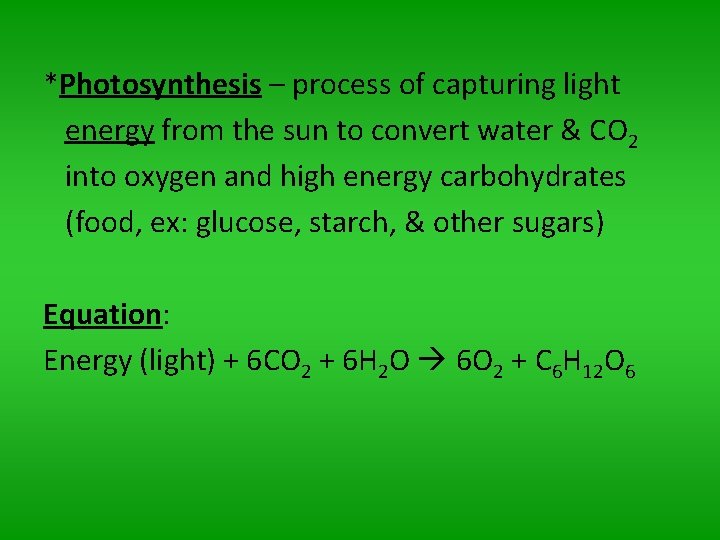
*Photosynthesis – process of capturing light energy from the sun to convert water & CO 2 into oxygen and high energy carbohydrates (food, ex: glucose, starch, & other sugars) Equation: Energy (light) + 6 CO 2 + 6 H 2 O 6 O 2 + C 6 H 12 O 6
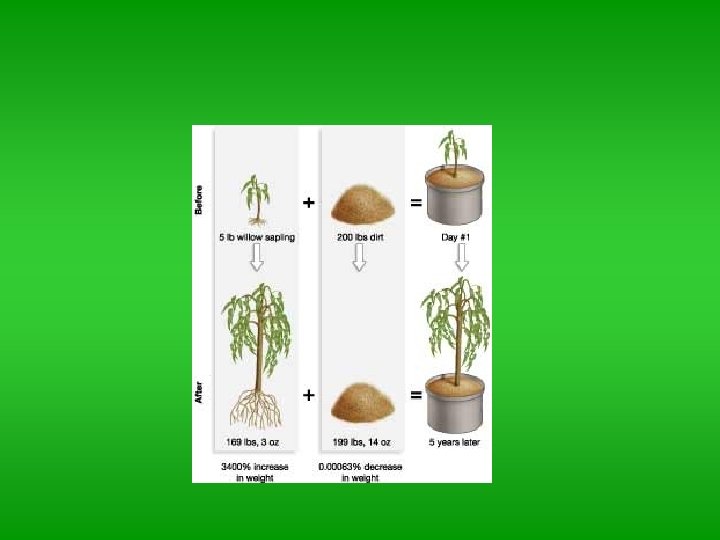
Investigating Photosynthesis 1. Van Helmont’s Experiment – do plant’s grow by taking material from the soil? • Found mass of dry soil • Planted a seedling, watered it at regular intervals until it grew to a mass of 75 kg. • Found mass of soil to be unchanged • Concluded the mass the plant gained came from the water he added. • Partially correct, but did not determine where the carbon in the carbohydrate comes from
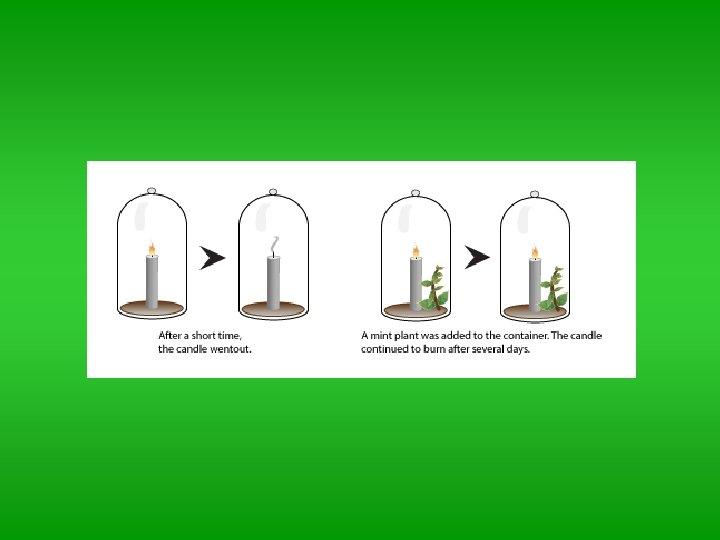
2. Priestley’s Experiment – oxygen is produced by plants • Determined that oxygen was required to keep a flame lit/burning. • Removed oxygen from a jar by placing a lit candle under it until the flame went out. • Then placed a sprig of mint in the jar (empty of oxygen) • After a few days, he found he could relight a candle in this jar and it would remain lit for a while!
3. Jan Ingenhousz – light is essential to photosynthesis! • • Showed the effect observed by Priestley occurred only when the plant is exposed to light! Together, Priestly and Ingenhousz showed the plants need light and water to produce oxygen.
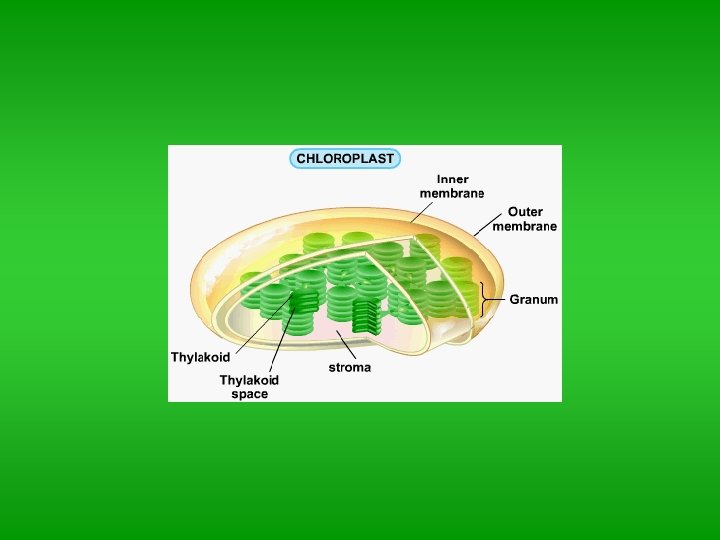
I. Photosynthesis Basics – occurs in the chloroplasts of plants, protists, and some bacteria cells. A. Chloroplast – organelle where photosynthesis occurs 1. Surrounded by 2 membranes. 2. Thylakoid – flattened sac made of membrane inside the chloroplast 3. Granum – stack of multiple thylakoids 4. Stroma – fluid that surrounds the grana and fills the chloroplast
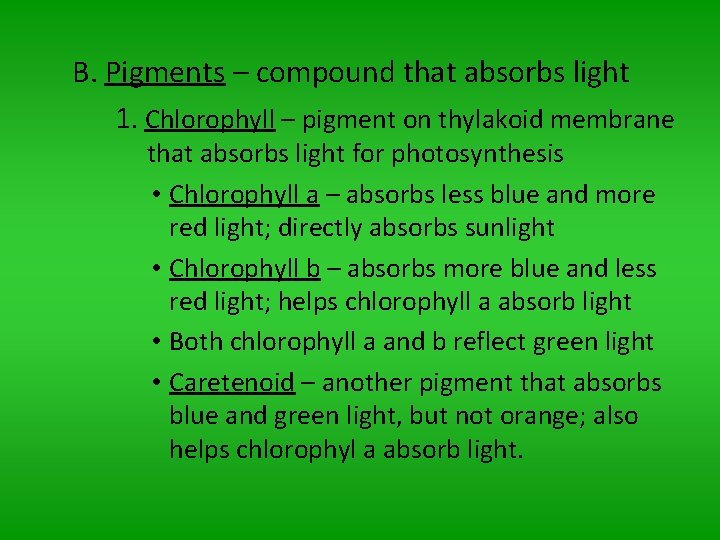
B. Pigments – compound that absorbs light 1. Chlorophyll – pigment on thylakoid membrane that absorbs light for photosynthesis • Chlorophyll a – absorbs less blue and more red light; directly absorbs sunlight • Chlorophyll b – absorbs more blue and less red light; helps chlorophyll a absorb light • Both chlorophyll a and b reflect green light • Caretenoid – another pigment that absorbs blue and green light, but not orange; also helps chlorophyl a absorb light.
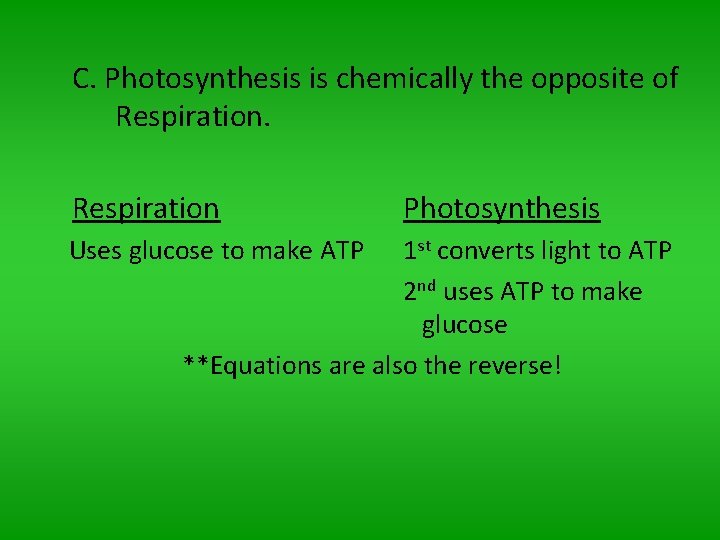
C. Photosynthesis is chemically the opposite of Respiration Uses glucose to make ATP Photosynthesis 1 st converts light to ATP 2 nd uses ATP to make glucose **Equations are also the reverse!
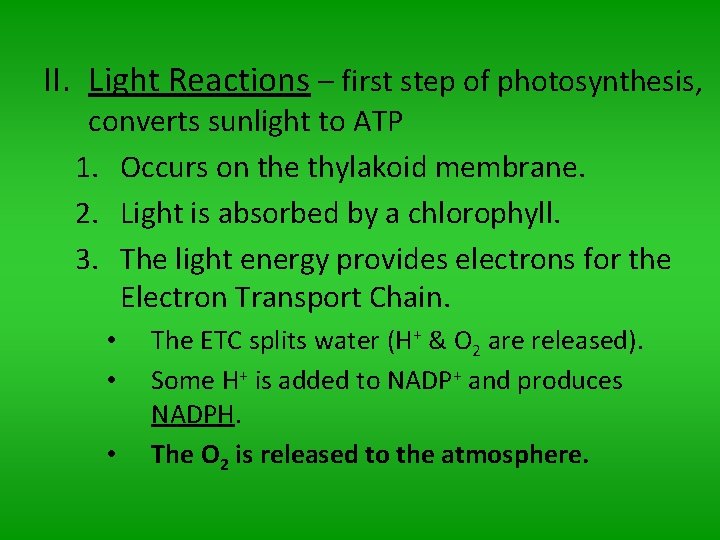
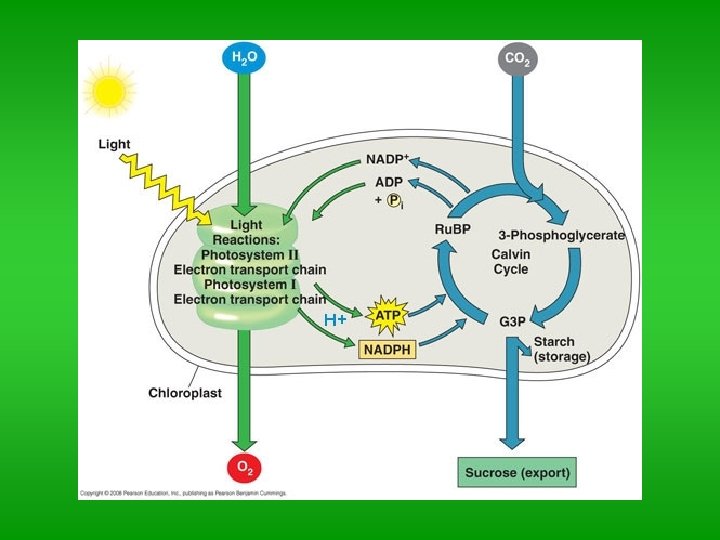
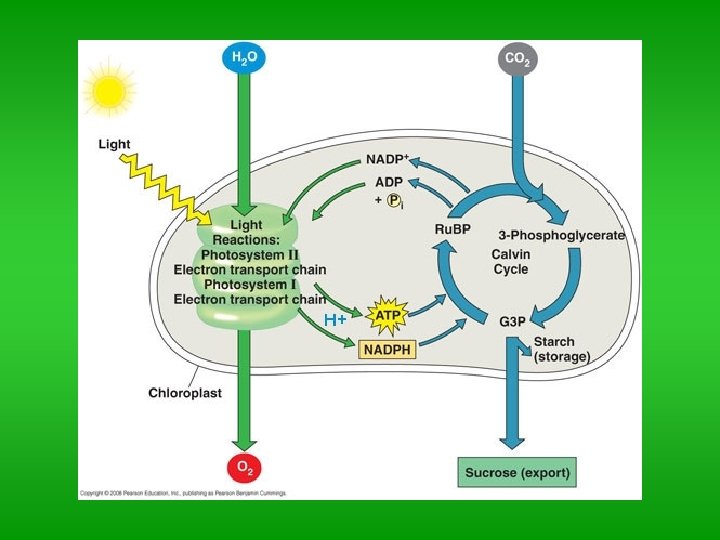
II. Light Reactions – first step of photosynthesis, converts sunlight to ATP 1. Occurs on the thylakoid membrane. 2. Light is absorbed by a chlorophyll. 3. The light energy provides electrons for the Electron Transport Chain. • • • The ETC splits water (H+ & O 2 are released). Some H+ is added to NADP+ and produces NADPH. The O 2 is released to the atmosphere.
4. Chemiosmosis • • Also happens on the membrane of the thylakoids. Rest of the H+ drive ATP Synthase proteins to make ATP. *Chemiosmosis and the ETC happen at the same time!!!
III. Calvin Cycle – the 2 nd step of photosynthesis. Also called the Dark Reactions, as light does not play any direct role. Uses ATP to make Glucose
Steps of the Calvin Cycle 1. Ru. BP (carbohydrate in plants) reacts with NADPH, CO 2 (from the atmosphere), and ATP to make Glucose. 2. In the final step, Ru. BP is remade so the cycle can occur again.