
Photosynthesis Photosynthesis Main Idea Light energy is trapped

- Slides: 38
Photosynthesis
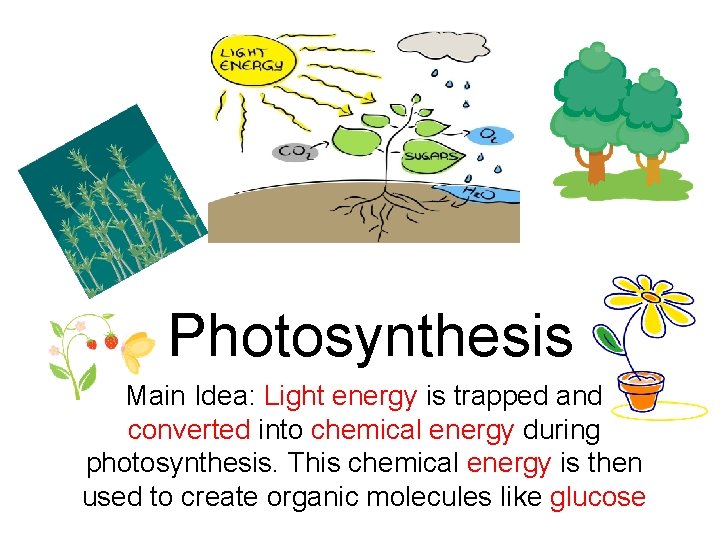
Photosynthesis Main Idea: Light energy is trapped and converted into chemical energy during photosynthesis. This chemical energy is then used to create organic molecules like glucose
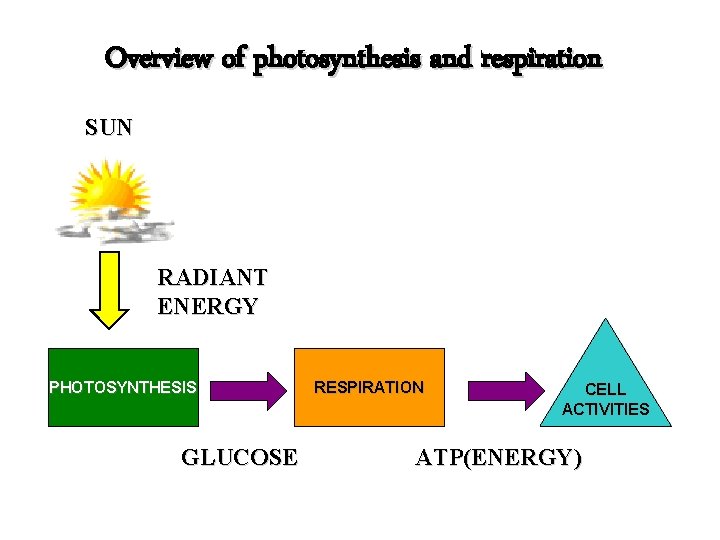
Overview of photosynthesis and respiration SUN RADIANT ENERGY PHOTOSYNTHESIS GLUCOSE RESPIRATION CELL ACTIVITIES ATP(ENERGY)
Energy For Life • All living things need a source of energy to live • Most energy originates from the sun…. * • Ex. ) What do you plan on having for lunch today?
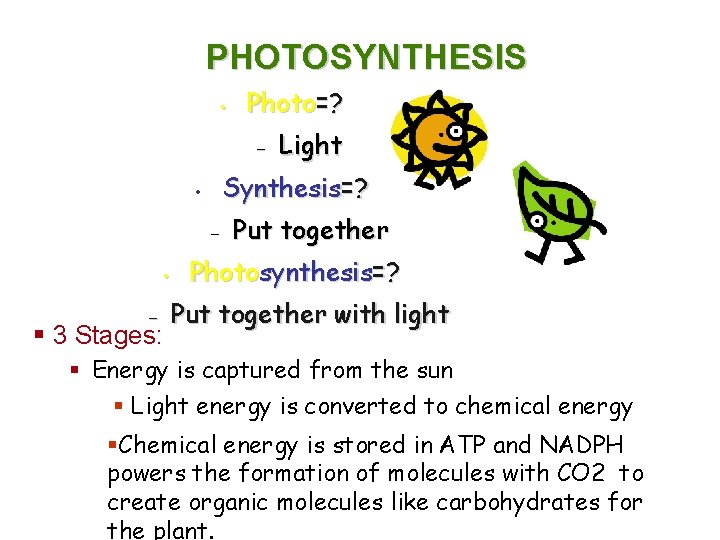
PHOTOSYNTHESIS • Photo=? – Synthesis=? • – § 3 Stages: Light Put together Photosynthesis=? Put together with light § Energy is captured from the sun § Light energy is converted to chemical energy §Chemical energy is stored in ATP and NADPH powers the formation of molecules with CO 2 to create organic molecules like carbohydrates for the plant.
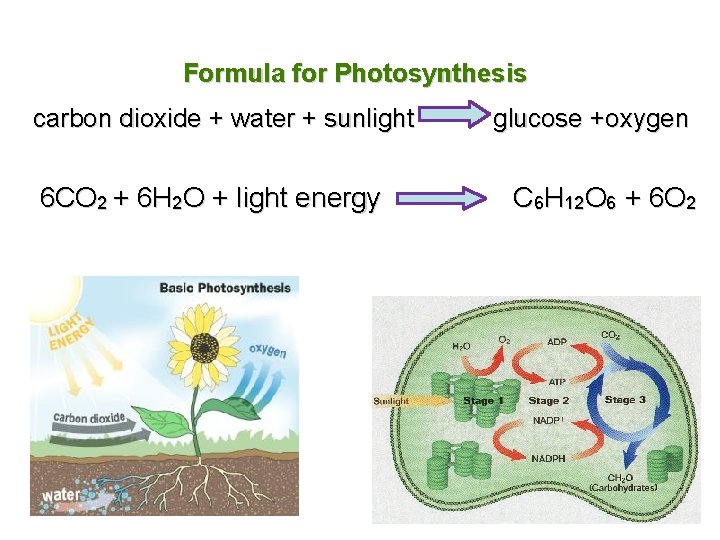
Formula for Photosynthesis carbon dioxide + water + sunlight 6 CO 2 + 6 H 2 O + light energy glucose +oxygen C 6 H 12 O 6 + 6 O 2
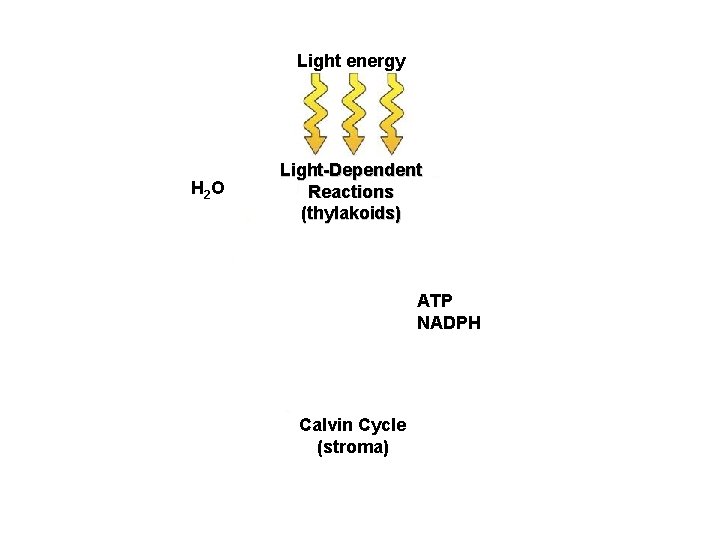
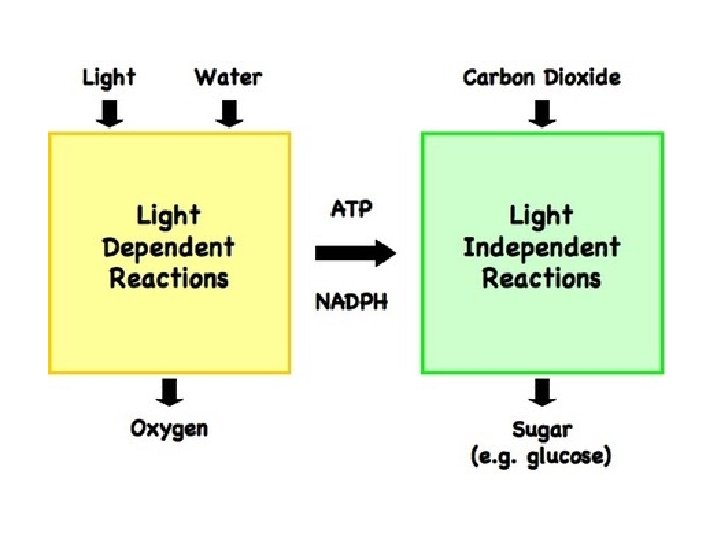
Light energy H 2 O Light-Dependent Reactions (thylakoids) ADP + NADP Sugar O 2 ATP NADPH Calvin Cycle (stroma) CO 2 + H 2 0
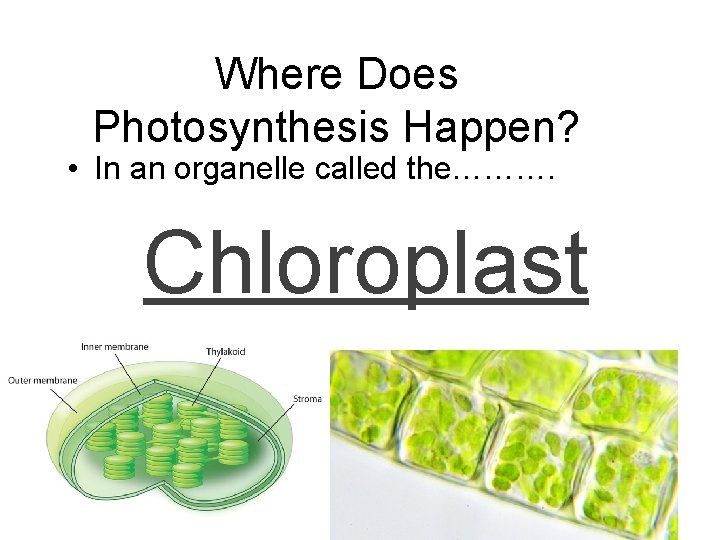
Where Does Photosynthesis Happen? • In an organelle called the………. Chloroplast
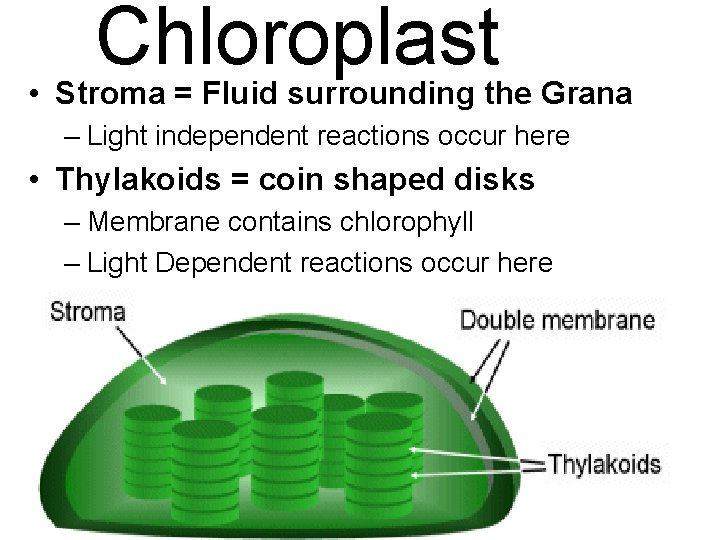
Chloroplast • Stroma = Fluid surrounding the Grana – Light independent reactions occur here • Thylakoids = coin shaped disks – Membrane contains chlorophyll – Light Dependent reactions occur here
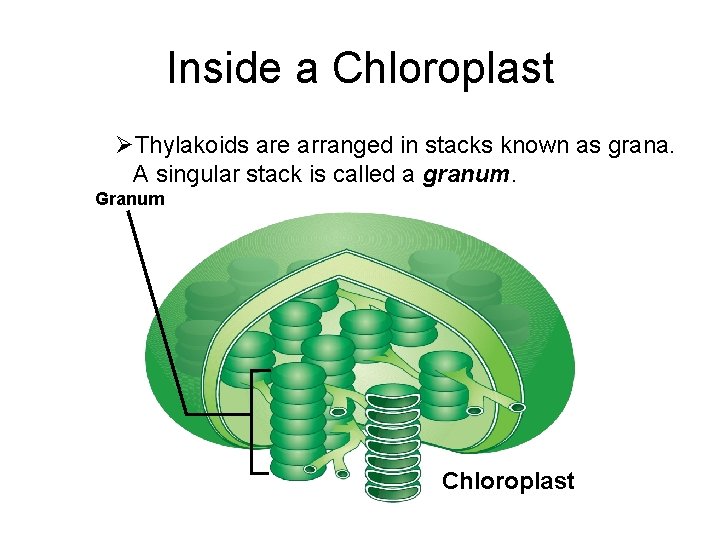
Inside a Chloroplast ØThylakoids are arranged in stacks known as grana. A singular stack is called a granum. Granum Chloroplast
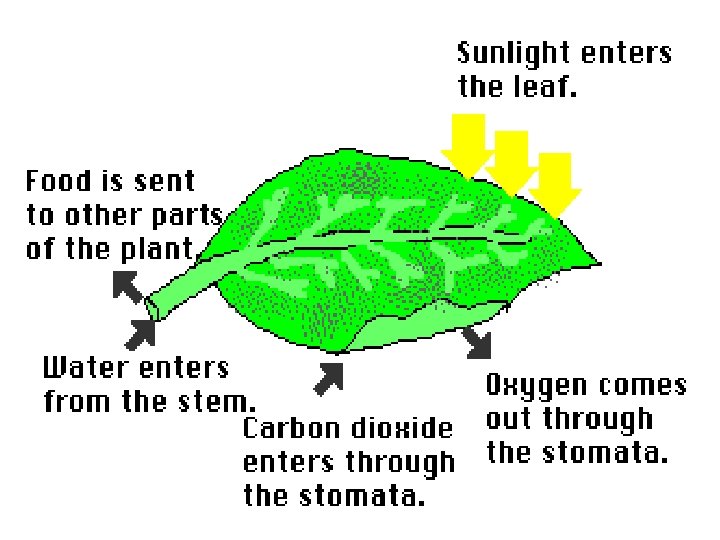
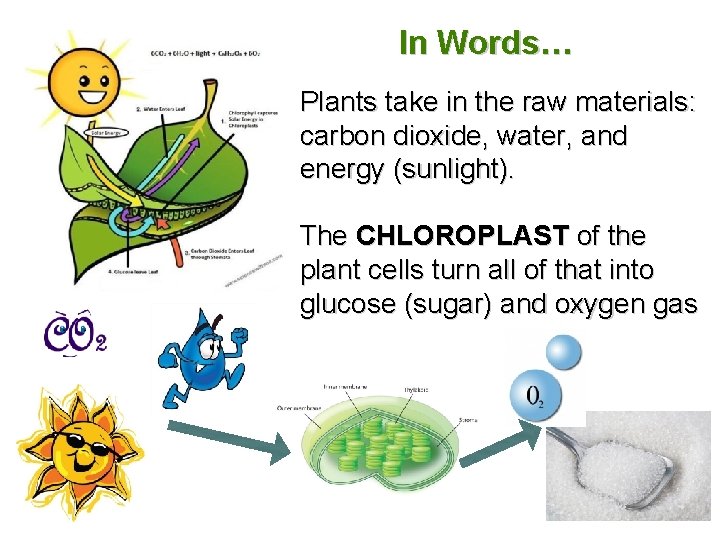
In Words… Plants take in the raw materials: carbon dioxide, water, and energy (sunlight). The CHLOROPLAST of the plant cells turn all of that into glucose (sugar) and oxygen gas
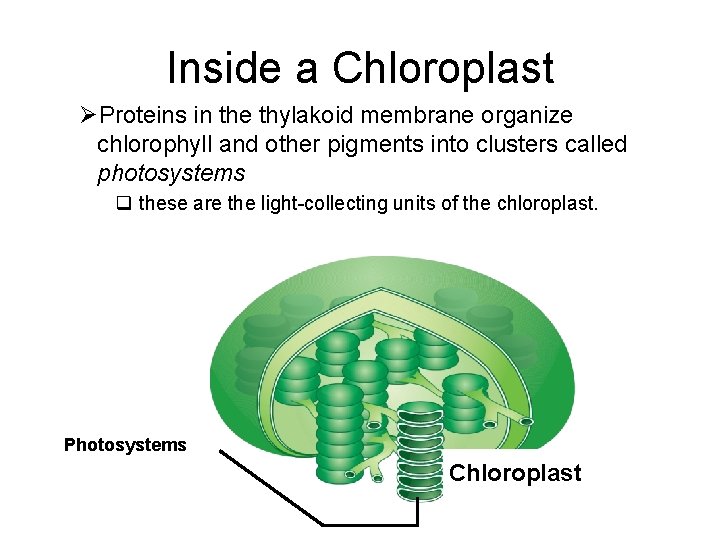
Inside a Chloroplast ØProteins in the thylakoid membrane organize chlorophyll and other pigments into clusters called photosystems q these are the light-collecting units of the chloroplast. Photosystems Chloroplast
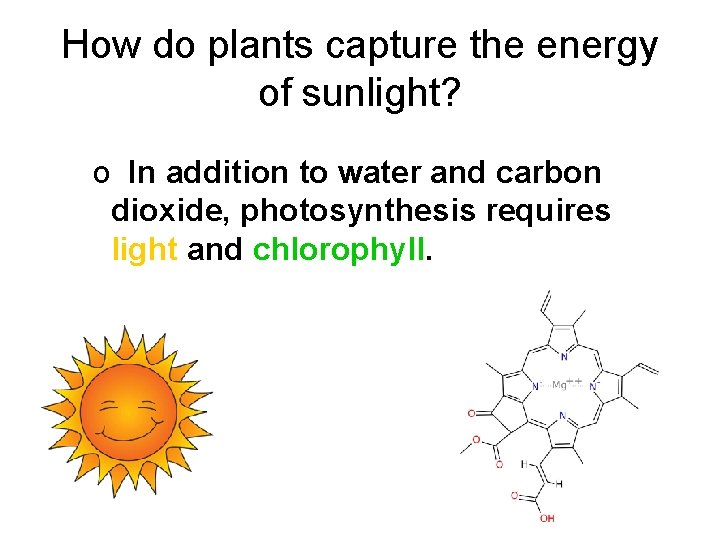
How do plants capture the energy of sunlight? o In addition to water and carbon dioxide, photosynthesis requires light and chlorophyll.
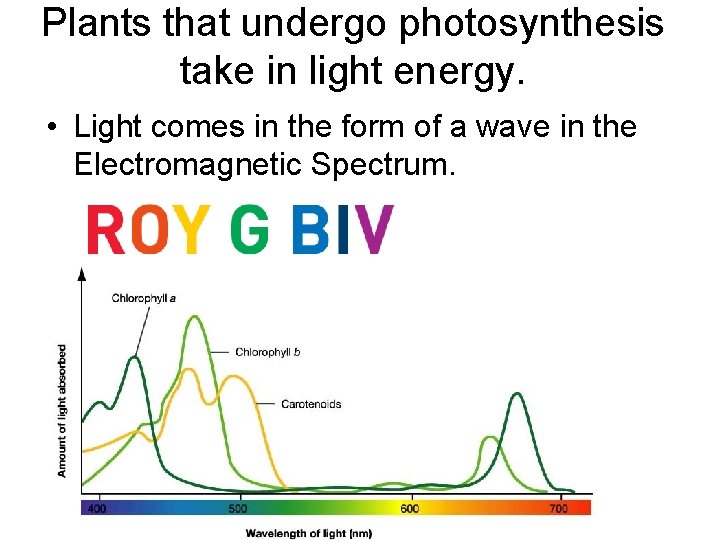
Plants that undergo photosynthesis take in light energy. • Light comes in the form of a wave in the Electromagnetic Spectrum.
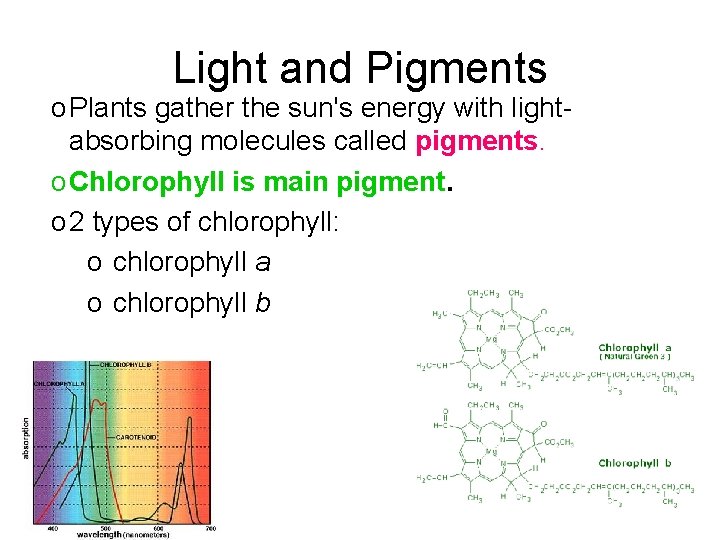
Light and Pigments o Plants gather the sun's energy with lightabsorbing molecules called pigments. o Chlorophyll is main pigment. o 2 types of chlorophyll: o chlorophyll a o chlorophyll b
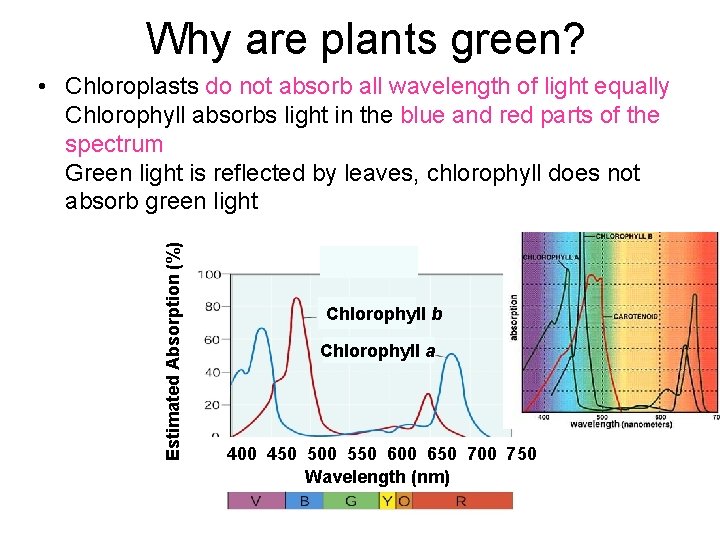
Why are plants green? Estimated Absorption (%) • Chloroplasts do not absorb all wavelength of light equally Chlorophyll absorbs light in the blue and red parts of the spectrum Green light is reflected by leaves, chlorophyll does not absorb green light Chlorophyll b Chlorophyll a 400 450 500 550 600 650 700 750 Wavelength (nm)
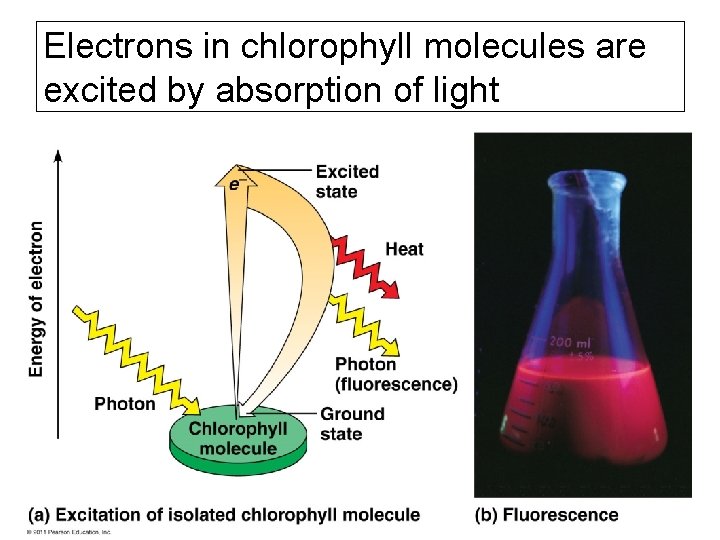
Electrons in chlorophyll molecules are excited by absorption of light
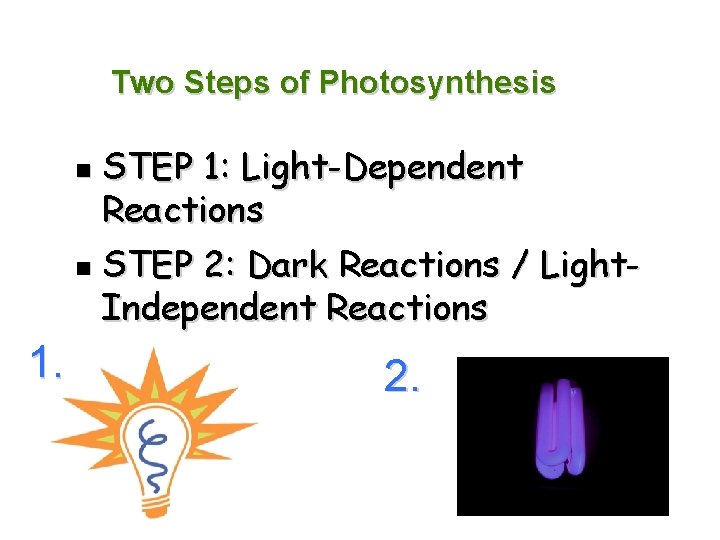
Two Steps of Photosynthesis STEP 1: Light-Dependent Reactions n STEP 2: Dark Reactions / Light. Independent Reactions n 1. 2. 19
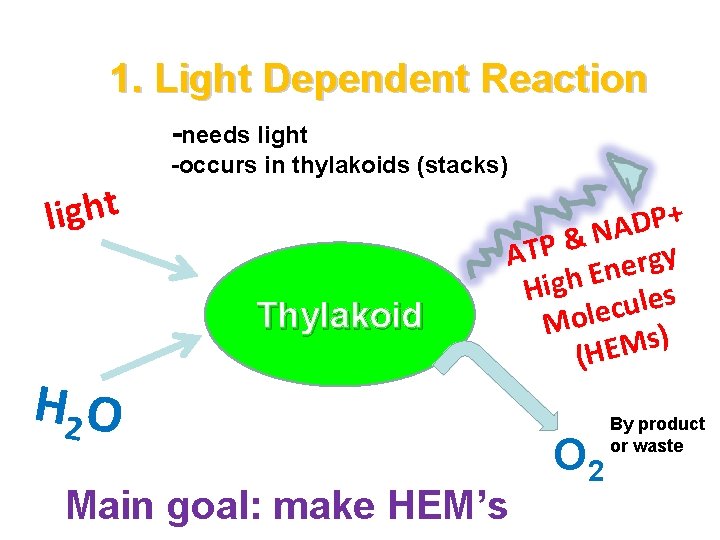
1. Light Dependent Reaction -needs light -occurs in thylakoids (stacks) Thylakoid H 2 O + P D A N & P AT y g r e En h g i H s e l u c Mole s) (HEM Main goal: make HEM’s O 2 By product or waste
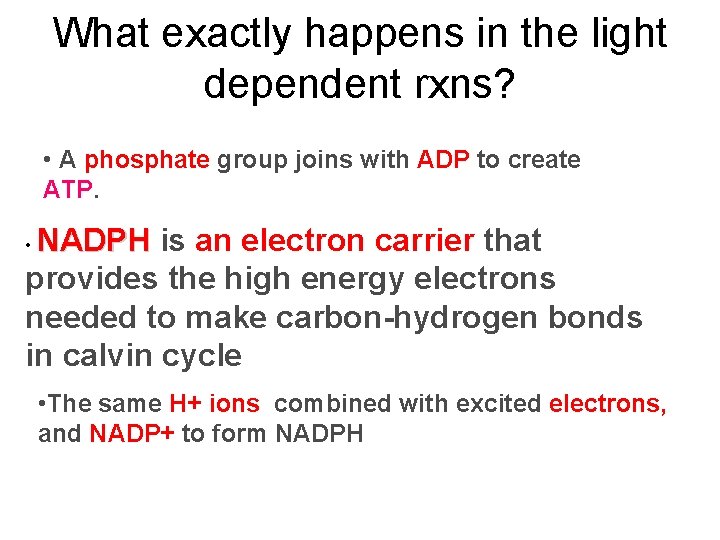
What exactly happens in the light dependent rxns? • A phosphate group joins with ADP to create ATP. NADPH is an electron carrier that provides the high energy electrons needed to make carbon-hydrogen bonds in calvin cycle • • The same H+ ions combined with excited electrons, and NADP+ to form NADPH
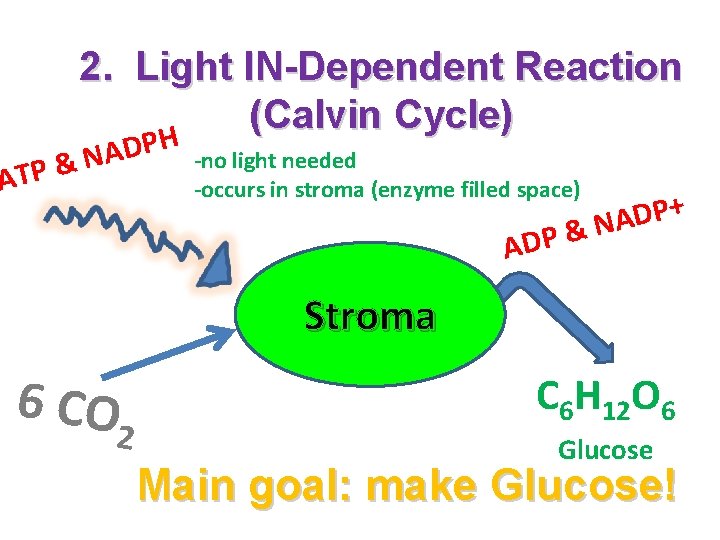
2. Light IN-Dependent Reaction (Calvin Cycle) ATP H P D A &N -no light needed -occurs in stroma (enzyme filled space) ADP + P D A &N Stroma 6 CO 2 C 6 H 12 O 6 Glucose Main goal: make Glucose!
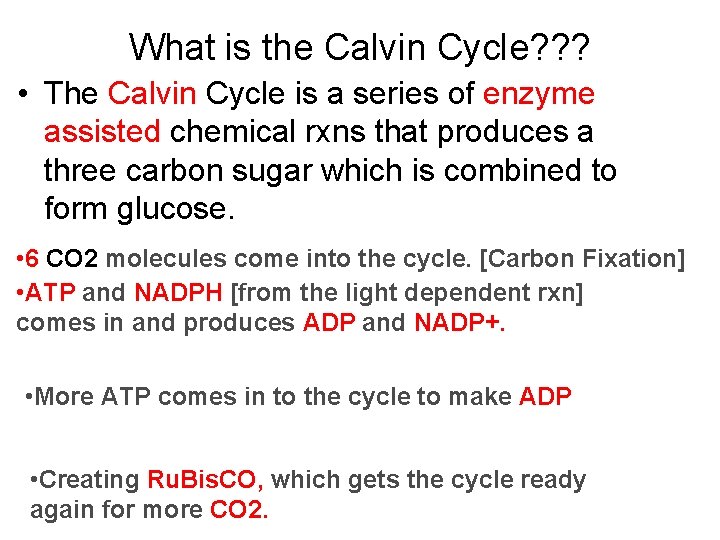
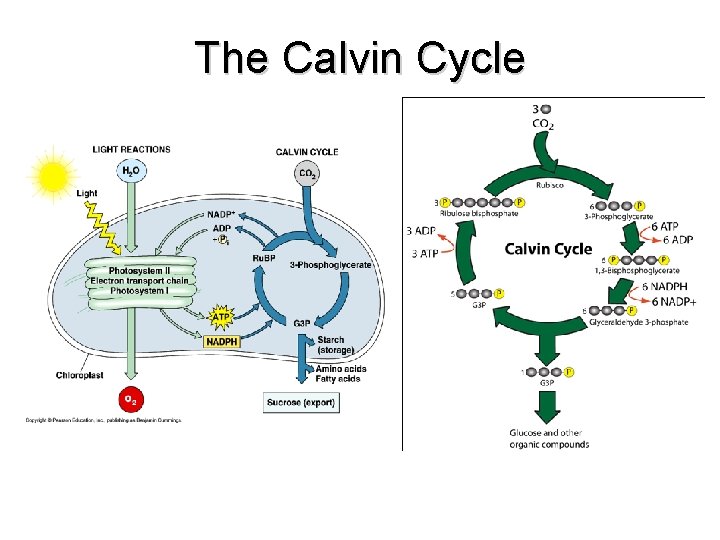
What is the Calvin Cycle? ? ? • The Calvin Cycle is a series of enzyme assisted chemical rxns that produces a three carbon sugar which is combined to form glucose. • 6 CO 2 molecules come into the cycle. [Carbon Fixation] • ATP and NADPH [from the light dependent rxn] comes in and produces ADP and NADP+. • More ATP comes in to the cycle to make ADP • Creating Ru. Bis. CO, which gets the cycle ready again for more CO 2.
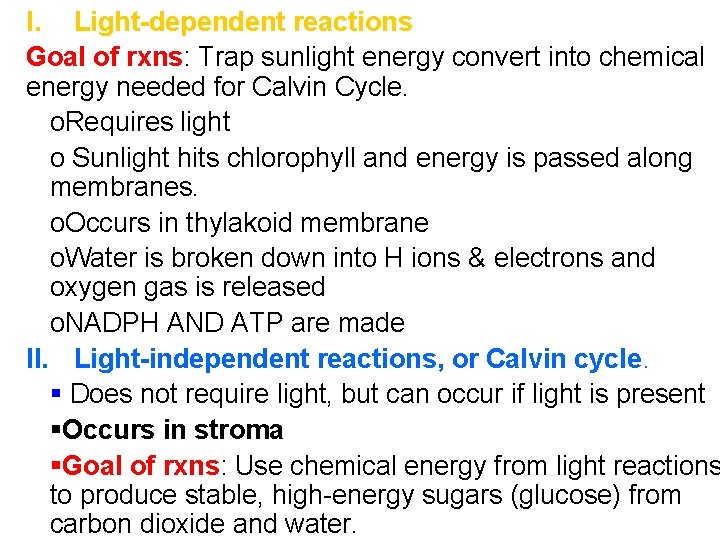
I. Light-dependent reactions Goal of rxns: Trap sunlight energy convert into chemical energy needed for Calvin Cycle. o. Requires light o Sunlight hits chlorophyll and energy is passed along membranes. o. Occurs in thylakoid membrane o. Water is broken down into H ions & electrons and oxygen gas is released o. NADPH AND ATP are made II. Light-independent reactions, or Calvin cycle. § Does not require light, but can occur if light is present §Occurs in stroma §Goal of rxns: Use chemical energy from light reactions to produce stable, high-energy sugars (glucose) from carbon dioxide and water.
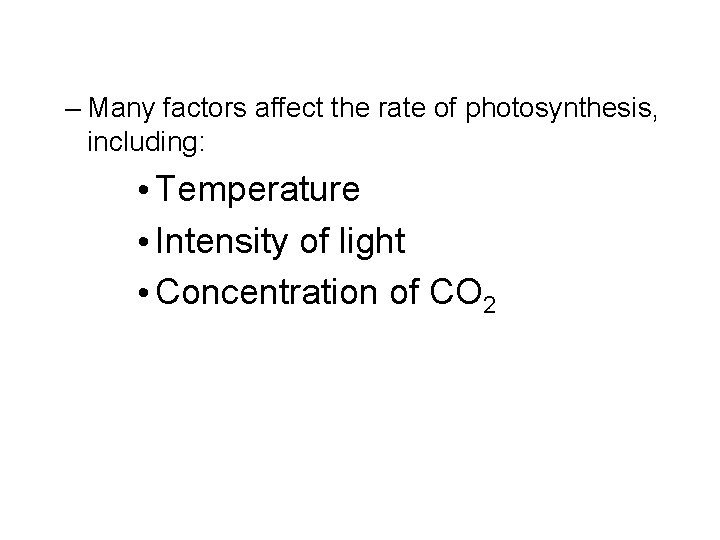
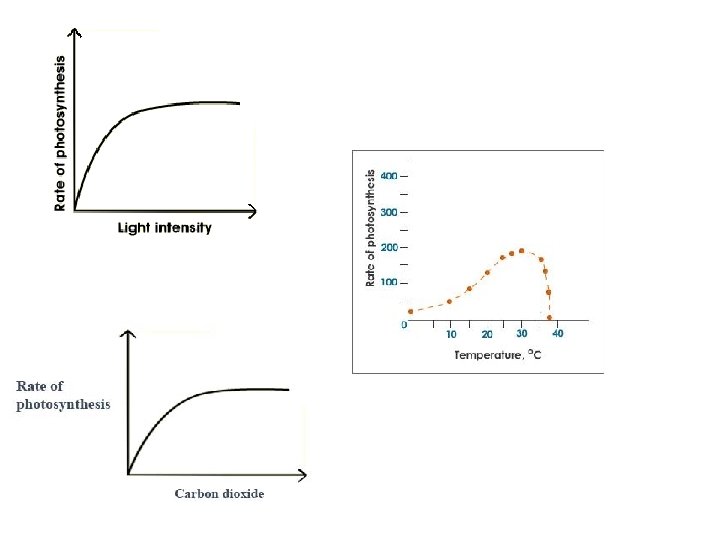
– Many factors affect the rate of photosynthesis, including: • Temperature • Intensity of light • Concentration of CO 2
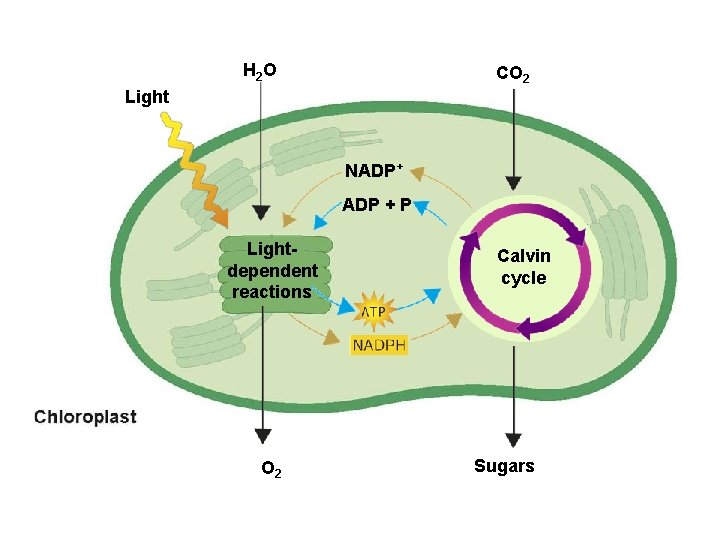
H 2 O CO 2 Light NADP+ ADP + P Lightdependent reactions Calvin cycle Chloroplast O 2 Sugars
The Calvin Cycle
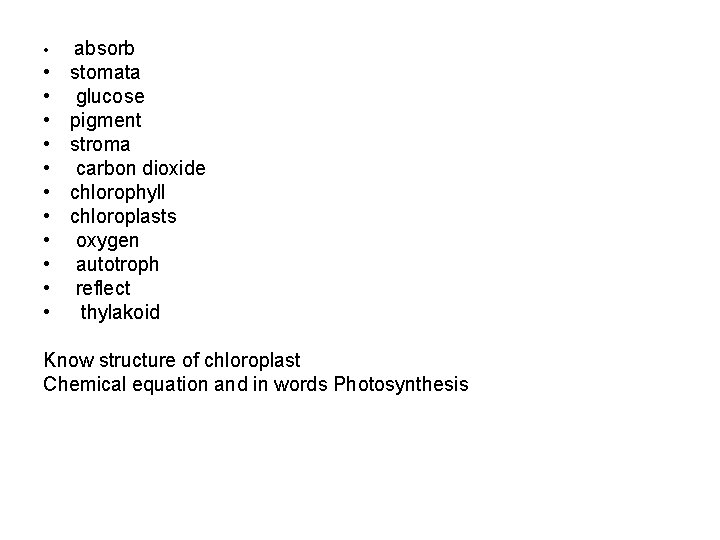
• • • absorb stomata glucose pigment stroma carbon dioxide chlorophyll chloroplasts oxygen autotroph reflect thylakoid Know structure of chloroplast Chemical equation and in words Photosynthesis
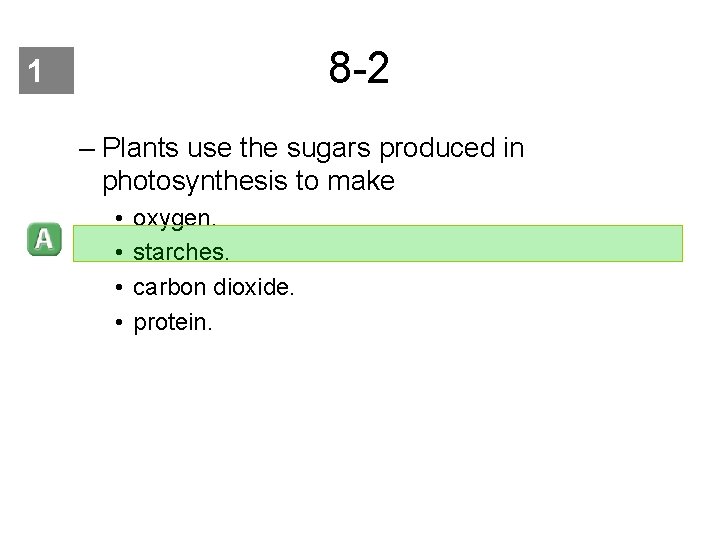
8 -2 1 – Plants use the sugars produced in photosynthesis to make • • oxygen. starches. carbon dioxide. protein.
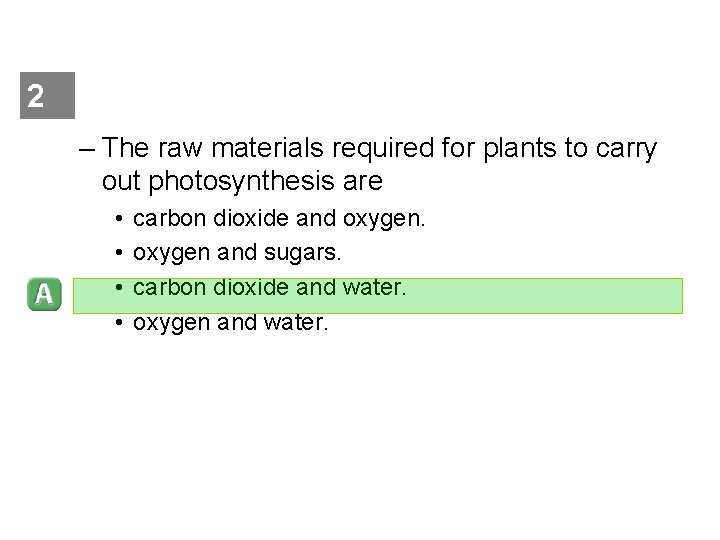
2 – The raw materials required for plants to carry out photosynthesis are • • carbon dioxide and oxygen and sugars. carbon dioxide and water. oxygen and water.
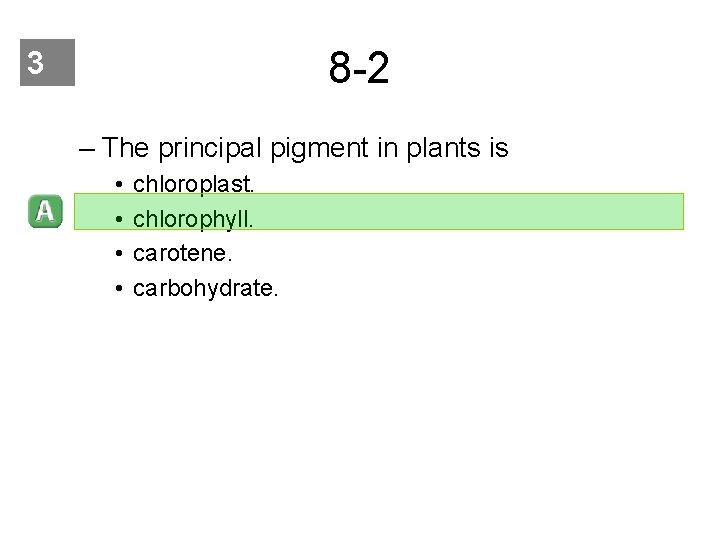
8 -2 3 – The principal pigment in plants is • • chloroplast. chlorophyll. carotene. carbohydrate.
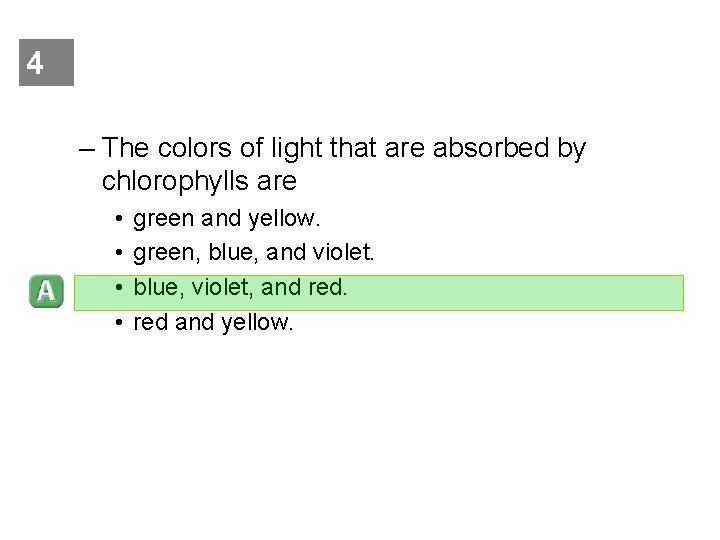
4 – The colors of light that are absorbed by chlorophylls are • • green and yellow. green, blue, and violet. blue, violet, and red and yellow.
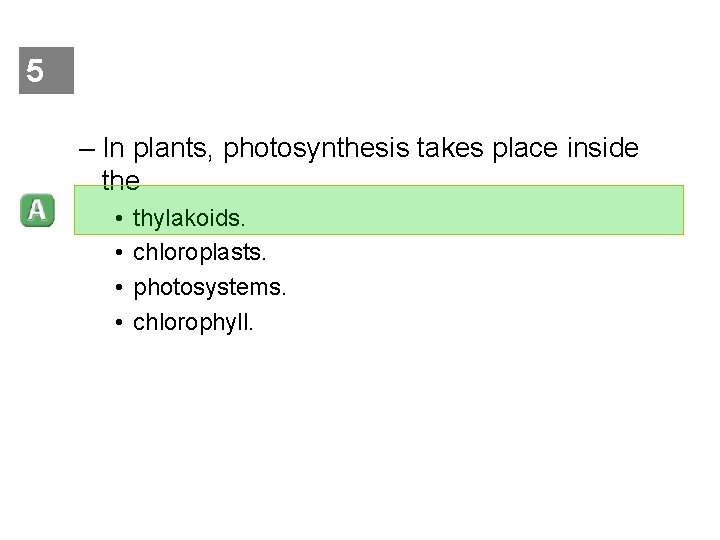
5 – In plants, photosynthesis takes place inside the • • thylakoids. chloroplasts. photosystems. chlorophyll.
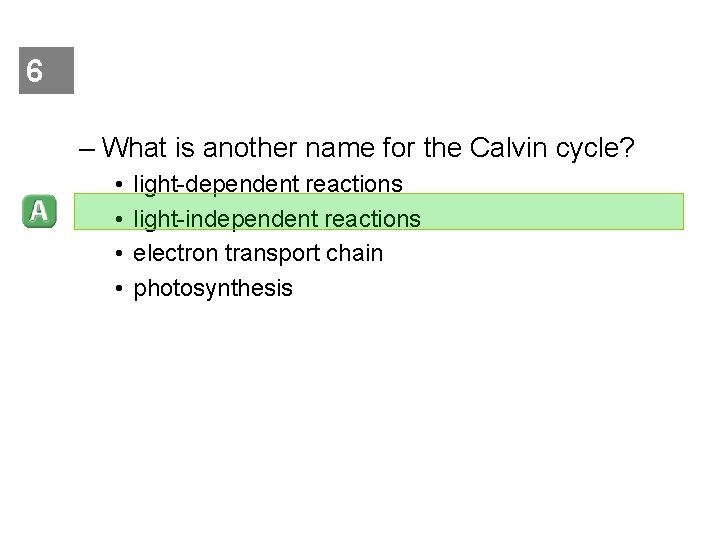
6 – What is another name for the Calvin cycle? • • light-dependent reactions light-independent reactions electron transport chain photosynthesis
7 – Which of the following factors does NOT directly affect photosynthesis? • • wind water supply temperature light intensity