
Photosynthesis Photosynthesis Cellular Respiration Energy comes from the
- Slides: 16
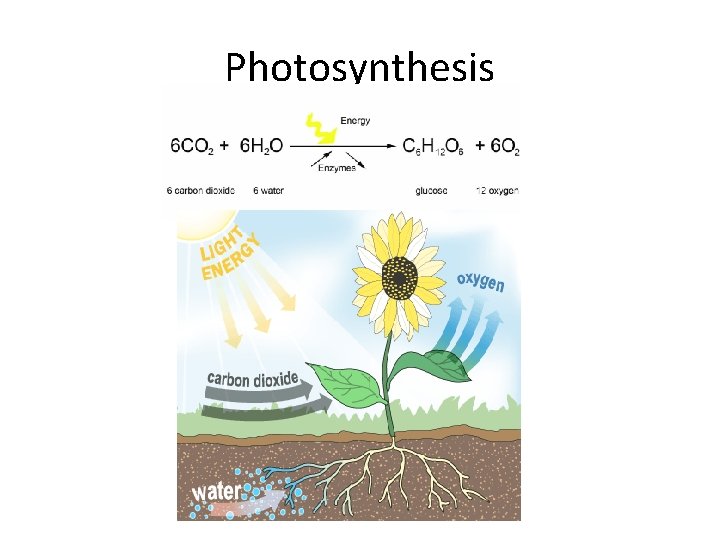
Photosynthesis
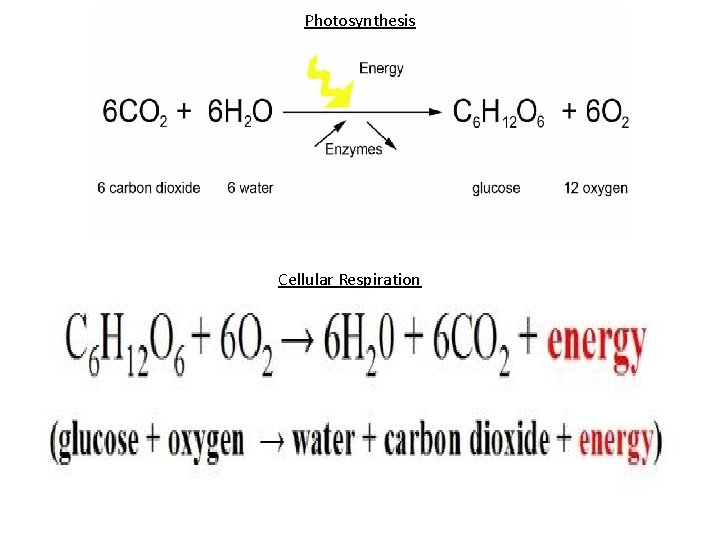
Photosynthesis Cellular Respiration
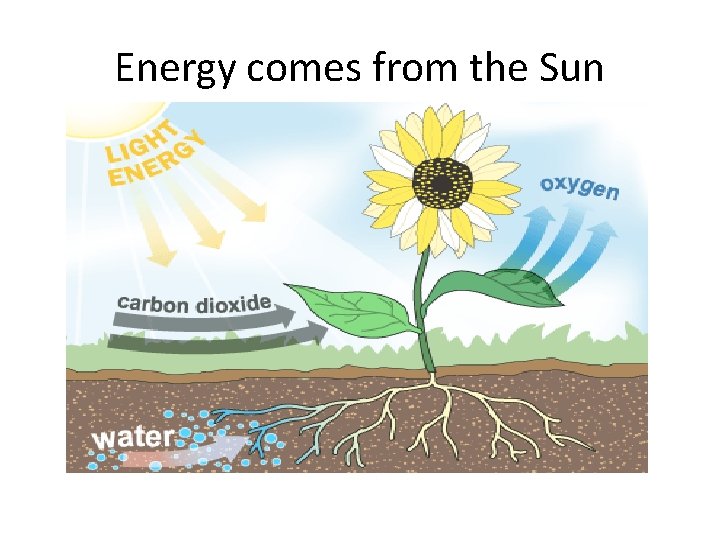
Energy comes from the Sun
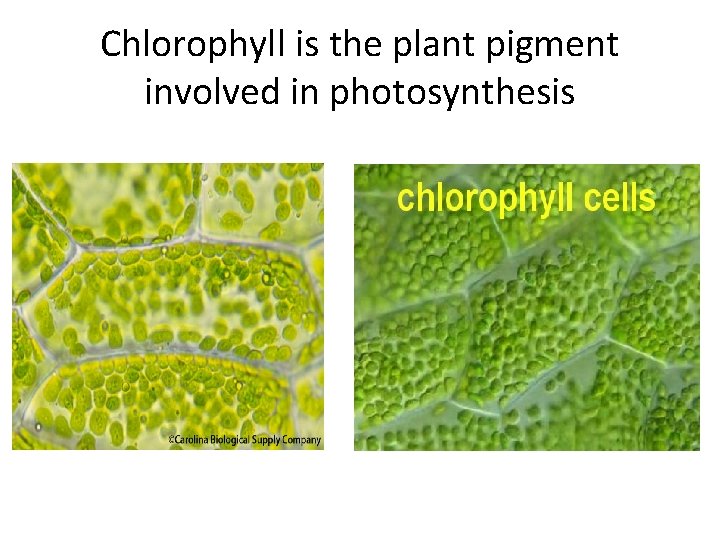
Chlorophyll is the plant pigment involved in photosynthesis
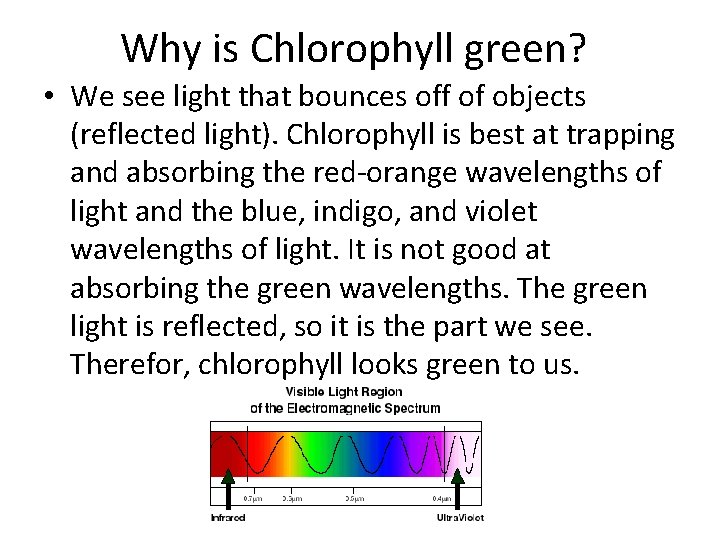
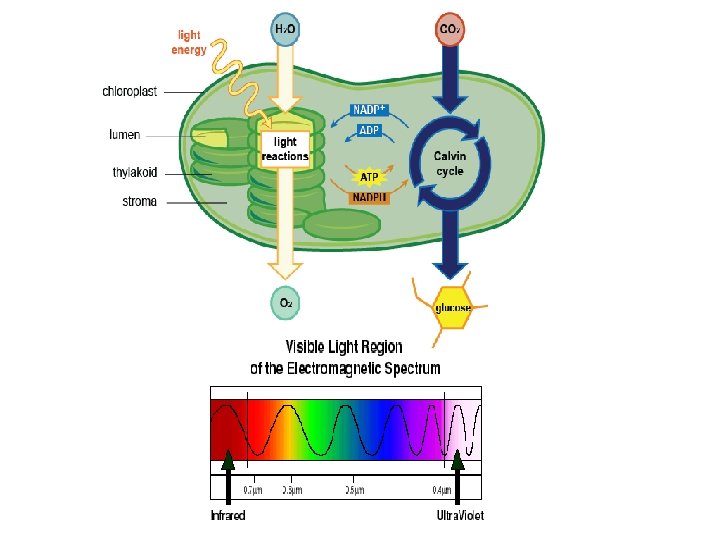
Why is Chlorophyll green? • We see light that bounces off of objects (reflected light). Chlorophyll is best at trapping and absorbing the red-orange wavelengths of light and the blue, indigo, and violet wavelengths of light. It is not good at absorbing the green wavelengths. The green light is reflected, so it is the part we see. Therefor, chlorophyll looks green to us.
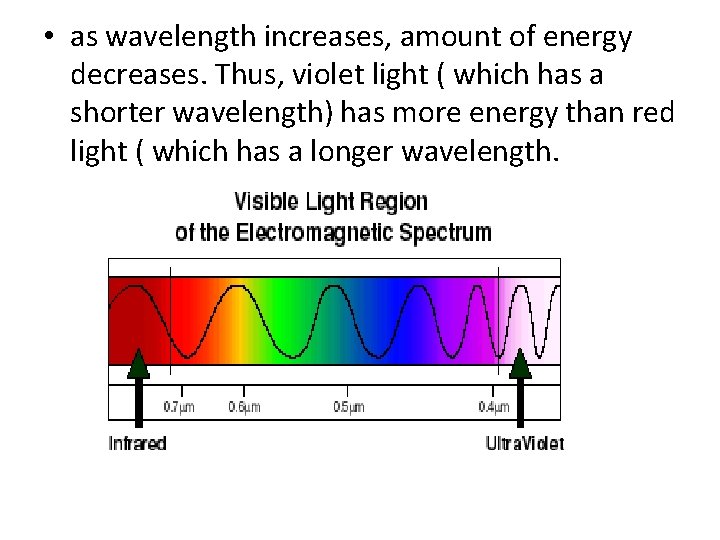
• as wavelength increases, amount of energy decreases. Thus, violet light ( which has a shorter wavelength) has more energy than red light ( which has a longer wavelength.
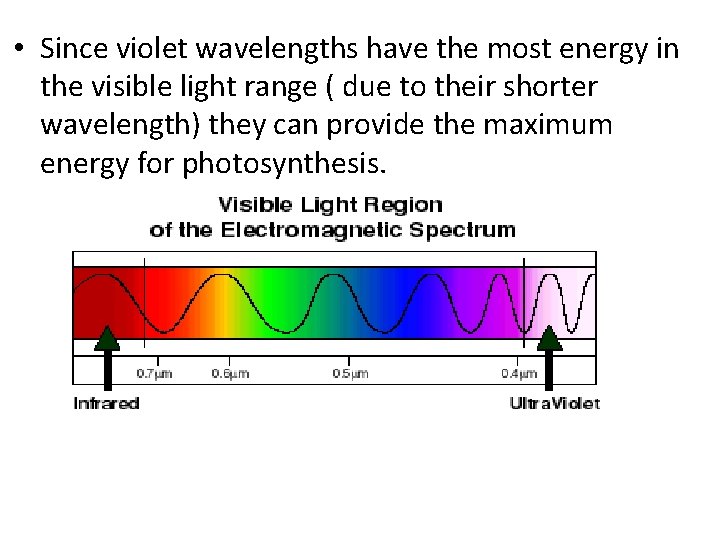
• Since violet wavelengths have the most energy in the visible light range ( due to their shorter wavelength) they can provide the maximum energy for photosynthesis.
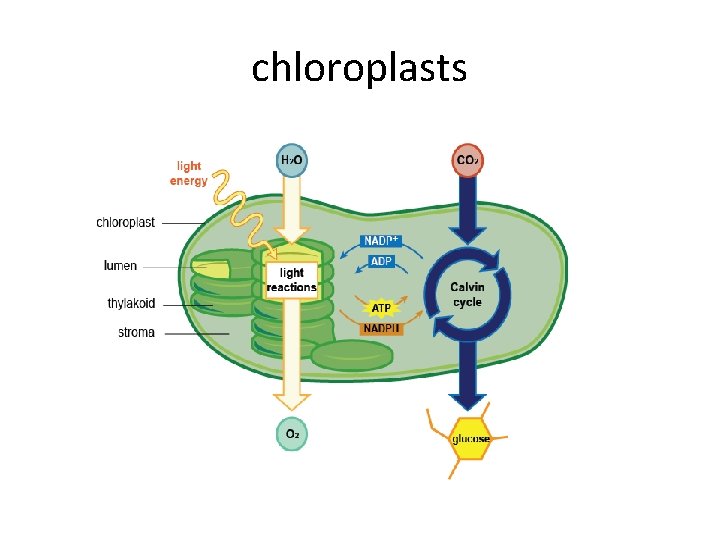
chloroplasts
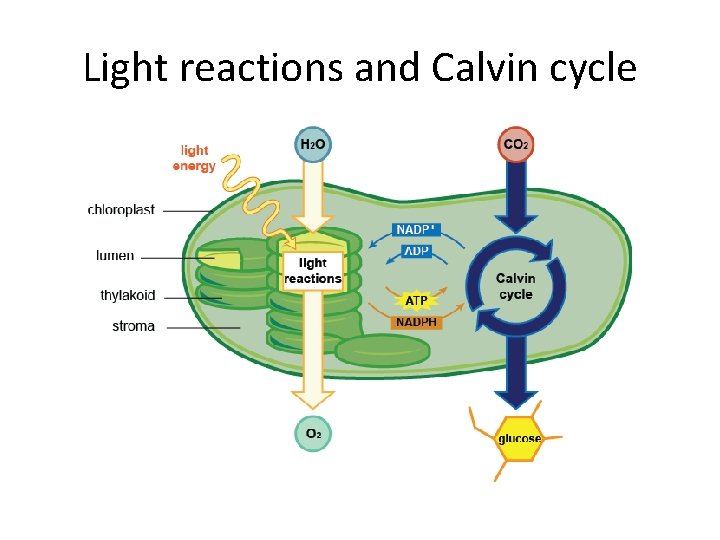
Light reactions and Calvin cycle
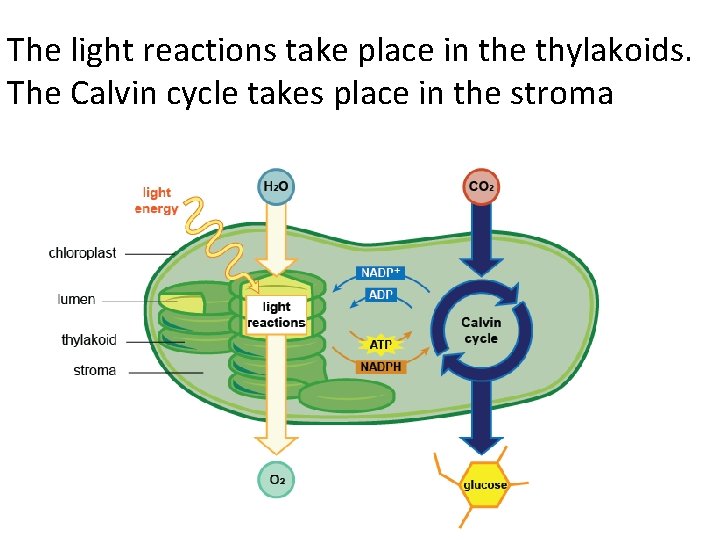
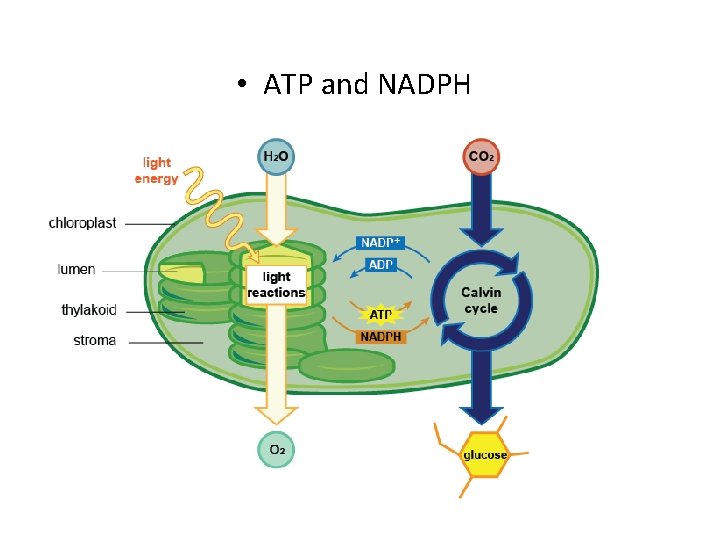
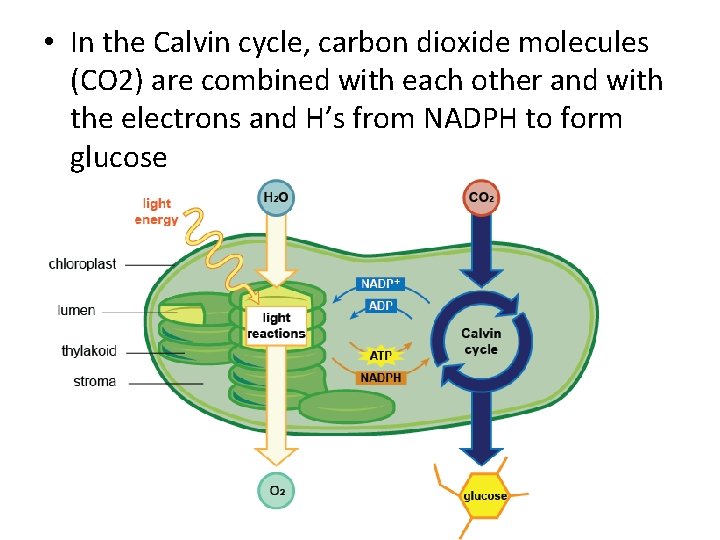
The light reactions take place in the thylakoids. The Calvin cycle takes place in the stroma
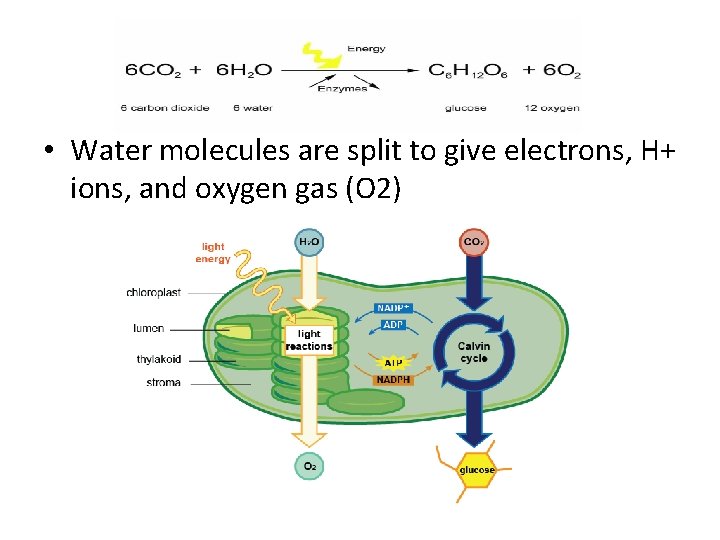
• Water molecules are split to give electrons, H+ ions, and oxygen gas (O 2)
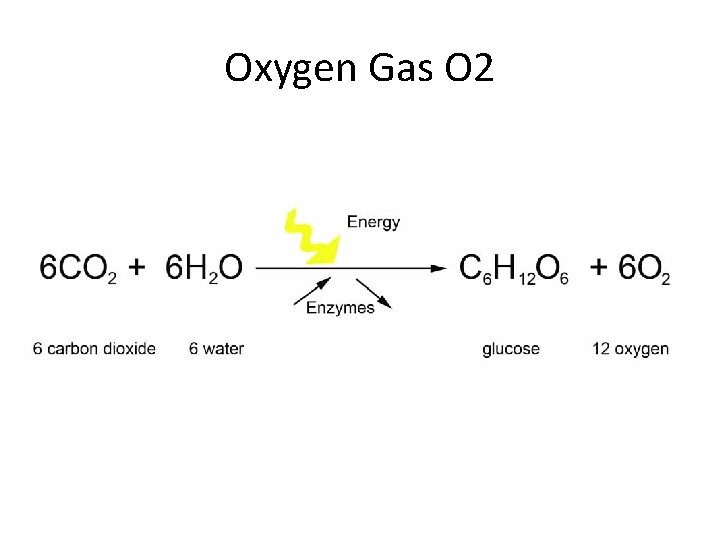
Oxygen Gas O 2
• ATP and NADPH
• In the Calvin cycle, carbon dioxide molecules (CO 2) are combined with each other and with the electrons and H’s from NADPH to form glucose
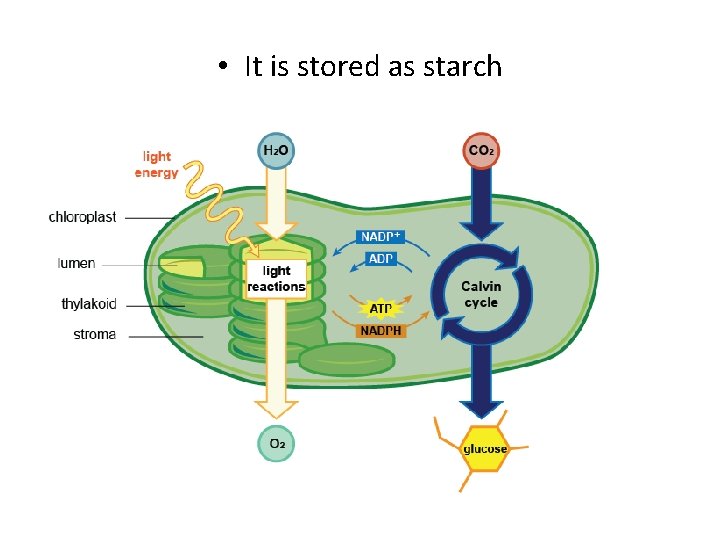
• It is stored as starch