
Photosynthesis Part II Leaf Structure and Light Dark
- Slides: 18
Photosynthesis Part II: Leaf Structure and Light & Dark Reactions KL Biology L. Buechler
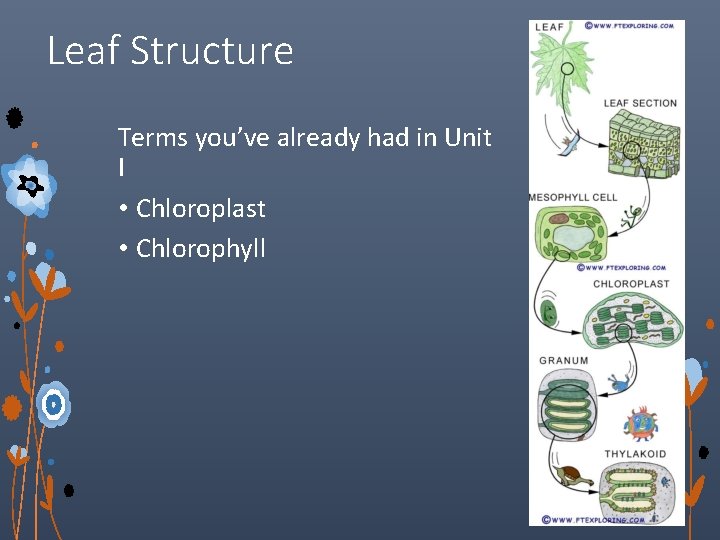
Leaf Structure Terms you’ve already had in Unit I • Chloroplast • Chlorophyll
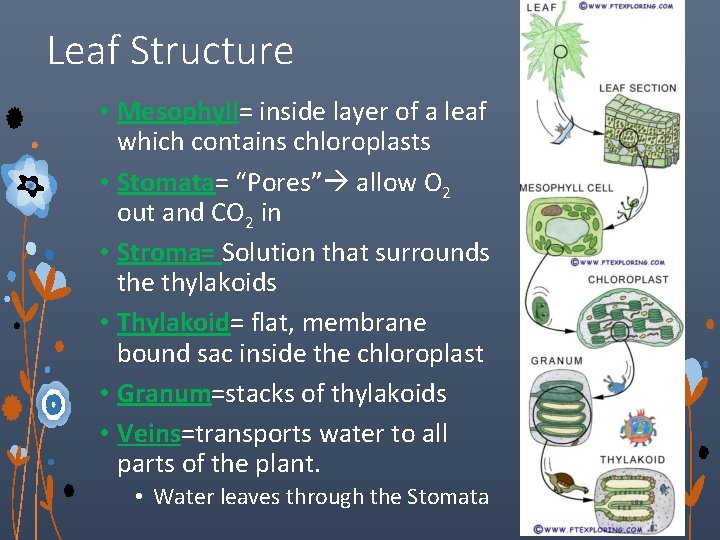
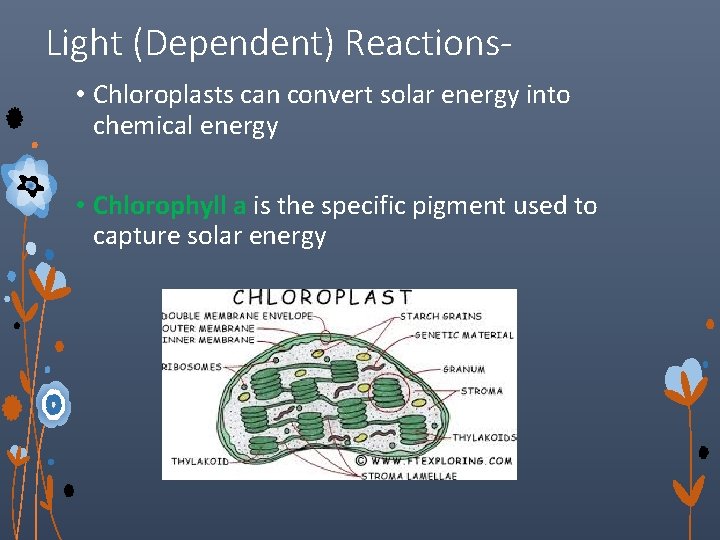
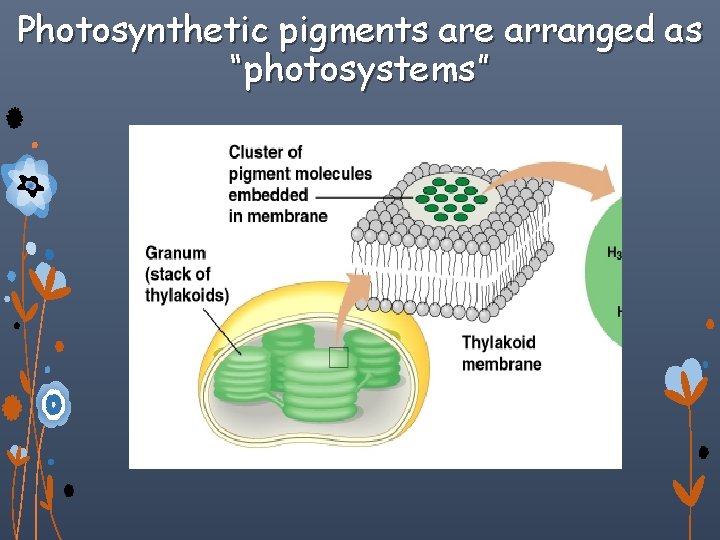
Leaf Structure • Mesophyll= inside layer of a leaf which contains chloroplasts • Stomata= “Pores” allow O 2 out and CO 2 in • Stroma= Solution that surrounds the thylakoids • Thylakoid= flat, membrane bound sac inside the chloroplast • Granum=stacks of thylakoids • Veins=transports water to all parts of the plant. • Water leaves through the Stomata
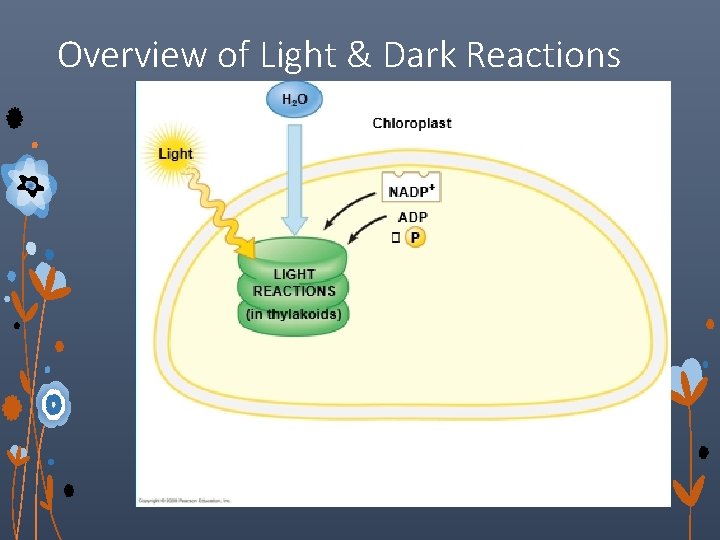
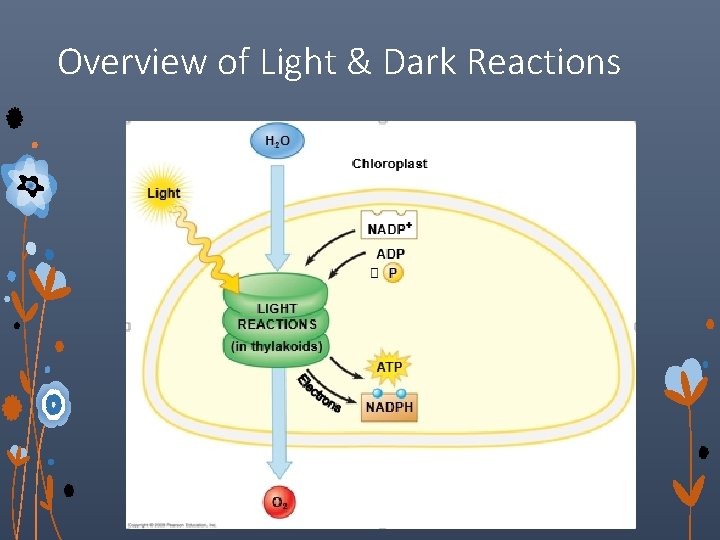
Overview of Light & Dark Reactions
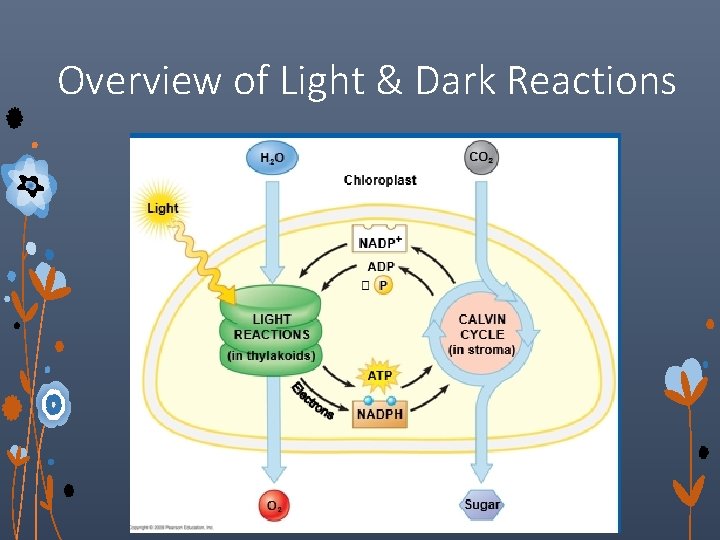
Overview of Light & Dark Reactions
Overview of Light & Dark Reactions
Light (Dependent) Reactions • Chloroplasts can convert solar energy into chemical energy • Chlorophyll a is the specific pigment used to capture solar energy
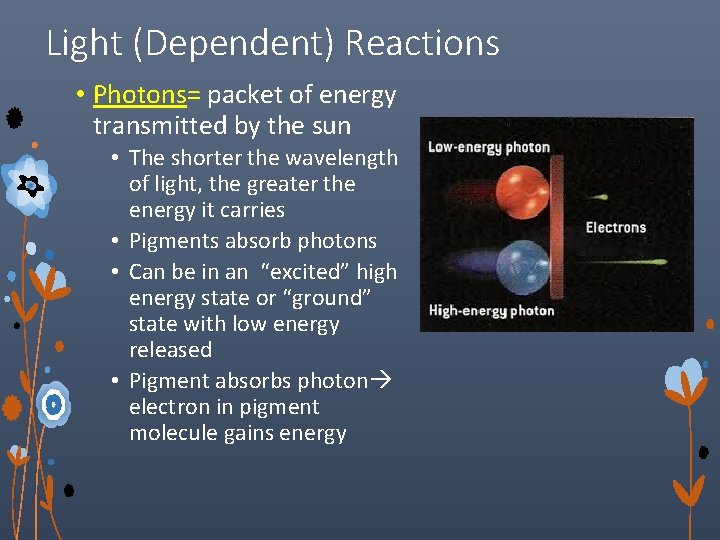
Light (Dependent) Reactions • Photons= packet of energy transmitted by the sun • The shorter the wavelength of light, the greater the energy it carries • Pigments absorb photons • Can be in an “excited” high energy state or “ground” state with low energy released • Pigment absorbs photon electron in pigment molecule gains energy
Photosynthetic pigments are arranged as “photosystems”
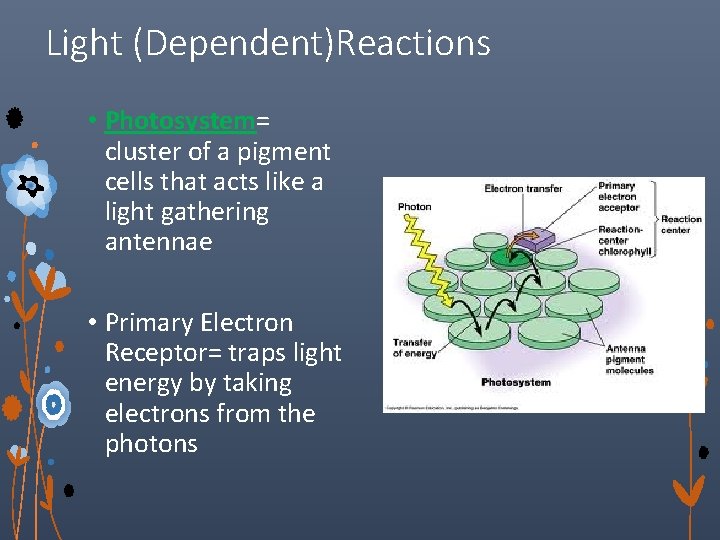
Light (Dependent)Reactions • Photosystem= cluster of a pigment cells that acts like a light gathering antennae • Primary Electron Receptor= traps light energy by taking electrons from the photons
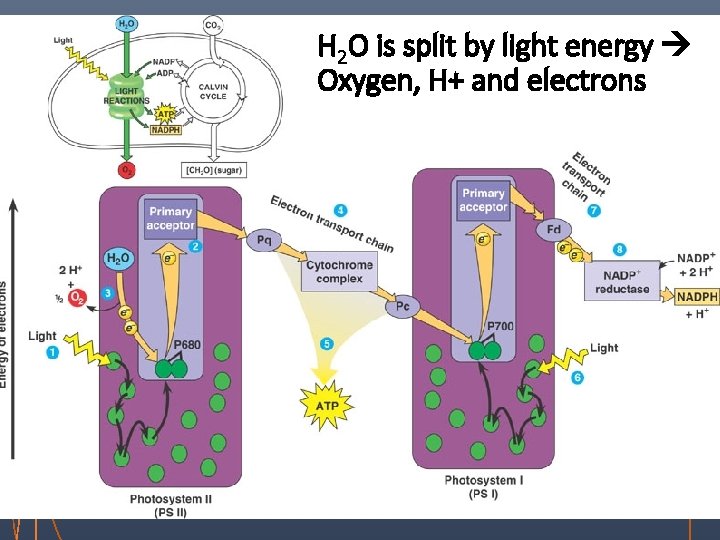
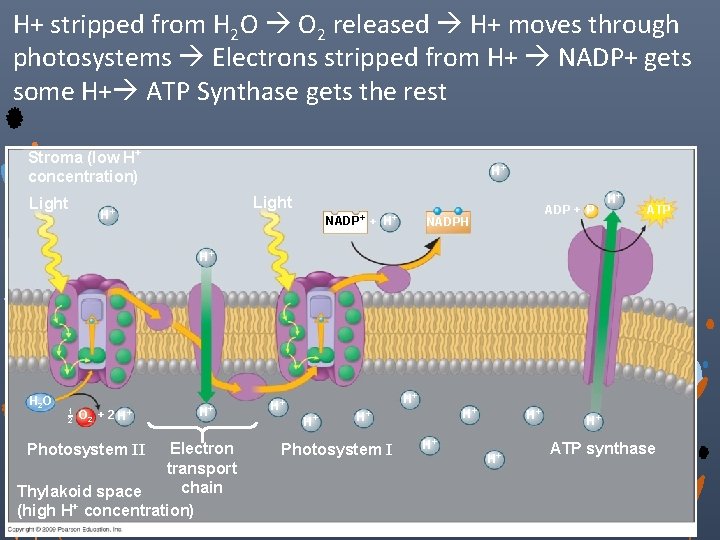
H 2 O is split by light energy Oxygen, H+ and electrons
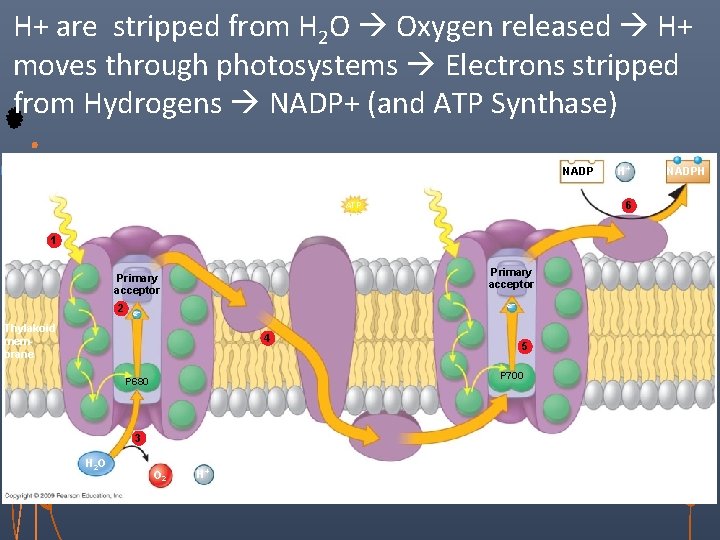
H+ are stripped from H 2 O Oxygen released H+ moves through photosystems Electrons stripped from Hydrogens NADP+ (and ATP Synthase) Photon Photosystem II Stroma Electron transport chain Provides energy for synthesis of ATP by chemiosmosis NADP+ + H+ Photon Photosystem I 1 Primary acceptor 2 e– e– Thylakoid membrane 4 P 700 P 680 Thylakoid space 3 H 2 O 1 2 5 O 2 + 2 H+ 6 NADPH
H+ stripped from H 2 O O 2 released H+ moves through photosystems Electrons stripped from H+ NADP+ gets some H+ ATP Synthase gets the rest Stroma (low H+ concentration) Light H+ NADP+ + H+ ADP + P NADPH H+ ATP H+ H 2 O 1 2 O 2 + 2 H+ H+ Electron transport chain Thylakoid space (high H+ concentration) Photosystem II H+ H+ H+ Photosystem I H+ H+ ATP synthase
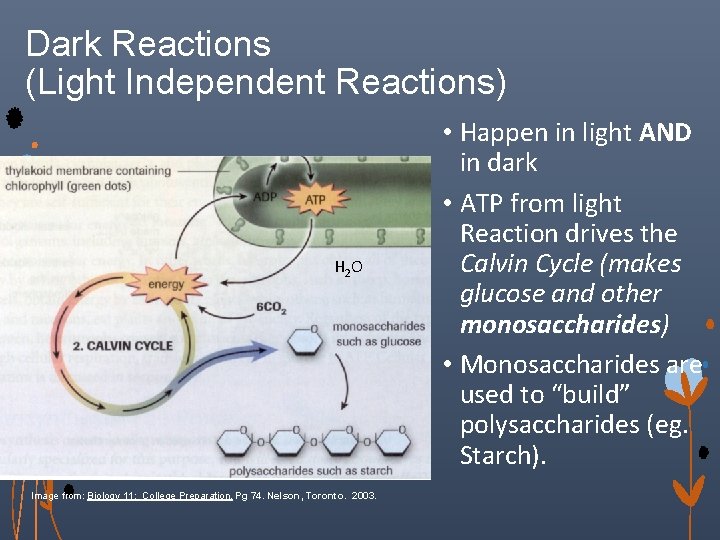
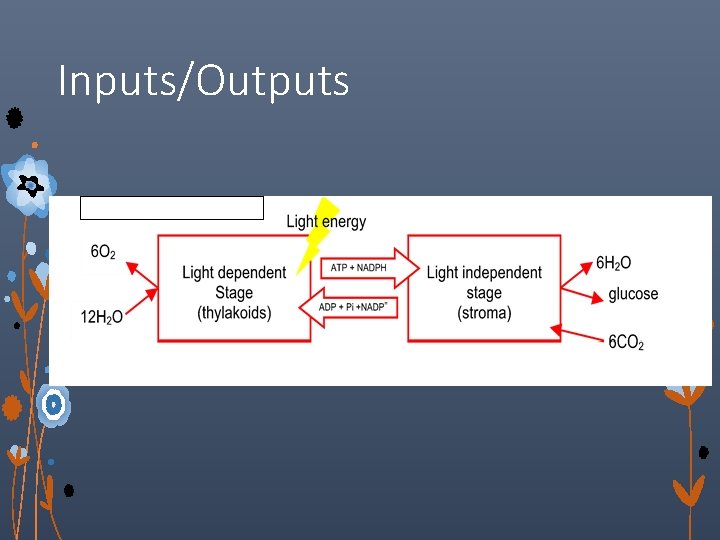
Dark Reactions (Light Independent Reactions) H 2 O Image from: Biology 11: College Preparation. Pg 74. Nelson, Toronto. 2003. • Happen in light AND in dark • ATP from light Reaction drives the Calvin Cycle (makes glucose and other monosaccharides) • Monosaccharides are used to “build” polysaccharides (eg. Starch).
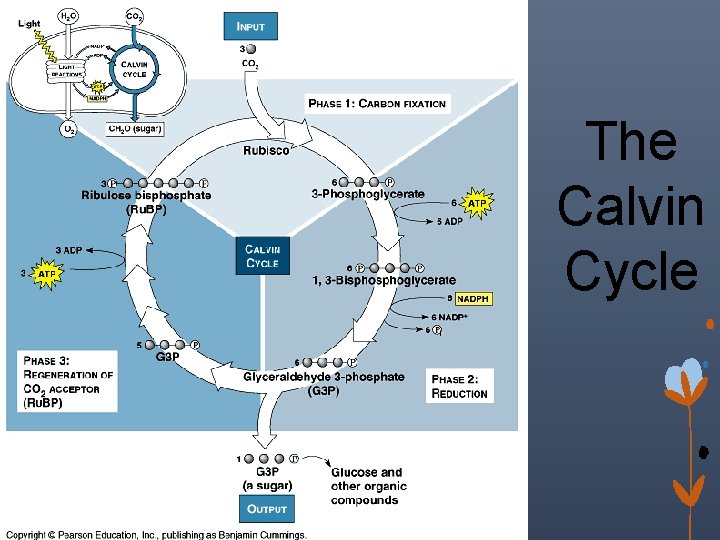
The Calvin Cycle
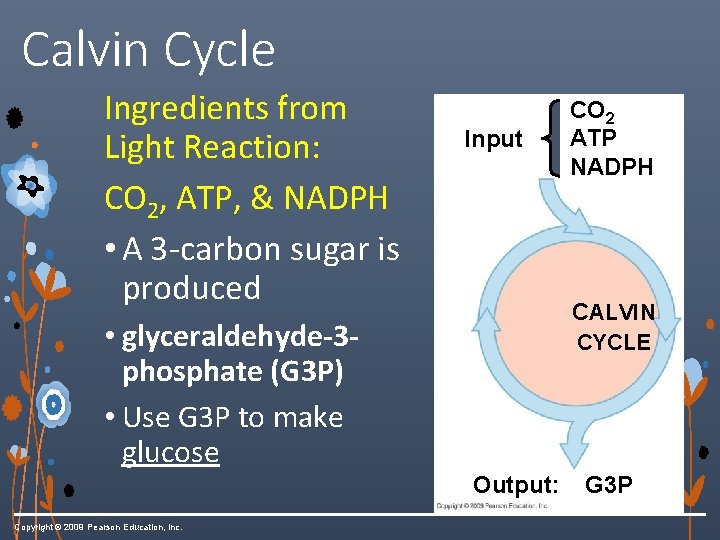
Calvin Cycle Ingredients from Light Reaction: CO 2, ATP, & NADPH • A 3 -carbon sugar is produced Input CALVIN • glyceraldehyde-3 phosphate (G 3 P) • Use G 3 P to make glucose CYCLE Output: Copyright © 2009 Pearson Education, Inc. CO 2 ATP NADPH G 3 P
Inputs/Outputs
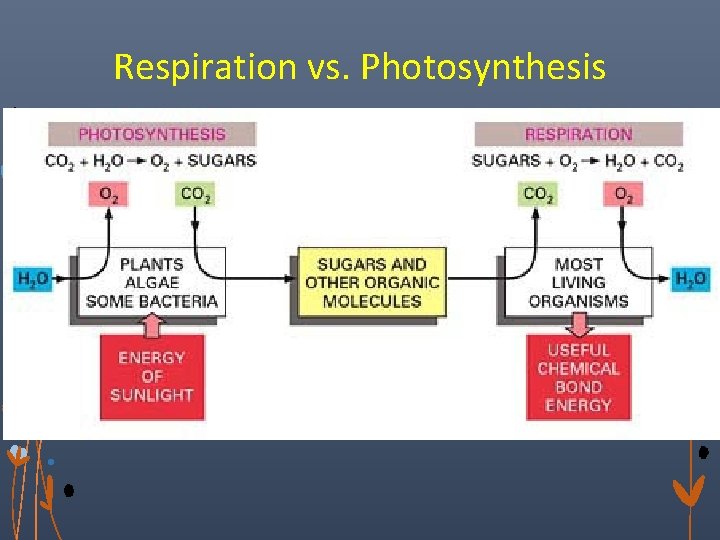
Respiration vs. Photosynthesis