
PHOTOSYNTHESIS PART 1 Light Dependent Reactions LIGHT DEPENDENT
- Slides: 12
PHOTOSYNTHESIS PART 1 Light Dependent Reactions
LIGHT DEPENDENT REACTIONS Light dependent reactions must have light to produce. The first part of photosynthesis is light dependent, while the second part is not.
5 STEPS TO THE LIGHT DEPENDENT REACTION 1. Photosystem II 2. Electron Transport Chain 3. Photosystem I 4. Hydrogen Ion Movement 5. ATP Formation
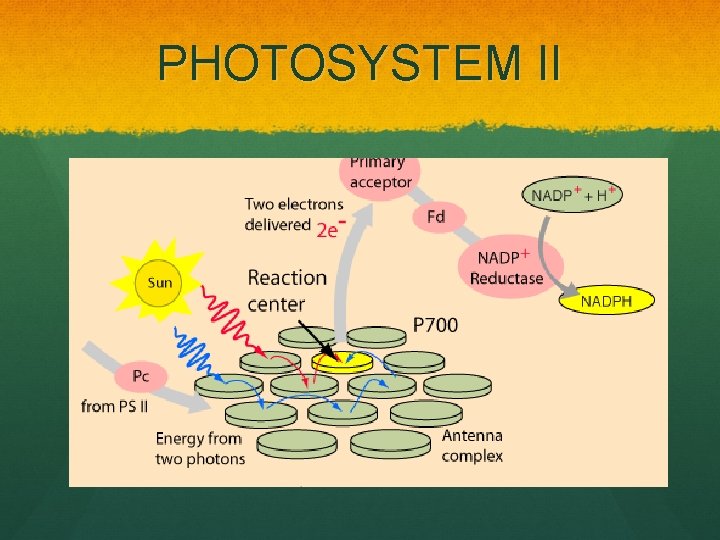
PHOTOSYSTEM II A photosystem is a light collecting unit. In Photosystem II the water molecule is broken down by sunlight. The light excite the hydrogen ions (another words high energy electrons) located inside the water molecule and split it. The chloroplylls electrons become excited as well and leave the molecule. The oxygen molecules are released from the plant.
PHOTOSYSTEM II
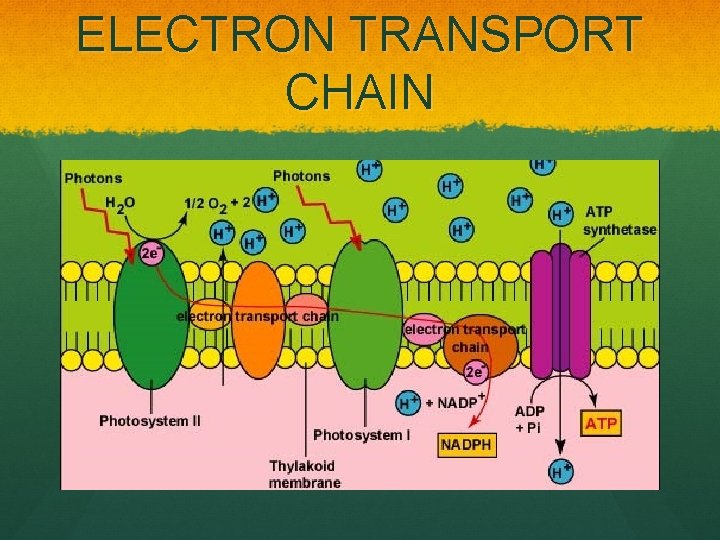
ELECTRON TRANSPORT CHAIN The electrons from Photosystem II are accepted by a molecule in the thylakoid membrane called the primary electron acceptor. The electrons are carried by NADP+ from Photosystem II to Photosystem I and then into the electron transport chain to the ATP Synthase. NADP+ is a high speed electron carrier and stands for Nicotinamide Dinucleotide Phosphate.
ELECTRON TRANSPORT CHAIN
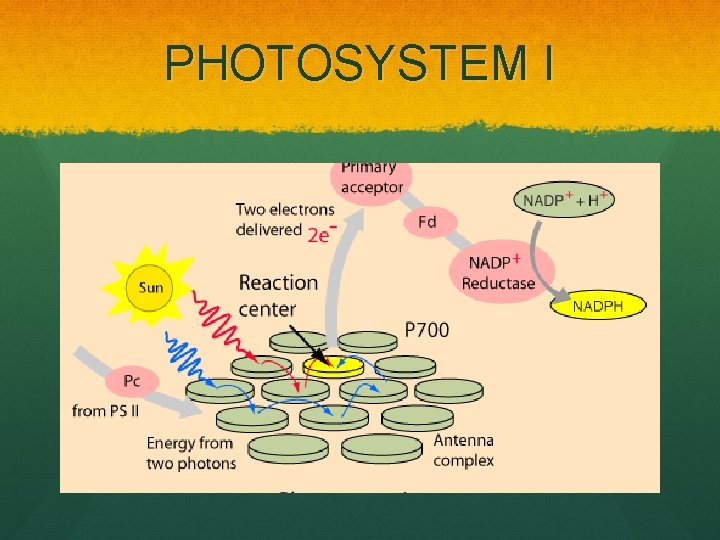
PHOTOSYSTEM I In Photosystem I, the excited electrons from Photosystem II help recharge the units. Water molecule is split and oxygen is sent into the atmosphere. He charged atoms are then sent into the Hydrogen Ion Movement. NADP+ is converted into NADPH
PHOTOSYSTEM I
HYDROGEN ION MOVEMENT NADPH neatly stacks the Hydrogen ions in the Thylakoid membrane preparing them to be pushed into the ATP Synthase.
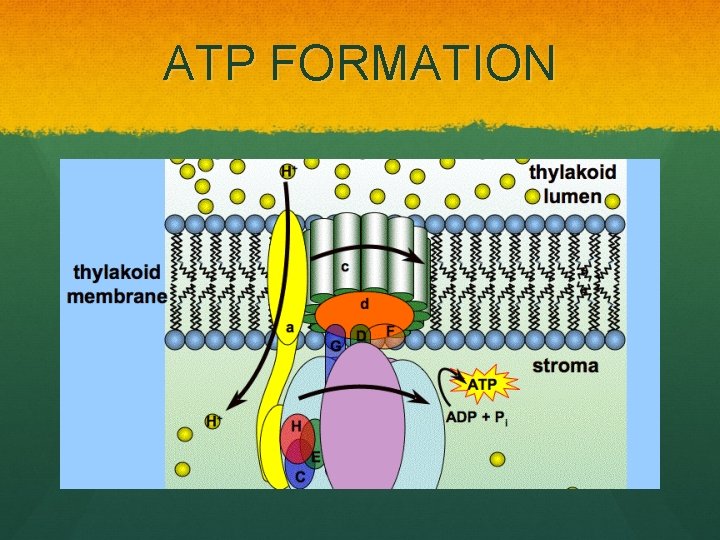
ATP FORMATION ADP in converted into ATP by the hydrogen ions in the ATP Synthase. This process is known as Chemiosmosis. The ATP Synthase is a ball-like structure located inside thylakoid that takes ADP and adds a phosphate group to it to become ATP stands for Adenosine Triphosphate and ADP stand for Adenosine Diphosphate.
ATP FORMATION