
PHOTOSYNTHESIS or Autotrophic Nutrition PHOTOSYNTHESIS PHOTOSYNTHESIS What does
- Slides: 37
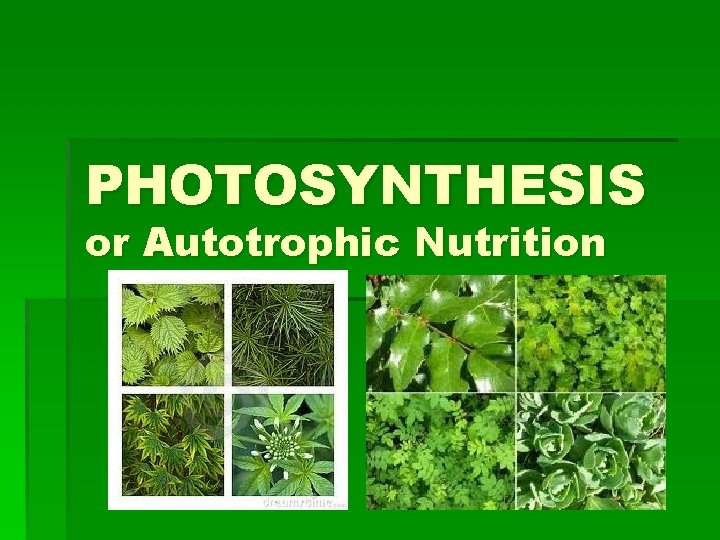
PHOTOSYNTHESIS or Autotrophic Nutrition
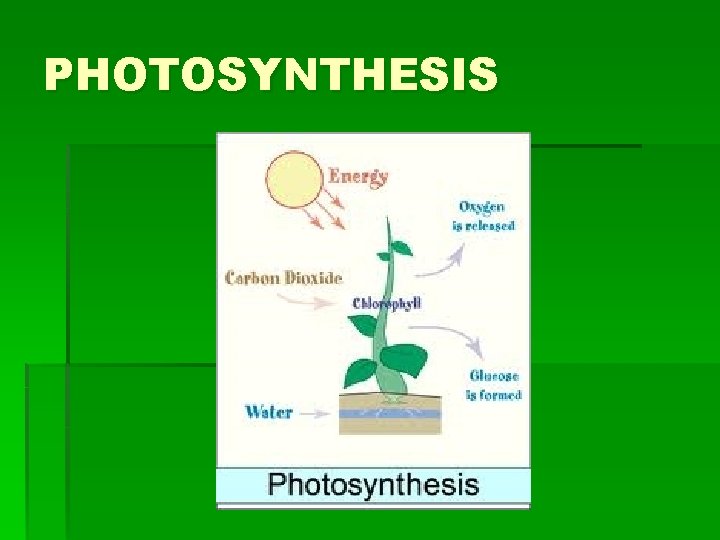
PHOTOSYNTHESIS
PHOTOSYNTHESIS § What does a plant need to survive? § _________________ § Which of the above is organic? ______
PHOTOSYNTHESIS § Photosynthesis is the process by which plants convert inorganic molecules into organic molecules. § Photosynthesis is the process by which plants convert light energy into chemical bond energy. § Photosynthesis is the process by which plants convert sunlight into glucose.
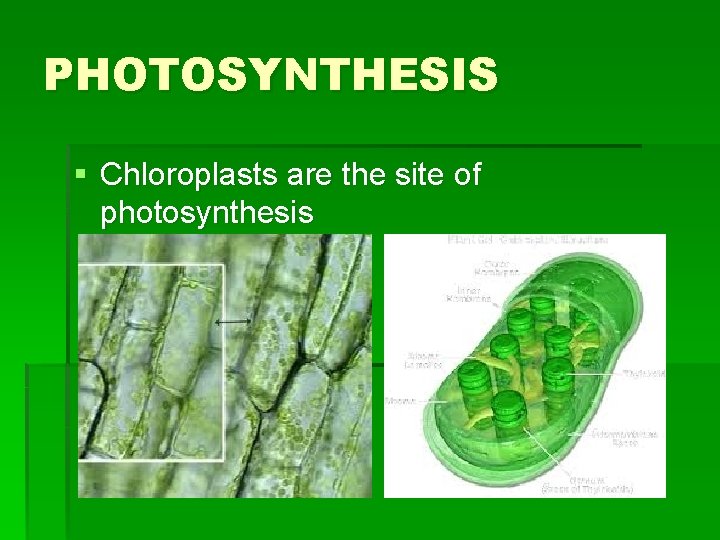
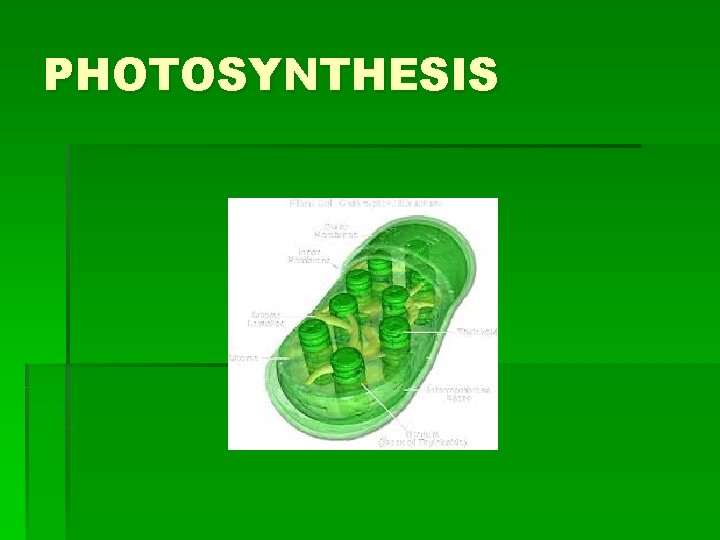
PHOTOSYNTHESIS § Chloroplasts are the site of photosynthesis
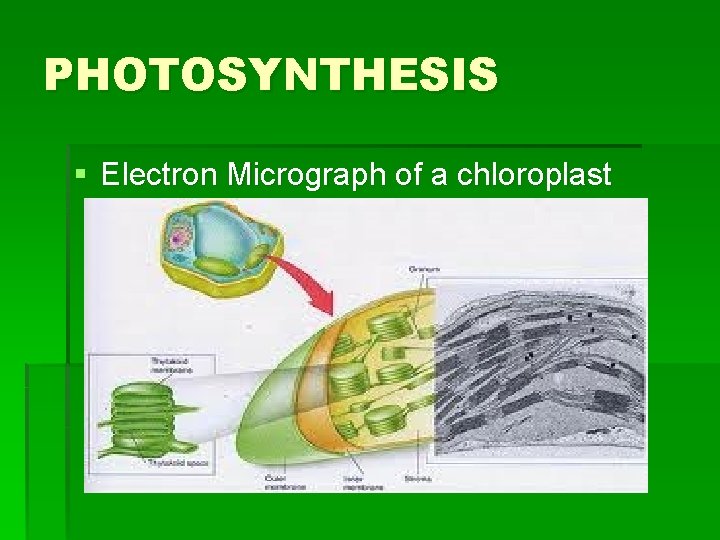
PHOTOSYNTHESIS § Electron Micrograph of a chloroplast
PHOTOSYNTHESIS
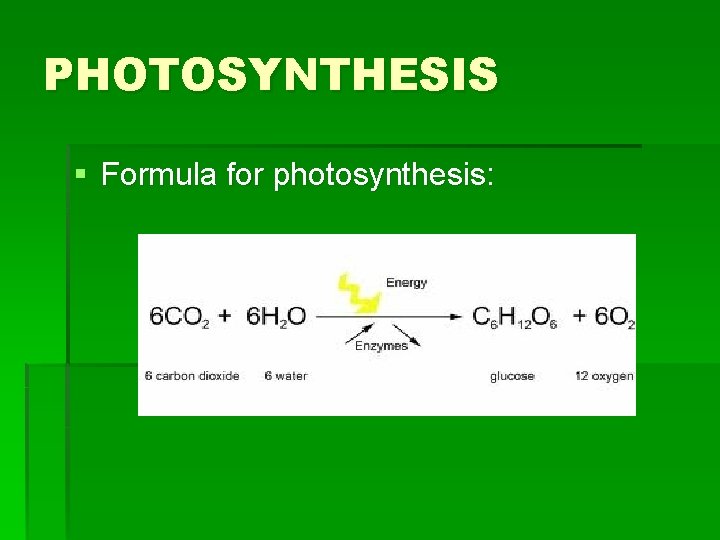
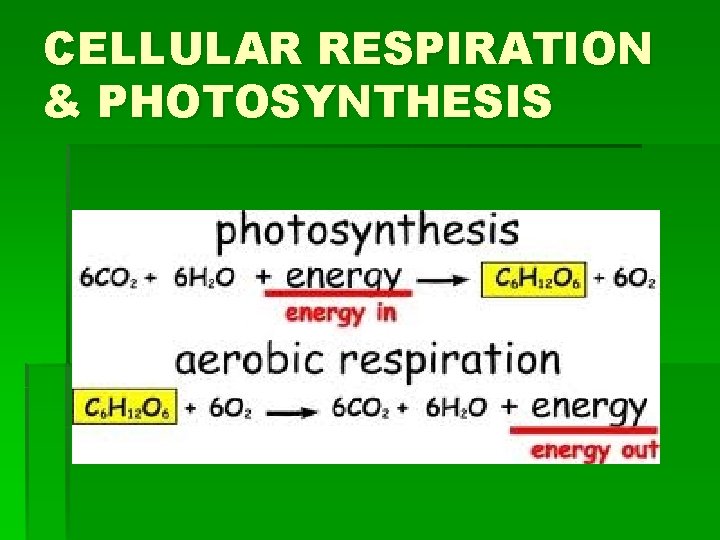
PHOTOSYNTHESIS § Formula for photosynthesis:
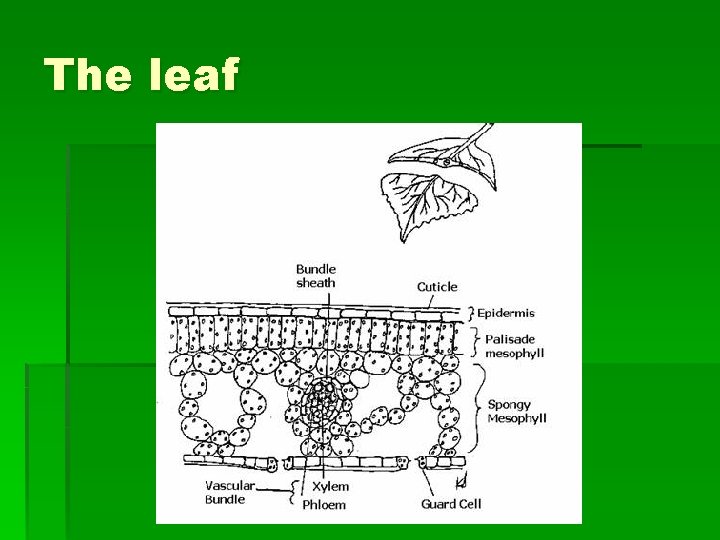
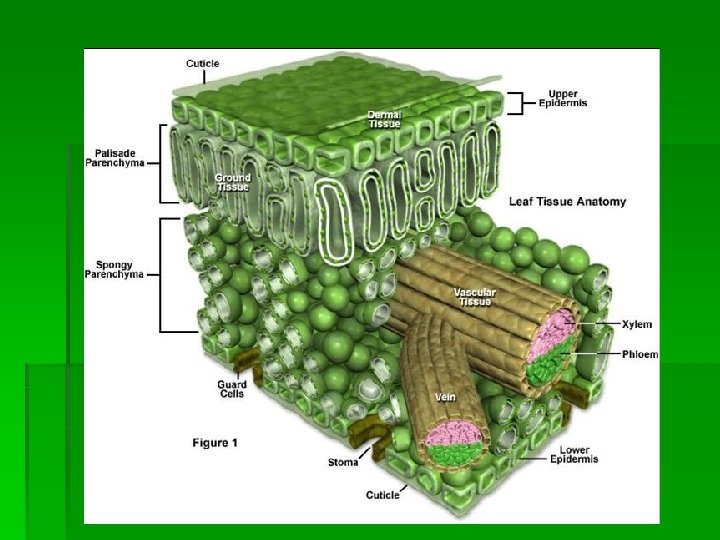
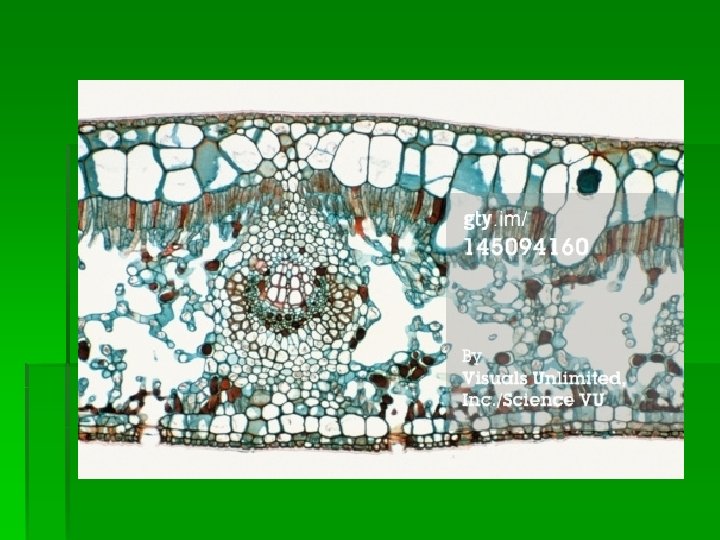
The leaf
PHOTOSYNTHESIS
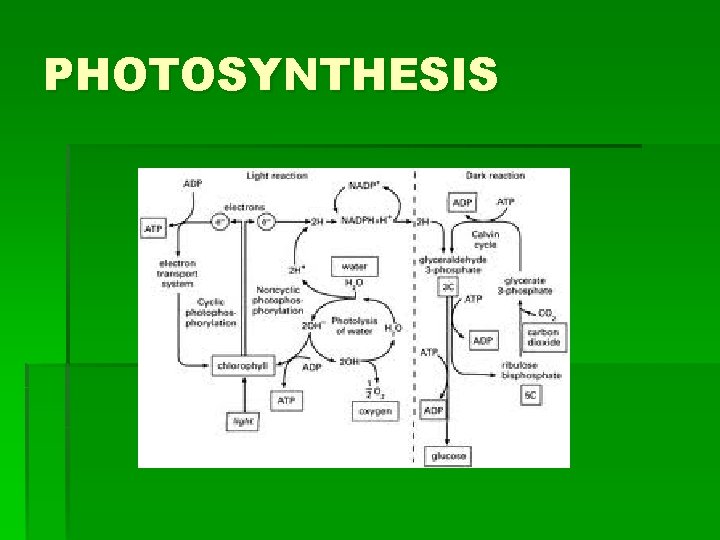
PHOTOSYNTHESIS § Occurs in two phases: § Light Phase § Occurs in the GRANA in the chloroplasts § Dark Phase § Occurs in the STROMA in the chloroplasts
Light Phase/Reaction § Occurs only in the presence of light § Also called Photolysis § Sunlight splits water into hydrogen and oxygen § Also called Light Dependent Reaction
Light Phase/Reaction § Drawing of Photolysis:
Dark Phase/Reaction § In order for the DARK PHASE to occur, HYDROGEN has to be carried from the LIGHT PHASE to the DARK PHASE. § This carrier molecule is called NADP. § When NADP is carrying hydrogen, it is NADPH.
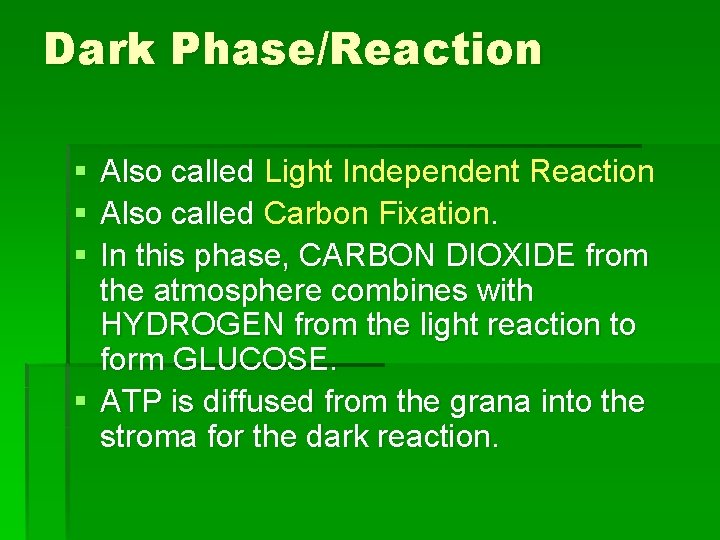
Dark Phase/Reaction § § § Also called Light Independent Reaction Also called Carbon Fixation. In this phase, CARBON DIOXIDE from the atmosphere combines with HYDROGEN from the light reaction to form GLUCOSE. § ATP is diffused from the grana into the stroma for the dark reaction.
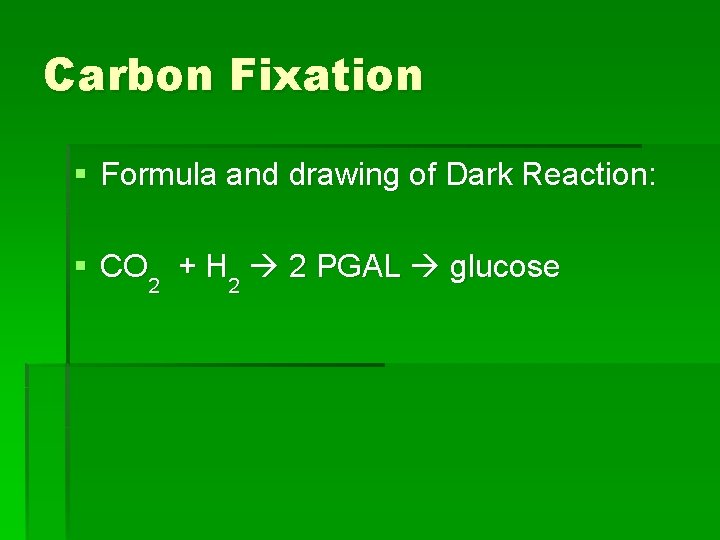
Carbon Fixation § Formula and drawing of Dark Reaction: § CO 2 + H 2 2 PGAL glucose
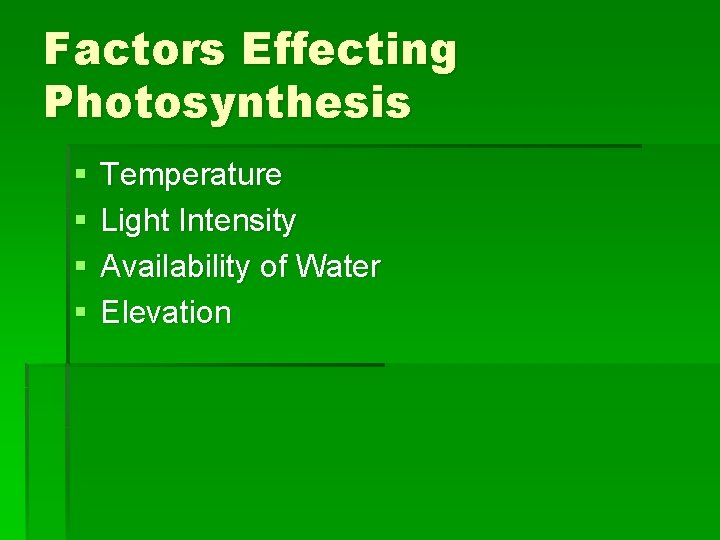
Factors Effecting Photosynthesis § § Temperature Light Intensity Availability of Water Elevation
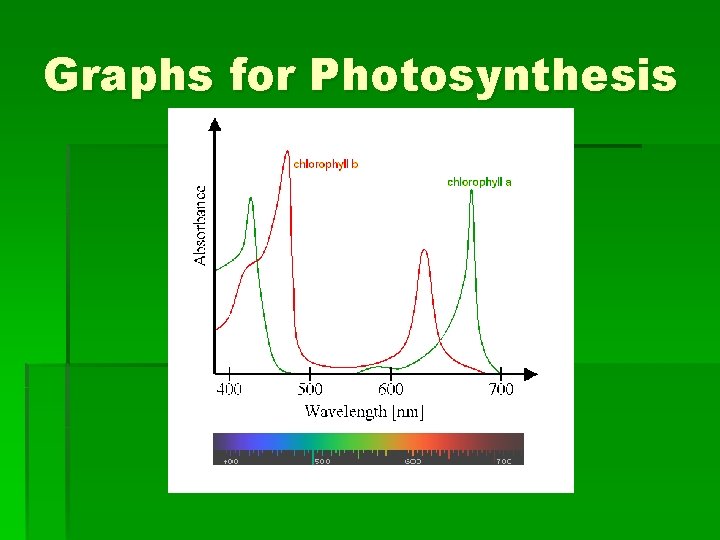
Graphs for Photosynthesis
CELLULAR RESPIRATION § Occurs in plants AND animals. § Occurs in the MITOCHONDRIA and CYTOPLASM.
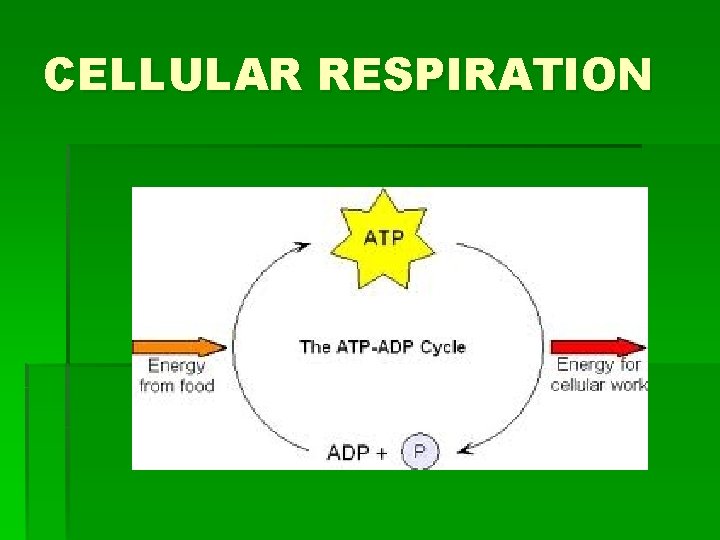
CELLULAR RESPIRATION § The process by which energy in food molecules (glucose) is converted to a form that can be used by the cells (ATP). § Can be AEROBIC (uses O 2) or ANAEROBIC (does NOT use O 2)
CELL RESPIRATION § Picture
CELLULAR RESPIRATION § ATP § Adenosine Tri-Phosphate = ENERGY § Comes from chemical bonds breaking § The more bonds broken, the more energy made. § Energy is stored in high energy phosphate bonds.
CELLULAR RESPIRATION
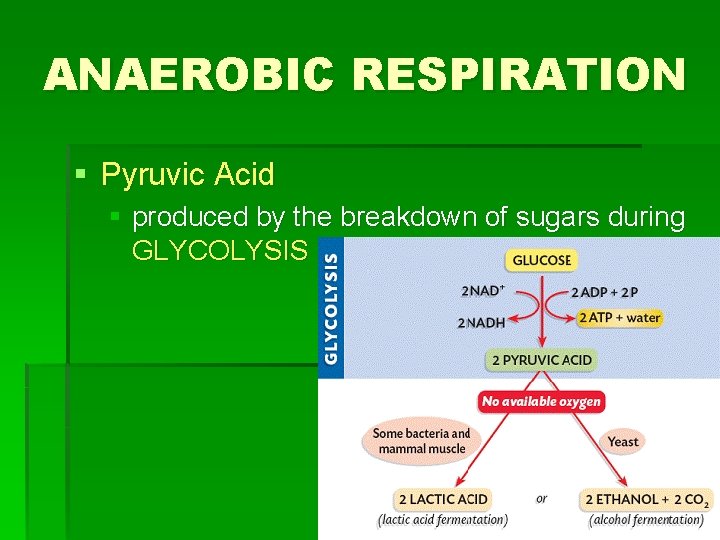
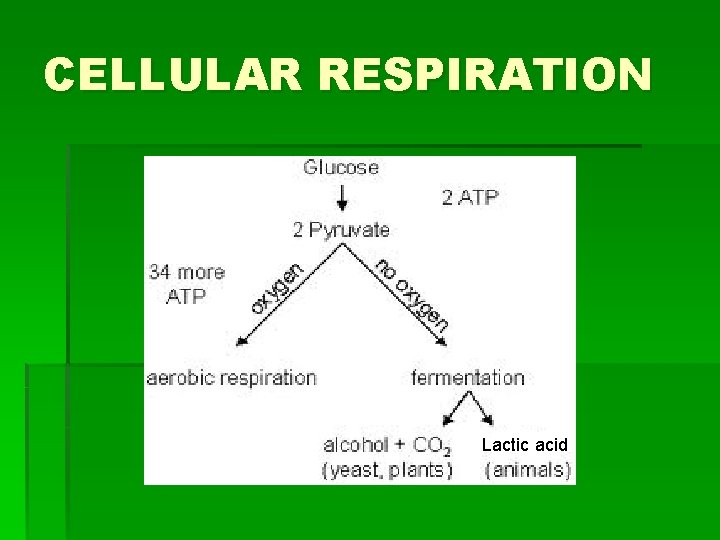
ANAEROBIC RESPIRATION § § § Occurs in the CYTOPLASM Makes energy WITHOUT using oxygen. Glucose is partially broken down. Also called GLYCOLYSIS or FERMENTATION. Produces: § Ethyl Alcohol ( in yeast) § Lactic Acid (in bacteria or human muscle cells).
ANAEROBIC RESPIRATION § Pyruvic Acid § produced by the breakdown of sugars during GLYCOLYSIS
ANAEROBIC RESPIRATION § Formula
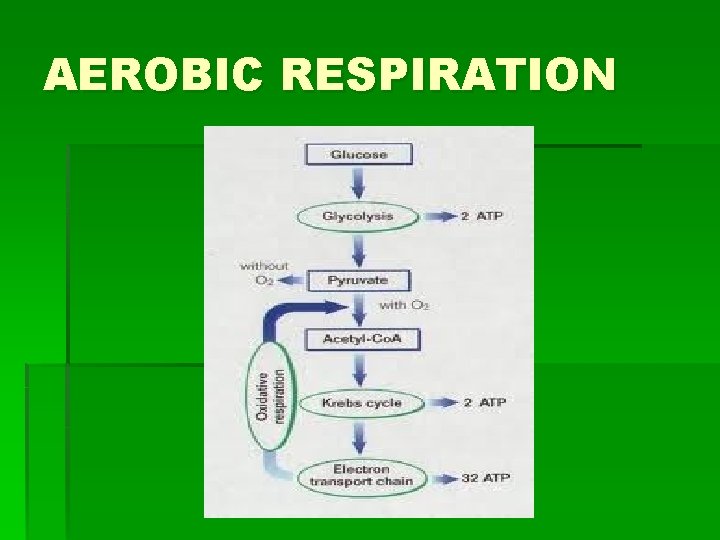
AEROBIC RESPIRATION § § § Making ATP USING oxygen. Occurs in the MITOCHONDRIA More energy efficient than anaerobic respiration (releases more energy). § Bonds in glucose are completely broken down.
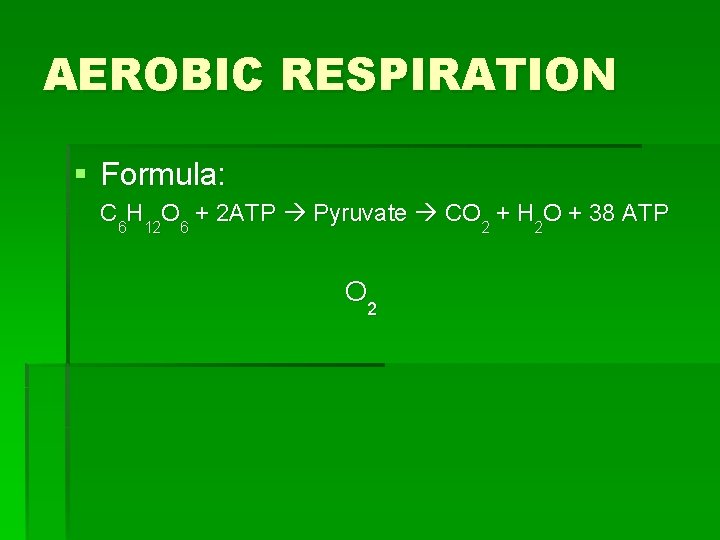
AEROBIC RESPIRATION § Formula: C 6 H 12 O 6 + 2 ATP Pyruvate CO 2 + H 2 O + 38 ATP O 2
Steps of Aerobic Respiration 1. Glycolysis (Anaerobic Respiration) • Makes pyruvic acid, which is then broken down • Produces 4 ATP (gross)
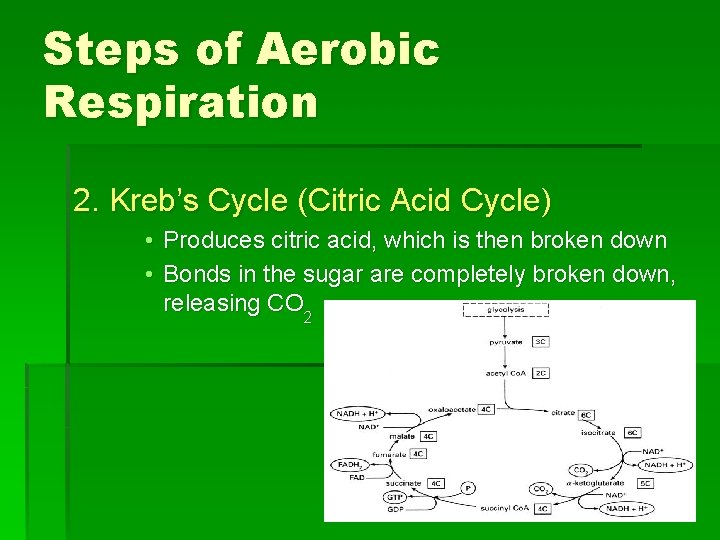
Steps of Aerobic Respiration 2. Kreb’s Cycle (Citric Acid Cycle) • Produces citric acid, which is then broken down • Bonds in the sugar are completely broken down, releasing CO 2
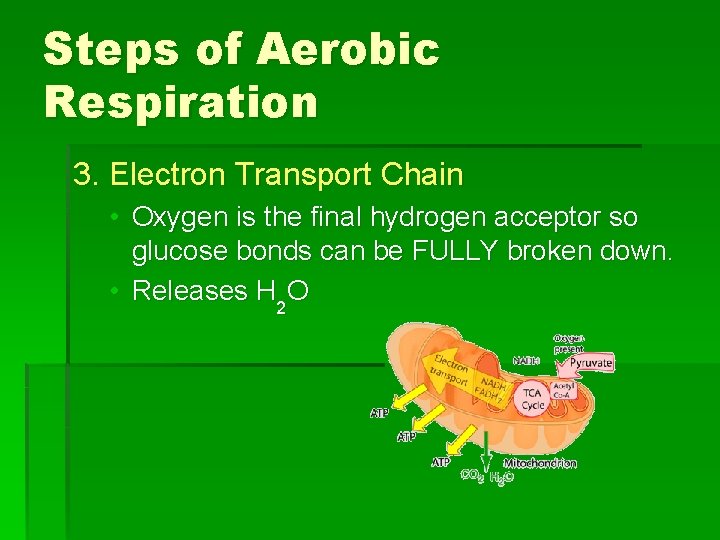
Steps of Aerobic Respiration 3. Electron Transport Chain • Oxygen is the final hydrogen acceptor so glucose bonds can be FULLY broken down. • Releases H 2 O
AEROBIC RESPIRATION
CELLULAR RESPIRATION Lactic acid
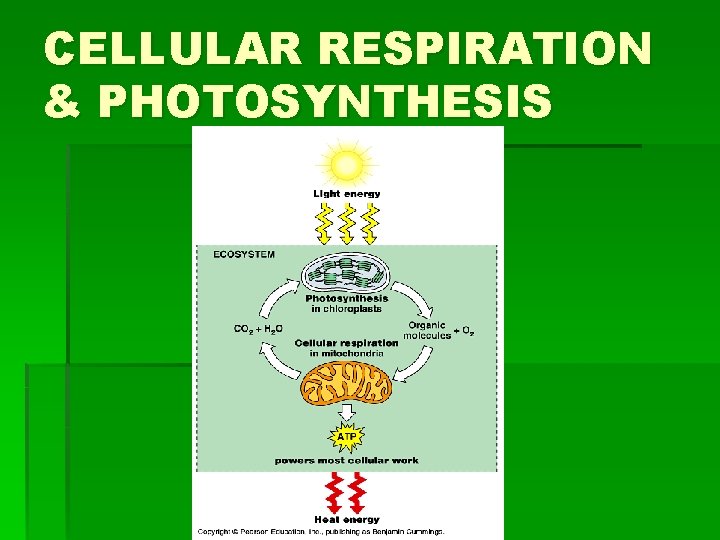
CELLULAR RESPIRATION & PHOTOSYNTHESIS
CELLULAR RESPIRATION & PHOTOSYNTHESIS