
Photosynthesis Objectives 1 PS converts light energy into
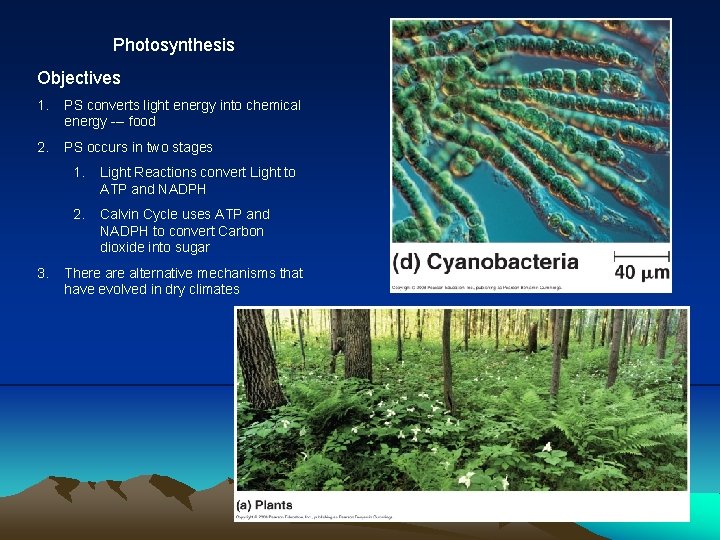
Photosynthesis Objectives 1. PS converts light energy into chemical energy --- food 2. PS occurs in two stages 3. 1. Light Reactions convert Light to ATP and NADPH 2. Calvin Cycle uses ATP and NADPH to convert Carbon dioxide into sugar There alternative mechanisms that have evolved in dry climates
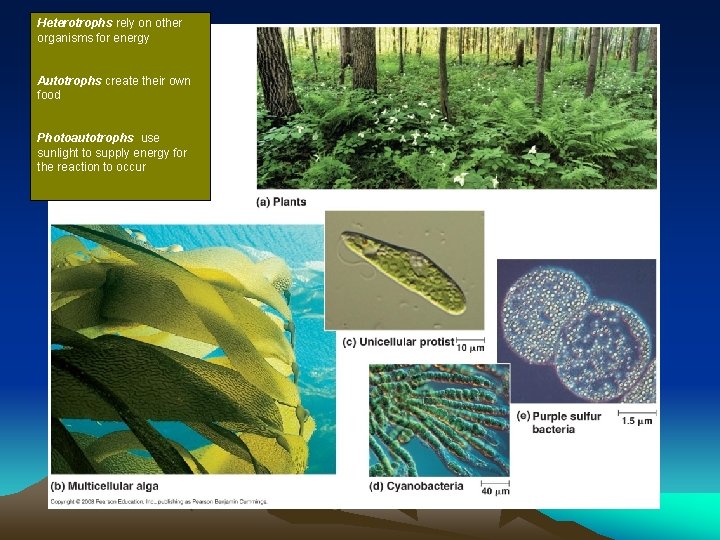
Heterotrophs rely on other organisms for energy Autotrophs create their own food Photoautotrophs use sunlight to supply energy for the reaction to occur
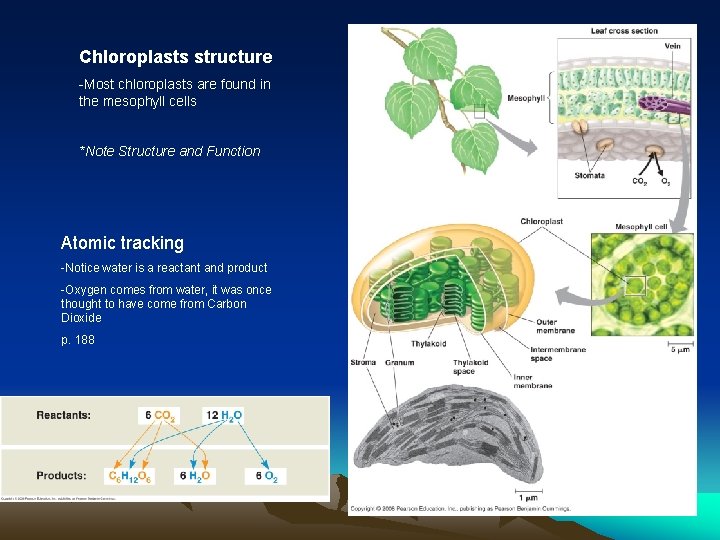
Chloroplasts structure -Most chloroplasts are found in the mesophyll cells *Note Structure and Function Atomic tracking -Notice water is a reactant and product -Oxygen comes from water, it was once thought to have come from Carbon Dioxide p. 188
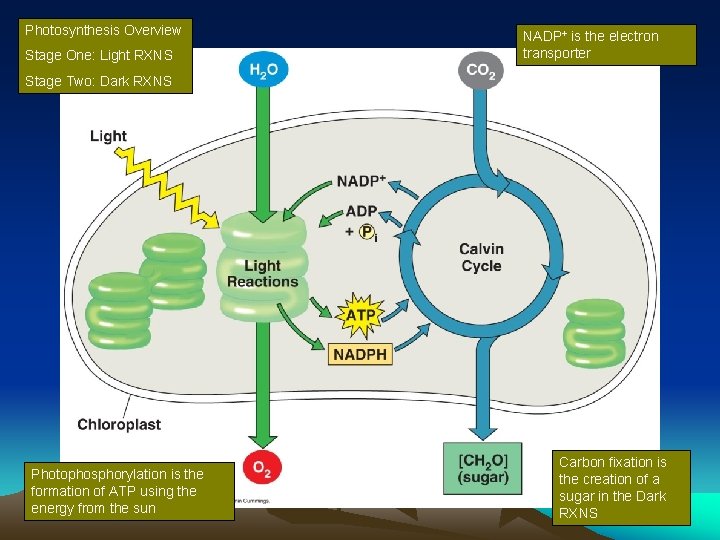
Photosynthesis Overview Stage One: Light RXNS NADP+ is the electron transporter Stage Two: Dark RXNS Photophosphorylation is the formation of ATP using the energy from the sun Carbon fixation is the creation of a sugar in the Dark RXNS
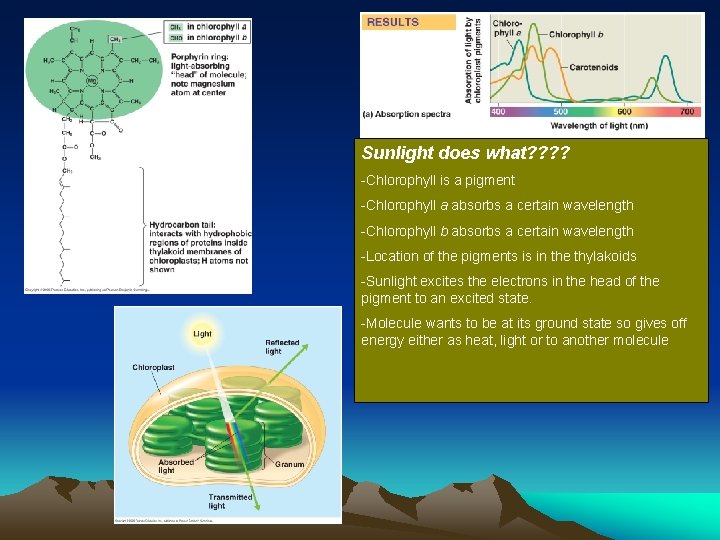
Sunlight does what? ? -Chlorophyll is a pigment -Chlorophyll a absorbs a certain wavelength -Chlorophyll b absorbs a certain wavelength -Location of the pigments is in the thylakoids -Sunlight excites the electrons in the head of the pigment to an excited state. -Molecule wants to be at its ground state so gives off energy either as heat, light or to another molecule
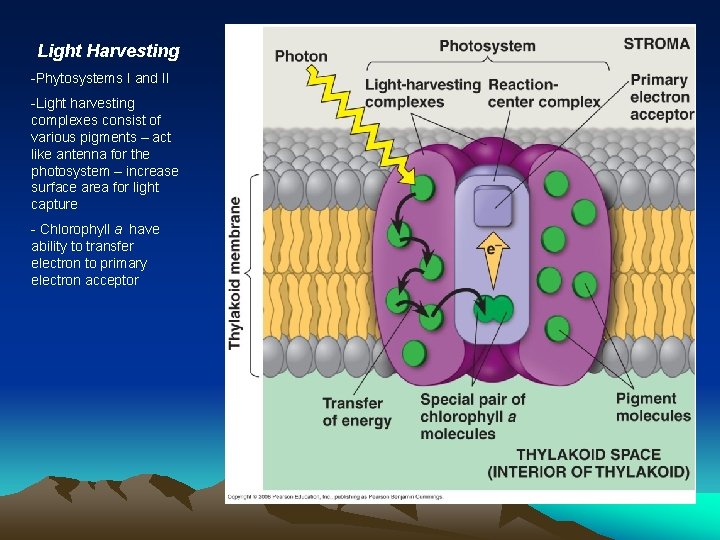
Light Harvesting -Phytosystems I and II -Light harvesting complexes consist of various pigments – act like antenna for the photosystem – increase surface area for light capture - Chlorophyll a have ability to transfer electron to primary electron acceptor
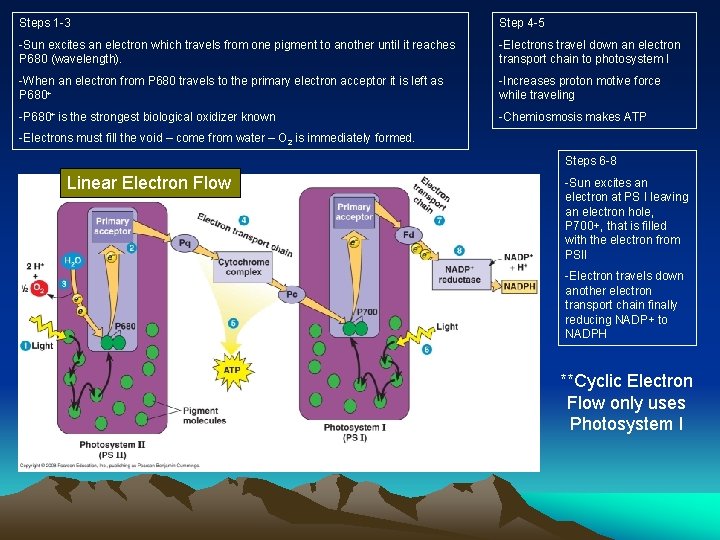
Steps 1 -3 Step 4 -5 -Sun excites an electron which travels from one pigment to another until it reaches P 680 (wavelength). -Electrons travel down an electron transport chain to photosystem I -When an electron from P 680 travels to the primary electron acceptor it is left as P 680+ -Increases proton motive force while traveling -P 680+ is the strongest biological oxidizer known -Chemiosmosis makes ATP -Electrons must fill the void – come from water – O 2 is immediately formed. Steps 6 -8 Linear Electron Flow -Sun excites an electron at PS I leaving an electron hole, P 700+, that is filled with the electron from PSII -Electron travels down another electron transport chain finally reducing NADP+ to NADPH **Cyclic Electron Flow only uses Photosystem I
![Chemiosmosis Comparison -Proton Motive Force Driven -ATP Synthase makes ATP -High [H] in the](http://slidetodoc.com/presentation_image_h2/a65b94acc56838744c83eda9d67ce2b5/image-8.jpg "Chemiosmosis Comparison -Proton Motive Force Driven -ATP Synthase makes ATP -High [H] in the")
Chemiosmosis Comparison -Proton Motive Force Driven -ATP Synthase makes ATP -High [H] in the inner space *ATP produced in the light reactions goes to the dark reactions
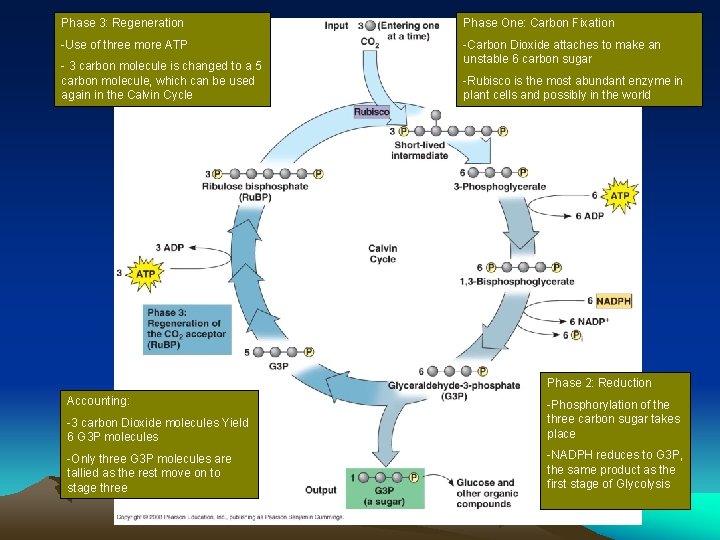
Phase 3: Regeneration Phase One: Carbon Fixation -Use of three more ATP -Carbon Dioxide attaches to make an unstable 6 carbon sugar - 3 carbon molecule is changed to a 5 carbon molecule, which can be used again in the Calvin Cycle -Rubisco is the most abundant enzyme in plant cells and possibly in the world Phase 2: Reduction Accounting: -3 carbon Dioxide molecules Yield 6 G 3 P molecules -Phosphorylation of the three carbon sugar takes place -Only three G 3 P molecules are tallied as the rest move on to stage three -NADPH reduces to G 3 P, the same product as the first stage of Glycolysis
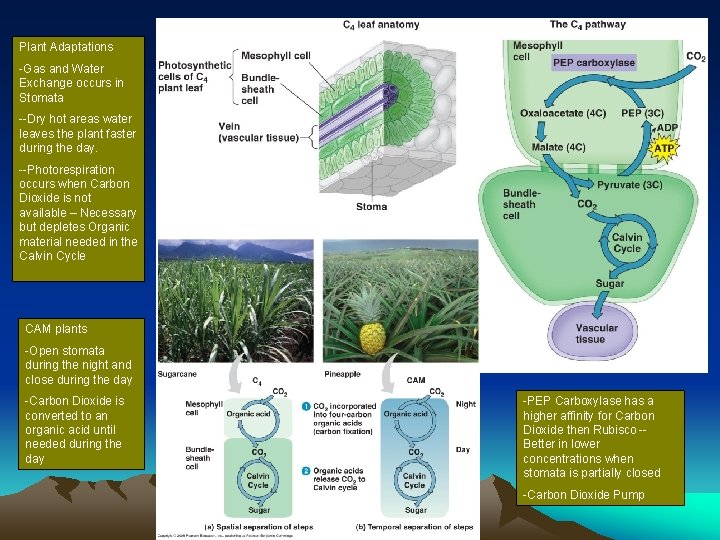
Plant Adaptations -Gas and Water Exchange occurs in Stomata --Dry hot areas water leaves the plant faster during the day. --Photorespiration occurs when Carbon Dioxide is not available – Necessary but depletes Organic material needed in the Calvin Cycle CAM plants -Open stomata during the night and close during the day -Carbon Dioxide is converted to an organic acid until needed during the day -PEP Carboxylase has a higher affinity for Carbon Dioxide then Rubisco -Better in lower concentrations when stomata is partially closed -Carbon Dioxide Pump
- Slides: 10