
Photosynthesis Notes Photosynthesis Process of converting light energy




- Slides: 13
Photosynthesis Notes
Photosynthesis Process of converting light energy to chemical energy (glucose) Solar energy is stored in chemical bonds of food molecules Autotrophs (self producers) use the food they make to fuel their life processes
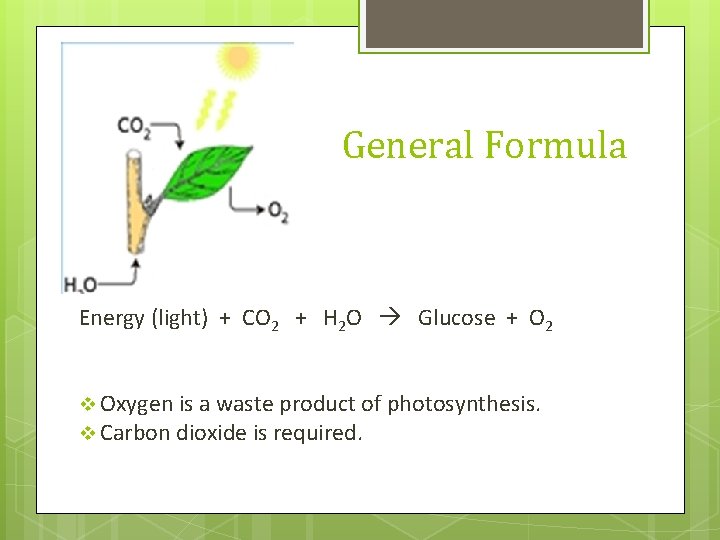
General Formula Energy (light) + CO 2 + H 2 O Glucose + O 2 v Oxygen is a waste product of photosynthesis. v Carbon dioxide is required.
Light: Ultimate source of energy for all living organisms Pigments – absorb light according to wavelength (chlorophyll – absorbs red, blue, orange, violet) Because chlorophyll does not absorb green – it reflects it Plants appear green
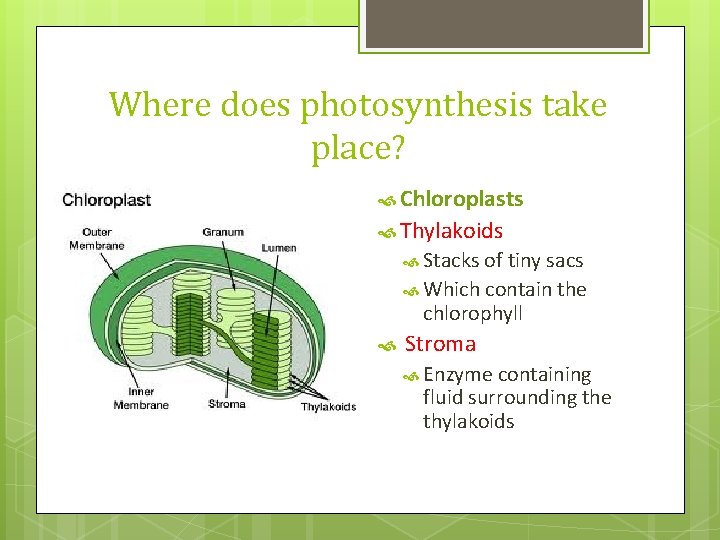
Where does photosynthesis take place? Chloroplasts Thylakoids Stacks of tiny sacs Which contain the chlorophyll Stroma Enzyme containing fluid surrounding the thylakoids
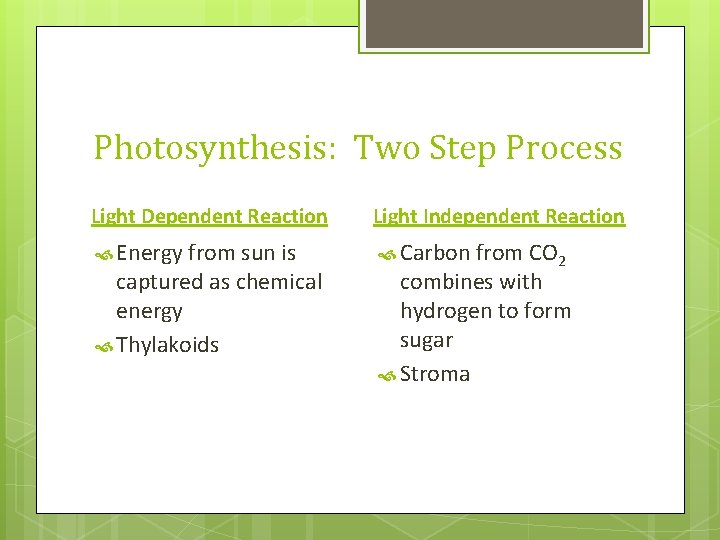
Photosynthesis: Two Step Process Light Dependent Reaction Light Independent Reaction Energy from sun is Carbon from CO 2 captured as chemical energy Thylakoids combines with hydrogen to form sugar Stroma
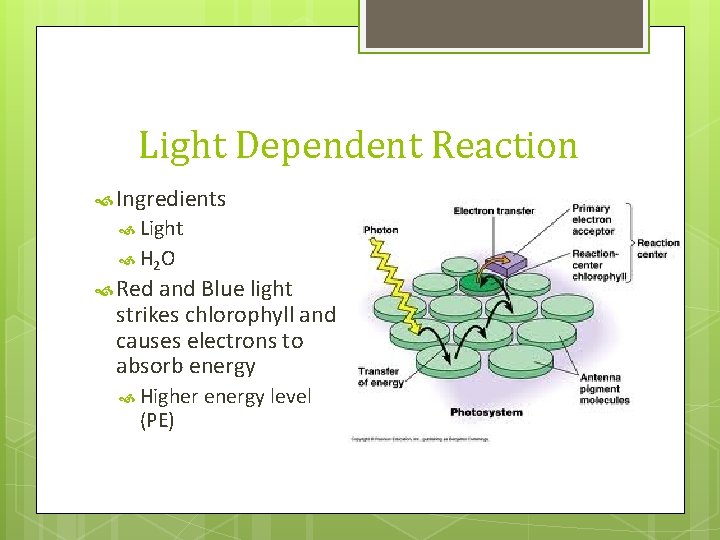
Light Dependent Reaction Ingredients Light H 2 O Red and Blue light strikes chlorophyll and causes electrons to absorb energy Higher energy level (PE)
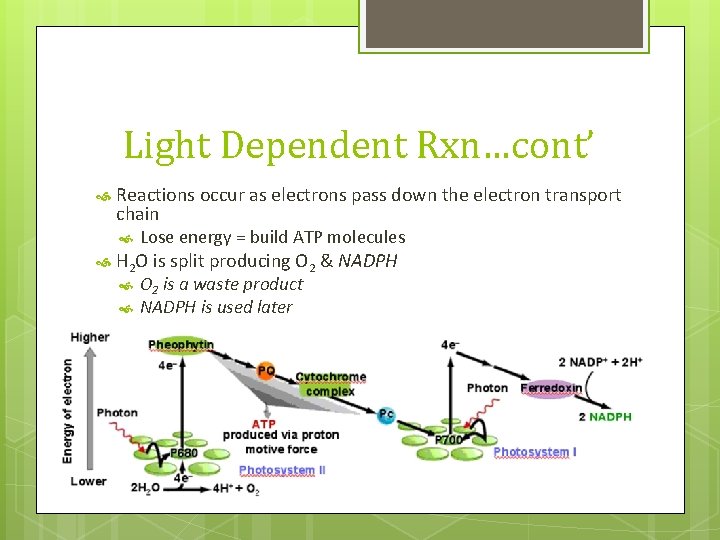
Light Dependent Rxn…cont’ Reactions occur as electrons pass down the electron transport chain Lose energy = build ATP molecules H 2 O is split producing O 2 & NADPH O 2 is a waste product NADPH is used later
Light Dependent Reaction: Where do we go next? Summary: Utilized light (energy) and H 2 O in order to produce… O 2 – waste product ATP – energy needed later NADPH – H “taxi” needed later Next up…
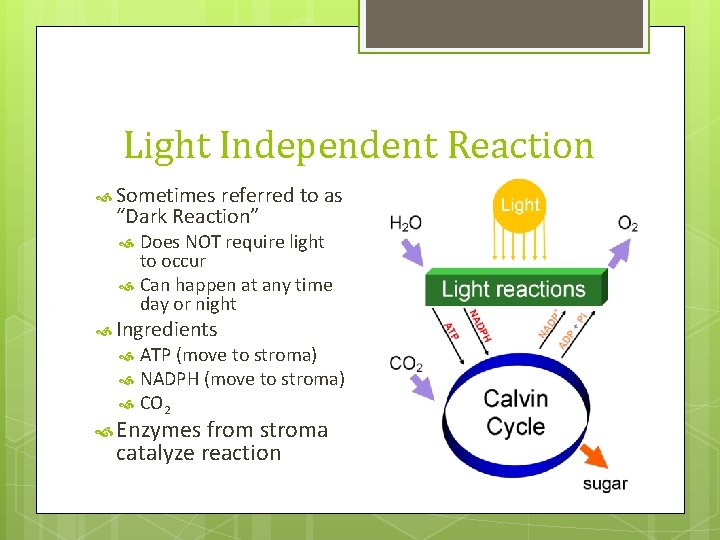
Light Independent Reaction Sometimes referred to as “Dark Reaction” Does NOT require light to occur Can happen at any time day or night Ingredients ATP (move to stroma) NADPH (move to stroma) CO 2 Enzymes from stroma catalyze reaction
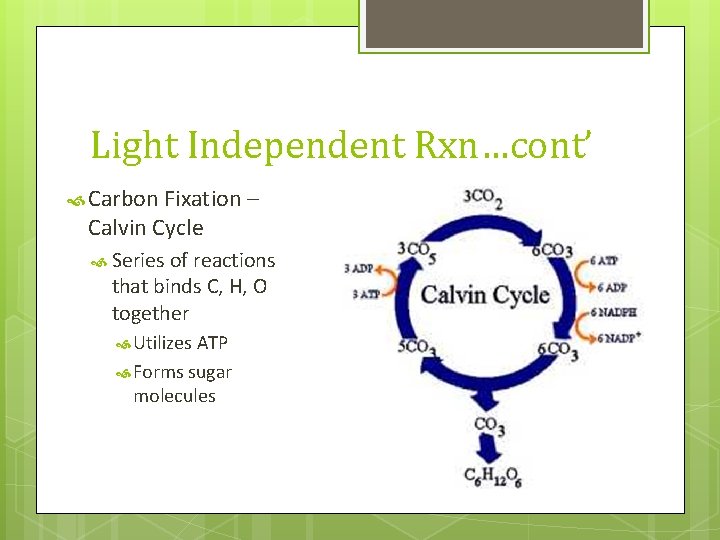
Light Independent Rxn…cont’ Carbon Fixation – Calvin Cycle Series of reactions that binds C, H, O together Utilizes ATP Forms sugar molecules
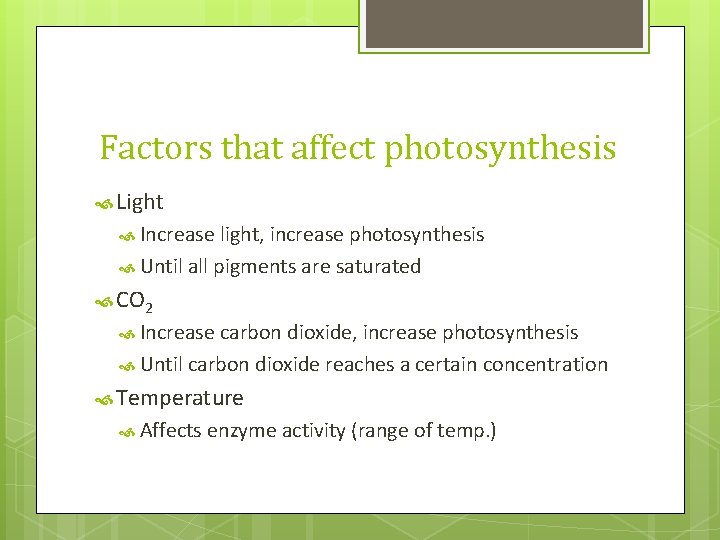
Factors that affect photosynthesis Light Increase light, increase photosynthesis Until all pigments are saturated CO 2 Increase carbon dioxide, increase photosynthesis Until carbon dioxide reaches a certain concentration Temperature Affects enzyme activity (range of temp. )