
PHOTOSYNTHESIS LIGHT REACTIONS Pigments substances that absorb light
PHOTOSYNTHESIS LIGHT REACTIONS

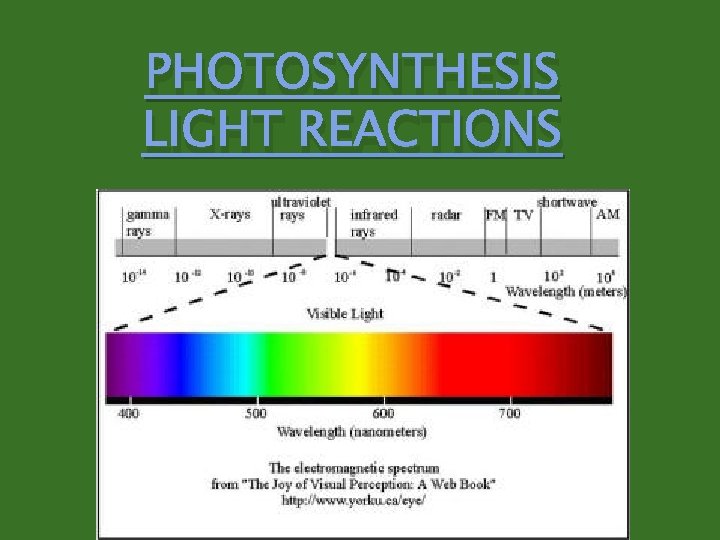
Pigments: substances that absorb light The following pigments help drive the process of photosynthesis due to their absorption of light: Chlorophyll a (reflects blue/green) Chlorophyll b – accessory pigment (reflect yellow/green) Carotenoid- accessory pigment (reflect yellow/orange-protective role)
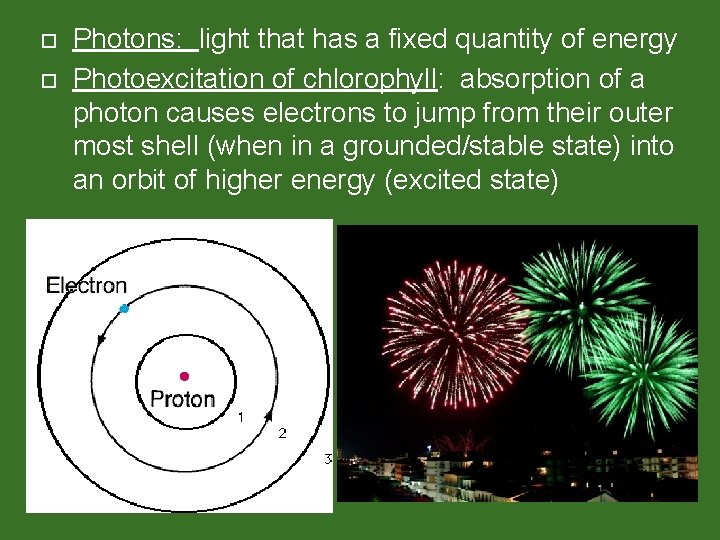
Photons: light that has a fixed quantity of energy Photoexcitation of chlorophyll: absorption of a photon causes electrons to jump from their outer most shell (when in a grounded/stable state) into an orbit of higher energy (excited state)
Photosystems: Light Harvesting Complexes of the Thylakoid Membrane Photosystems: small organic molecules/bundles that contain chlorophyll and proteins - have a light gathering antennae complex which consists of chlorophyll a, chlorophyll b, and carotenoid molecules
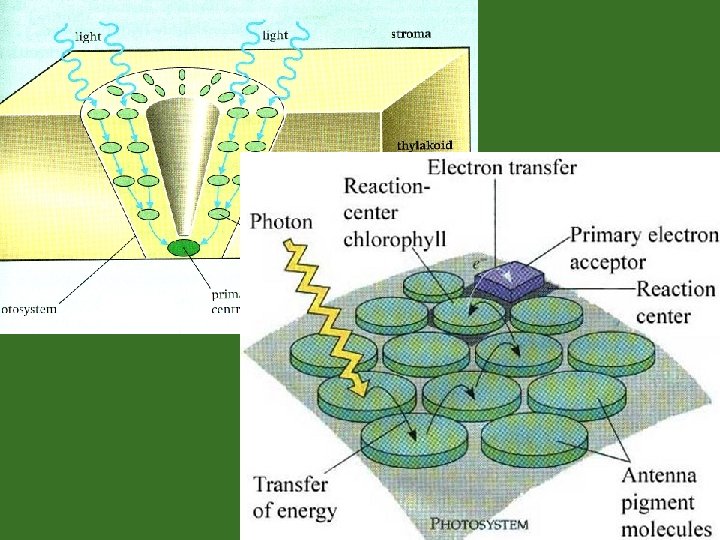
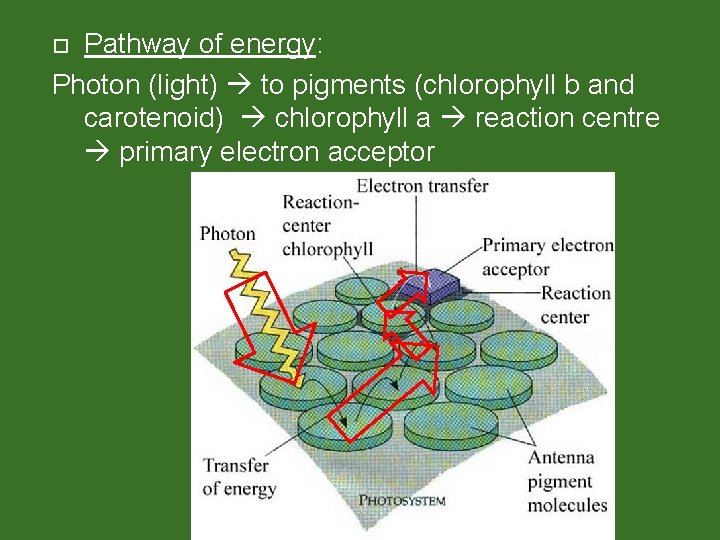
Pathway of energy: Photon (light) to pigments (chlorophyll b and carotenoid) chlorophyll a reaction centre primary electron acceptor
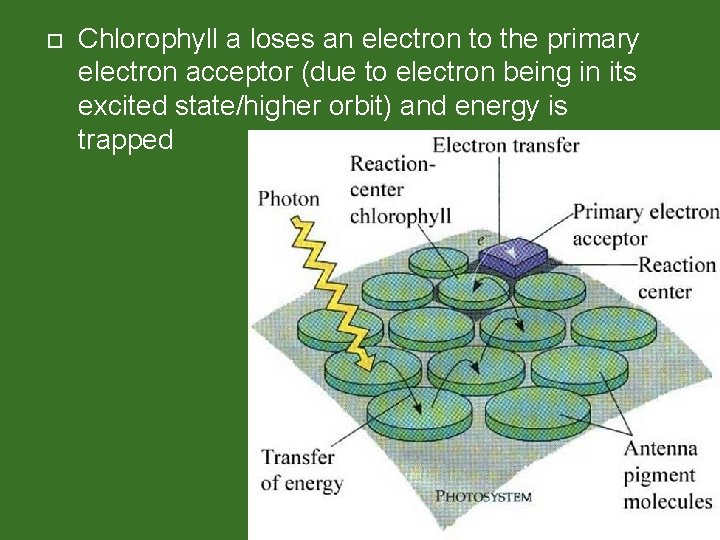
Chlorophyll a loses an electron to the primary electron acceptor (due to electron being in its excited state/higher orbit) and energy is trapped
Thylakoid Membrane has Two Types of Photosystems Photosystem I: reaction centre P 700 (absorbs wavelength 700 nm-red) 2. Photosystem II: reaction centre P 680 (absorbs wavelength 680 nm-red) **P 700 and P 680 are identical chlorophyll a molecules but contain different proteins 1.
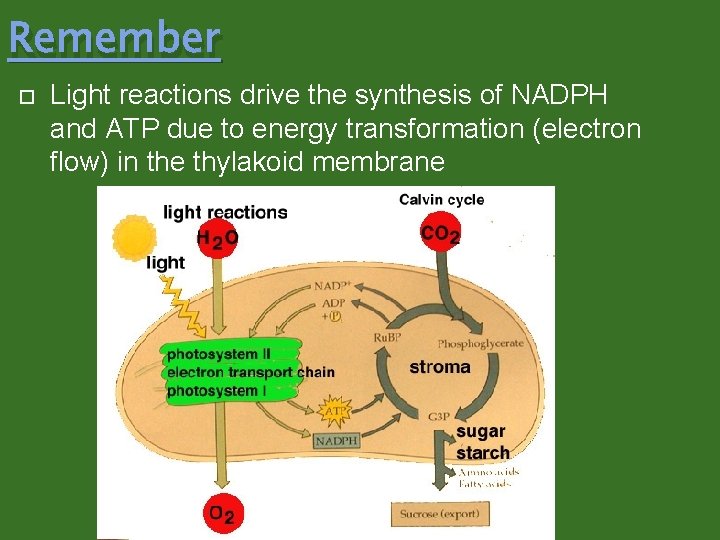
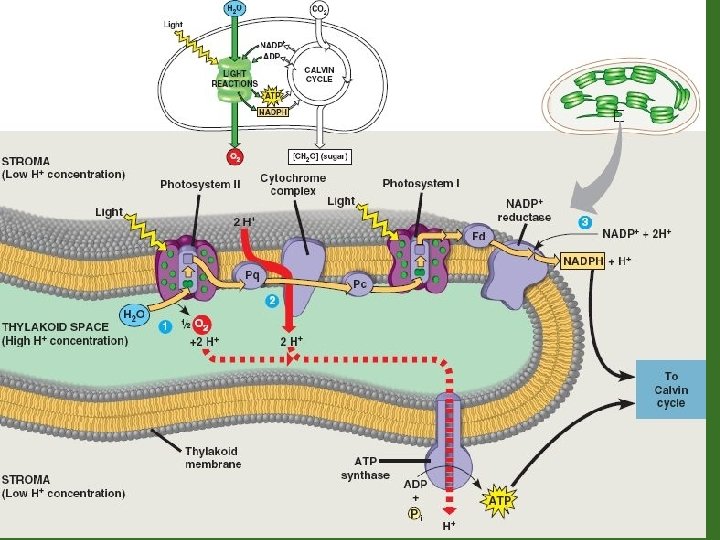
Remember Light reactions drive the synthesis of NADPH and ATP due to energy transformation (electron flow) in the thylakoid membrane
Two Routes Electrons can Flow 2. Cyclic Electron Flow Noncyclic Electron Flow (predominant) Noncyclic Electron Flow: 1. i. ) Photosystem II absorbs light Electron goes into excited state and at the reaction centre chlorophyll P 680 the electron is captured by the primary electron acceptor Chlorophyll P 680 wants an electron back
Enzyme extracts electrons from H 2 O and supplies P 680 electrons ii) iii) iv) This splits H 2 O molecule (2 H+ ions and ½ O O 2) Each photoexcited electron moves from the primary electron acceptor of Photosystem II to Photosystem I via an electron transport chain ATP is synthesized by photophosphorylation (ATP made by light) and chemiosmosis
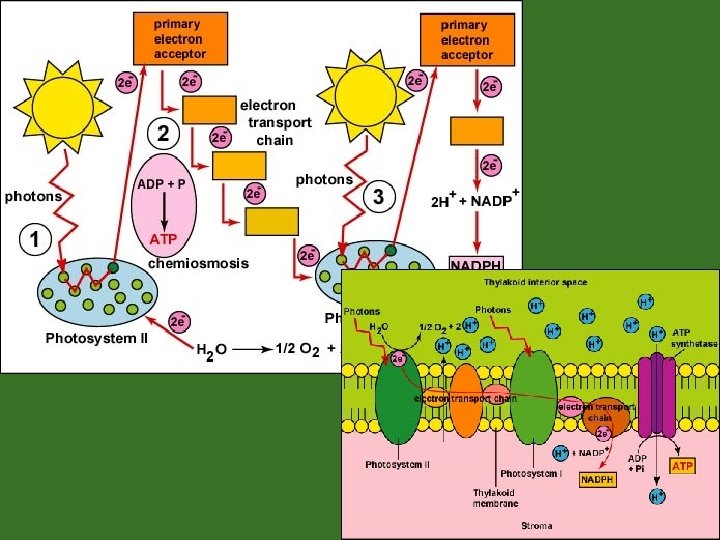

v. ) electrons travel down ETC and fills in the “hole” (missing electron) because the P 700 chlorophyll a was excited from light and lost an electron to primary electron acceptor in Photosystem I

vi. ) primary electron acceptor of Photosystem I passes the photoexcited electrons to a second ETC
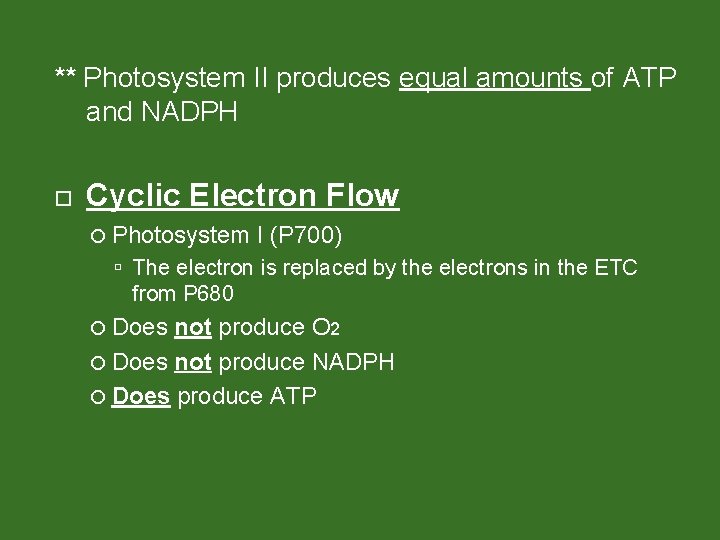
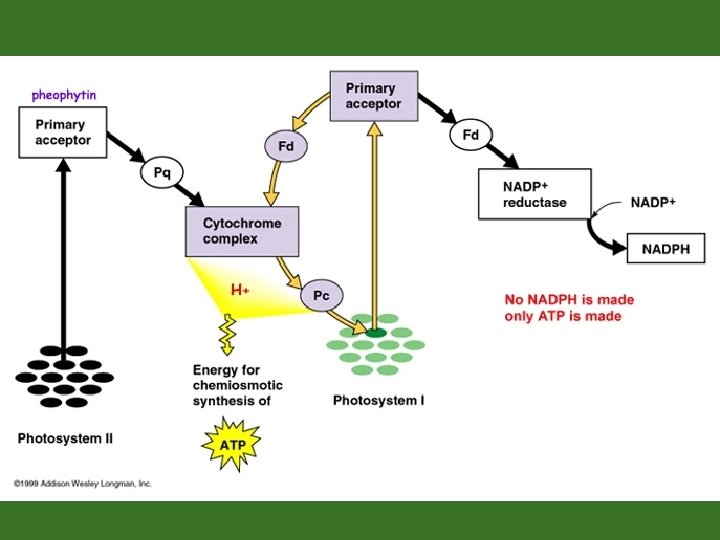
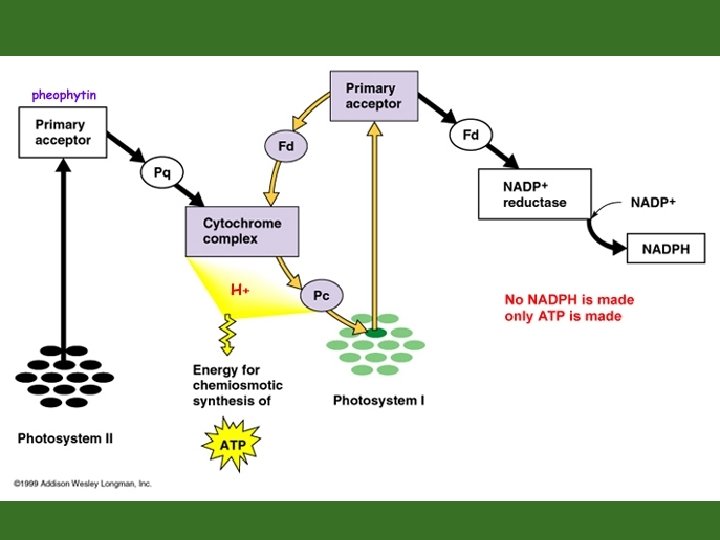
** Photosystem II produces equal amounts of ATP and NADPH Cyclic Electron Flow Photosystem I (P 700) The electron is replaced by the electrons in the ETC from P 680 Does not produce O 2 Does not produce NADPH Does produce ATP

light reaction summary
- Slides: 21