
Photosynthesis Life from Light AP Biology Supporting a
Photosynthesis: Life from Light AP Biology
Supporting a biosphere § On global scale, photosynthesis is the most important process for the continuation of life on Earth each year photosynthesis synthesizes 160 billion tons of carbohydrate u Heterotrophs are dependent on plants as food source for fuel & raw materials u AP Biology
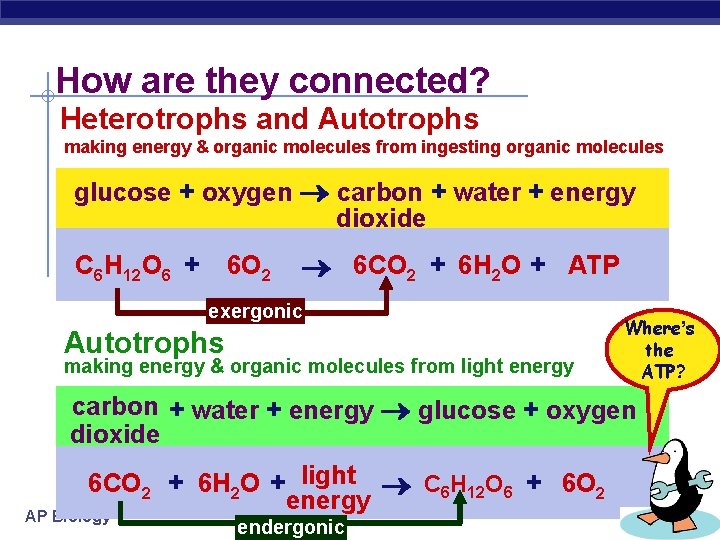
How are they connected? Heterotrophs and Autotrophs making energy & organic molecules from ingesting organic molecules glucose + oxygen carbon + water + energy dioxide C 6 H 12 O 6 + 6 O 2 6 CO 2 + 6 H 2 O + ATP exergonic Autotrophs making energy & organic molecules from light energy Where’s the ATP? carbon + water + energy glucose + oxygen dioxide 6 CO 2 + 6 H 2 O + light C 6 H 12 O 6 + 6 O 2 energy AP Biology endergonic
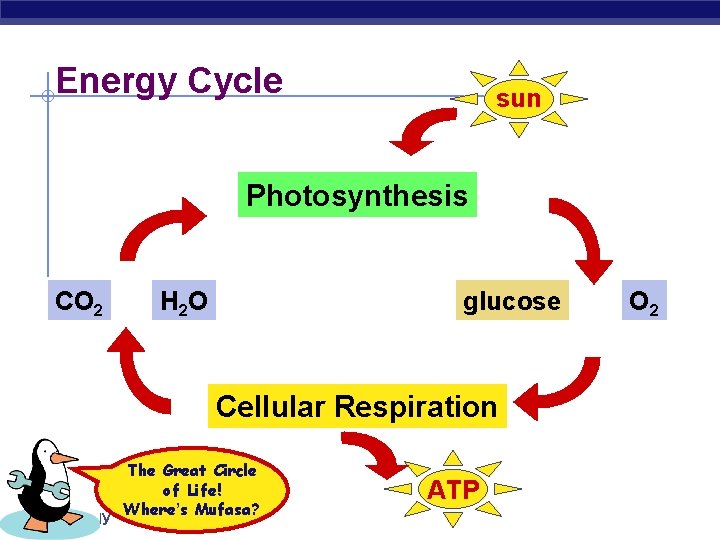
Energy Cycle sun Photosynthesis CO 2 H 2 O glucose Cellular Respiration The Great Circle of Life! AP Biology Where’s Mufasa? ATP O 2
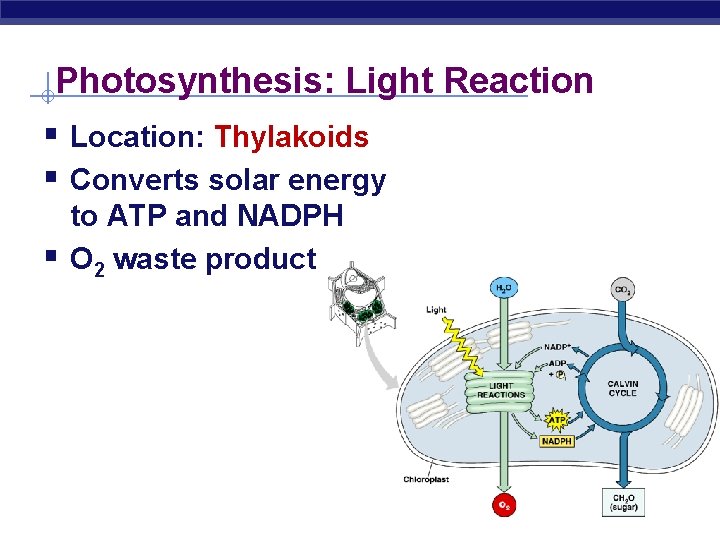
Photosynthesis: Light Reaction § Location: Thylakoids § Converts solar energy § to ATP and NADPH O 2 waste product AP Biology
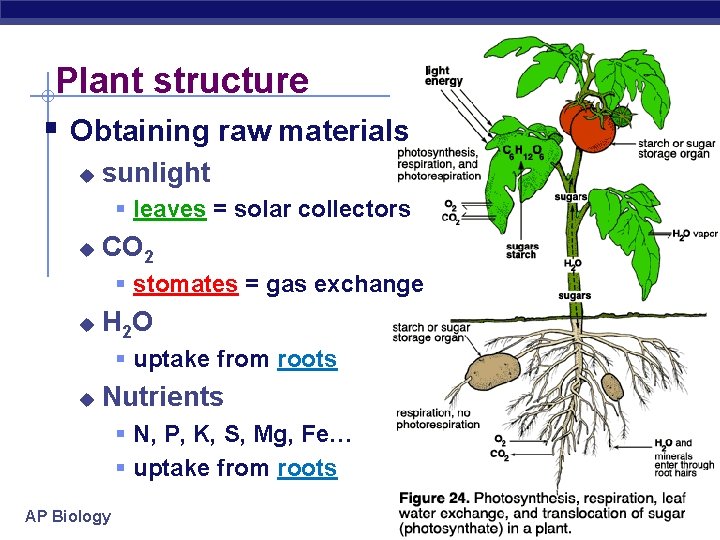
Plant structure § Obtaining raw materials u sunlight § leaves = solar collectors u CO 2 § stomates = gas exchange u H 2 O § uptake from roots u Nutrients § N, P, K, S, Mg, Fe… § uptake from roots AP Biology 2005 -2006
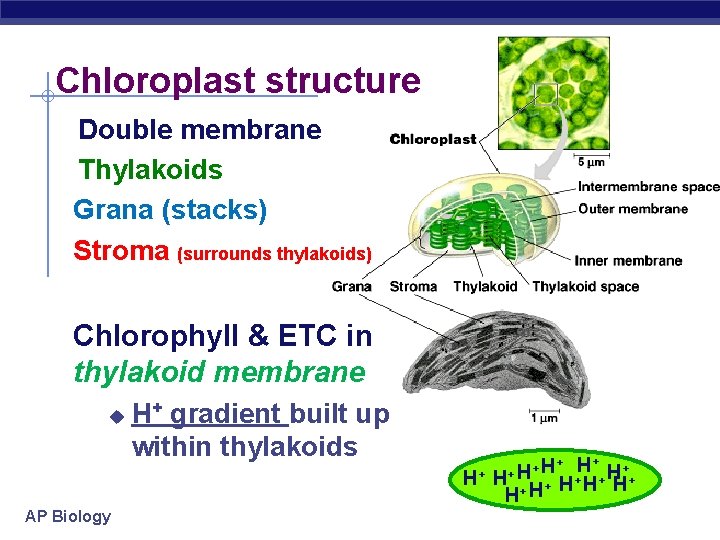
Chloroplast structure Double membrane Thylakoids Grana (stacks) Stroma (surrounds thylakoids) Chlorophyll & ETC in thylakoid membrane u H+ gradient built up within thylakoids H+ AP Biology + + H+ H H+ + H H + H+ H+ H+ + H H
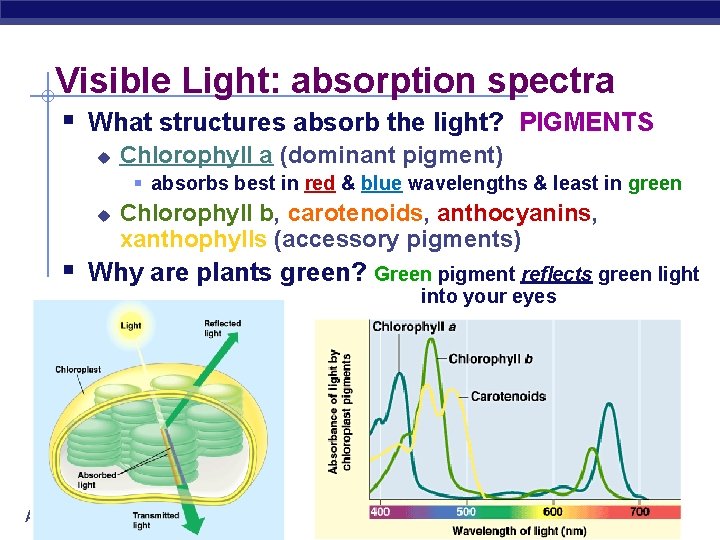
Visible Light: absorption spectra § What structures absorb the light? PIGMENTS u Chlorophyll a (dominant pigment) § absorbs best in red & blue wavelengths & least in green u Chlorophyll b, carotenoids, anthocyanins, xanthophylls (accessory pigments) § Why are plants green? Green pigment reflects green light into your eyes AP Biology
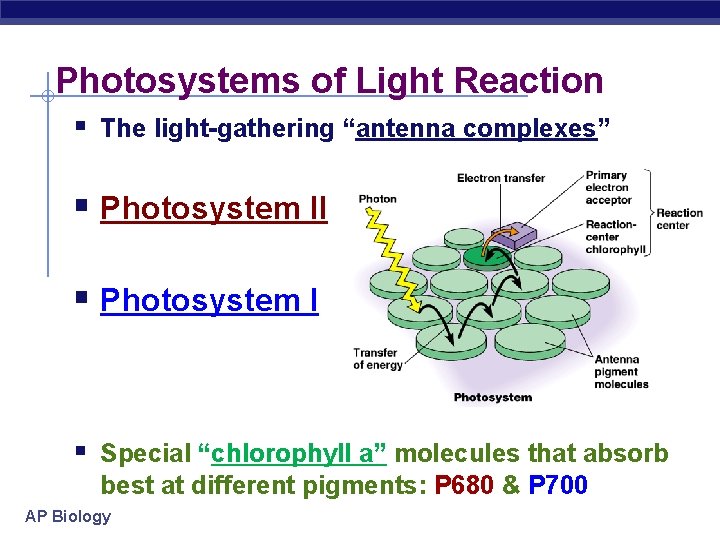
Photosystems of Light Reaction § The light-gathering “antenna complexes” § Photosystem II § Photosystem I § Special “chlorophyll a” molecules that absorb best at different pigments: P 680 & P 700 AP Biology
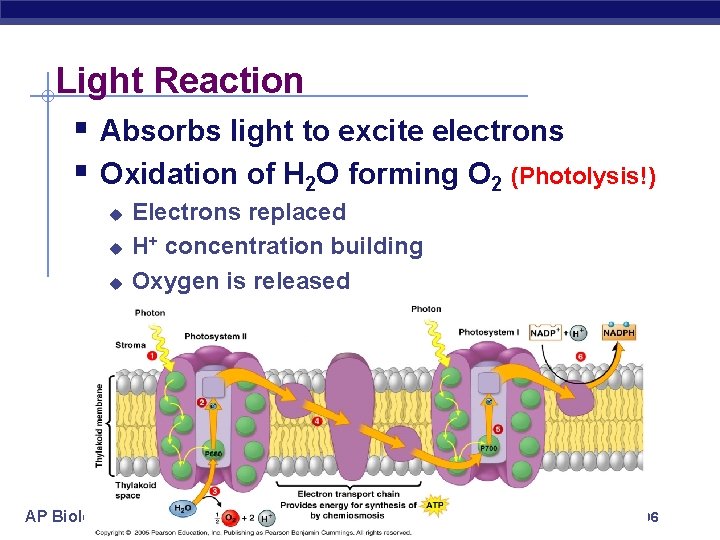
Light Reaction § Absorbs light to excite electrons § Oxidation of H 2 O forming O 2 (Photolysis!) u u u AP Biology Electrons replaced H+ concentration building Oxygen is released 2005 -2006
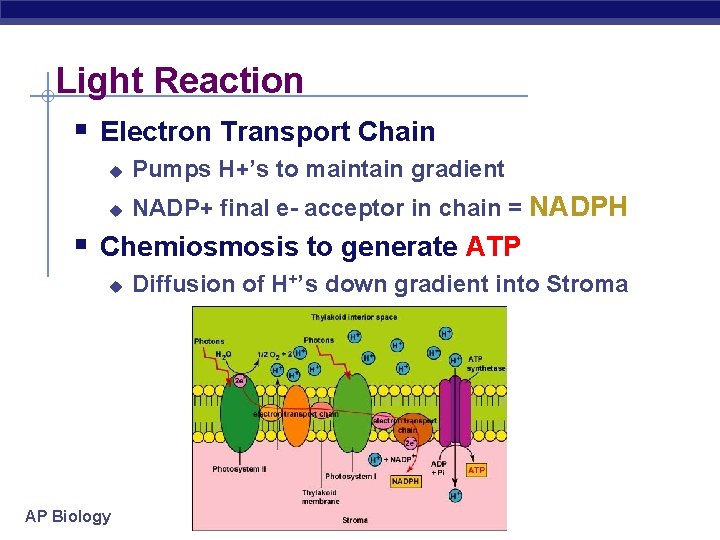
Light Reaction § Electron Transport Chain u Pumps H+’s to maintain gradient u NADP+ final e- acceptor in chain = NADPH § Chemiosmosis to generate ATP u AP Biology Diffusion of H+’s down gradient into Stroma
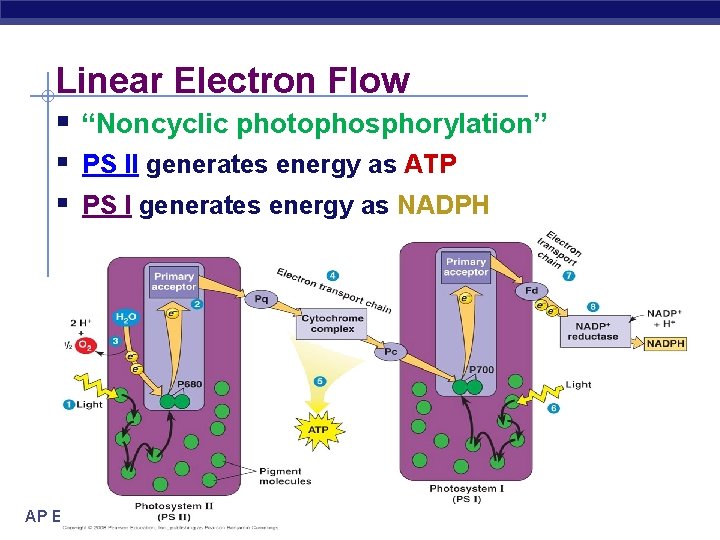
Linear Electron Flow § “Noncyclic photophosphorylation” § PS II generates energy as ATP § PS I generates energy as NADPH AP Biology
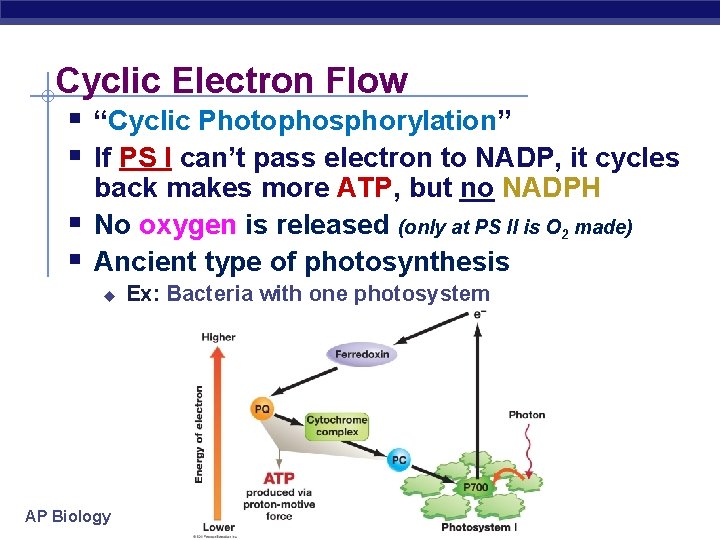
Cyclic Electron Flow § “Cyclic Photophosphorylation” § If PS I can’t pass electron to NADP, it cycles § § back makes more ATP, but no NADPH No oxygen is released (only at PS II is O 2 made) Ancient type of photosynthesis u AP Biology Ex: Bacteria with one photosystem
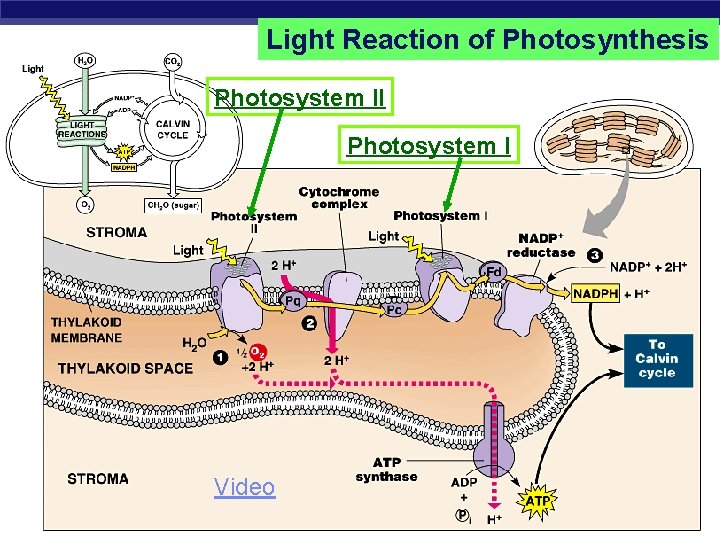
Light Reaction of Photosynthesis Photosystem II Photosystem I Video AP Biology
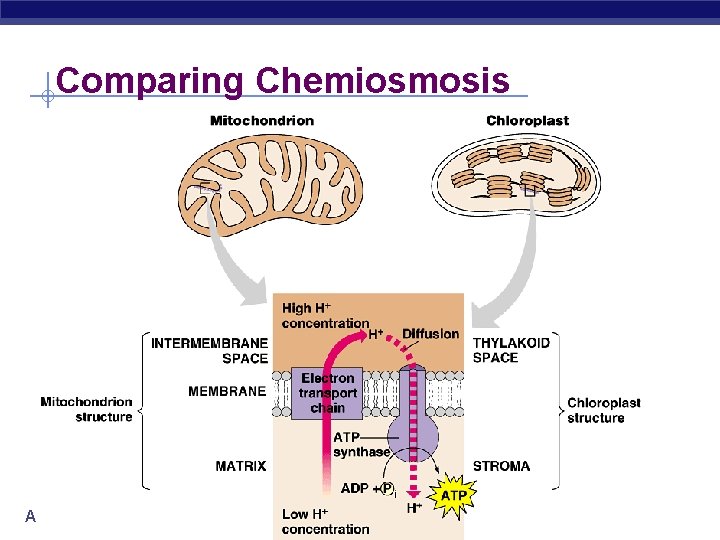
Comparing Chemiosmosis AP Biology 2005 -2006
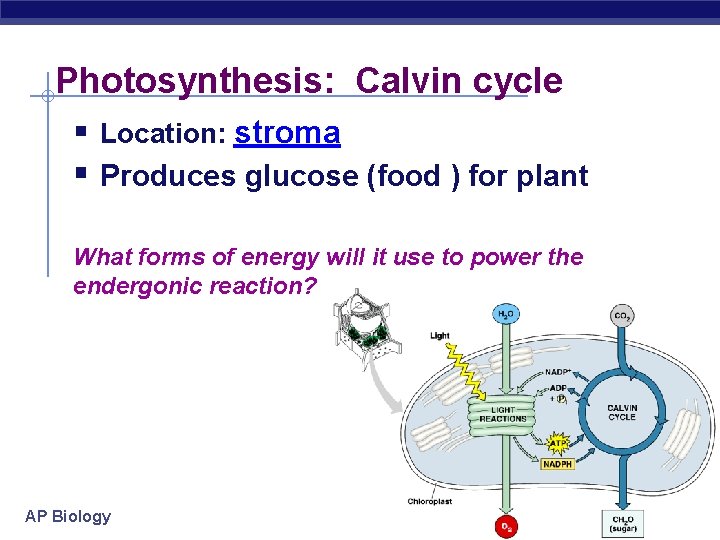
Photosynthesis: Calvin cycle § Location: stroma § Produces glucose (food ) for plant What forms of energy will it use to power the endergonic reaction? AP Biology 2005 -2006
From CO 2 C 6 H 12 O 6 § CO 2 has very little chemical energy § C 6 H 12 O 6 contains a lot of chemical energy (C-C bonds) § Reduction of CO 2 C 6 H 12 O 6 many small steps u each catalyzed by specific enzyme u u AP Biology Using exergonic reactions to power the endergonic!
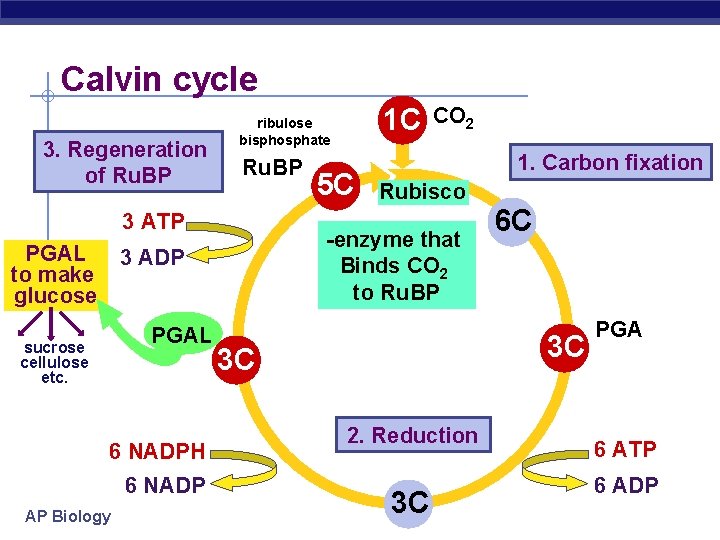
Calvin cycle 3. Regeneration of Ru. BP 3 ATP PGAL to make glucose sucrose cellulose etc. 6 NADPH 6 NADP AP Biology 5 C CO 2 1. Carbon fixation Rubisco -enzyme that Binds CO 2 to Ru. BP 3 ADP PGAL 1 C ribulose bisphosphate 6 C 3 C 3 C 2. Reduction 3 C PGA 6 ATP 6 ADP
Calvin cycle § 6 turns of Calvin Cycle = 1 glucose u u u 6 CO 2 is needed 18 ATP is needed 12 NADPH is needed § PGAL important intermediate! u can be used to make: § Glucose, sucrose, lipids, amino acids etc. AP Biology
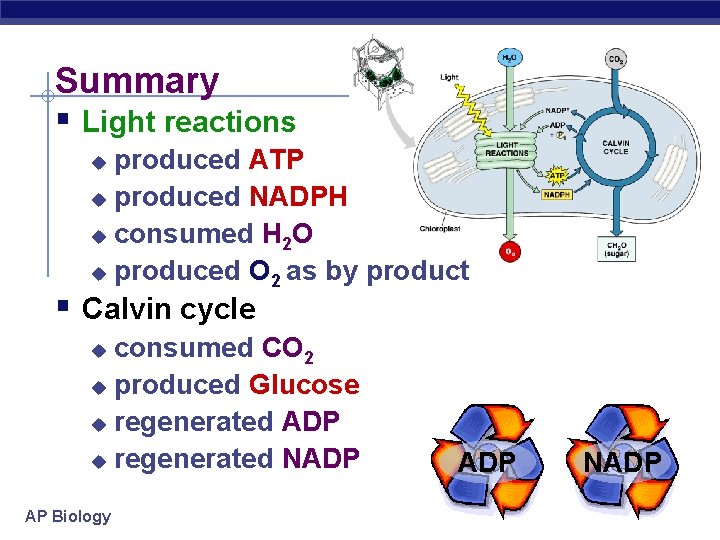
Summary § Light reactions produced ATP u produced NADPH u consumed H 2 O u produced O 2 as by product u § Calvin cycle consumed CO 2 u produced Glucose u regenerated ADP u regenerated NADP u AP Biology ADP NADP
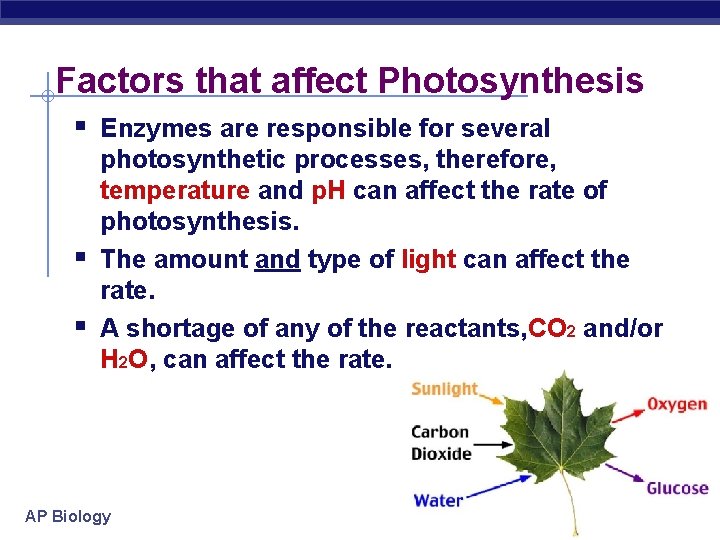
Factors that affect Photosynthesis § Enzymes are responsible for several § § photosynthetic processes, therefore, temperature and p. H can affect the rate of photosynthesis. The amount and type of light can affect the rate. A shortage of any of the reactants, CO 2 and/or H 2 O, can affect the rate. AP Biology
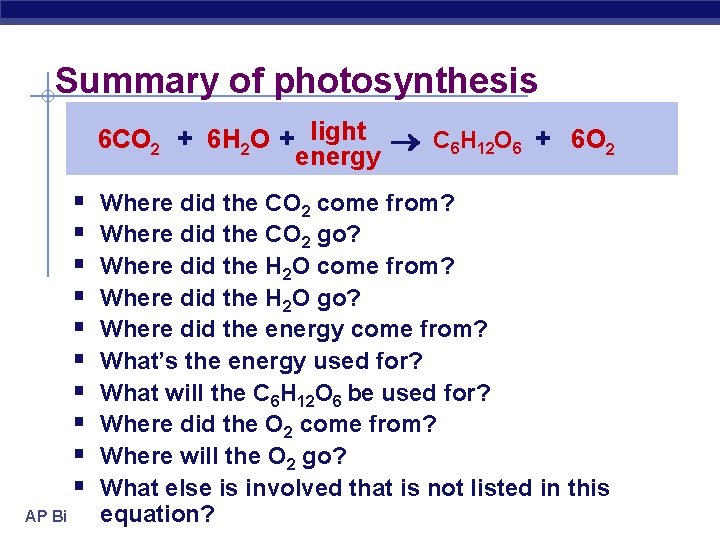
Summary of photosynthesis 6 CO 2 + 6 H 2 O + light C 6 H 12 O 6 + 6 O 2 energy § § § § § Where did the CO 2 come from? Where did the CO 2 go? Where did the H 2 O come from? Where did the H 2 O go? Where did the energy come from? What’s the energy used for? What will the C 6 H 12 O 6 be used for? Where did the O 2 come from? Where will the O 2 go? What else is involved that is not listed in this equation? AP Biology 2005 -2006
- Slides: 22