
Photosynthesis Life from Light and Air AP Ch
- Slides: 13
Photosynthesis: Life from Light and Air AP Ch. 10 AP Biology 2007 -2008
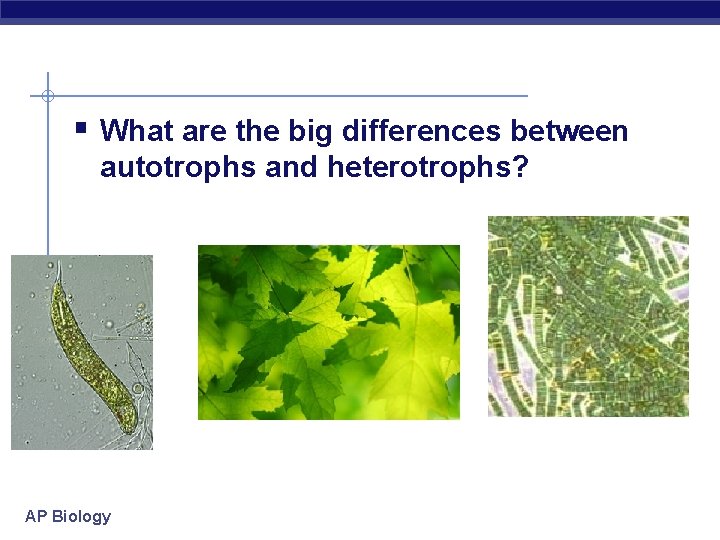
§ What are the big differences between autotrophs and heterotrophs? AP Biology
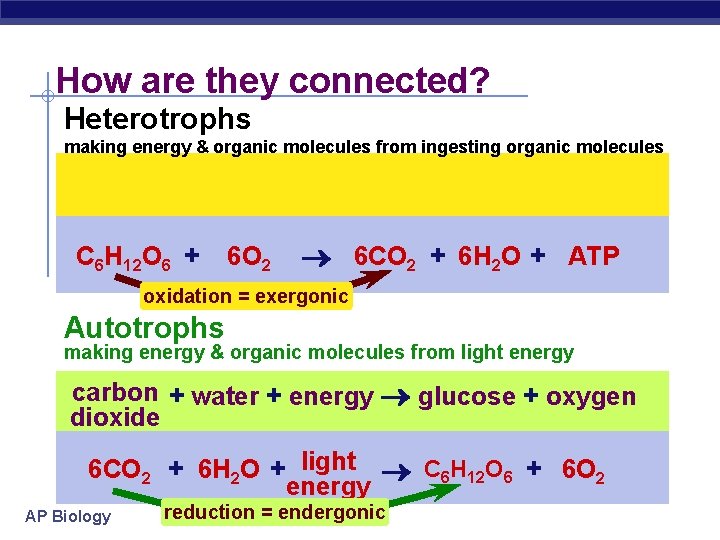
How are they connected? Heterotrophs making energy & organic molecules from ingesting organic molecules C 6 H 12 O 6 + 6 O 2 6 CO 2 + 6 H 2 O + ATP oxidation = exergonic Autotrophs making energy & organic molecules from light energy carbon + water + energy glucose + oxygen dioxide 6 CO 2 + 6 H 2 O + light C 6 H 12 O 6 + 6 O 2 energy AP Biology reduction = endergonic
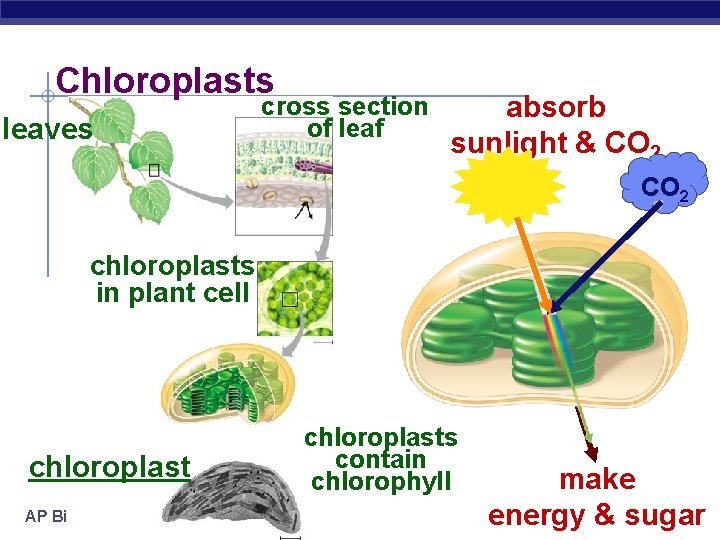
Chloroplasts leaves cross section of leaf absorb sunlight & CO 2 chloroplasts in plant cell chloroplast AP Biology chloroplasts contain chlorophyll make energy & sugar
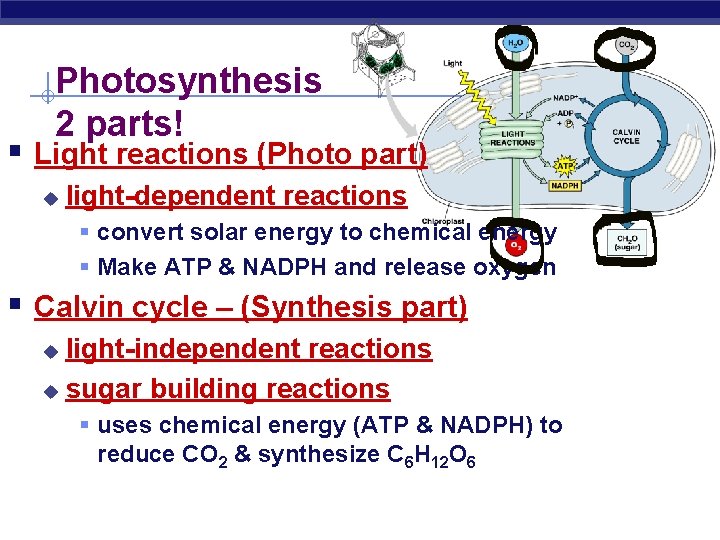
Photosynthesis 2 parts! § Light reactions (Photo part) u light-dependent reactions § convert solar energy to chemical energy § Make ATP & NADPH and release oxygen § Calvin cycle – (Synthesis part) light-independent reactions u sugar building reactions u § uses chemical energy (ATP & NADPH) to reduce CO 2 & synthesize C 6 H 12 O 6 AP Biology
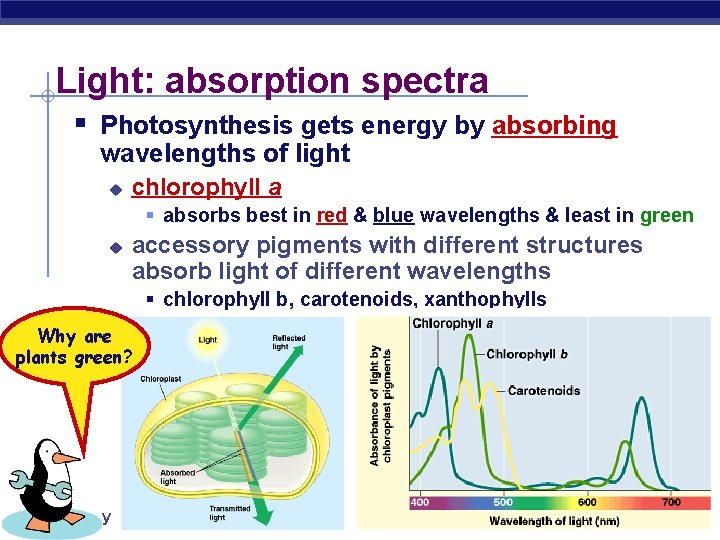
Light: absorption spectra § Photosynthesis gets energy by absorbing wavelengths of light u chlorophyll a § absorbs best in red & blue wavelengths & least in green u accessory pigments with different structures absorb light of different wavelengths § chlorophyll b, carotenoids, xanthophylls Why are plants green? AP Biology
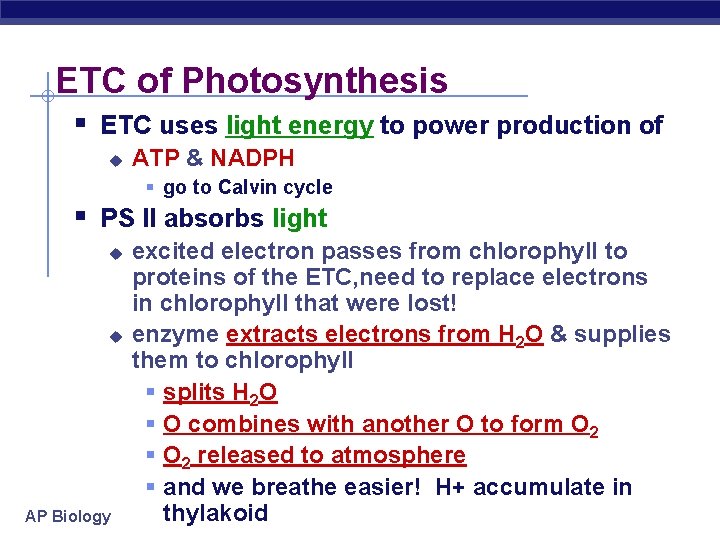
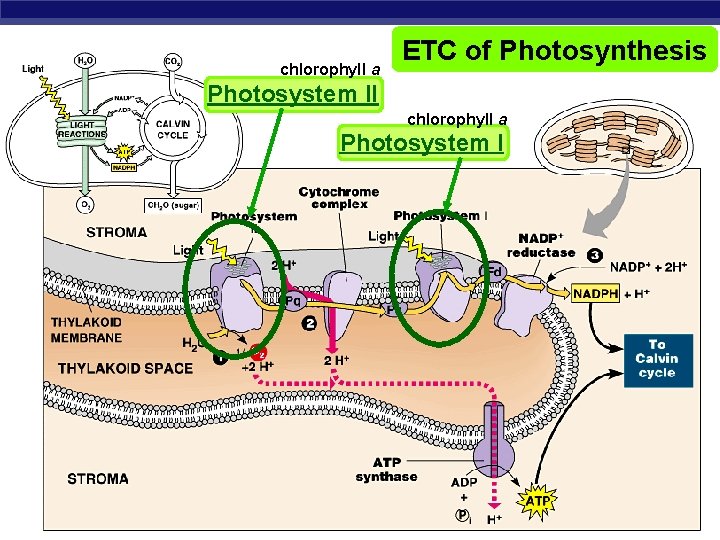
ETC of Photosynthesis § ETC uses light energy to power production of u ATP & NADPH § go to Calvin cycle § PS II absorbs light u u AP Biology excited electron passes from chlorophyll to proteins of the ETC, need to replace electrons in chlorophyll that were lost! enzyme extracts electrons from H 2 O & supplies them to chlorophyll § splits H 2 O § O combines with another O to form O 2 § O 2 released to atmosphere § and we breathe easier! H+ accumulate in thylakoid
chlorophyll a ETC of Photosynthesis Photosystem II chlorophyll a Photosystem I AP Biology
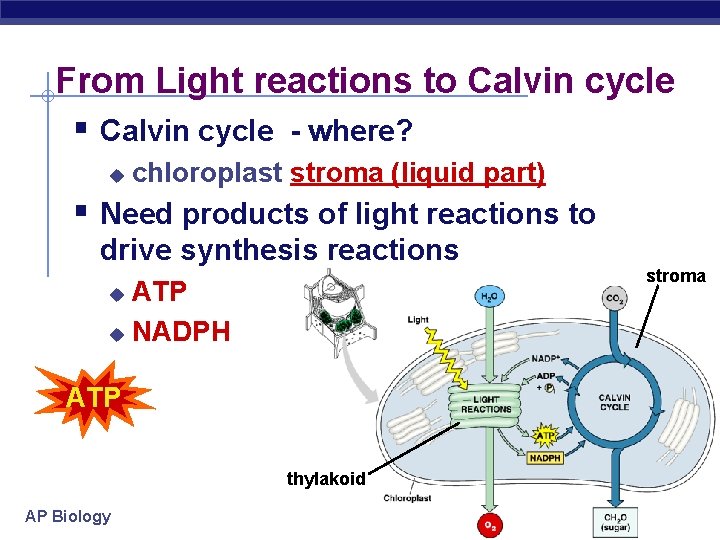
From Light reactions to Calvin cycle § Calvin cycle - where? u chloroplast stroma (liquid part) § Need products of light reactions to drive synthesis reactions ATP u NADPH u ATP thylakoid AP Biology stroma
From CO 2 C 6 H 12 O 6 § Synthesis = an endergonic process u put in a lot of energy § Reduction of CO 2 C 6 H 12 O 6 proceeds in many small uphill steps each catalyzed by a specific enzyme u using energy stored in ATP & NADPH u AP Biology
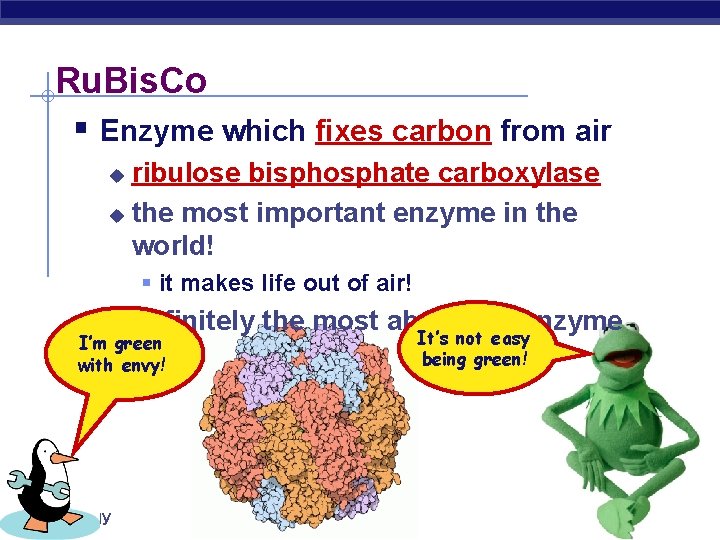
Ru. Bis. Co § Enzyme which fixes carbon from air ribulose bisphosphate carboxylase u the most important enzyme in the world! u § it makes life out of air! definitely the most abundant enzyme It’s not easy u I’m green with envy! AP Biology being green!
Photosynthesis summary 1. Where did the energy come from? 2. Where did the electrons come from? 3. Where did the H 2 O come from? 4. Where did the O 2 come from? 5. Where did the O 2 go? 6. Where did the H+ come from? 7. Where did the ATP come from? 8. What will the ATP be used for? 9. Where did the NADPH come from? 10. What will the NADPH be used for? AP Biology
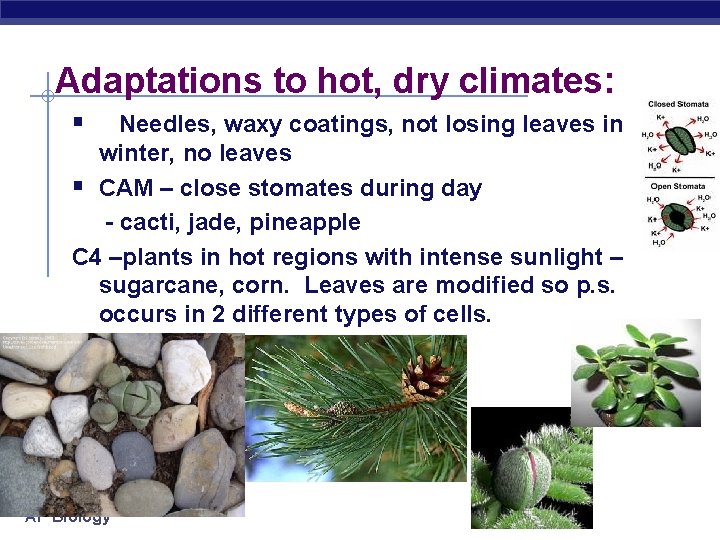
Adaptations to hot, dry climates: § Needles, waxy coatings, not losing leaves in winter, no leaves § CAM – close stomates during day - cacti, jade, pineapple C 4 –plants in hot regions with intense sunlight – sugarcane, corn. Leaves are modified so p. s. occurs in 2 different types of cells. AP Biology