
Photosynthesis Law Of Conservation of Matter and Energy

- Slides: 47
Photosynthesis
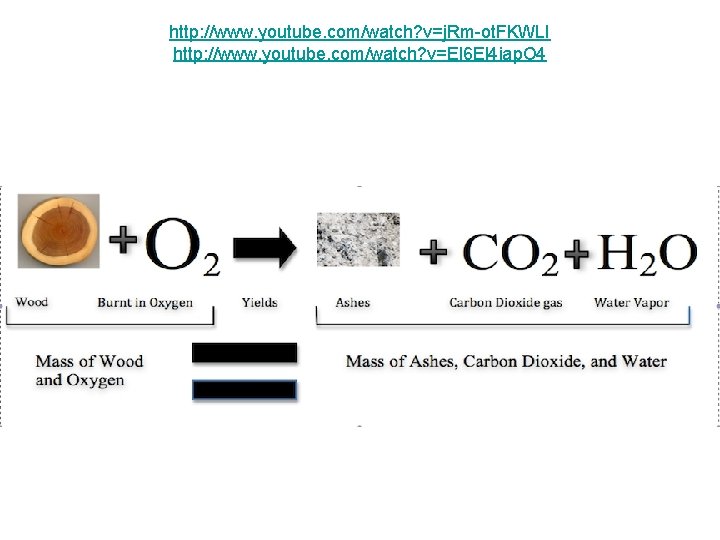
Law Of Conservation of Matter and Energy • Matter and energy can neither be created of destroyed, only transformed.
• Total amount of energy in the universe is constant-it’s stored in the bonds of matter. • Potential energy =stored energy • Kinetic energy= released(bonds broken)energy. • (Released energy is NOT lost energy, it’s just transformed)
Chemical Reactions
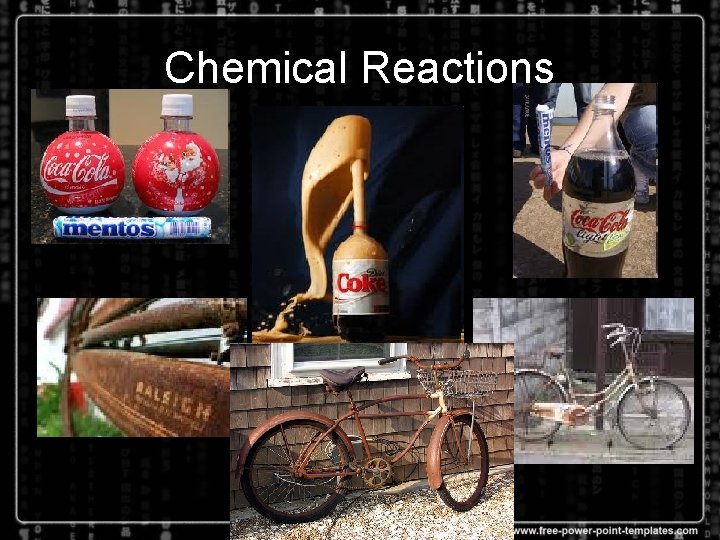
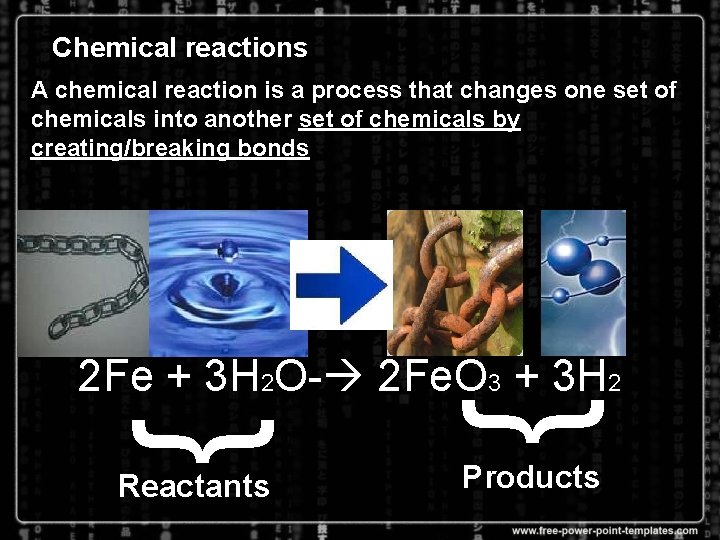
Chemical reactions A chemical reaction is a process that changes one set of chemicals into another set of chemicals by creating/breaking bonds Reactants { { 2 Fe + 3 H 2 O- 2 Fe. O 3 + 3 H 2 Products
http: //www. youtube. com/watch? v=j. Rm-ot. FKWLI http: //www. youtube. com/watch? v=El 6 El 4 iap. O 4
Carbon Bonding • Organic molecules are made mostly of carbon atoms. Most matter in living organisms is made of organic molecules. • Use pg. 51 -52 to answer the following • QUESTION: How do carbon’s bonding properties contribute to the existence of a wide variety of biological molecules?
Carbon ANSWER: One of the most important elements found in living things Has 4 valence electrons which means it can form 4 bonds with other carbon atoms or other elements such as hydrogen (H), oxygen (O), phosphorous (P)
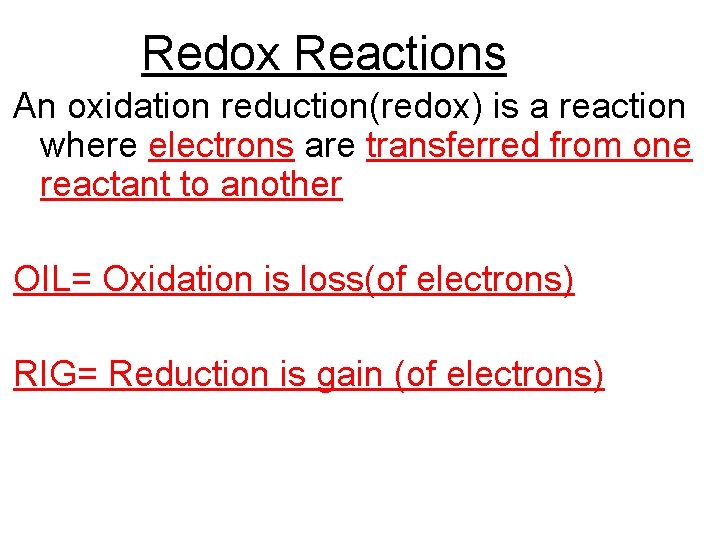
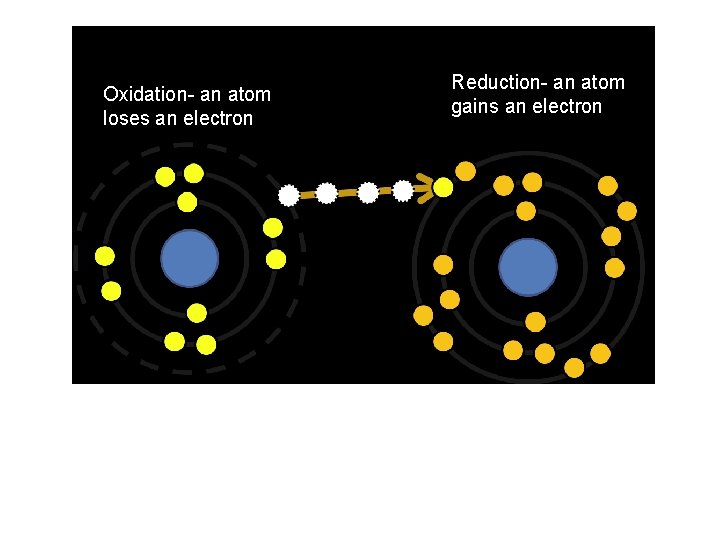
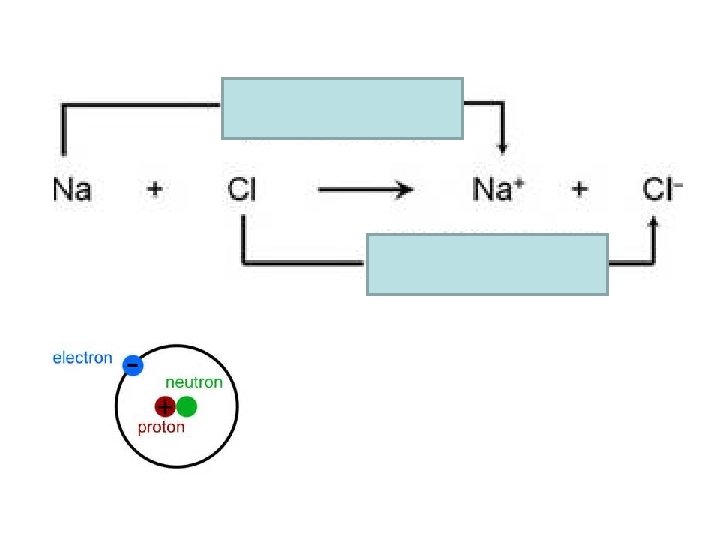
Redox Reactions An oxidation reduction(redox) is a reaction where electrons are transferred from one reactant to another OIL= Oxidation is loss(of electrons) RIG= Reduction is gain (of electrons)
Oxidation- an atom loses an electron Reduction- an atom gains an electron
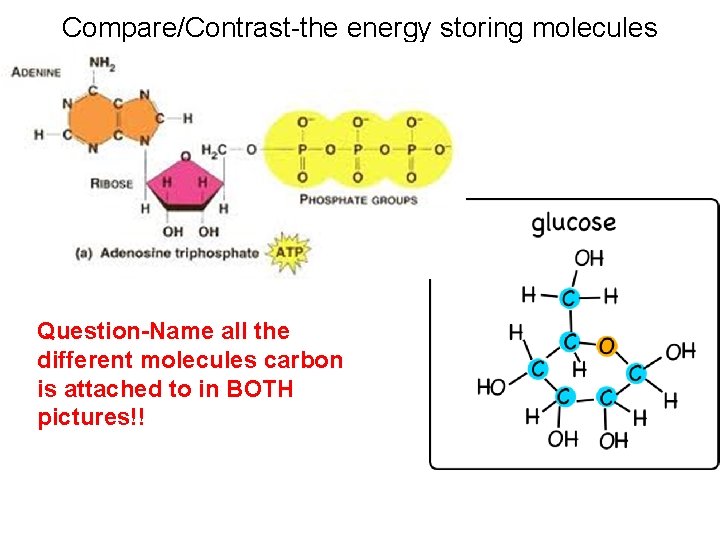
Compare/Contrast-the energy storing molecules Question-Name all the different molecules carbon is attached to in BOTH pictures!!
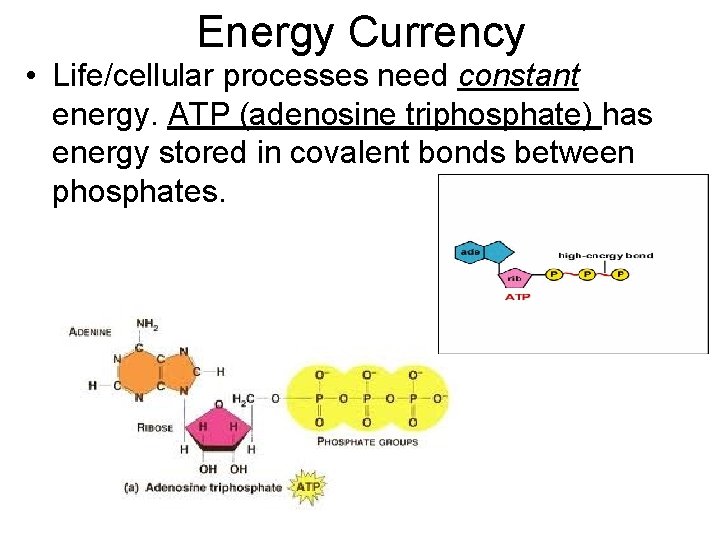
Energy Currency • Life/cellular processes need constant energy. ATP (adenosine triphosphate) has energy stored in covalent bonds between phosphates.
What is Photosynthesis? Photosynthesis is when autotrophs make their own food/glucose. Photosynthesis takes light energy, water, and breaks apart carbon dioxide and converts it into stored energy in glucose.
What is Photosynthesis? • http: //www. mhhe. com/biosci/bio_animation s/02_MH_Photosynthesis_Web/
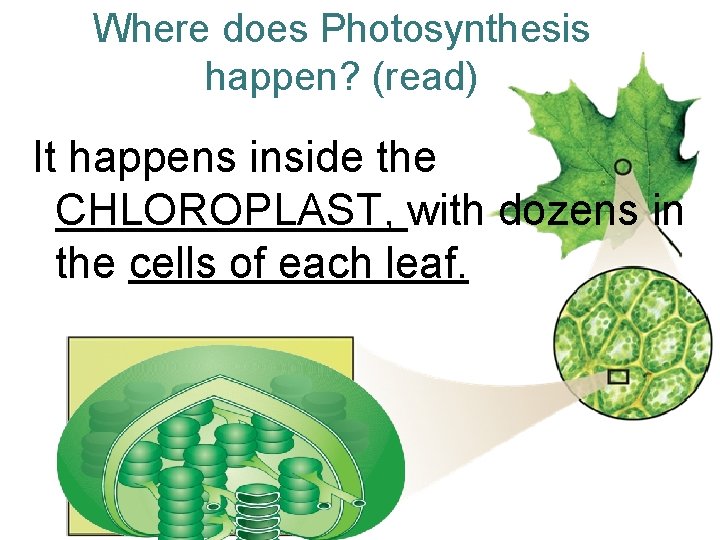
Where does Photosynthesis happen? (read) It happens inside the CHLOROPLAST, with dozens in the cells of each leaf.
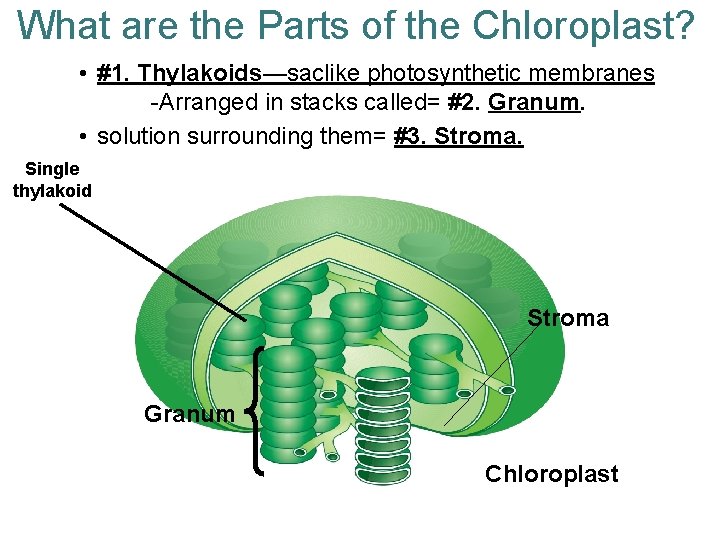
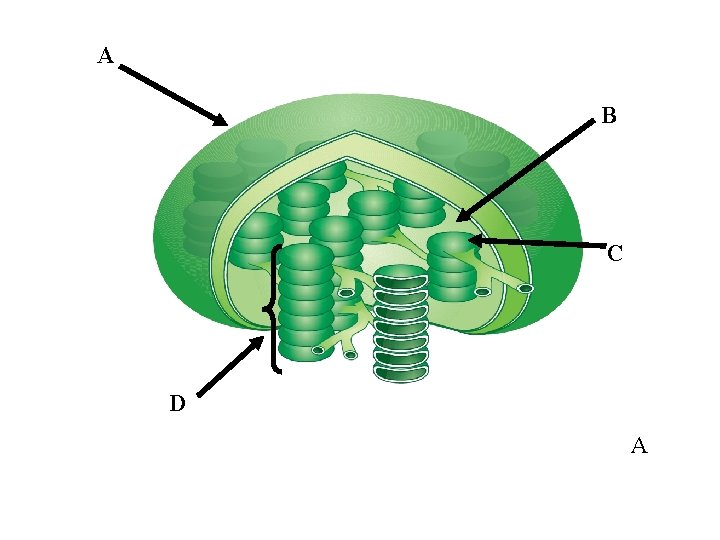
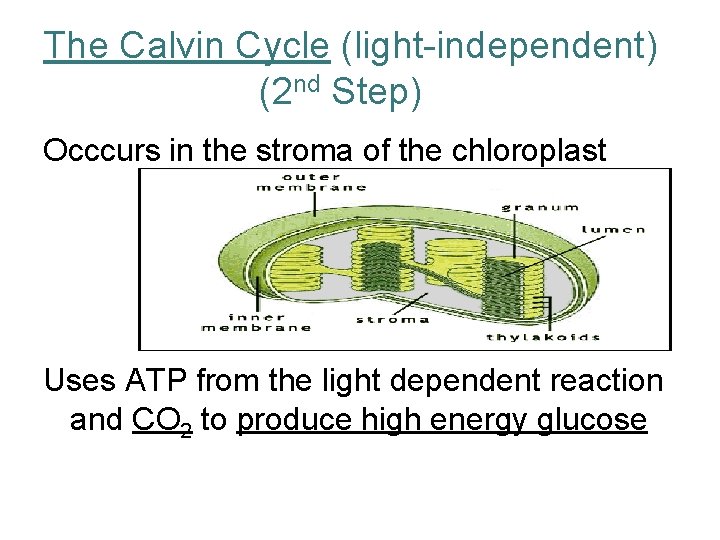
What are the Parts of the Chloroplast? • #1. Thylakoids—saclike photosynthetic membranes -Arranged in stacks called= #2. Granum. • solution surrounding them= #3. Stroma. Single thylakoid Stroma Granum Chloroplast
A B C D A
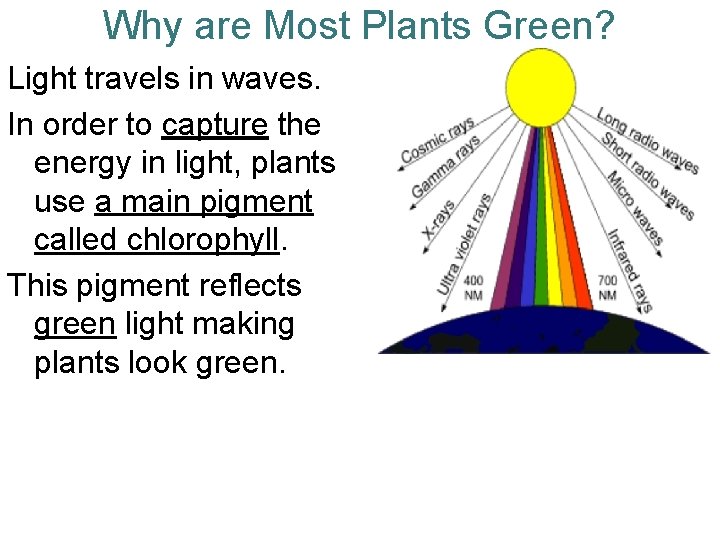
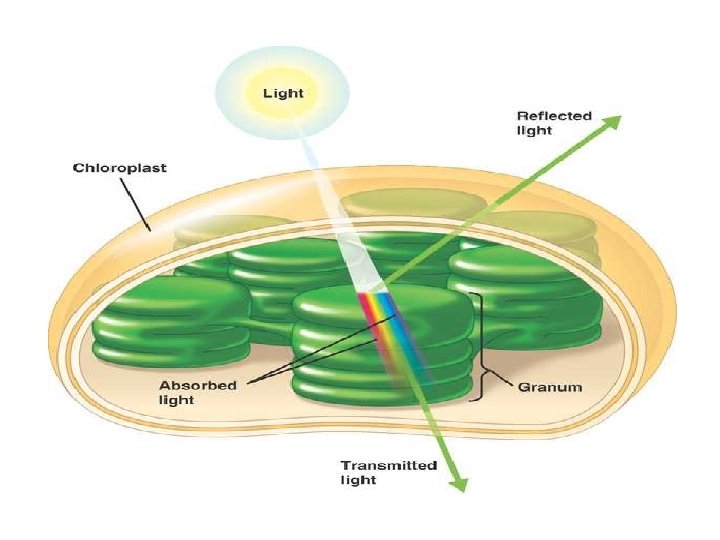
Why are Most Plants Green? Light travels in waves. In order to capture the energy in light, plants use a main pigment called chlorophyll. This pigment reflects green light making plants look green.
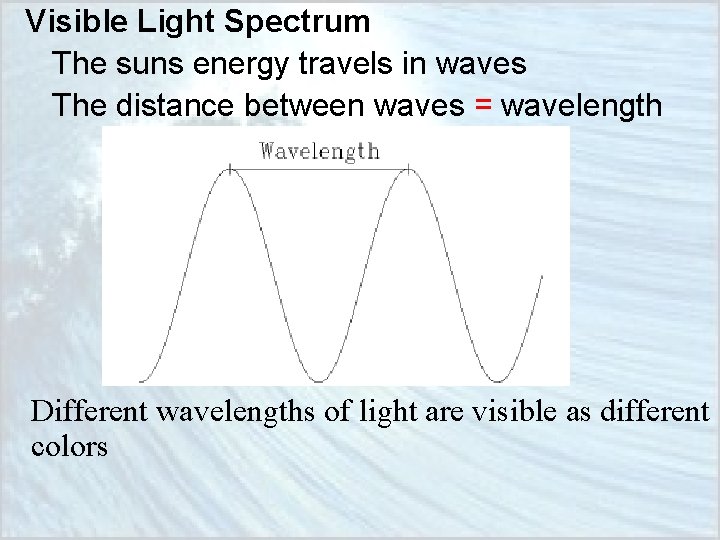
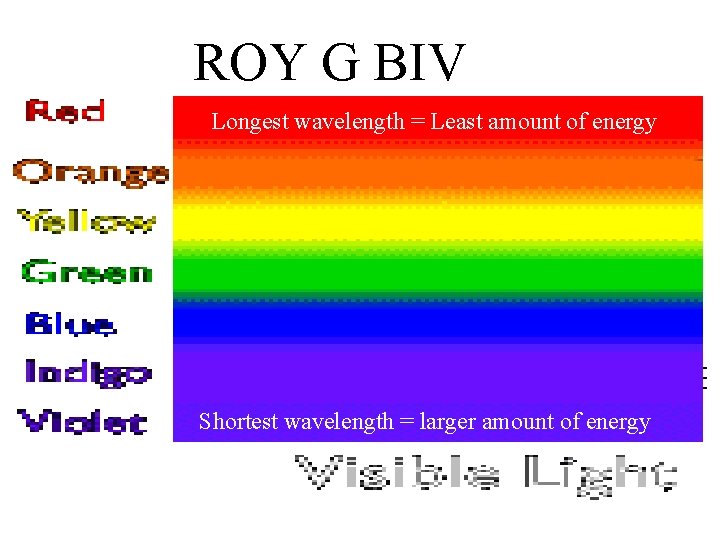
Visible Light Spectrum The suns energy travels in waves The distance between waves = wavelength Different wavelengths of light are visible as different colors
ROY G BIV Longest wavelength = Least amount of energy Shortest wavelength = larger amount of energy
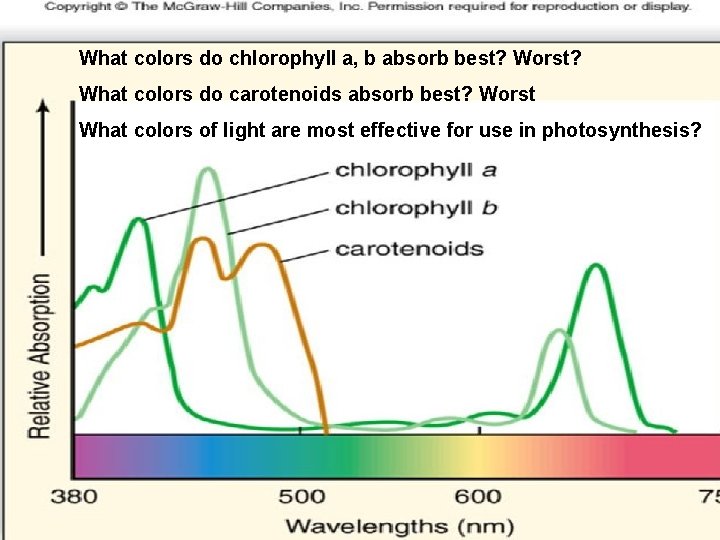
What colors do chlorophyll a, b absorb best? Worst? What colors do carotenoids absorb best? Worst What colors of light are most effective for use in photosynthesis?
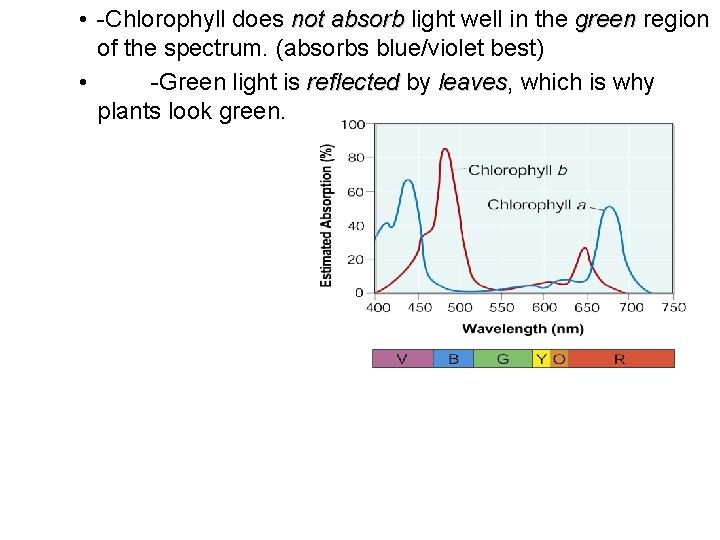
• -Chlorophyll does not absorb light well in the green region of the spectrum. (absorbs blue/violet best) • -Green light is reflected by leaves, leaves which is why plants look green.
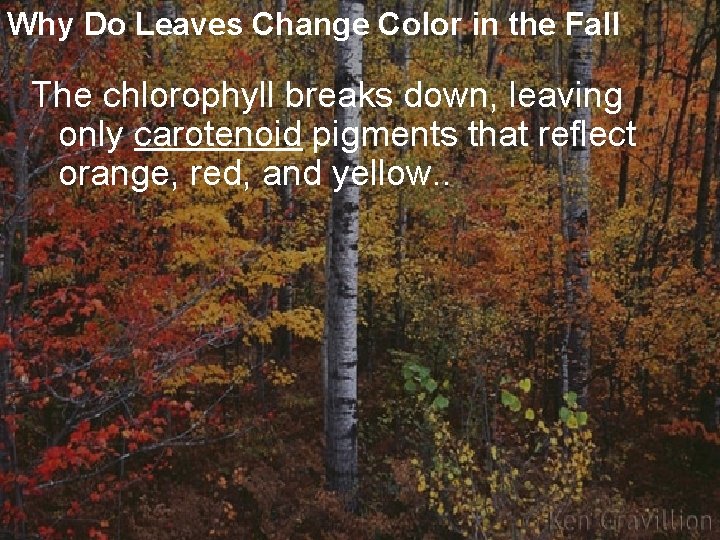
Why Do Leaves Change Color in the Fall The chlorophyll breaks down, leaving only carotenoid pigments that reflect orange, red, and yellow. .
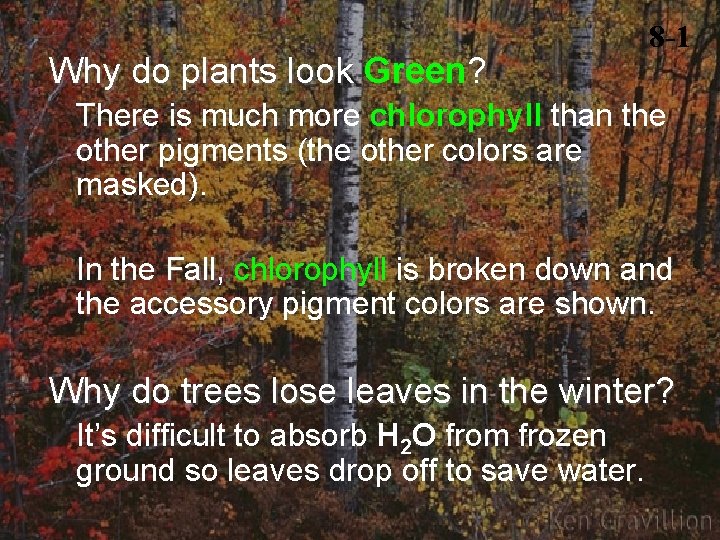
Why do plants look Green? 8 -1 There is much more chlorophyll than the other pigments (the other colors are masked). In the Fall, Fall chlorophyll is broken down and the accessory pigment colors are shown Why do trees lose leaves in the winter? It’s difficult to absorb H 2 O from frozen ground so leaves drop off to save water.
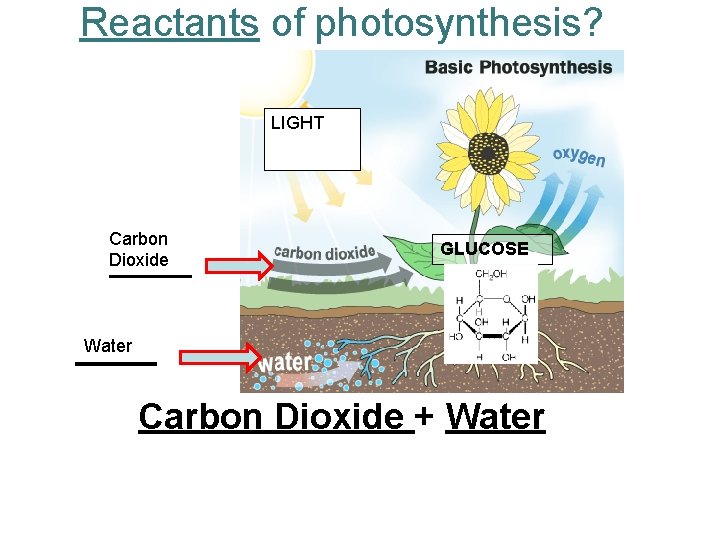
Reactants of photosynthesis? LIGHT Carbon Dioxide GLUCOSE Water Carbon Dioxide + Water
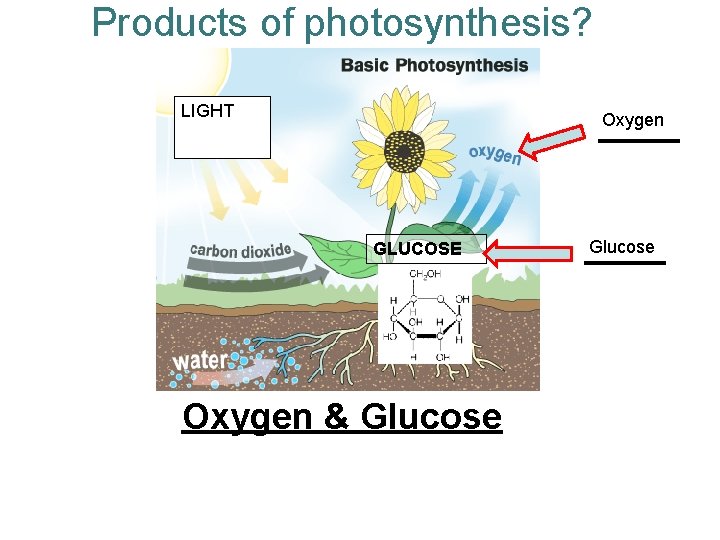
Products of photosynthesis? LIGHT Oxygen GLUCOSE Oxygen & Glucose
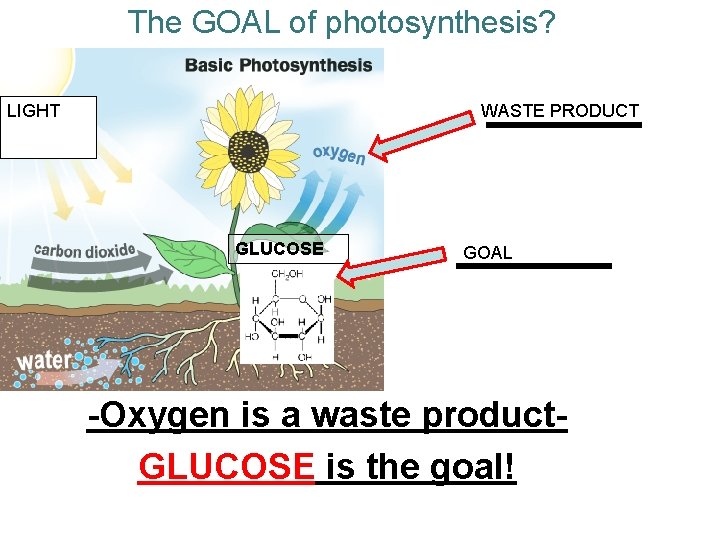
The GOAL of photosynthesis? LIGHT WASTE PRODUCT GLUCOSE GOAL -Oxygen is a waste product. GLUCOSE is the goal!
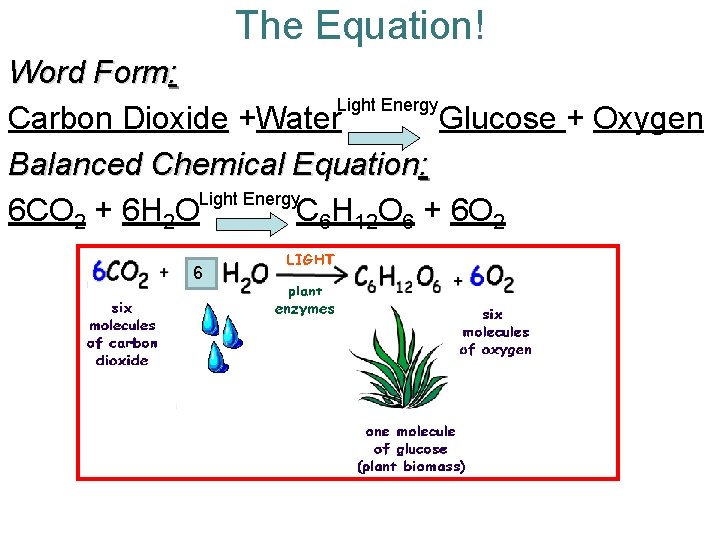
The Equation! Word Form: Light Energy Carbon Dioxide +Water Glucose + Oxygen Balanced Chemical Equation: Light Energy 6 CO 2 + 6 H 2 O C 6 H 12 O 6 + 6 O 2 6
What are the Reactions? Photosynthesis is 2 reactions happening simultaneously in the chloroplast! -1 st- Light Dependent Reaction. 2 nd –Calvin Cycle a. k. a. Light Independent reaction The 2 nd reaction can not happen without the first.
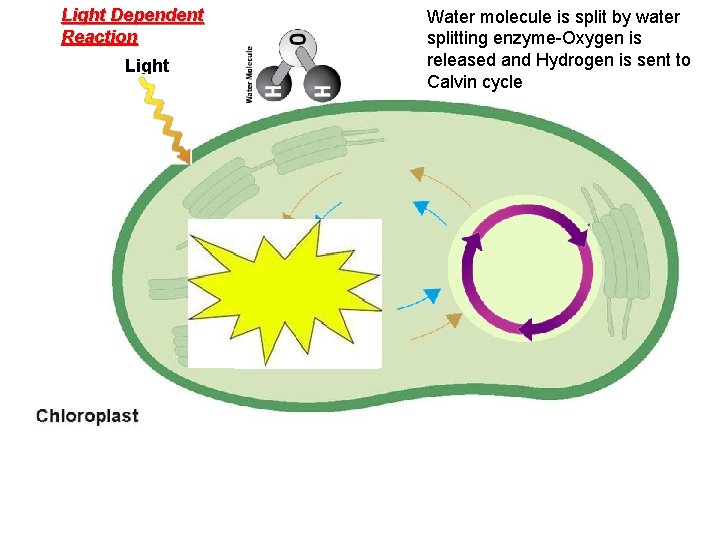
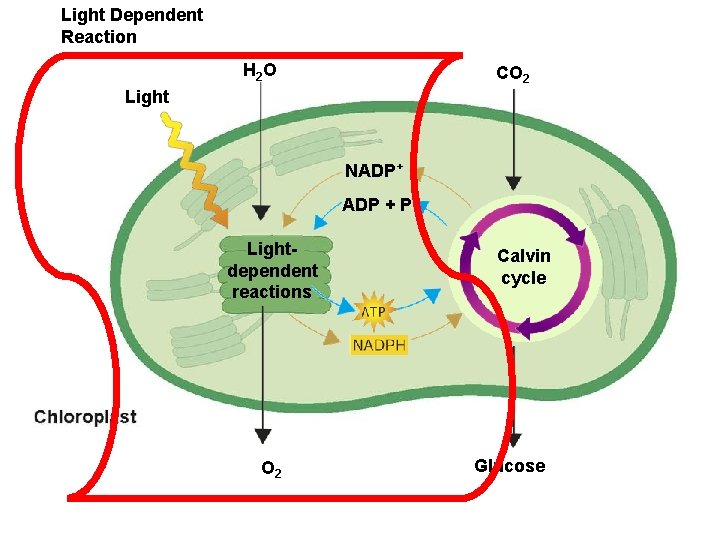
Light Dependent Reaction Water molecule is split by water splitting enzyme-Oxygen is released and Hydrogen is sent to Calvin cycle Light- dependent reactions Chloroplast Calvin Cycle
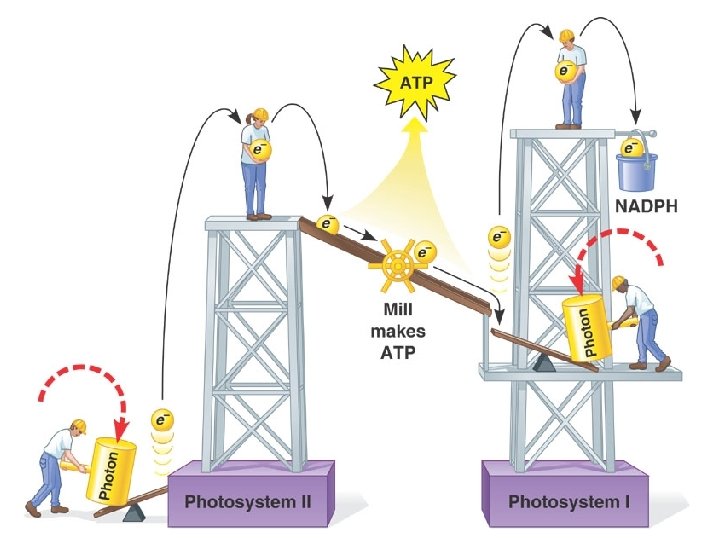
Light dependent reaction(Step 1) a. )Occurs in the thylakoids of chloroplast b. )Starts w/water (H 2 O) and sunlight absorbed by chlorophyll molecules c. )Makes Oxygen (O 2) , ATP energy and NADPH energy **The ATP and NADPH will be used in reaction 2
Light Dependent Reaction H 2 O CO 2 Light NADP+ ADP + P Lightdependent reactions Calvin cycle Chloroplast O 2 Glucose
With your shoulder partner explain when/what/where happens to each of the following when they enter the thylakoids of the Light Dependent Reaction: 1. Water 2. NADP+ 3. ADP
Light- dependent Reactions Light energy is absorbed by chlorophyll molecules This light energy excites electrons (excited electrons supply energy) and boosts them to higher energy levels. The electrons “fall” to a lower energy state, releasing energy that is harnessed to make ATP
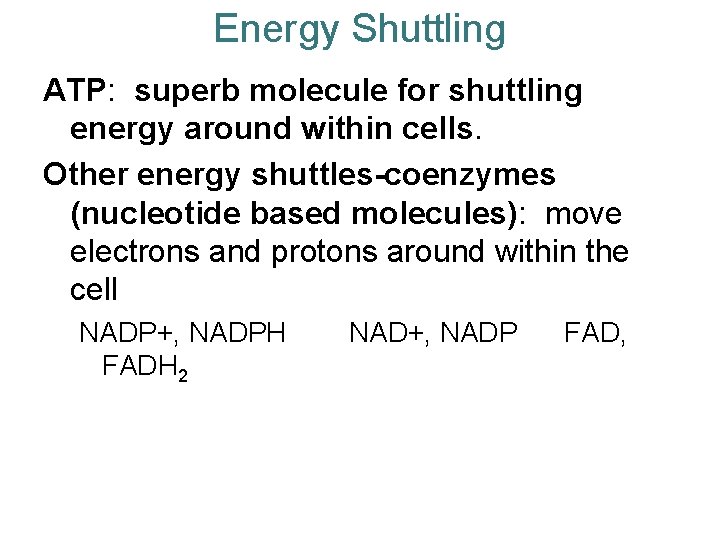
Energy Shuttling ATP: superb molecule for shuttling energy around within cells. Other energy shuttles-coenzymes (nucleotide based molecules): move electrons and protons around within the cell NADP+, NADPH FADH 2 NAD+, NADP FAD,
Silently and Independently • Q: Explain why the splitting of water is important the continuation of the calvin cycle and to our survival? • Provides Hydrogen the Calvin Cycle requires to make glucose and oxygen we need to breathe. • Q: Explain how oxygen is generated in photosynthesis(p. 117 Paragraph 5, 6) • Water is split in light dependent reaction, and the oxygen is released as a waste product
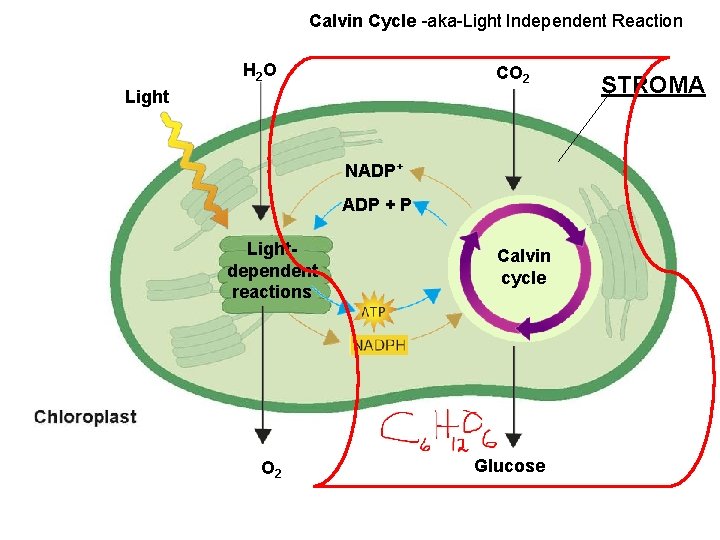
The Calvin Cycle (light-independent) (2 nd Step) Occcurs in the stroma of the chloroplast Uses ATP from the light dependent reaction and CO 2 to produce high energy glucose
Calvin Cycle -aka-Light Independent Reaction H 2 O CO 2 Light NADP+ ADP + P Lightdependent reactions Calvin cycle Chloroplast O 2 Glucose STROMA
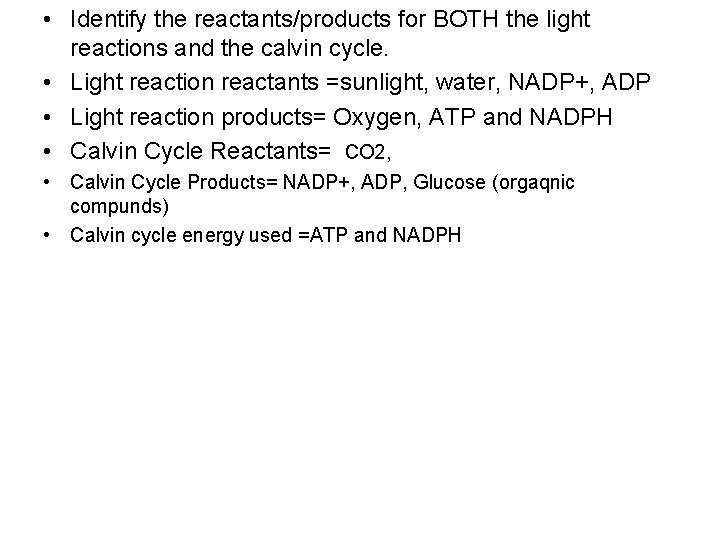
• Identify the reactants/products for BOTH the light reactions and the calvin cycle. • Light reaction reactants =sunlight, water, NADP+, ADP • Light reaction products= Oxygen, ATP and NADPH • Calvin Cycle Reactants= CO 2, • Calvin Cycle Products= NADP+, ADP, Glucose (orgaqnic compunds) • Calvin cycle energy used =ATP and NADPH
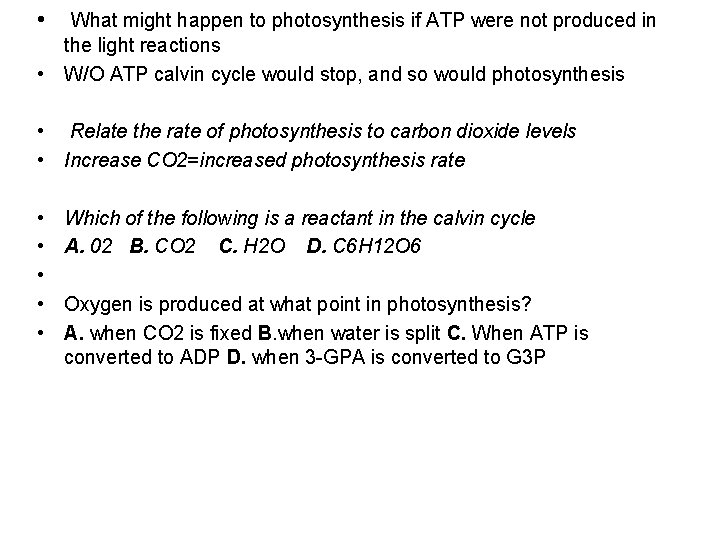
• What might happen to photosynthesis if ATP were not produced in the light reactions • W/O ATP calvin cycle would stop, and so would photosynthesis • Relate the rate of photosynthesis to carbon dioxide levels • Increase CO 2=increased photosynthesis rate • • • Which of the following is a reactant in the calvin cycle A. 02 B. CO 2 C. H 2 O D. C 6 H 12 O 6 Oxygen is produced at what point in photosynthesis? A. when CO 2 is fixed B. when water is split C. When ATP is converted to ADP D. when 3 -GPA is converted to G 3 P
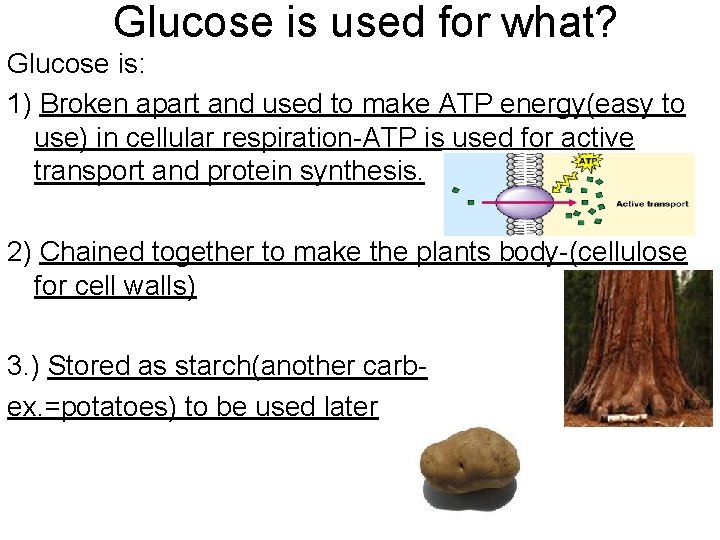
Glucose is used for what? Glucose is: 1) Broken apart and used to make ATP energy(easy to use) in cellular respiration-ATP is used for active transport and protein synthesis. 2) Chained together to make the plants body-(cellulose for cell walls) 3. ) Stored as starch(another carbex. =potatoes) to be used later
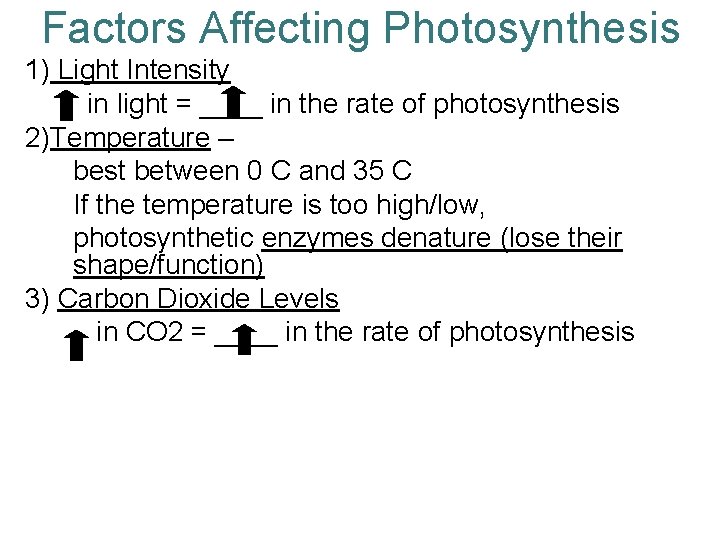
Factors Affecting Photosynthesis 1) Light Intensity in light = ____ in the rate of photosynthesis 2)Temperature – best between 0 C and 35 C If the temperature is too high/low, photosynthetic enzymes denature (lose their shape/function) 3) Carbon Dioxide Levels in CO 2 = ____ in the rate of photosynthesis
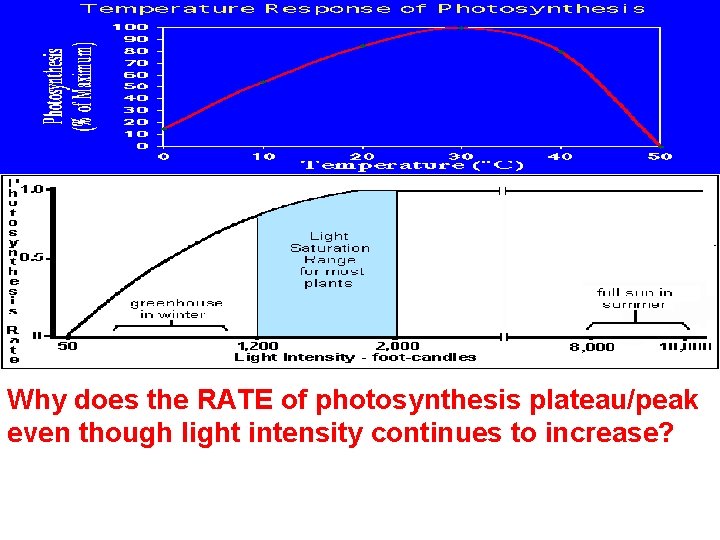
Why does the RATE of photosynthesis plateau/peak even though light intensity continues to increase?