
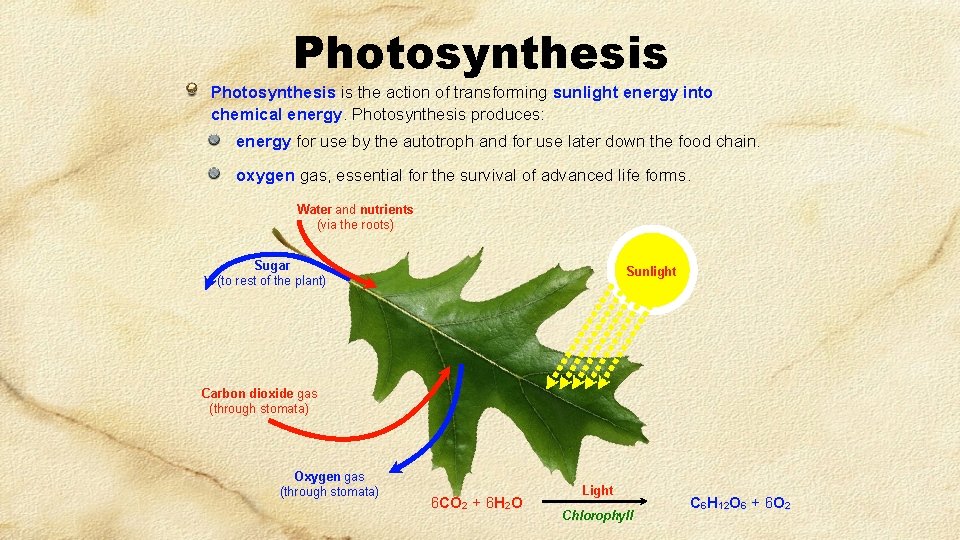
Photosynthesis is the action of transforming sunlight energy
- Slides: 22
Photosynthesis is the action of transforming sunlight energy into chemical energy. Photosynthesis produces: energy for use by the autotroph and for use later down the food chain. oxygen gas, essential for the survival of advanced life forms. Water and nutrients (via the roots) Sugar (to rest of the plant) Sunlight Carbon dioxide gas (through stomata) Oxygen gas (through stomata) 6 CO 2 + 6 H 2 O Light Chlorophyll C 6 H 12 O 6 + 6 O 2
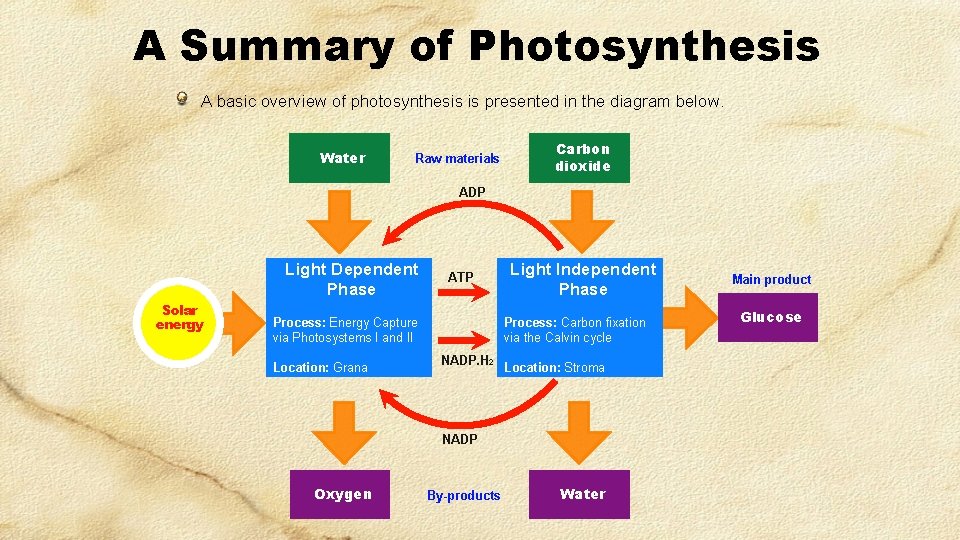
A Summary of Photosynthesis A basic overview of photosynthesis is presented in the diagram below. Water Raw materials Carbon dioxide ADP Light Dependent Phase Solar energy ATP Process: Energy Capture via Photosystems I and II Location: Grana Light Independent Phase Process: Carbon fixation via the Calvin cycle NADP. H 2 Location: Stroma NADP Oxygen By-products Water Main product Glucose
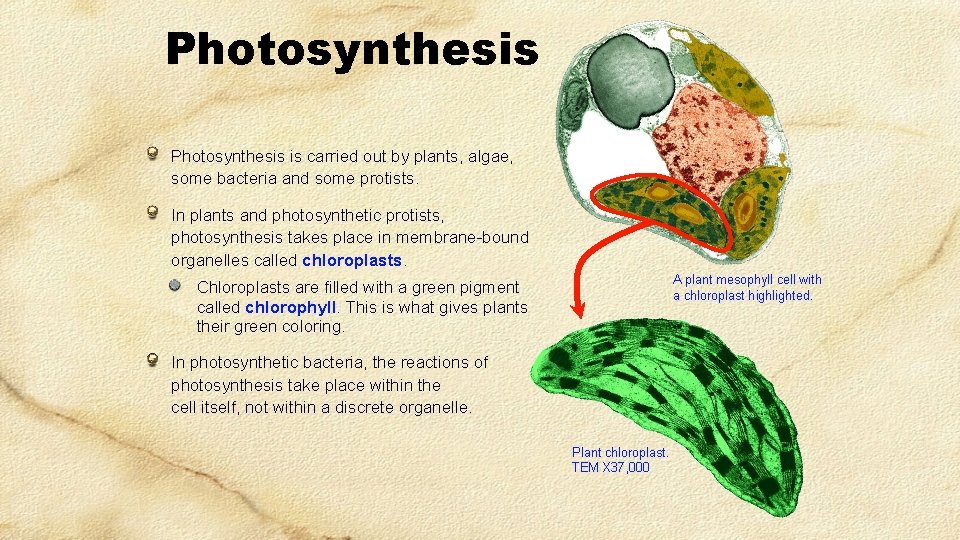
Photosynthesis is carried out by plants, algae, some bacteria and some protists. In plants and photosynthetic protists, photosynthesis takes place in membrane-bound organelles called chloroplasts. A plant mesophyll cell with a chloroplast highlighted. Chloroplasts are filled with a green pigment called chlorophyll. This is what gives plants their green coloring. In photosynthetic bacteria, the reactions of photosynthesis take place within the cell itself, not within a discrete organelle. Plant chloroplast. TEM X 37, 000
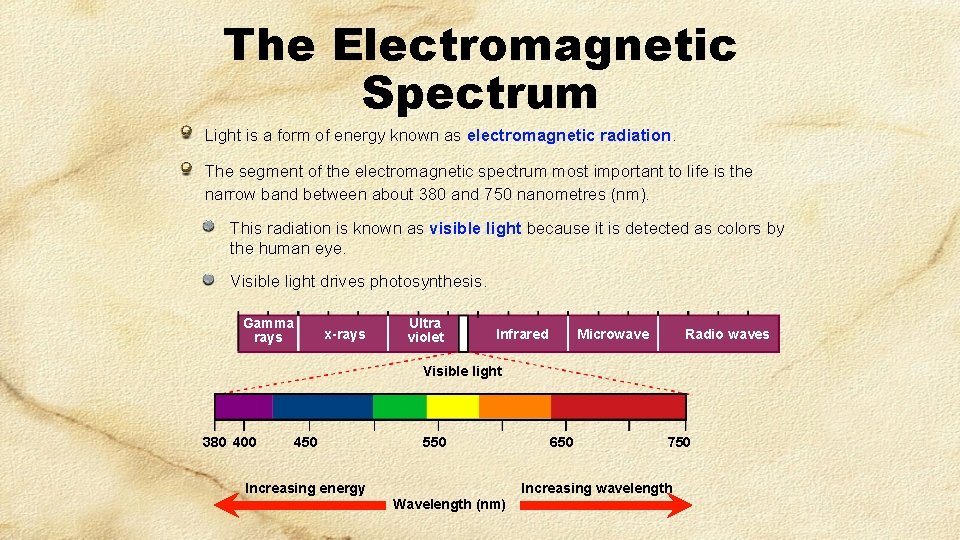
The Electromagnetic Spectrum Light is a form of energy known as electromagnetic radiation. The segment of the electromagnetic spectrum most important to life is the narrow band between about 380 and 750 nanometres (nm). This radiation is known as visible light because it is detected as colors by the human eye. Visible light drives photosynthesis. Gamma rays x-rays Ultra violet Infrared Microwave Radio waves Visible light 380 400 450 Increasing energy 550 Wavelength (nm) 650 750 Increasing wavelength
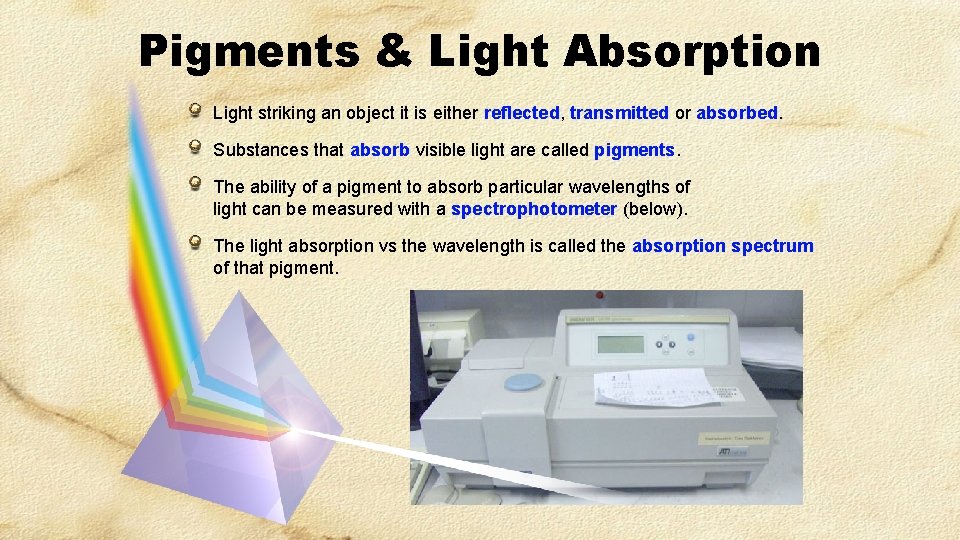
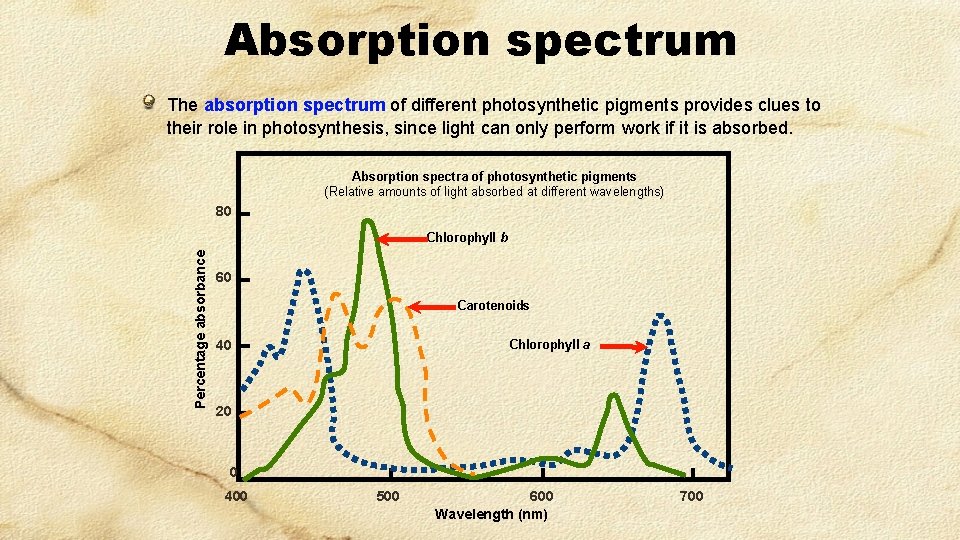
Pigments & Light Absorption Light striking an object it is either reflected, transmitted or absorbed. Substances that absorb visible light are called pigments. The ability of a pigment to absorb particular wavelengths of light can be measured with a spectrophotometer (below). The light absorption vs the wavelength is called the absorption spectrum of that pigment.
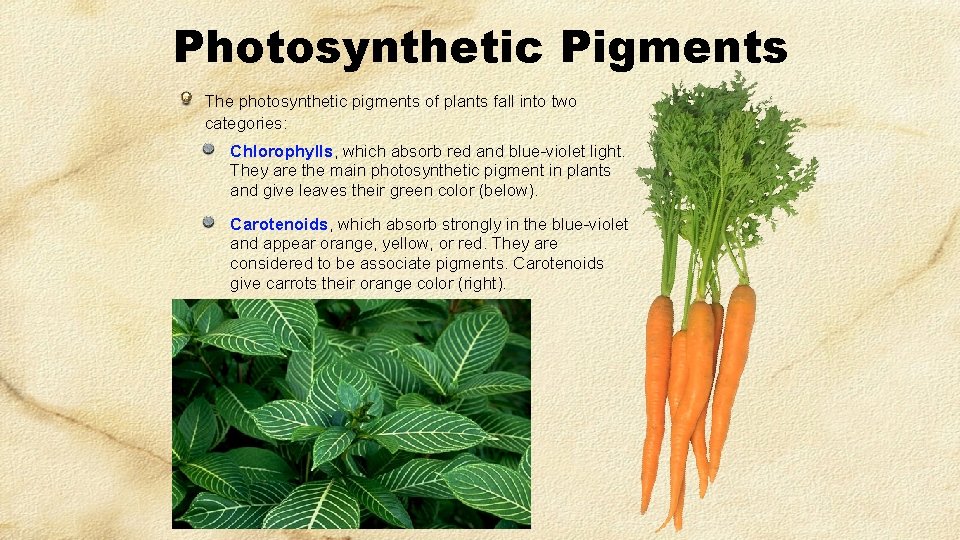
Photosynthetic Pigments The photosynthetic pigments of plants fall into two categories: Chlorophylls, which absorb red and blue-violet light. They are the main photosynthetic pigment in plants and give leaves their green color (below). Carotenoids, which absorb strongly in the blue-violet and appear orange, yellow, or red. They are considered to be associate pigments. Carotenoids give carrots their orange color (right).
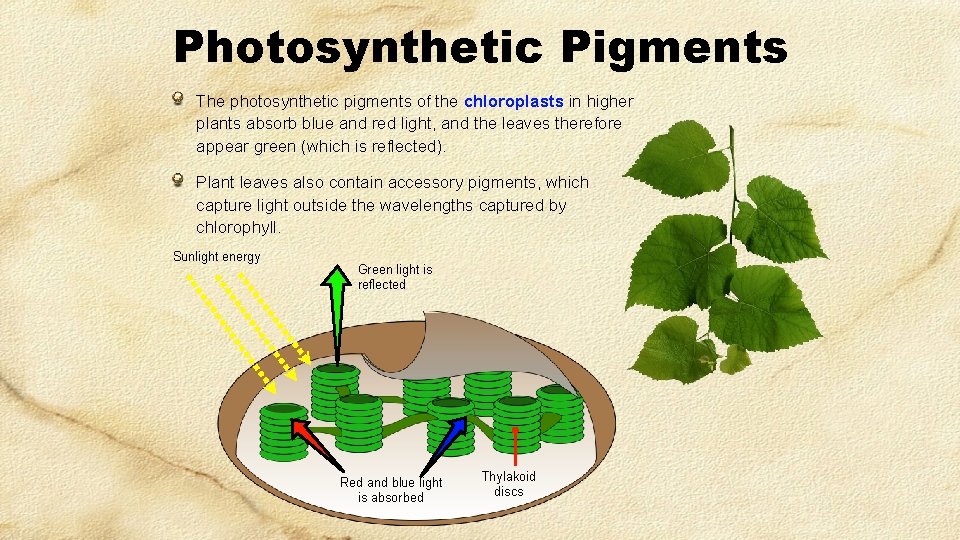
Photosynthetic Pigments The photosynthetic pigments of the chloroplasts in higher plants absorb blue and red light, and the leaves therefore appear green (which is reflected). Plant leaves also contain accessory pigments, which capture light outside the wavelengths captured by chlorophyll. Sunlight energy Green light is reflected Red and blue light is absorbed Thylakoid discs
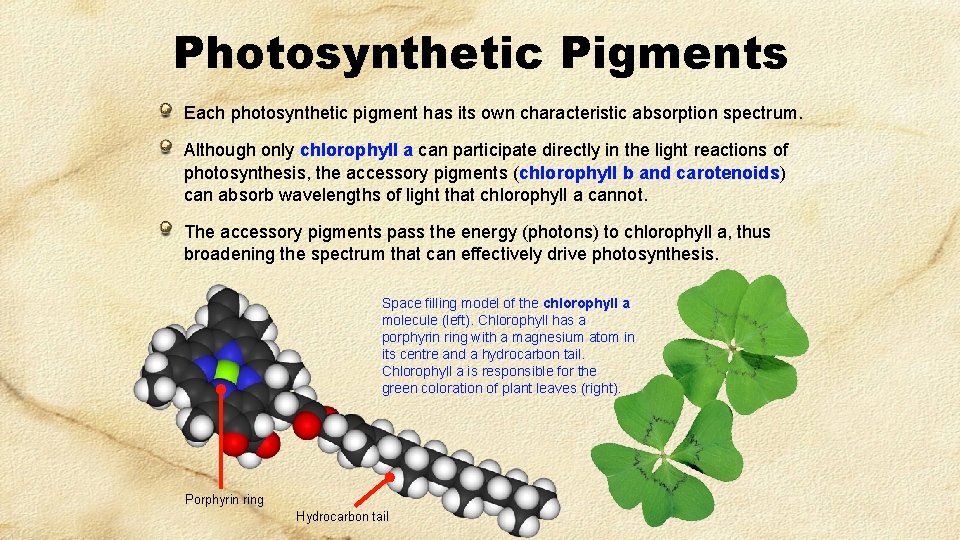
Photosynthetic Pigments Each photosynthetic pigment has its own characteristic absorption spectrum. Although only chlorophyll a can participate directly in the light reactions of photosynthesis, the accessory pigments (chlorophyll b and carotenoids) can absorb wavelengths of light that chlorophyll a cannot. The accessory pigments pass the energy (photons) to chlorophyll a, thus broadening the spectrum that can effectively drive photosynthesis. Space filling model of the chlorophyll a molecule (left). Chlorophyll has a porphyrin ring with a magnesium atom in its centre and a hydrocarbon tail. Chlorophyll a is responsible for the green coloration of plant leaves (right). Porphyrin ring Hydrocarbon tail
Absorption spectrum The absorption spectrum of different photosynthetic pigments provides clues to their role in photosynthesis, since light can only perform work if it is absorbed. Absorption spectra of photosynthetic pigments (Relative amounts of light absorbed at different wavelengths) 80 Percentage absorbance Chlorophyll b 60 Carotenoids Chlorophyll a 40 20 0 400 500 600 Wavelength (nm) 700
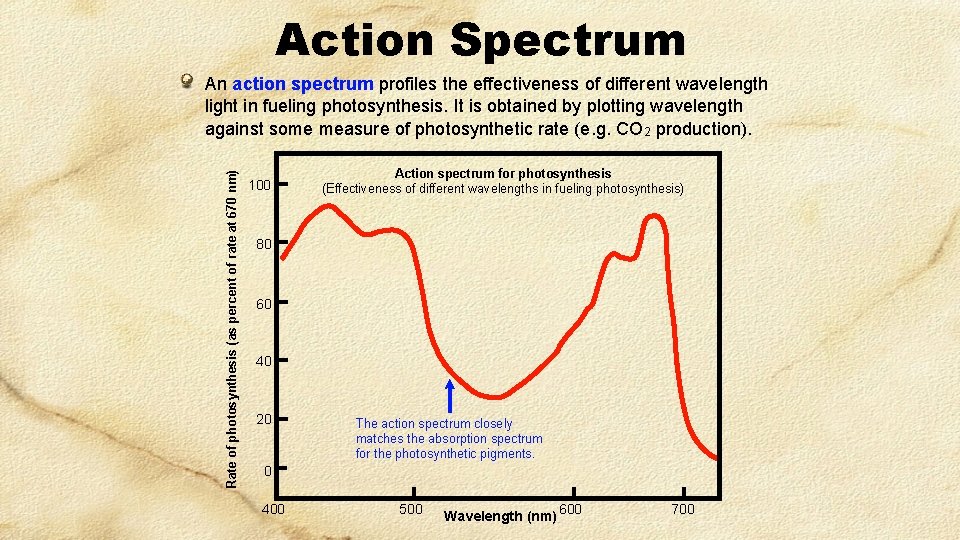
Action Spectrum Rate of photosynthesis (as percent of rate at 670 nm) An action spectrum profiles the effectiveness of different wavelength light in fueling photosynthesis. It is obtained by plotting wavelength against some measure of photosynthetic rate (e. g. CO 2 production). 100 Action spectrum for photosynthesis (Effectiveness of different wavelengths in fueling photosynthesis) 80 60 40 20 The action spectrum closely matches the absorption spectrum for the photosynthetic pigments. 0 400 500 Wavelength (nm) 600 700
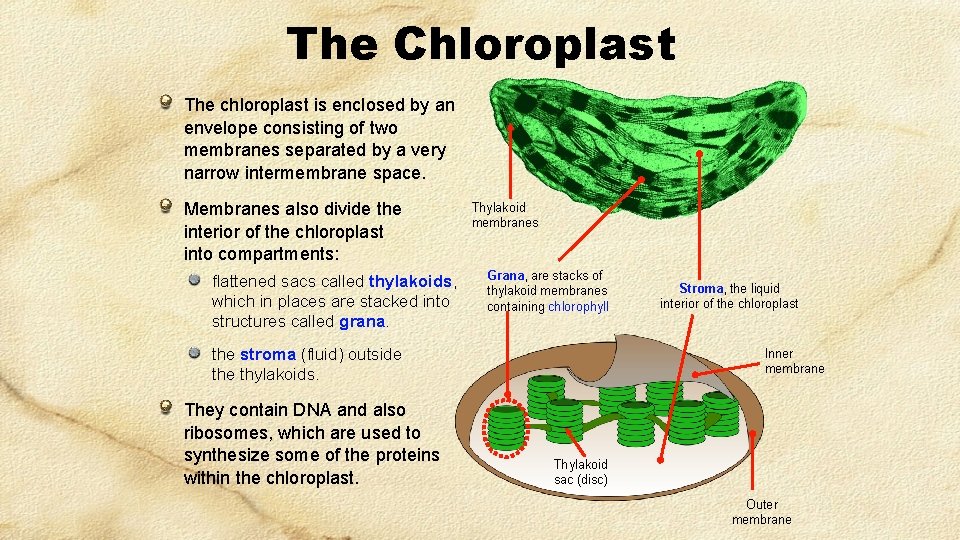
The Chloroplast The chloroplast is enclosed by an envelope consisting of two membranes separated by a very narrow intermembrane space. Membranes also divide the interior of the chloroplast into compartments: flattened sacs called thylakoids, which in places are stacked into structures called grana. Thylakoid membranes Grana, are stacks of thylakoid membranes containing chlorophyll the stroma (fluid) outside thylakoids. They contain DNA and also ribosomes, which are used to synthesize some of the proteins within the chloroplast. Stroma, the liquid interior of the chloroplast Inner membrane Thylakoid sac (disc) Outer membrane
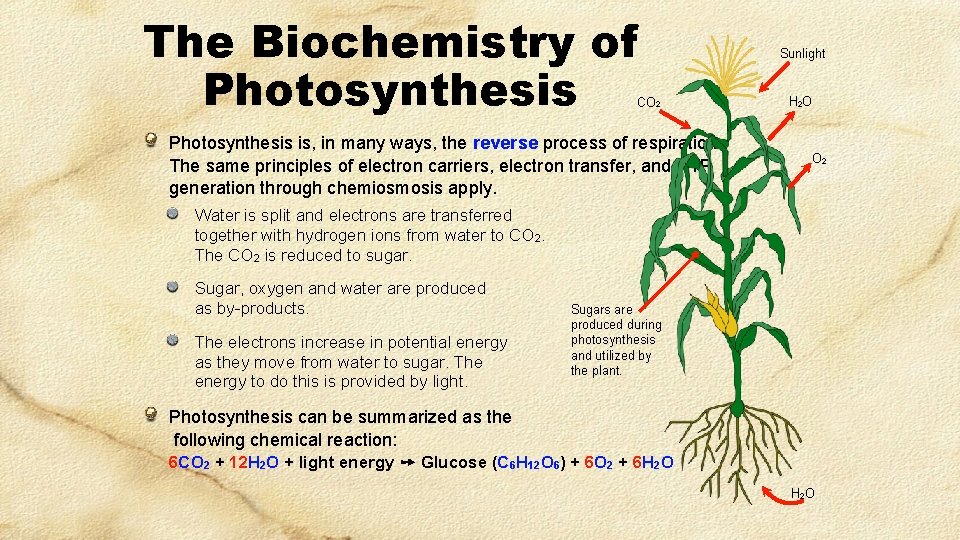
The Biochemistry of Photosynthesis CO 2 Photosynthesis is, in many ways, the reverse process of respiration. The same principles of electron carriers, electron transfer, and ATP generation through chemiosmosis apply. Sunlight H 2 O O 2 Water is split and electrons are transferred together with hydrogen ions from water to CO 2. The CO 2 is reduced to sugar. Sugar, oxygen and water are produced as by-products. The electrons increase in potential energy as they move from water to sugar. The energy to do this is provided by light. Sugars are produced during photosynthesis and utilized by the plant. Photosynthesis can be summarized as the following chemical reaction: 6 CO 2 + 12 H 2 O + light energy ➙ Glucose (C 6 H 12 O 6) + 6 O 2 + 6 H 2 O
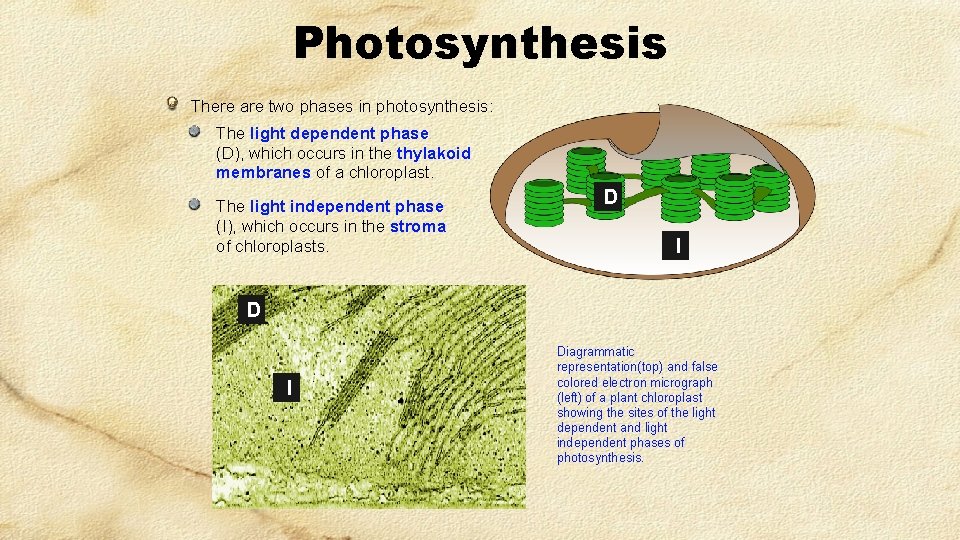
Photosynthesis There are two phases in photosynthesis: The light dependent phase (D), which occurs in the thylakoid membranes of a chloroplast. The light independent phase (I), which occurs in the stroma of chloroplasts. D I Diagrammatic representation(top) and false colored electron micrograph (left) of a plant chloroplast showing the sites of the light dependent and light independent phases of photosynthesis.
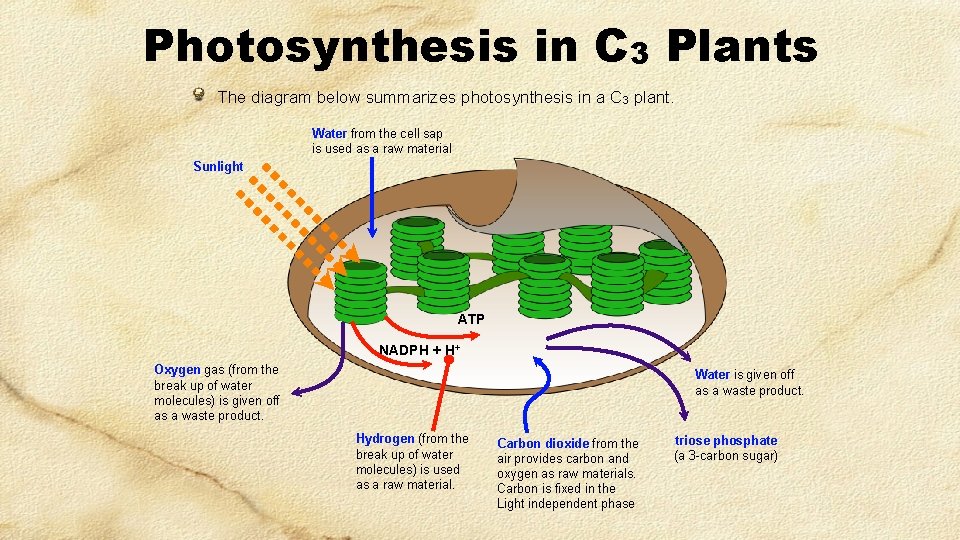
Photosynthesis in C 3 Plants The diagram below summarizes photosynthesis in a C 3 plant. Water from the cell sap is used as a raw material Sunlight ATP NADPH + H+ Oxygen gas (from the break up of water molecules) is given off as a waste product. Water is given off as a waste product. Hydrogen (from the break up of water molecules) is used as a raw material. Carbon dioxide from the air provides carbon and oxygen as raw materials. Carbon is fixed in the Light independent phase triose phosphate (a 3 -carbon sugar)
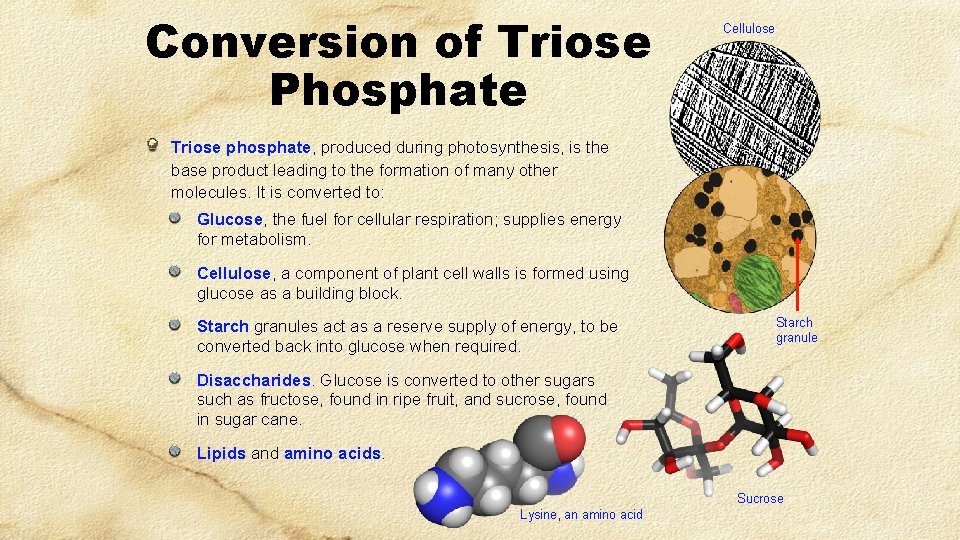
Conversion of Triose Phosphate Cellulose Triose phosphate, produced during photosynthesis, is the base product leading to the formation of many other molecules. It is converted to: Glucose, the fuel for cellular respiration; supplies energy for metabolism. Cellulose, a component of plant cell walls is formed using glucose as a building block. Starch granules act as a reserve supply of energy, to be converted back into glucose when required. Starch granule Disaccharides. Glucose is converted to other sugars such as fructose, found in ripe fruit, and sucrose, found in sugar cane. Lipids and amino acids. Sucrose Lysine, an amino acid
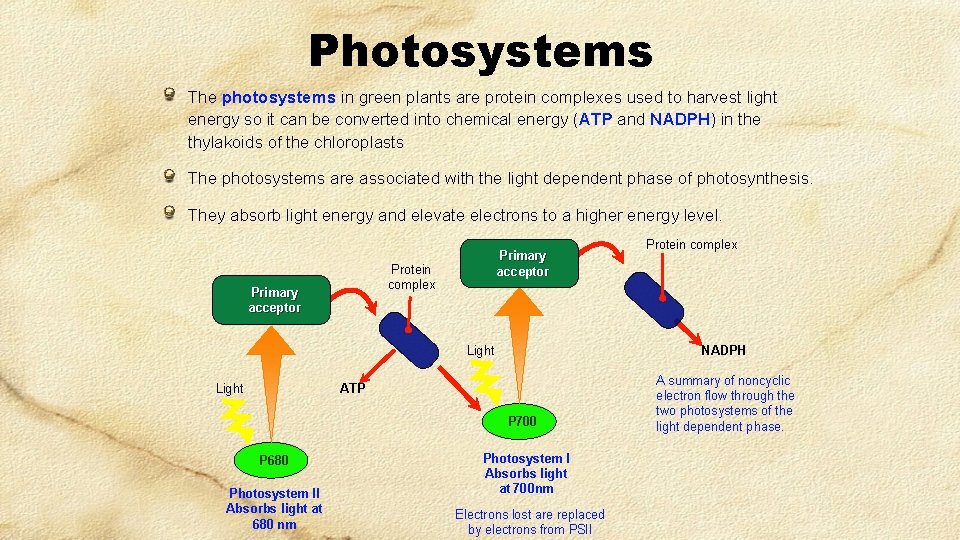
Photosystems The photosystems in green plants are protein complexes used to harvest light energy so it can be converted into chemical energy (ATP and NADPH) in the thylakoids of the chloroplasts The photosystems are associated with the light dependent phase of photosynthesis. They absorb light energy and elevate electrons to a higher energy level. Primary acceptor Protein complex Primary acceptor NADPH Light ATP Light P 700 P 680 Photosystem II Absorbs light at 680 nm Protein complex Photosystem I Absorbs light at 700 nm Electrons lost are replaced by electrons from PSII A summary of noncyclic electron flow through the two photosystems of the light dependent phase.
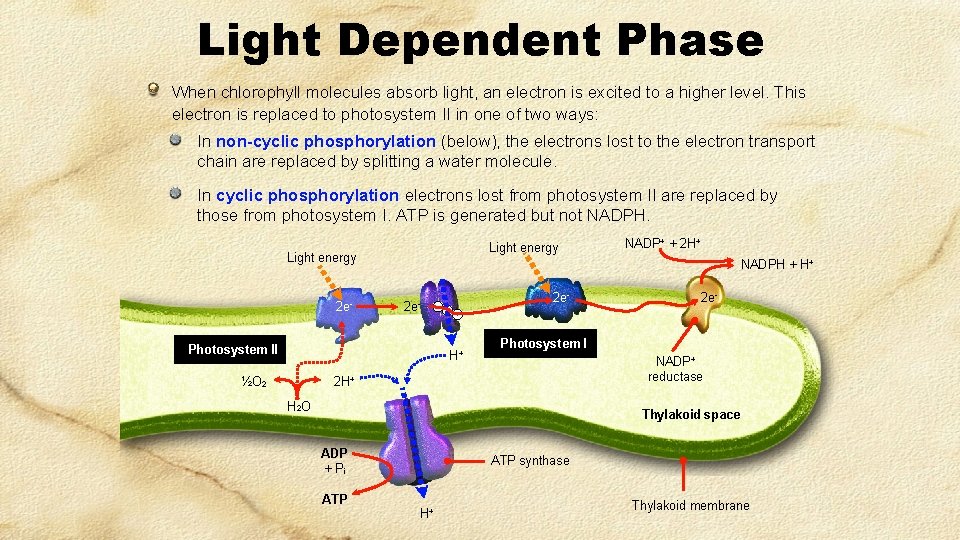
Light Dependent Phase When chlorophyll molecules absorb light, an electron is excited to a higher level. This electron is replaced to photosystem II in one of two ways: In non-cyclic phosphorylation (below), the electrons lost to the electron transport chain are replaced by splitting a water molecule. In cyclic phosphorylation electrons lost from photosystem II are replaced by those from photosystem I. ATP is generated but not NADPH. Light energy 2 e- NADPH + H+ 2 e- Photosystem II H+ 2 e- Photosystem I NADP+ reductase 2 H+ ½O 2 NADP+ + 2 H+ H 2 O Thylakoid space ADP + Pi ATP synthase ATP H+ Thylakoid membrane
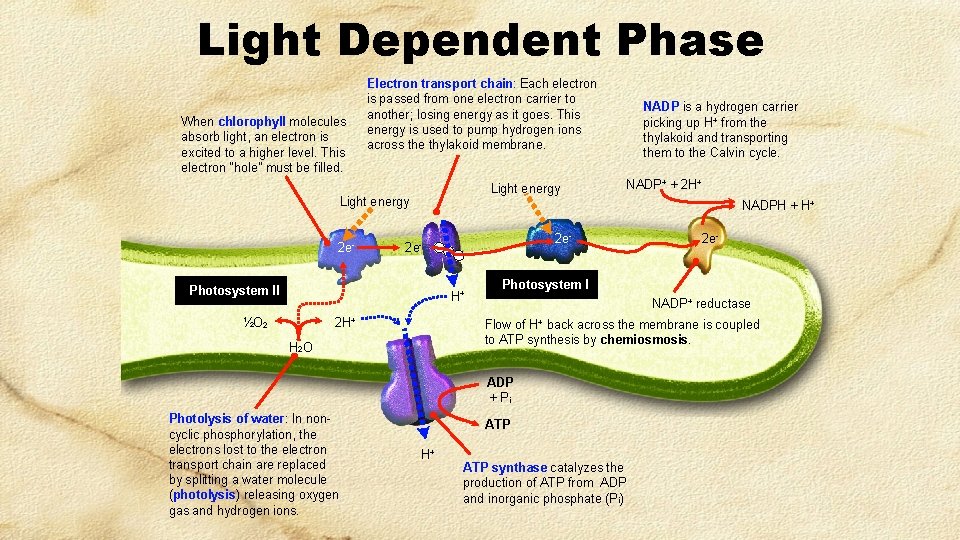
Light Dependent Phase When chlorophyll molecules absorb light, an electron is excited to a higher level. This electron “hole” must be filled. Electron transport chain: Each electron is passed from one electron carrier to another; losing energy as it goes. This energy is used to pump hydrogen ions across the thylakoid membrane. Light energy 2 e- 2 e- H+ 2 e- Photosystem I NADP+ reductase Flow of H+ back across the membrane is coupled to ATP synthesis by chemiosmosis. H 2 O ADP + Pi Photolysis of water: In noncyclic phosphorylation, the electrons lost to the electron transport chain are replaced by splitting a water molecule (photolysis) releasing oxygen gas and hydrogen ions. NADP+ + 2 H+ NADPH + H+ Photosystem II ½O 2 NADP is a hydrogen carrier picking up H+ from the thylakoid and transporting them to the Calvin cycle. ATP H+ ATP synthase catalyzes the production of ATP from ADP and inorganic phosphate (Pi)
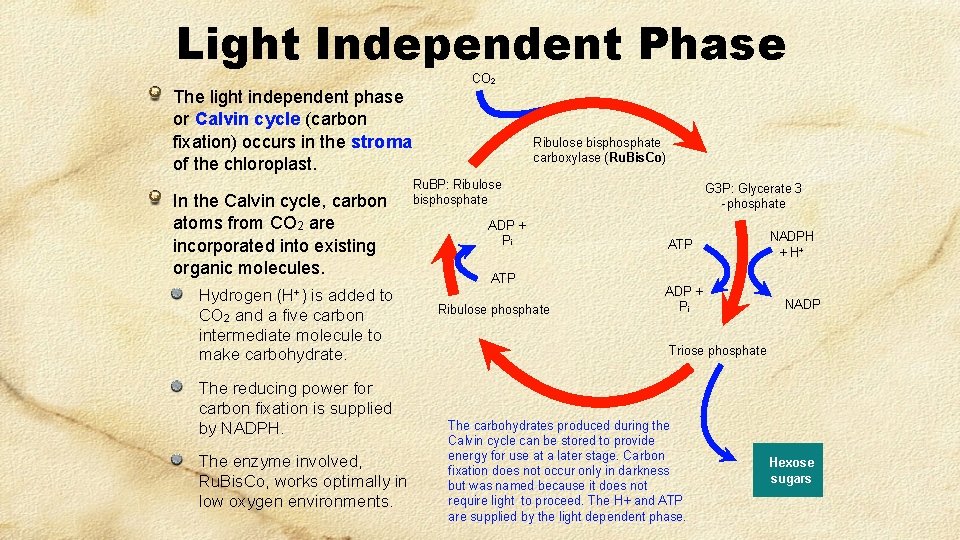
Light Independent Phase CO 2 The light independent phase or Calvin cycle (carbon fixation) occurs in the stroma of the chloroplast. In the Calvin cycle, carbon atoms from CO 2 are incorporated into existing organic molecules. Hydrogen (H+) is added to CO 2 and a five carbon intermediate molecule to make carbohydrate. The reducing power for carbon fixation is supplied by NADPH. The enzyme involved, Ru. Bis. Co, works optimally in low oxygen environments. Ribulose bisphosphate carboxylase (Ru. Bis. Co) Ru. BP: Ribulose bisphosphate ADP + Pi ATP Ribulose phosphate G 3 P: Glycerate 3 -phosphate ATP ADP + Pi NADPH + H+ NADP Triose phosphate The carbohydrates produced during the Calvin cycle can be stored to provide energy for use at a later stage. Carbon fixation does not occur only in darkness but was named because it does not require light to proceed. The H+ and ATP are supplied by the light dependent phase. Hexose sugars
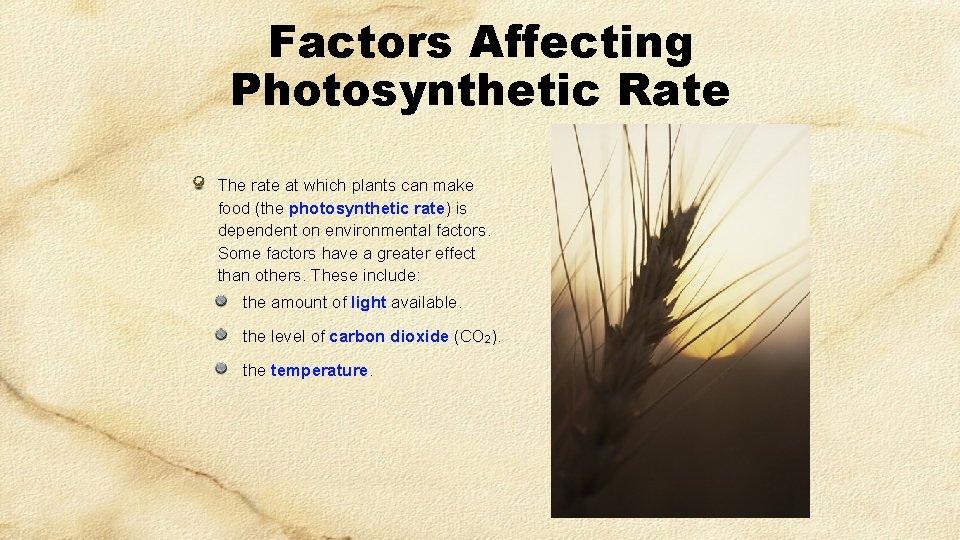
Factors Affecting Photosynthetic Rate The rate at which plants can make food (the photosynthetic rate) is dependent on environmental factors. Some factors have a greater effect than others. These include: the amount of light available. the level of carbon dioxide (CO 2). the temperature.
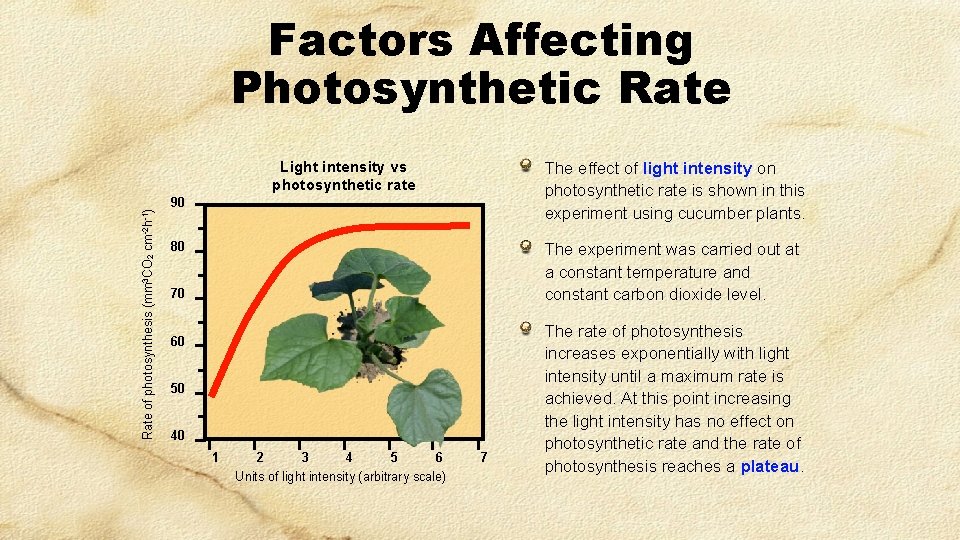
Factors Affecting Photosynthetic Rate of photosynthesis (mm 3 CO 2 cm-2 h-1) Light intensity vs photosynthetic rate The effect of light intensity on photosynthetic rate is shown in this experiment using cucumber plants. 90 The experiment was carried out at a constant temperature and constant carbon dioxide level. 80 70 60 50 40 1 2 3 4 5 6 Units of light intensity (arbitrary scale) 7 The rate of photosynthesis increases exponentially with light intensity until a maximum rate is achieved. At this point increasing the light intensity has no effect on photosynthetic rate and the rate of photosynthesis reaches a plateau.
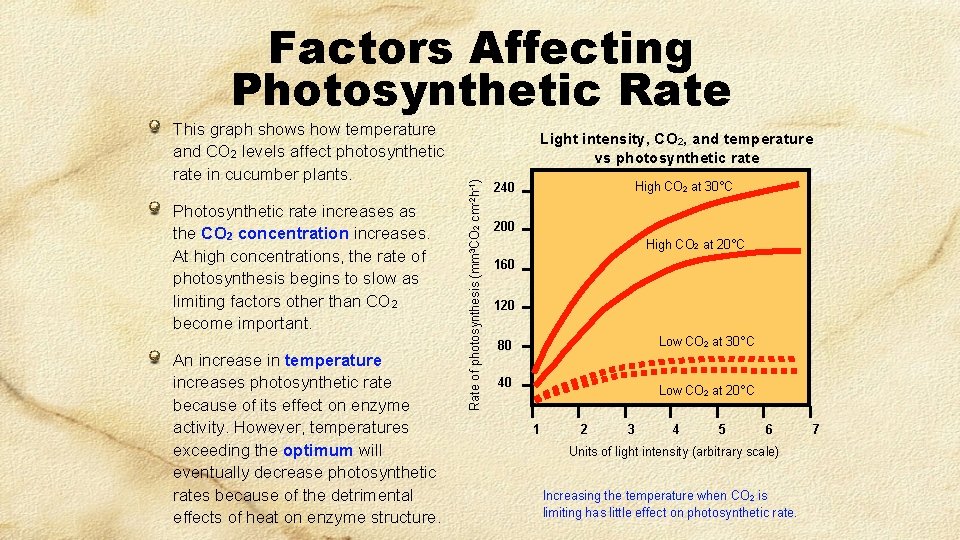
Factors Affecting Photosynthetic Rate Photosynthetic rate increases as the CO 2 concentration increases. At high concentrations, the rate of photosynthesis begins to slow as limiting factors other than CO 2 become important. An increase in temperature increases photosynthetic rate because of its effect on enzyme activity. However, temperatures exceeding the optimum will eventually decrease photosynthetic rates because of the detrimental effects of heat on enzyme structure. Light intensity, CO 2, and temperature vs photosynthetic rate Rate of photosynthesis (mm 3 CO 2 cm-2 h-1) This graph shows how temperature and CO 2 levels affect photosynthetic rate in cucumber plants. High CO 2 at 30°C 240 200 High CO 2 at 20°C 160 120 Low CO 2 at 30°C 80 40 Low CO 2 at 20°C 1 2 3 4 5 6 Units of light intensity (arbitrary scale) Increasing the temperature when CO 2 is limiting has little effect on photosynthetic rate. 7