
Photosynthesis is a process used by plants and
Photosynthesis: is a process used by plants and other organisms to convert light energy, normally from the Sun, into chemical energy that can be later used for the organisms' activities. Occurs in: Producers (examples plants/some bacteria/algae) Chloroplasts of leaves are major sites for photosynthesis. Affected by: Temperature, Light Intensity, CO 2 & O 2 Carbon dioxide + water + light energy glucose + oxygen 6 CO 2 + 6 H 2 O + light energy C 6 H 12 O 6 + 6 O 2 Reactants Products
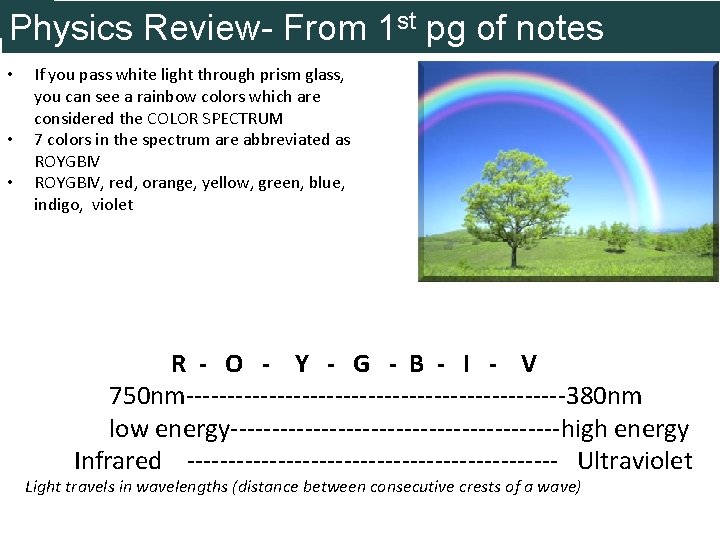
Physics Review- From 1 st pg of notes • • • If you pass white light through prism glass, you can see a rainbow colors which are considered the COLOR SPECTRUM 7 colors in the spectrum are abbreviated as ROYGBIV, red, orange, yellow, green, blue, indigo, violet R - O - Y - G - B - I - V 750 nm-----------------------380 nm low energy--------------------high energy Infrared ----------------------- Ultraviolet Light travels in wavelengths (distance between consecutive crests of a wave)
Chlorophyll is made up of a combination of pigments: Carotene= orange Xanthophyll = yellow accessory pigments Chlorophyll b= blue-green Chlorophyll a= yellow-green (direct use in photosynthesis) This combination reveals a green color!! Chloroplasts absorb red and blue light, which are most affective in photosynthesis. Green light is reflected, which is why the leaves appear green.
- Slides: 3