
Photosynthesis Introduction to Biology Photosynthesis Photo light Synthesis
Photosynthesis Introduction to Biology
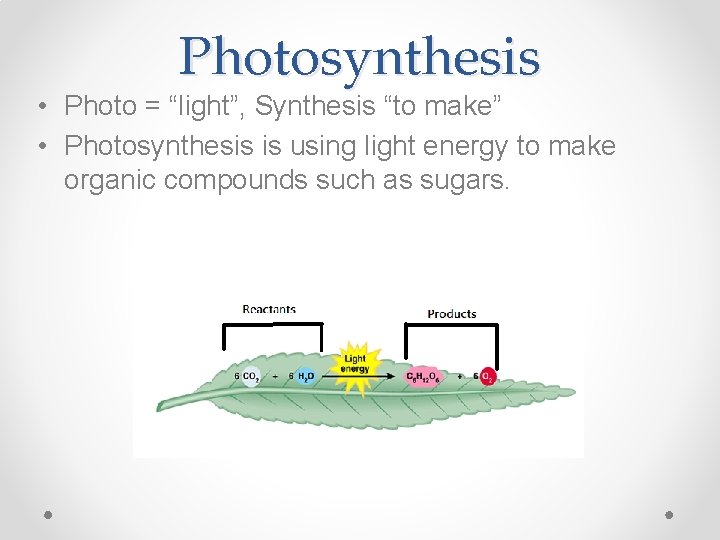
Photosynthesis • Photo = “light”, Synthesis “to make” • Photosynthesis is using light energy to make organic compounds such as sugars.
• Autotrophs are able to produce the molecules they need for life without eating anything. o Photoautotrophs use sunlight as their energy source. o Chemoautotrophs use non-living chemicals (like Hydrogen sulfide gas) as their energy source • Almost all plants are photoautotrophs. o Also includes algae(protists), and some bacteria.
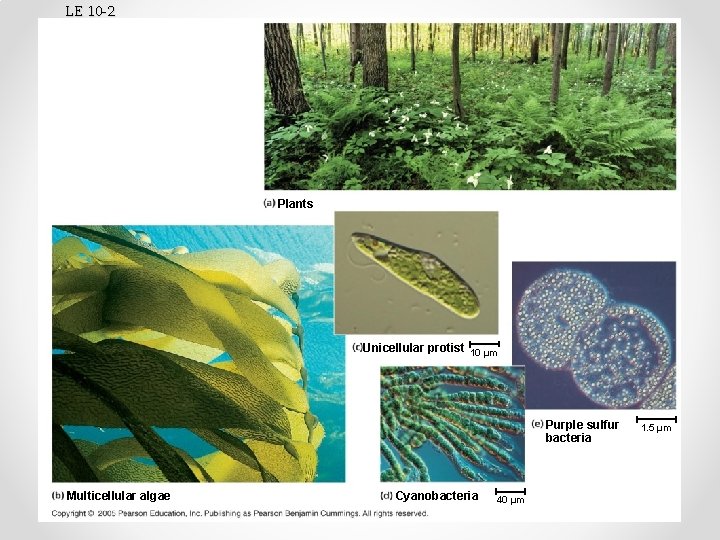
LE 10 -2 Plants Unicellular protist 10 µm Purple sulfur bacteria Multicellular algae Cyanobacteria 40 µm 1. 5 µm
• Heterotrophs obtain their organic material by eating other organisms • Almost all heterotrophs, including humans, depend on photoautotrophs like plants for food and oxygen
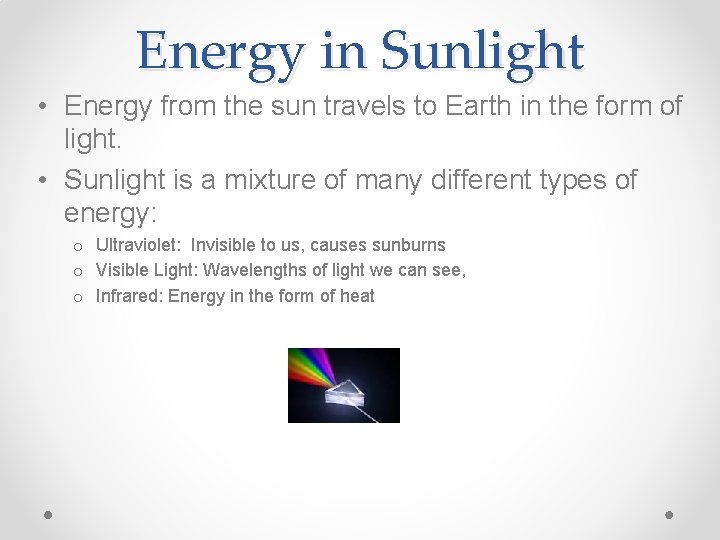
Energy in Sunlight • Energy from the sun travels to Earth in the form of light. • Sunlight is a mixture of many different types of energy: o Ultraviolet: Invisible to us, causes sunburns o Visible Light: Wavelengths of light we can see, o Infrared: Energy in the form of heat
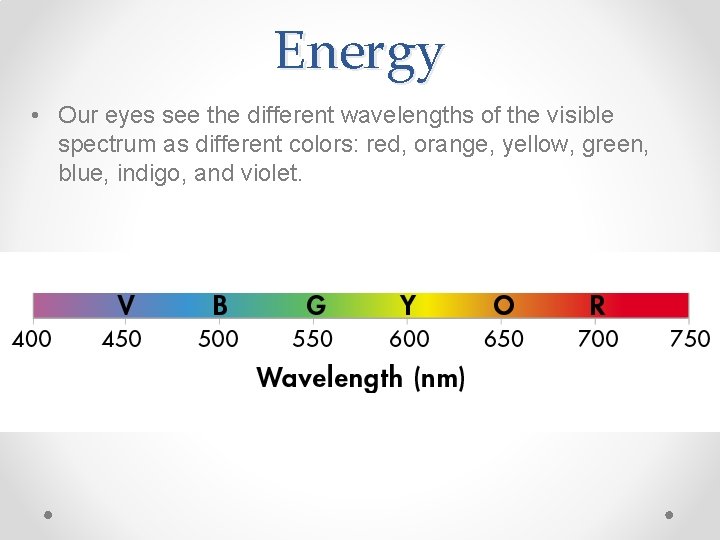
Energy • Our eyes see the different wavelengths of the visible spectrum as different colors: red, orange, yellow, green, blue, indigo, and violet.

Pigments • Plants gather the sun’s energy with light -absorbing molecules called pigments. • The plants’ principal pigment is chlorophyll. o Chlorophyll is a green pigment. o Plants are green because chlorophyll reflects green light and absorbs every other wavelength.
Pigments • Plant cells contain other pigments besides chlorophyll that increase the wavelengths absorbed. o These are called carotenoids. • During the summer, so much chlorophyll is produced that the green color overwhelms the other pigments. • When temperatures drop, the plants stop producing chlorophyll, and the other pigments may be seen.
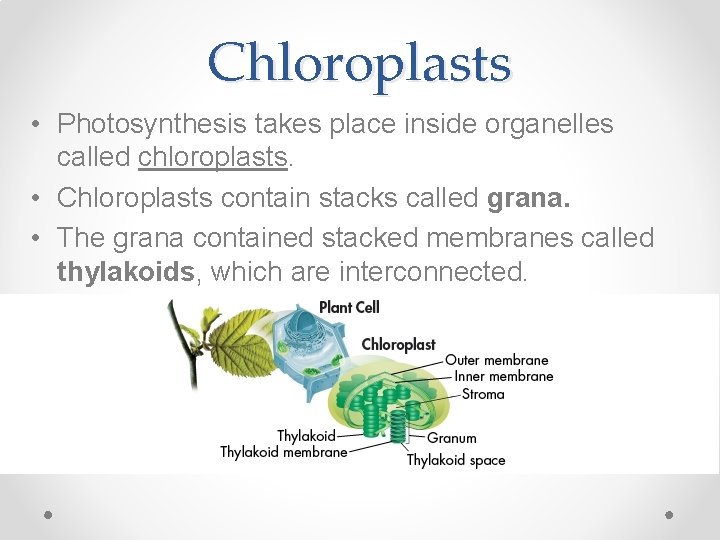
Chloroplasts • Photosynthesis takes place inside organelles called chloroplasts. • Chloroplasts contain stacks called grana. • The grana contained stacked membranes called thylakoids, which are interconnected.
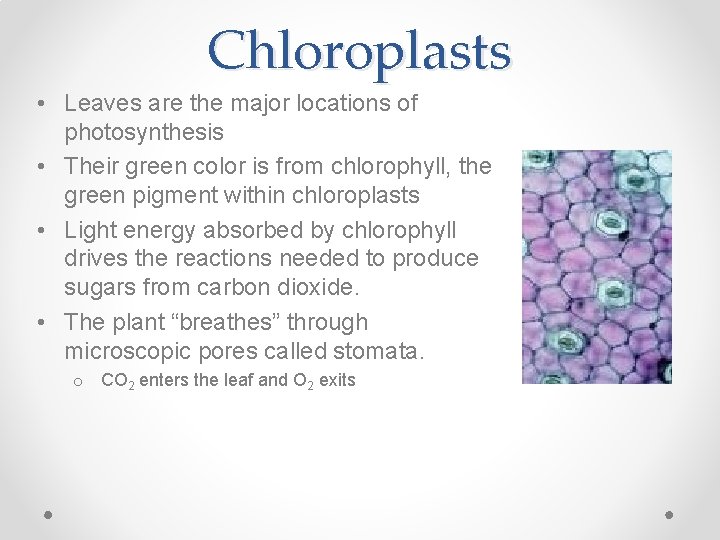
Chloroplasts • Leaves are the major locations of photosynthesis • Their green color is from chlorophyll, the green pigment within chloroplasts • Light energy absorbed by chlorophyll drives the reactions needed to produce sugars from carbon dioxide. • The plant “breathes” through microscopic pores called stomata. o CO 2 enters the leaf and O 2 exits
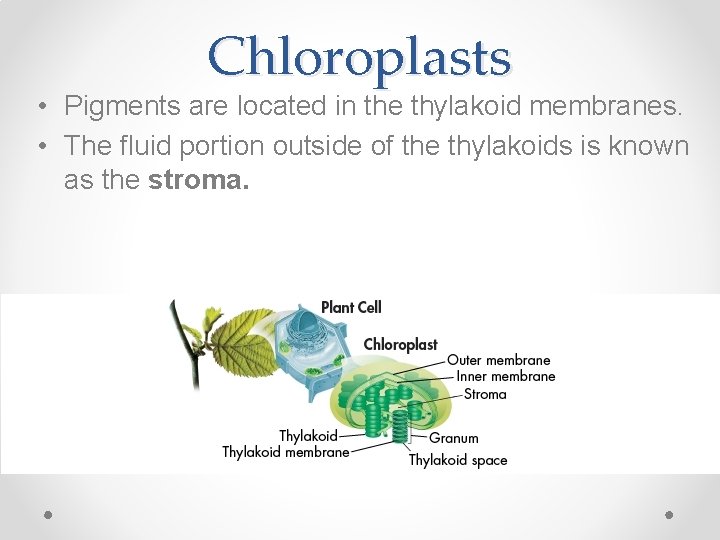
Chloroplasts • Pigments are located in the thylakoid membranes. • The fluid portion outside of the thylakoids is known as the stroma.
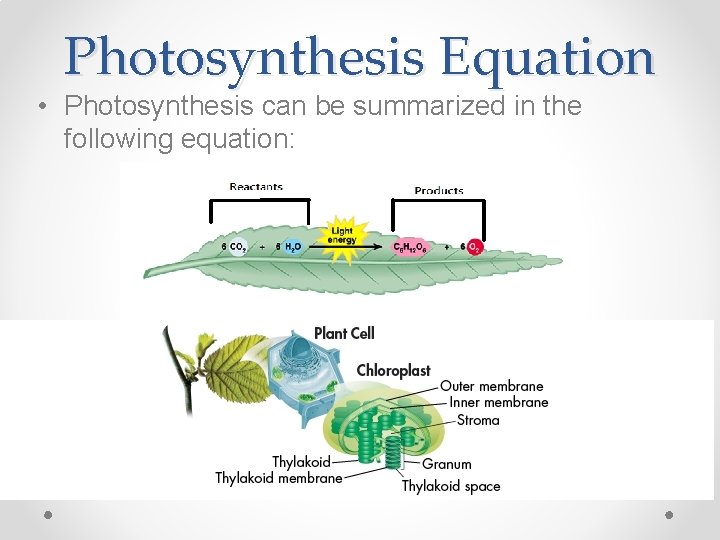
Photosynthesis Equation • Photosynthesis can be summarized in the following equation:
Stages of Photosynthesis • Photosynthesis consists of the light reactions (the photo part) and Calvin cycle (the synthesis part) • The light reactions occur in the thylakoids of the chloroplast. o Splits water, releases O 2, produces ATP and NADPH • The Calvin cycle occurs in the stroma of the chloroplast. o Forms sugar from CO 2 using ATP and NADPH
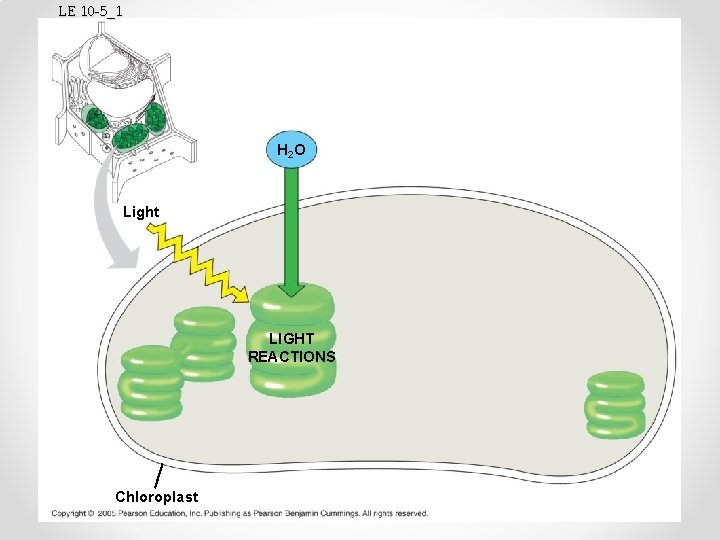
LE 10 -5_1 H 2 O Light LIGHT REACTIONS Chloroplast
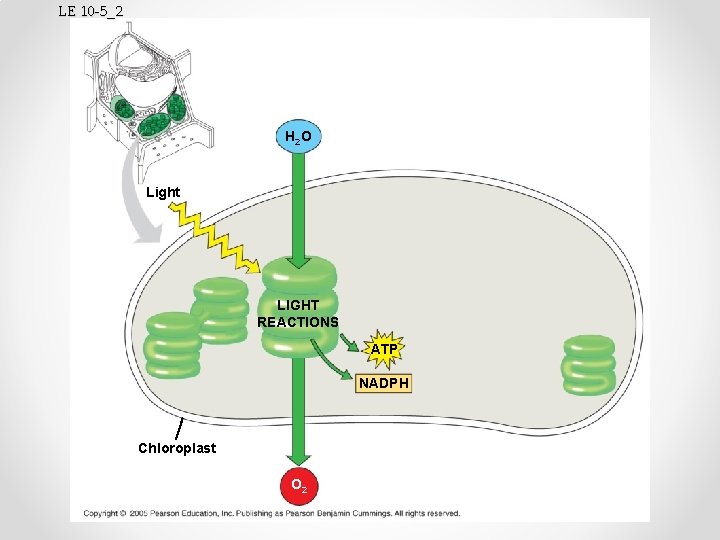
LE 10 -5_2 H 2 O Light LIGHT REACTIONS ATP NADPH Chloroplast O 2
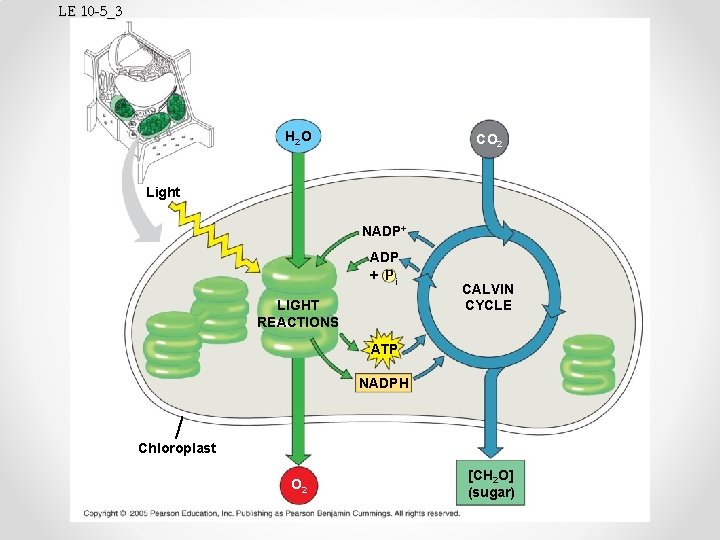
LE 10 -5_3 H 2 O CO 2 Light NADP+ ADP + Pi LIGHT REACTIONS CALVIN CYCLE ATP NADPH Chloroplast O 2 [CH 2 O] (sugar)
ATP and NADPH • Chloroplasts are solar-powered chemical factories • Their thylakoids transform light energy into the chemical energy of ATP and NADPH. o These are small energy-containing molecules that can be used to make glucose later.
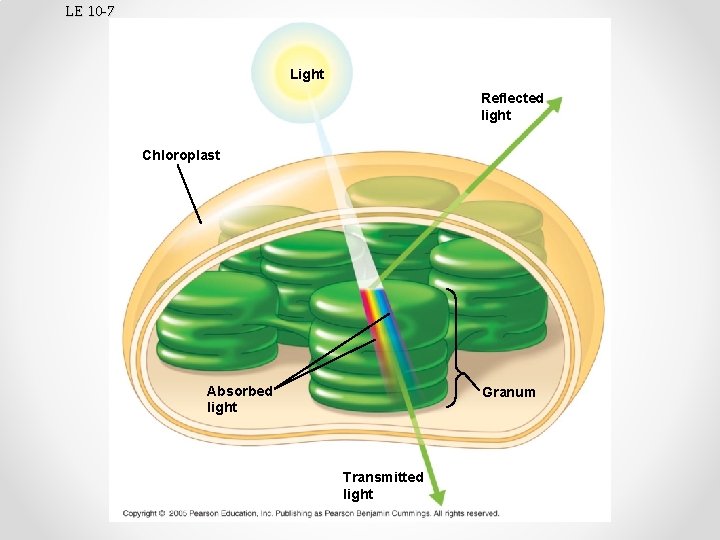
LE 10 -7 Light Reflected light Chloroplast Absorbed light Granum Transmitted light
Absorption of Sunlight • When chlorophyll absorbs light, it goes from a lowenergy ground state to an high-energy excited state, which is unstable. • When excited electrons fall back to the ground state, photons are given off causing fluorescence.

Building Glucose • The Calvin cycle builds sugar from smaller molecules by using ATP and NADPH • Carbon enters the cycle as CO 2 and leaves as a sugar named glyceraldehyde-3 -phospate (G 3 P) o To make one G 3 P, the cycle must take place three times, using up three molecules of CO 2
- Slides: 21