
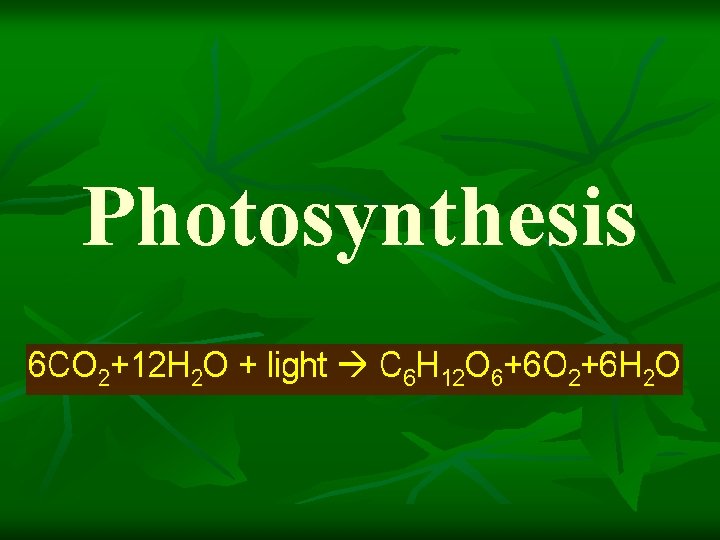
Photosynthesis Introduction n Photosynthesis transfers electrons from water







- Slides: 43
Photosynthesis
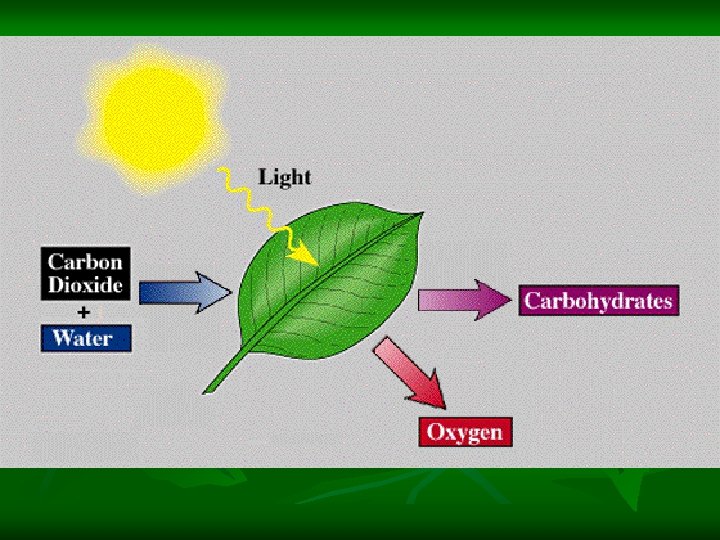
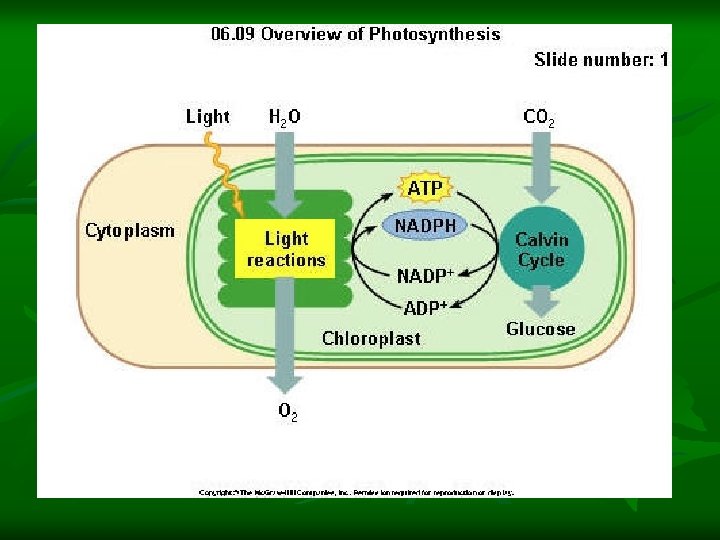
Introduction n Photosynthesis transfers electrons from water to energy-poor CO 2 molecules, forming energy-rich sugar molecules. This electron transfer is an example of an oxidationreduction process: the water is oxidized (loses electrons) and the CO 2 is reduced (gains electrons). Photosynthesis uses light energy to drive the electrons from water to their more energetic states in the sugar products, thus converting solar energy into chemical energy.
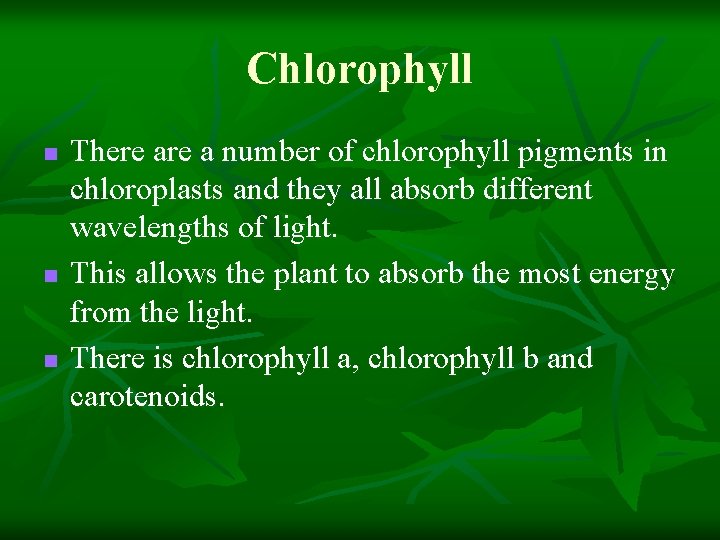
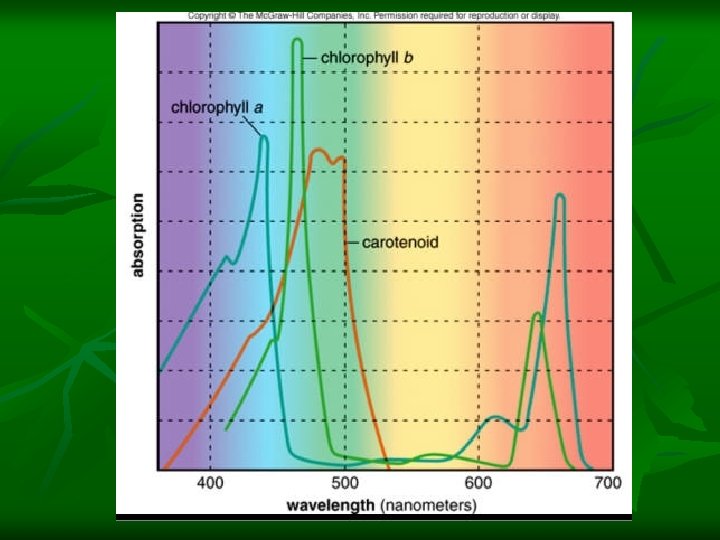
Chlorophyll n n n There a number of chlorophyll pigments in chloroplasts and they all absorb different wavelengths of light. This allows the plant to absorb the most energy from the light. There is chlorophyll a, chlorophyll b and carotenoids.
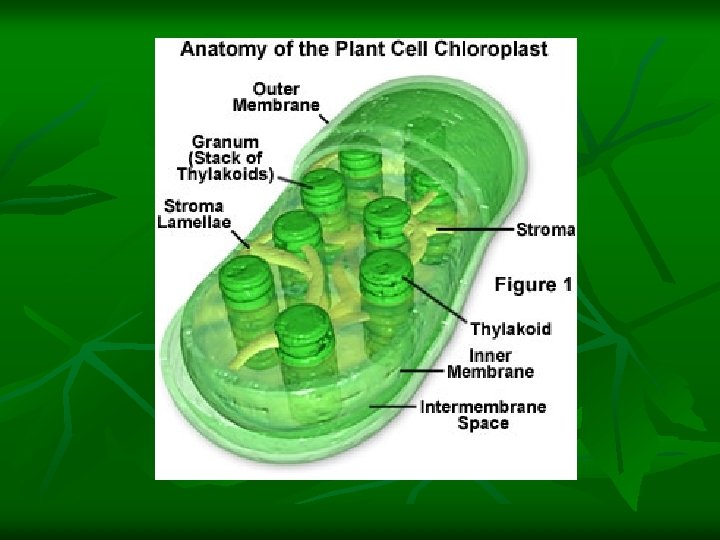
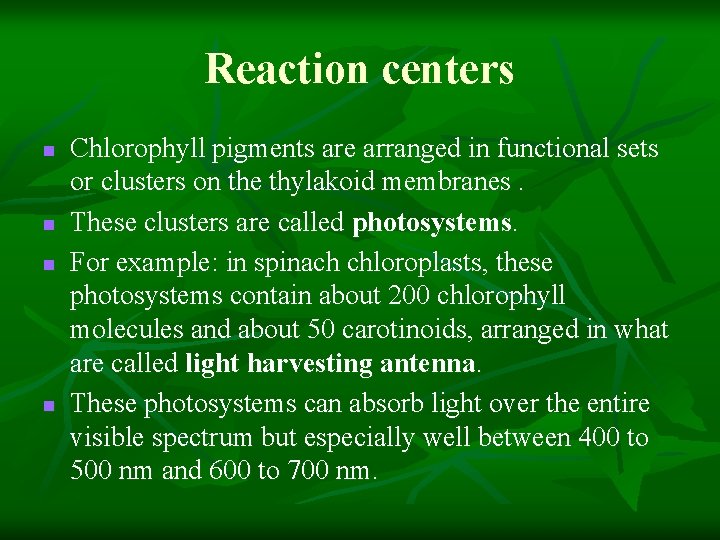
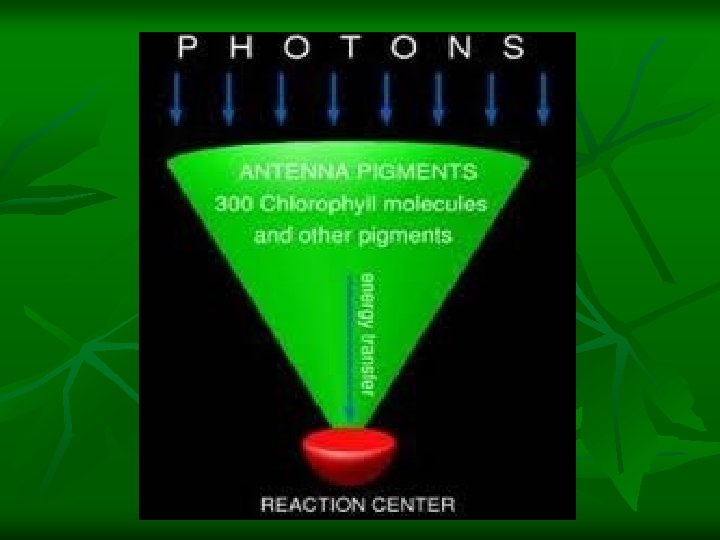
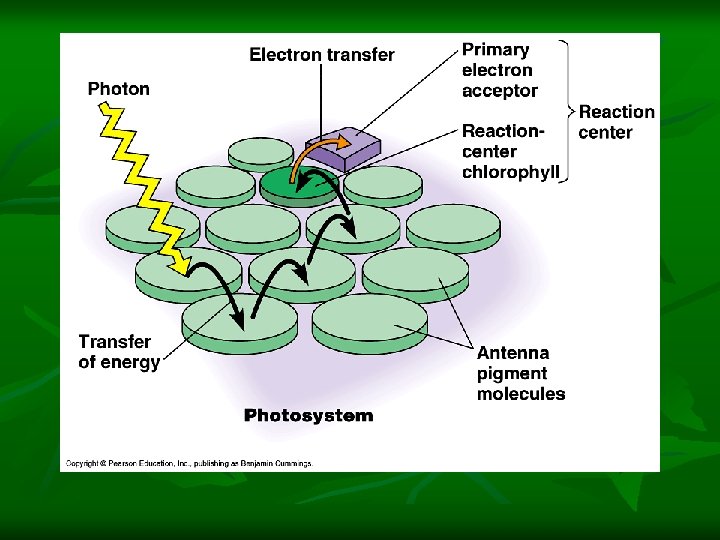
Reaction centers n n Chlorophyll pigments are arranged in functional sets or clusters on the thylakoid membranes. These clusters are called photosystems. For example: in spinach chloroplasts, these photosystems contain about 200 chlorophyll molecules and about 50 carotinoids, arranged in what are called light harvesting antenna. These photosystems can absorb light over the entire visible spectrum but especially well between 400 to 500 nm and 600 to 700 nm.
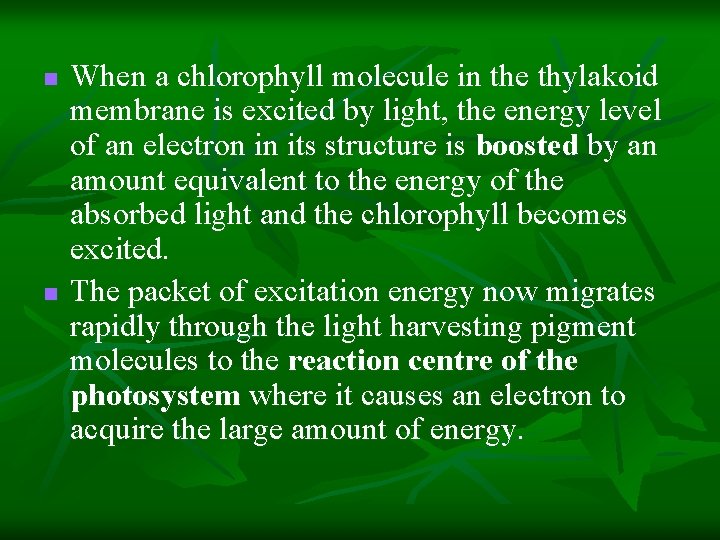
n n When a chlorophyll molecule in the thylakoid membrane is excited by light, the energy level of an electron in its structure is boosted by an amount equivalent to the energy of the absorbed light and the chlorophyll becomes excited. The packet of excitation energy now migrates rapidly through the light harvesting pigment molecules to the reaction centre of the photosystem where it causes an electron to acquire the large amount of energy.
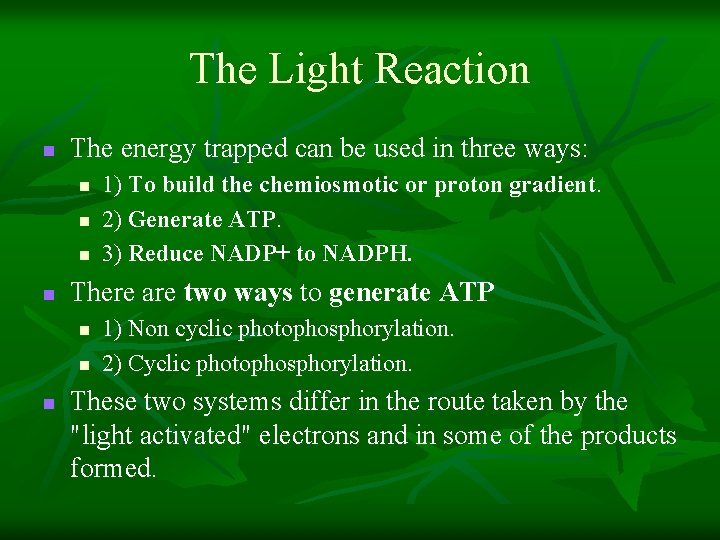
The Light Reaction n The energy trapped can be used in three ways: n n There are two ways to generate ATP n n n 1) To build the chemiosmotic or proton gradient. 2) Generate ATP. 3) Reduce NADP+ to NADPH. 1) Non cyclic photophosphorylation. 2) Cyclic photophosphorylation. These two systems differ in the route taken by the "light activated" electrons and in some of the products formed.
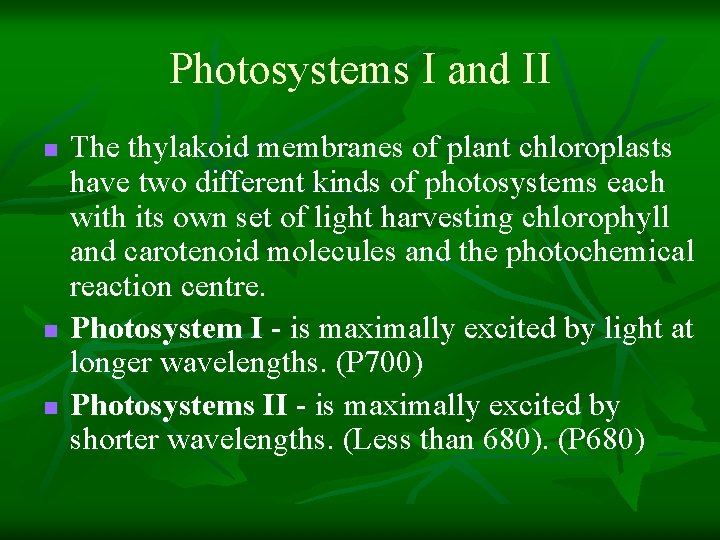
Photosystems I and II n n n The thylakoid membranes of plant chloroplasts have two different kinds of photosystems each with its own set of light harvesting chlorophyll and carotenoid molecules and the photochemical reaction centre. Photosystem I - is maximally excited by light at longer wavelengths. (P 700) Photosystems II - is maximally excited by shorter wavelengths. (Less than 680). (P 680)
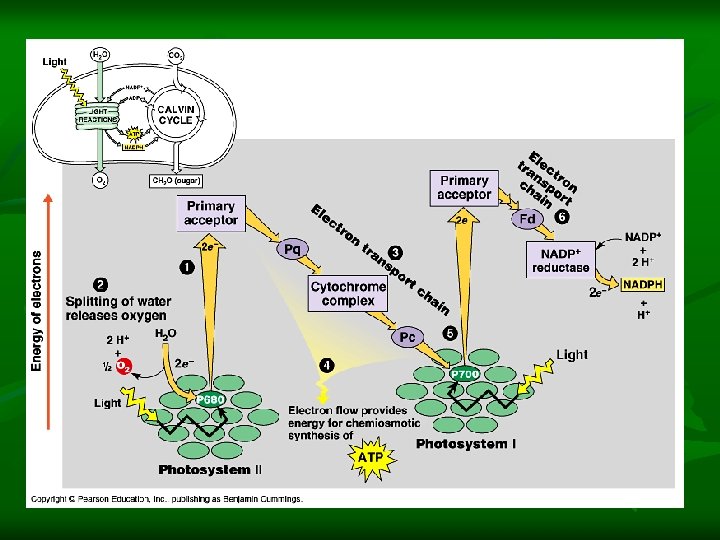
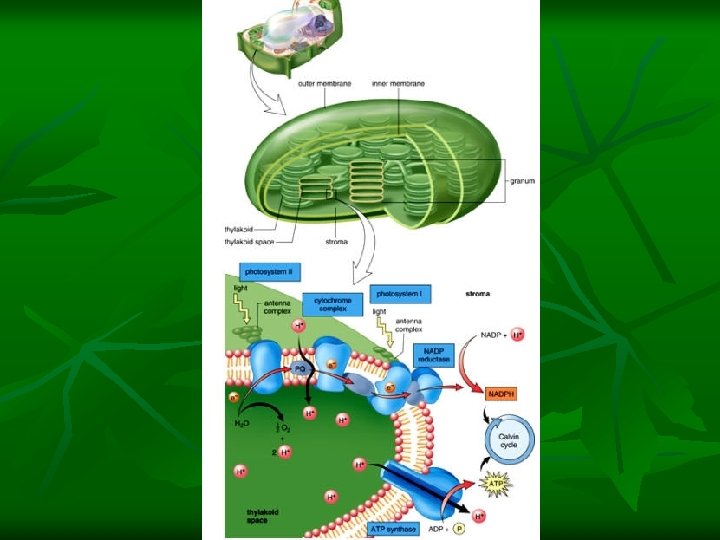
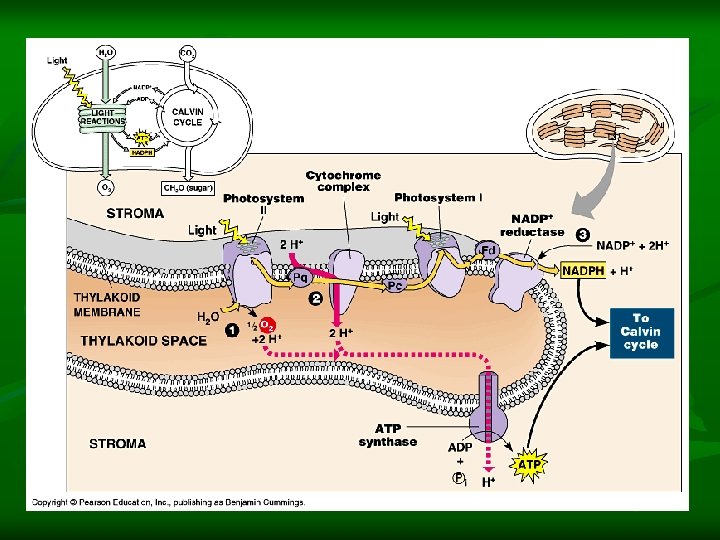
Non Cyclic Photophosphorylation n n photons are absorbed in photosystem II and the chlorophyll a of this photoactivation centre passes the energy rich electron on into the electron transport system. Once in the electron transport system of the thylakoid membrane the electron is passed from electron carrier to electron carrier eventually entering photosystem I. In the "tumbling" down of the electron transport chain the electron gradually loses energy. Some of that energy will be used to "pump protons" across the thylakoid membrane into the "lumen" of the thylakoid.
n n n NB: Each light activated electron allows the "proton pump" to pump one proton across the membrane. These partly spent electrons then pass into photosystem I P 700 where they receive another "boost" to their highest energy level. But these electrons do not pump protons they use their energy to reduce NADP+ to NADPH.
Cyclic Photophosphorylation n n If NADP is not available then a cyclic event takes over. The electrons from Photosystem I are given an energy boost but they follow a different route. Photosystem I becomes the donor and the acceptor of electrons. Hydrogen ions still build up and ATP is still synthesised.
Replacing electron to PS II n n The electron for PS I comes either from PS II or from itself. To replace the electron lost by PS II water is split. This involves light and is called the photolytic splitting of water. It splits it into 4 electrons, 4 hydrogen ions and a molecule of oxygen.
Chemiosmotic Phosphorylation n cyclic and non-cyclic photophosphorylation serve to pump protons into the lumen of the thylakoids. Just as in the mitochondria outer compartment the protons are allowed to flow back into the stroma. The controlled flow of H+ down this concentration gradient occurs through protein channels which contain ATP synthase.
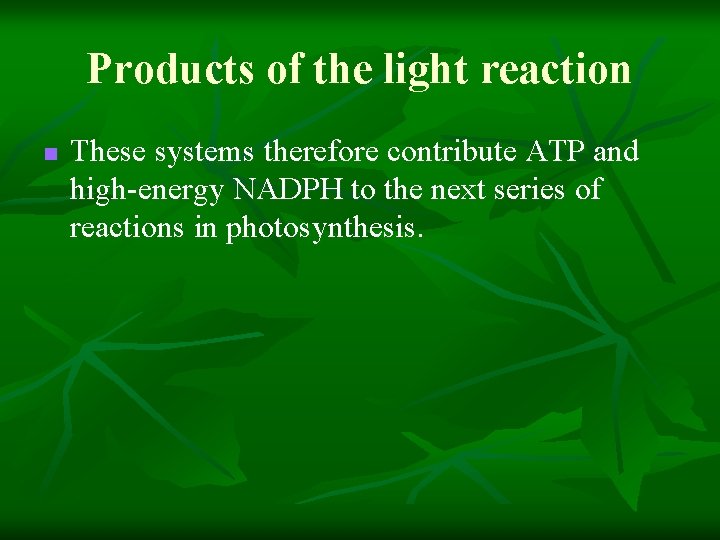
Products of the light reaction n These systems therefore contribute ATP and high-energy NADPH to the next series of reactions in photosynthesis.
Light Independent Stage Calvin Cycle
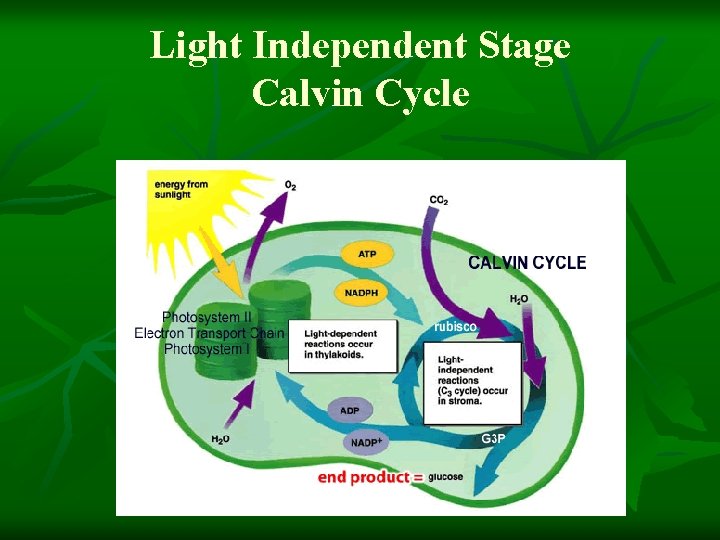
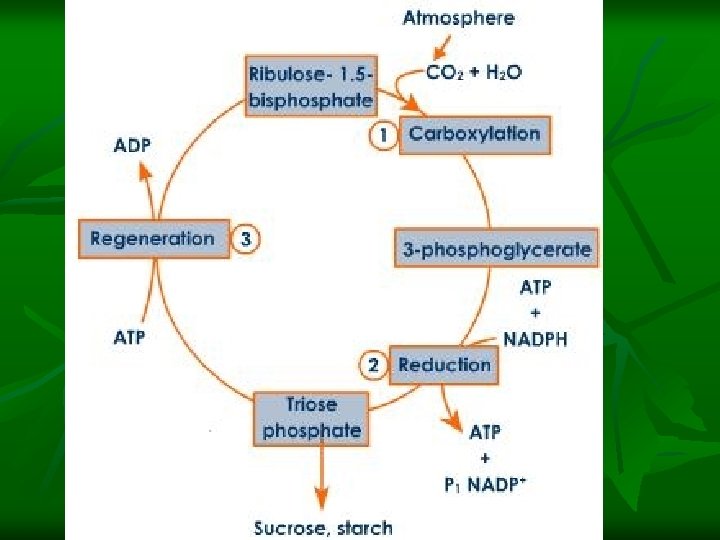
n n n One molecule of CO 2 combines with one molecule of Ru. BP with the aid of the enzyme rubisco (ribulose bisphosphate carboxylase). (Carbon fixation) Resulting complexes split into 2 GP molecules (Glycerate-3 phosphate) GP is then reduced using energy and electrons from NADPH and ATP to form GALP (glyceraldehyde-3 -phosphate). (Reduction) Two out of 12 GALP molecules form a 6 C sugar and are changed into starch for storage. Ten out of twelve GALP molecules are restructured into six Ru. BP molecules (Regeneration)
n n This is the C 3 pathway and is typical of most plants. The other type is called C 4 or CAM plants
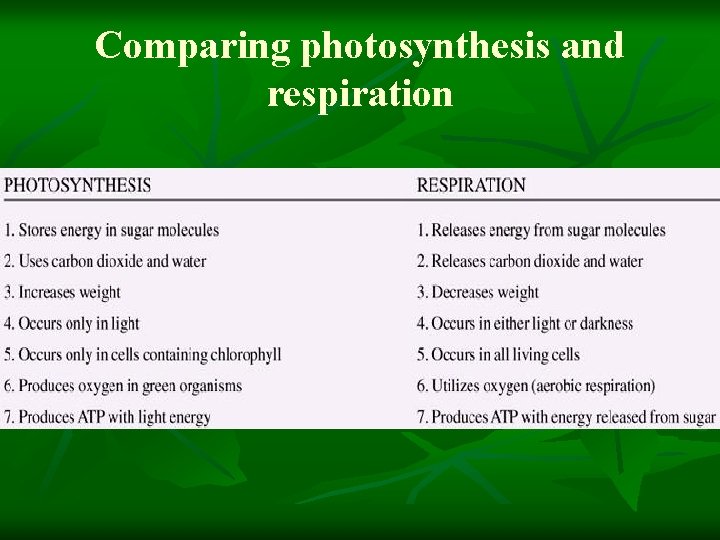
Comparing photosynthesis and respiration
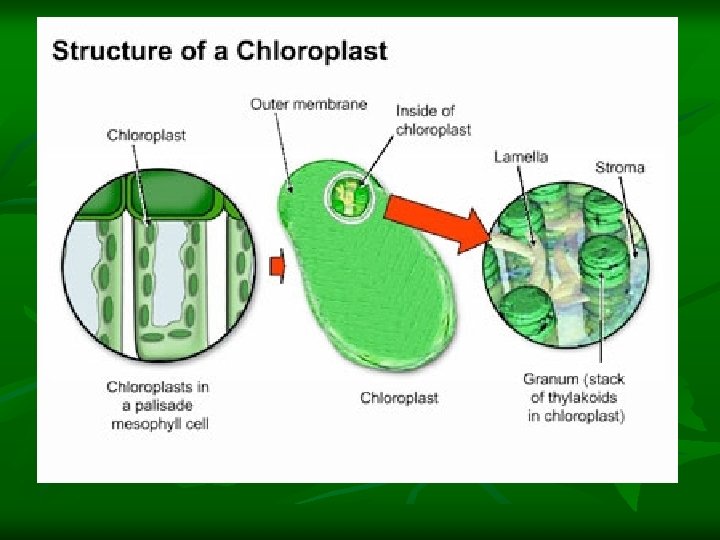
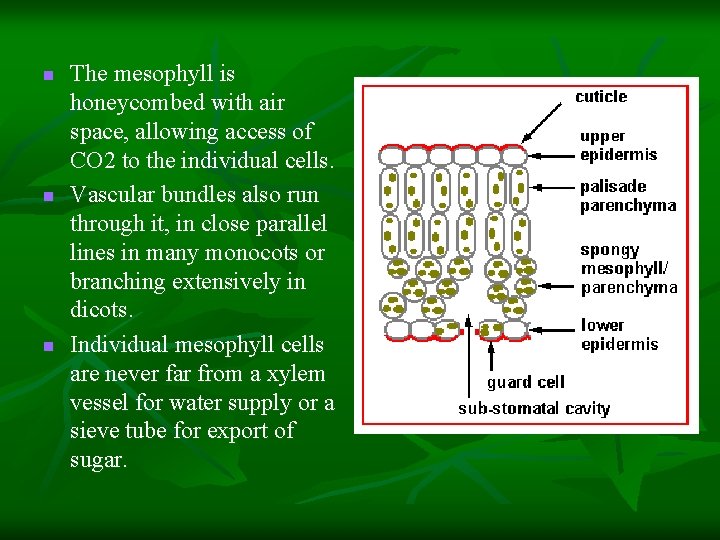
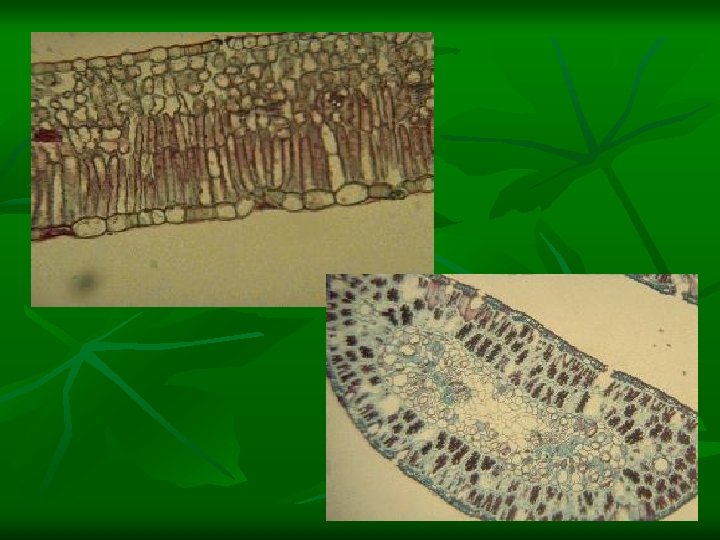
Leaf Structure and function n n The leaf is a sandwich of photosynthetic parenchyma between two layers of epidermis. Stomata are often confined to the lower epidermis the parenchyma is divided into palisade cells and spongey mesophyll. The extra thickness of sun leaves is made up of extra layers of palisade cells by comparison with shade leaves of the same plant.
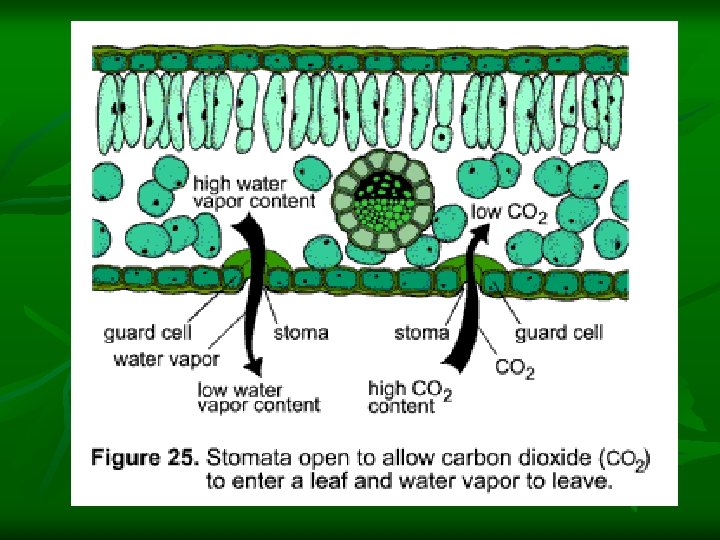
n n n The mesophyll is honeycombed with air space, allowing access of CO 2 to the individual cells. Vascular bundles also run through it, in close parallel lines in many monocots or branching extensively in dicots. Individual mesophyll cells are never far from a xylem vessel for water supply or a sieve tube for export of sugar.
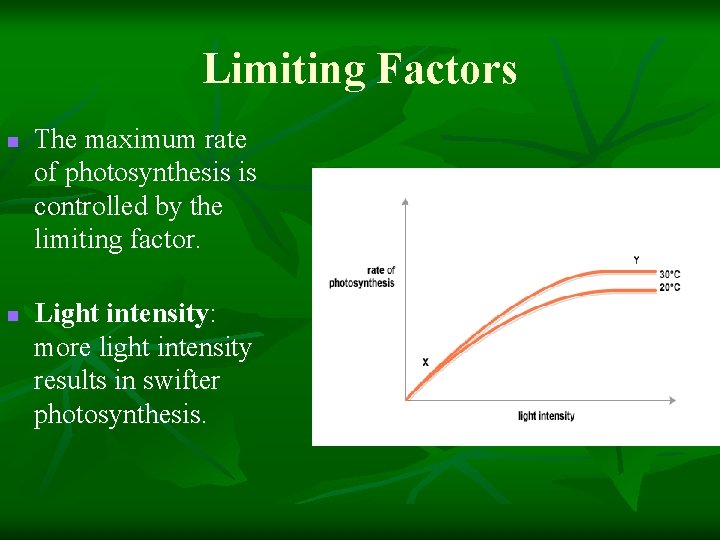
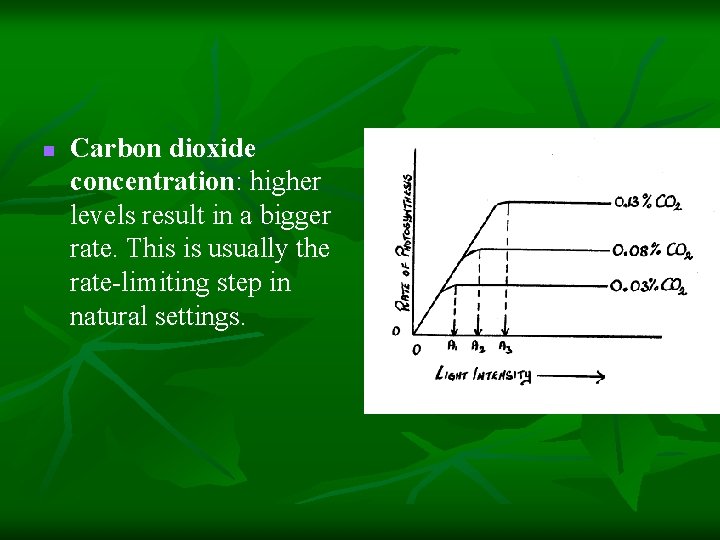
Limiting Factors n n The maximum rate of photosynthesis is controlled by the limiting factor. Light intensity: more light intensity results in swifter photosynthesis.
n Carbon dioxide concentration: higher levels result in a bigger rate. This is usually the rate-limiting step in natural settings.
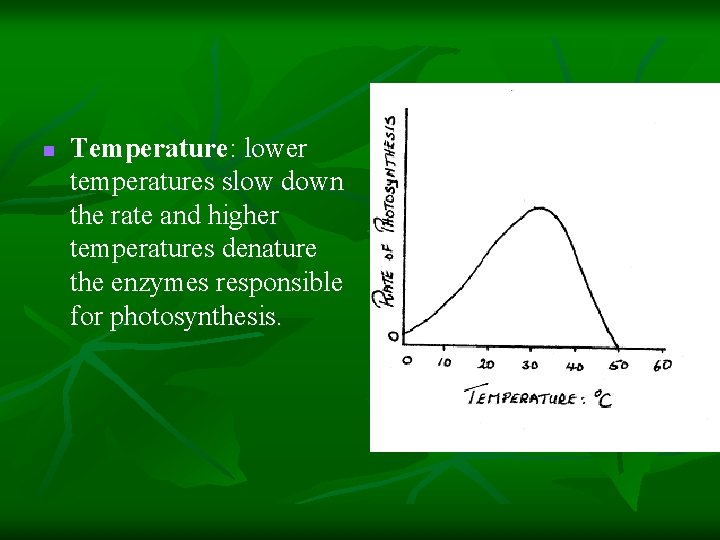
n Temperature: lower temperatures slow down the rate and higher temperatures denature the enzymes responsible for photosynthesis.
n n Availability of water: water is needed as a raw material for photosynthesis, and if it is short, it will cause the plant to wilt and thereby lose its ability to capture sunlight. Availability of nutrients: On a deeper level, other factors like amount of chlorophyll or availability of nutrients (e. g. Mg is needed for chlorophyll synthesis) will also affect the rate of photosynthesis.
Carbon dioxide n n As carbon dioxide concentrations rise, the rate at which sugars are made by the light-independent reactions increases until limited by other factors. Ru. Bis. CO, the enzyme that captures carbon dioxide in the light-independent reactions, has a binding affinity for both carbon dioxide and oxygen. When the concentration of carbon dioxide is high, Ru. Bis. CO will fix carbon dioxide. However, if the carbon dioxide concentration is low, Ru. Bis. CO will bind oxygen instead of carbon dioxide.
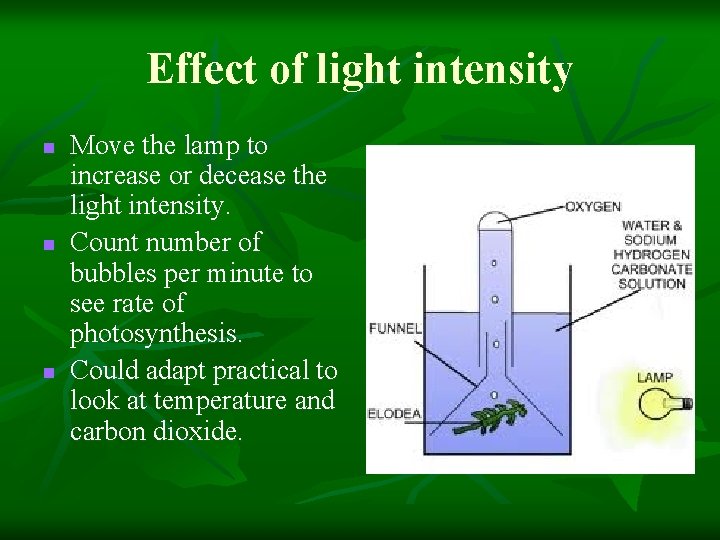
Effect of light intensity n n n Move the lamp to increase or decease the light intensity. Count number of bubbles per minute to see rate of photosynthesis. Could adapt practical to look at temperature and carbon dioxide.