
Photosynthesis I will understand the role of photosynthesis
- Slides: 17
Photosynthesis I will: understand the role of photosynthesis in the flow of energy for the cell. I can: demonstrate how the process of photosynthesis converts light energy into stored chemical energy for cells.
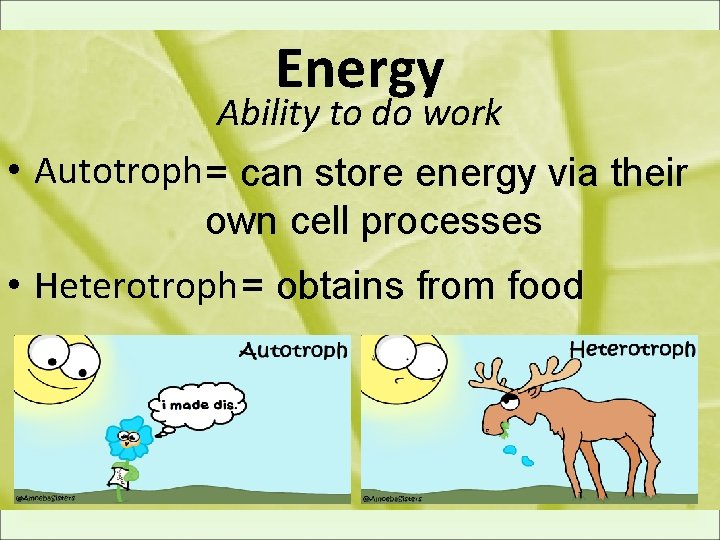
Energy Ability to do work • Autotroph = can store energy via their own cell processes • Heterotroph = obtains from food
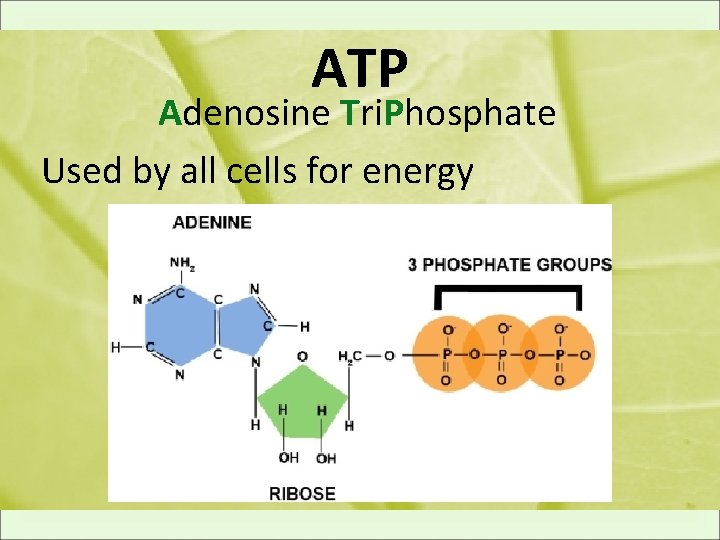
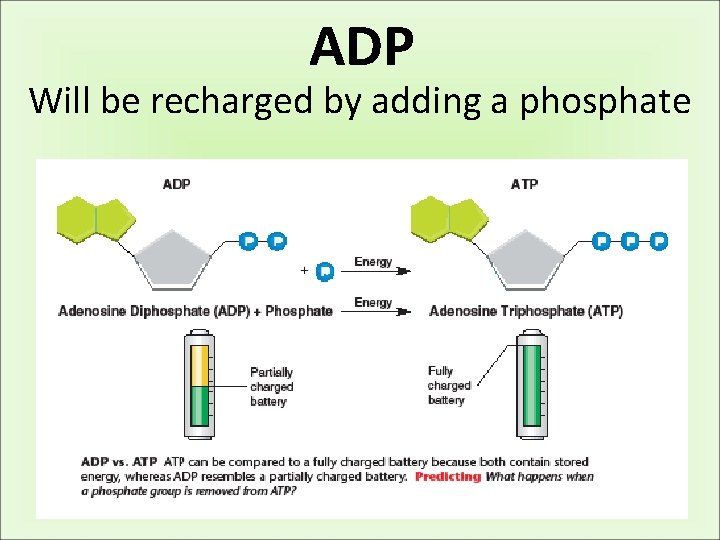
ATP Adenosine Tri. Phosphate Used by all cells for energy
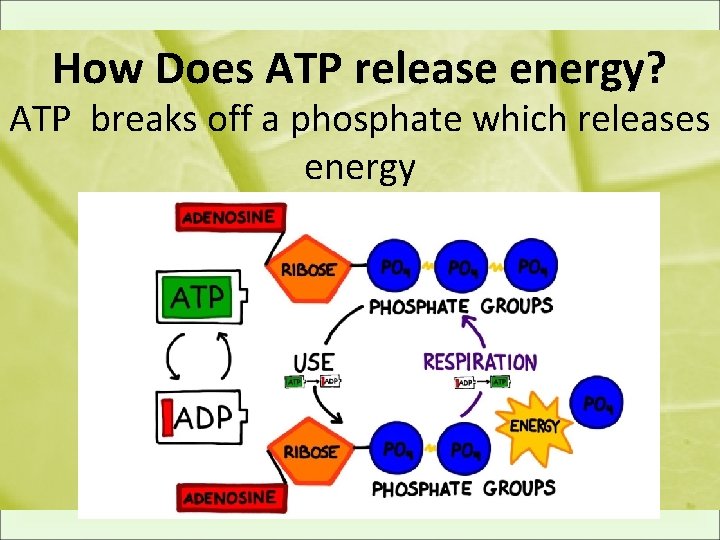
How Does ATP release energy? ATP breaks off a phosphate which releases energy
ADP Will be recharged by adding a phosphate
Photosynthesis • Capturing light energy from the sun and storing it into food (carbs) • Performed by plants, algae, & some bacteria • Supplies food for heterotrophs
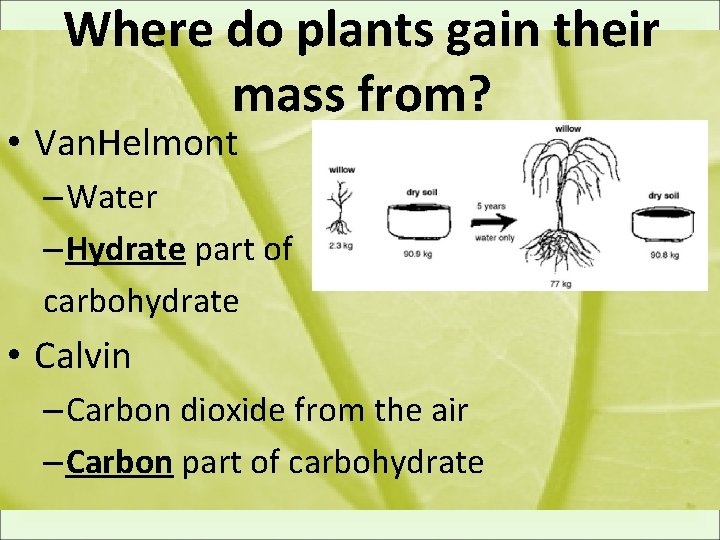
Where do plants gain their mass from? • Van. Helmont – Water – Hydrate part of carbohydrate • Calvin – Carbon dioxide from the air – Carbon part of carbohydrate
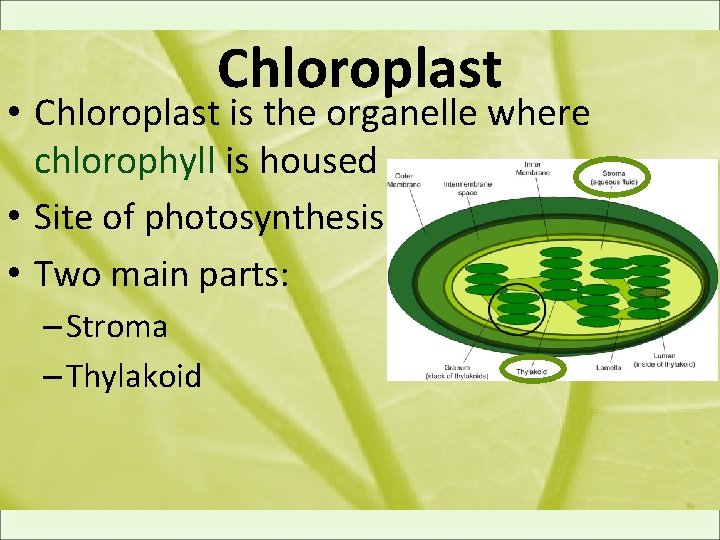
Chloroplast • Chloroplast is the organelle where chlorophyll is housed • Site of photosynthesis • Two main parts: – Stroma – Thylakoid
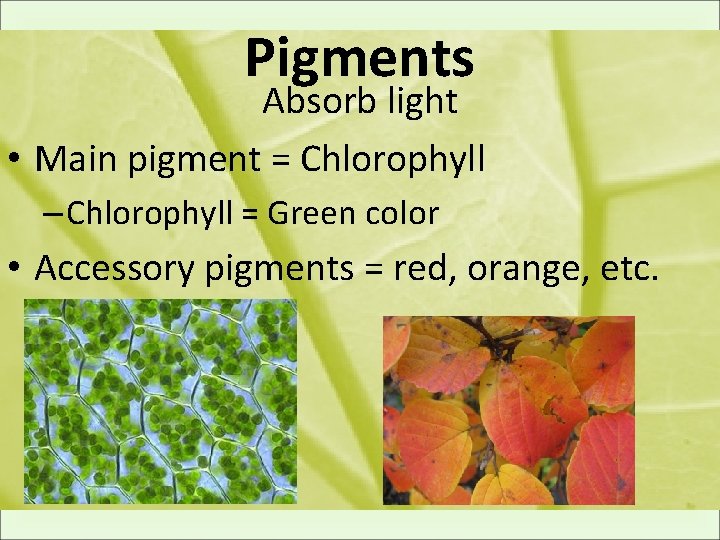
Pigments Absorb light • Main pigment = Chlorophyll – Chlorophyll = Green color • Accessory pigments = red, orange, etc.
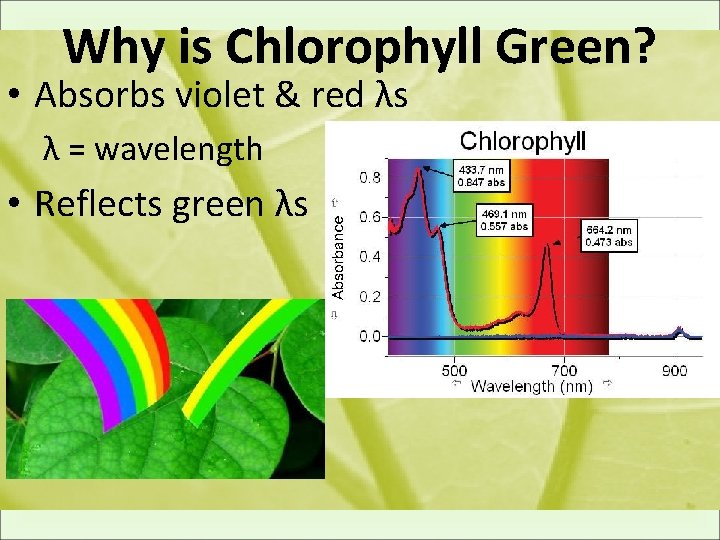
Why is Chlorophyll Green? • Absorbs violet & red λs λ = wavelength • Reflects green λs
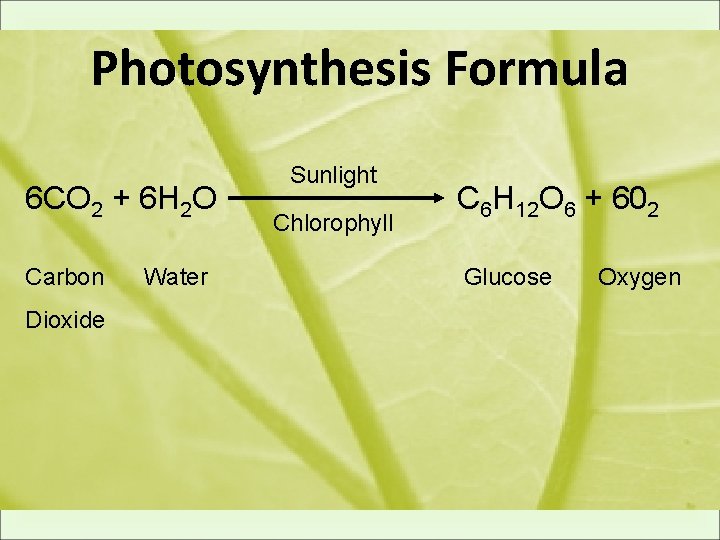
Photosynthesis Formula 6 CO 2 + 6 H 2 O Carbon Dioxide Water Sunlight Chlorophyll C 6 H 12 O 6 + 602 Glucose Oxygen
Two Types of Reactions • Light Dependent Reactions • Light Independent Reactions – Calvin Cycle
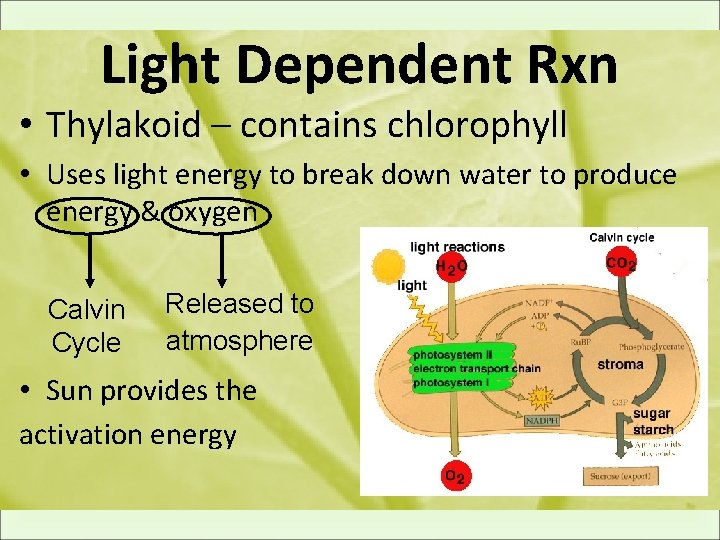
Light Dependent Rxn • Thylakoid – contains chlorophyll • Uses light energy to break down water to produce energy & oxygen Calvin Cycle Released to atmosphere • Sun provides the activation energy
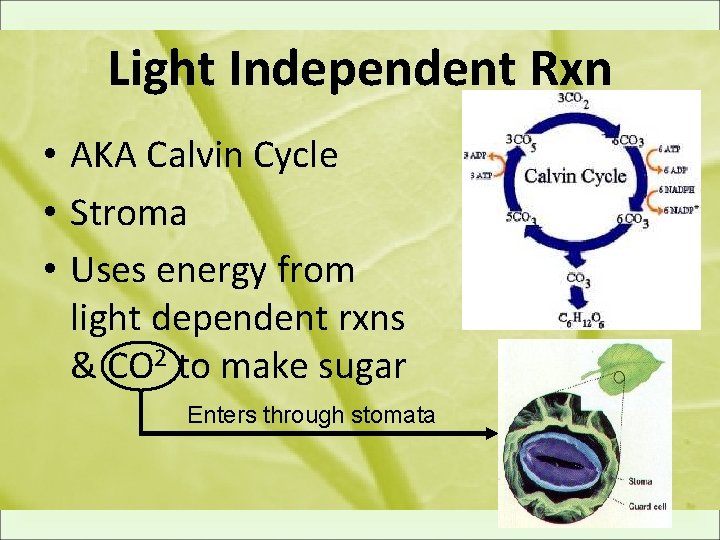
Light Independent Rxn • AKA Calvin Cycle • Stroma • Uses energy from light dependent rxns & CO 2 to make sugar Enters through stomata
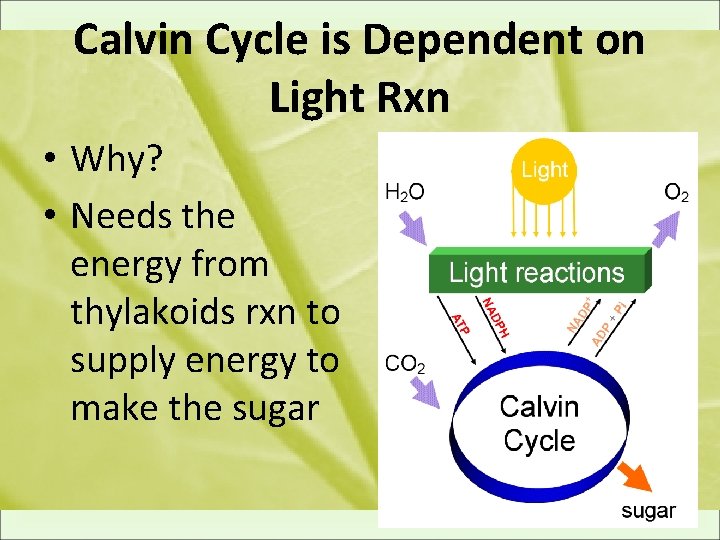
Calvin Cycle is Dependent on Light Rxn • Why? • Needs the energy from thylakoids rxn to supply energy to make the sugar
Affects on the Rate of Photosynthesis • Water – Begin light dependent reactions • Temperature – 0 – 35 ºC = best enzyme function • Intensity of light – More light = more activation energy