
Photosynthesis How do you define photosynthesis A process
- Slides: 12
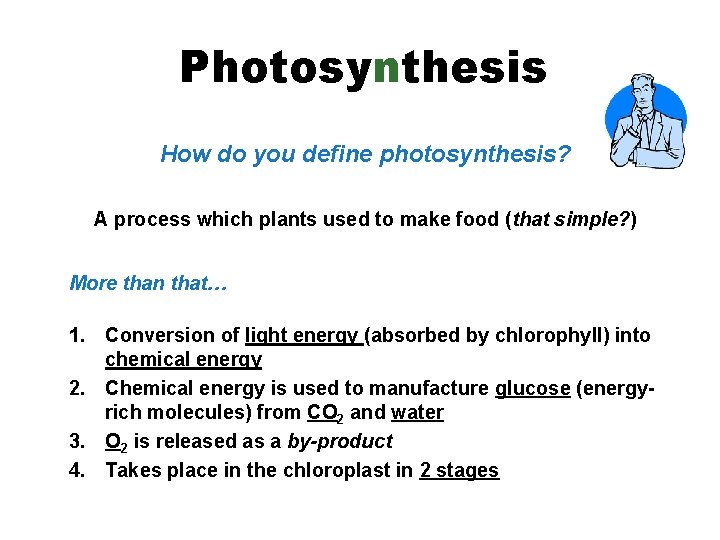
Photosynthesis How do you define photosynthesis? A process which plants used to make food (that simple? ) More than that… 1. Conversion of light energy (absorbed by chlorophyll) into chemical energy 2. Chemical energy is used to manufacture glucose (energyrich molecules) from CO 2 and water 3. O 2 is released as a by-product 4. Takes place in the chloroplast in 2 stages
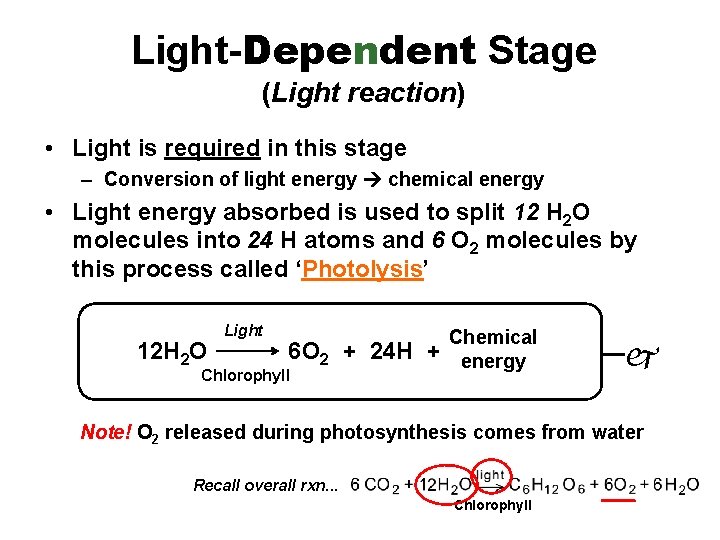
Light-Dependent Stage (Light reaction) • Light is required in this stage – Conversion of light energy chemical energy • Light energy absorbed is used to split 12 H 2 O molecules into 24 H atoms and 6 O 2 molecules by this process called ‘Photolysis’ 12 H 2 O Light 6 O 2 + 24 H + Chlorophyll Chemical energy Note! O 2 released during photosynthesis comes from water Recall overall rxn. . . Chlorophyll
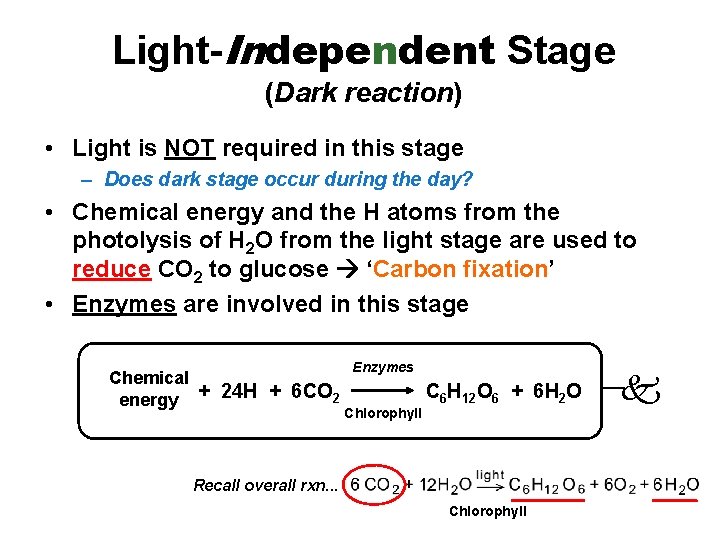
Light-Independent Stage (Dark reaction) • Light is NOT required in this stage – Does dark stage occur during the day? • Chemical energy and the H atoms from the photolysis of H 2 O from the light stage are used to reduce CO 2 to glucose ‘Carbon fixation’ • Enzymes are involved in this stage Chemical energy + 24 H + 6 CO 2 Enzymes C 6 H 12 O 6 + 6 H 2 O Chlorophyll Recall overall rxn. . . Chlorophyll
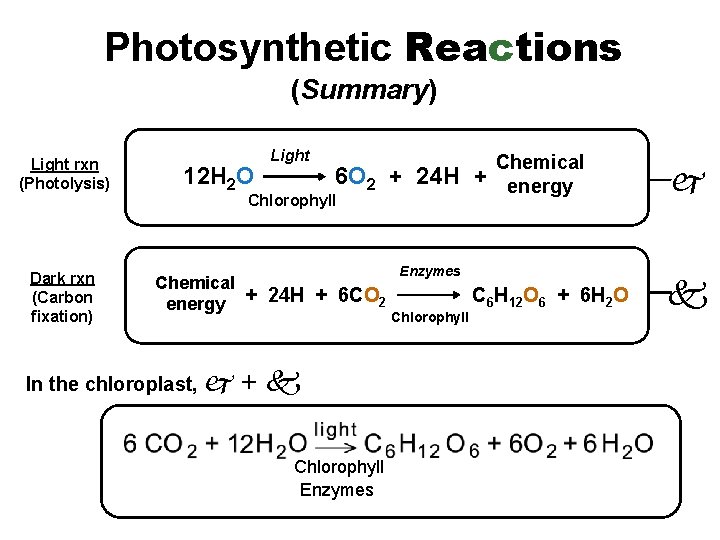
Photosynthetic Reactions (Summary) Light rxn (Photolysis) Dark rxn (Carbon fixation) 12 H 2 O Light 6 O 2 + 24 H + Chlorophyll Chemical energy + 24 H + 6 CO 2 In the chloroplast, + Chlorophyll Enzymes Chemical energy Enzymes C 6 H 12 O 6 + 6 H 2 O Chlorophyll
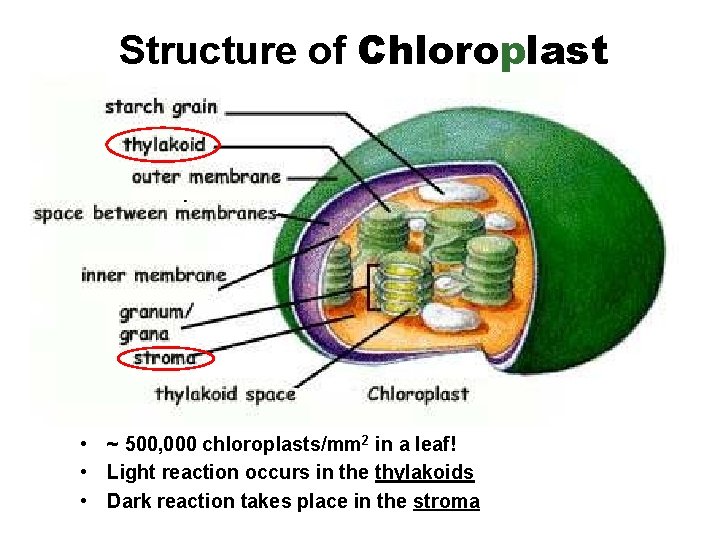
Structure of Chloroplast • ~ 500, 000 chloroplasts/mm 2 in a leaf! • Light reaction occurs in the thylakoids • Dark reaction takes place in the stroma
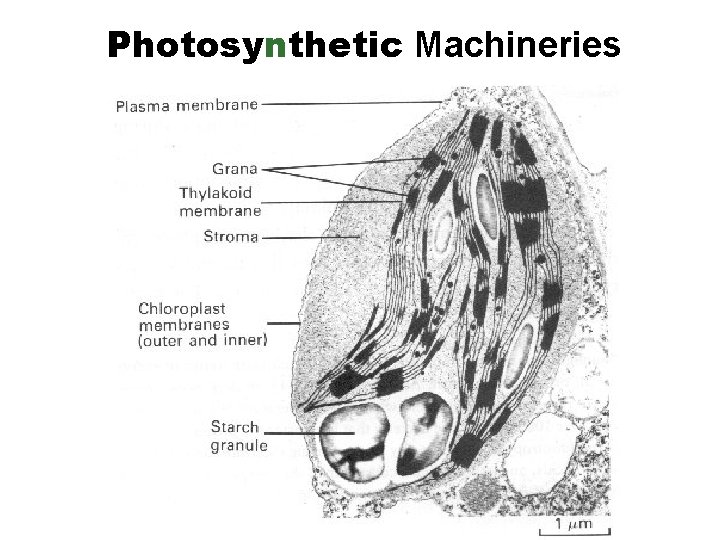
Photosynthetic Machineries
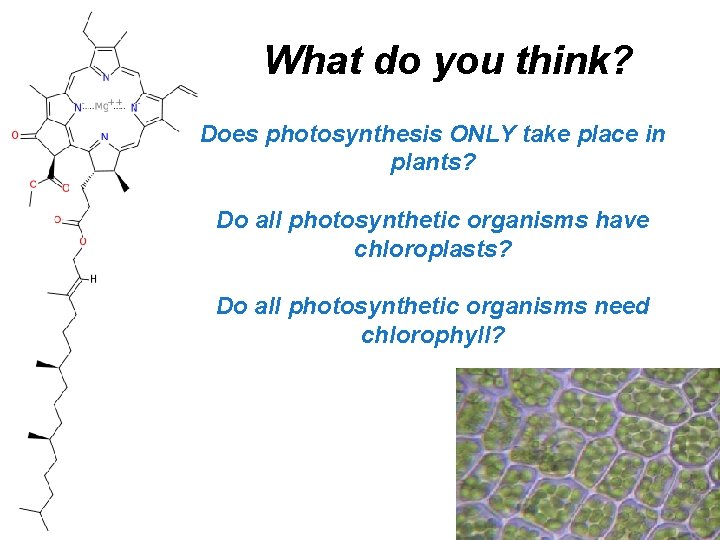
What do you think? Does photosynthesis ONLY take place in plants? Do all photosynthetic organisms have chloroplasts? Do all photosynthetic organisms need chlorophyll?
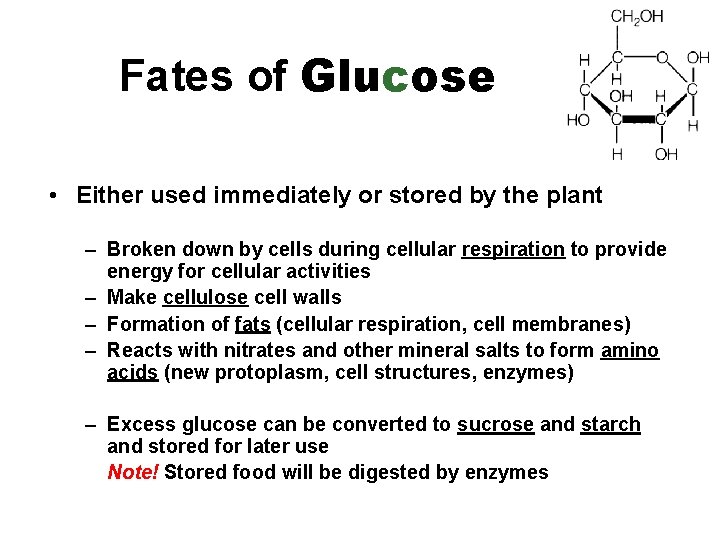
Fates of Glucose • Either used immediately or stored by the plant – Broken down by cells during cellular respiration to provide energy for cellular activities – Make cellulose cell walls – Formation of fats (cellular respiration, cell membranes) – Reacts with nitrates and other mineral salts to form amino acids (new protoplasm, cell structures, enzymes) – Excess glucose can be converted to sucrose and starch and stored for later use Note! Stored food will be digested by enzymes
Quick Review • What is photolysis? • What are the main differences between light and dark stages? • What can happen to the glucose produced by plants?
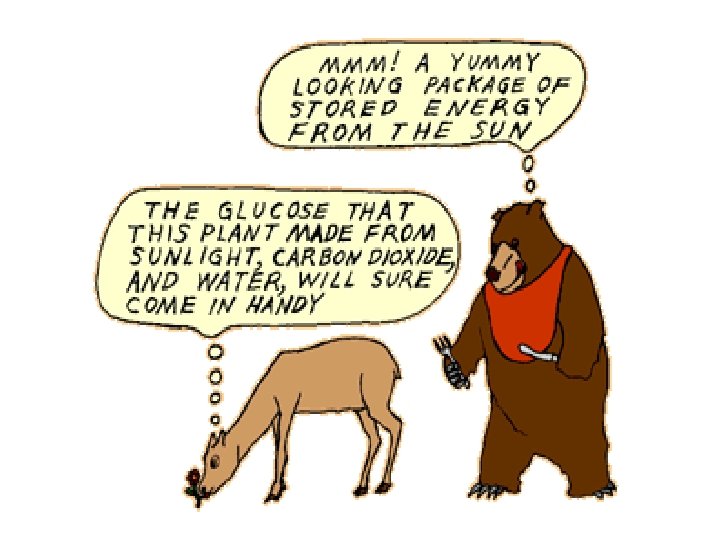
Importance of Photosynthesis 1. Light energy when converted to chemical energy is passed on to the other organisms in the food chain 2. Glucose formed during photosynthesis is sometimes converted to fats and proteins which other organisms can obtain for their own use 3. Helps to purify the air – Important for maintaining concentration of gases in the atmosphere 4. Can be used as fossil fuels – Releases stored energy when burnt for cooking and other industrial purposes
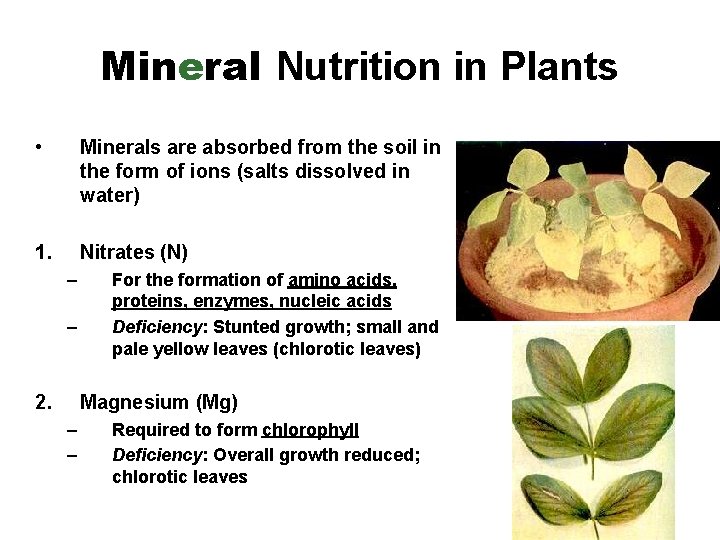
Mineral Nutrition in Plants • Minerals are absorbed from the soil in the form of ions (salts dissolved in water) 1. Nitrates (N) – – 2. For the formation of amino acids, proteins, enzymes, nucleic acids Deficiency: Stunted growth; small and pale yellow leaves (chlorotic leaves) Magnesium (Mg) – – Required to form chlorophyll Deficiency: Overall growth reduced; chlorotic leaves