
Photosynthesis Energy transfer Photosynthesis transfers light energy into

- Slides: 20
Photosynthesis
Energy transfer • Photosynthesis transfers light energy into chemical potential energy – This energy can then be released for work in respiration • Almost all energy transferred to ATP is derived from light energy
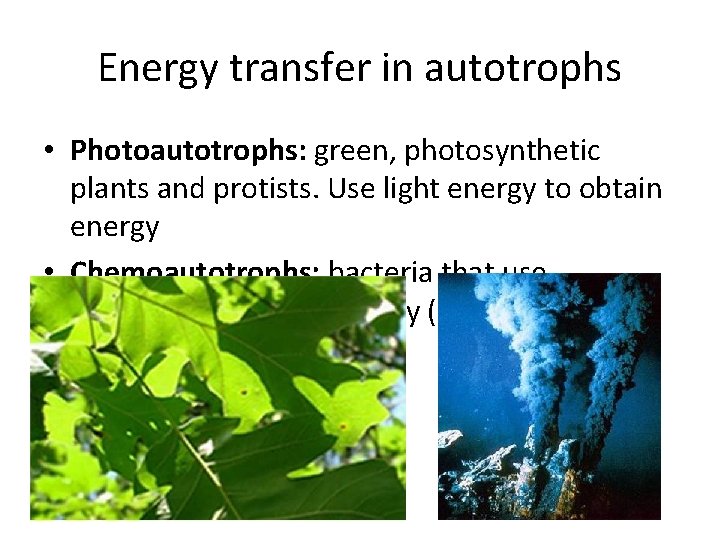
Energy transfer in autotrophs • Photoautotrophs: green, photosynthetic plants and protists. Use light energy to obtain energy • Chemoautotrophs: bacteria that use chemicals to obtain energy (ex: nitrifying bacteria)
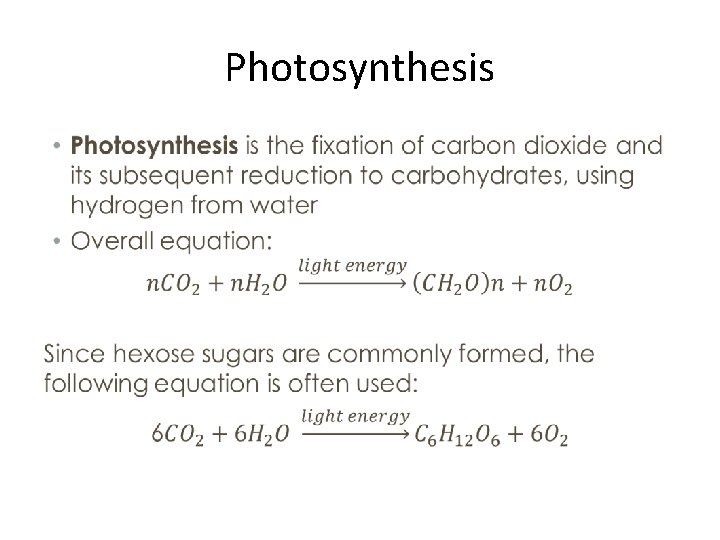
Photosynthesis •
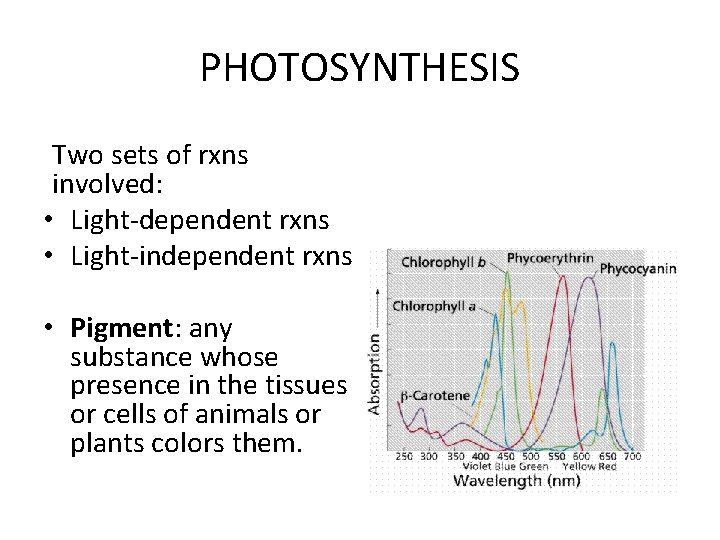
PHOTOSYNTHESIS Two sets of rxns involved: • Light-dependent rxns • Light-independent rxns • Pigment: any substance whose presence in the tissues or cells of animals or plants colors them.
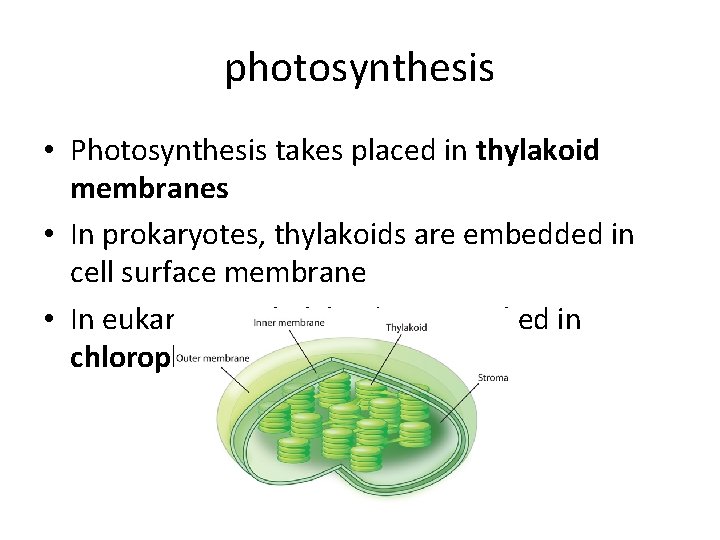
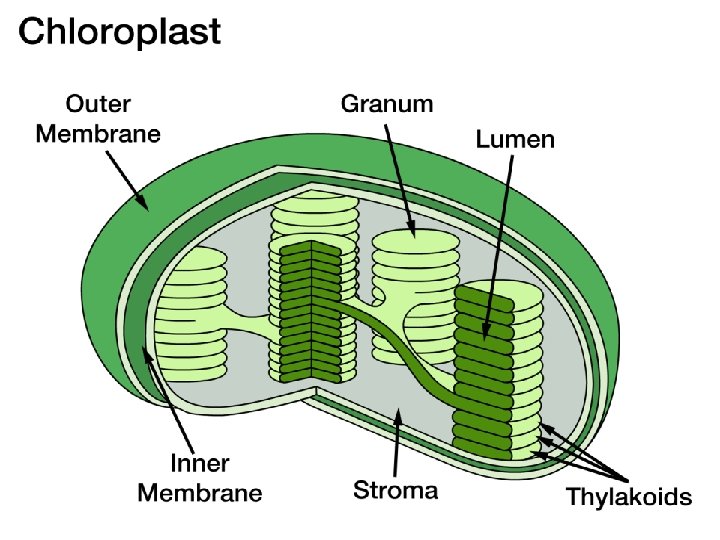
photosynthesis • Photosynthesis takes placed in thylakoid membranes • In prokaryotes, thylakoids are embedded in cell surface membrane • In eukaryotes, thylakoids are stacked in chloroplasts
Light dependent reactions – Light energy is necessary – Only take place in presence of suitable pigments that absorb certain wavelengths of light – Light energy splits (photolysis) water into hydrogen and oxygen (oxygen is waste byproduct) – Light energy also needed to provide chemical energy in the form of ATP for the reduction of carbon dioxide during light independent reactions
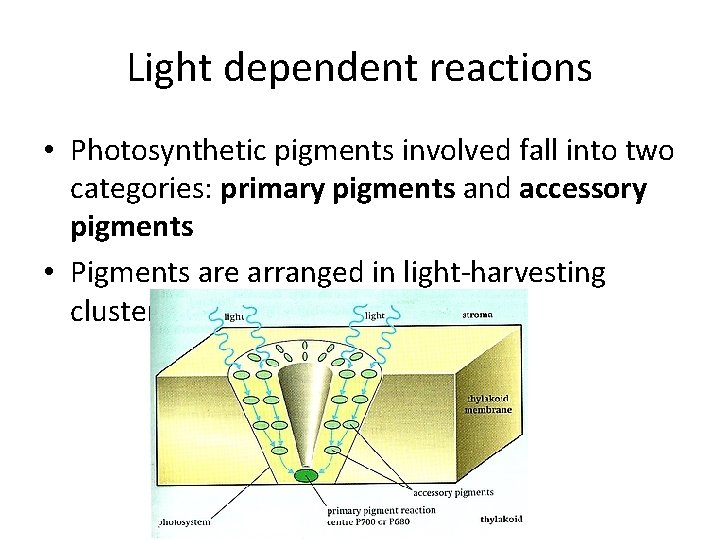
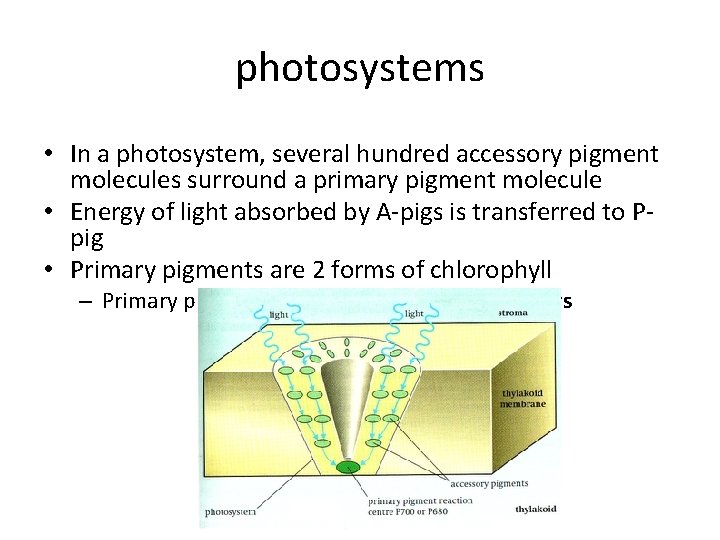
Light dependent reactions • Photosynthetic pigments involved fall into two categories: primary pigments and accessory pigments • Pigments are arranged in light-harvesting clusters called photosystems
photosystems • In a photosystem, several hundred accessory pigment molecules surround a primary pigment molecule • Energy of light absorbed by A-pigs is transferred to Ppig • Primary pigments are 2 forms of chlorophyll – Primary pigments said to act as reaction centers
Do now 9/18 • What is the chemical formula for photosynthesis?
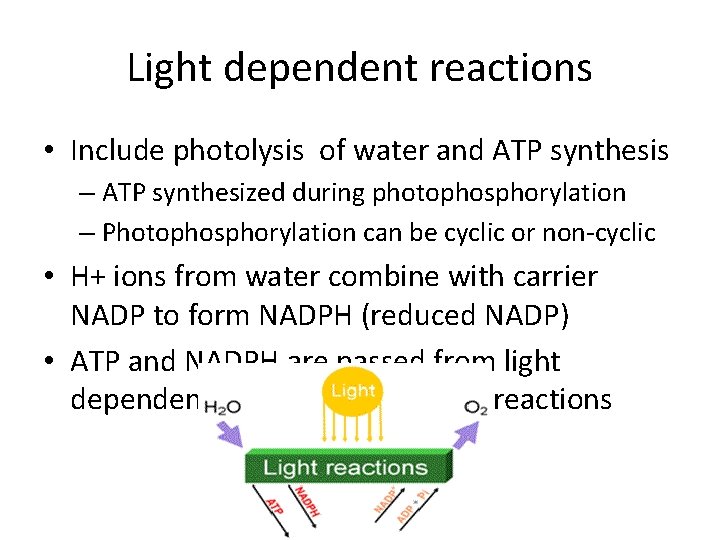
Light dependent reactions • Include photolysis of water and ATP synthesis – ATP synthesized during photophosphorylation – Photophosphorylation can be cyclic or non-cyclic • H+ ions from water combine with carrier NADP to form NADPH (reduced NADP) • ATP and NADPH are passed from light dependent to light independent reactions
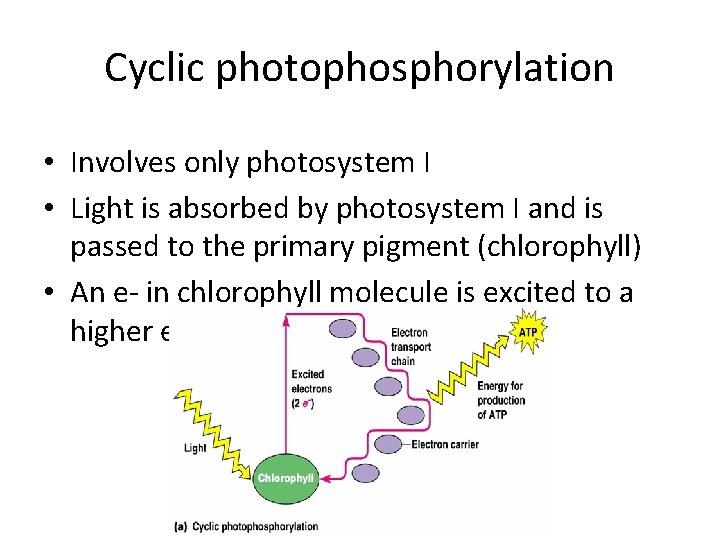
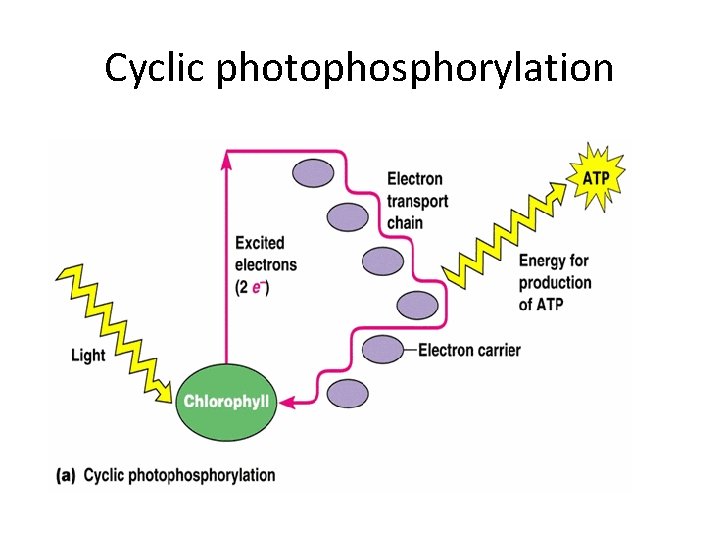
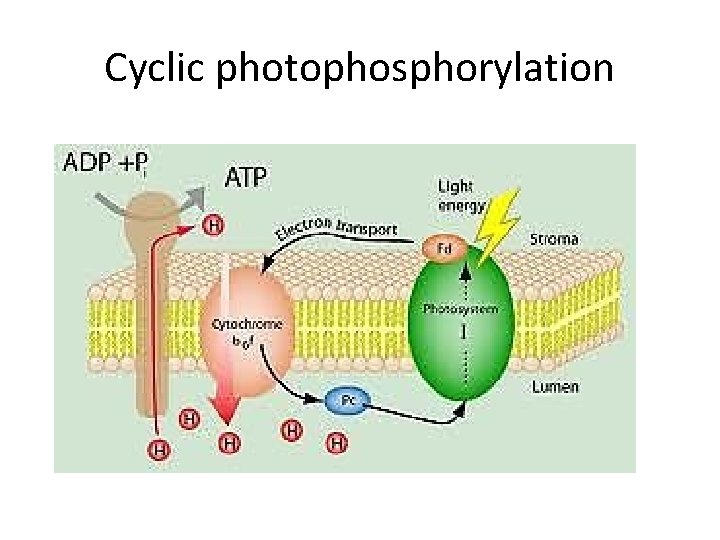
Cyclic photophosphorylation • Involves only photosystem I • Light is absorbed by photosystem I and is passed to the primary pigment (chlorophyll) • An e- in chlorophyll molecule is excited to a higher energy level and is emitted
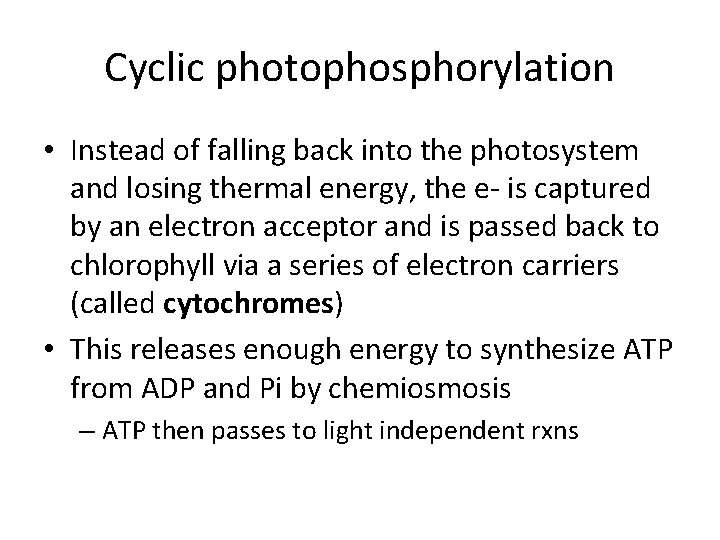
Cyclic photophosphorylation • Instead of falling back into the photosystem and losing thermal energy, the e- is captured by an electron acceptor and is passed back to chlorophyll via a series of electron carriers (called cytochromes) • This releases enough energy to synthesize ATP from ADP and Pi by chemiosmosis – ATP then passes to light independent rxns
Cyclic photophosphorylation
Cyclic photophosphorylation
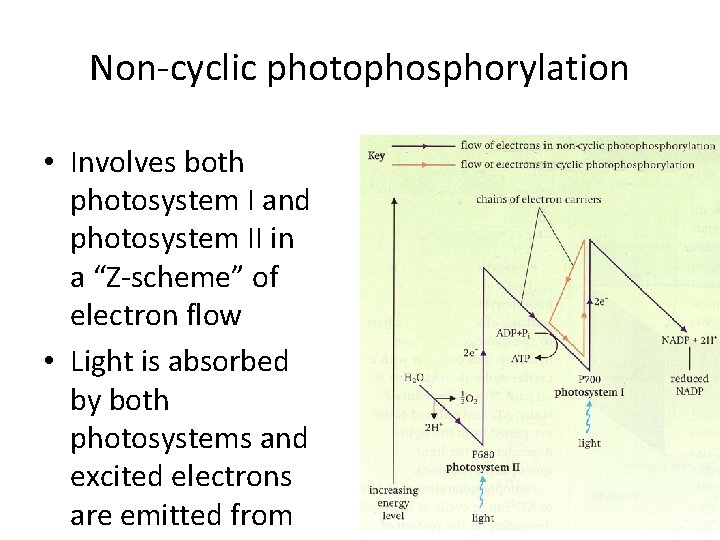
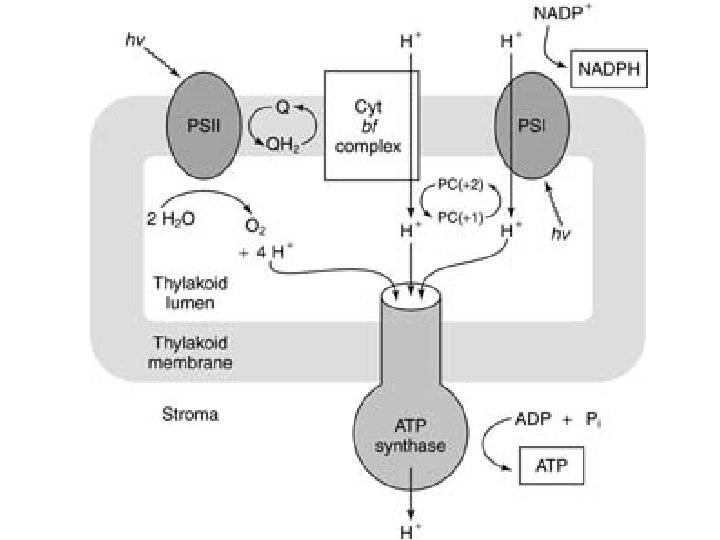
Non-cyclic photophosphorylation • Involves both photosystem I and photosystem II in a “Z-scheme” of electron flow • Light is absorbed by both photosystems and excited electrons are emitted from
Non-cyclic photophosphorylation • Electrons from photosystem II are absorbed by electron acceptors and pass along chains of electron carriers • Primary pigment of photosystem I absorbs electrons from photosystem II • Electrons are replaced from photolysis of water • ATP is synthesized as electrons generate potential energy gradient for chemiosmosis
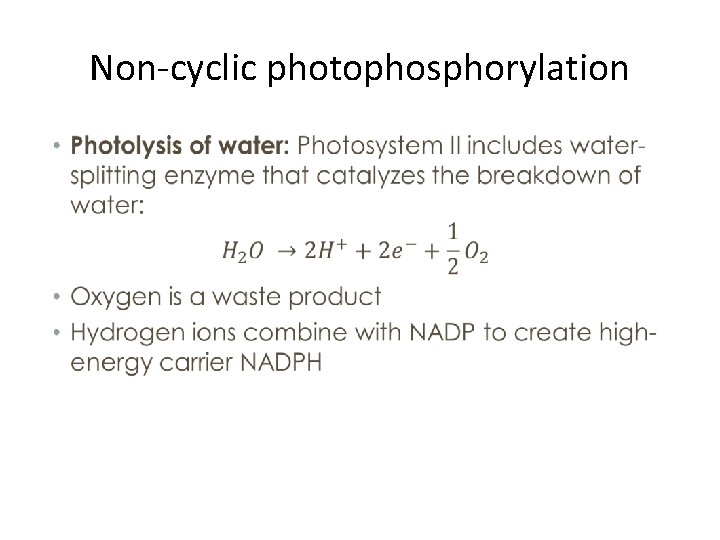
Non-cyclic photophosphorylation •