
PHOTOSYNTHESIS Energy can be transformed from one form
PHOTOSYNTHESIS
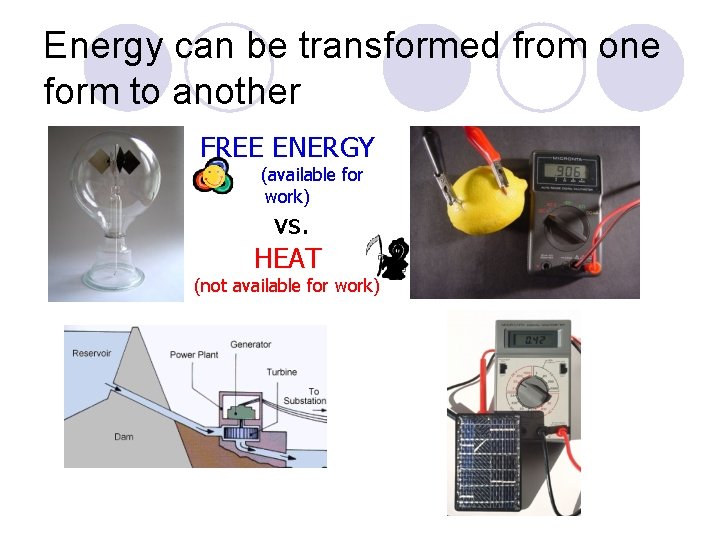
Energy can be transformed from one form to another FREE ENERGY (available for work) vs. HEAT (not available for work)
THE SUN: MAIN SOURCE OF ENERGY FOR LIFE ON EARTH
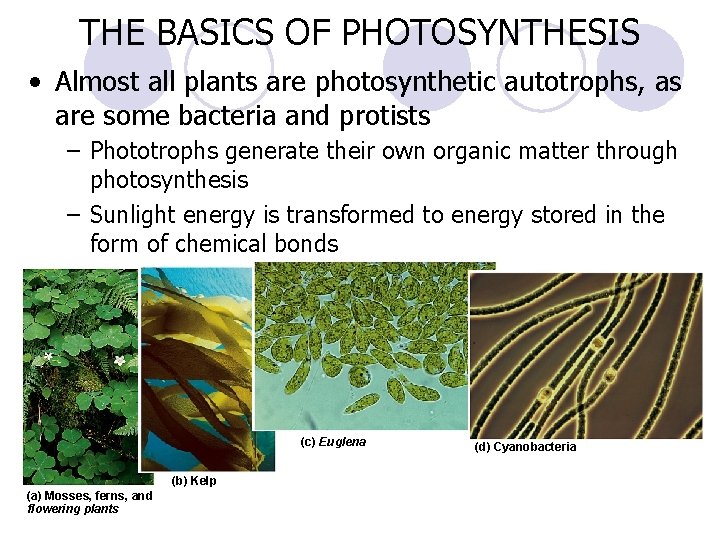
THE BASICS OF PHOTOSYNTHESIS • Almost all plants are photosynthetic autotrophs, as are some bacteria and protists – Phototrophs generate their own organic matter through photosynthesis – Sunlight energy is transformed to energy stored in the form of chemical bonds (c) Euglena (b) Kelp (a) Mosses, ferns, and flowering plants (d) Cyanobacteria
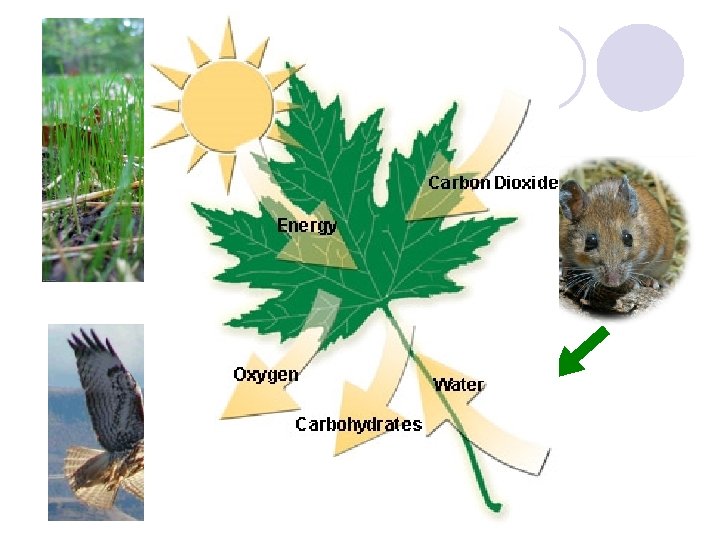
Food Chain
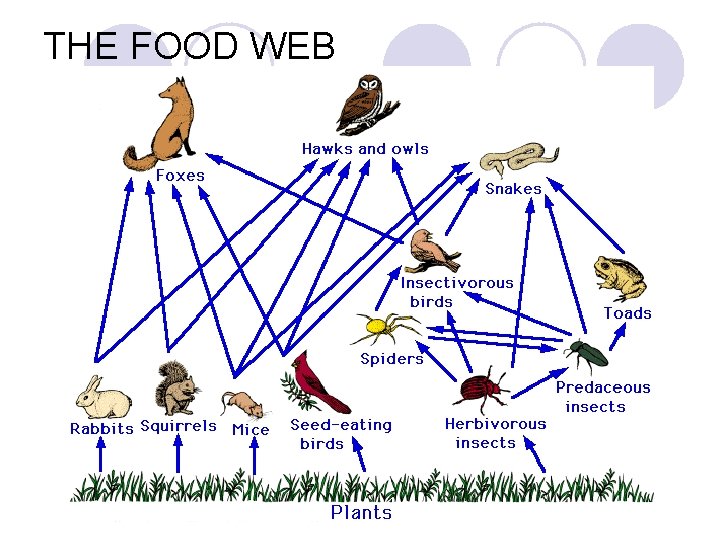
THE FOOD WEB
WHY ARE PLANTS GREEN? It's not that easy bein' green Having to spend each day the color of the leaves When I think it could be nicer being red or yellow or gold Or something much more colorful like that… Kermit the Frog
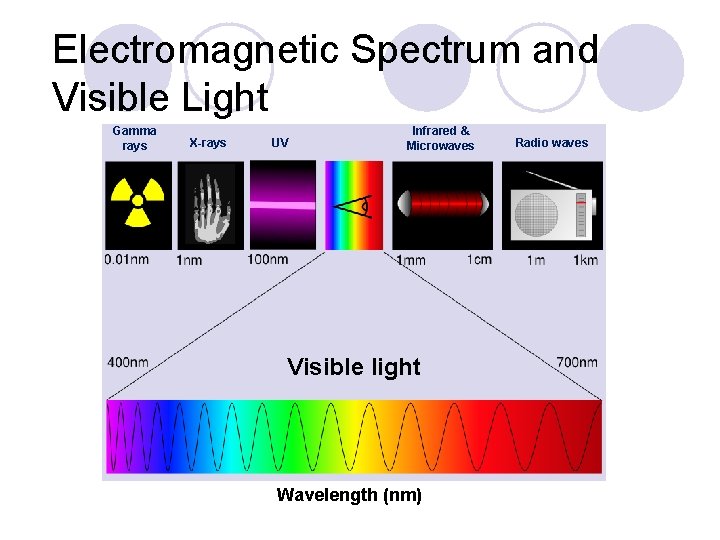
Electromagnetic Spectrum and Visible Light Gamma rays X-rays UV Infrared & Microwaves Visible light Wavelength (nm) Radio waves
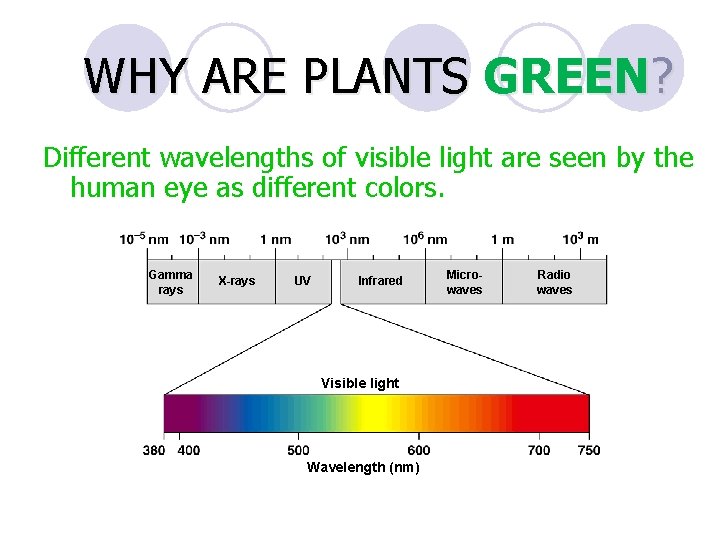
WHY ARE PLANTS GREEN? Different wavelengths of visible light are seen by the human eye as different colors. Gamma rays X-rays UV Infrared Visible light Wavelength (nm) Microwaves Radio waves
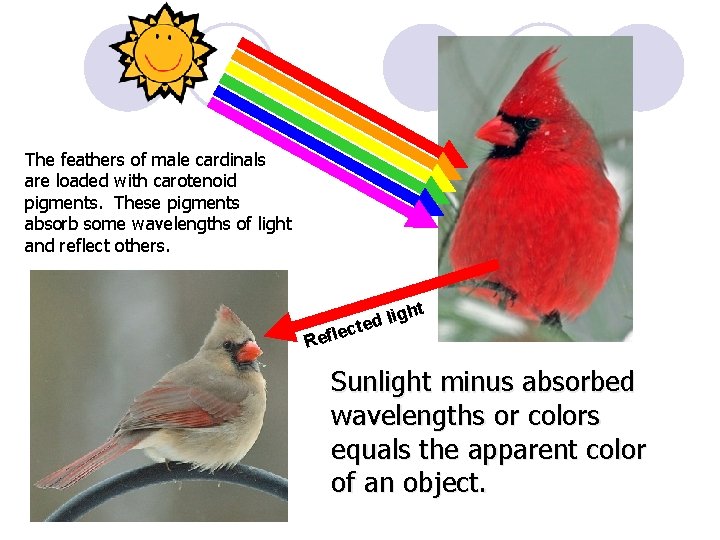
The feathers of male cardinals are loaded with carotenoid pigments. These pigments absorb some wavelengths of light and reflect others. ht g i l d lecte Ref Sunlight minus absorbed wavelengths or colors equals the apparent color of an object.
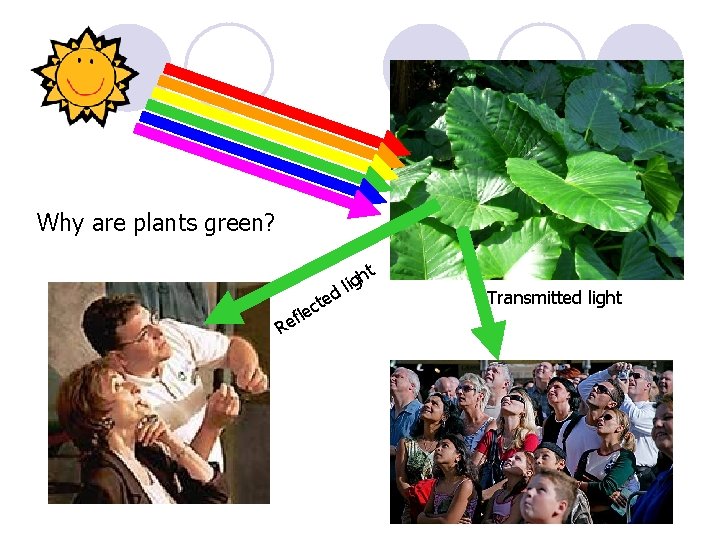
Why are plants green? t d R te c e efl h lig Transmitted light
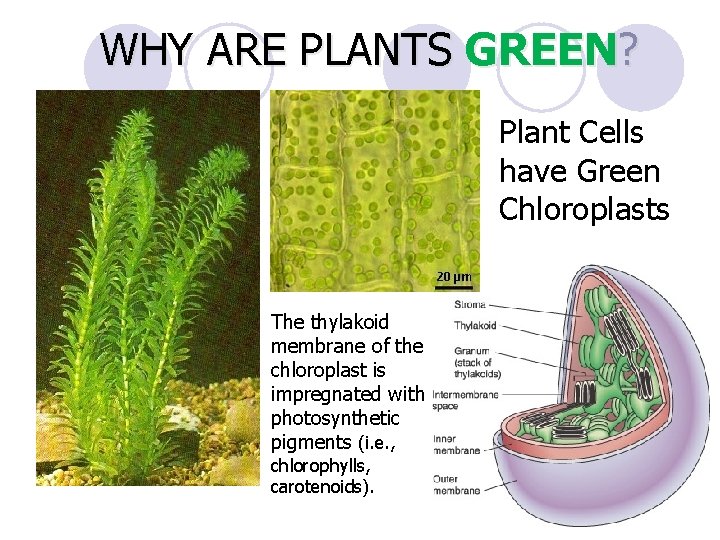
WHY ARE PLANTS GREEN? Plant Cells have Green Chloroplasts The thylakoid membrane of the chloroplast is impregnated with photosynthetic pigments (i. e. , chlorophylls, carotenoids).
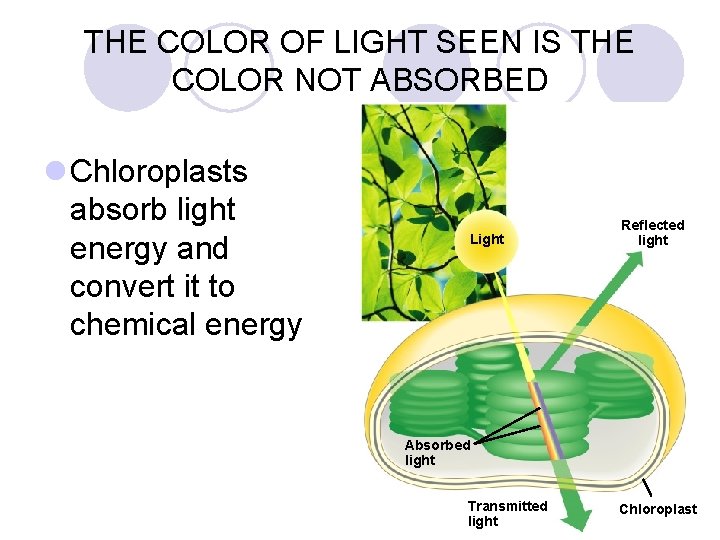
THE COLOR OF LIGHT SEEN IS THE COLOR NOT ABSORBED l Chloroplasts absorb light energy and convert it to chemical energy Light Reflected light Absorbed light Transmitted light Chloroplast
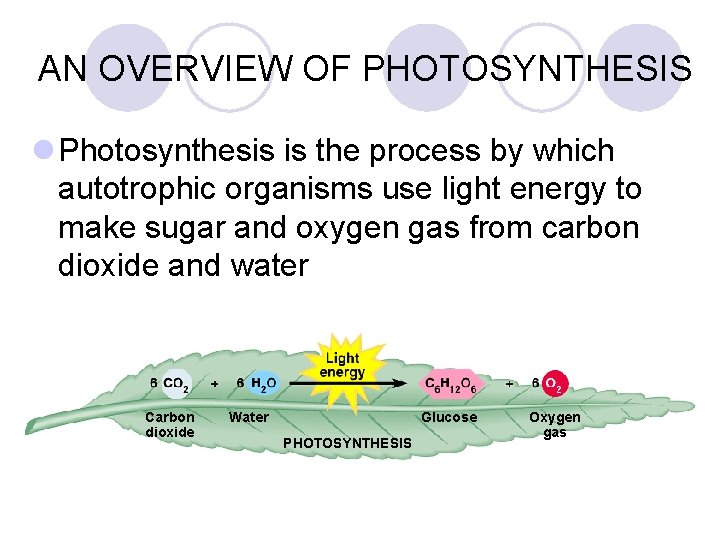
AN OVERVIEW OF PHOTOSYNTHESIS l Photosynthesis is the process by which autotrophic organisms use light energy to make sugar and oxygen gas from carbon dioxide and water Carbon dioxide Water Glucose PHOTOSYNTHESIS Oxygen gas

AN OVERVIEW OF PHOTOSYNTHESIS l The light reactions convert solar energy to chemical energy ¡ Produce ATP & NADPH Light Chloroplast NADP +P Light reactions Calvin cycle
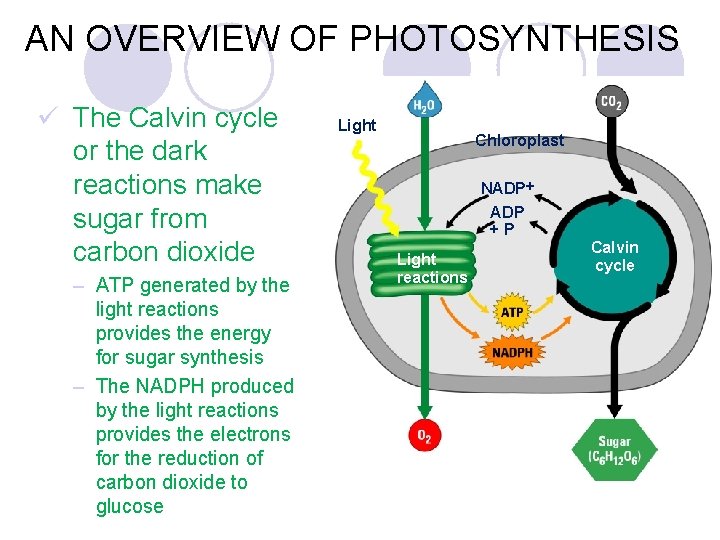
AN OVERVIEW OF PHOTOSYNTHESIS ü The Calvin cycle or the dark reactions make sugar from carbon dioxide – ATP generated by the light reactions provides the energy for sugar synthesis – The NADPH produced by the light reactions provides the electrons for the reduction of carbon dioxide to glucose Light Chloroplast NADP +P Light reactions Calvin cycle
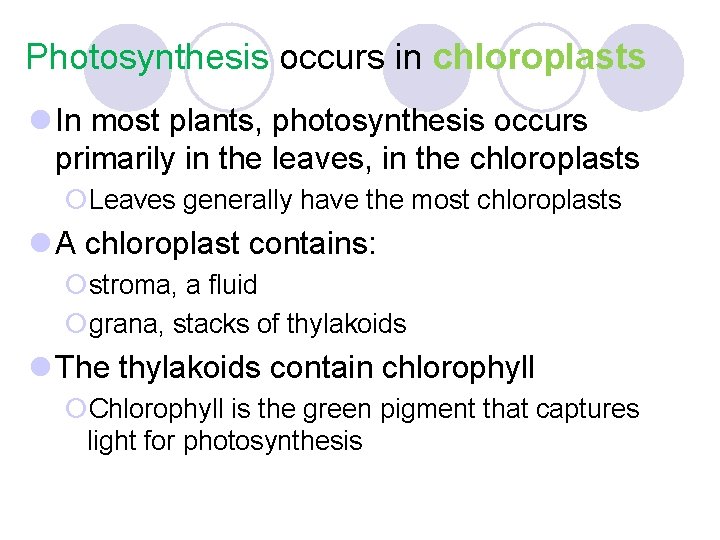
Photosynthesis occurs in chloroplasts l In most plants, photosynthesis occurs primarily in the leaves, in the chloroplasts ¡Leaves generally have the most chloroplasts l A chloroplast contains: ¡stroma, a fluid ¡grana, stacks of thylakoids l The thylakoids contain chlorophyll ¡Chlorophyll is the green pigment that captures light for photosynthesis
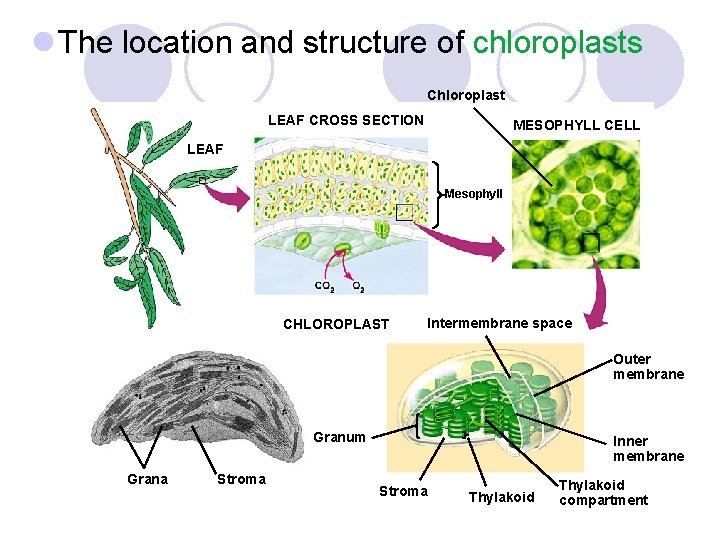
l The location and structure of chloroplasts Chloroplast LEAF CROSS SECTION MESOPHYLL CELL LEAF Mesophyll CHLOROPLAST Intermembrane space Outer membrane Granum Grana Stroma Inner membrane Stroma Thylakoid compartment
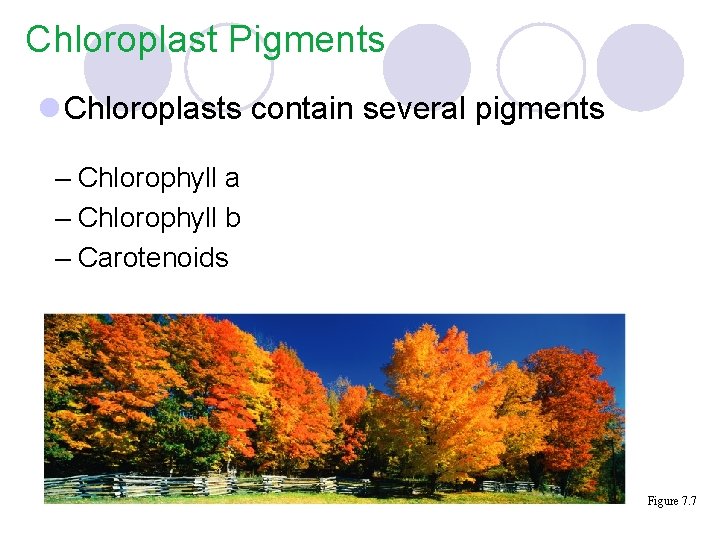
Chloroplast Pigments l Chloroplasts contain several pigments – Chlorophyll a – Chlorophyll b – Carotenoids Figure 7. 7
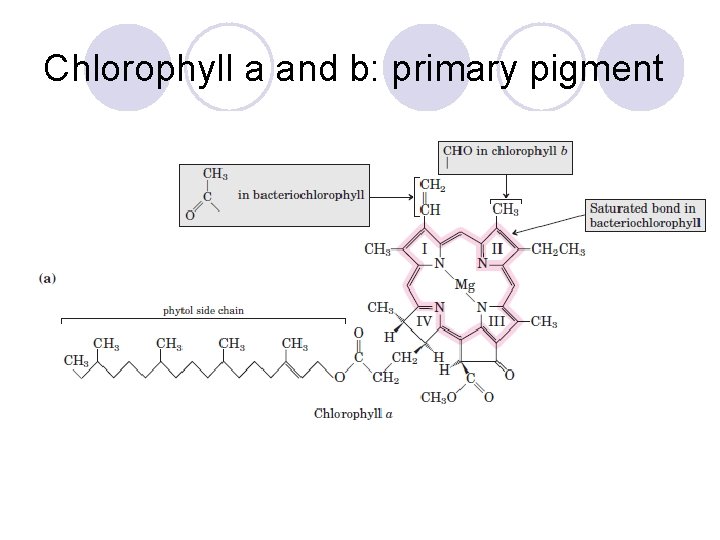
Chlorophyll a and b: primary pigment
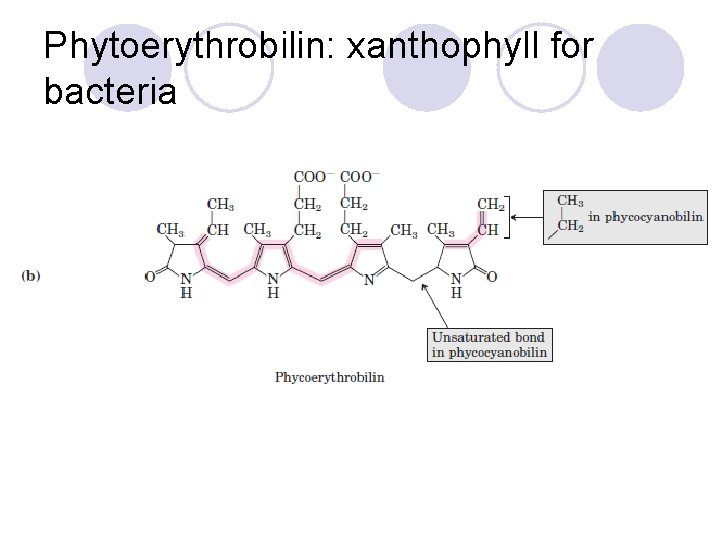
Phytoerythrobilin: xanthophyll for bacteria
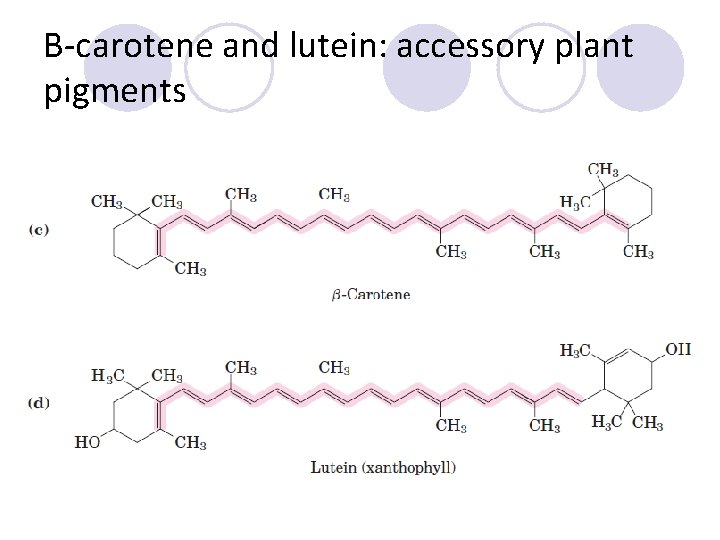
Β-carotene and lutein: accessory plant pigments
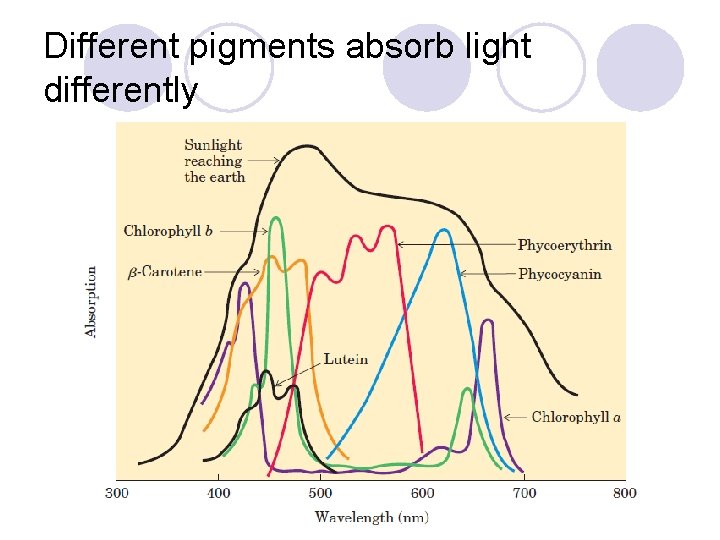
Different pigments absorb light differently
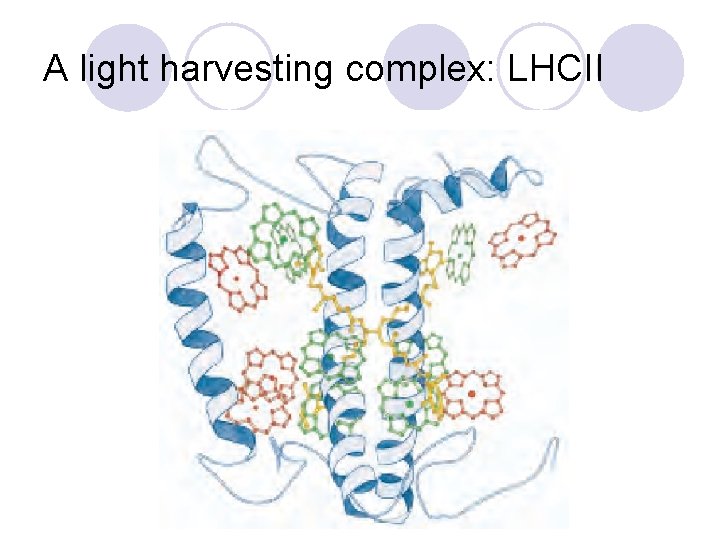
A light harvesting complex: LHCII
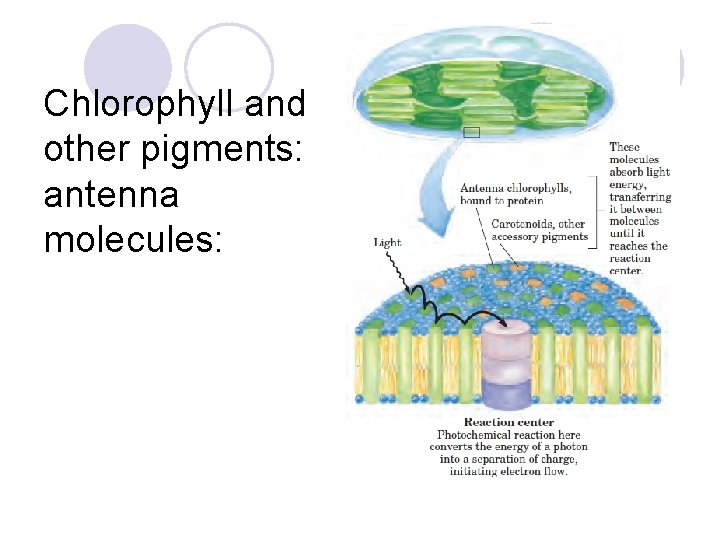
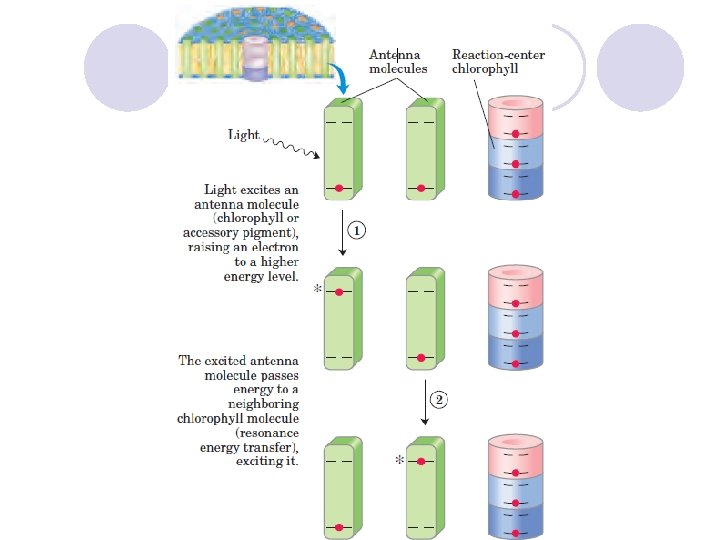
Chlorophyll and other pigments: antenna molecules:
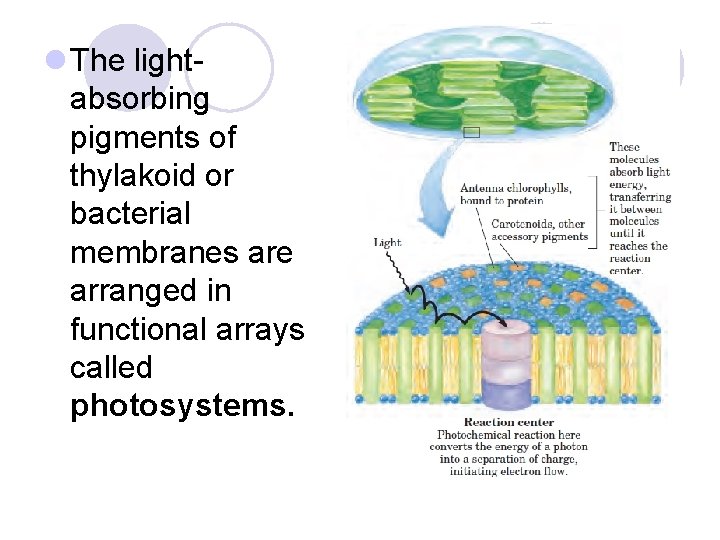
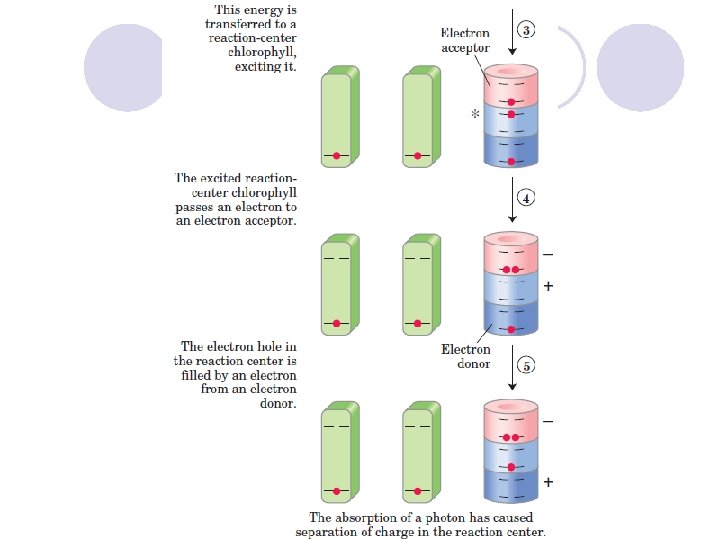
l The lightabsorbing pigments of thylakoid or bacterial membranes are arranged in functional arrays called photosystems.
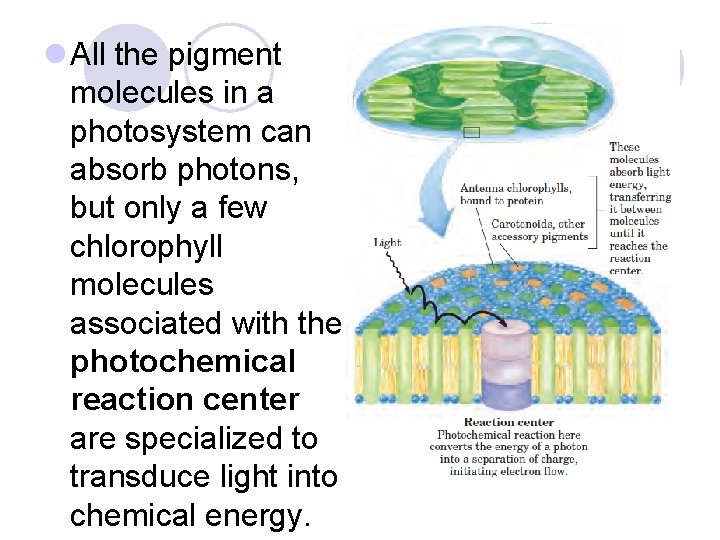
l All the pigment molecules in a photosystem can absorb photons, but only a few chlorophyll molecules associated with the photochemical reaction center are specialized to transduce light into chemical energy.
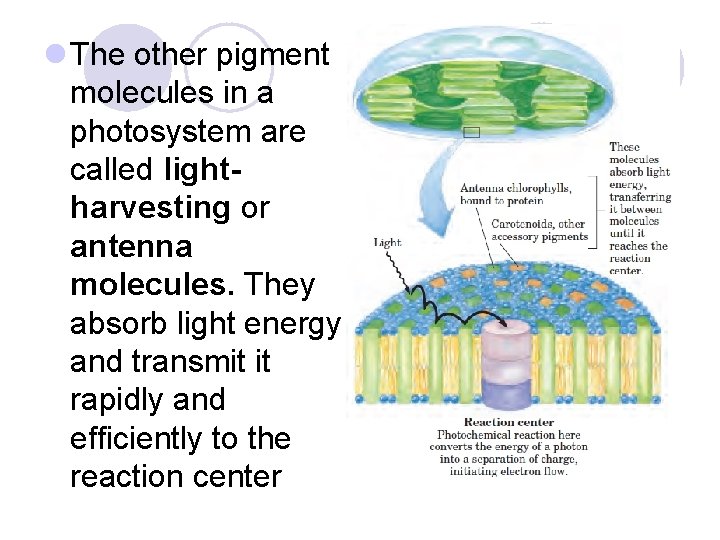
l The other pigment molecules in a photosystem are called lightharvesting or antenna molecules. They absorb light energy and transmit it rapidly and efficiently to the reaction center
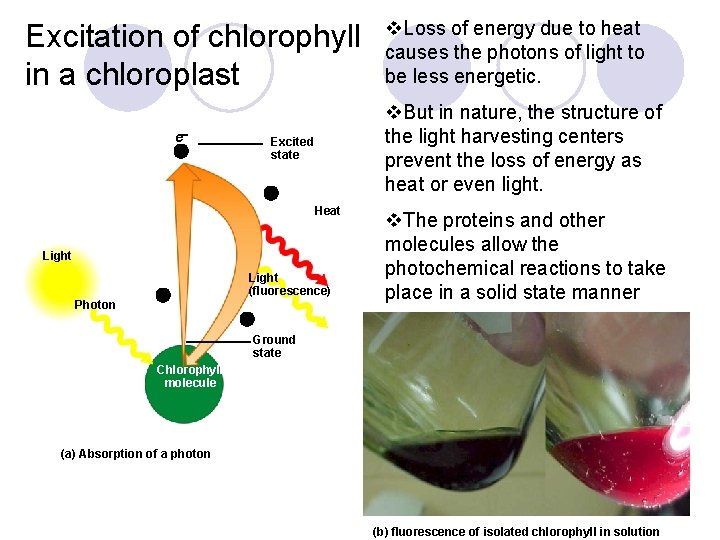
Excitation of chlorophyll in a chloroplast e 2 v. But in nature, the structure of the light harvesting centers prevent the loss of energy as heat or even light. Excited state Heat Light (fluorescence) Photon v. Loss of energy due to heat causes the photons of light to be less energetic. v. The proteins and other molecules allow the photochemical reactions to take place in a solid state manner Ground state Chlorophyll molecule (a) Absorption of a photon (b) fluorescence of isolated chlorophyll in solution
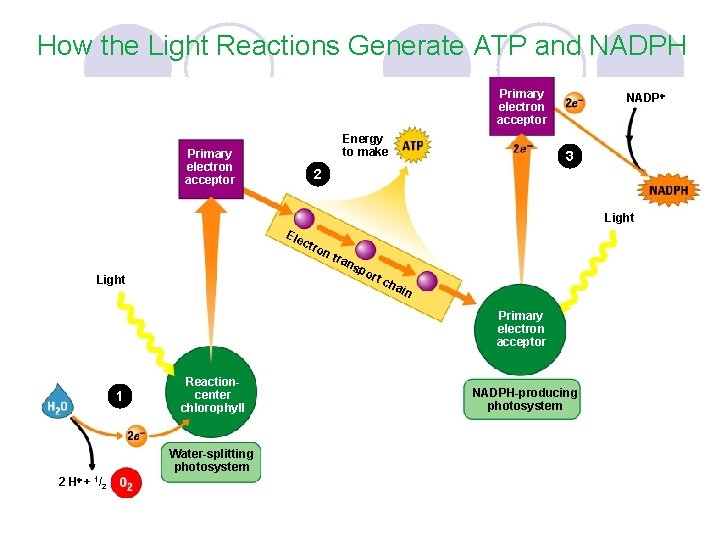
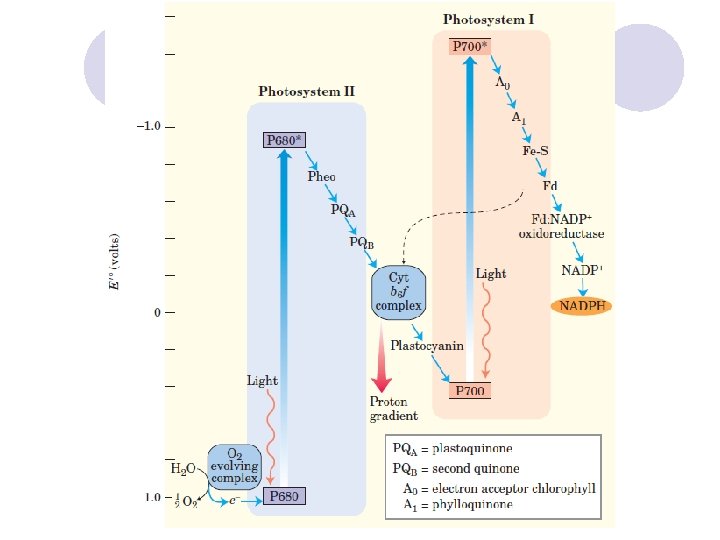
In plants, two photosynthetic reaction centers work in tandem l Photosystem II and photosystem I work together to catalyze the light-driven movement of electrons from H 2 O to NADP+, essentially producing NADPH and ATP in the process l The excited electrons are passed from the primary electron acceptor to electron transport chains ¡Their energy ends up in ATP and NADPH
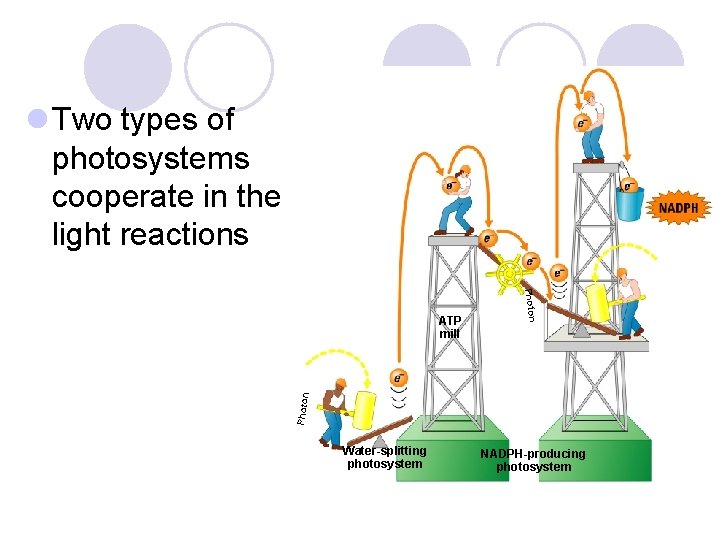
l Two types of photosystems cooperate in the light reactions Photon ATP mill Water-splitting photosystem NADPH-producing photosystem
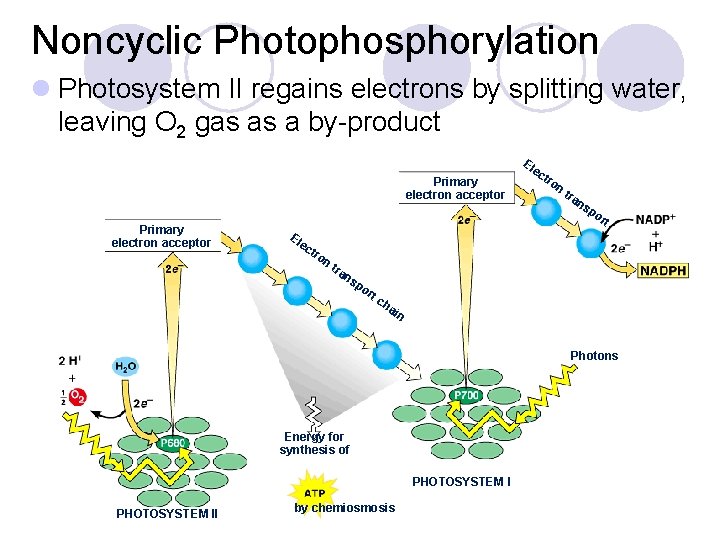
Noncyclic Photophosphorylation l Photosystem II regains electrons by splitting water, leaving O 2 gas as a by-product El Primary electron acceptor El ec t ro n tra ns po rt ec tro n tra ns po rt ch ain Photons Energy for synthesis of PHOTOSYSTEM II by chemiosmosis
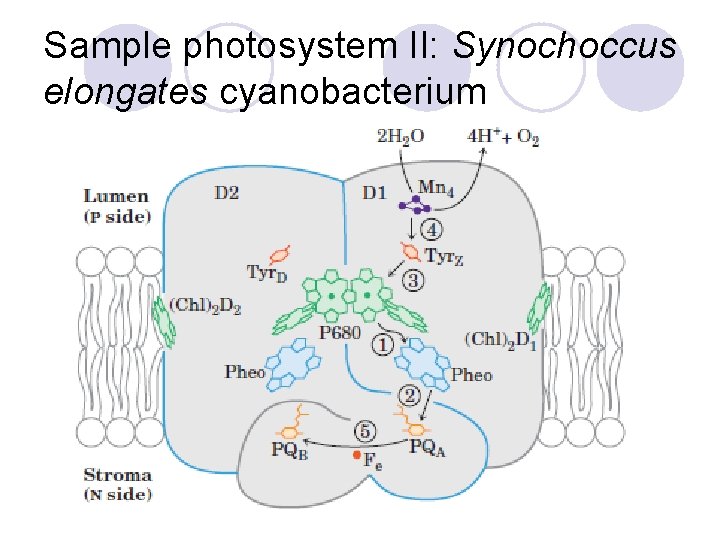
Sample photosystem II: Synochoccus elongates cyanobacterium
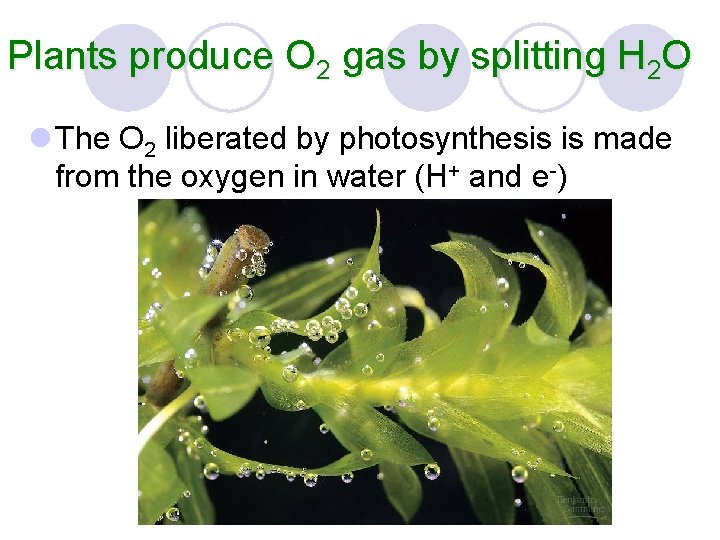
Plants produce O 2 gas by splitting H 2 O l The O 2 liberated by photosynthesis is made from the oxygen in water (H+ and e-)
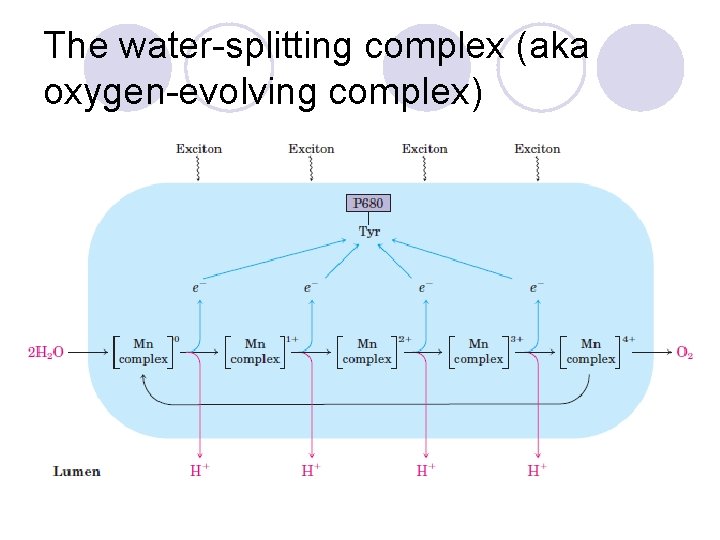
The water-splitting complex (aka oxygen-evolving complex)
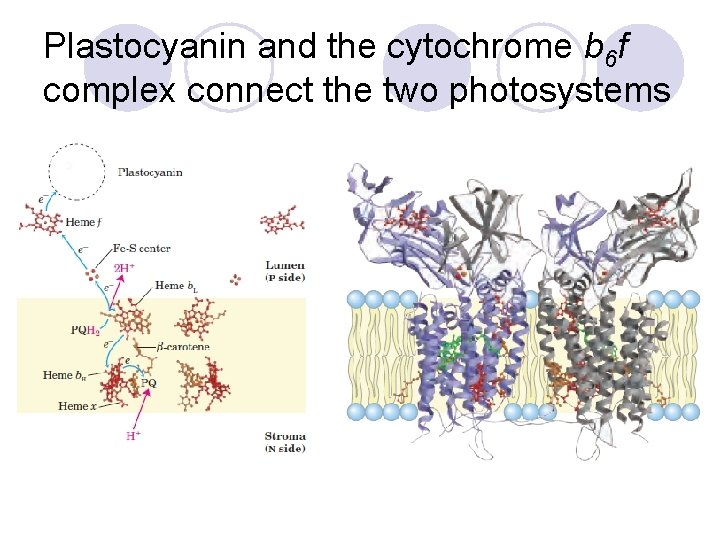
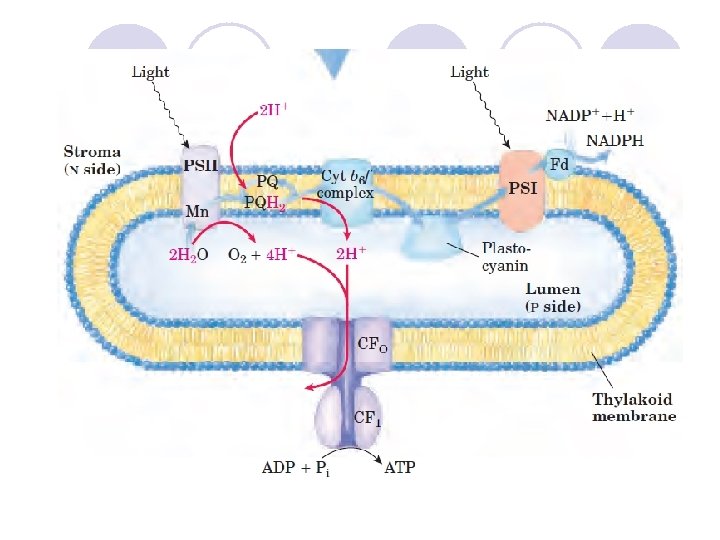
Plastocyanin and the cytochrome b 6 f complex connect the two photosystems
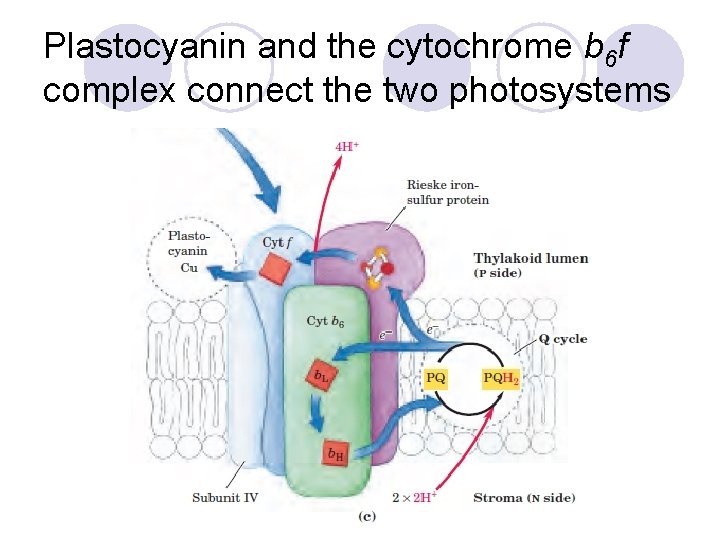
Plastocyanin and the cytochrome b 6 f complex connect the two photosystems
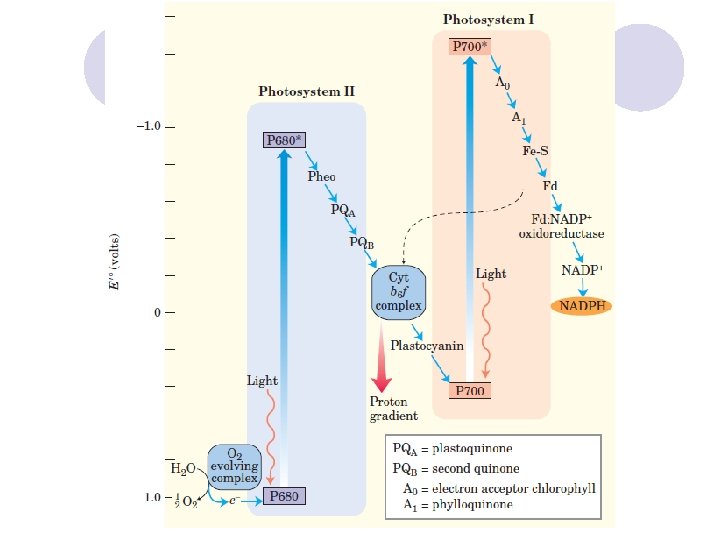
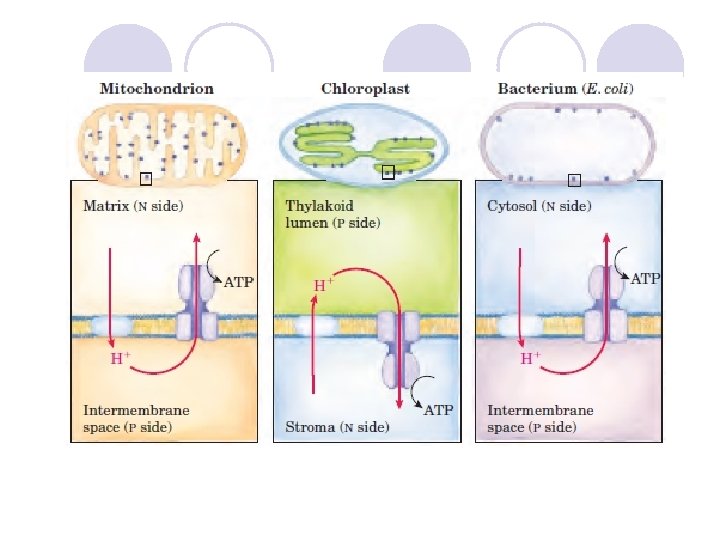
Chemiosmosis powers ATP synthesis in the light reactions l The electron transport chains are arranged with the photosystems in the thylakoid membranes and pump H+ through that membrane ¡The flow of H+ back through the membrane is harnessed by ATP synthase to make ATP ¡In the stroma, the H+ ions combine with NADP+ to form NADPH
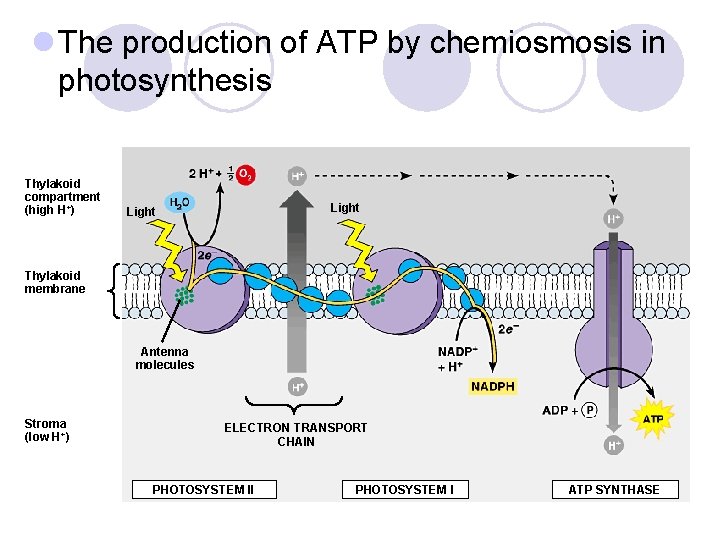
l The production of ATP by chemiosmosis in photosynthesis Thylakoid compartment (high H+) Light Thylakoid membrane Antenna molecules Stroma (low H+) ELECTRON TRANSPORT CHAIN PHOTOSYSTEM II PHOTOSYSTEM I ATP SYNTHASE
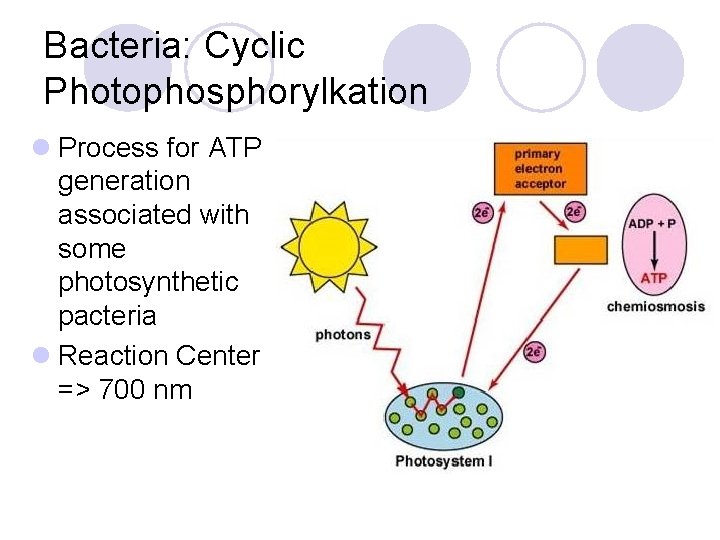
Bacteria: Cyclic Photophosphorylkation l Process for ATP generation associated with some photosynthetic pacteria l Reaction Center => 700 nm
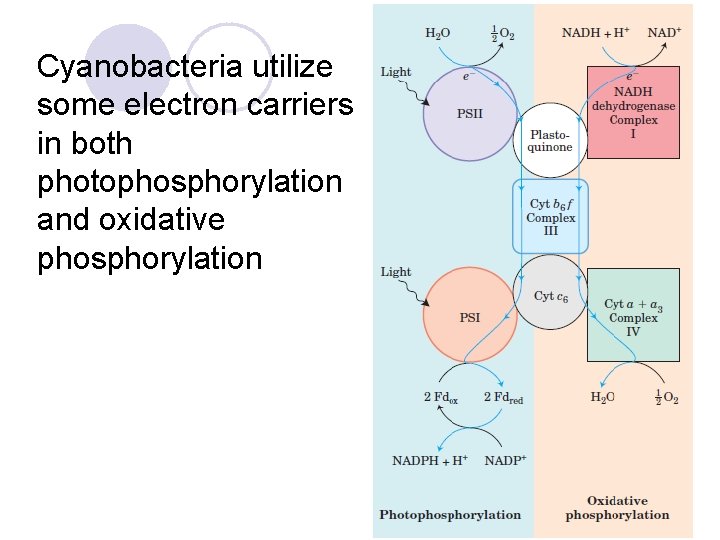
Cyanobacteria utilize some electron carriers in both photophosphorylation and oxidative phosphorylation
How the Light Reactions Generate ATP and NADPH Primary electron acceptor Energy to make Primary electron acceptor NADP 3 2 Light Ele c tro Light nt ran sp ort ch ain Primary electron acceptor 1 Reactioncenter chlorophyll Water-splitting photosystem 2 H + 1/2 NADPH-producing photosystem
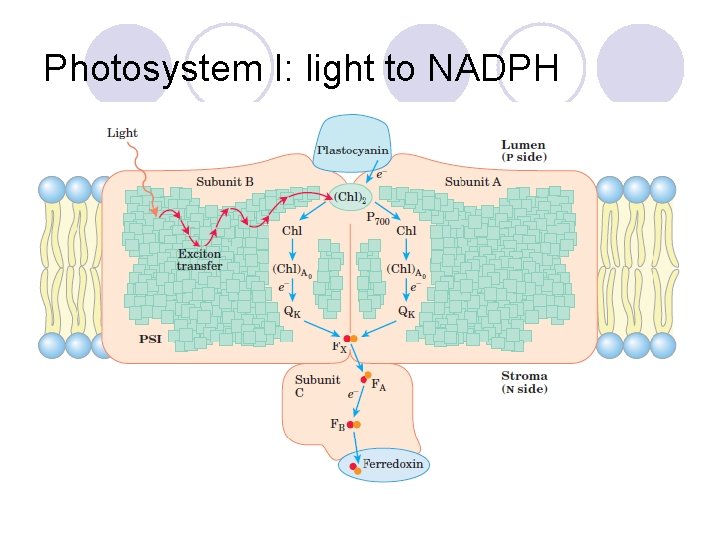
Photosystem I: light to NADPH
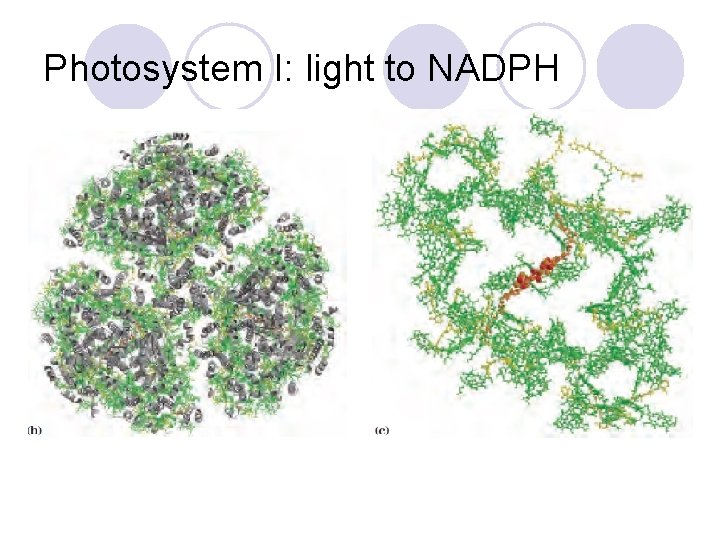
Photosystem I: light to NADPH
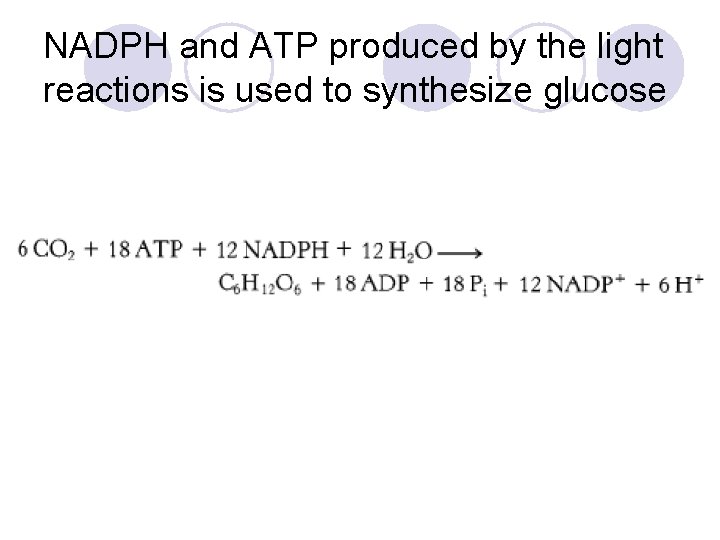
NADPH and ATP produced by the light reactions is used to synthesize glucose
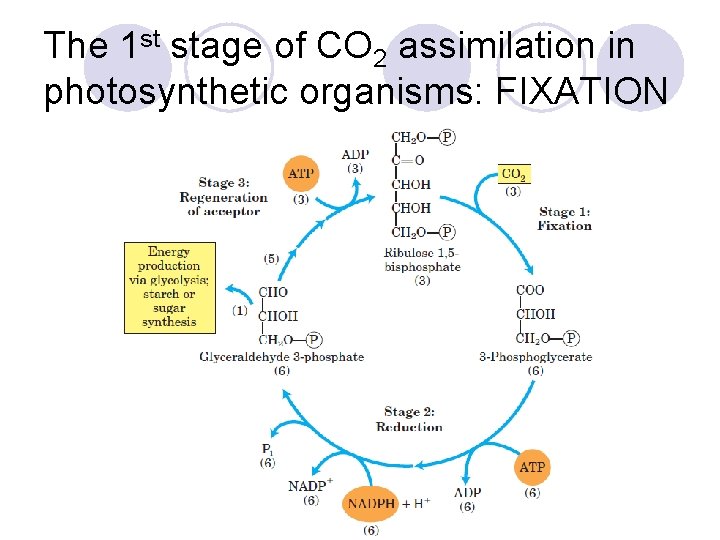
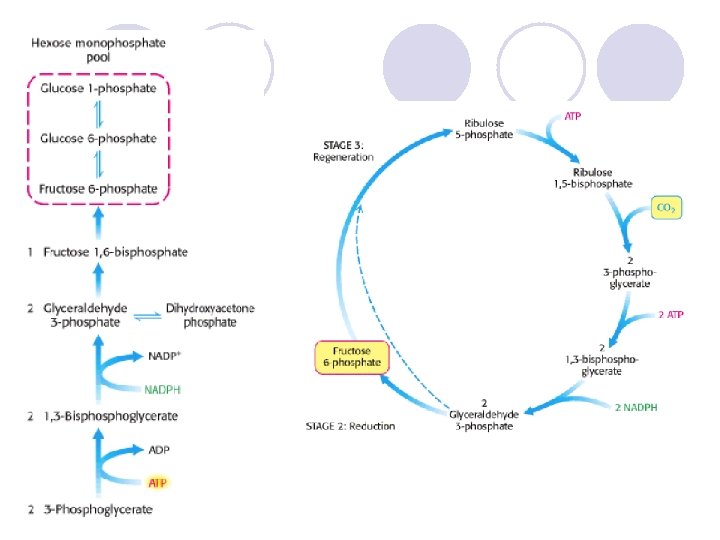
The 1 st stage of CO 2 assimilation in photosynthetic organisms: FIXATION
Rubisco: A photosynthetic VIP l Rubisco, more properly known as ribulose 1, 5 -bisphosphate carboxylase, is the enzyme responsible for catalyzing the incorporation of 3 CO 2 molecules into a single 3 -phosphoglycerate molecule.
2 nd stage of CO 2 assimilation l Conversion of 3 -phosphoglycerate to glyceraldehyde 3 -phosphate l Essentially the reverse of the similar reaction in glycolysis, but NADPH is used instead of NADH.
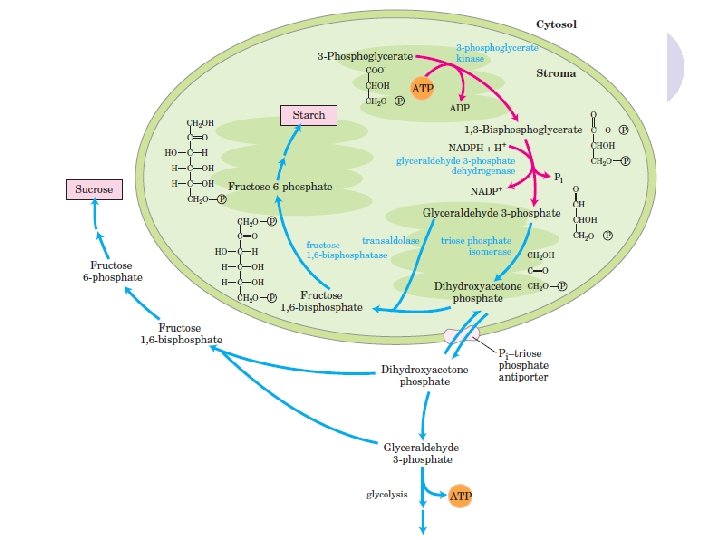
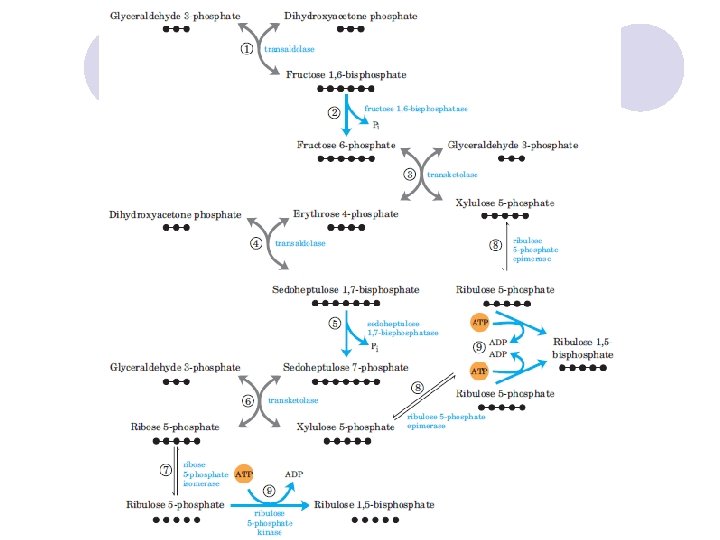
3 rd stage of CO 2 assimilation l Regeneration of ribulose 1, 5 -bisphosphate from triose phosphates
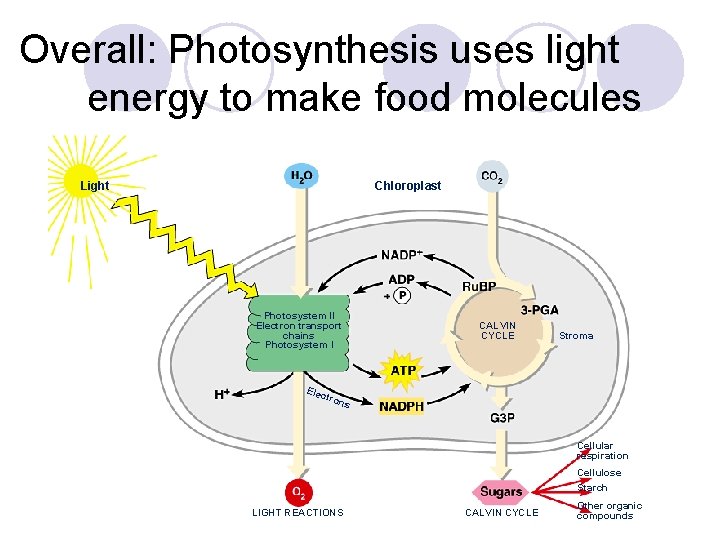
Overall: Photosynthesis uses light energy to make food molecules Light Chloroplast Photosystem II Electron transport chains Photosystem I Ele CALVIN CYCLE Stroma ctro ns Cellular respiration Cellulose Starch LIGHT REACTIONS CALVIN CYCLE Other organic compounds

- Slides: 60