
PHOTOSYNTHESIS Chapter 6 The main form of energy
- Slides: 24
PHOTOSYNTHESIS Chapter 6
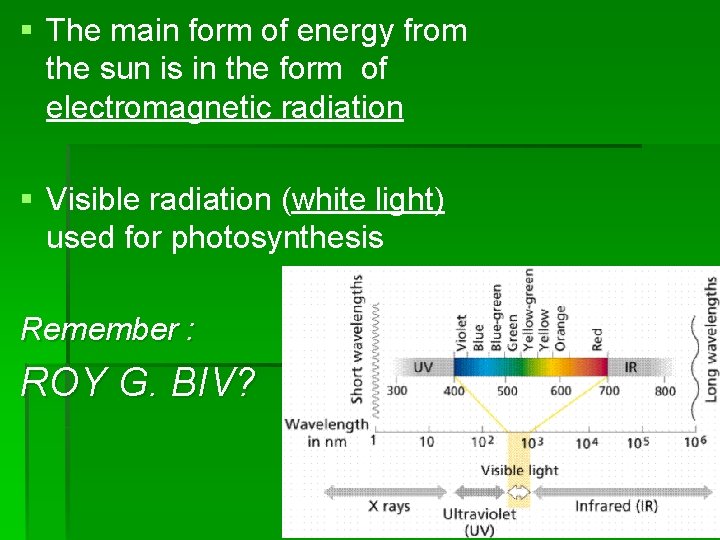
§ The main form of energy from the sun is in the form of electromagnetic radiation § Visible radiation (white light) used for photosynthesis Remember : ROY G. BIV?
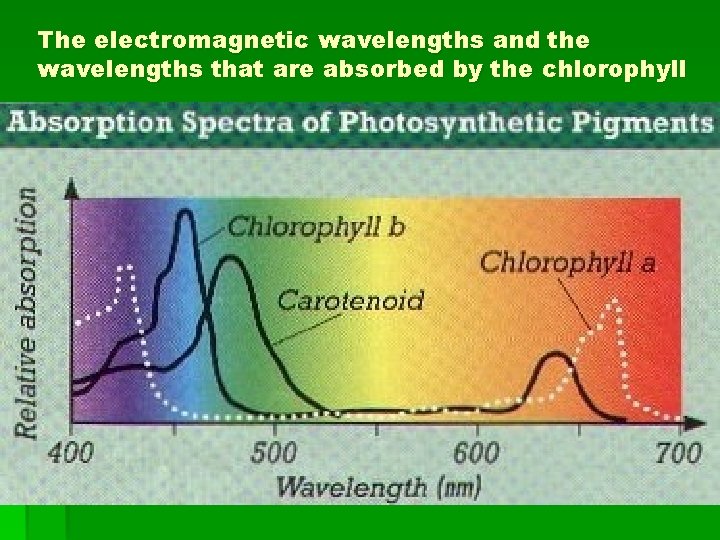
Why are plants green? § pigment a compound that absorbs light § different pigments absorb different wavelengths of white light. § chlorophyll is a pigment that absorbs red & blue light so green is reflected or transmitted. § Chlorophyll is located in the thylakoid membranes So, Plants are green because the green wavelength is reflected, not absorbed.
2 types of chlorophyll § Chlorophyll a – involved in light reactions § Chlorophyll b – assists in capturing light energy – accessory pigment § Carotenoids – accessory pigments – captures more light energy § Red, orange & yellow
The electromagnetic wavelengths and the wavelengths that are absorbed by the chlorophyll
Photosynthesis is § conversion of light energy into chemical energy that is stored in organic compounds (carbohydrates > glucose) § Used by autotrophs such as: § Plants § Algae § Some bacteria (prokaryotes)
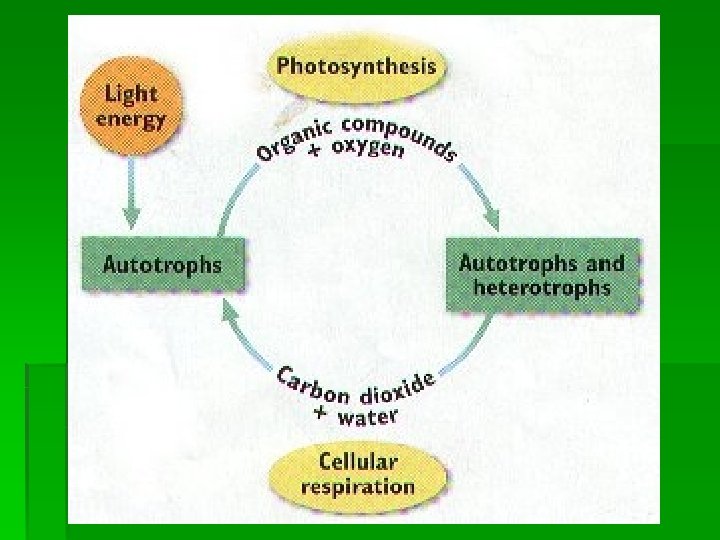
§ glucose - energy-rich chemical produced through photosynthesis (carbohydrate) § C 6 H 12 O 6 § Biochemical pathway – series of reactions where the product of one reaction is consumed in the next § E. g. photosynthesis product is glucose which is used in cellular respiration to make ATP
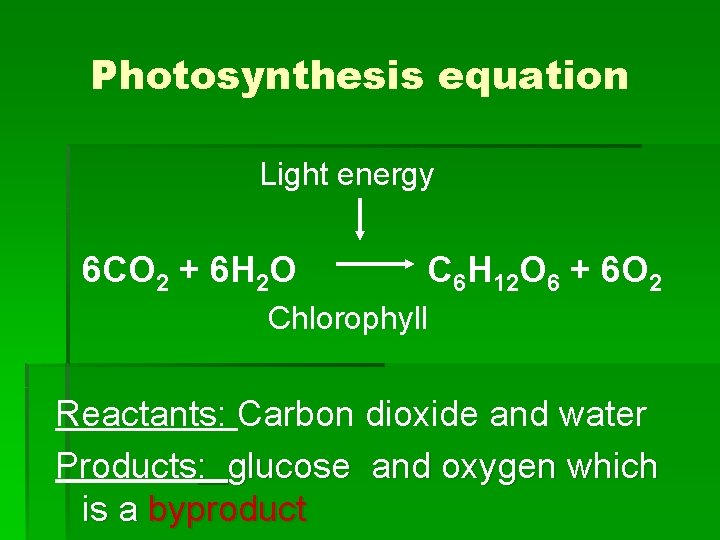
Photosynthesis equation Light energy 6 CO 2 + 6 H 2 O C 6 H 12 O 6 + 6 O 2 Chlorophyll Reactants: Carbon dioxide and water Products: glucose and oxygen which is a byproduct
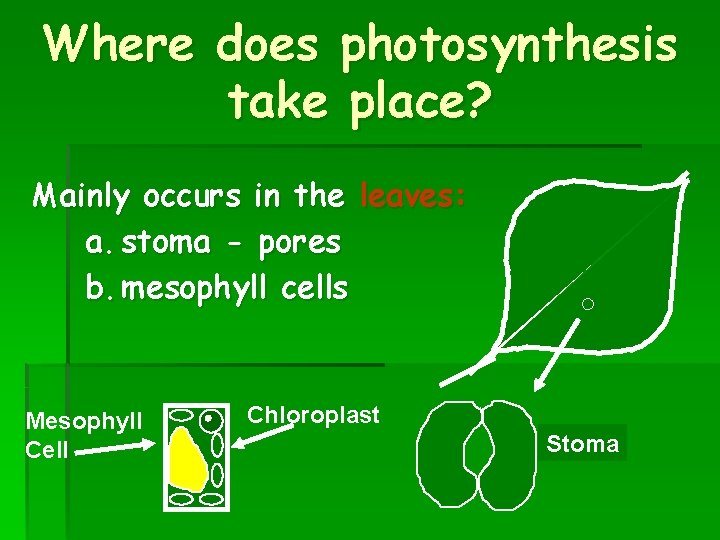
Where does photosynthesis take place? Mainly occurs in the leaves: a. stoma - pores b. mesophyll cells Mesophyll Cell Chloroplast Stoma
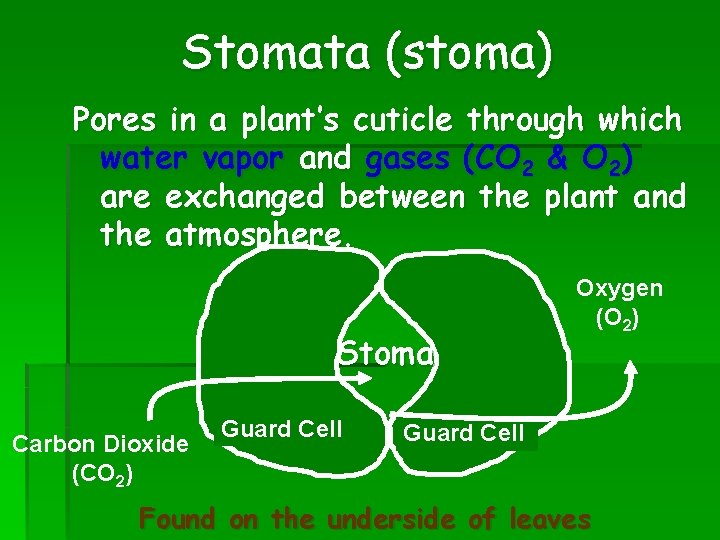
Stomata (stoma) Pores in a plant’s cuticle through which water vapor and gases (CO 2 & O 2) are exchanged between the plant and the atmosphere. Stoma Carbon Dioxide (CO 2) Guard Cell Oxygen (O 2) Guard Cell Found on the underside of leaves
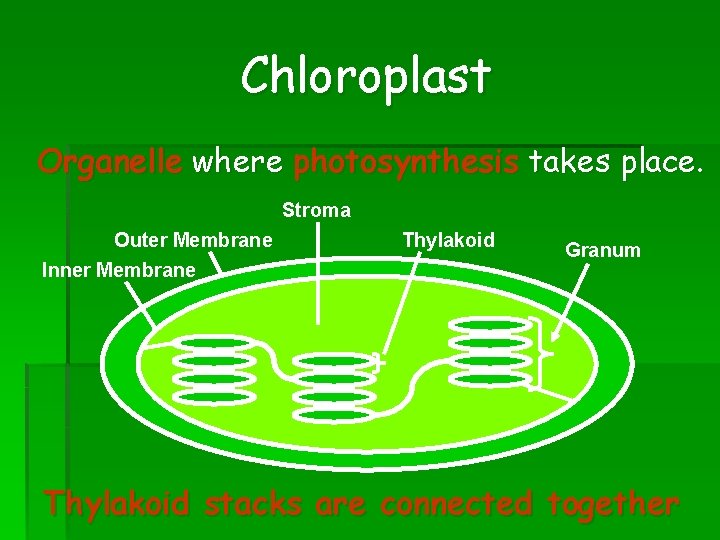
Chloroplast Organelle where photosynthesis takes place. Stroma Outer Membrane Inner Membrane Thylakoid Granum Thylakoid stacks are connected together
Parts Øchloroplasts – membrane organelle that absorbs light energy ØThylakoids – flattened sacs contain pigment chlorophyll ØGrana (pl: granum) – layered thylakoids (like pancakes) ØStroma – solution around thylakoids ØStomata – pore on underside of leaf where O 2 is released and CO 2 enters
Energy for Life on Earth § Sunlight is the ULTIMATE energy for all life on Earth § Plants store energy in the chemical bonds of sugars § Chemical energy is released as ATP during cellular respiration
Structure of ATP § ATP stands for adenosine triphosphate § It is composed of the nitrogen base ADENINE, the pentose (5 C) sugar RIBOSE, and three PHOSPHATE groups § The LAST phosphate group is bonded with a HIGH ENERGY chemical bond § This bond can be BROKEN to release ENERGY for CELLS to use
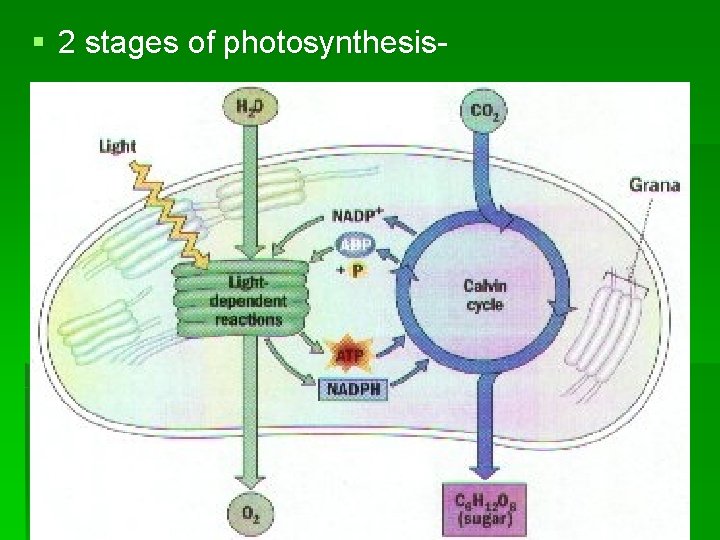
Photosynthesis SUN Photosynthesis can be divided into two stages: 1. Light Reaction Produces energy from solar power (photons) in the form of ATP and NADPH. 2. Calvin Cycle § Also called Carbon Fixation, Uses Co 2 & energy (ATP and NADPH) from light reaction to make sugar (glucose).
§ 2 stages of photosynthesis-
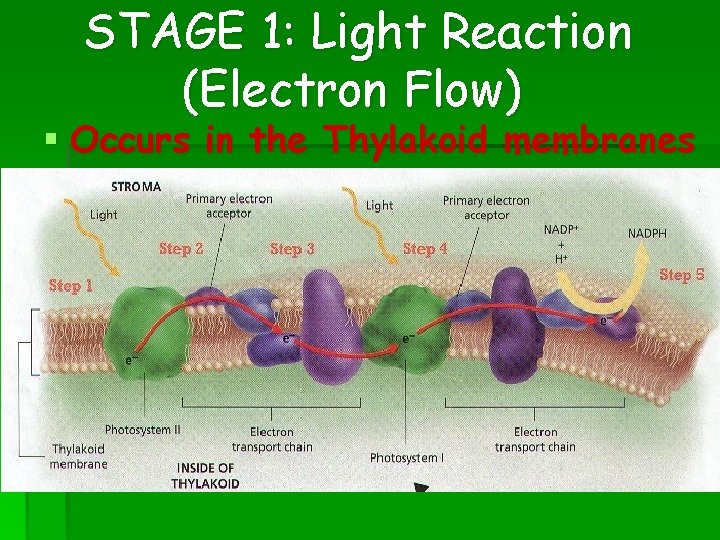
STAGE 1: Light Reaction (Electron Flow) § Occurs in the Thylakoid membranes
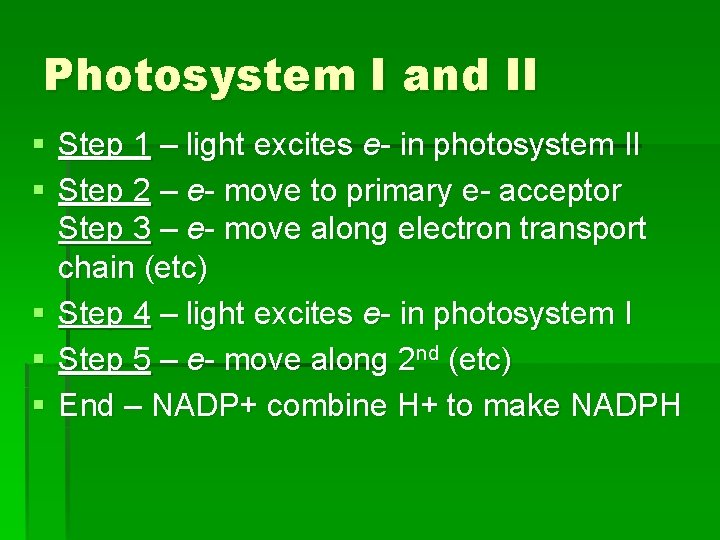
Photosystem I and II § Step 1 – light excites e- in photosystem II § Step 2 – e- move to primary e- acceptor Step 3 – e- move along electron transport chain (etc) § Step 4 – light excites e- in photosystem I § Step 5 – e- move along 2 nd (etc) § End – NADP+ combine H+ to make NADPH
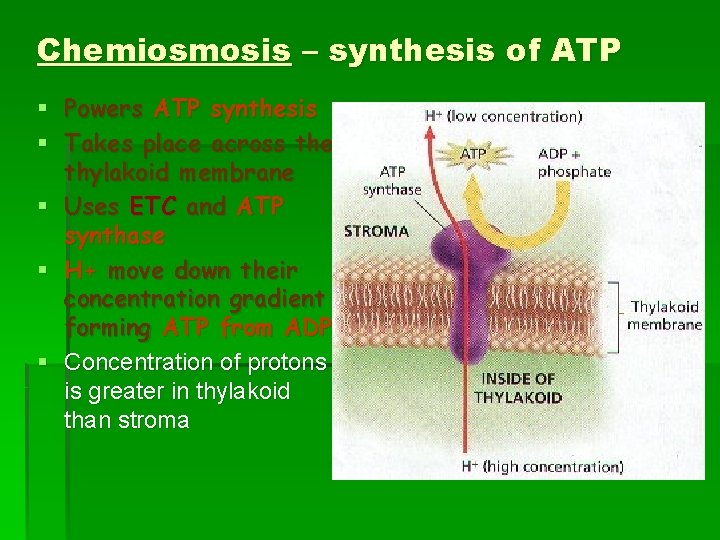
Chemiosmosis – synthesis of ATP § Powers ATP synthesis § Takes place across the thylakoid membrane § Uses ETC and ATP synthase § H+ move down their concentration gradient forming ATP from ADP § Concentration of protons is greater in thylakoid than stroma
§ ELECTRON TRANSPORT CHAIN ANIMATION § http: //www. science. smith. edu/department s/Biology/Bio 231/ltrxn. html
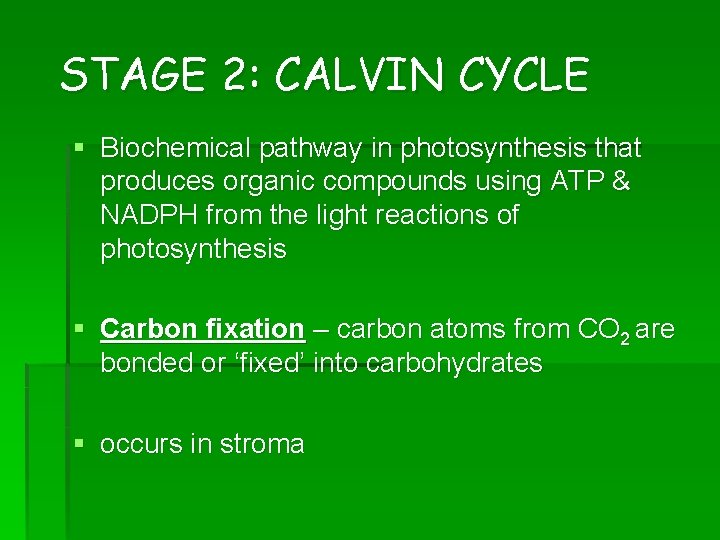
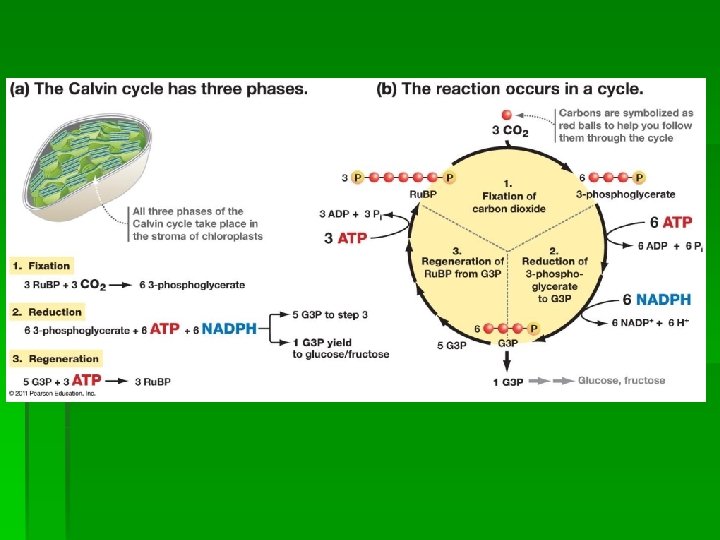
STAGE 2: CALVIN CYCLE § Biochemical pathway in photosynthesis that produces organic compounds using ATP & NADPH from the light reactions of photosynthesis § Carbon fixation – carbon atoms from CO 2 are bonded or ‘fixed’ into carbohydrates § occurs in stroma
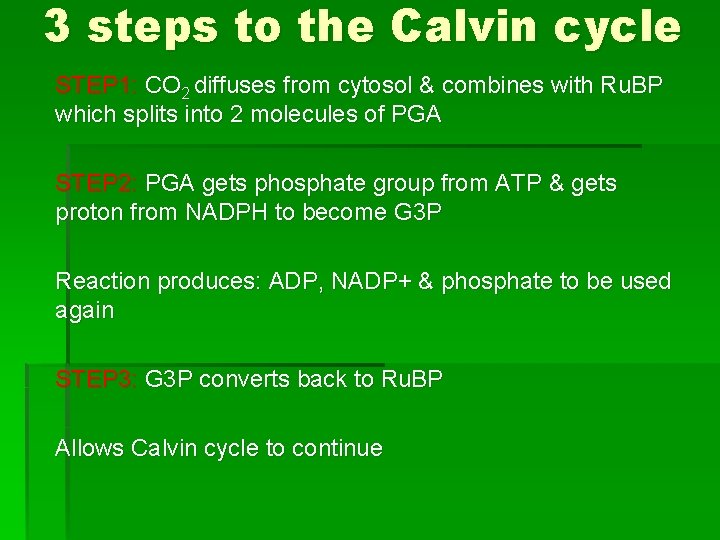
3 steps to the Calvin cycle STEP 1: CO 2 diffuses from cytosol & combines with Ru. BP which splits into 2 molecules of PGA STEP 2: PGA gets phosphate group from ATP & gets proton from NADPH to become G 3 P Reaction produces: ADP, NADP+ & phosphate to be used again STEP 3: G 3 P converts back to Ru. BP Allows Calvin cycle to continue