
Photosynthesis Chapter 3 Section 3 Sources of Energy

- Slides: 14
Photosynthesis Chapter 3, Section 3
Sources of Energy • The process by which a cell captures energy in sunlight and uses it to make food is called photosynthesis. Photo means “light” and synthesis means “put together”. • Nearly all living things obtain energy either directly or indirectly from the energy of sunlight captured during photosynthesis.
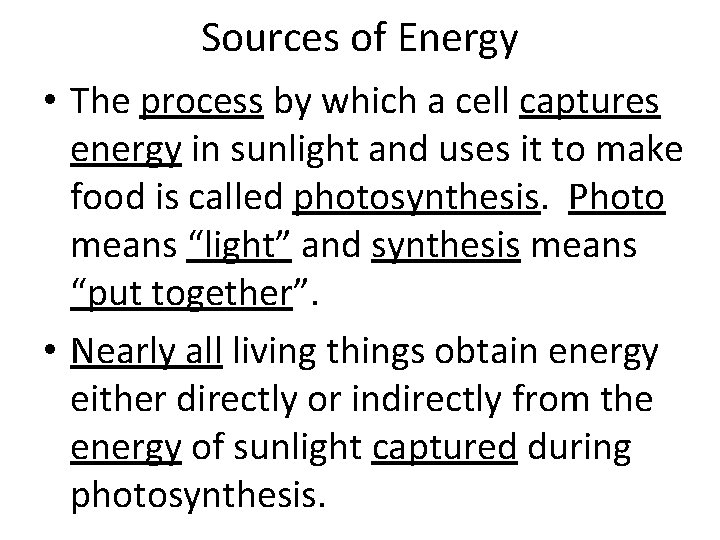
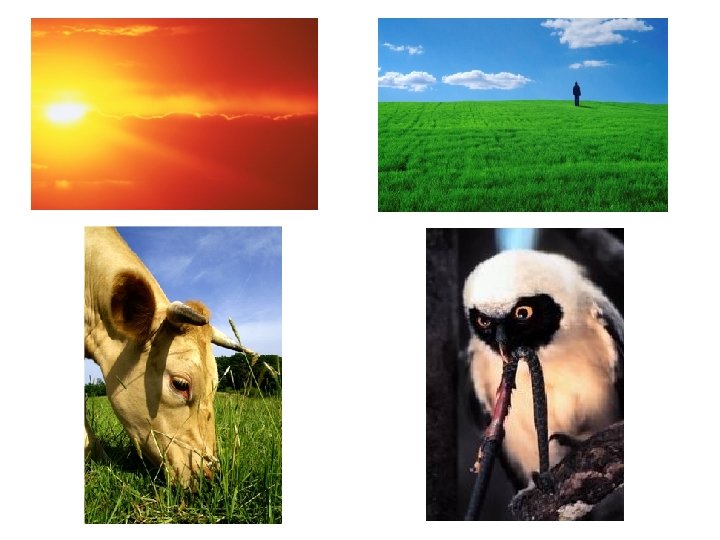
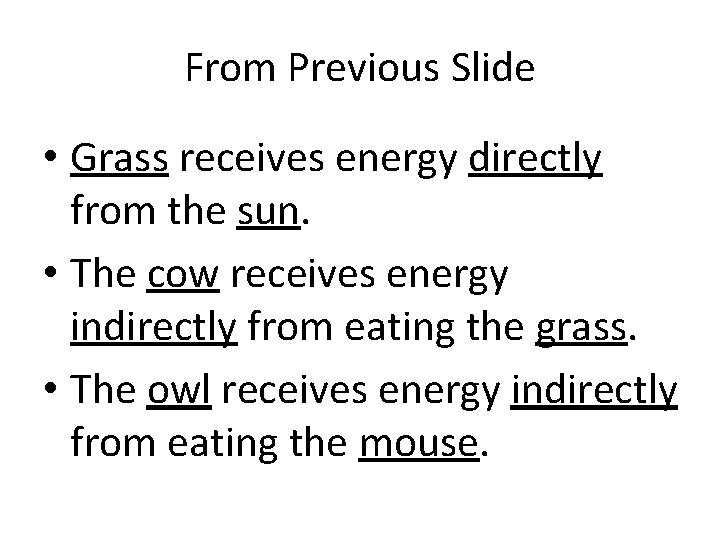
From Previous Slide • Grass receives energy directly from the sun. • The cow receives energy indirectly from eating the grass. • The owl receives energy indirectly from eating the mouse.
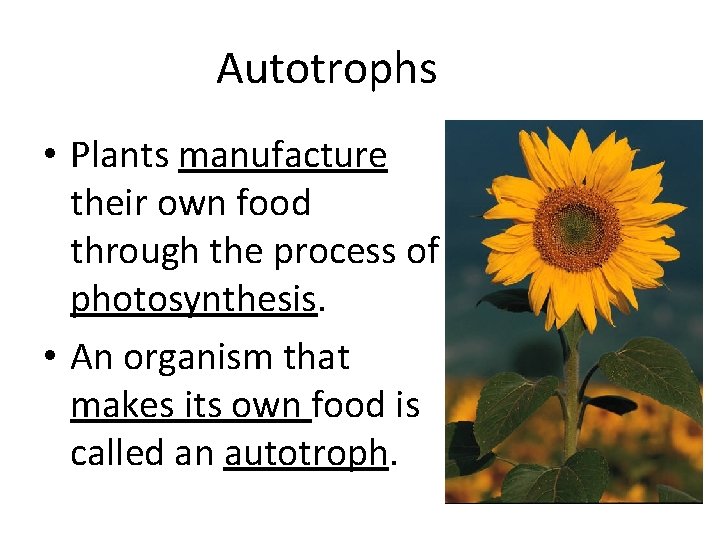
Autotrophs • Plants manufacture their own food through the process of photosynthesis. • An organism that makes its own food is called an autotroph.
Heterotroph • An organism that CANNOT make its own food is called a heterotroph.
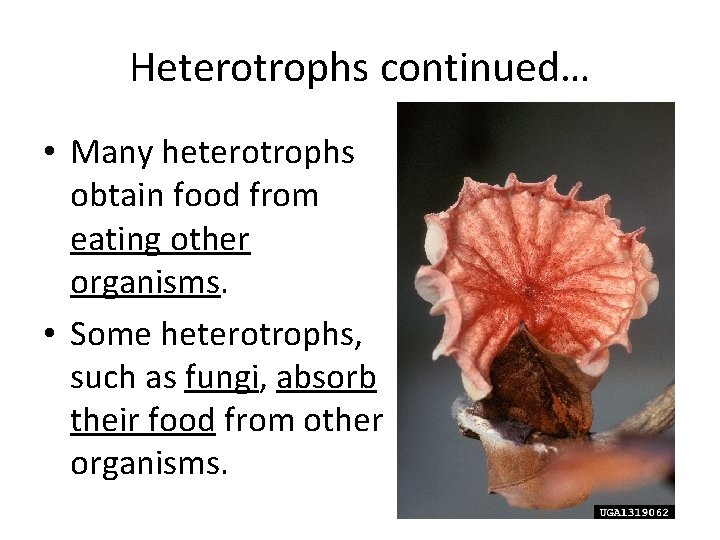
Heterotrophs continued… • Many heterotrophs obtain food from eating other organisms. • Some heterotrophs, such as fungi, absorb their food from other organisms.
The Two Stages of Photosynthesis • During photosynthesis plants and some other organisms use energy from the sun to convert carbon dioxide and water into oxygen and sugars.
Stage 1 • Stage 1 involves capturing the energy in sunlight. • In plants, the energy capturing mostly occurs in the leaves. • The organelles called chloroplasts contain a green pigment, chlorophyll. • Chlorophyll captures light energy to power the second stage of photosynthesis.
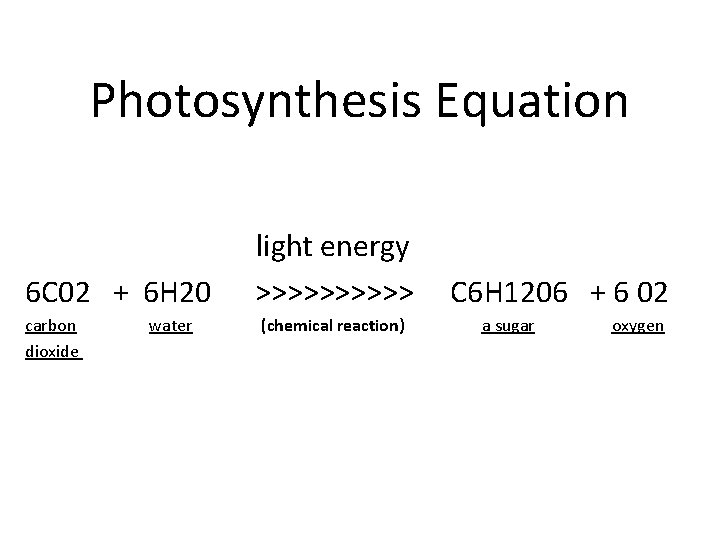
Stage 2 • Now, the cell uses the “captured” energy to produce sugars. • It takes two raw materials, water (H 20) and carbon dioxide (C 02). • In plants water is absorbed from the roots through the stem to the leaves. • Carbon dioxide enters through tiny openings or pores on the underside of the leaves called stomata.
Stage 2 continued… • Inside the chloroplasts, the water and carbon dioxide go through a series of chemical reactions! • The reactions are powered by the energy “captured” in stage 1. • These chemical reactions produce new products. • One product is SUGAR that has six carbon atoms.
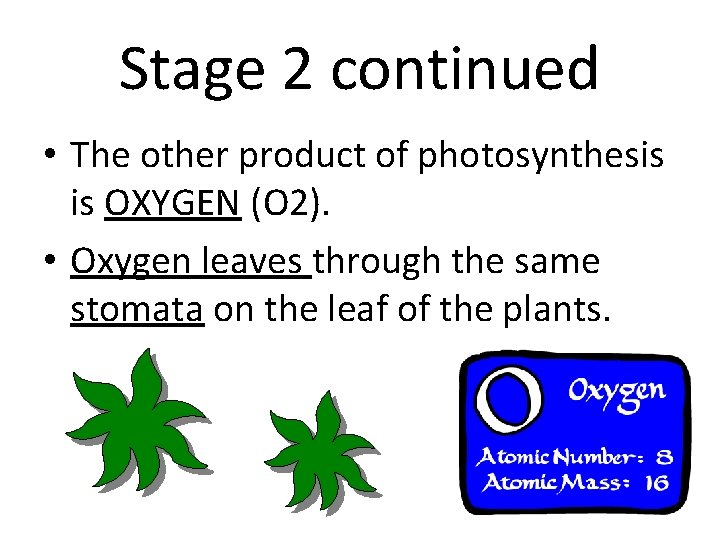
Stage 2 continued • The other product of photosynthesis is OXYGEN (O 2). • Oxygen leaves through the same stomata on the leaf of the plants.
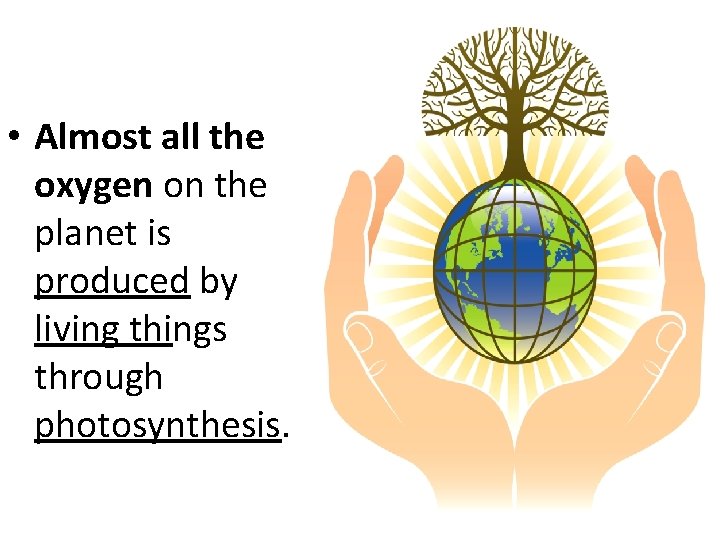
• Almost all the oxygen on the planet is produced by living things through photosynthesis.
Photosynthesis Equation 6 C 02 + 6 H 20 carbon dioxide water light energy >>>>> (chemical reaction) C 6 H 1206 + 6 02 a sugar oxygen