
Photosynthesis Chapter 10 Respiration Photosynthesis I Photosynthesis A
- Slides: 34
Photosynthesis Chapter 10
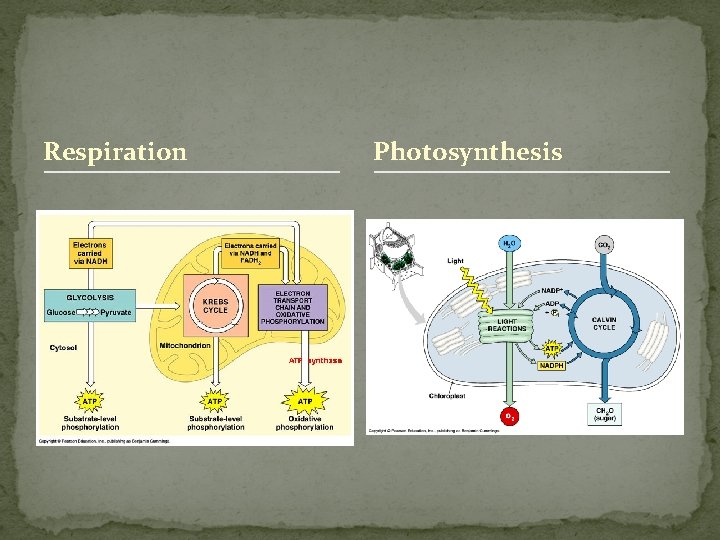
Respiration Photosynthesis
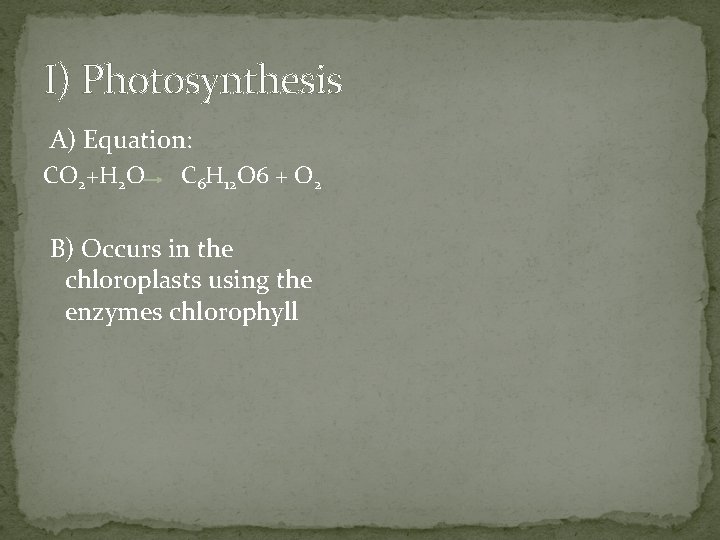
I) Photosynthesis A) Equation: CO 2+H 2 O C 6 H 12 O 6 + O 2 B) Occurs in the chloroplasts using the enzymes chlorophyll
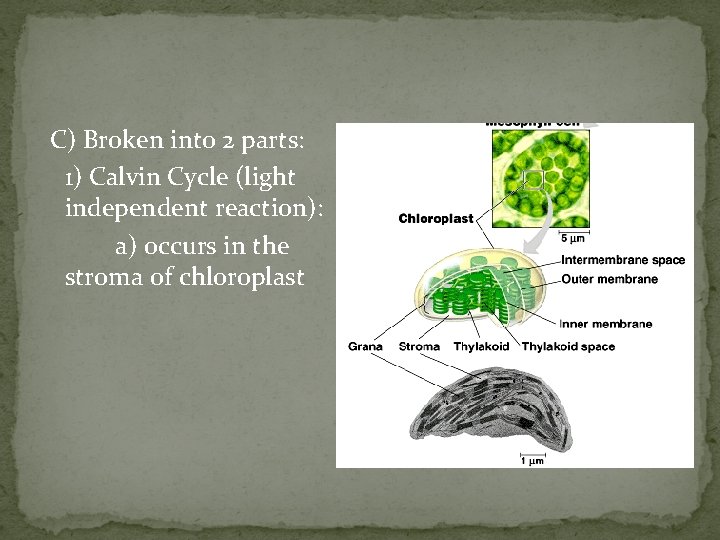
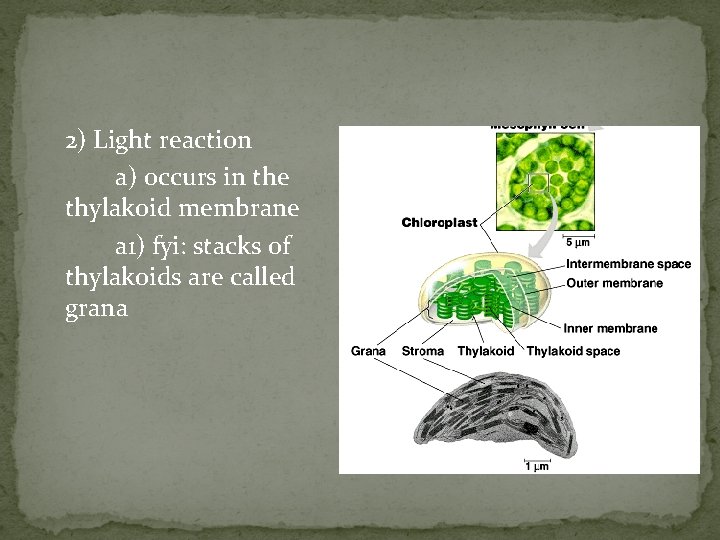
C) Broken into 2 parts: 1) Calvin Cycle (light independent reaction): a) occurs in the stroma of chloroplast
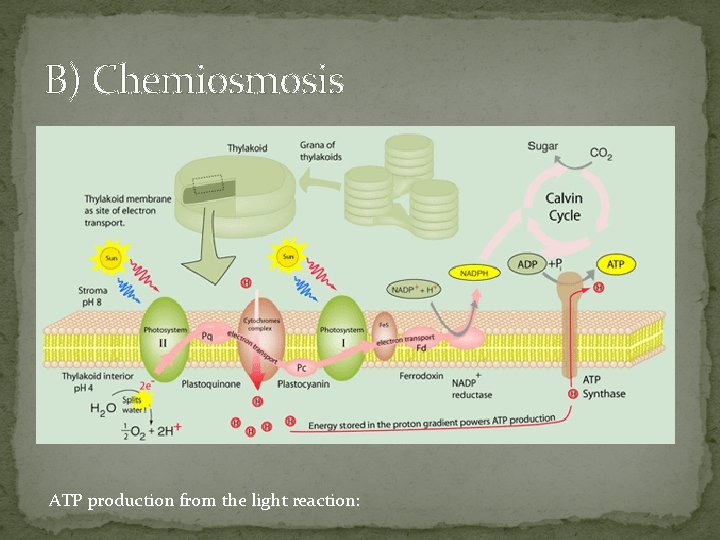
2) Light reaction a) occurs in the thylakoid membrane a 1) fyi: stacks of thylakoids are called grana
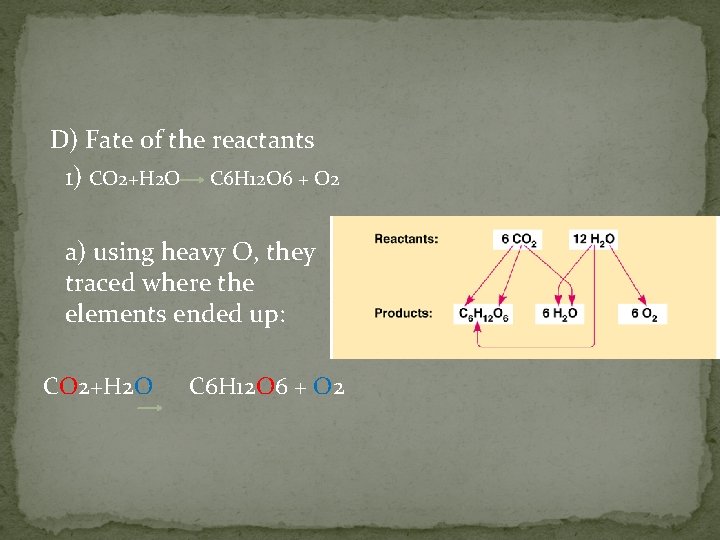
D) Fate of the reactants 1) CO 2+H 2 O C 6 H 12 O 6 + O 2 a) using heavy O, they traced where the elements ended up: CO 2+H 2 O C 6 H 12 O 6 + O 2
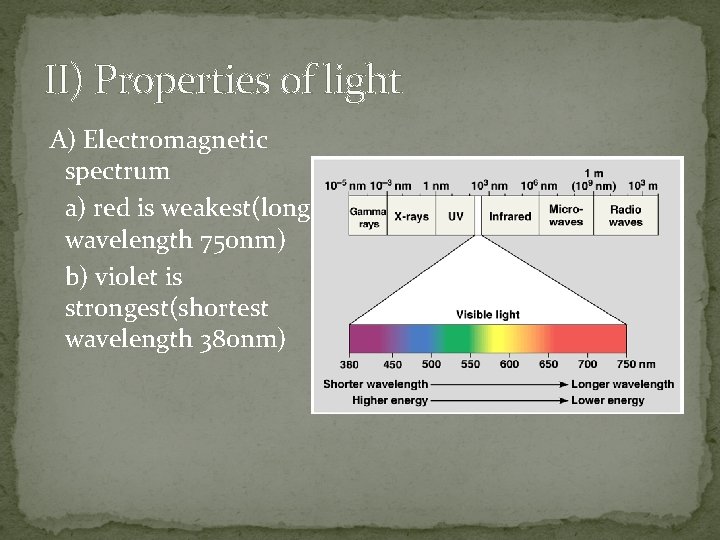
II) Properties of light A) Electromagnetic spectrum a) red is weakest(longest wavelength 750 nm) b) violet is strongest(shortest wavelength 380 nm)
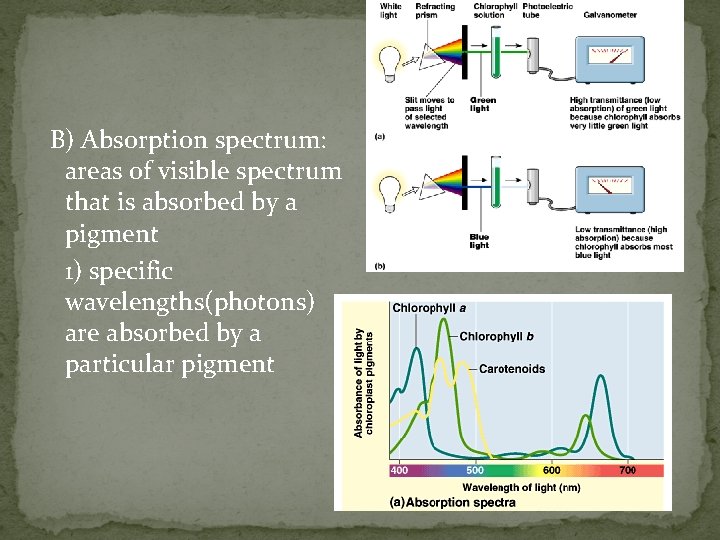
B) Absorption spectrum: areas of visible spectrum that is absorbed by a pigment 1) specific wavelengths(photons) are absorbed by a particular pigment
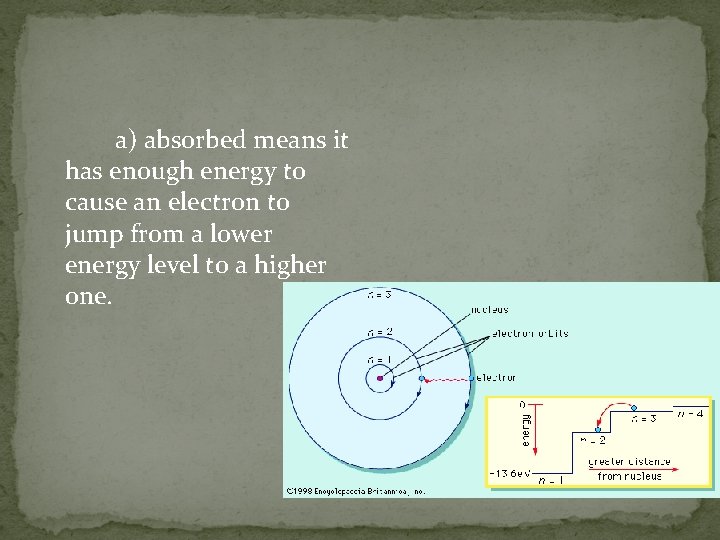
a) absorbed means it has enough energy to cause an electron to jump from a lower energy level to a higher one.
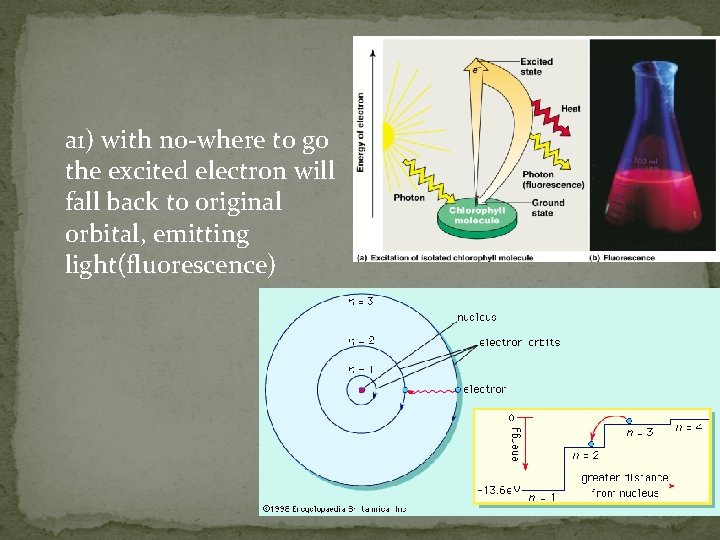
a 1) with no-where to go the excited electron will fall back to original orbital, emitting light(fluorescence)
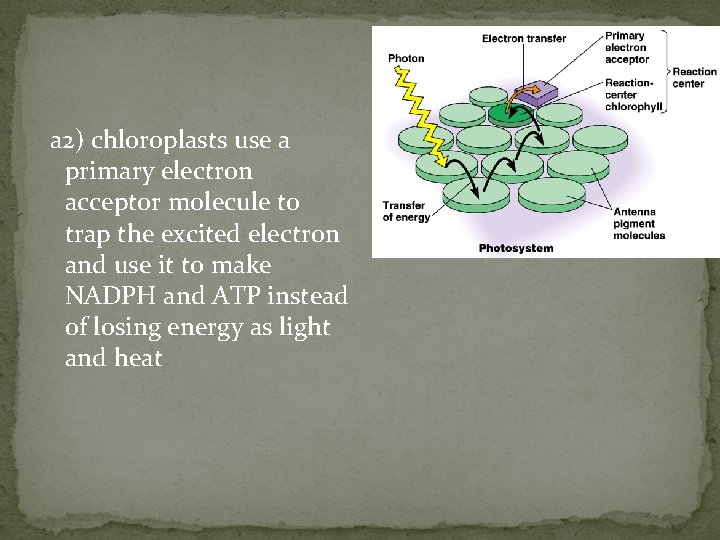
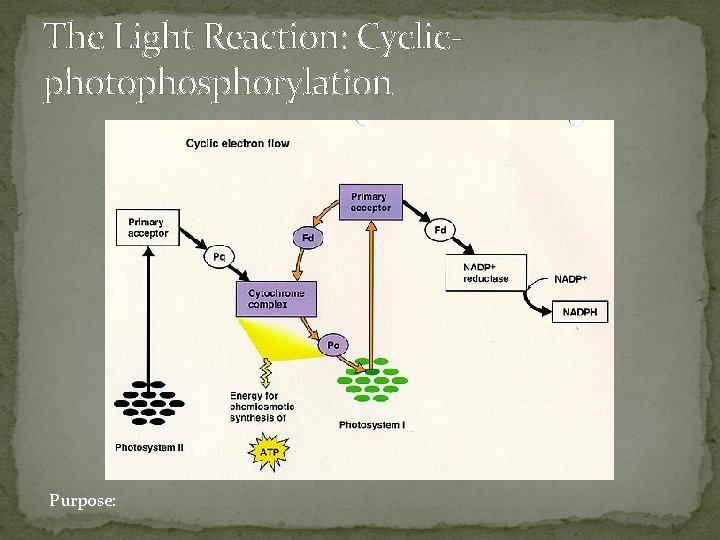
a 2) chloroplasts use a primary electron acceptor molecule to trap the excited electron and use it to make NADPH and ATP instead of losing energy as light and heat
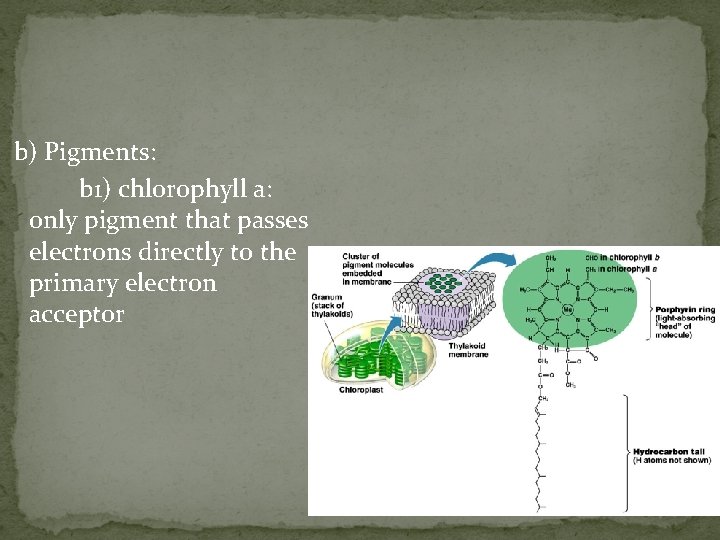
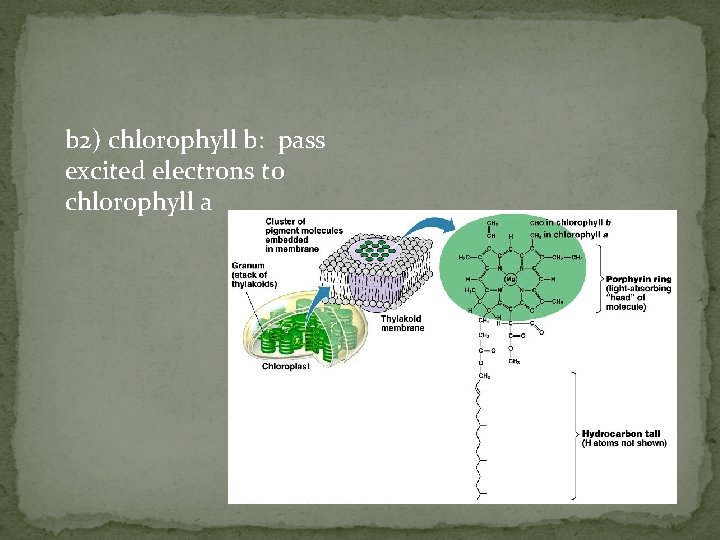
b) Pigments: b 1) chlorophyll a: only pigment that passes electrons directly to the primary electron acceptor
b 2) chlorophyll b: pass excited electrons to chlorophyll a
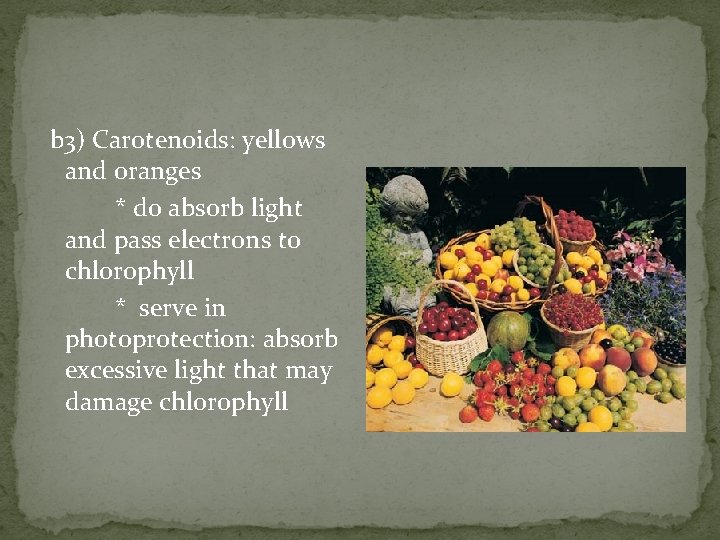
b 3) Carotenoids: yellows and oranges * do absorb light and pass electrons to chlorophyll * serve in photoprotection: absorb excessive light that may damage chlorophyll
* xanthophylls: contain oxygen * carotenes: pure hydrocarbons
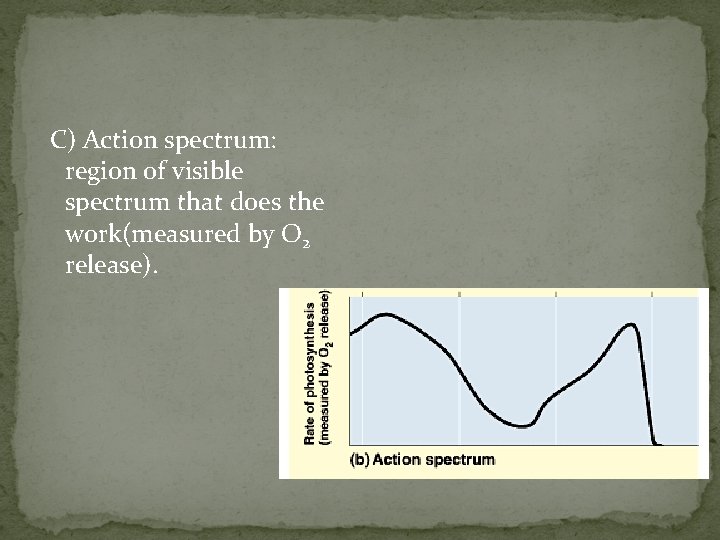
C) Action spectrum: region of visible spectrum that does the work(measured by O 2 release).
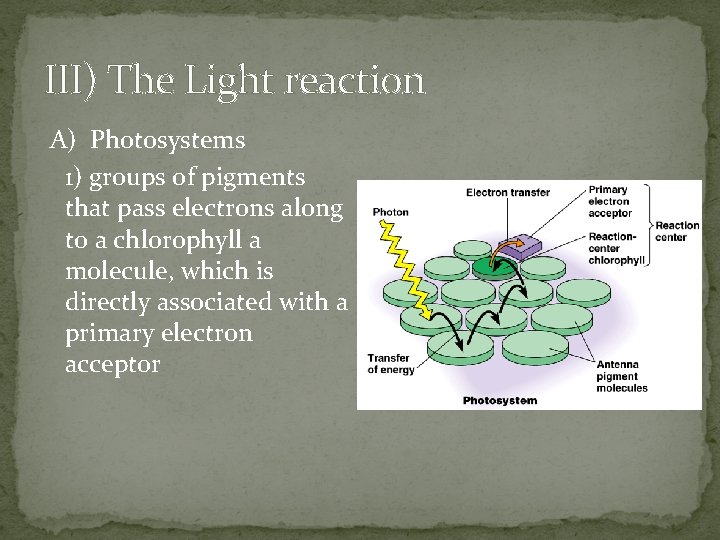
III) The Light reaction A) Photosystems 1) groups of pigments that pass electrons along to a chlorophyll a molecule, which is directly associated with a primary electron acceptor
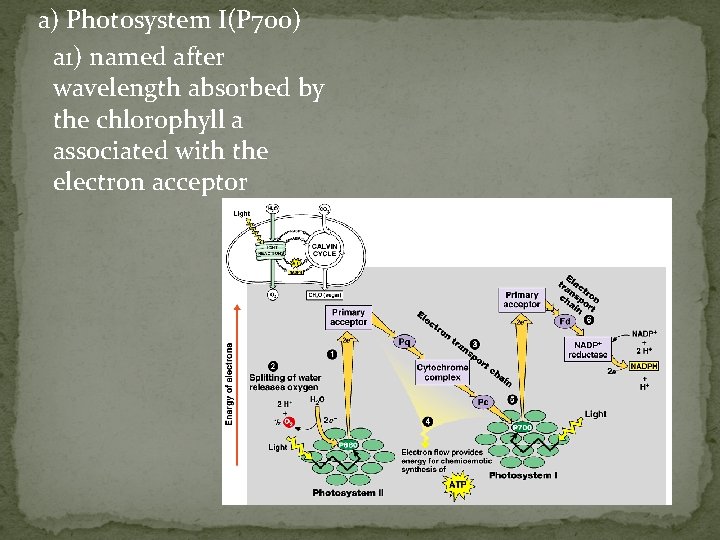
a) Photosystem I(P 700) a 1) named after wavelength absorbed by the chlorophyll a associated with the electron acceptor
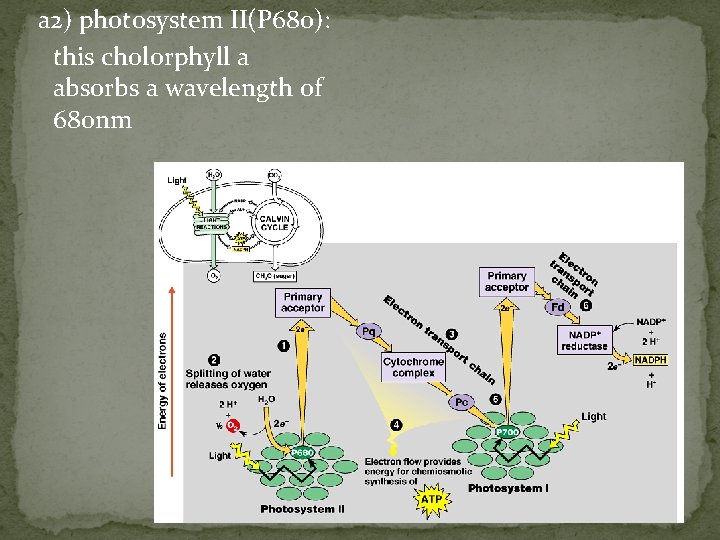
a 2) photosystem II(P 680): this cholorphyll a absorbs a wavelength of 680 nm
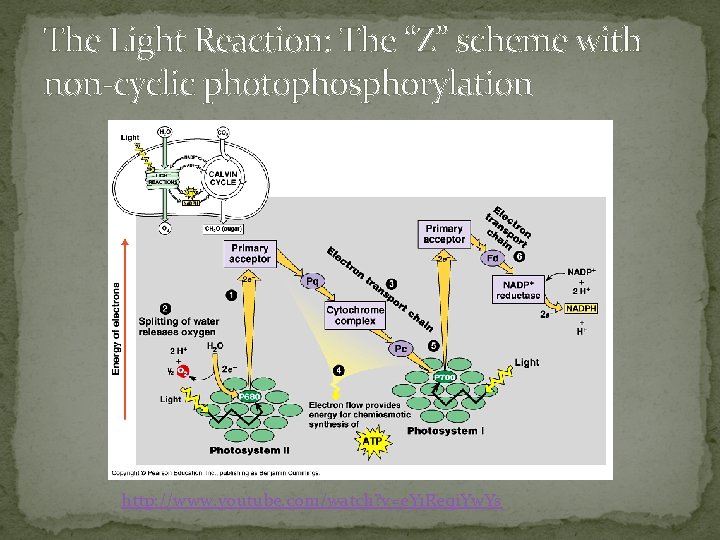
The Light Reaction: The “Z” scheme with non-cyclic photophosphorylation http: //www. youtube. com/watch? v=e. Y 1 Reqi. Yw. Ys
The Light Reaction: Cyclicphotophosphorylation Purpose:
B) Chemiosmosis ATP production from the light reaction:
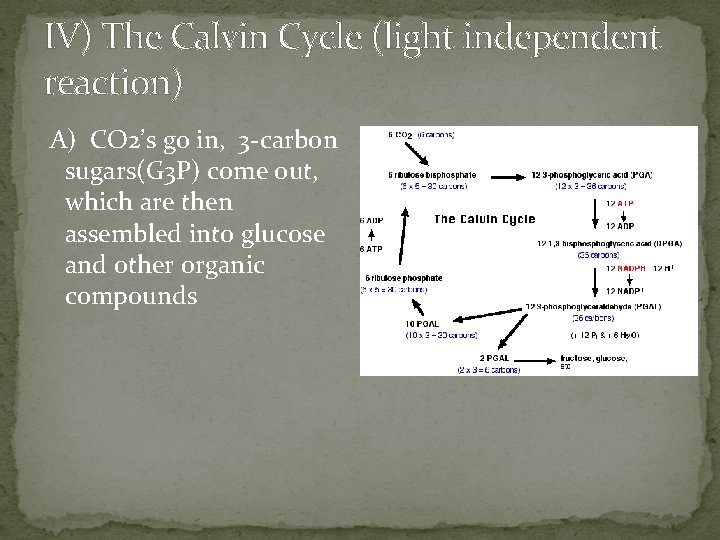
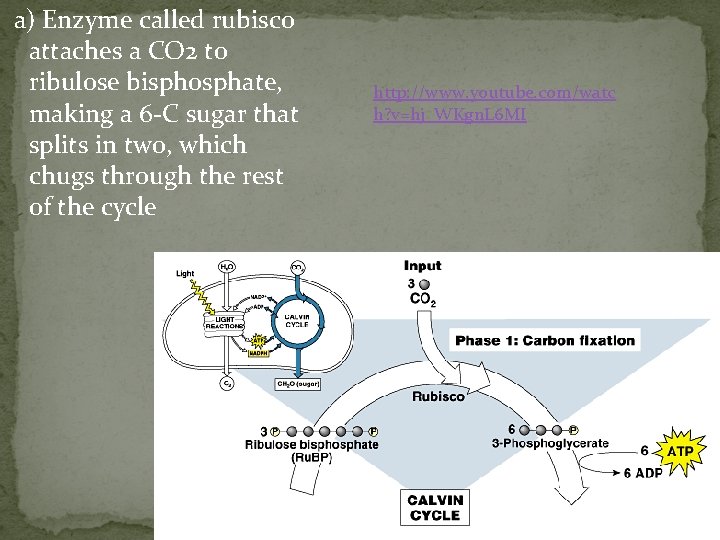
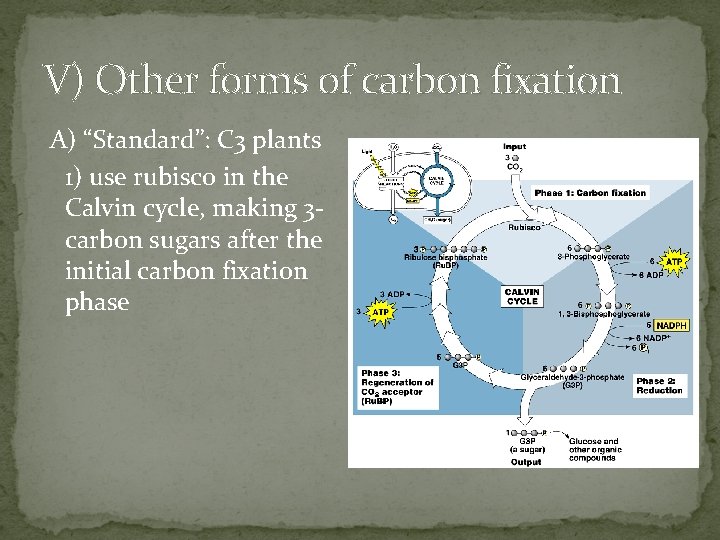
IV) The Calvin Cycle (light independent reaction) A) CO 2’s go in, 3 -carbon sugars(G 3 P) come out, which are then assembled into glucose and other organic compounds
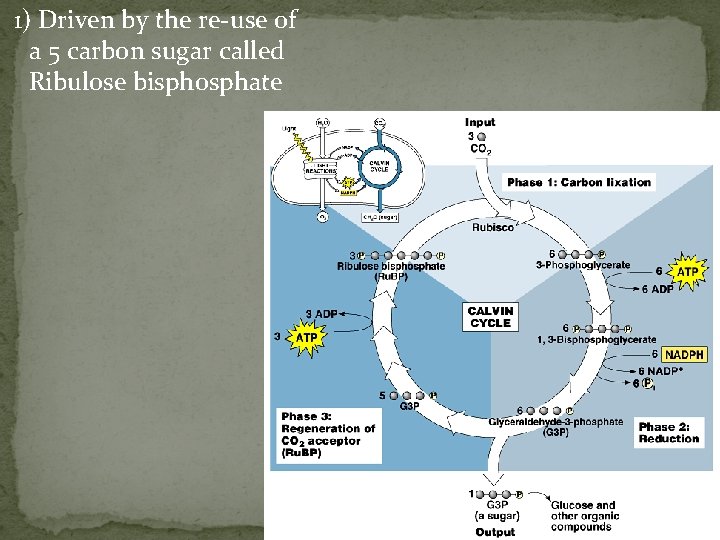
1) Driven by the re-use of a 5 carbon sugar called Ribulose bisphosphate
a) Enzyme called rubisco attaches a CO 2 to ribulose bisphosphate, making a 6 -C sugar that splits in two, which chugs through the rest of the cycle http: //www. youtube. com/watc h? v=hj_WKgn. L 6 MI
V) Other forms of carbon fixation A) “Standard”: C 3 plants 1) use rubisco in the Calvin cycle, making 3 carbon sugars after the initial carbon fixation phase
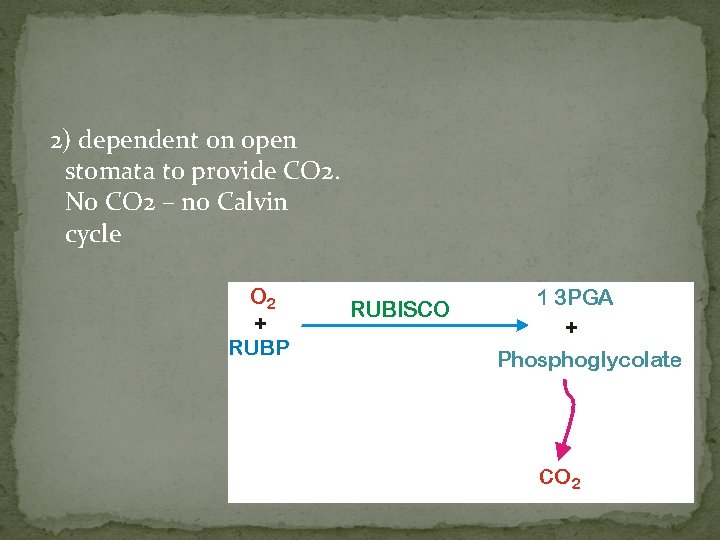
2) dependent on open stomata to provide CO 2. No CO 2 – no Calvin cycle
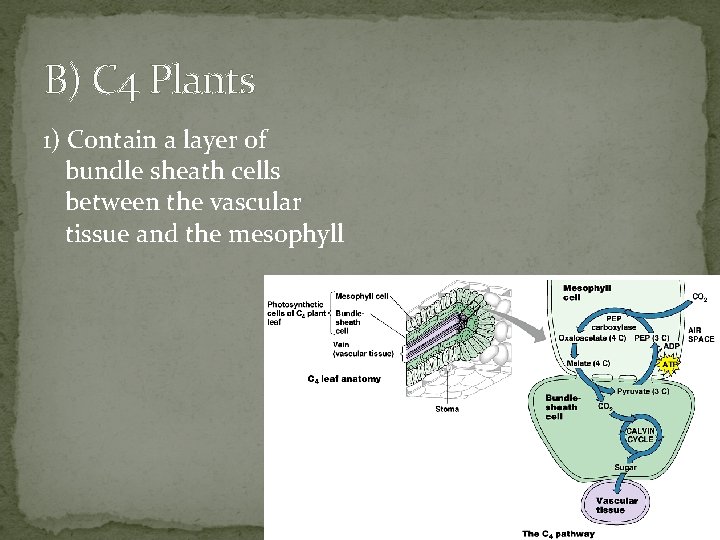
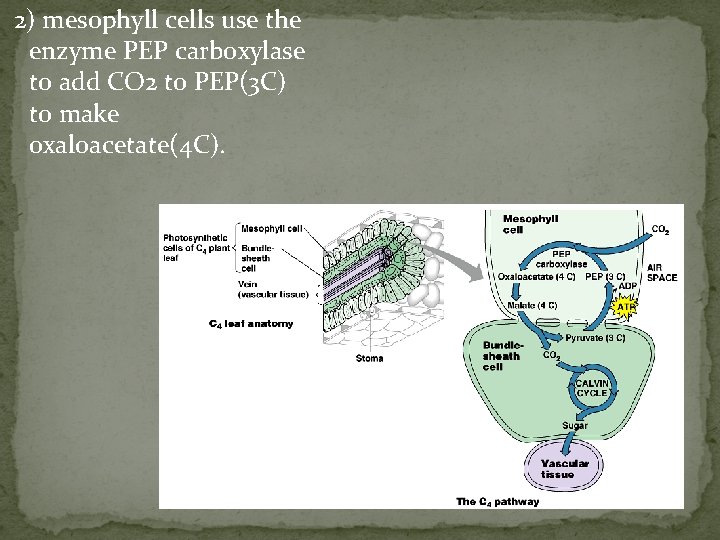
B) C 4 Plants 1) Contain a layer of bundle sheath cells between the vascular tissue and the mesophyll
2) mesophyll cells use the enzyme PEP carboxylase to add CO 2 to PEP(3 C) to make oxaloacetate(4 C).
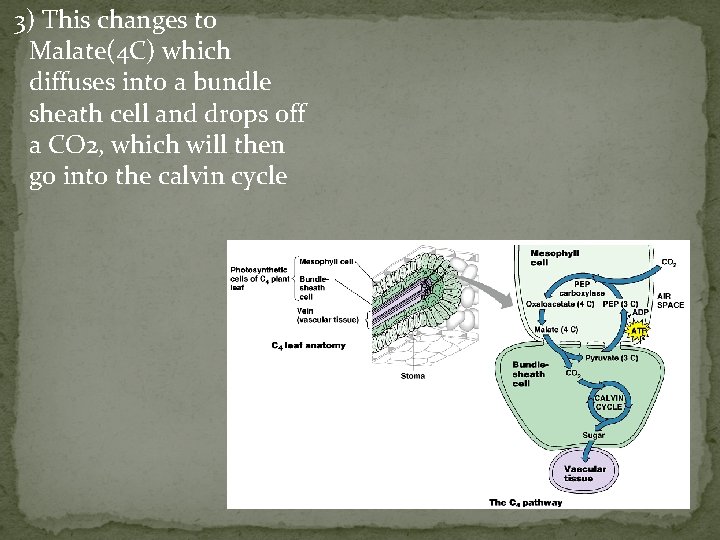
3) This changes to Malate(4 C) which diffuses into a bundle sheath cell and drops off a CO 2, which will then go into the calvin cycle
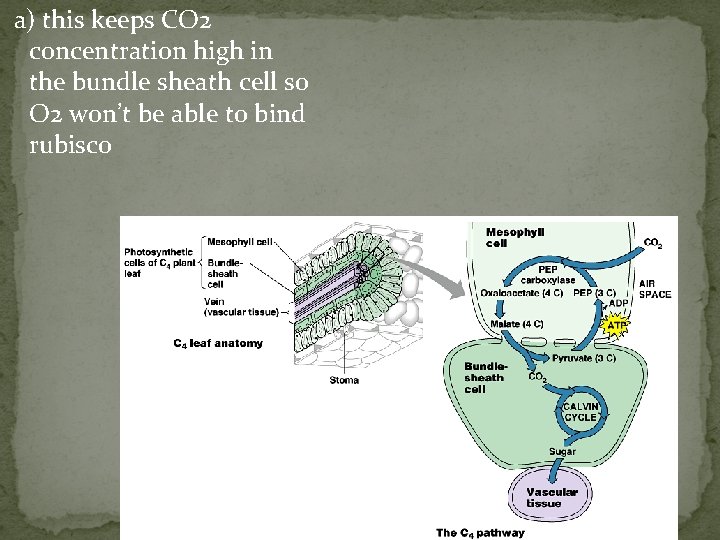
a) this keeps CO 2 concentration high in the bundle sheath cell so O 2 won’t be able to bind rubisco
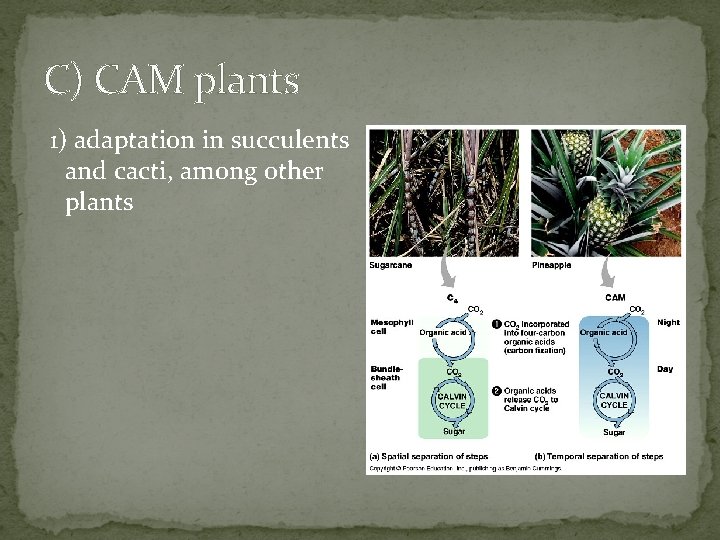
C) CAM plants 1) adaptation in succulents and cacti, among other plants
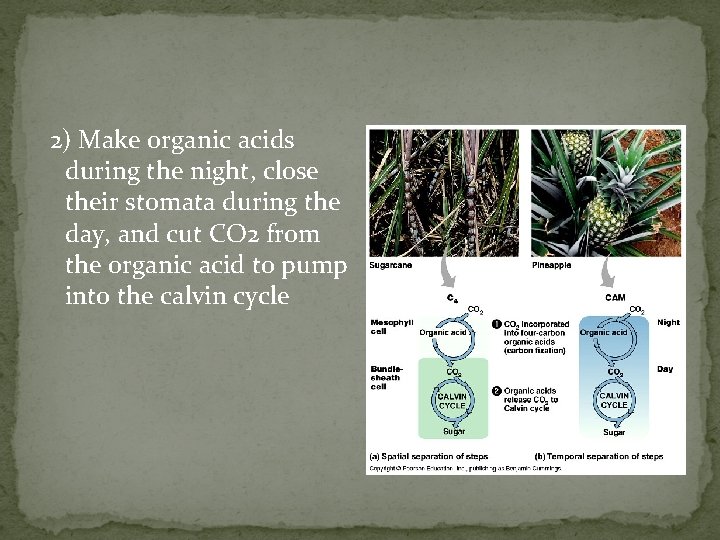
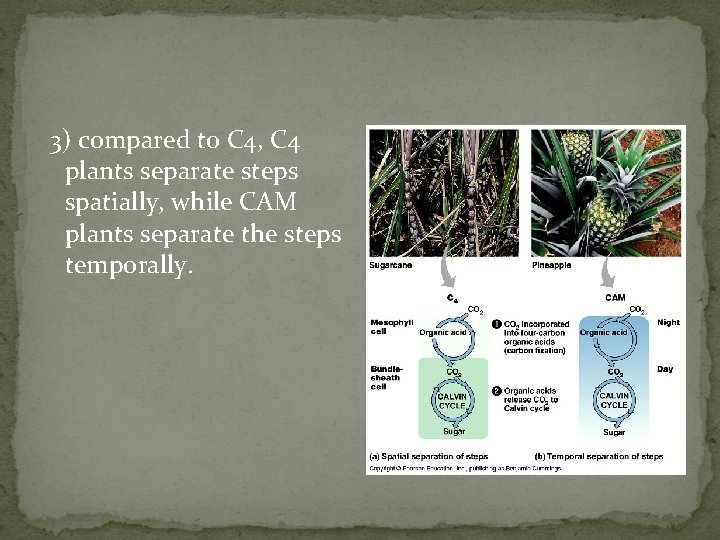
2) Make organic acids during the night, close their stomata during the day, and cut CO 2 from the organic acid to pump into the calvin cycle
3) compared to C 4, C 4 plants separate steps spatially, while CAM plants separate the steps temporally.