
Photosynthesis Ch 6 6 1 Photosynthesis Biochemical pathway
Photosynthesis Ch. 6


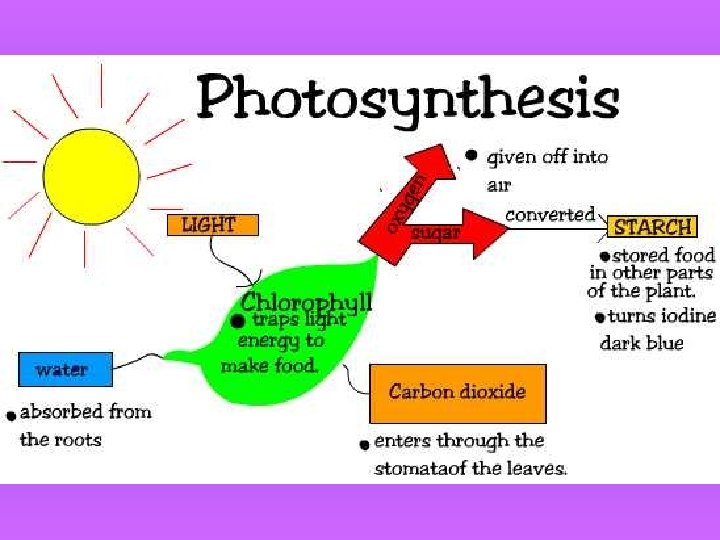
(6 -1) Photosynthesis • Biochemical pathway that converts light E into chemical E (organic cmpds/ carbs)
Obtaining E • Autotrophs: use E from sun to make food – Plants, algae, some bacteria • Heterotrophs: get E from food they consume – Humans, birds
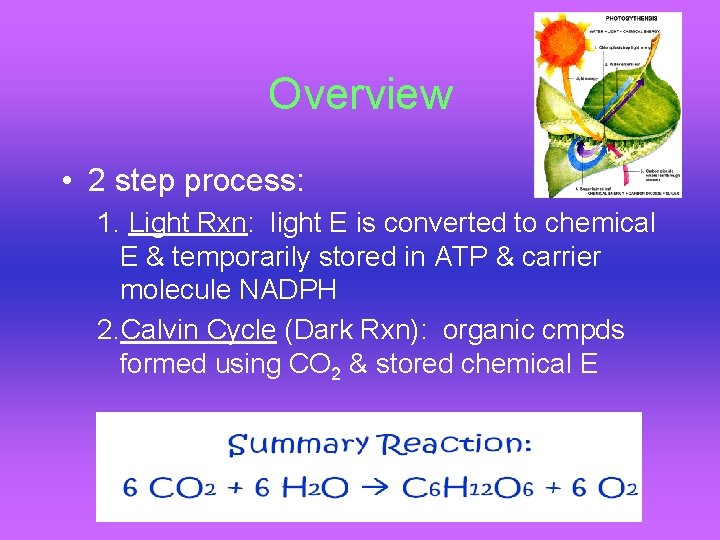
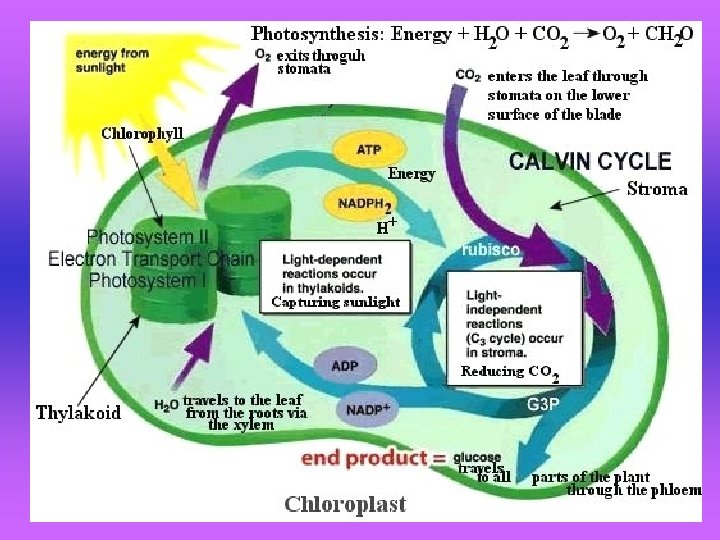
Overview • 2 step process: 1. Light Rxn: light E is converted to chemical E & temporarily stored in ATP & carrier molecule NADPH 2. Calvin Cycle (Dark Rxn): organic cmpds formed using CO 2 & stored chemical E

Capturing Light E • Light rxns begin w/ absorption of light in chloroplasts • Inside a chloroplast are thylakoids stacked to form grana surrounded by stroma
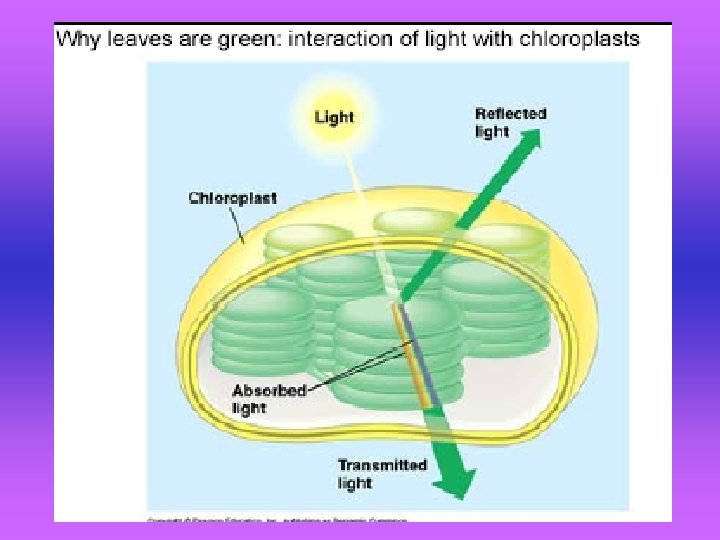
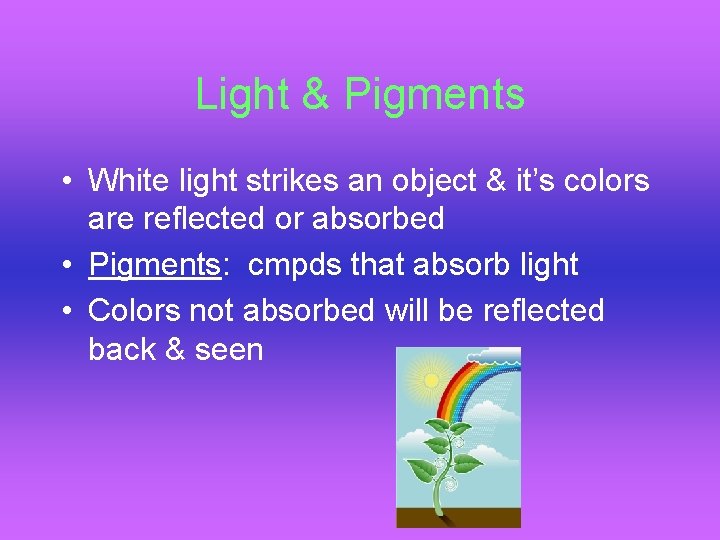
Light & Pigments • White light strikes an object & it’s colors are reflected or absorbed • Pigments: cmpds that absorb light • Colors not absorbed will be reflected back & seen
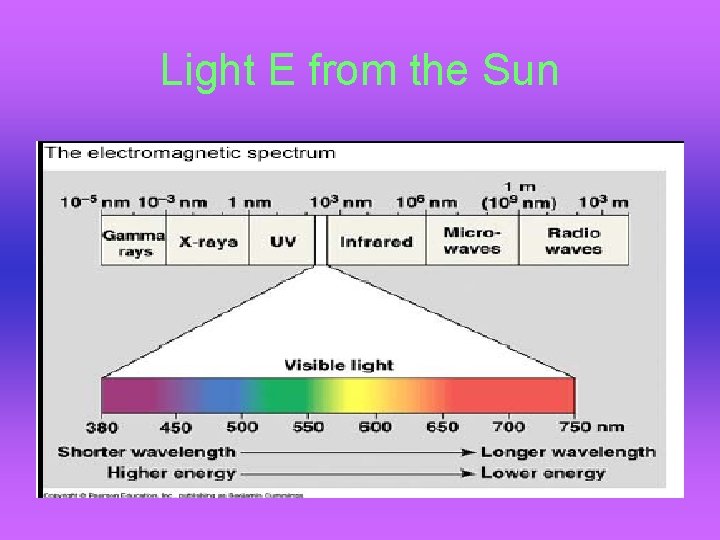
Light E from the Sun
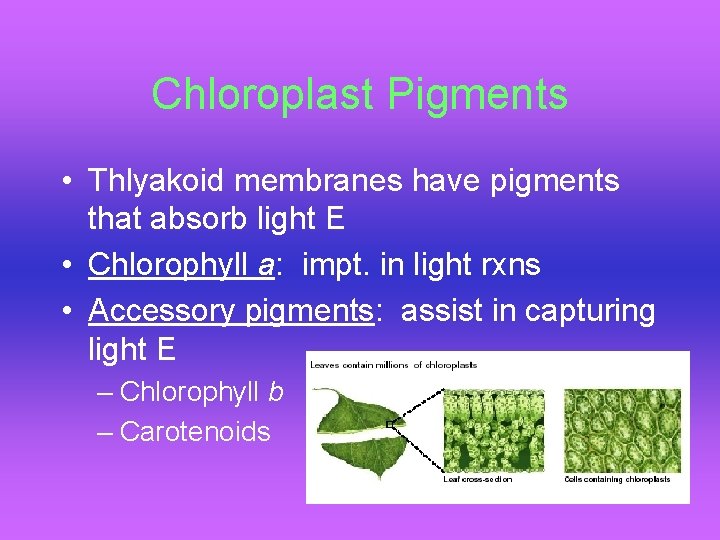
Chloroplast Pigments • Thlyakoid membranes have pigments that absorb light E • Chlorophyll a: impt. in light rxns • Accessory pigments: assist in capturing light E – Chlorophyll b – Carotenoids

Why so many pigments?

Light Rxns 1. Light E excites pigment e– Photosystem 1 & 2 2. e- donated to e- transport chain (ETC) – – Moves protons (H+) into thylakoid Makes NADPH
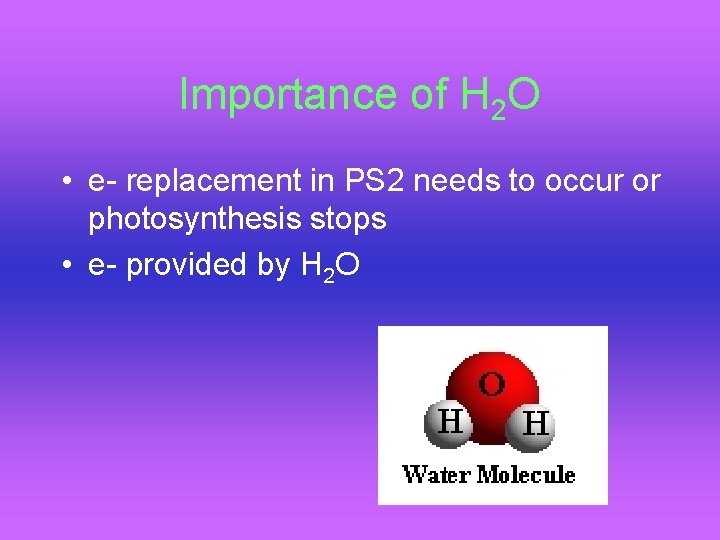
Importance of H 2 O • e- replacement in PS 2 needs to occur or photosynthesis stops • e- provided by H 2 O
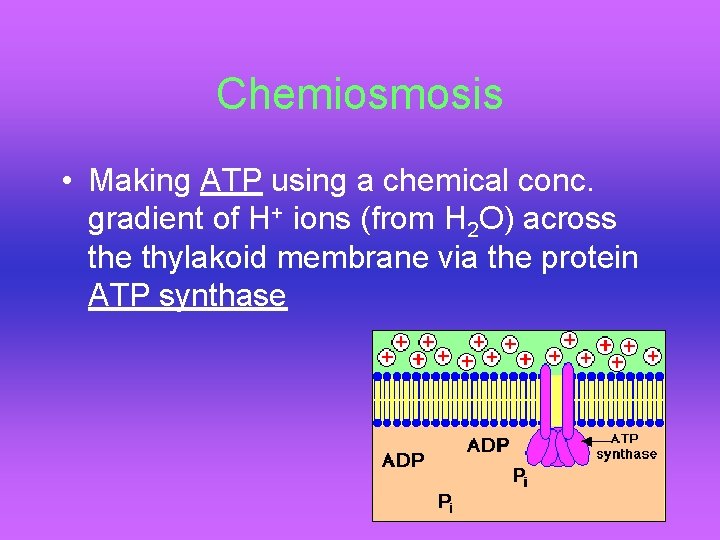
Chemiosmosis • Making ATP using a chemical conc. gradient of H+ ions (from H 2 O) across the thylakoid membrane via the protein ATP synthase

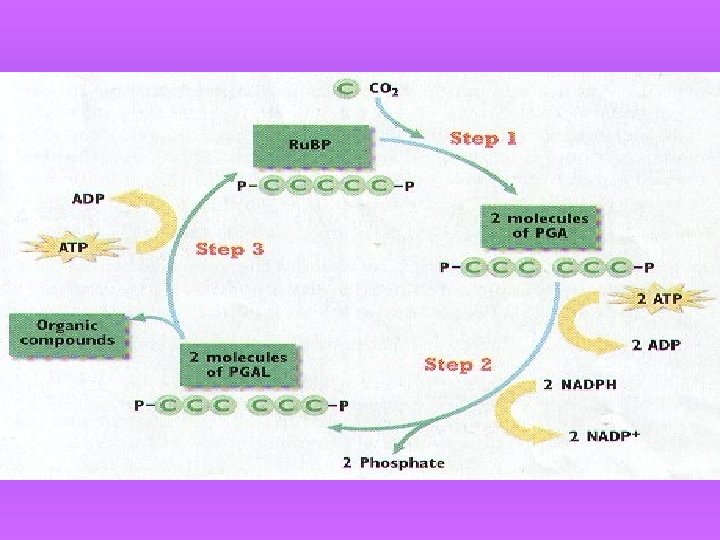
(6 -2) Calvin Cycle • Plants use E stored in ATP & NADPH during light rxns to produce organic cmpds (sugars) • Not dependent on light! • Carbon fixation: C-atoms from CO 2 bonded into sugars
Carbon Fixation 1. CO 2 diffuses into stroma, combines with Ru. BP, & splits 2. 1 new molecule uses E (ATP & NADPH) to leave the cycle to make carbs 3. 1 new molecule gets converted back to Ru. BP & restarts cycle
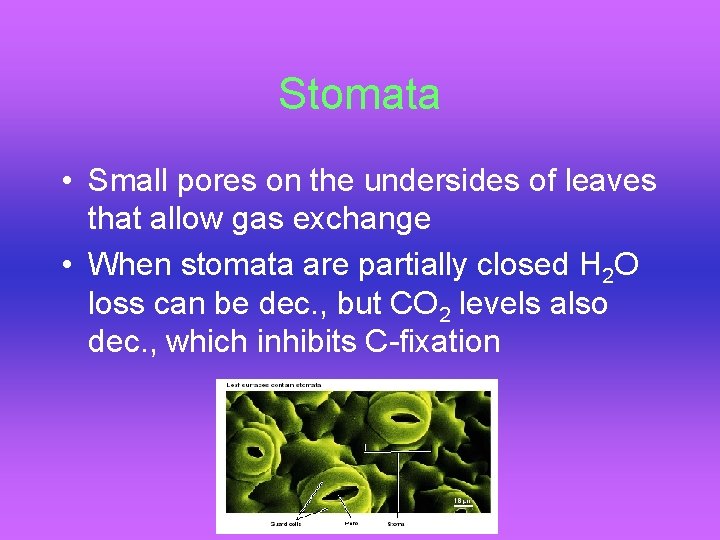
Stomata • Small pores on the undersides of leaves that allow gas exchange • When stomata are partially closed H 2 O loss can be dec. , but CO 2 levels also dec. , which inhibits C-fixation
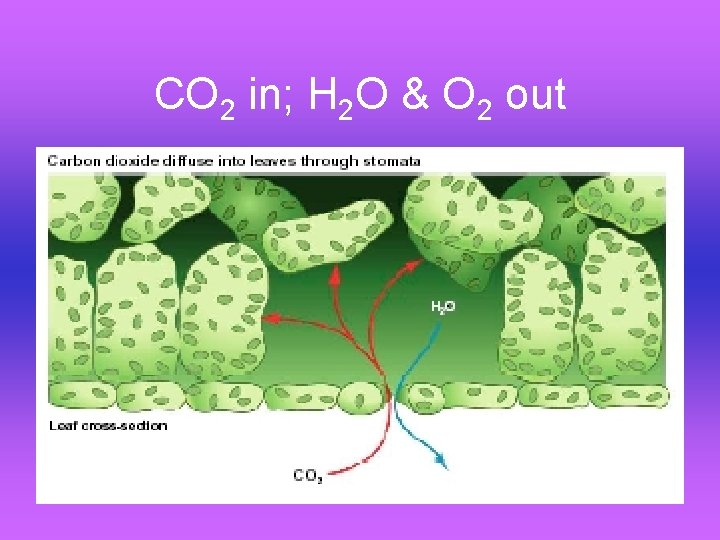
CO 2 in; H 2 O & O 2 out
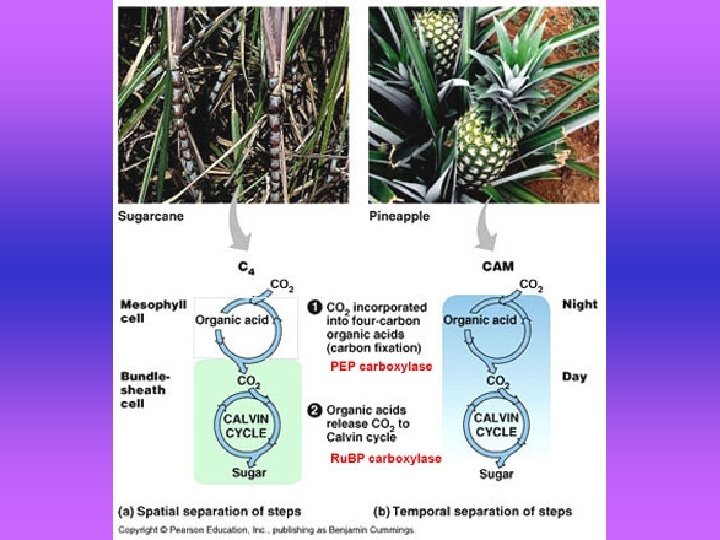
Alternative Pathways • C 4: fix carbon into a 4 -C cmpd – Partially close stomata during hottest part of day – Ex: corn, sugar cane, crab grass • CAM: operates at night – Close stomata during the day – Ex: cacti, pineapples
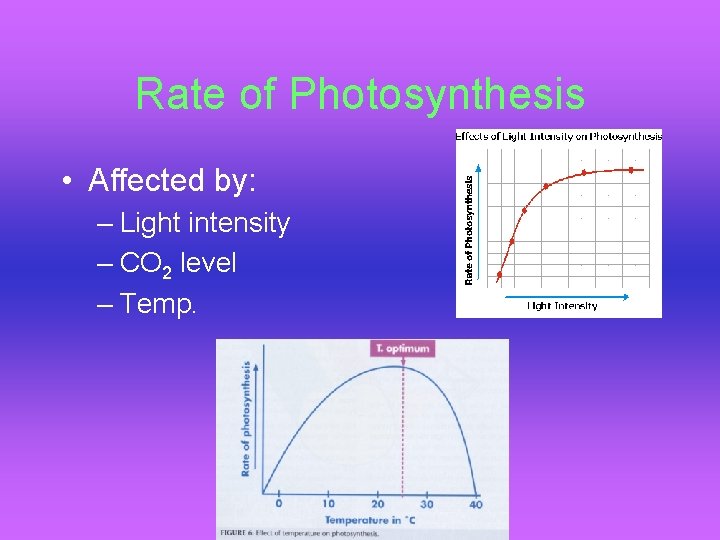
Rate of Photosynthesis • Affected by: – Light intensity – CO 2 level – Temp.

- Slides: 27