
PHOTOSYNTHESIS CELLULAR RESPIRATION Unit 3 Continued POGIL Photosynthesis
- Slides: 14
PHOTOSYNTHESIS & CELLULAR RESPIRATION Unit 3 Continued
POGIL – Photosynthesis, Respiration • Get in your assigned groups of 4. • Write each person’s name on the sticky note (first and last) • Select a – Reader – Reporter • Pay attention if it says write a “complete sentence. ” • Pay careful attention the questions with “keys” next to them.
Foldable • You need: – 3 handouts – Scissors – Colored pencils or markers – Highlighter (optional) • Listen for directions on how to fold and cut.
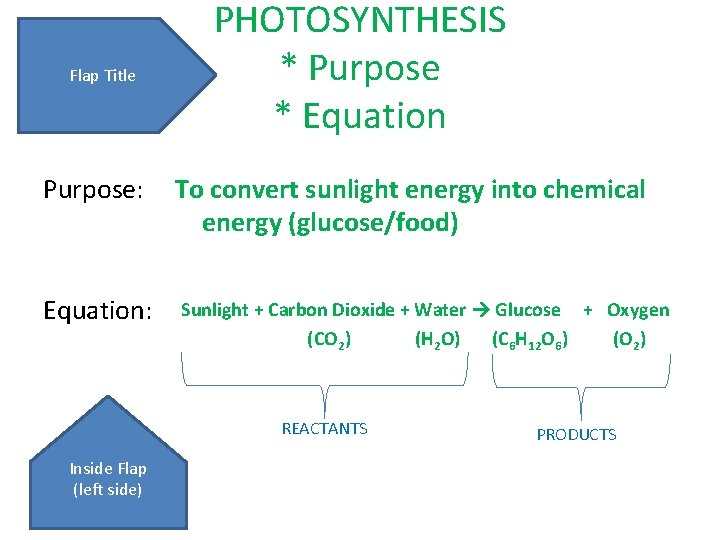
Flap Title PHOTOSYNTHESIS * Purpose * Equation Purpose: To convert sunlight energy into chemical energy (glucose/food) Equation: Sunlight + Carbon Dioxide + Water Glucose + Oxygen (CO 2) (H 2 O) (C 6 H 12 O 6) (O 2) REACTANTS Inside Flap (left side) PRODUCTS
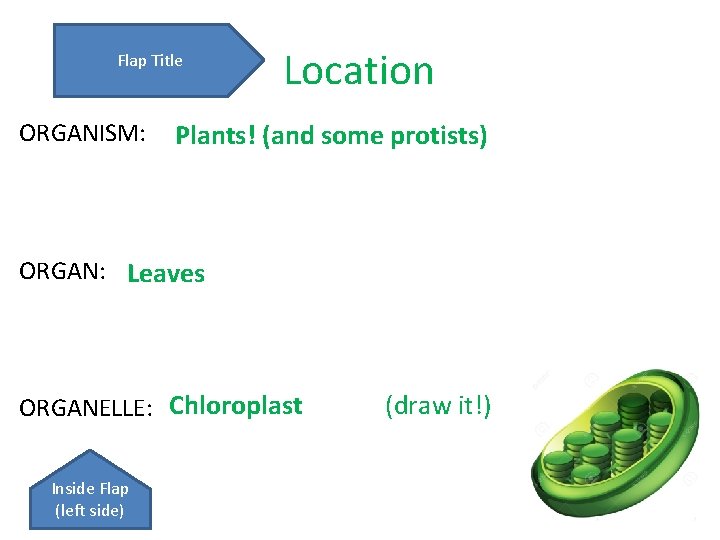
Flap Title ORGANISM: Location Plants! (and some protists) ORGAN: Leaves ORGANELLE: Chloroplast Inside Flap (left side) (draw it!)
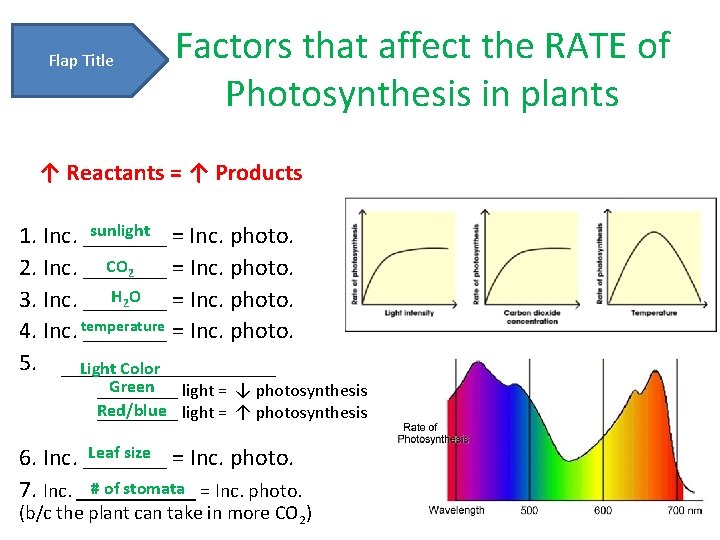
Flap Title Factors that affect the RATE of Photosynthesis in plants ↑ Reactants = ↑ Products sunlight = Inc. photo. 1. Inc. _______ CO 2 2. Inc. _______ = Inc. photo. H 2 O 3. Inc. _______ = Inc. photo. 4. Inc. temperature _______ = Inc. photo. 5. ____________ Light Color Green _____ light = ↓ photosynthesis Red/blue light = ↑ photosynthesis _____ Leaf size = Inc. photo. 6. Inc. _______ # of stomata = Inc. photo. 7. Inc. ______ (b/c the plant can take in more CO 2)
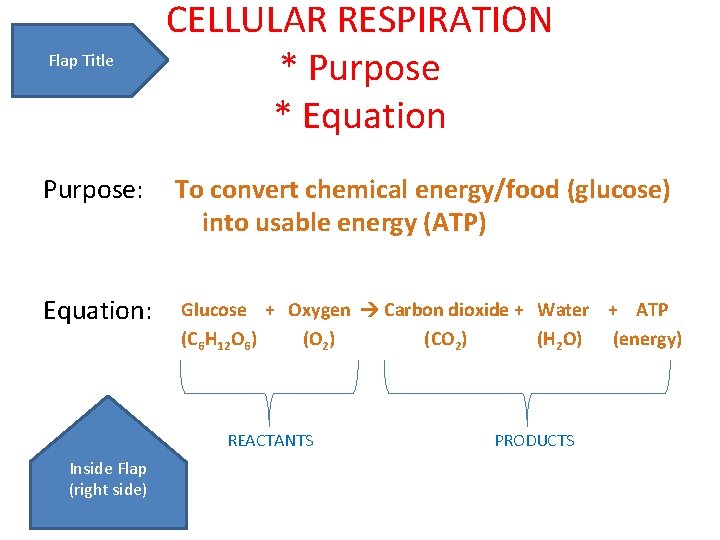
Flap Title CELLULAR RESPIRATION * Purpose * Equation Purpose: To convert chemical energy/food (glucose) into usable energy (ATP) Equation: Glucose + Oxygen Carbon dioxide + Water + ATP (C 6 H 12 O 6) (O 2) (CO 2) (H 2 O) (energy) REACTANTS Inside Flap (right side) PRODUCTS
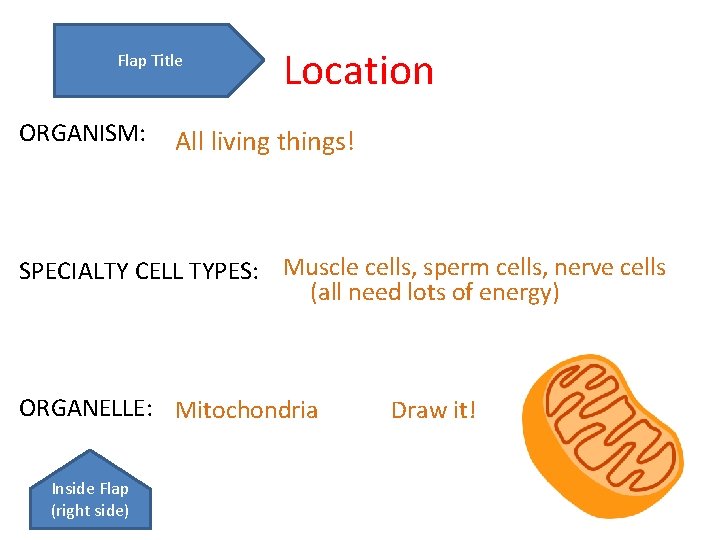
Flap Title ORGANISM: Location All living things! SPECIALTY CELL TYPES: Muscle cells, sperm cells, nerve cells (all need lots of energy) ORGANELLE: Mitochondria Inside Flap (right side) Draw it!
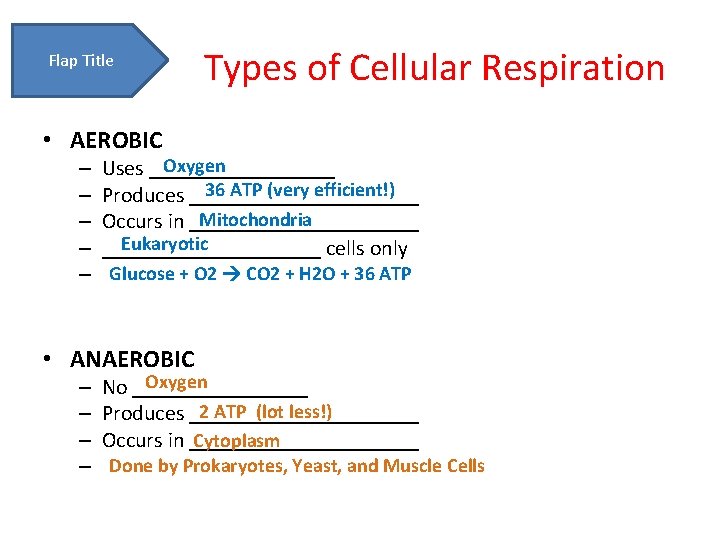
Flap Title Types of Cellular Respiration • AEROBIC – – – Oxygen Uses _________ 36 ATP (very efficient!) Produces ___________ Mitochondria Occurs in ___________ Eukaryotic __________ cells only Glucose + O 2 CO 2 + H 2 O + 36 ATP • ANAEROBIC – – Oxygen No ________ 2 ATP (lot less!) Produces ___________ Occurs in ___________ Cytoplasm Done by Prokaryotes, Yeast, and Muscle Cells
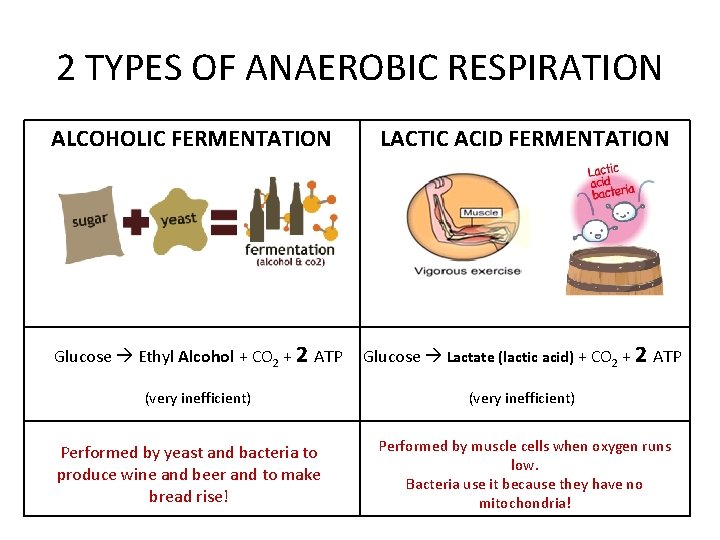
2 TYPES OF ANAEROBIC RESPIRATION ALCOHOLIC FERMENTATION LACTIC ACID FERMENTATION Glucose Ethyl Alcohol + CO 2 + 2 ATP Glucose Lactate (lactic acid) + CO 2 + 2 ATP (very inefficient) Performed by yeast and bacteria to produce wine and beer and to make bread rise! Performed by muscle cells when oxygen runs low. Bacteria use it because they have no mitochondria!
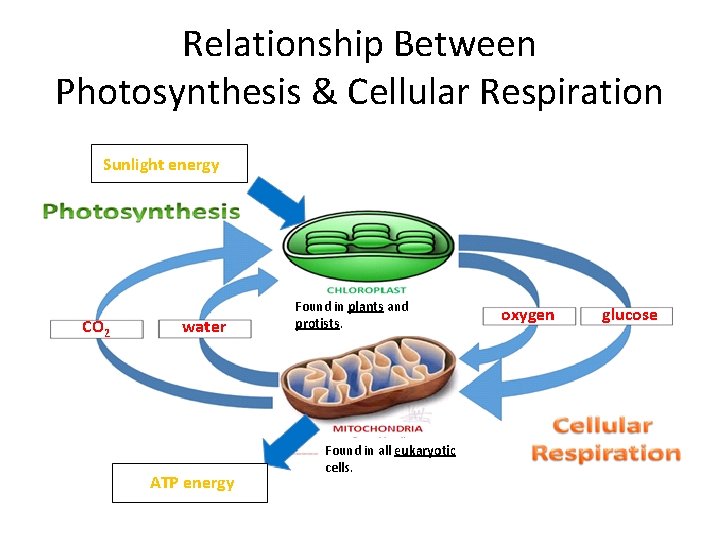
Relationship Between Photosynthesis & Cellular Respiration Sunlight energy CO 2 water ATP energy Found in plants and protists. Found in all eukaryotic cells. oxygen glucose
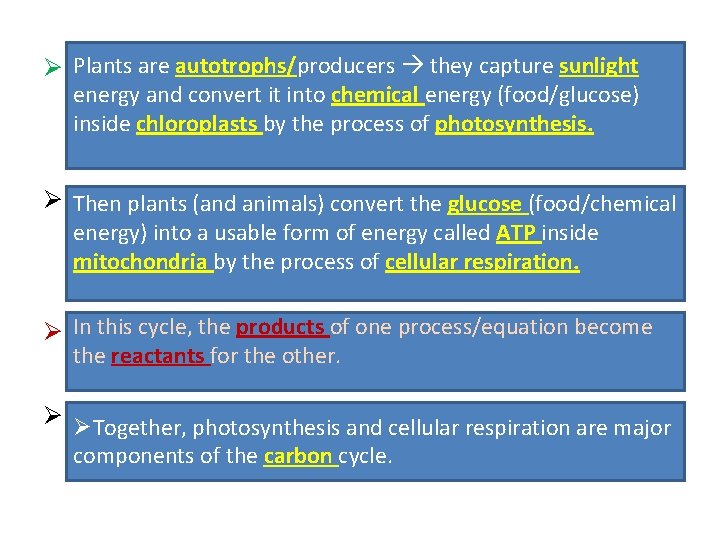
Plants are autotrophs/producers they sunlight Ø Plants _______/producers capture they capture _____ energyitand it into ______ energy and convert intoconvert chemical energy (food/glucose) inside _______ by the inside chloroplasts by the process of photosynthesis. process of ___________. Ø Then (and animals)convertthe theglucose ______ Then plants (and (food/chemical energy) into usablecalled form. ATP of energy) into a usable form of aenergy inside called ____ inside _________ by the process of mitochondria by the process of cellular respiration. ________________. In this cycle, the of one process/equation become Ø In the products _______ of one process/equation the reactants for the other. become the ______ Ø Together, photosynthesis ØTogether, photosynthesisand andcellularrespiration are major components of the ______ cycle. components of the carbon cycle.
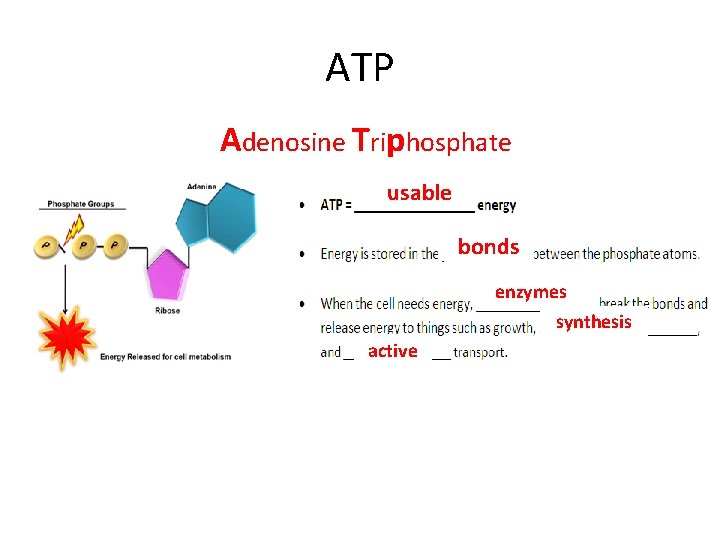
ATP Adenosine Triphosphate usable bonds enzymes synthesis active
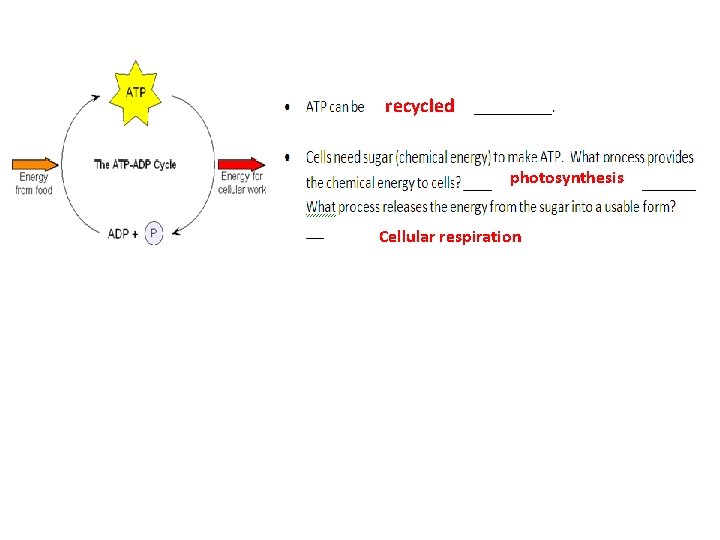
recycled photosynthesis Cellular respiration