
Photosynthesis Cellular Respiration The opposite of photosynthesis Photosynthesis
- Slides: 24
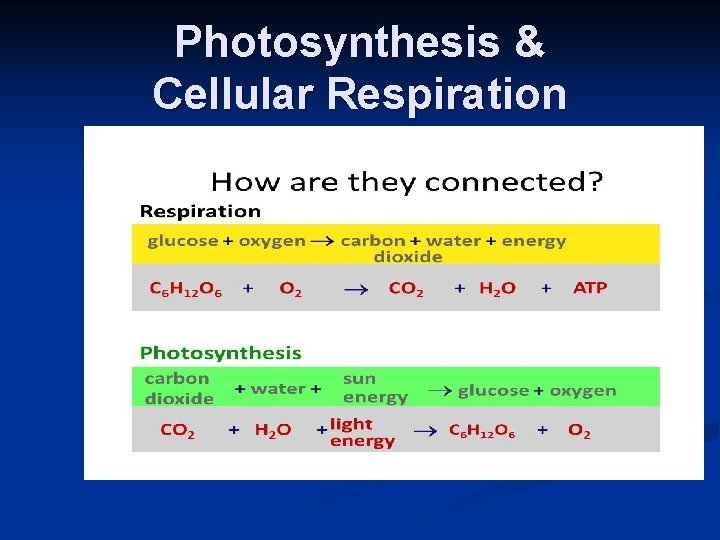
Photosynthesis & Cellular Respiration
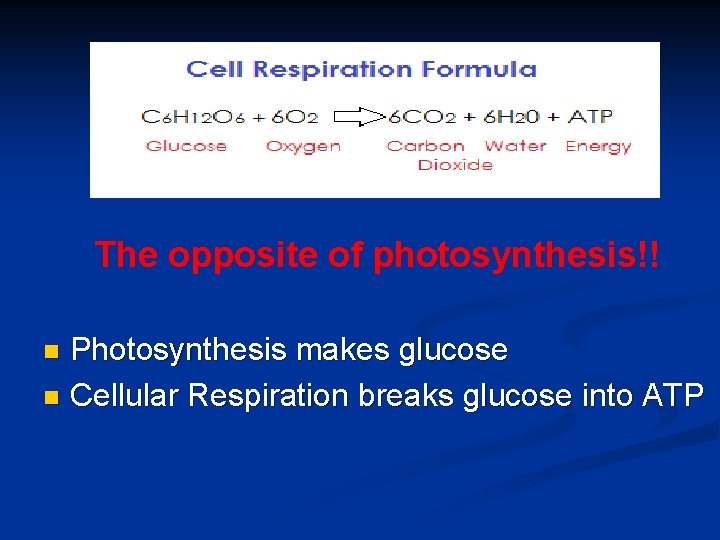
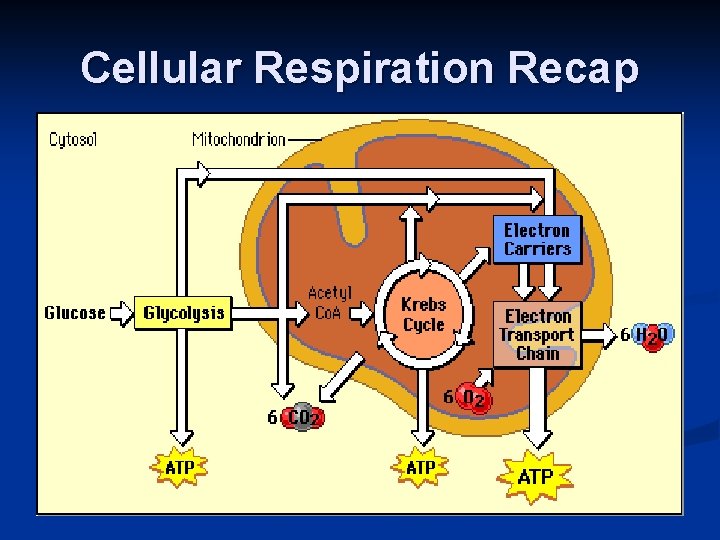
The opposite of photosynthesis!! Photosynthesis makes glucose n Cellular Respiration breaks glucose into ATP n
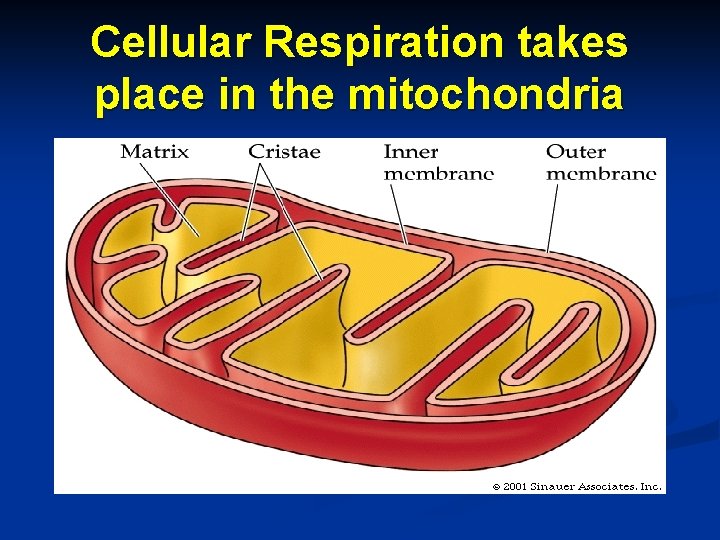
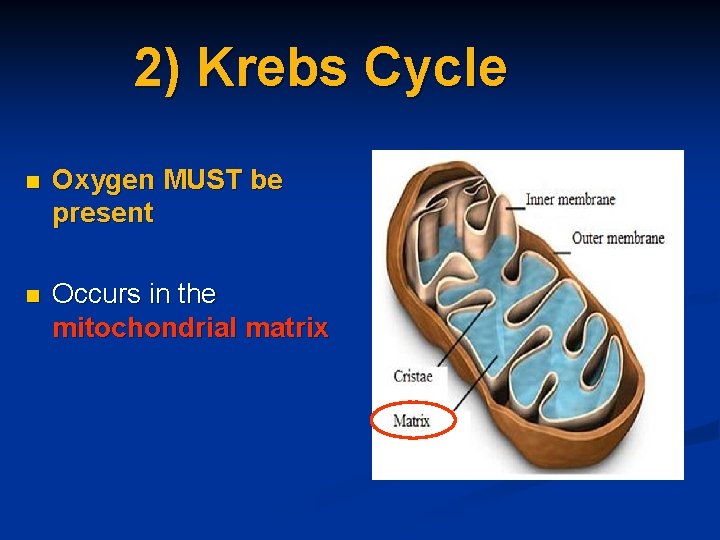
Cellular Respiration takes place in the mitochondria
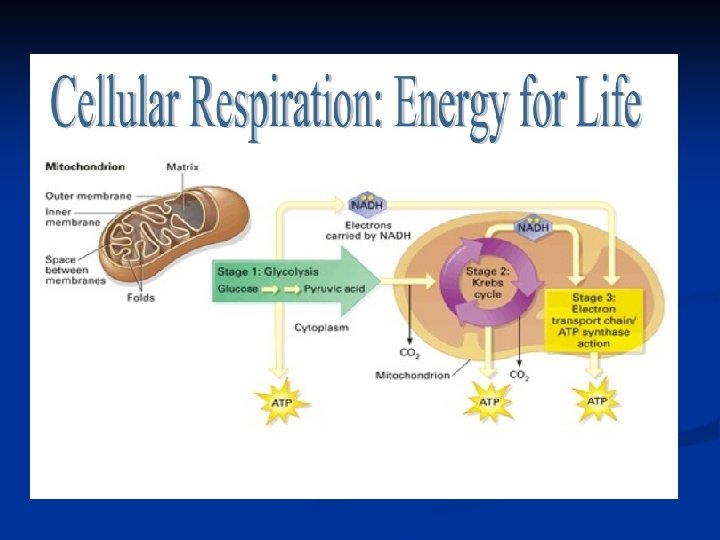
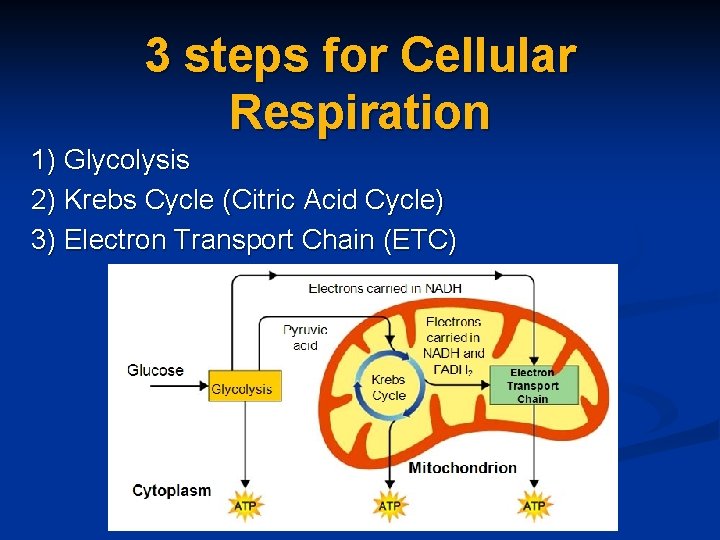
3 steps for Cellular Respiration 1) Glycolysis 2) Krebs Cycle (Citric Acid Cycle) 3) Electron Transport Chain (ETC)
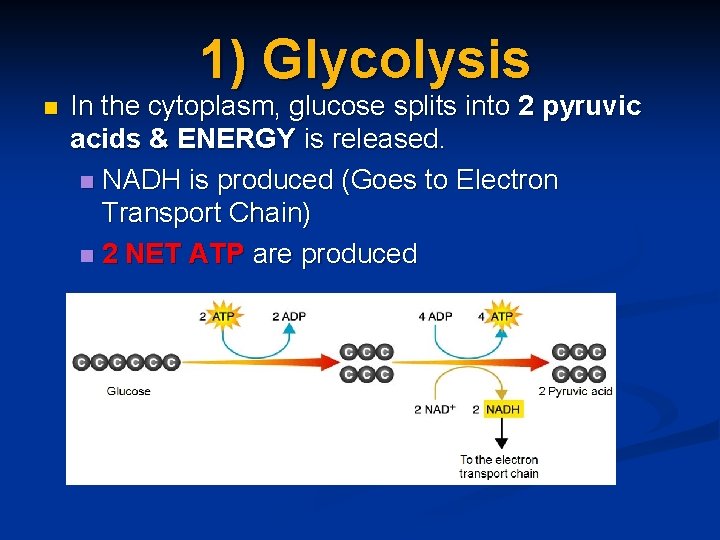
1) Glycolysis n In the cytoplasm, glucose splits into 2 pyruvic acids & ENERGY is released. n NADH is produced (Goes to Electron Transport Chain) n 2 NET ATP are produced
Where Pyruvic Acid goes: n A. No oxygen: it stays in the cytoplasm for anaerobic respiration n B. Yes oxygen: it travels into the mitochondria for aerobic respiration
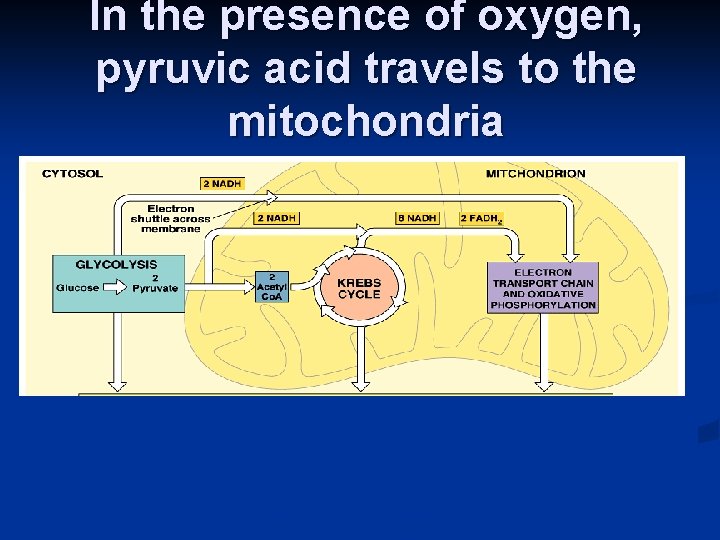
In the presence of oxygen, pyruvic acid travels to the mitochondria
2) Krebs Cycle n Oxygen MUST be present n Occurs in the mitochondrial matrix
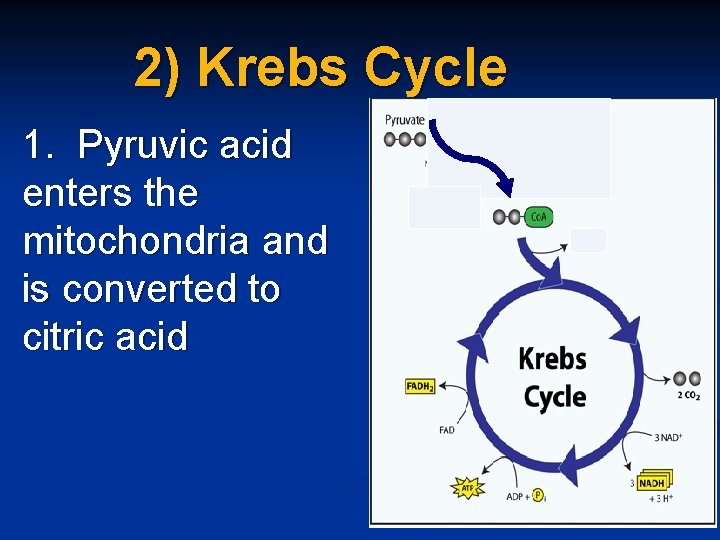
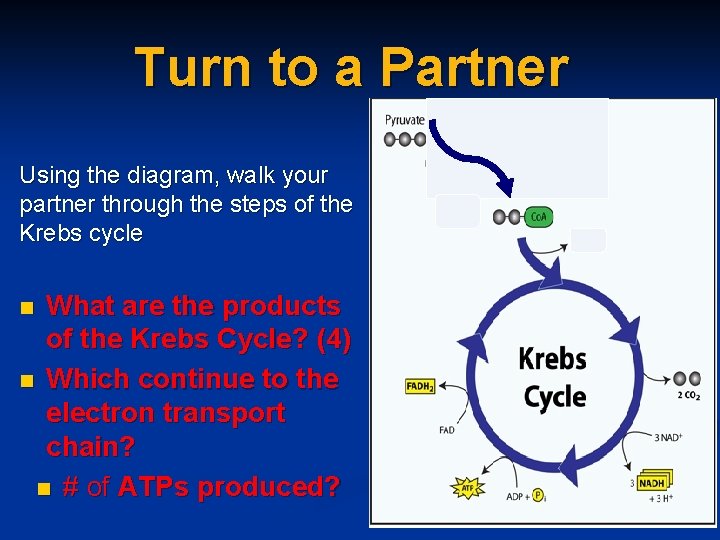
2) Krebs Cycle 1. Pyruvic acid enters the mitochondria and is converted to citric acid
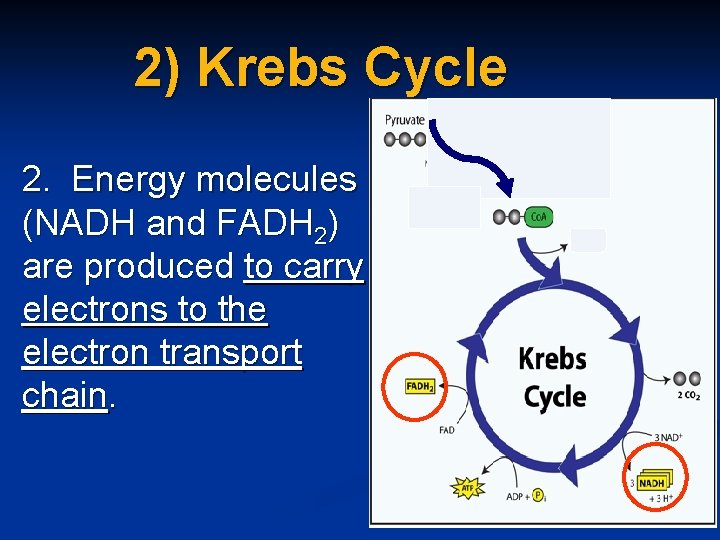
2) Krebs Cycle 2. Energy molecules (NADH and FADH 2) are produced to carry electrons to the electron transport chain.
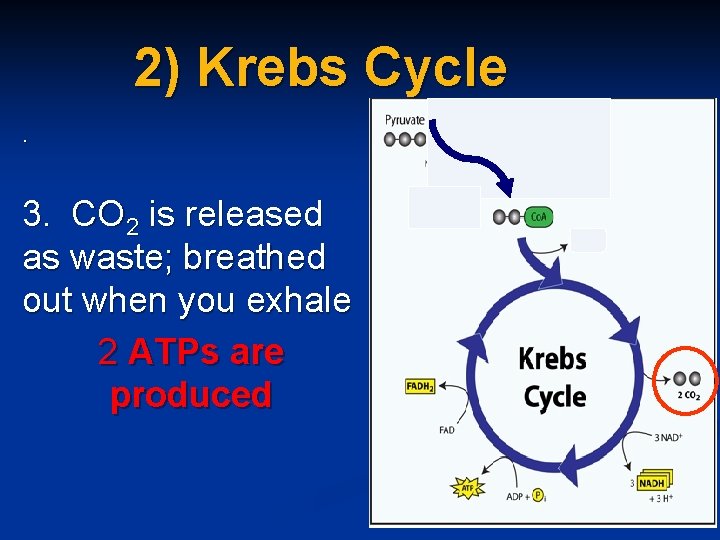
2) Krebs Cycle. 3. CO 2 is released as waste; breathed out when you exhale 2 ATPs are produced
Turn to a Partner Using the diagram, walk your partner through the steps of the Krebs cycle What are the products of the Krebs Cycle? (4) n Which continue to the electron transport chain? n # of ATPs produced? n
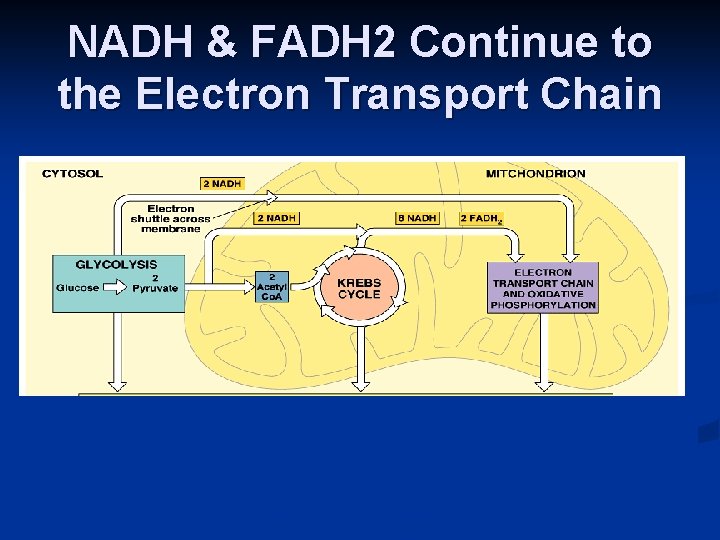
NADH & FADH 2 Continue to the Electron Transport Chain
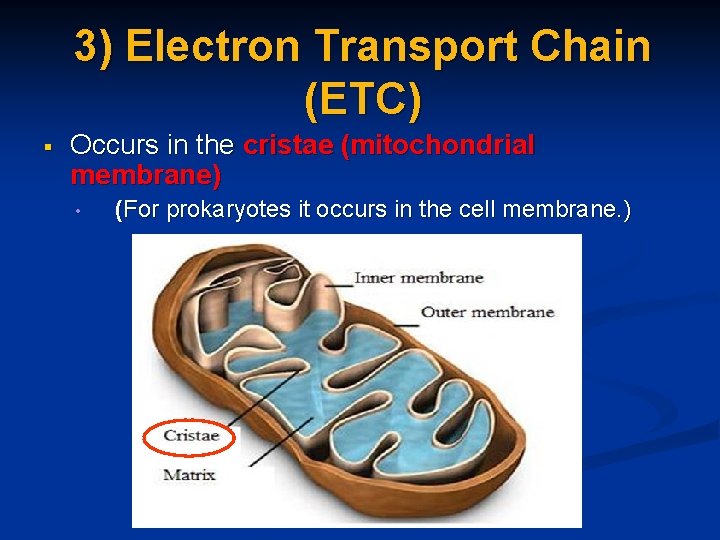
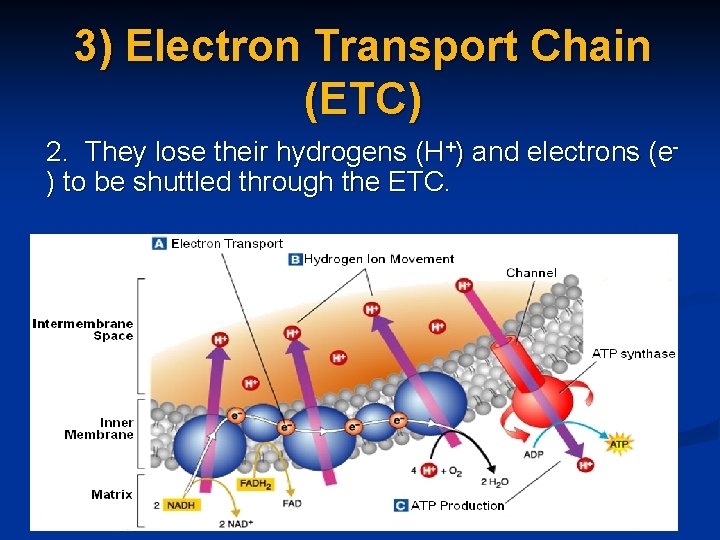
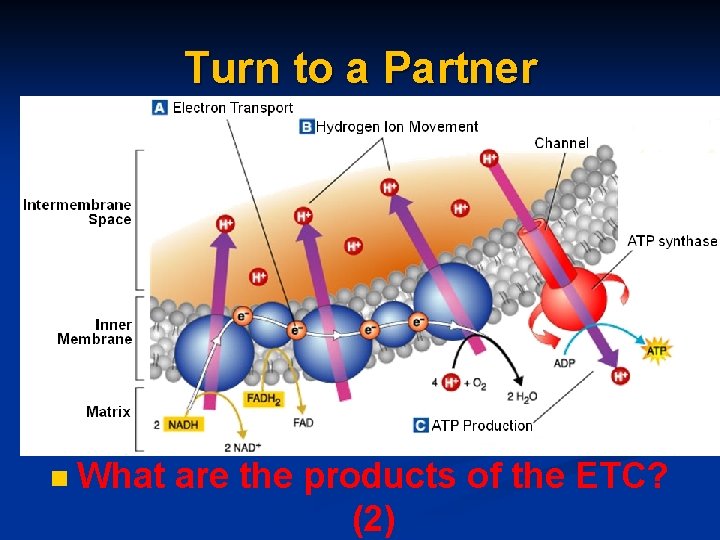
3) Electron Transport Chain (ETC) § Occurs in the cristae (mitochondrial membrane) • (For prokaryotes it occurs in the cell membrane. )
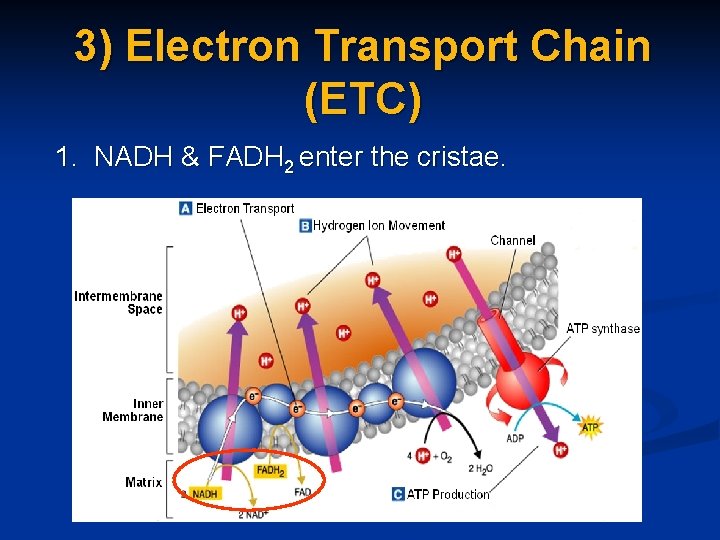
3) Electron Transport Chain (ETC) 1. NADH & FADH 2 enter the cristae.
3) Electron Transport Chain (ETC) 2. They lose their hydrogens (H+) and electrons (e) to be shuttled through the ETC.
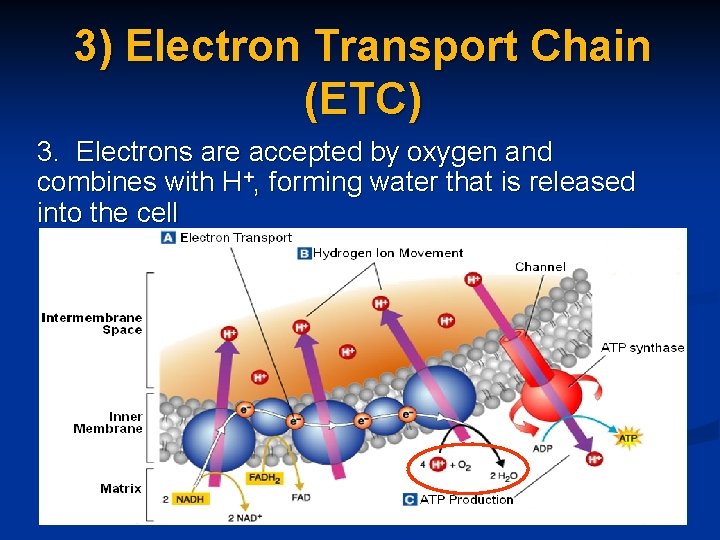
3) Electron Transport Chain (ETC) 3. Electrons are accepted by oxygen and combines with H+, forming water that is released into the cell
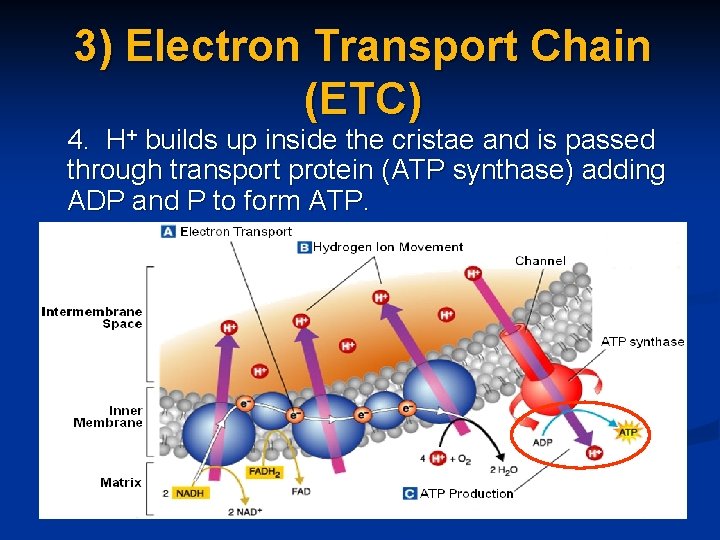
3) Electron Transport Chain (ETC) 4. H+ builds up inside the cristae and is passed through transport protein (ATP synthase) adding ADP and P to form ATP.
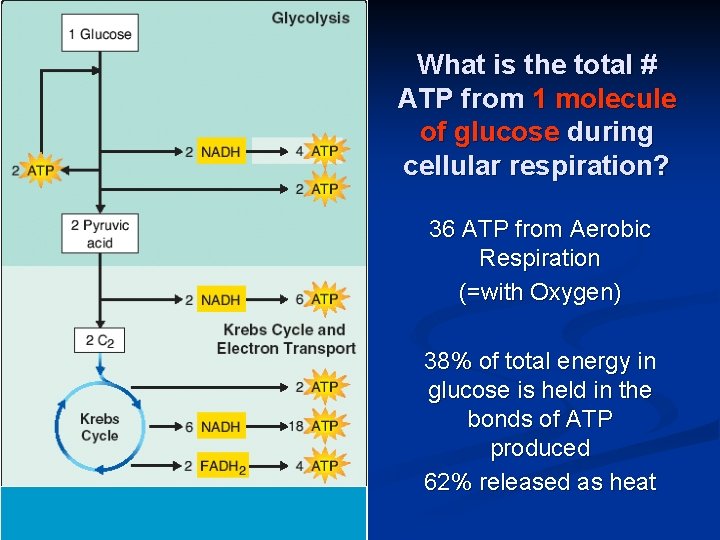
ETC continued… n ETC Produce 32 - 34 ATP n NOTE: 2 ATP are used by transport proteins to move NADH from glycolysis into the ETC. n This results in a Net Gain of 32 ATP from the ETC.
Turn to a Partner n What are the products of the ETC? (2)
Cellular Respiration Recap
What is the total # ATP from 1 molecule of glucose during cellular respiration? 36 ATP from Aerobic Respiration (=with Oxygen) 38% of total energy in glucose is held in the bonds of ATP produced 62% released as heat
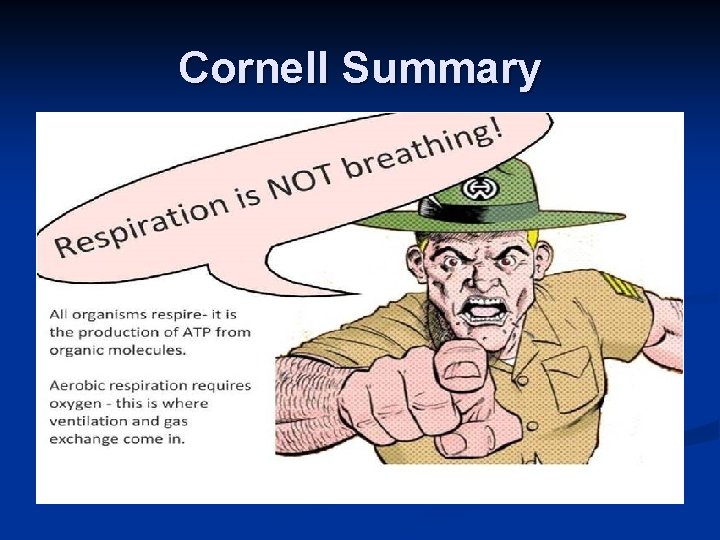
Cornell Summary