
Photosynthesis Cellular Respiration OR HOW THINGS GET THEIR

- Slides: 26
Photosynthesis & Cellular Respiration OR… HOW THINGS GET THEIR ENERGY
Our objectives include: 1. Analyzing the flow of energy through living systems, 2. Comparing and contrasting autotrophs and heterotrophs, 3. Reviewing and answering questions about metabolism, 4. Defining two types of metabolism.
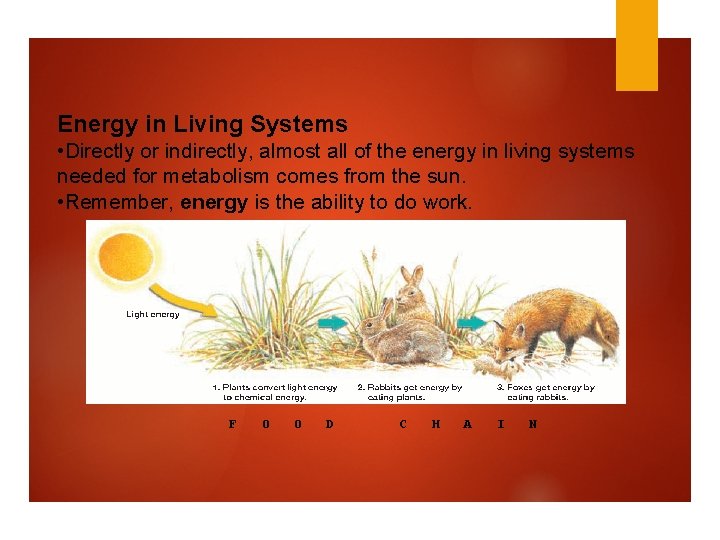
Energy in Living Systems • Directly or indirectly, almost all of the energy in living systems needed for metabolism comes from the sun. • Remember, energy is the ability to do work. F O O D C H A I N
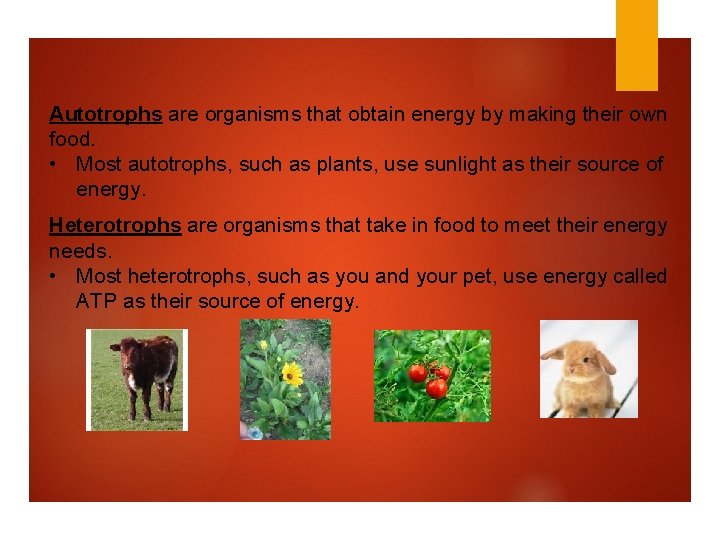
Autotrophs are organisms that obtain energy by making their own food. • Most autotrophs, such as plants, use sunlight as their source of energy. Heterotrophs are organisms that take in food to meet their energy needs. • Most heterotrophs, such as you and your pet, use energy called ATP as their source of energy.
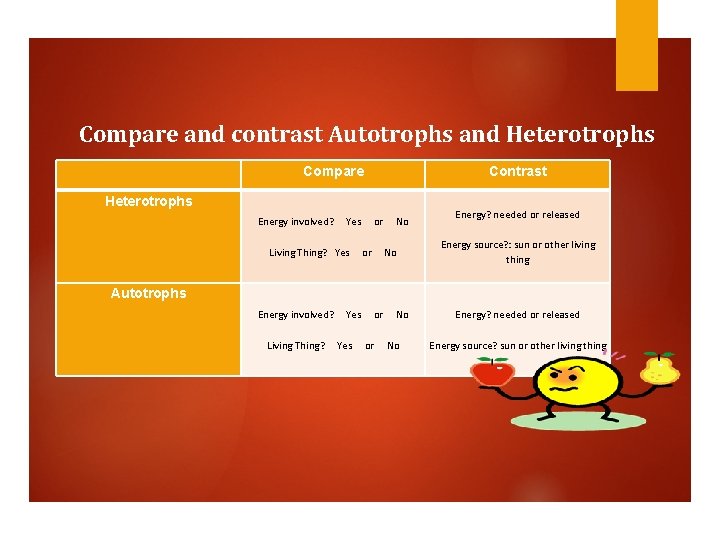
Compare and contrast Autotrophs and Heterotrophs Compare Contrast Heterotrophs Energy involved? Yes Living Thing? Yes or or No No Energy? needed or released Energy source? : sun or other living thing Autotrophs Energy involved? Living Thing? Yes or or No No Energy? needed or released Energy source? sun or other living thing
But how do autotrophs and heterotrophs get their energy? They must BUILD or break down molecules that store energy. youtube. com/watch? v=5 qjg. EKq. Vk. So
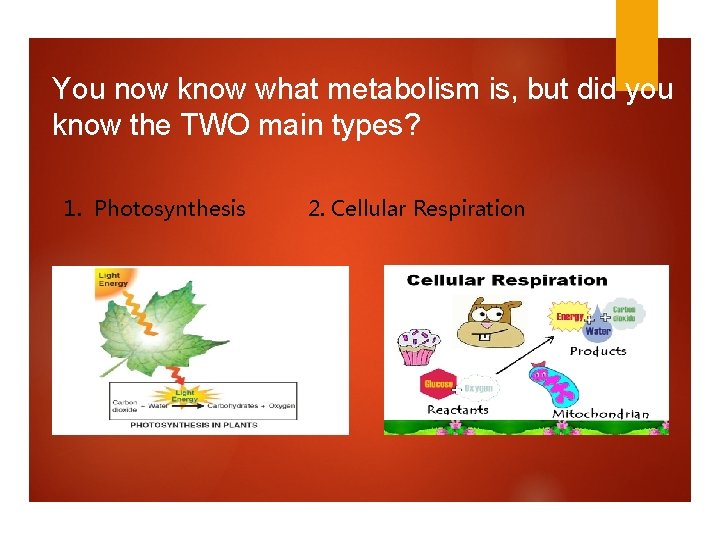
You now know what metabolism is, but did you know the TWO main types? 1. Photosynthesis 2. Cellular Respiration
In the next lesson we are going to discuss photosynthesis
A quick vocab review before we start!
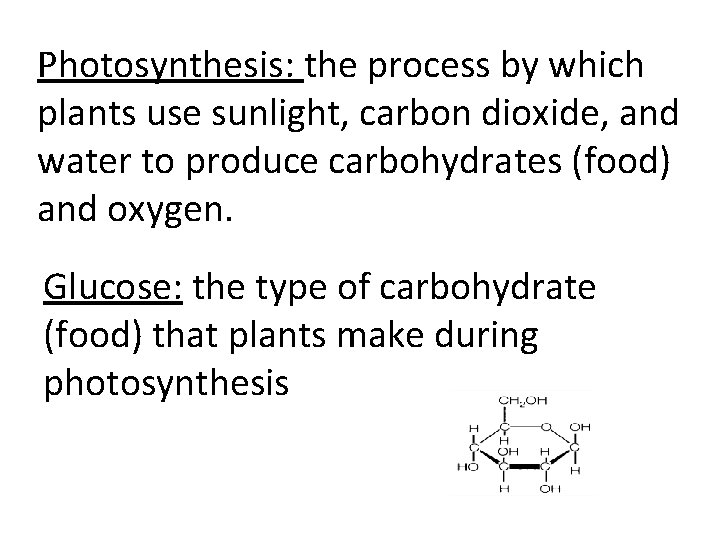
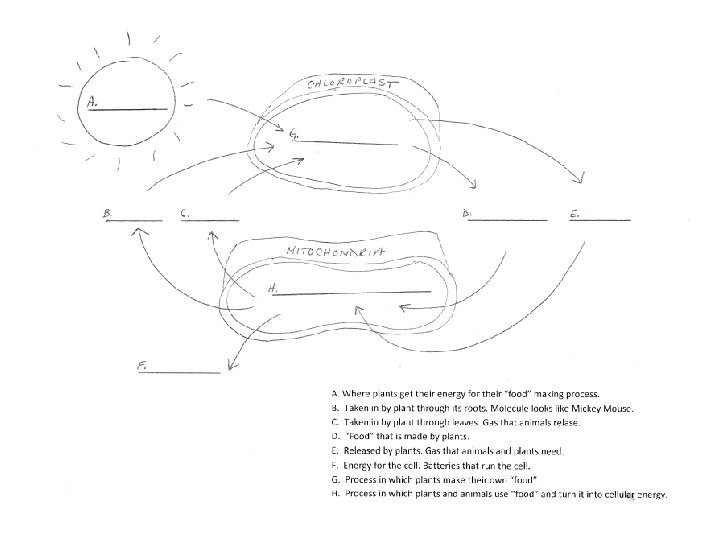
Photosynthesis: the process by which plants use sunlight, carbon dioxide, and water to produce carbohydrates (food) and oxygen. Glucose: the type of carbohydrate (food) that plants make during photosynthesis
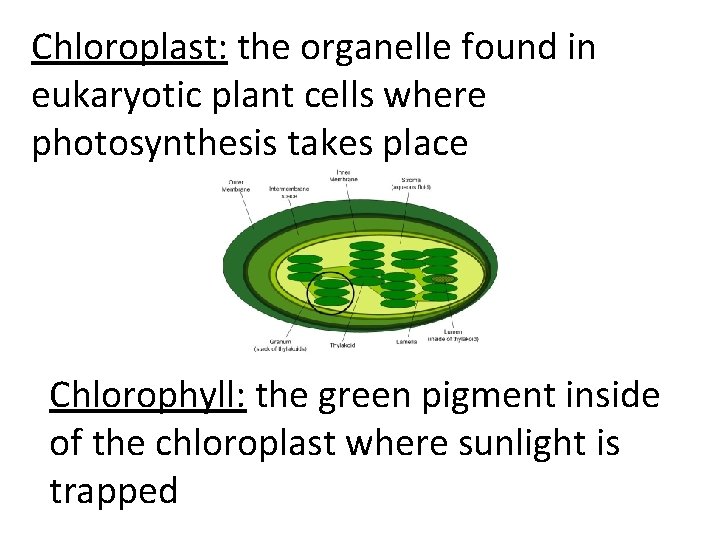
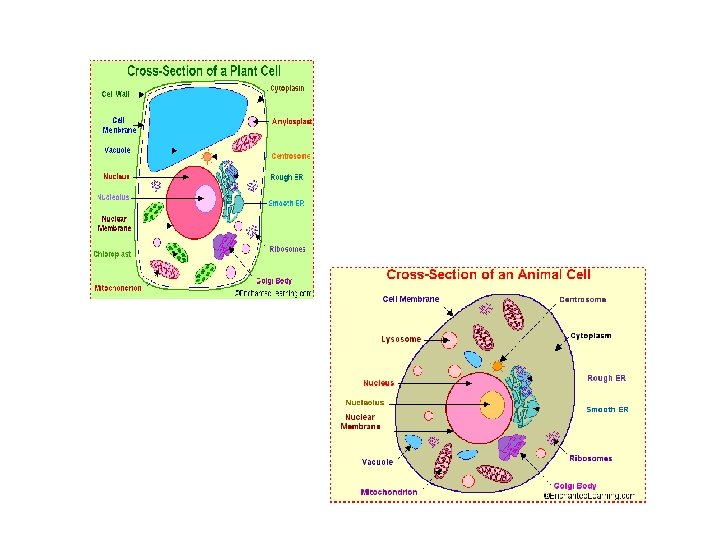
Chloroplast: the organelle found in eukaryotic plant cells where photosynthesis takes place Chlorophyll: the green pigment inside of the chloroplast where sunlight is trapped
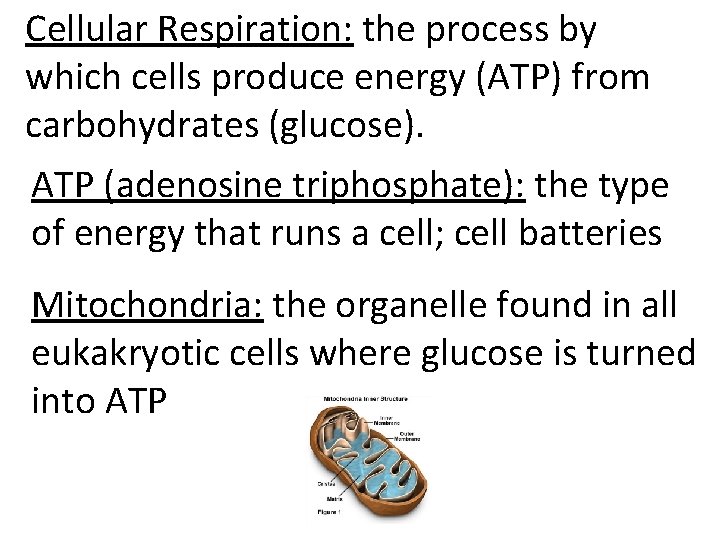
Cellular Respiration: the process by which cells produce energy (ATP) from carbohydrates (glucose). ATP (adenosine triphosphate): the type of energy that runs a cell; cell batteries Mitochondria: the organelle found in all eukakryotic cells where glucose is turned into ATP
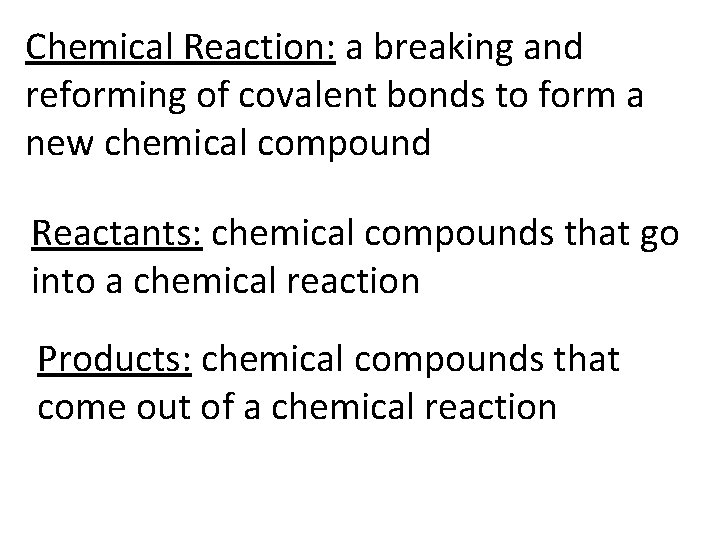
Chemical Reaction: a breaking and reforming of covalent bonds to form a new chemical compound Reactants: chemical compounds that go into a chemical reaction Products: chemical compounds that come out of a chemical reaction
Photosynthesis Word Equation ________________ Chemical Equation ________________
Goal of Process: make food (glucose) for plant cells Where in the cell does this process take place? Chloroplast What attracts sunlight to the chloroplast? chlorophyll
Anabolic (building up a biomolecule requiring an input of energy) or Catabolic (breaking down a biomolecule and releasing energy)? Photosynthesis is _________. What living organisms do Photosynthesis? __________________ Photosynthesis Video Open notes quiz!
Cellular Respiration Word Equation ________________ Chemical Equation ________________
Goal of Process: turn food (glucose) into energy for the cell (ATP) Where in the cell does this process take place? Mitochondria
Anabolic (building up a biomolecule requiring an input of energy) or Catabolic (breaking down a biomolecule and releasing energy)? Cellular Respiration is _________. What living organisms do Cellular Respiration? ______________ Cellular Respiration Video Open notes quiz!
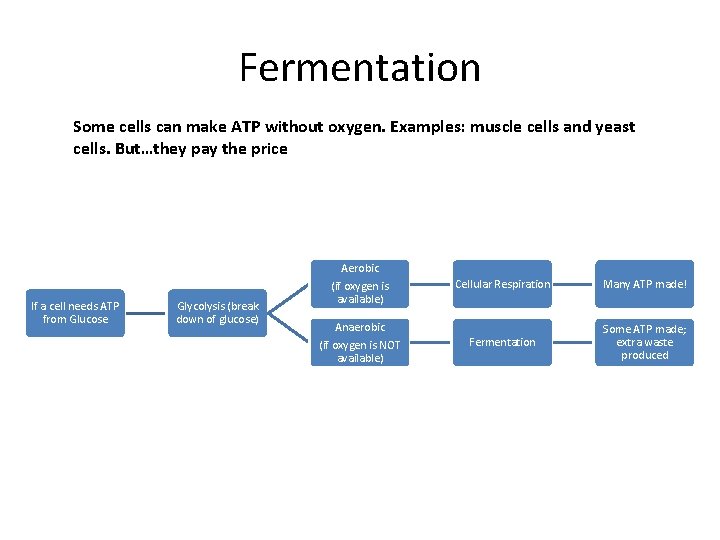
Fermentation Some cells can make ATP without oxygen. Examples: muscle cells and yeast cells. But…they pay the price If a cell needs ATP from Glucose Glycolysis (break down of glucose) Aerobic (if oxygen is available) Cellular Respiration Many ATP made! Anaerobic (if oxygen is NOT available) Fermentation Some ATP made; extra waste produced
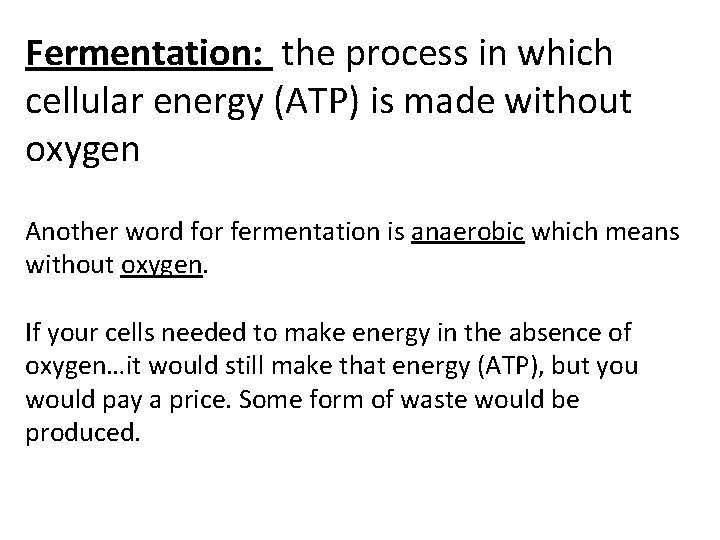
Fermentation: the process in which cellular energy (ATP) is made without oxygen Another word for fermentation is anaerobic which means without oxygen. If your cells needed to make energy in the absence of oxygen…it would still make that energy (ATP), but you would pay a price. Some form of waste would be produced.
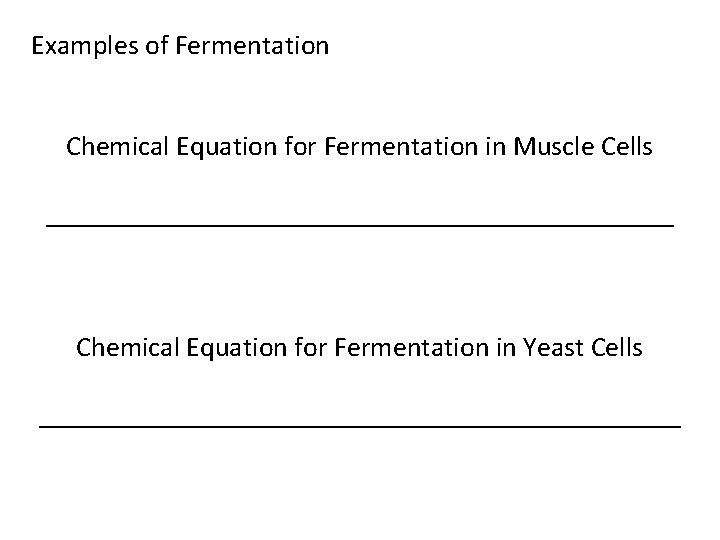
Examples of Fermentation Chemical Equation for Fermentation in Muscle Cells _______________________ Chemical Equation for Fermentation in Yeast Cells _______________________
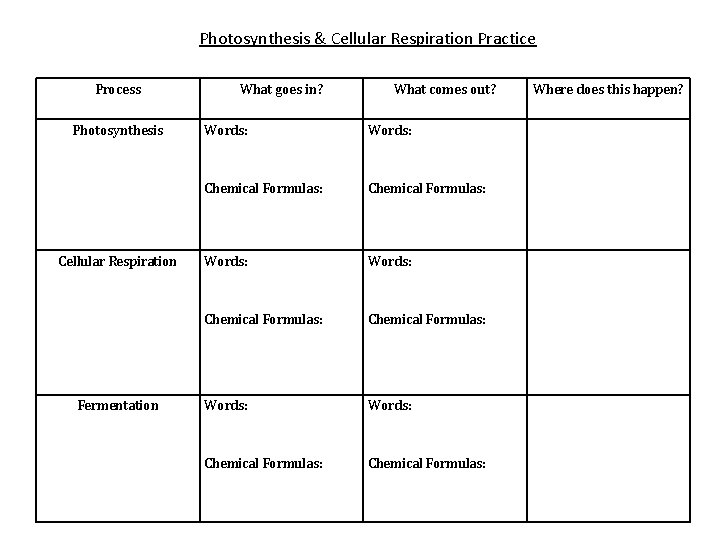
Photosynthesis & Cellular Respiration Practice Process Photosynthesis Cellular Respiration Fermentation What goes in? What comes out? Words: Chemical Formulas: Words: Chemical Formulas: Where does this happen?