
PHOTOSYNTHESIS CELLULAR RESPIRATION Cells All organisms are made
- Slides: 17
PHOTOSYNTHESIS & CELLULAR RESPIRATION
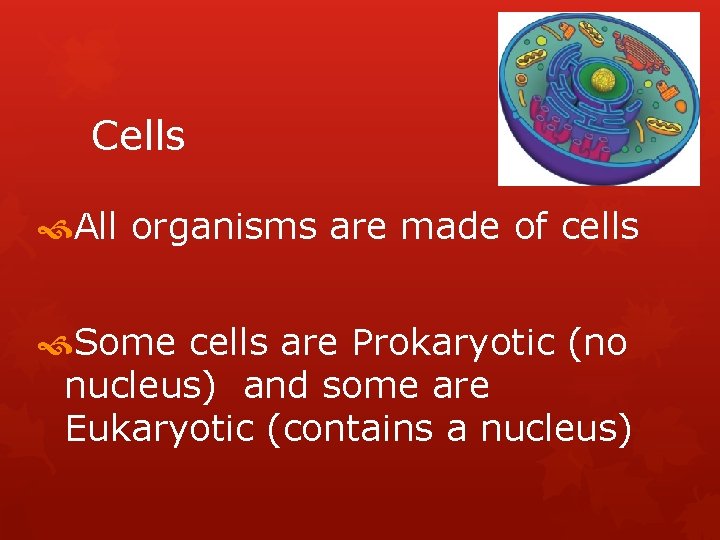
Cells All organisms are made of cells Some cells are Prokaryotic (no nucleus) and some are Eukaryotic (contains a nucleus)
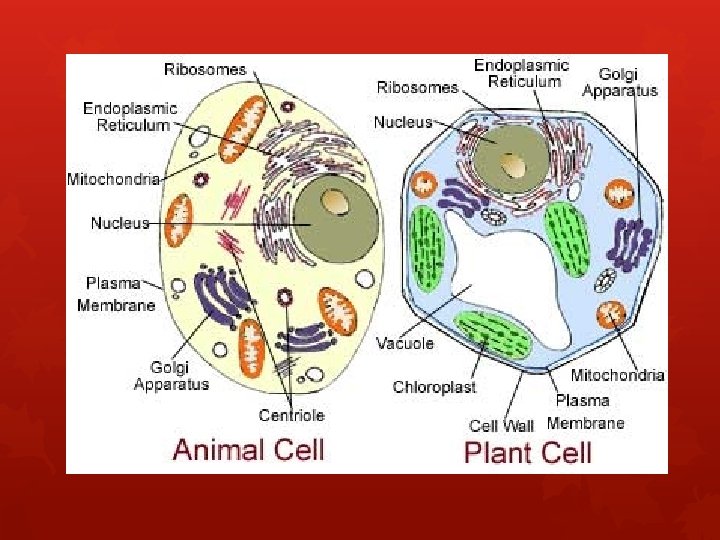
Structure of Cells Nucleus: Controls the cells functions Contains the cell’s genetic information. This is organized into smaller structures called chromosomes. Cell Membrane: Outer layer of the cell that controls what materials that enter and exit the cell Ribosomes: Structure that makes proteins Mitochondria: Releases the chemical energy stored in glucose (sugar).
Structure of Cells Chloroplasts (plants): Contain a pigment called chlorophyll which absorbs sunlight. The chloroplast then convert the sun’s energy into food for the plant. Cell Wall (plants): Protective layer surrounding the cell membrane
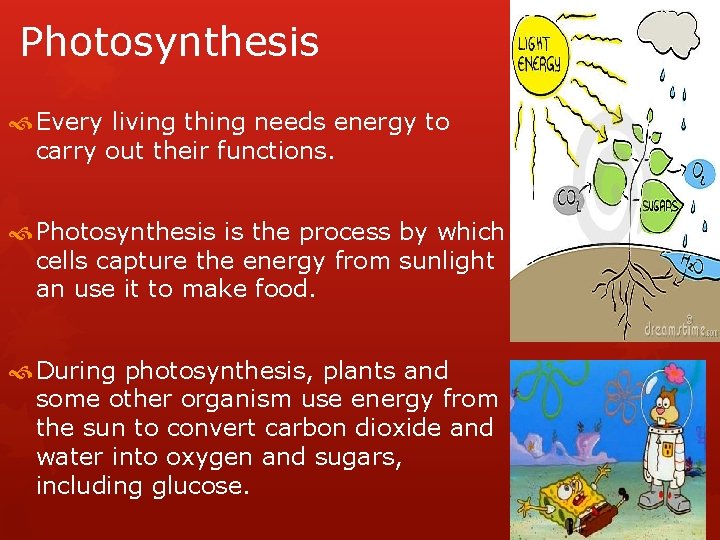
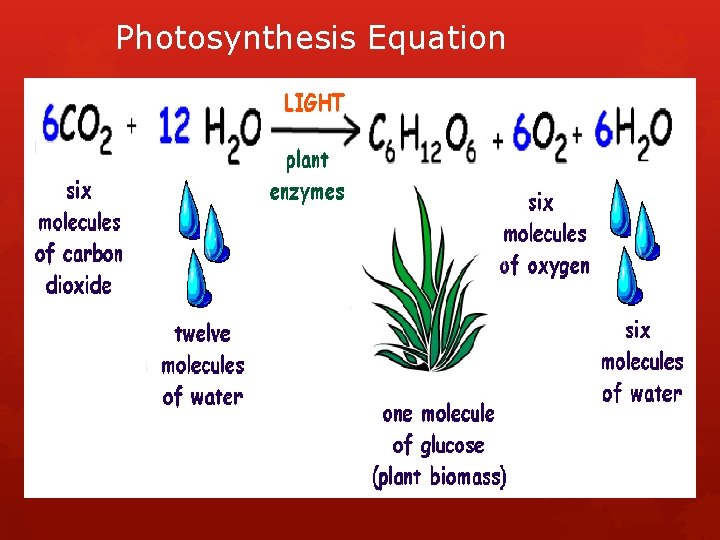
Photosynthesis Every living thing needs energy to carry out their functions. Photosynthesis is the process by which cells capture the energy from sunlight an use it to make food. During photosynthesis, plants and some other organism use energy from the sun to convert carbon dioxide and water into oxygen and sugars, including glucose.
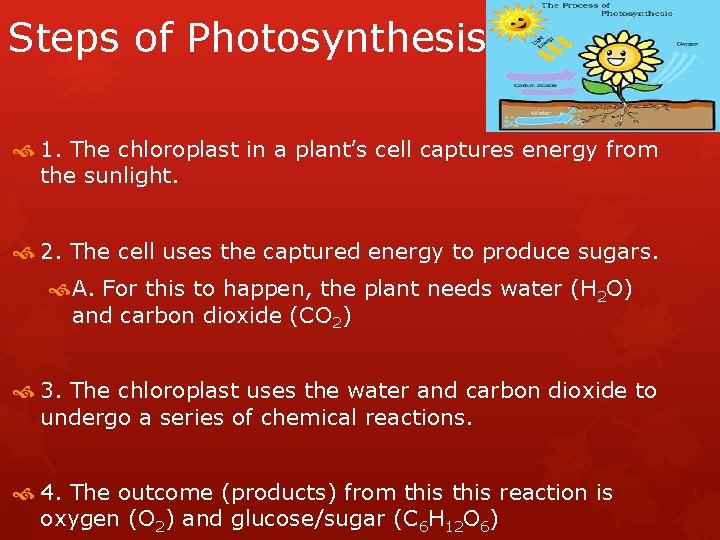
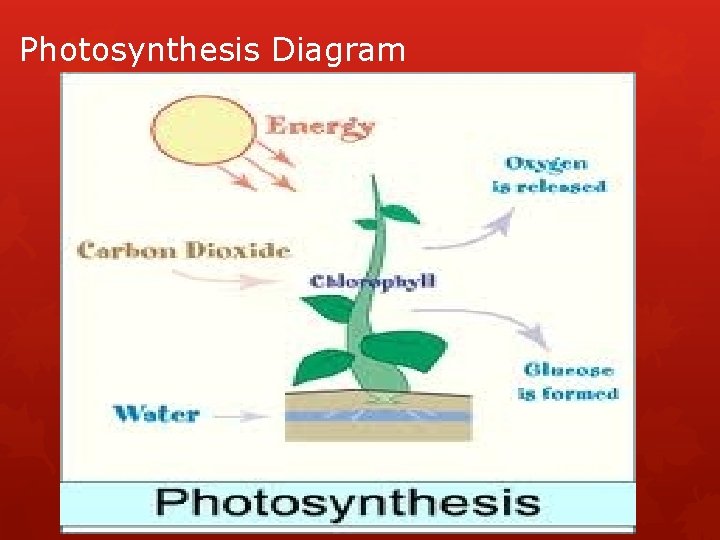
Steps of Photosynthesis 1. The chloroplast in a plant’s cell captures energy from the sunlight. 2. The cell uses the captured energy to produce sugars. A. For this to happen, the plant needs water (H 2 O) and carbon dioxide (CO 2) 3. The chloroplast uses the water and carbon dioxide to undergo a series of chemical reactions. 4. The outcome (products) from this reaction is oxygen (O 2) and glucose/sugar (C 6 H 12 O 6)
Photosynthesis Diagram
Photosynthesis Equation
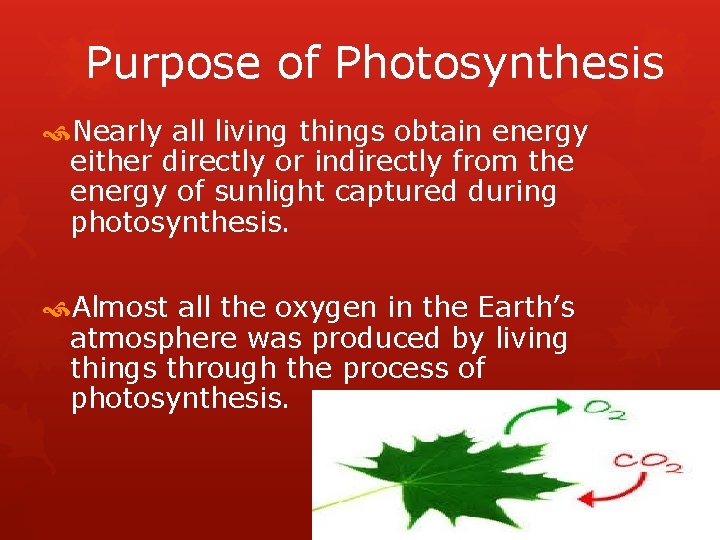
Purpose of Photosynthesis Nearly all living things obtain energy either directly or indirectly from the energy of sunlight captured during photosynthesis. Almost all the oxygen in the Earth’s atmosphere was produced by living things through the process of photosynthesis.
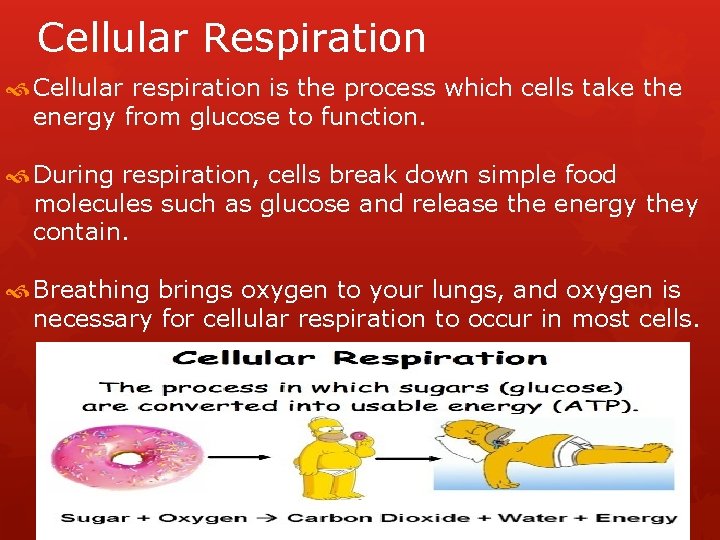
Cellular Respiration Cellular respiration is the process which cells take the energy from glucose to function. During respiration, cells break down simple food molecules such as glucose and release the energy they contain. Breathing brings oxygen to your lungs, and oxygen is necessary for cellular respiration to occur in most cells.
How Your Body Obtains Energy 1. You eat food and the food passes through your digestive system. 2. The food is then broken down into small molecules. 3. These molecules then pass out of the digestive system and into your bloodstream. 4. The molecules travel through the bloodstream to the cells of your body. 5. Inside the cells, the energy in the molecules is released.
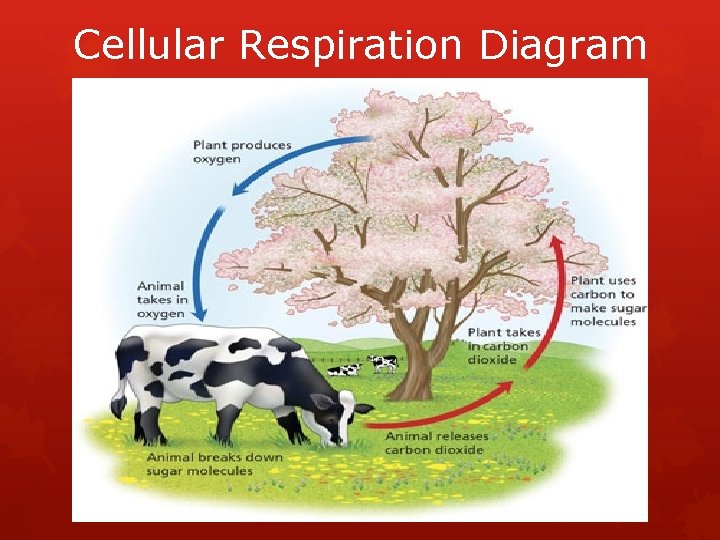
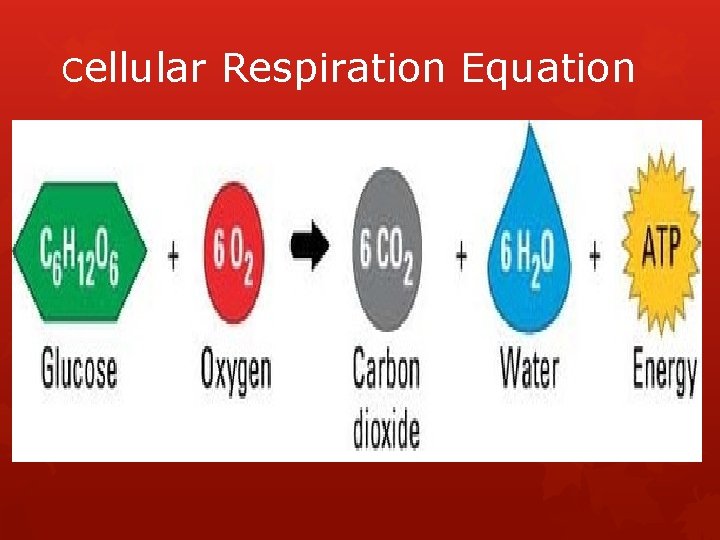
Steps of Cellular Respiration 1. Starts off in the cytoplasm of cells. Glucose is broken down into smaller molecules. 2. Next part takes place in the mitochondria. Molecules are broken down even smaller. This reaction requires oxygen, and a great deal of energy is released. 3. The end product is carbon dioxide and water. These products diffuse out of the cell. **This is why when you breathe in, you take in oxygen. When you breathe out, you release carbon dioxide and water.
Cellular Respiration Diagram
Cellular Respiration Equation
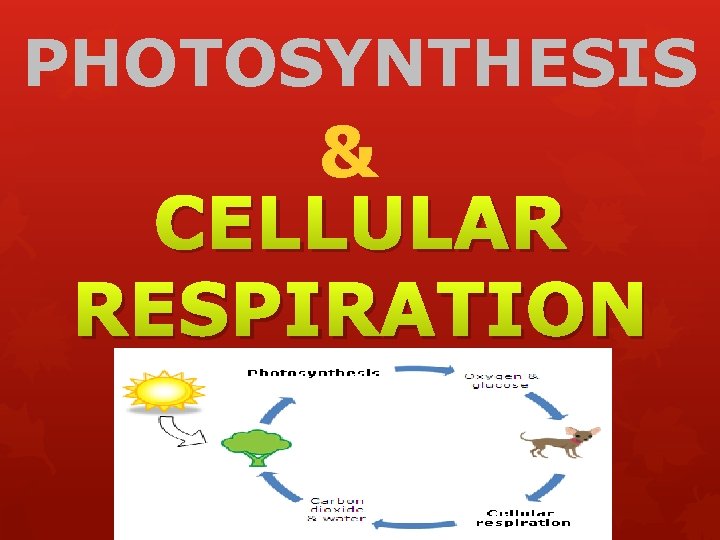
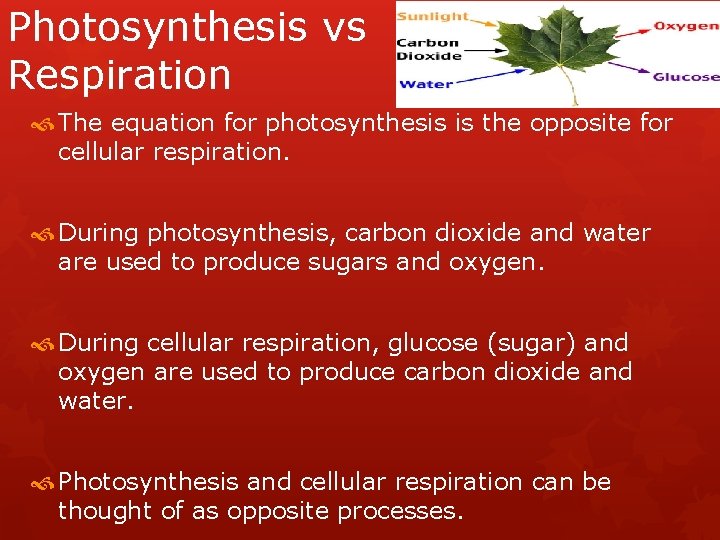
Photosynthesis vs Respiration The equation for photosynthesis is the opposite for cellular respiration. During photosynthesis, carbon dioxide and water are used to produce sugars and oxygen. During cellular respiration, glucose (sugar) and oxygen are used to produce carbon dioxide and water. Photosynthesis and cellular respiration can be thought of as opposite processes.