
Photosynthesis Biology B Overview 1 SUN 2 LIGHT

Photosynthesis Biology B
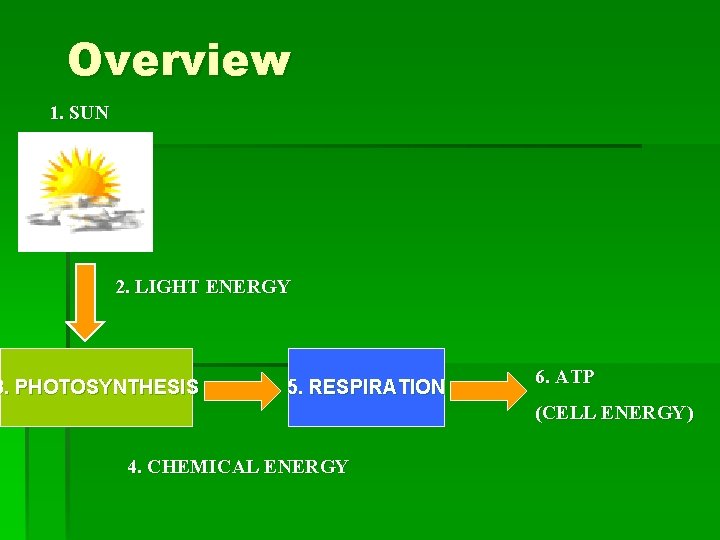
Overview 1. SUN 2. LIGHT ENERGY 3. PHOTOSYNTHESIS 5. RESPIRATION 6. ATP (CELL ENERGY) 4. CHEMICAL ENERGY
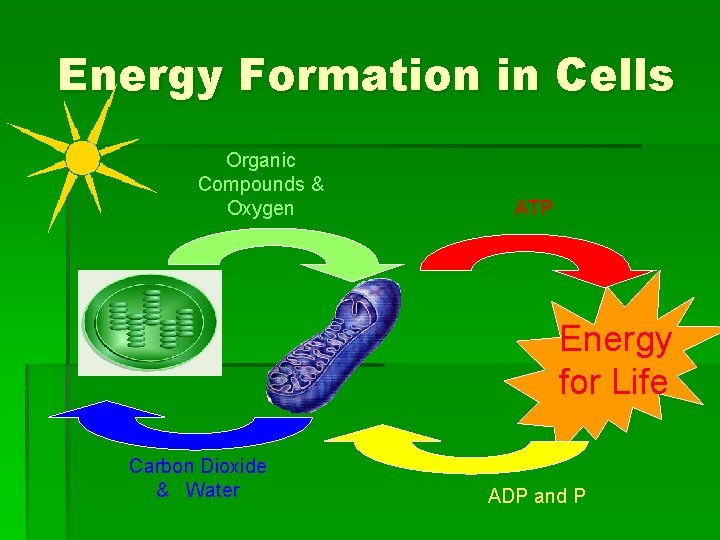
Energy Formation in Cells Organic Compounds & Oxygen ATP Energy for Life Carbon Dioxide & Water ADP and P
What is Photosynthesis? § The process of photosynthesis is where organisms convert light energy into chemical energy to create products such as carbohydrates, sugars, and starches.
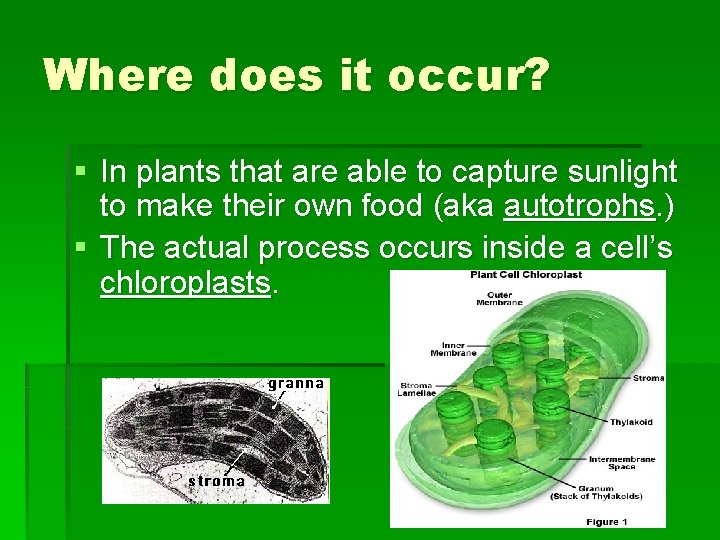
Where does it occur? § In plants that are able to capture sunlight to make their own food (aka autotrophs. ) § The actual process occurs inside a cell’s chloroplasts.
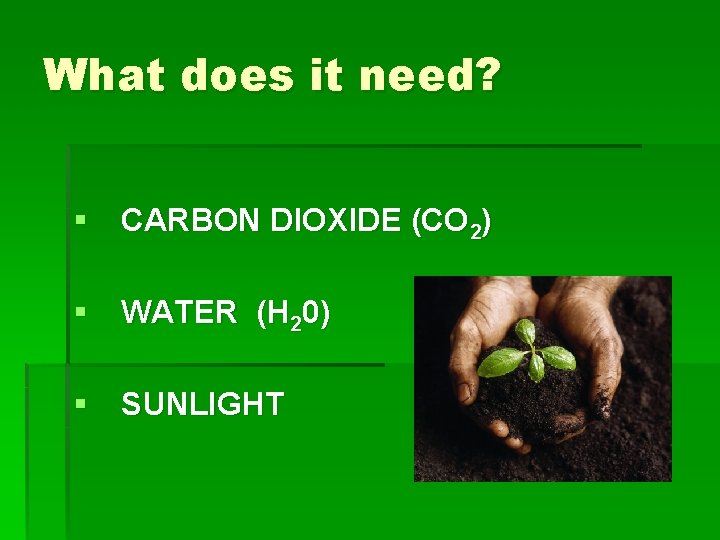
What does it need? § CARBON DIOXIDE (CO 2) § WATER (H 20) § SUNLIGHT
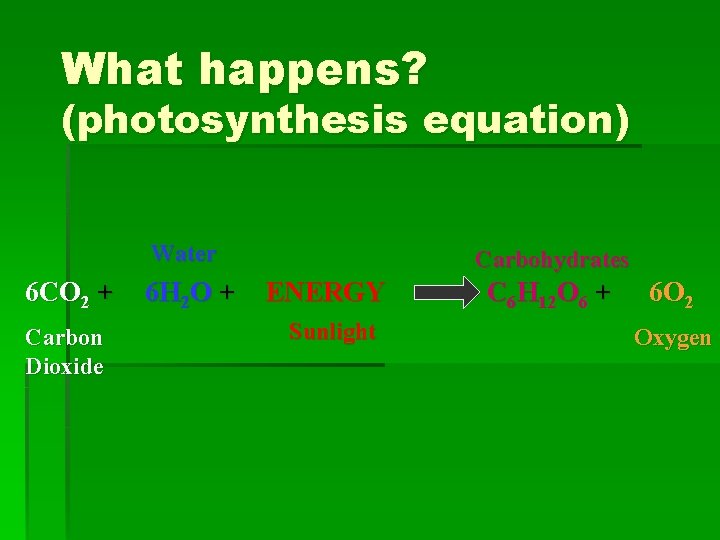
What happens? (photosynthesis equation) Water 6 CO 2 + Carbon Dioxide 6 H 2 O + Carbohydrates ENERGY Sunlight C 6 H 12 O 6 + 6 O 2 Oxygen
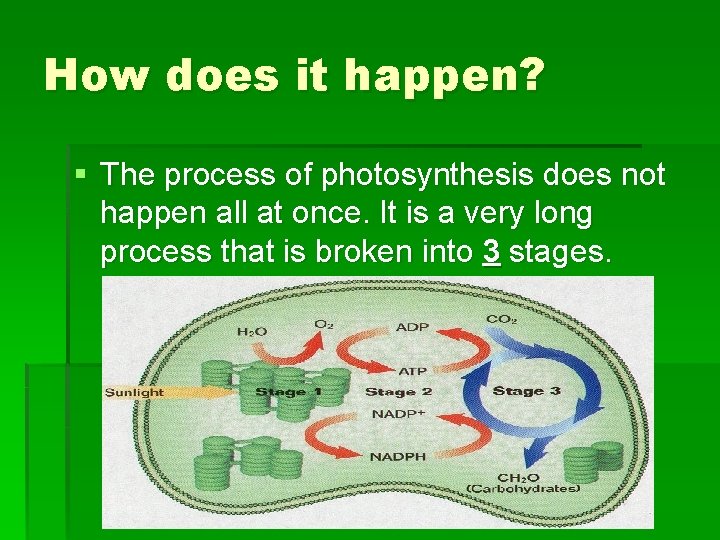
How does it happen? § The process of photosynthesis does not happen all at once. It is a very long process that is broken into 3 stages.
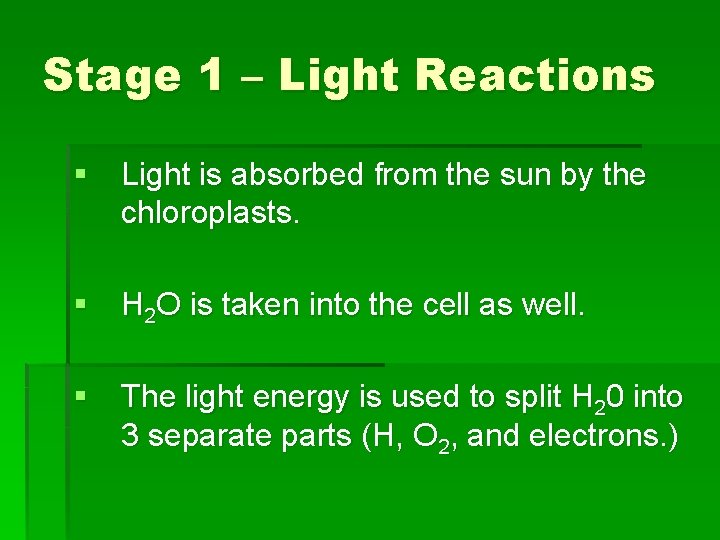
Stage 1 – Light Reactions § Light is absorbed from the sun by the chloroplasts. § H 2 O is taken into the cell as well. § The light energy is used to split H 20 into 3 separate parts (H, O 2, and electrons. )
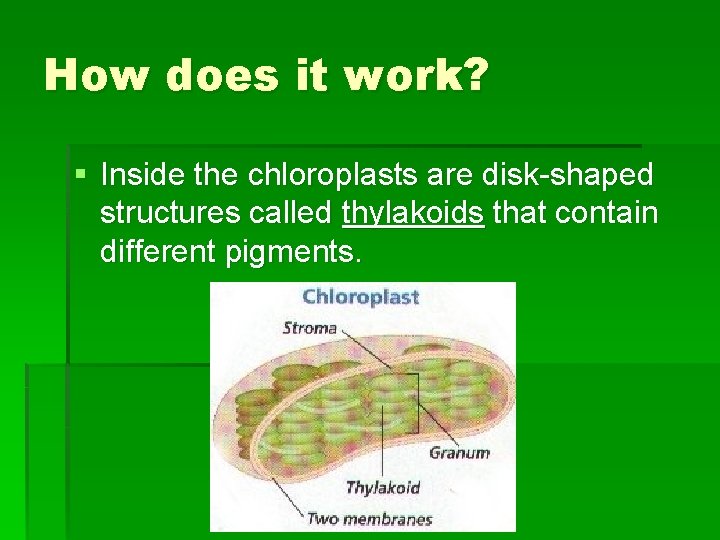
How does it work? § Inside the chloroplasts are disk-shaped structures called thylakoids that contain different pigments.
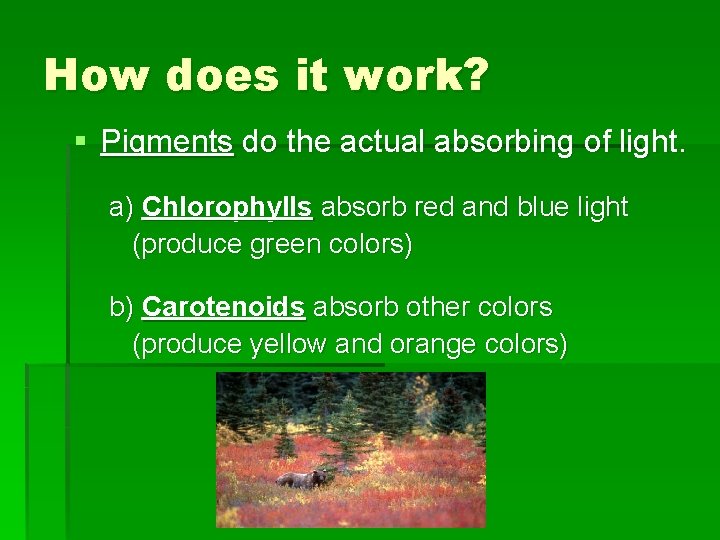
How does it work? § Pigments do the actual absorbing of light. a) Chlorophylls absorb red and blue light (produce green colors) b) Carotenoids absorb other colors (produce yellow and orange colors)
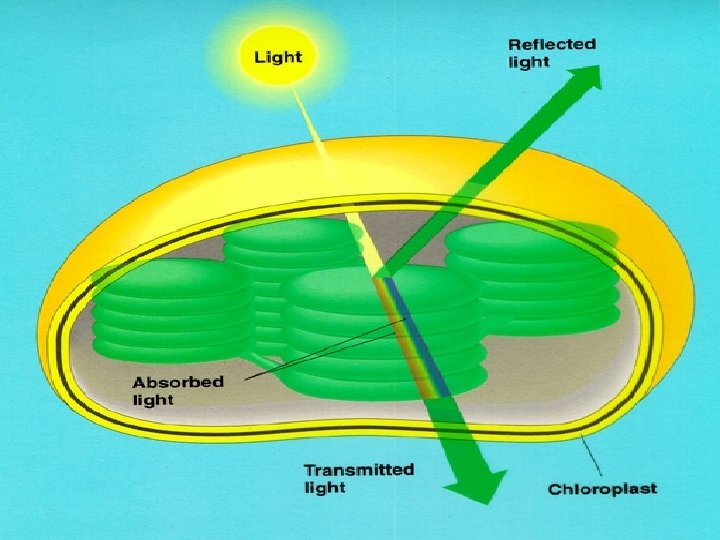
How does it work? § Once the sunlight is captured it is used to split water (H 20) into Hydrogen (H), Oxygen gas (O 2), and free electrons. § Oxygen gas (O 2) is free to leave the plant and this is what animals use to breathe.
Stage 2 – Energy Storage § Free electrons are passed from thylakoid to thylakoid until they reach an ADP molecule and turn it into an ATP. § Hydrogen (H) molecules are passed from protein to protein until they reach a NADP+ molecule and then they become an NADPH.
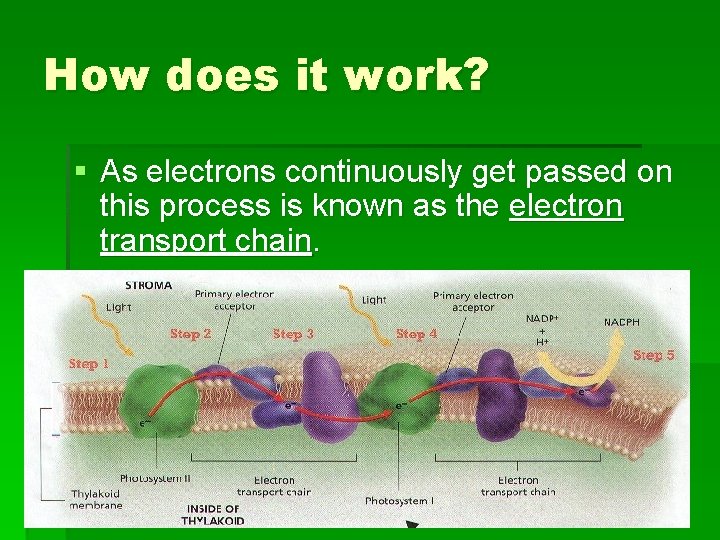
How does it work? § As electrons continuously get passed on this process is known as the electron transport chain.
Stage 3 – Dark Reactions § The newly formed ATP and NADPH power the formation of carbohydrates, sugars, and starches. § This is done by using CO 2 as the starting material.
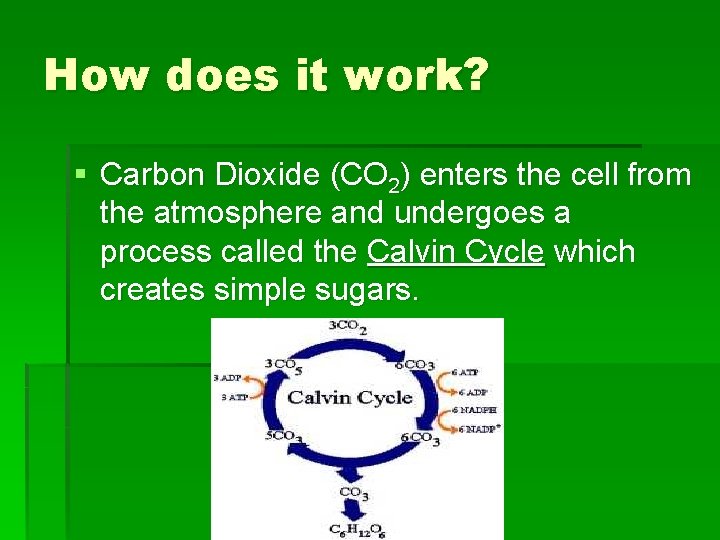
How does it work? § Carbon Dioxide (CO 2) enters the cell from the atmosphere and undergoes a process called the Calvin Cycle which creates simple sugars.
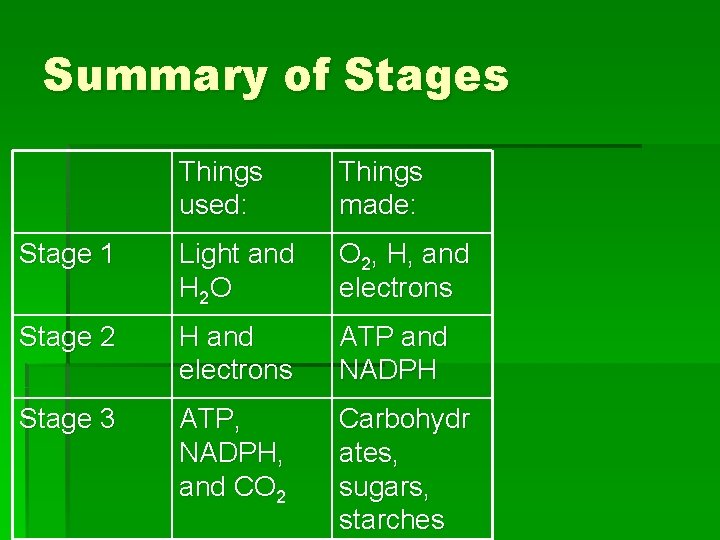
Summary of Stages Things used: Things made: Stage 1 Light and H 2 O O 2, H, and electrons Stage 2 H and electrons ATP and NADPH Stage 3 ATP, NADPH, and CO 2 Carbohydr ates, sugars, starches
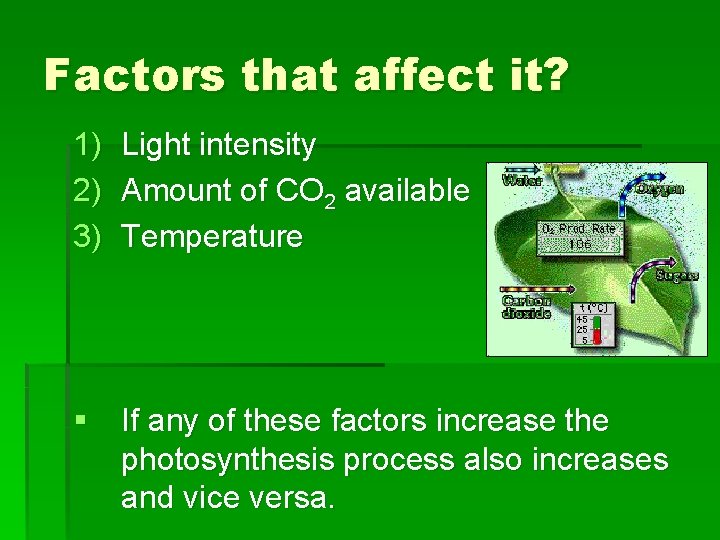
Factors that affect it? 1) 2) 3) Light intensity Amount of CO 2 available Temperature § If any of these factors increase the photosynthesis process also increases and vice versa.
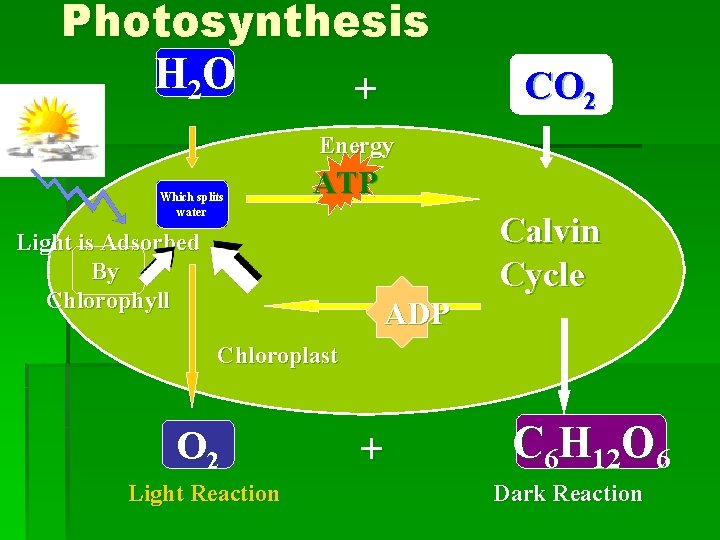
Photosynthesis H 2 O + CO 2 Energy Which splits water ATP Light is Adsorbed By Chlorophyll Calvin Cycle ADP Chloroplast O 2 Light Reaction + C 6 H 12 O 6 Dark Reaction
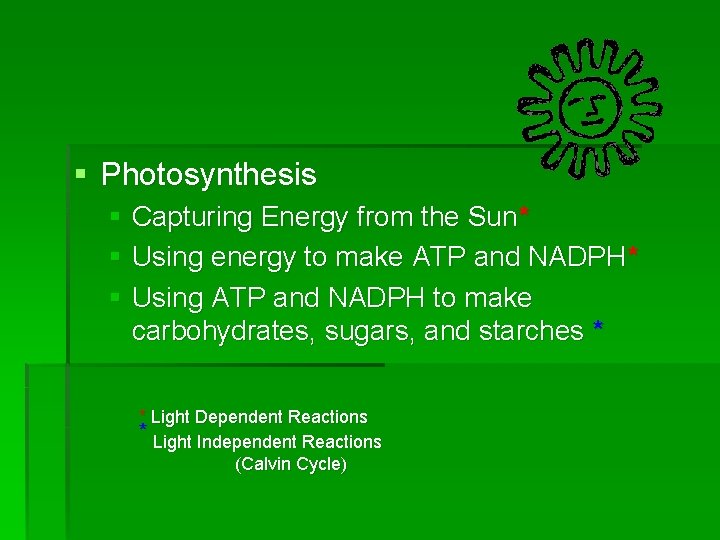
§ Photosynthesis § Capturing Energy from the Sun* § Using energy to make ATP and NADPH* § Using ATP and NADPH to make carbohydrates, sugars, and starches * * Light Dependent Reactions * Light Independent Reactions (Calvin Cycle)
Any Questions? § Education is light, lack of it darkness. --Russian Proverb § Education is the movement from darkness to light. --Bloom
- Slides: 22