
Photosynthesis Biology 122 Genes and Development Cyanobacteria Thylakoid
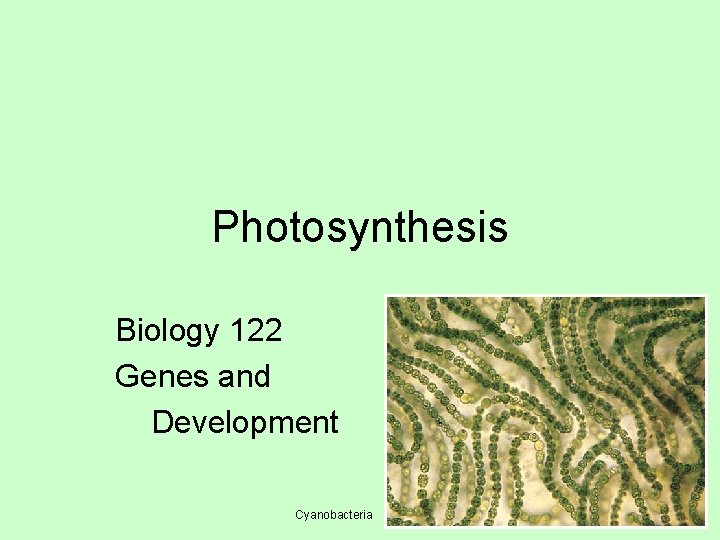
Photosynthesis Biology 122 Genes and Development Cyanobacteria
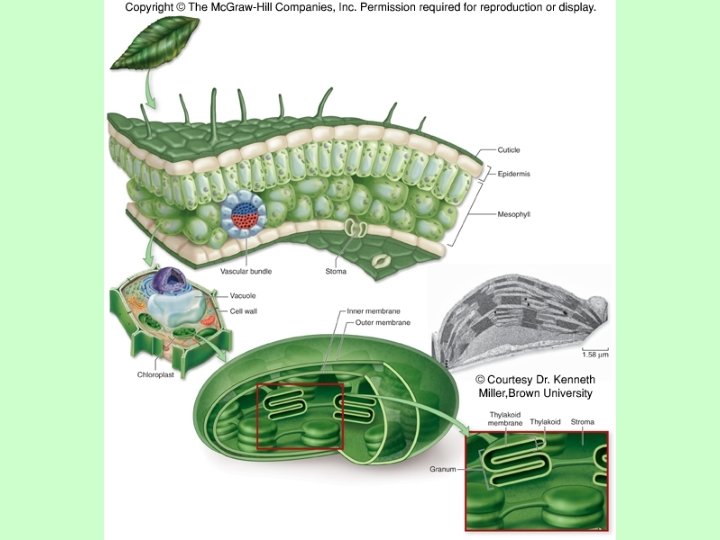

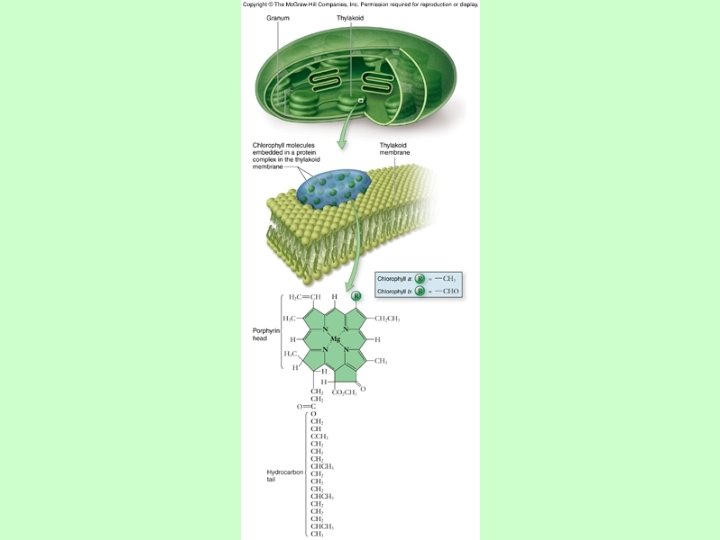
Thylakoid membranes pack together to form grana from a spinach plant

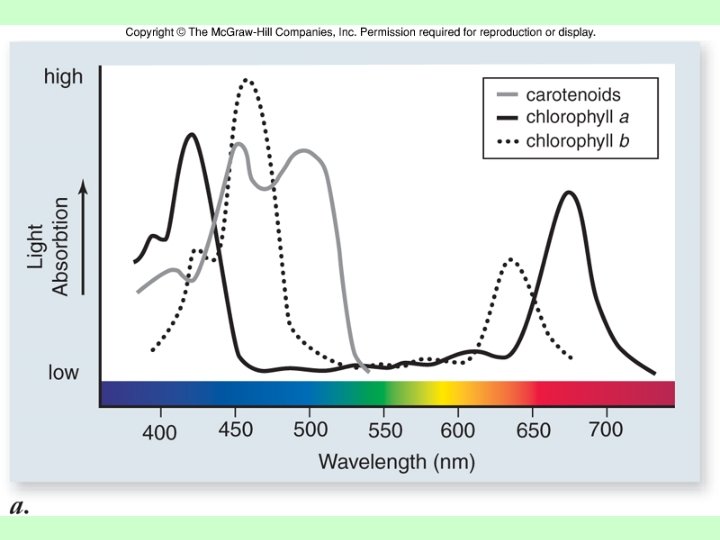
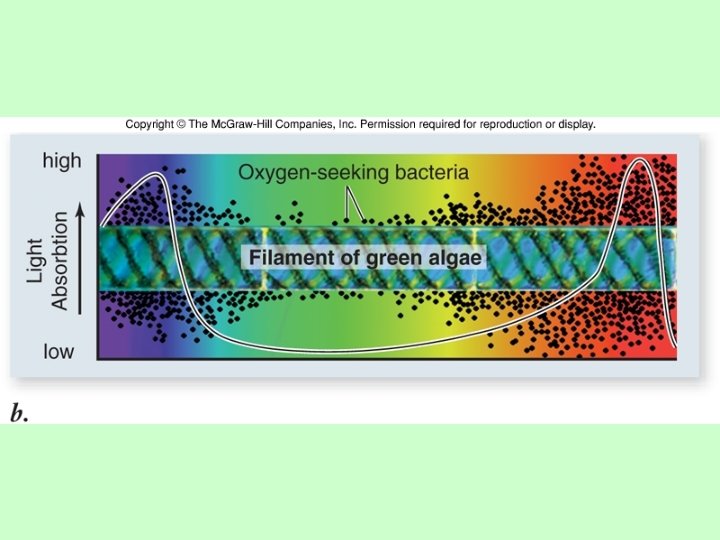
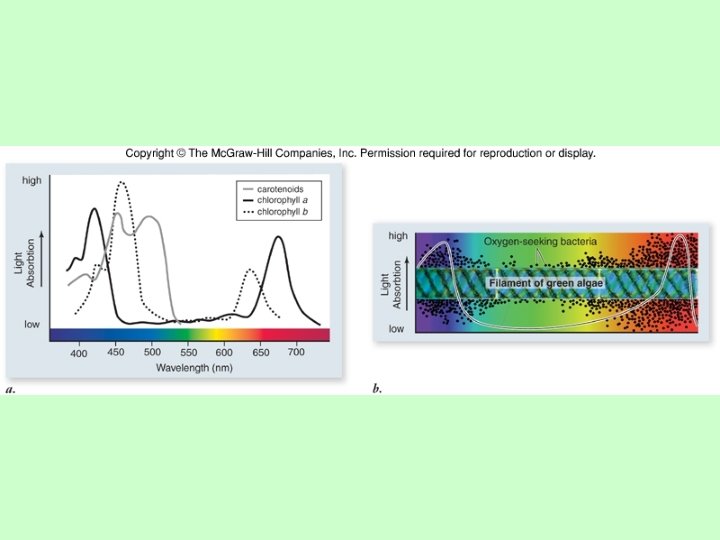
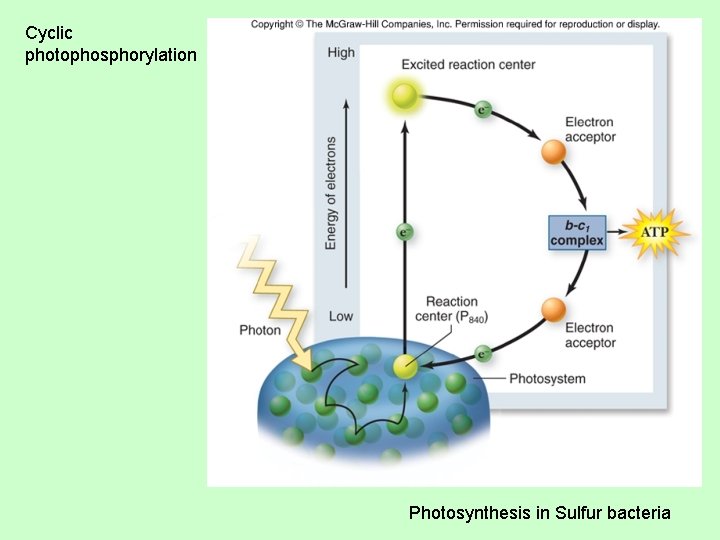
Cyclic photophosphorylation Photosynthesis in Sulfur bacteria
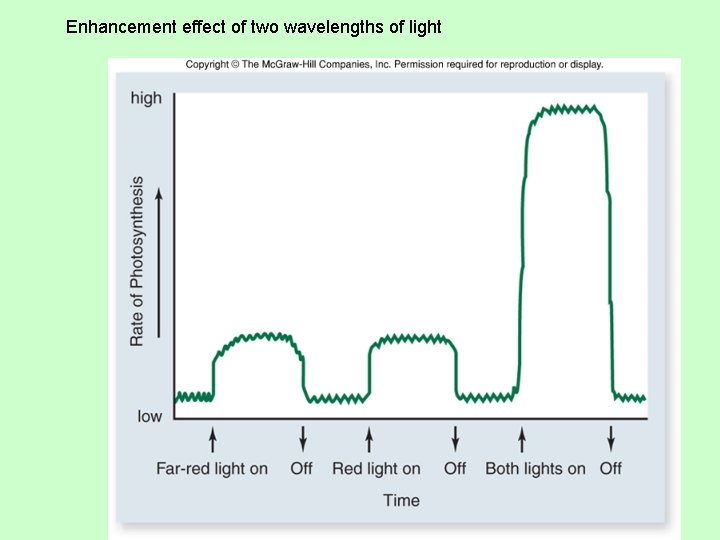
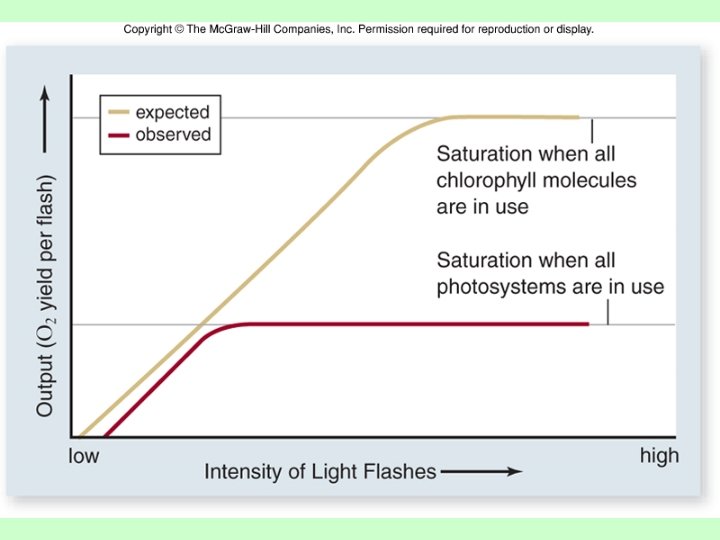
Enhancement effect of two wavelengths of light
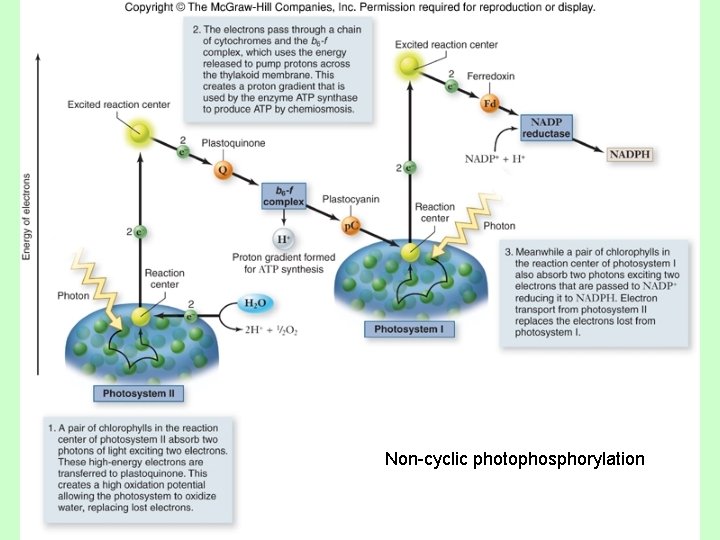
Non-cyclic photophosphorylation
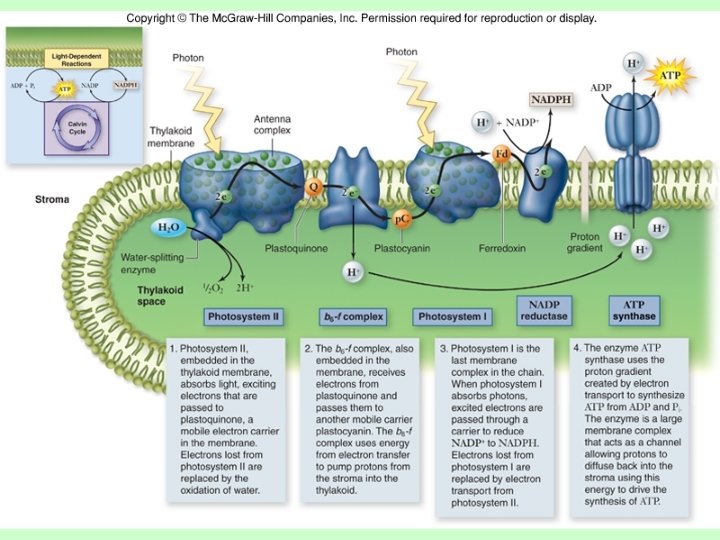
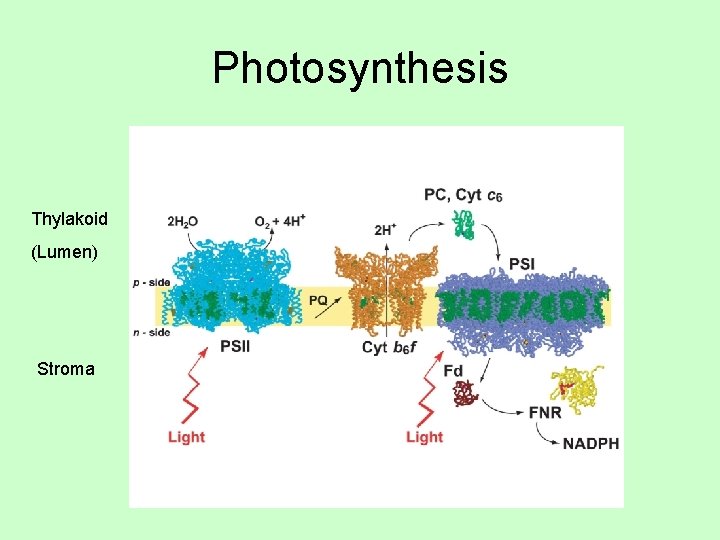
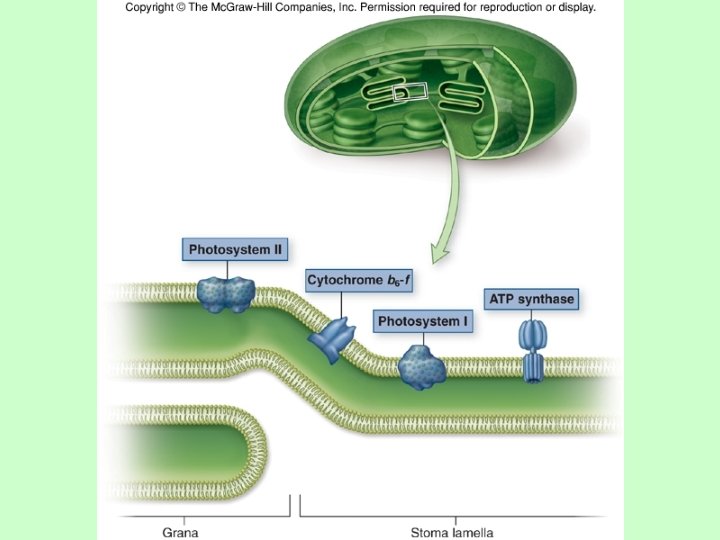
Photosynthesis Thylakoid (Lumen) Stroma
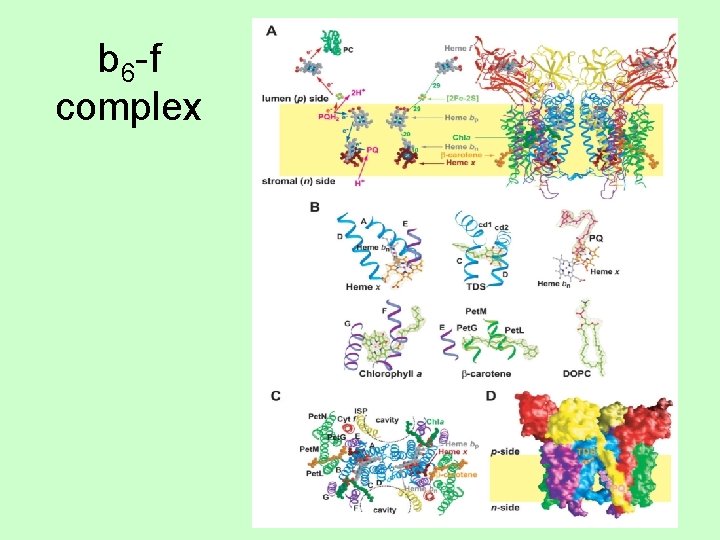
b 6 -f complex
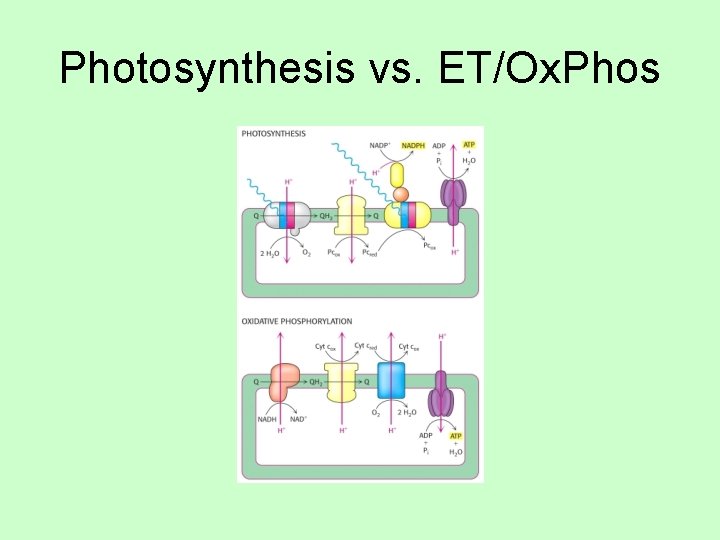
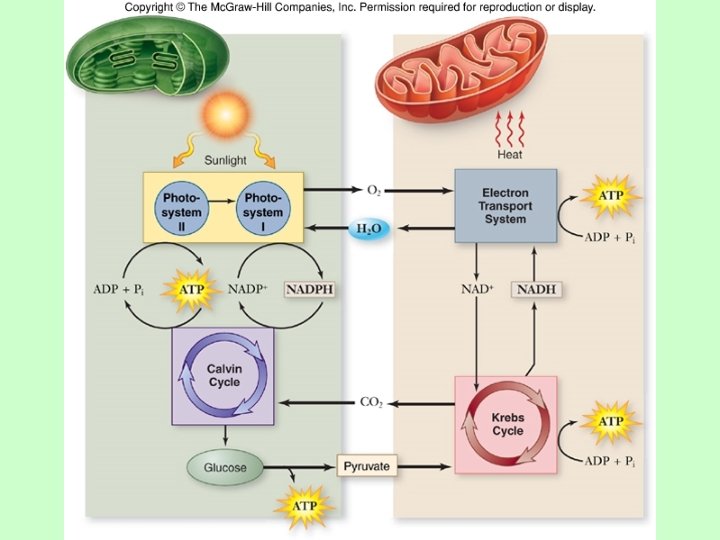
Photosynthesis vs. ET/Ox. Phos
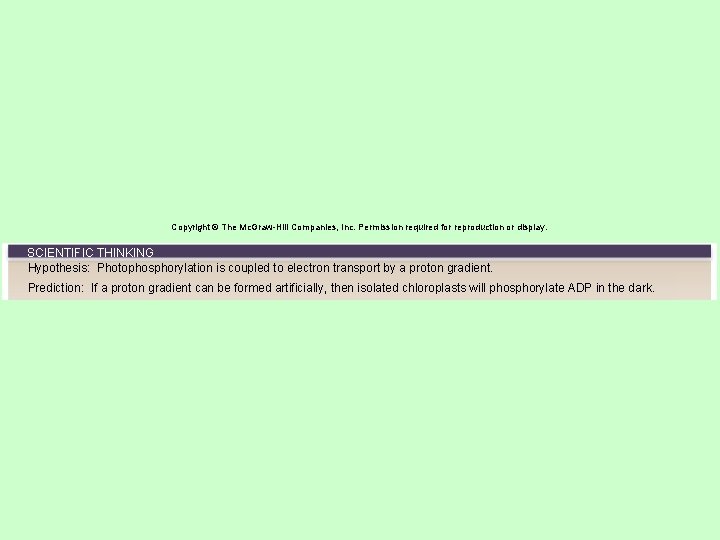
Copyright © The Mc. Graw-Hill Companies, Inc. Permission required for reproduction or display. SCIENTIFIC THINKING Hypothesis: Photophosphorylation is coupled to electron transport by a proton gradient. Prediction: If a proton gradient can be formed artificially, then isolated chloroplasts will phosphorylate ADP in the dark.
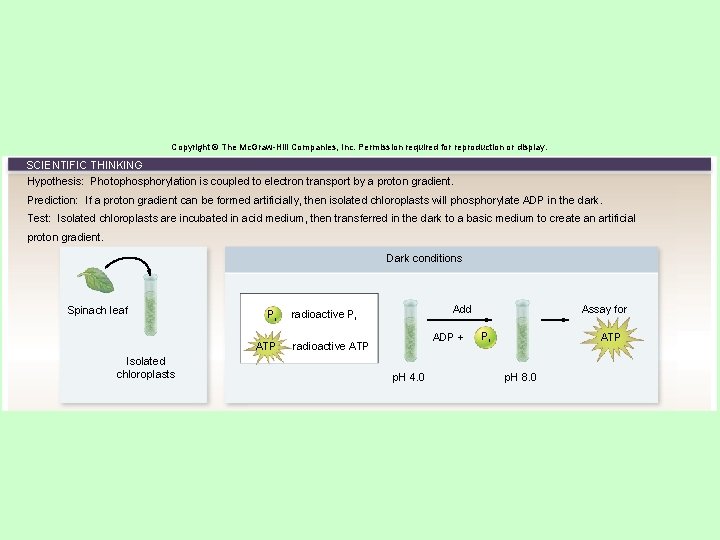
Copyright © The Mc. Graw-Hill Companies, Inc. Permission required for reproduction or display. SCIENTIFIC THINKING Hypothesis: Photophosphorylation is coupled to electron transport by a proton gradient. Prediction: If a proton gradient can be formed artificially, then isolated chloroplasts will phosphorylate ADP in the dark. Test: Isolated chloroplasts are incubated in acid medium, then transferred in the dark to a basic medium to create an artificial proton gradient. Dark conditions Spinach leaf Pi ATP Isolated chloroplasts Add radioactive Pi ADP + radioactive ATP p. H 4. 0 Assay for Pi ATP p. H 8. 0
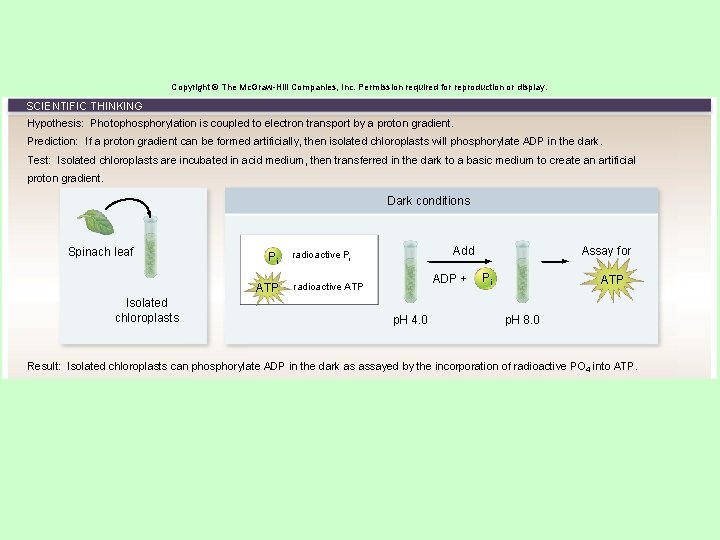
Copyright © The Mc. Graw-Hill Companies, Inc. Permission required for reproduction or display. SCIENTIFIC THINKING Hypothesis: Photophosphorylation is coupled to electron transport by a proton gradient. Prediction: If a proton gradient can be formed artificially, then isolated chloroplasts will phosphorylate ADP in the dark. Test: Isolated chloroplasts are incubated in acid medium, then transferred in the dark to a basic medium to create an artificial proton gradient. Dark conditions Spinach leaf Pi ATP Isolated chloroplasts Add radioactive Pi ADP + radioactive ATP p. H 4. 0 Assay for Pi ATP p. H 8. 0 Result: Isolated chloroplasts can phosphorylate ADP in the dark as assayed by the incorporation of radioactive PO 4 into ATP.
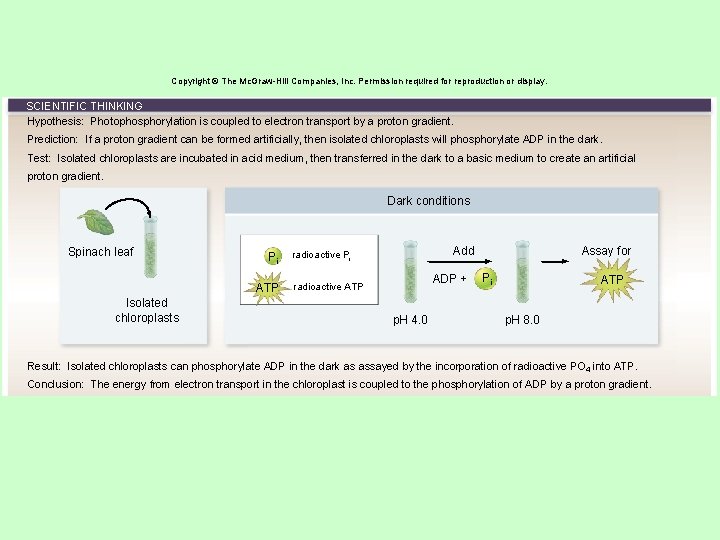
Copyright © The Mc. Graw-Hill Companies, Inc. Permission required for reproduction or display. SCIENTIFIC THINKING Hypothesis: Photophosphorylation is coupled to electron transport by a proton gradient. Prediction: If a proton gradient can be formed artificially, then isolated chloroplasts will phosphorylate ADP in the dark. Test: Isolated chloroplasts are incubated in acid medium, then transferred in the dark to a basic medium to create an artificial proton gradient. Dark conditions Spinach leaf Pi ATP Isolated chloroplasts Add radioactive Pi ADP + radioactive ATP p. H 4. 0 Assay for Pi ATP p. H 8. 0 Result: Isolated chloroplasts can phosphorylate ADP in the dark as assayed by the incorporation of radioactive PO 4 into ATP. Conclusion: The energy from electron transport in the chloroplast is coupled to the phosphorylation of ADP by a proton gradient.
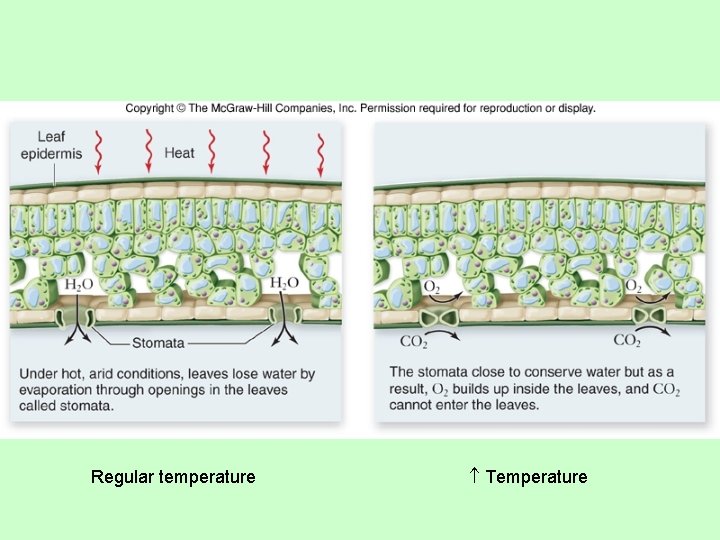
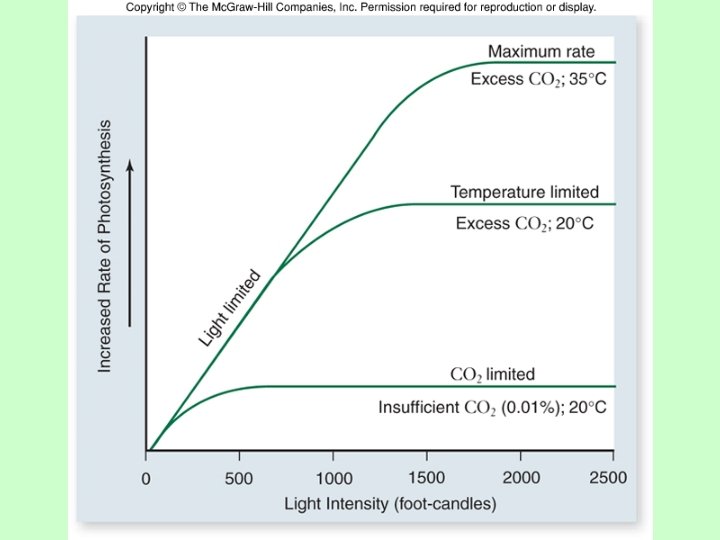
Regular temperature Temperature
- Slides: 33