
Photosynthesis Autotrophs vs Heterotrophs Autotroph Heterotroph Make Obtain

Photosynthesis
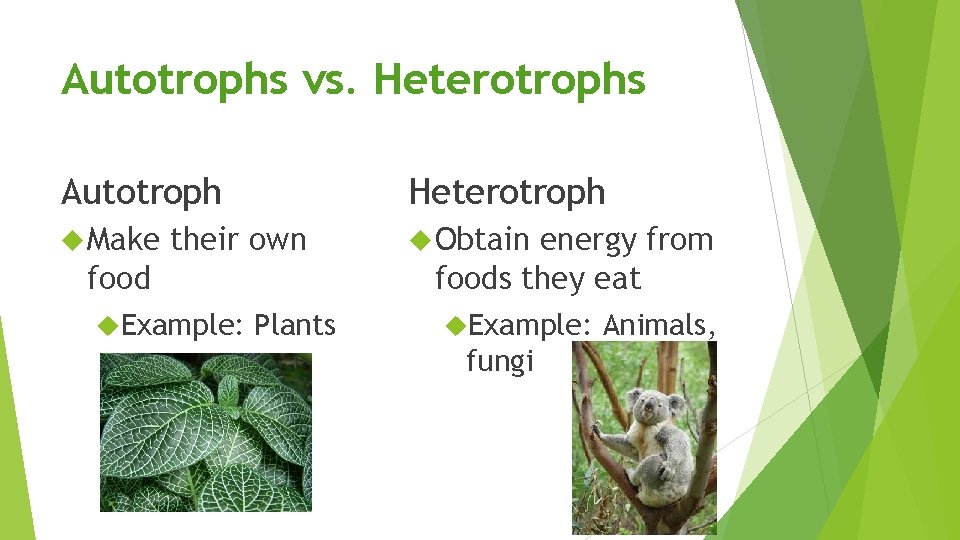
Autotrophs vs. Heterotrophs Autotroph Heterotroph Make Obtain their own food Example: Plants energy from foods they eat Example: fungi Animals,
Autotrophs Photosynthesis Some occurs within: bacteria Algae Within leaves of plants does NOT happen in ALL cells
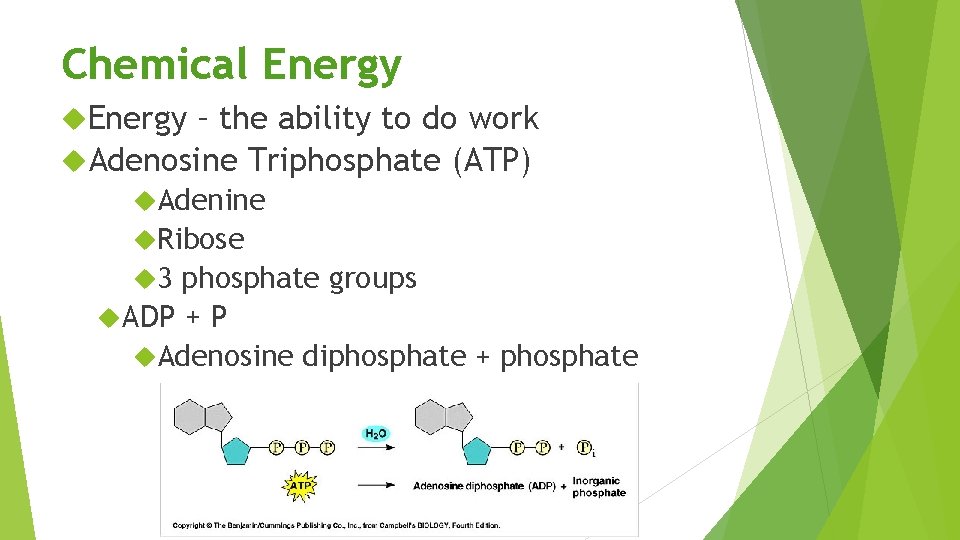
Chemical Energy – the ability to do work Adenosine Triphosphate (ATP) Adenine Ribose 3 phosphate groups ADP + P Adenosine diphosphate + phosphate
Chemical Energy = Adenosine Triphosphate (ATP)
Photosynthesis The process of creating sugar from CO 2. Consumes by light. H 2 O and is powered
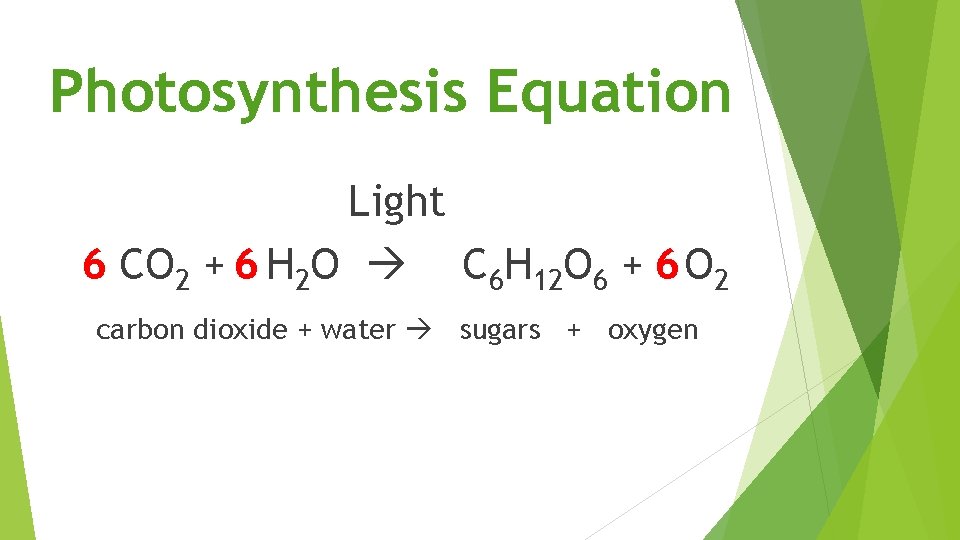
Photosynthesis Equation Light 6 CO 2 + 6 H 2 O C 6 H 12 O 6 + 6 O 2 carbon dioxide + water sugars + oxygen
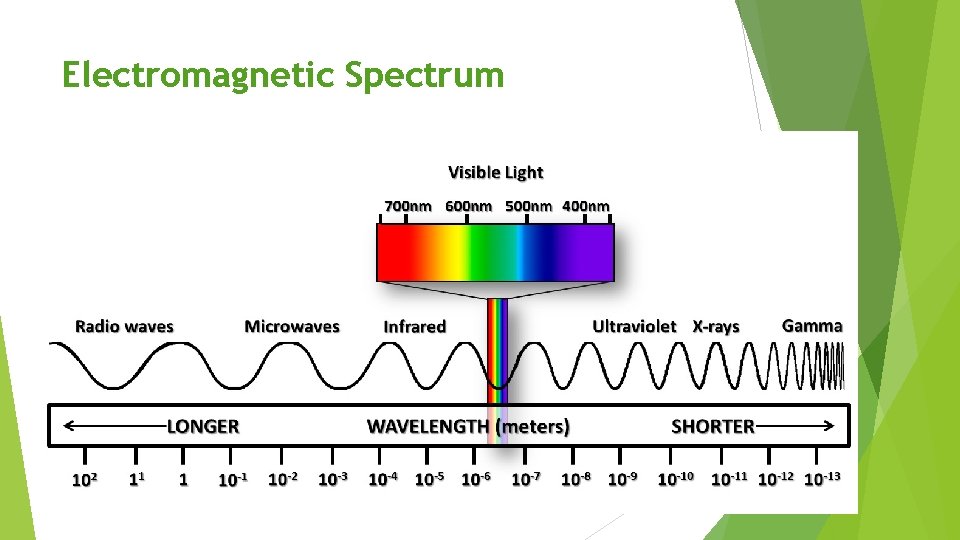
Electromagnetic Spectrum
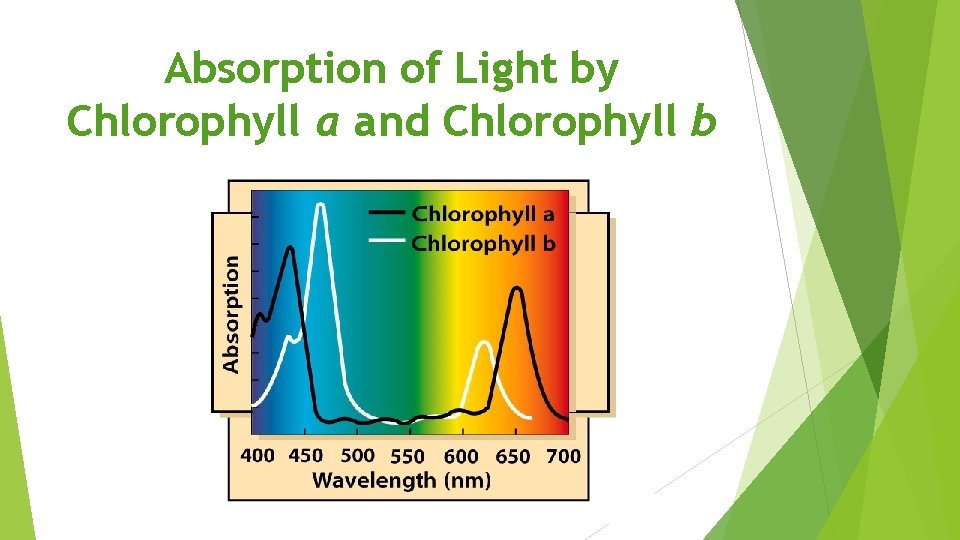
Absorption of Light by Chlorophyll a and Chlorophyll b
Light and Pigment Plants gather the Sun’s energy with light absorbing molecules called pigments Chlorophyll (Green) chlorophyll b a and chlorophyll
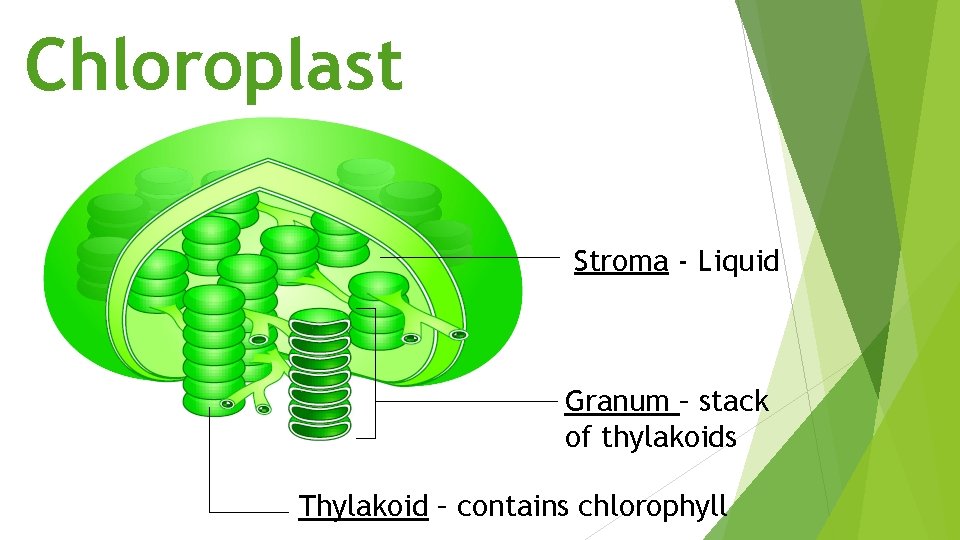
Chloroplast Stroma - Liquid Granum – stack of thylakoids Thylakoid – contains chlorophyll
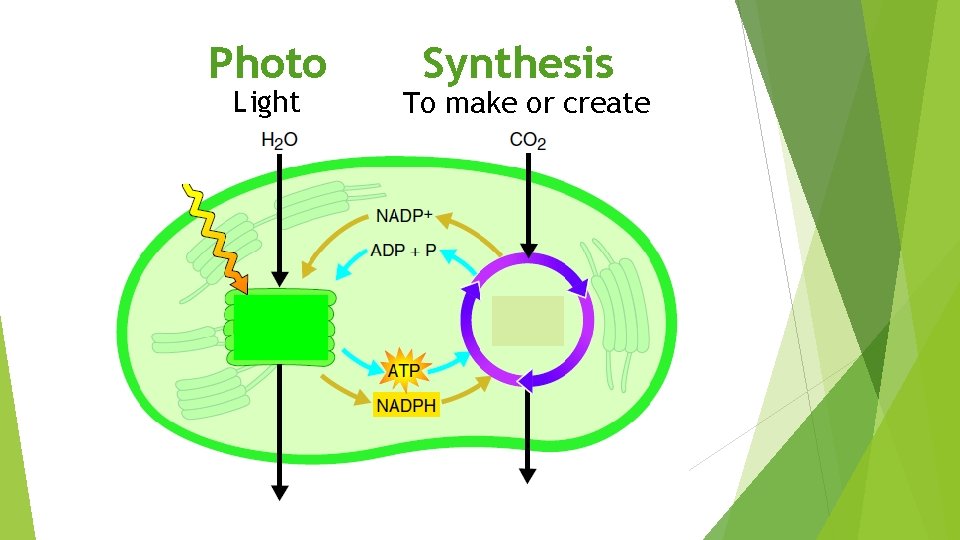
Photo Light Synthesis To make or create
Photosynthesis Part I: Light Dependent Reactions Location: Thylakoid Membrane
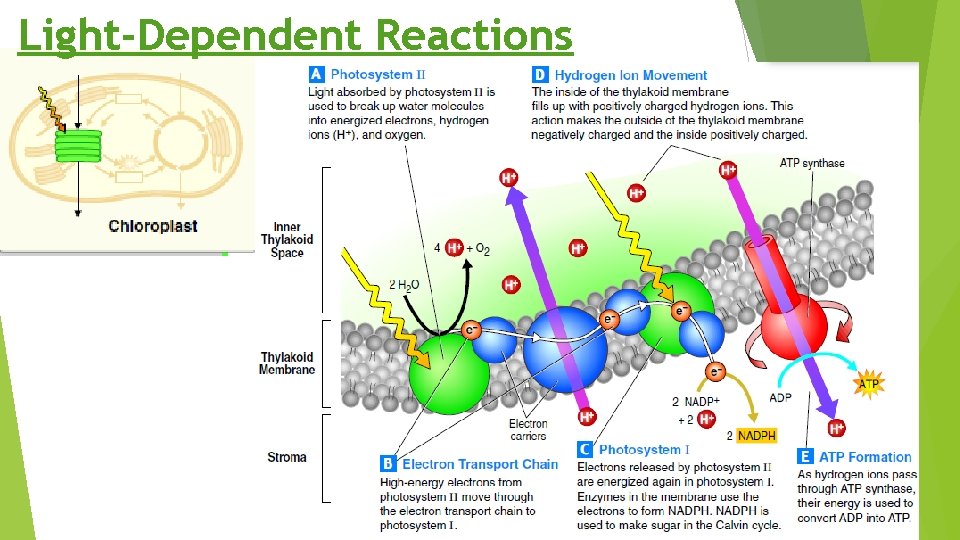
Light-Dependent Reactions
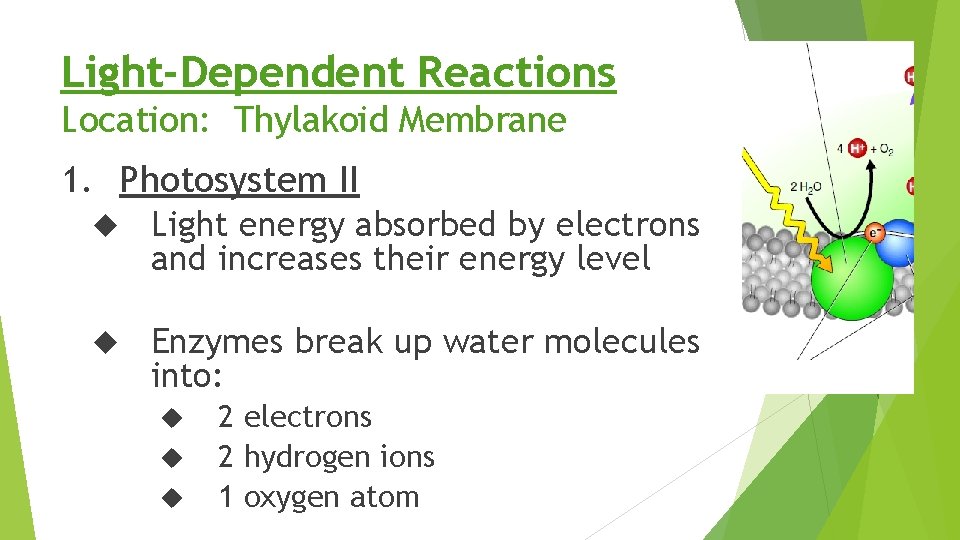
Light-Dependent Reactions Location: Thylakoid Membrane 1. Photosystem II Light energy absorbed by electrons and increases their energy level Enzymes break up water molecules into: 2 electrons 2 hydrogen ions 1 oxygen atom
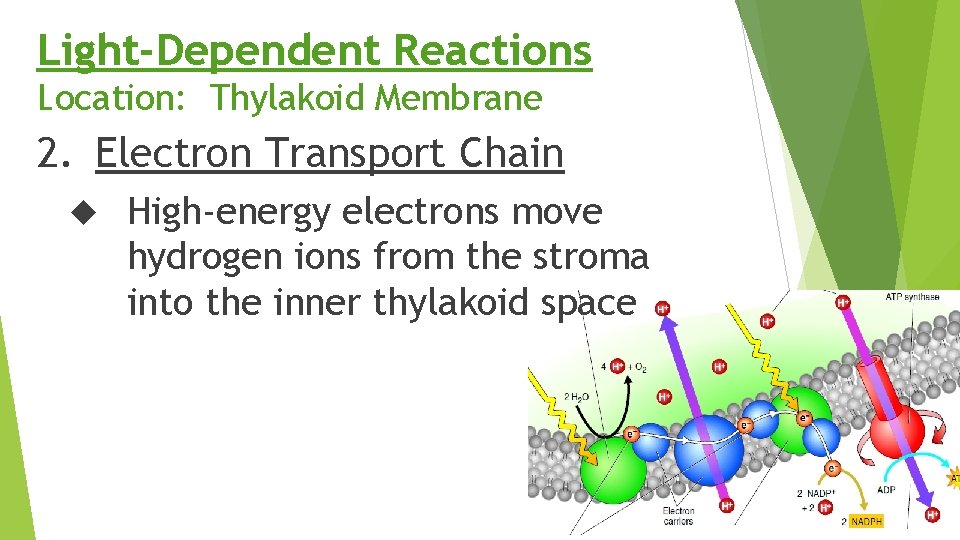
Light-Dependent Reactions Location: Thylakoid Membrane 2. Electron Transport Chain High-energy electrons move hydrogen ions from the stroma into the inner thylakoid space
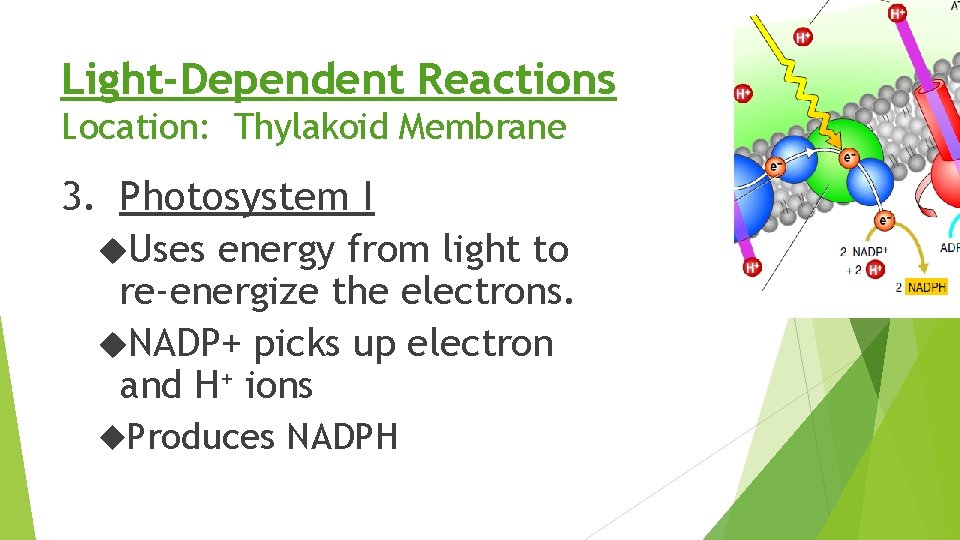
Light-Dependent Reactions Location: Thylakoid Membrane 3. Photosystem I Uses energy from light to re-energize the electrons. NADP+ picks up electron and H+ ions Produces NADPH
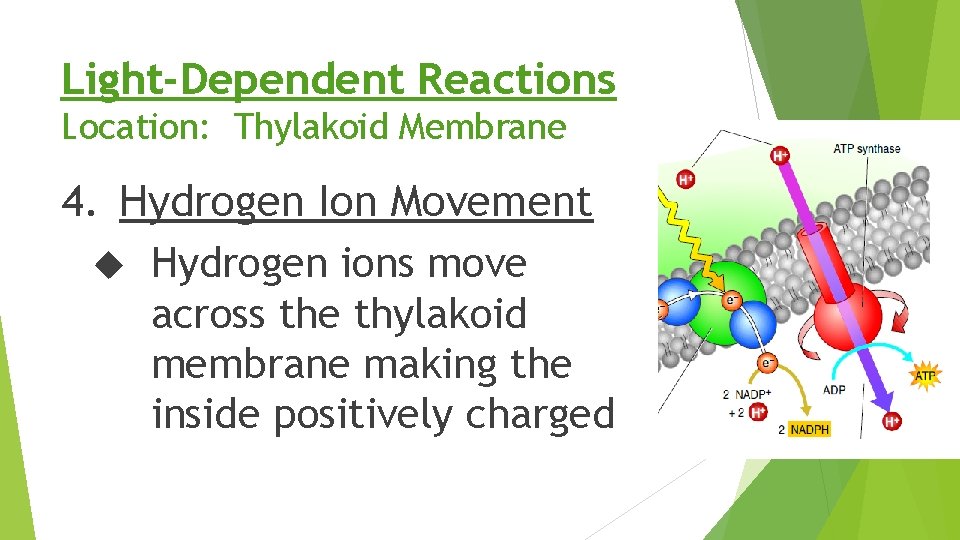
Light-Dependent Reactions Location: Thylakoid Membrane 4. Hydrogen Ion Movement Hydrogen ions move across the thylakoid membrane making the inside positively charged
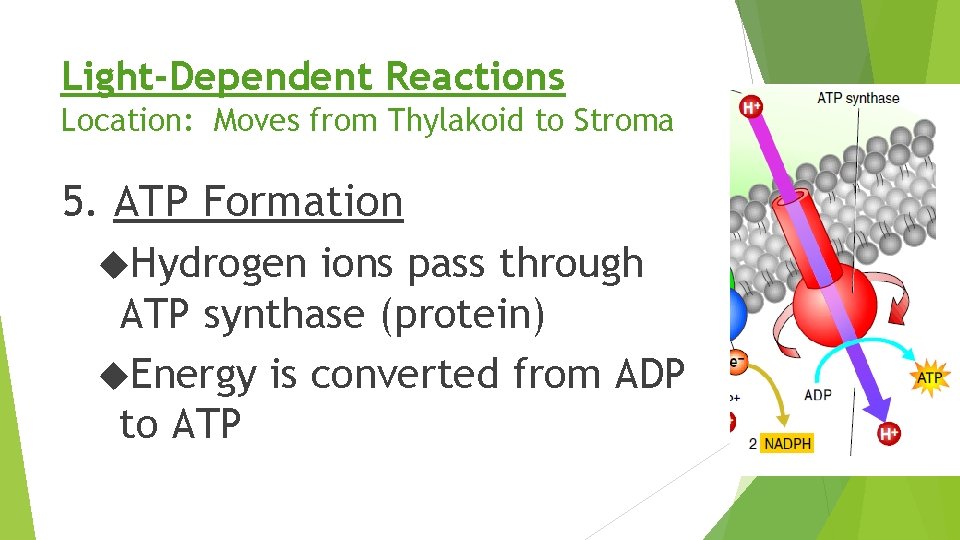
Light-Dependent Reactions Location: Moves from Thylakoid to Stroma 5. ATP Formation Hydrogen ions pass through ATP synthase (protein) Energy is converted from ADP to ATP
Photosynthesis Part II: Light Independent Reactions a. k. a. Calvin Cycle Location: Stroma
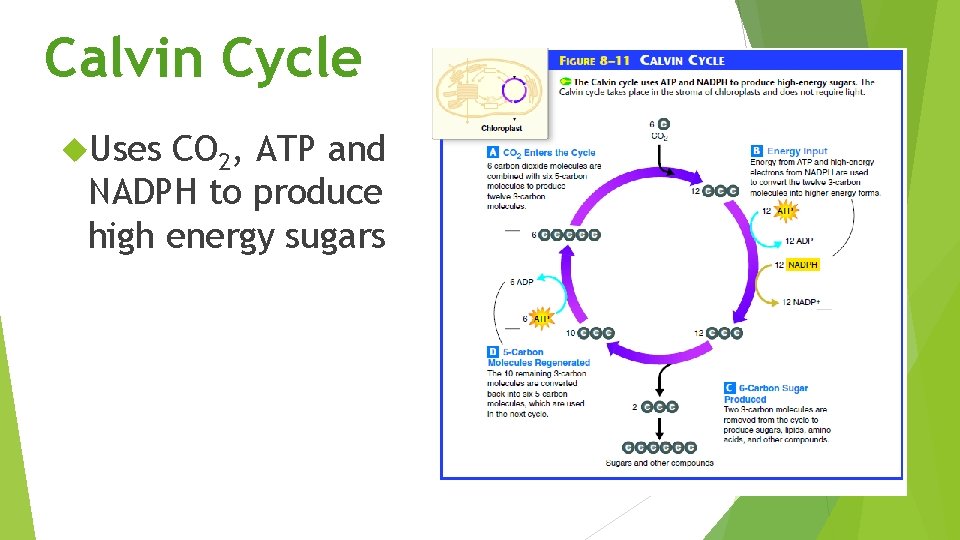
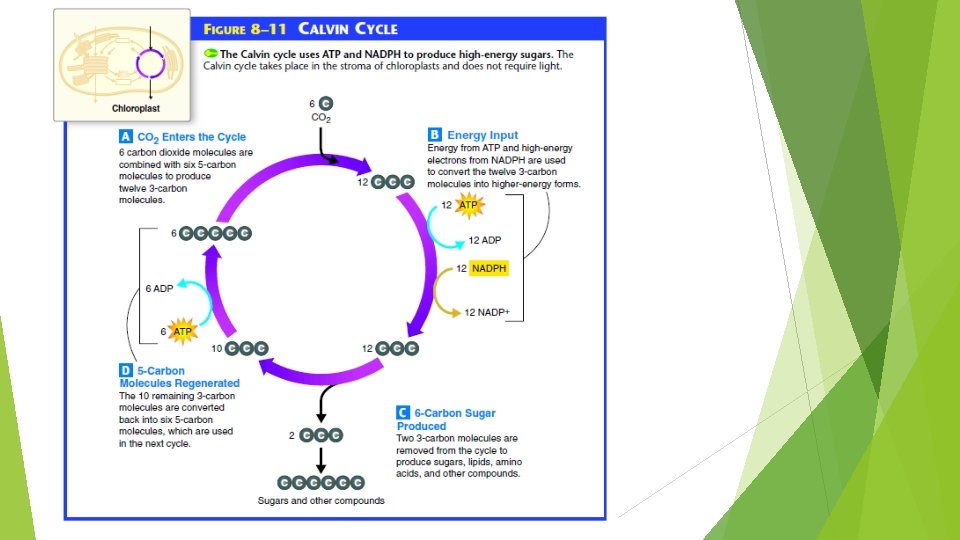
Calvin Cycle Uses CO 2, ATP and NADPH to produce high energy sugars
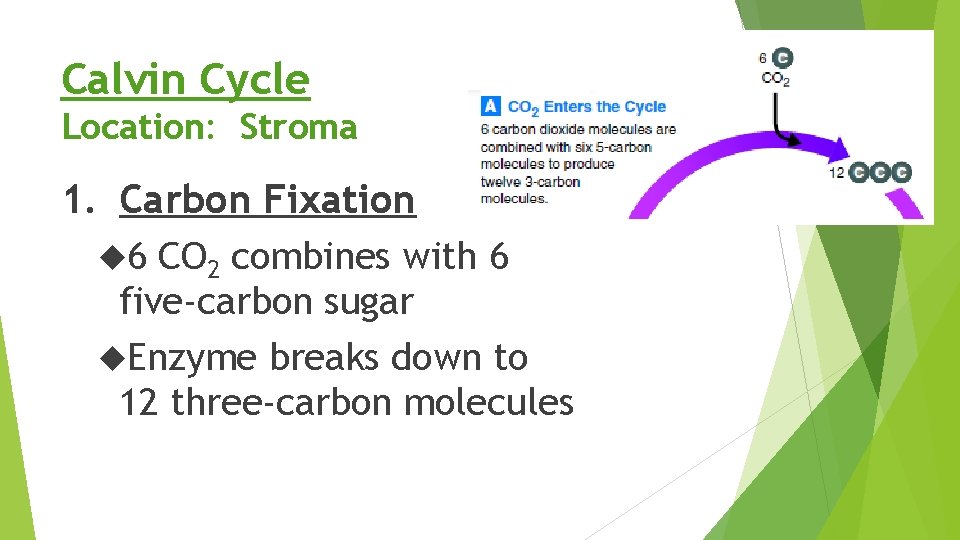
Calvin Cycle Location: Stroma 1. Carbon Fixation 6 CO 2 combines with 6 five-carbon sugar Enzyme breaks down to 12 three-carbon molecules
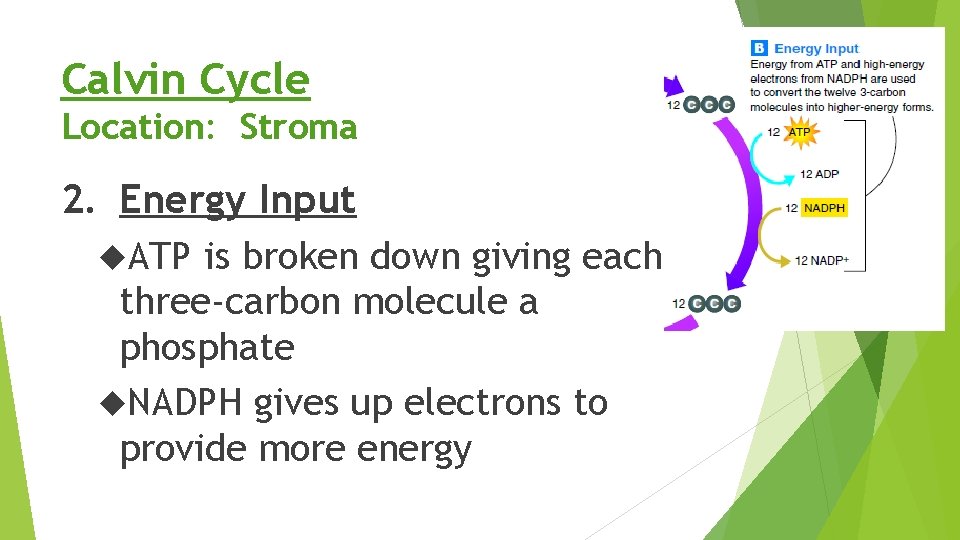
Calvin Cycle Location: Stroma 2. Energy Input ATP is broken down giving each three-carbon molecule a phosphate NADPH gives up electrons to provide more energy
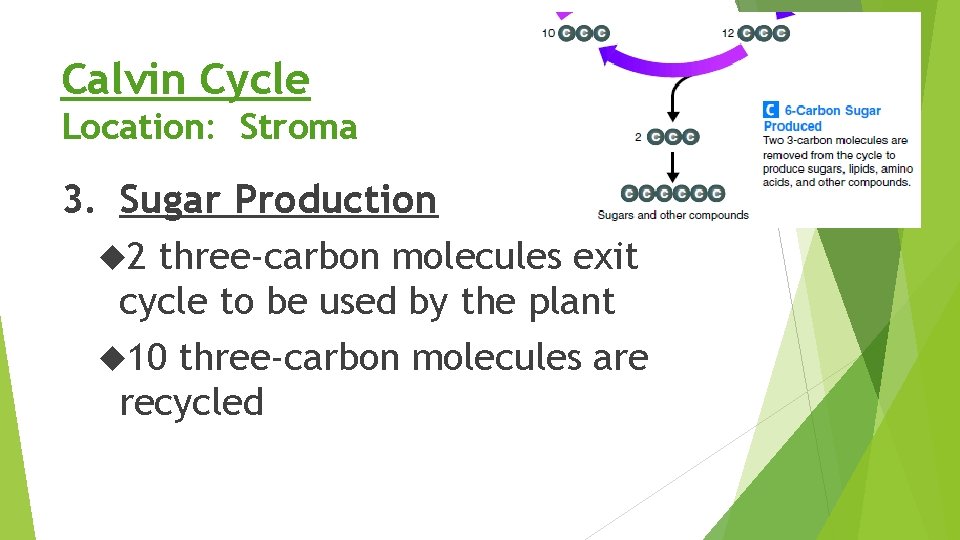
Calvin Cycle Location: Stroma 3. Sugar Production 2 three-carbon molecules exit cycle to be used by the plant 10 three-carbon molecules are recycled
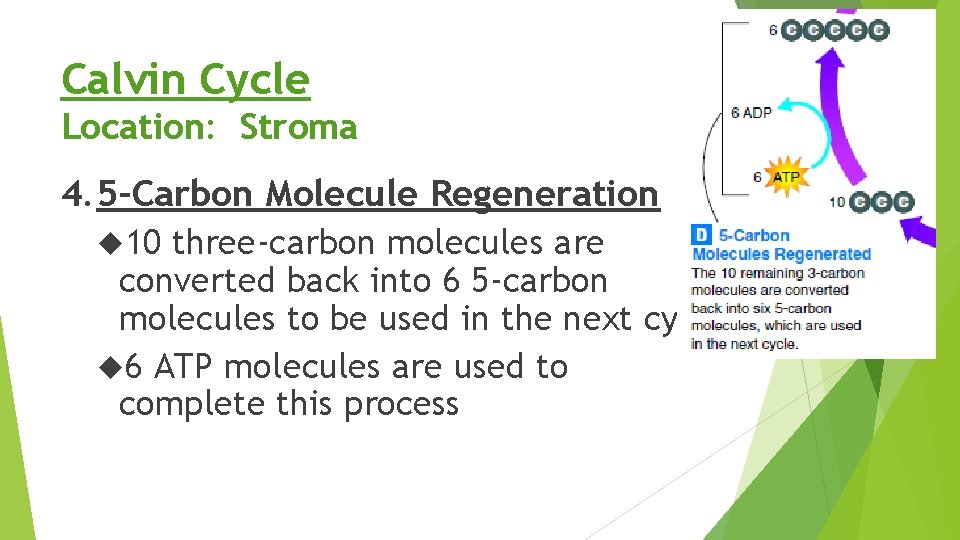
Calvin Cycle Location: Stroma 4. 5 -Carbon Molecule Regeneration 10 three-carbon molecules are converted back into 6 5 -carbon molecules to be used in the next cycle 6 ATP molecules are used to complete this process
Factors Affecting Photosynthesis Water Plants in dry conditions have a waxy coating on the leaves that reduce water loss Temperature Photosynthesis depend on enzymes that function best between 0 o. C and 35 o. C Light Intensity Increasing light intensity increases the rate of photosynthesis However, a plant has a maximum rate of photosynthesis that can be reached
- Slides: 27