
PHOTOSYNTHESIS AUTOTROPHS PHOTOAUTOTROPHS Autotrophic organisms that use light
- Slides: 13
PHOTOSYNTHESIS
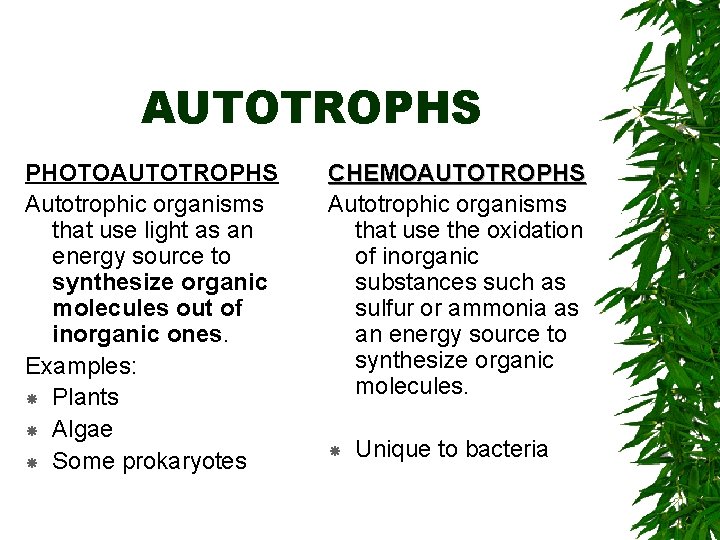
AUTOTROPHS PHOTOAUTOTROPHS Autotrophic organisms that use light as an energy source to synthesize organic molecules out of inorganic ones. Examples: Plants Algae Some prokaryotes CHEMOAUTOTROPHS Autotrophic organisms that use the oxidation of inorganic substances such as sulfur or ammonia as an energy source to synthesize organic molecules. Unique to bacteria
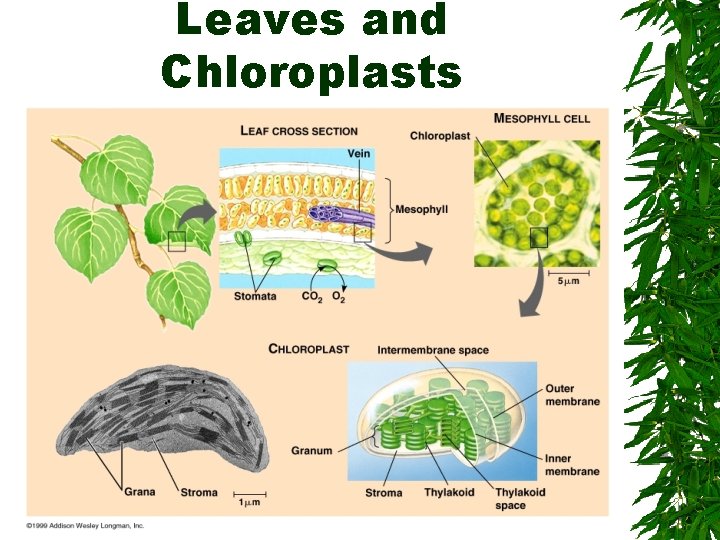
Leaves and Chloroplasts
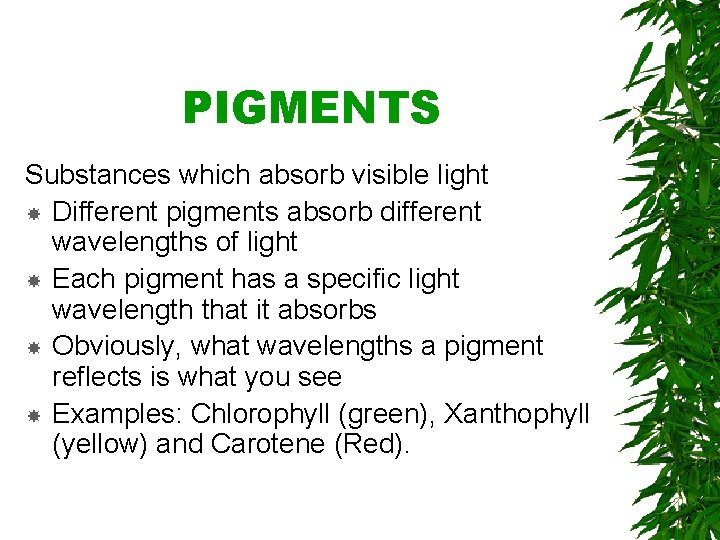
PIGMENTS Substances which absorb visible light Different pigments absorb different wavelengths of light Each pigment has a specific light wavelength that it absorbs Obviously, what wavelengths a pigment reflects is what you see Examples: Chlorophyll (green), Xanthophyll (yellow) and Carotene (Red).
Chlorophyll Green pigment in chloroplasts that absorbs the light energy used to drive photosynthesis. Found in chloroplasts in eukaryotes.
CHLOROPLASTS Contain chlorophyll Float on the cytoplasm Found mostly in the mesophyll (middle layers) of the leaf
The Chloroplast
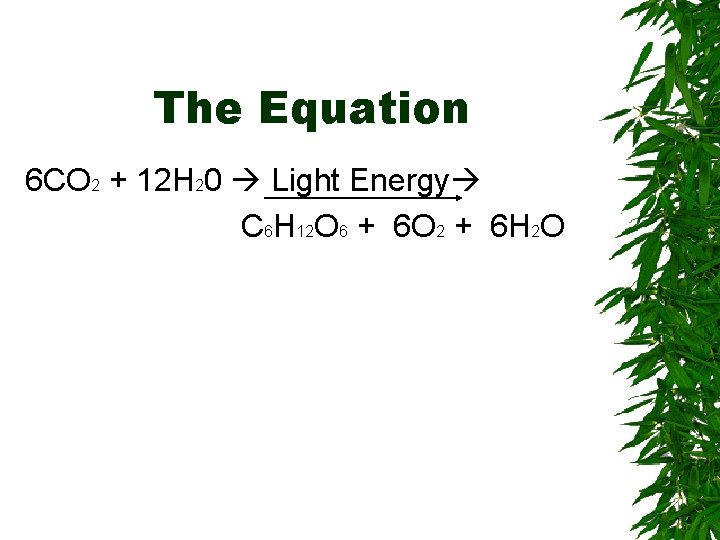
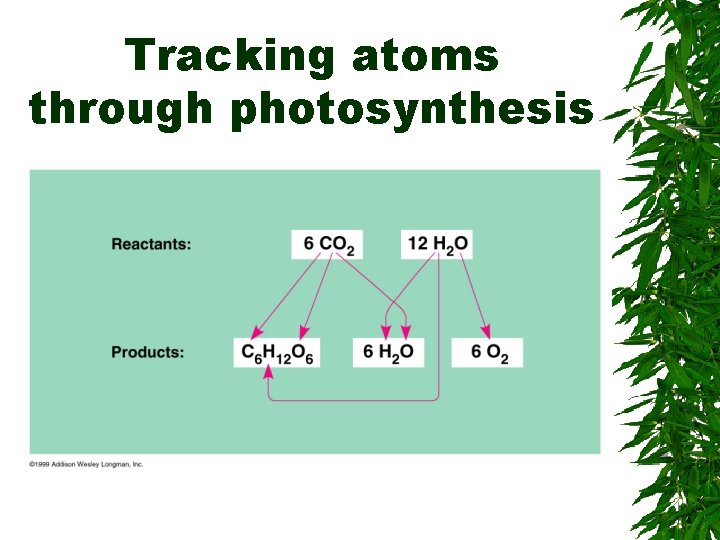
The Equation 6 CO 2 + 12 H 20 Light Energy C 6 H 12 O 6 + 6 O 2 + 6 H 2 O
Tracking atoms through photosynthesis
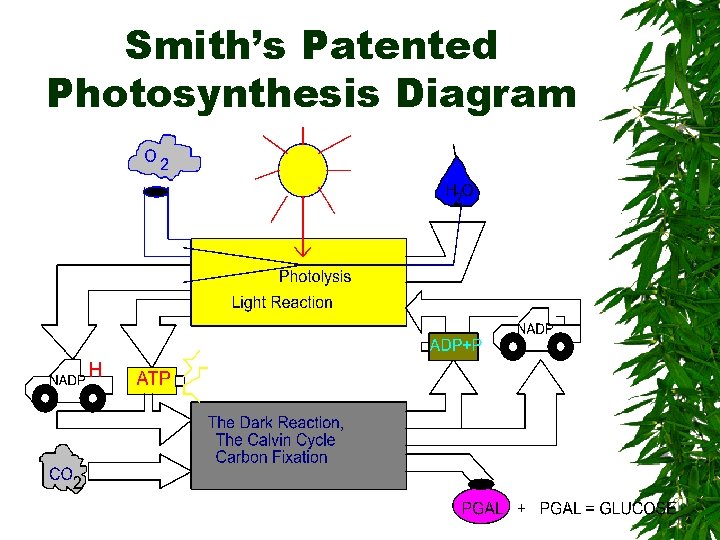
Smith’s Patented Photosynthesis Diagram
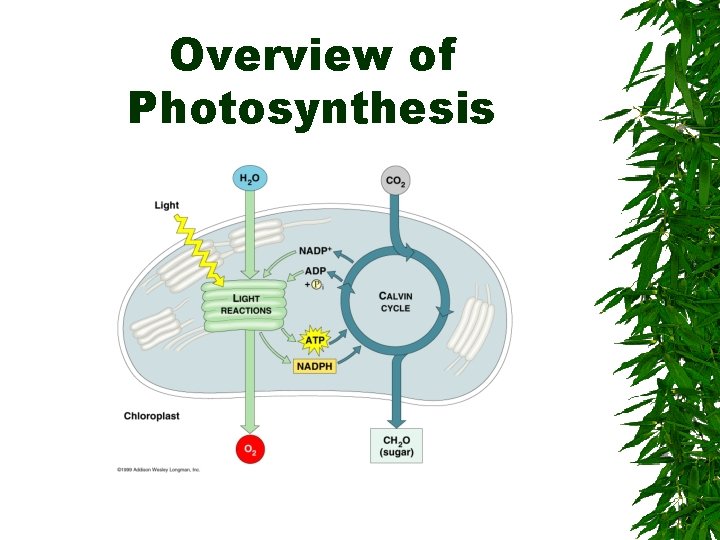
Overview of Photosynthesis
The Light Reactions Also known as the Photochemical or Light Dependent Reactions. Happen in the Grana of the chloroplasts Photolysis: Light splitting. Light splits water into H+ and O.
Dark Reactions Occur in the stroma of the chloroplasts Otherwise known as CARBON FIXATION REACTIONS, and LIGHT INDEPENDENT REACTIONS. Do not require light, but DO require NADPH and ATP from the light reactions. Can happen during daylight, too. C is converted from CO 2 to Glucose, eventually