
Photosynthesis And Respiration I What is Photosynthesis A

- Slides: 67
Photosynthesis And Respiration
I. What is Photosynthesis
A. Photosynthesis is the process by which plants convert light energy into chemical energy.
B. Photo means light: Synthesis means to build or make.
C. This process provides food for plants and oxygen for animals; this process only takes place in autotrophs.
D. Raw materials needed for photosynthesis:
Water Chlorophyll Carbon Suitable dioxide temperature Light
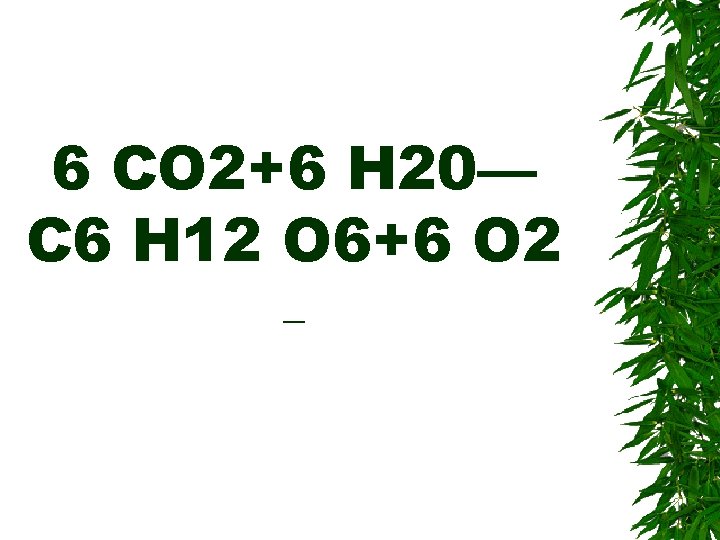
E. Equation for photosynthesis
6 CO 2+6 H 20— C 6 H 12 O 6+6 O 2 _
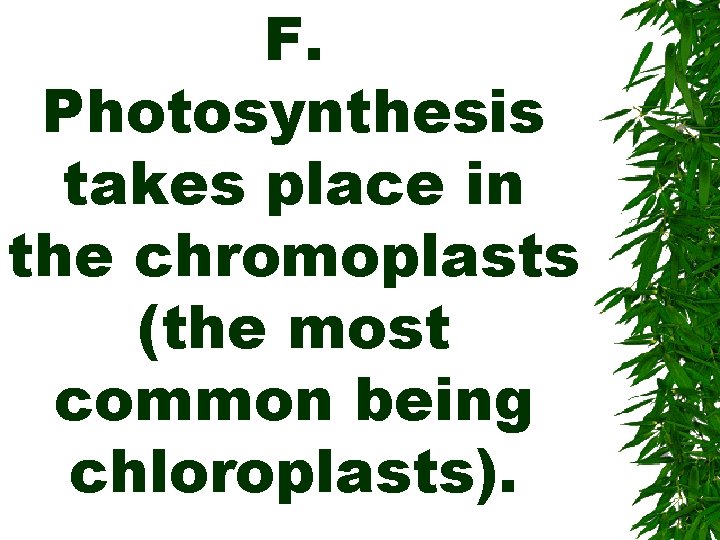
F. Photosynthesis takes place in the chromoplasts (the most common being chloroplasts).
II. Steps involved in photosynthesis
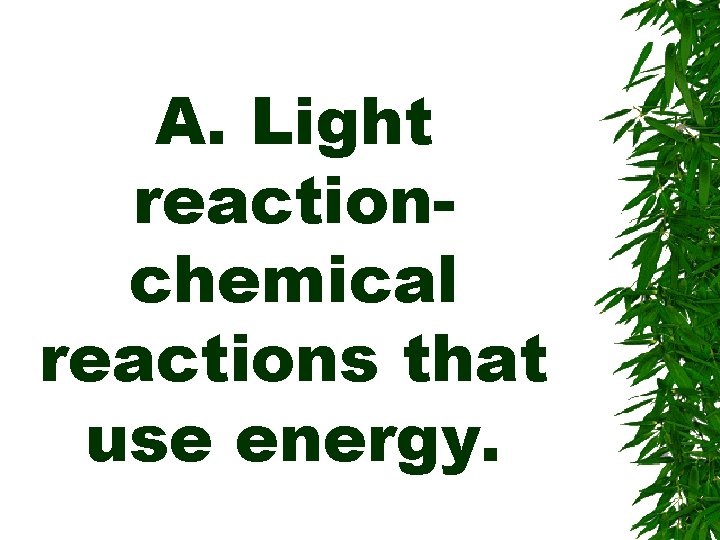
A. Light reactionchemical reactions that use energy.
1. Light travels as a wave. The wavelength is the distance between the crests of successive waves.
The shorter the wavelength the more energy it has. Ex. violet is shorter than red.
2. Pigments are light absorbing compounds. Most plants contain the pigment chlorophyll which absorbs mainly red and blue but reflects green.
a. Other pigments are also present and are called accessory pigments (ex. orange is carotenoid and yellow is xanthophyll.
B. Steps of the light reaction
1. Chlorophyll is energized- Light energy causes a change in the atoms of a chlorophyll molecule making electrons move to a higher energy level (orbit).
2. Water molecules are split- energy used to break the bond between hydrogen and oxygen comes from energized chlorophyll.
( the hydrogen is kept but the oxygen is a waste product)
3. Energy is stored in ATPATP stands for adenosine triphosphate.
It is a molecule that stores energy so it can be used later. ATP allows the chlorophyll to accept more light energy.
4. Hydrogen is trapped by NADP (Nicotinamide Adenine Dinucleotide Phosphate).
NADP is a coenzyme that easily attaches to a hydrogen molecule and forms NADPH 2. The H 2 comes from the split water and the oxygen is released as waste.
a. 2 products of the light reaction
1. Stored energy in the form of ATP
2. Hydrogen stored on NADP as NADPH 2.
C. Dark reaction ( also called the Calvin Cycle)
This does not mean that this cycle takes place at night; it means that this cycle does not use light energy but uses energy that was stored during the light reaction.
D. Steps of the dark reaction
1. Carbon dioxide is fixed by RUBP(Ribulose Biphosphate) is a 5 carbon sugar that bonds easily to carbon dioxide.
This makes a very unstable 6 carbon sugar that breaks to form 2 molecules of PGA (Phosphoglyceric acid).
2. PGA combines with hydrogen to form PGAL
The PGA combines with hydrogen taken from the NADPH to form PGAL (Phosphoglyceraldehyde)
This requires a large amount of energy supplied by ATP
PGAL can be used immediately by the cell or changed into other products.
3. Other products made from PGALMore PGAL is made than can be used immediately so it is changed into other products such as:
a. RUBP to keep the cycle running
b. Glucose that can be stored and used later
c. Oils stored for longer periods.
1. Products of the Dark Reaction
a. PGAL to be used immediately
b. RUBP to keep the cycle running
c. Glucose that can be stored and used later.
d. Oils that can be stored for later use.
III. Cellular Respiration
A. Any process that releases energy to be used by a cell is called respiration.
B. Respiration can occur inside or outside the mitochondria and takes place in both plant cells and animal cells.
C. 2 types of respiration
1. Anaerobic respirationprocess that does not require oxygen; takes place outside the mitochondria.
a. In this process glucose is broken down into smaller molecules (pyruvic acid) so it can enter into the mitochondria. This breakdown releases very little energy.
b. This process is called glycolysis.
c. Some bacteria and yeasts this is their only method of energy so they are called anaerobes.
d. If pyruvic acid is broken further without oxygen the process is called fermentation.
There are 2 types of fermentation
1. Alcoholic fermentation- in some organisms such as yeast when pyruvic acid is broken down the product made is alcohol.
2. Lactic acid fermentation- the animal cells when oxygen supplies become short the pyruvic acid is changed into lactic acid.
This occurs frequently in muscles because lactic acid buildup is what causes soreness. The liver eventually gets the lactic acid and changes it back into glucose.
2. Aerobic respiration. Process that does require oxygen; Takes place inside the mitochondria.
Pyruvic acid is broken down and gives off a great deal of energy.
a. Aerobic respiration is divided into 2 reactions.
1. Krebs Cycle (or citric acid cycle)
2. Electron Transport Chain
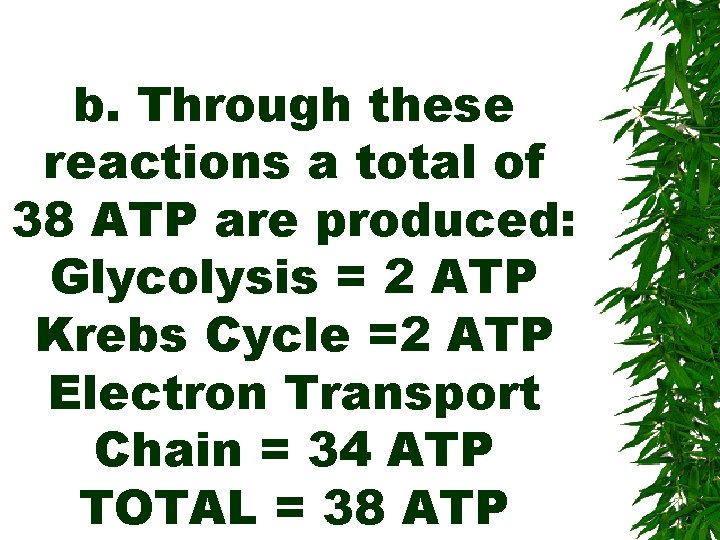
b. Through these reactions a total of 38 ATP are produced: Glycolysis = 2 ATP Krebs Cycle =2 ATP Electron Transport Chain = 34 ATP TOTAL = 38 ATP
IV. Comparing Photosynthesis and Respiration
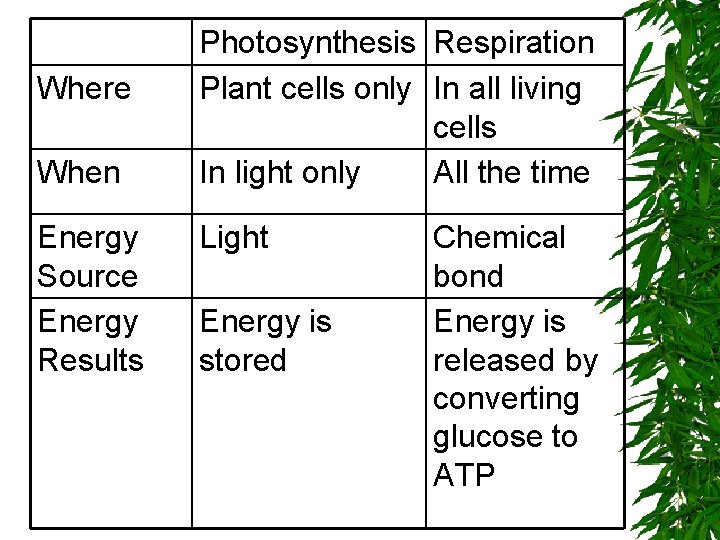
Where When Energy Source Energy Results Photosynthesis Respiration Plant cells only In all living cells In light only All the time Light Energy is stored Chemical bond Energy is released by converting glucose to ATP