
Photosynthesis ALTERNATIVE PS PATHWAYS Quick Review 1 Where
- Slides: 8
Photosynthesis ALTERNATIVE PS PATHWAYS
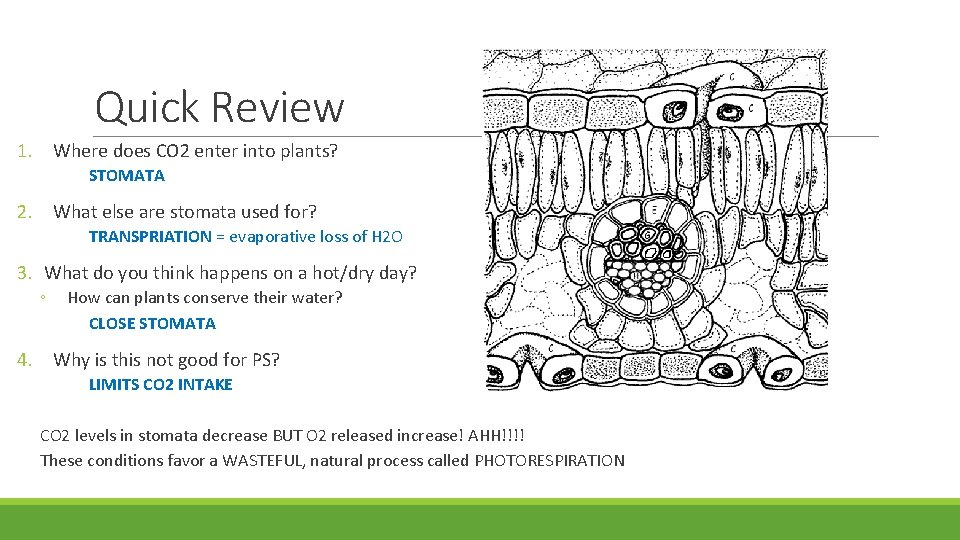
Quick Review 1. Where does CO 2 enter into plants? STOMATA 2. What else are stomata used for? TRANSPRIATION = evaporative loss of H 2 O 3. What do you think happens on a hot/dry day? ◦ How can plants conserve their water? CLOSE STOMATA 4. Why is this not good for PS? LIMITS CO 2 INTAKE CO 2 levels in stomata decrease BUT O 2 released increase! AHH!!!! These conditions favor a WASTEFUL, natural process called PHOTORESPIRATION
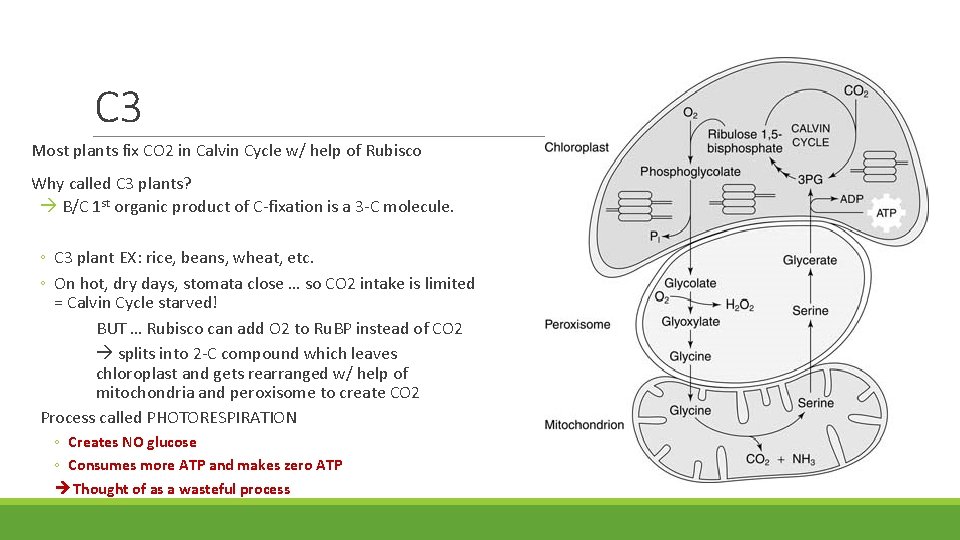
C 3 Most plants fix CO 2 in Calvin Cycle w/ help of Rubisco Why called C 3 plants? B/C 1 st organic product of C-fixation is a 3 -C molecule. ◦ C 3 plant EX: rice, beans, wheat, etc. ◦ On hot, dry days, stomata close … so CO 2 intake is limited = Calvin Cycle starved! BUT … Rubisco can add O 2 to Ru. BP instead of CO 2 splits into 2 -C compound which leaves chloroplast and gets rearranged w/ help of mitochondria and peroxisome to create CO 2 Process called PHOTORESPIRATION ◦ Creates NO glucose ◦ Consumes more ATP and makes zero ATP Thought of as a wasteful process
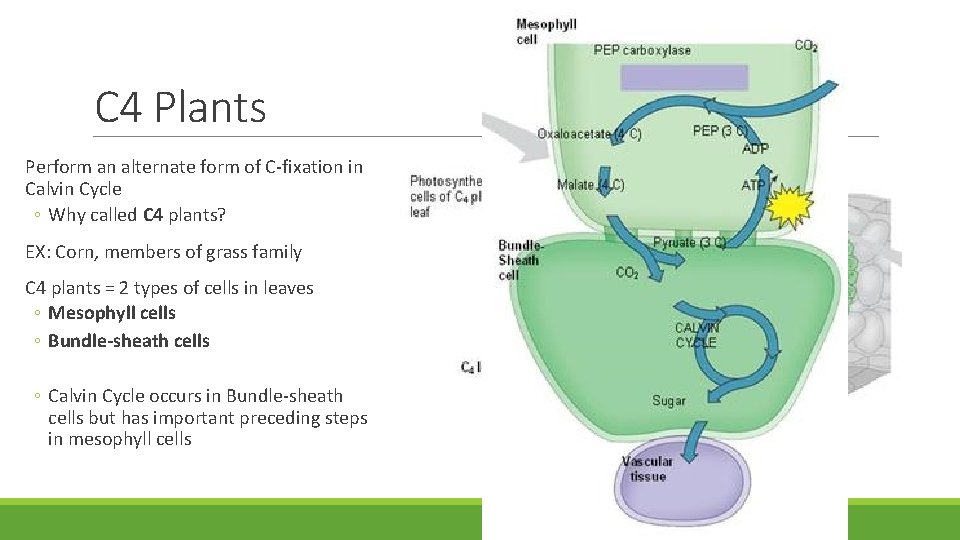
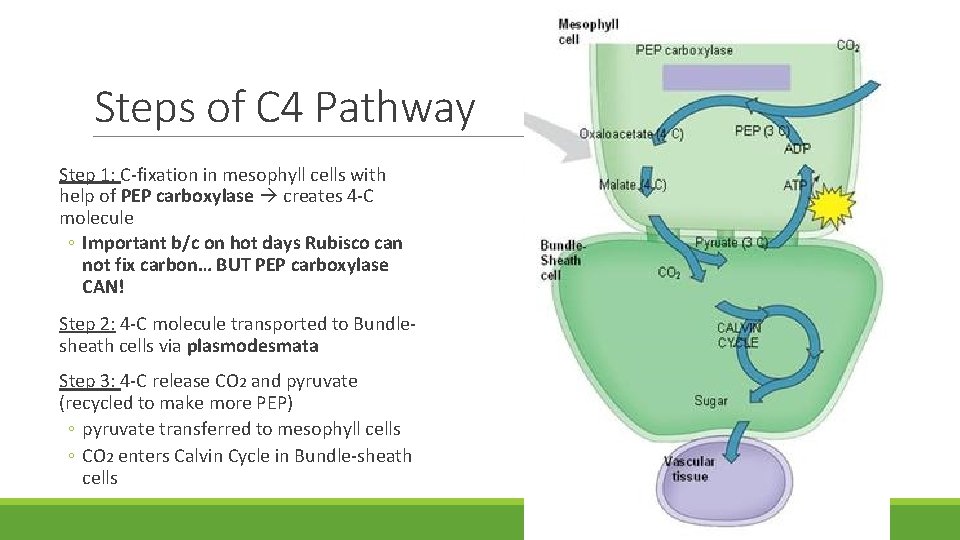
C 4 Plants Perform an alternate form of C-fixation in Calvin Cycle ◦ Why called C 4 plants? EX: Corn, members of grass family C 4 plants = 2 types of cells in leaves ◦ Mesophyll cells ◦ Bundle-sheath cells ◦ Calvin Cycle occurs in Bundle-sheath cells but has important preceding steps in mesophyll cells
Steps of C 4 Pathway Step 1: C-fixation in mesophyll cells with help of PEP carboxylase creates 4 -C molecule ◦ Important b/c on hot days Rubisco can not fix carbon… BUT PEP carboxylase CAN! Step 2: 4 -C molecule transported to Bundlesheath cells via plasmodesmata Step 3: 4 -C release CO 2 and pyruvate (recycled to make more PEP) ◦ pyruvate transferred to mesophyll cells ◦ CO 2 enters Calvin Cycle in Bundle-sheath cells
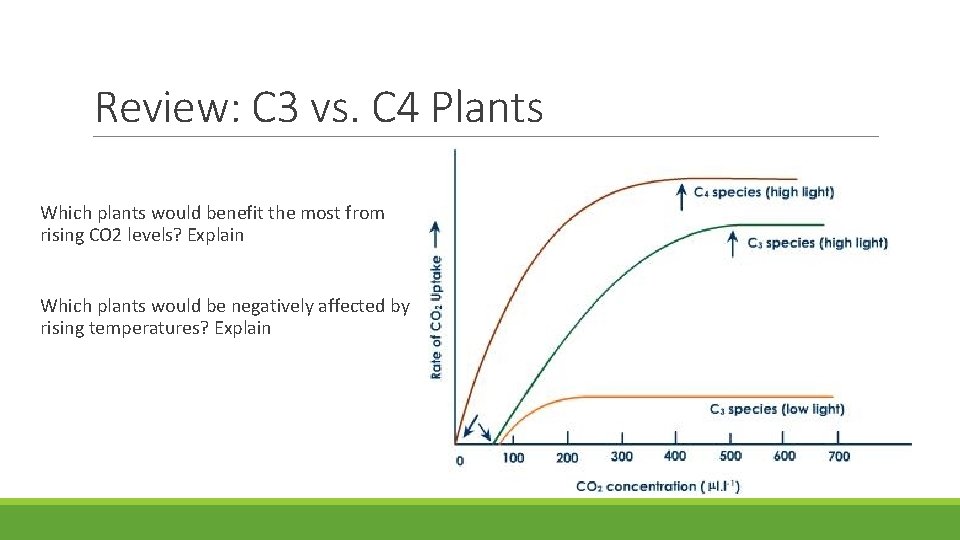
Review: C 3 vs. C 4 Plants Which plants would benefit the most from rising CO 2 levels? Explain Which plants would be negatively affected by rising temperatures? Explain
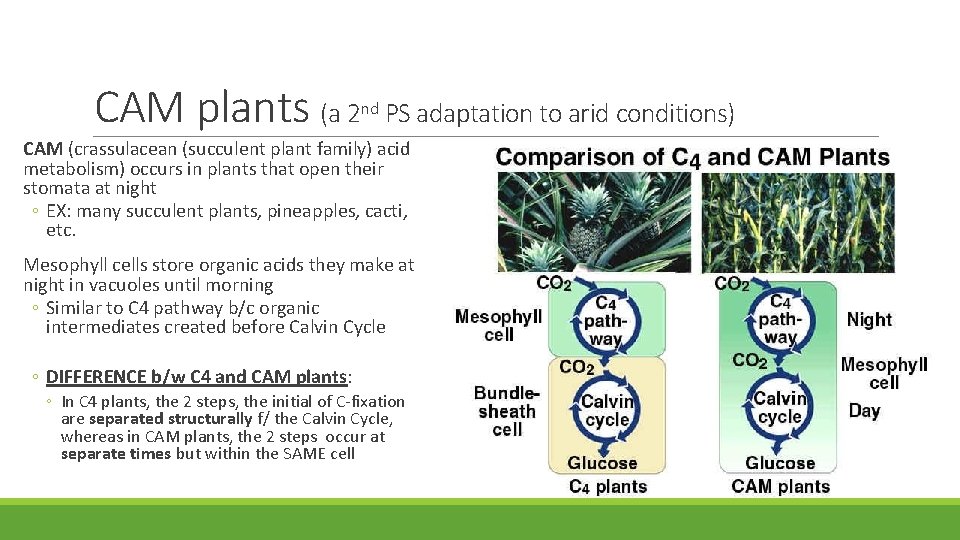
CAM plants (a 2 nd PS adaptation to arid CAM (crassulacean (succulent plant family) acid metabolism) occurs in plants that open their stomata at night ◦ EX: many succulent plants, pineapples, cacti, etc. Mesophyll cells store organic acids they make at night in vacuoles until morning ◦ Similar to C 4 pathway b/c organic intermediates created before Calvin Cycle ◦ DIFFERENCE b/w C 4 and CAM plants: ◦ In C 4 plants, the 2 steps, the initial of C-fixation are separated structurally f/ the Calvin Cycle, whereas in CAM plants, the 2 steps occur at separate times but within the SAME cell conditions)
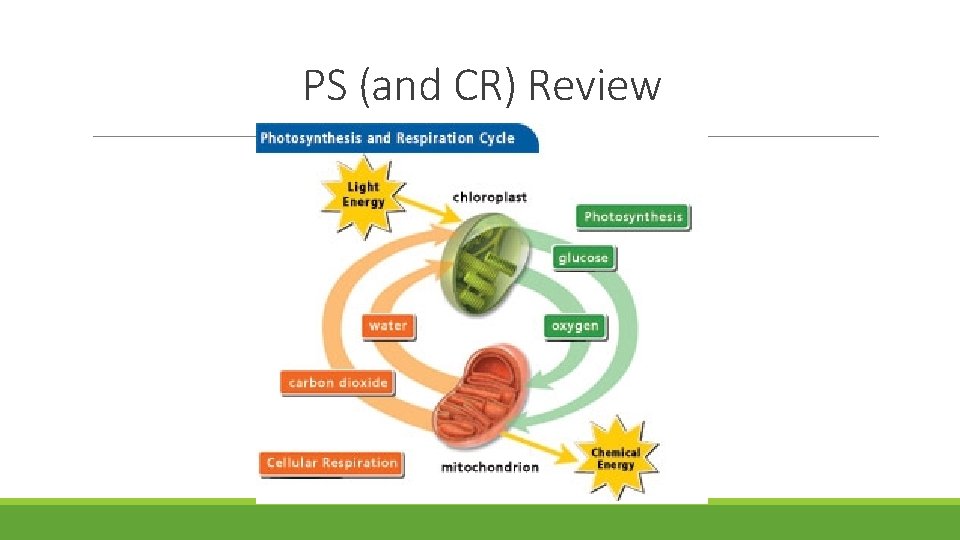
PS (and CR) Review