
Photosynthesis 1 Outline l I Photosynthesis 2 A
- Slides: 16
Photosynthesis 1
Outline l I. Photosynthesis – – 2 A. Introduction B. Reactions
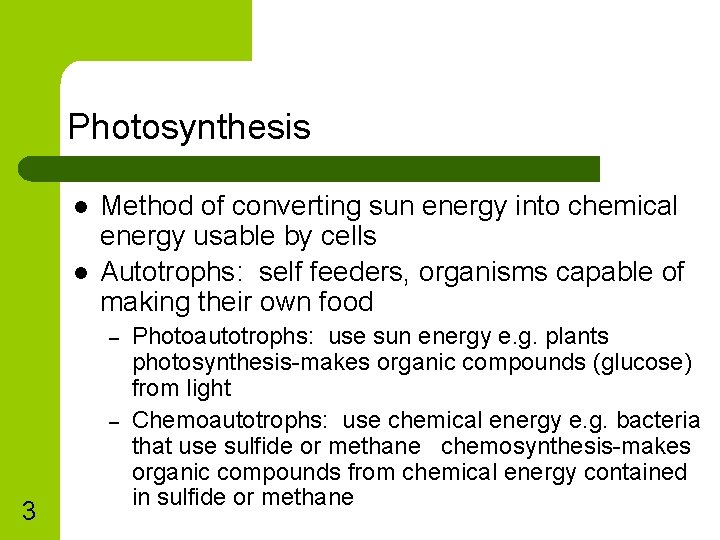
Photosynthesis l l Method of converting sun energy into chemical energy usable by cells Autotrophs: self feeders, organisms capable of making their own food – – 3 Photoautotrophs: use sun energy e. g. plants photosynthesis-makes organic compounds (glucose) from light Chemoautotrophs: use chemical energy e. g. bacteria that use sulfide or methane chemosynthesis-makes organic compounds from chemical energy contained in sulfide or methane
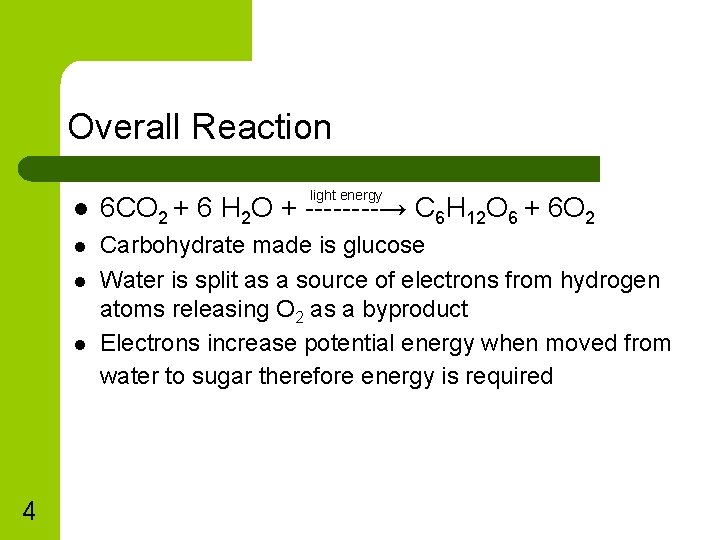
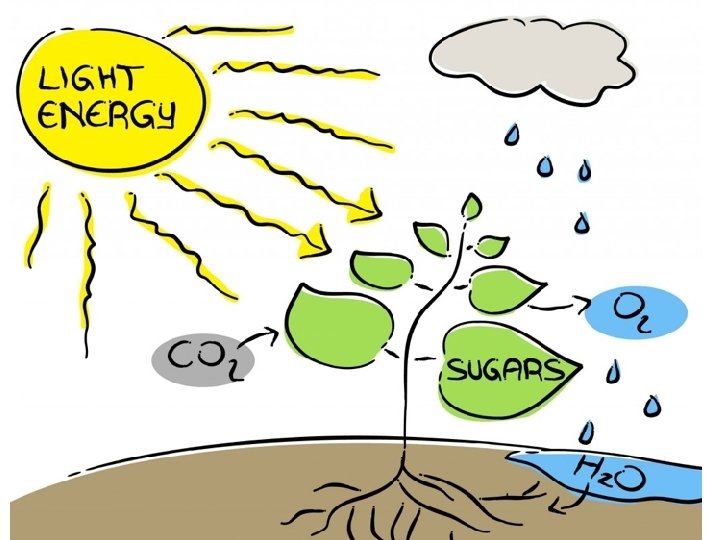
Overall Reaction l 6 CO 2 + 6 H 2 O + ----→ C 6 H 12 O 6 + 6 O 2 l Carbohydrate made is glucose Water is split as a source of electrons from hydrogen atoms releasing O 2 as a byproduct Electrons increase potential energy when moved from water to sugar therefore energy is required l l 4 light energy
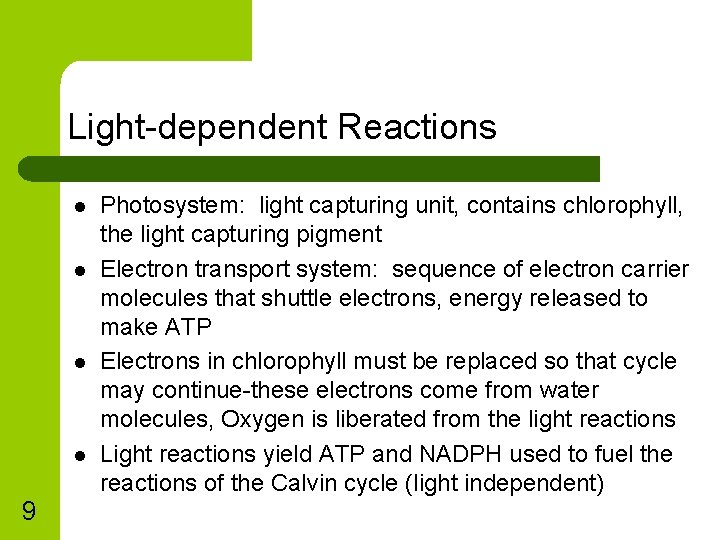
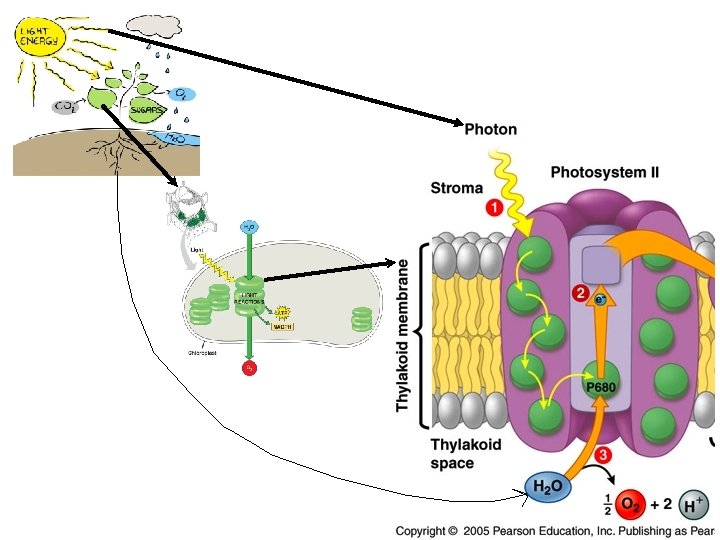
Light-dependent Reactions l 5 Overview: light energy is absorbed by chlorophyll molecules-this light energy excites electrons and boosts them to higher energy levels. They are trapped by electron acceptor molecules that are poised at the start of a neighboring transport system.
Photosynthesis l Photosynthesis takes place in specialized structures inside plant cells called chloroplasts – 7 Light absorbing pigment molecules e. g. chlorophyll
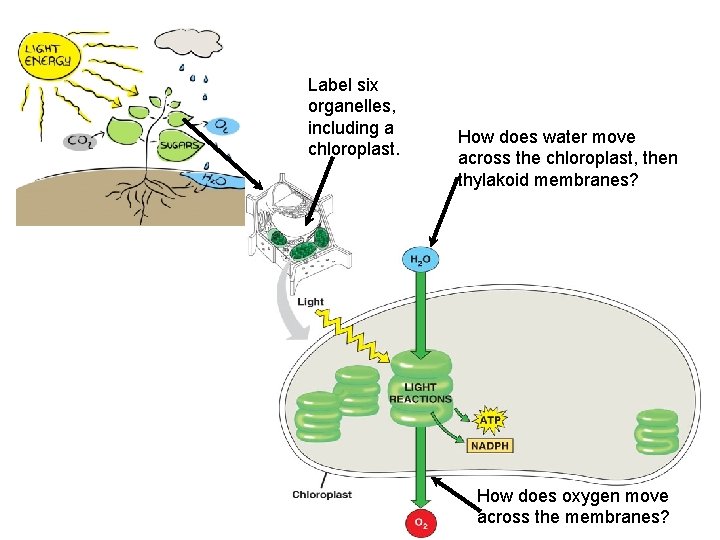
Label six organelles, including a chloroplast. How does water move across the chloroplast, then thylakoid membranes? How does oxygen move across the membranes?
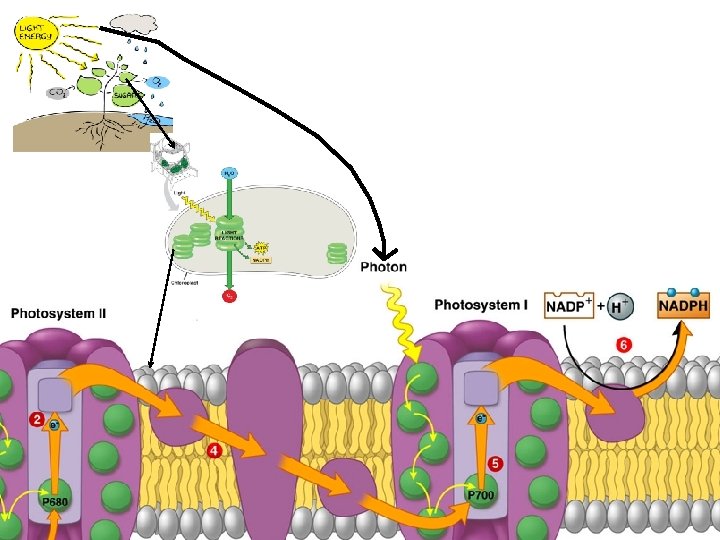
Light-dependent Reactions l l 9 Photosystem: light capturing unit, contains chlorophyll, the light capturing pigment Electron transport system: sequence of electron carrier molecules that shuttle electrons, energy released to make ATP Electrons in chlorophyll must be replaced so that cycle may continue-these electrons come from water molecules, Oxygen is liberated from the light reactions Light reactions yield ATP and NADPH used to fuel the reactions of the Calvin cycle (light independent)
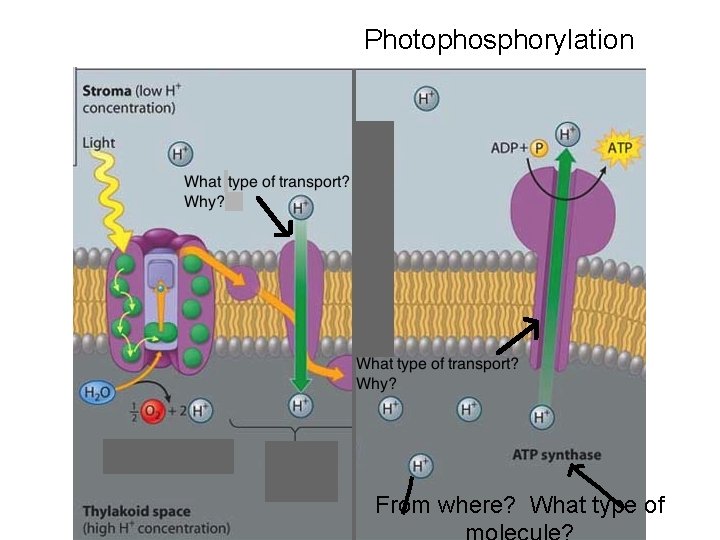
Photophosphorylation From where? What type of
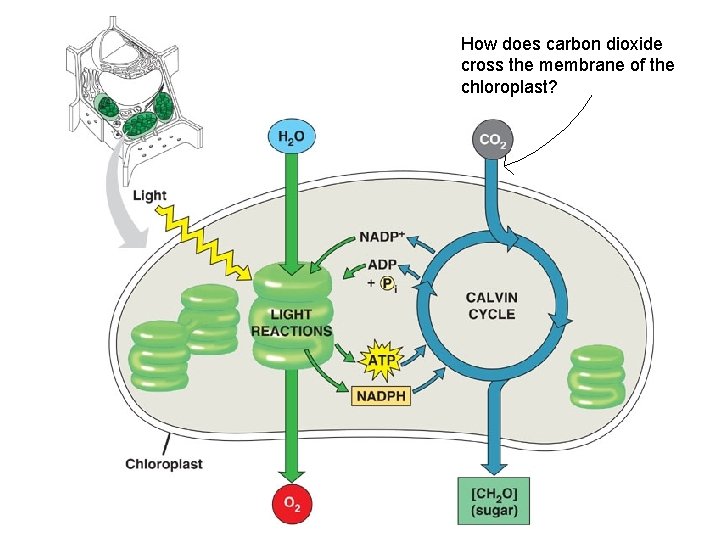
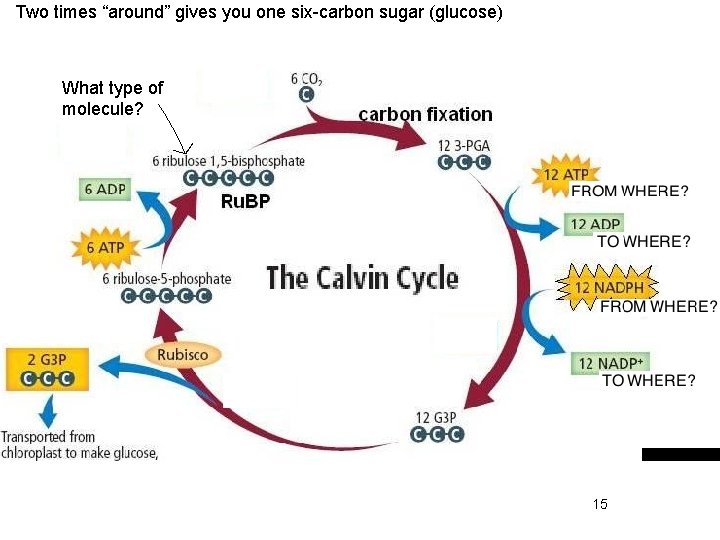
Calvin Cycle (light independent reactions) l l l 13 ATP and NADPH generated in light reactions used to fuel the reactions which take CO 2 and break it apart, then reassemble the carbons into glucose. Called carbon fixation: taking carbon from an inorganic molecule (atmospheric CO 2) and making an organic molecule out of it (glucose) Simplified version of how carbon and energy enter the food chain
How does carbon dioxide cross the membrane of the chloroplast?
Two times “around” gives you one six-carbon sugar (glucose) What type of molecule? 15
Harvesting Chemical Energy l l 16 So we see how energy enters food chains (via autotrophs) we can look at how organisms use that energy to fuel their bodies. Plants and animals both use products of photosynthesis (glucose) for metabolic fuel Heterotrophs: must take in energy from outside sources, cannot make their own e. g. animals When we take in glucose (or other carbs), proteins, and fats-these foods don’t come to us the way our cells can use them