
Photonic Band Gap Accelerator Experiments Roark Marsh Massachusetts
Photonic Band Gap Accelerator Experiments Roark Marsh Massachusetts Institute of Technology, Plasma Science and Fusion Center Accelerator Seminar 1/27/2009
Talk Outline r Introduction r Photonic Band Gaps r Photonic Band Gap Higher Order Modes r MIT Accelerator r Photonic Band Gap Wakefield Measurements r Photonic Band Gap Breakdown Experiments
Introduction r Standard Model r Large Hadron Collider: LHC r International Linear Collider: ILC r Compact Linear Collider: CLIC r High Gradient Acceleration
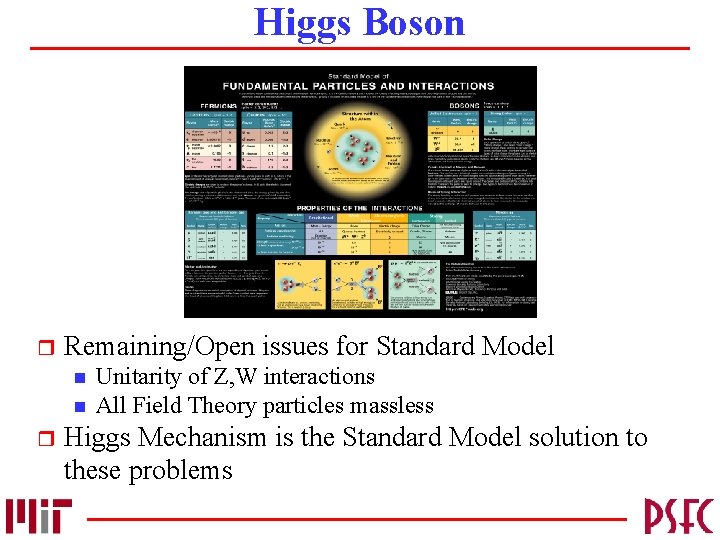
Higgs Boson r Remaining/Open issues for Standard Model n n r Unitarity of Z, W interactions All Field Theory particles massless Higgs Mechanism is the Standard Model solution to these problems
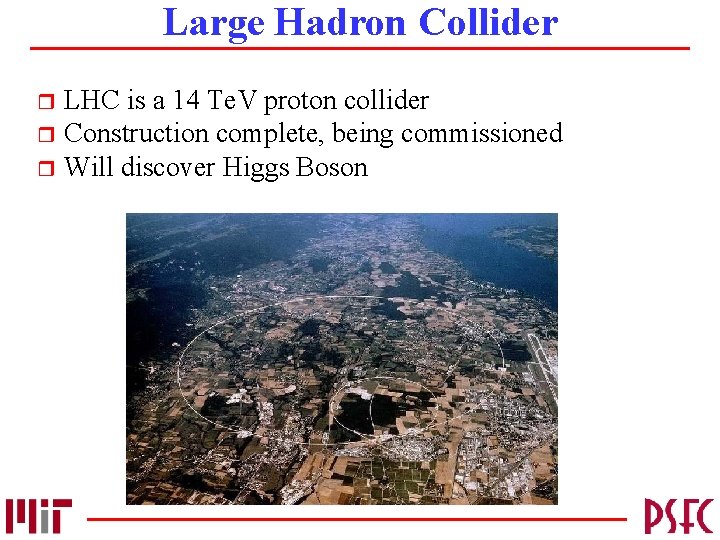
Large Hadron Collider LHC is a 14 Te. V proton collider r Construction complete, being commissioned r Will discover Higgs Boson r
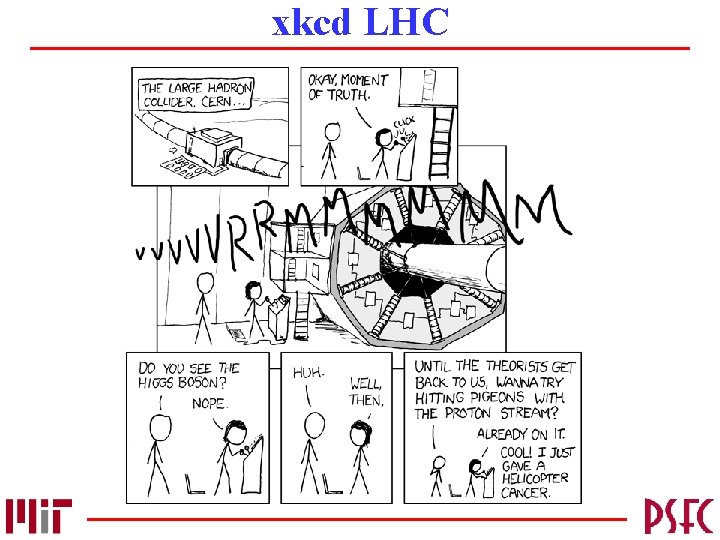
xkcd LHC
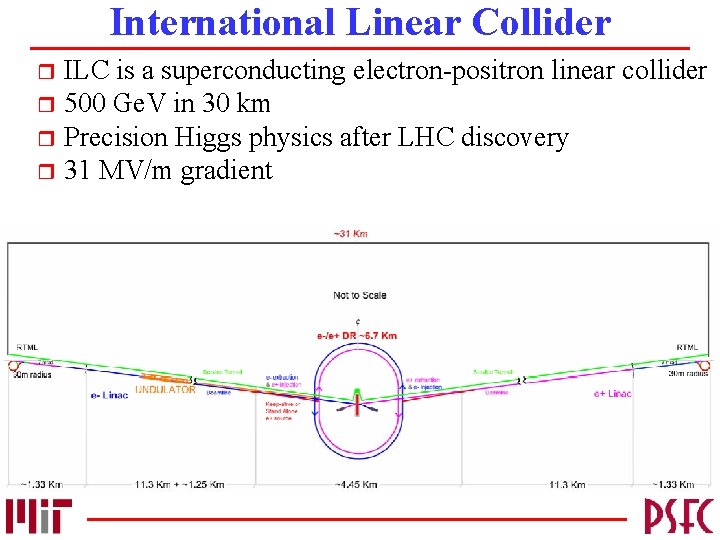
International Linear Collider ILC is a superconducting electron-positron linear collider r 500 Ge. V in 30 km r Precision Higgs physics after LHC discovery r 31 MV/m gradient r
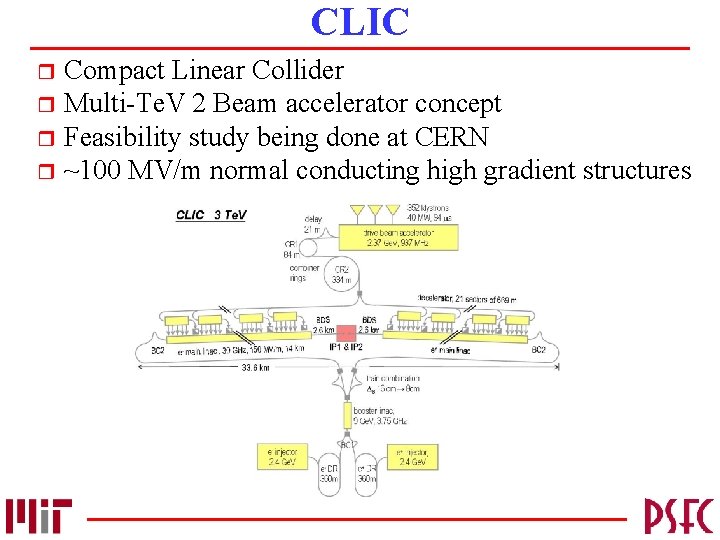
CLIC Compact Linear Collider r Multi-Te. V 2 Beam accelerator concept r Feasibility study being done at CERN r ~100 MV/m normal conducting high gradient structures r
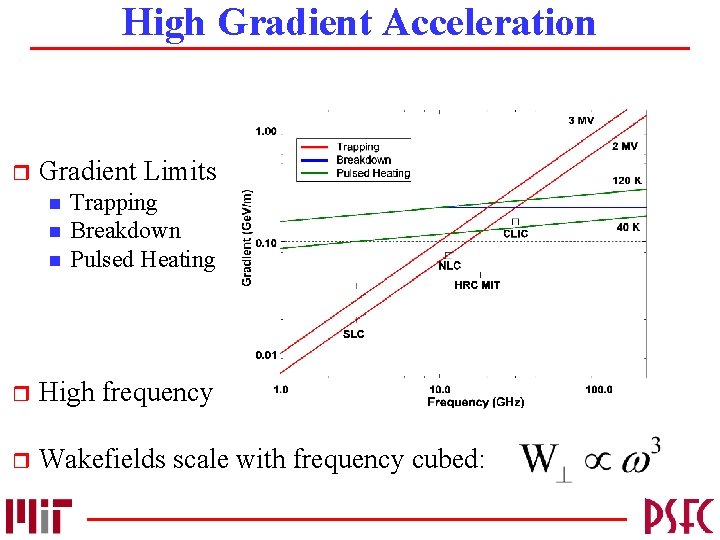
High Gradient Acceleration r Gradient Limits n n n Trapping Breakdown Pulsed Heating r High frequency r Wakefields scale with frequency cubed:
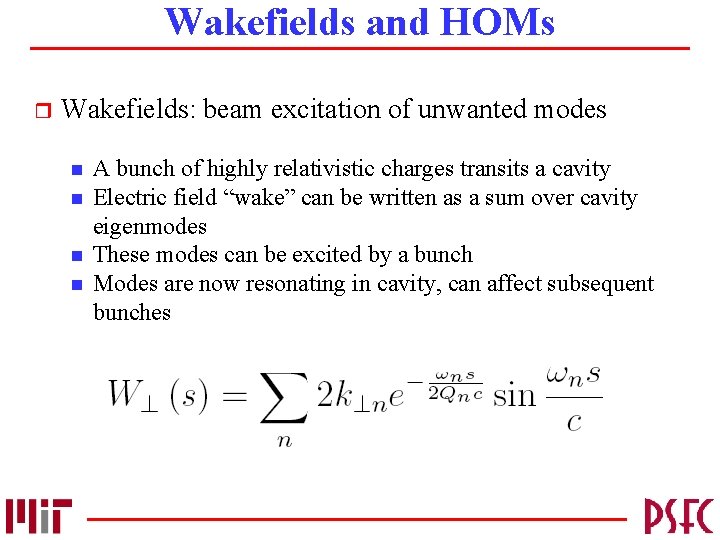
Wakefields and HOMs r Wakefields: beam excitation of unwanted modes n n A bunch of highly relativistic charges transits a cavity Electric field “wake” can be written as a sum over cavity eigenmodes These modes can be excited by a bunch Modes are now resonating in cavity, can affect subsequent bunches
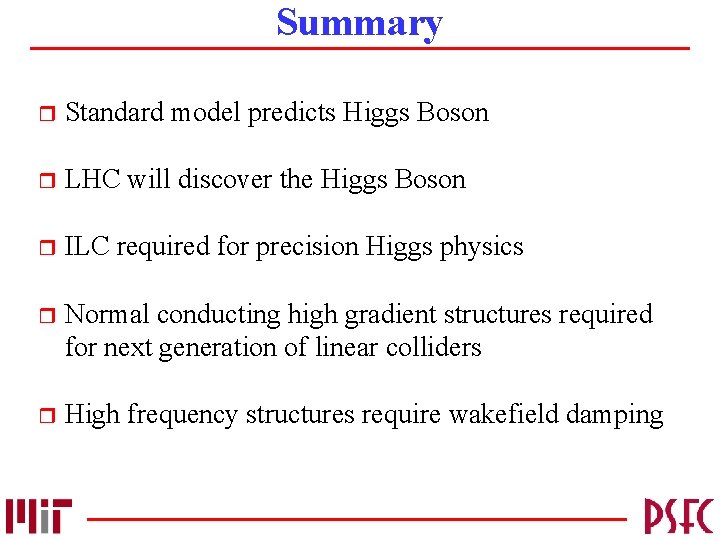
Summary r Standard model predicts Higgs Boson r LHC will discover the Higgs Boson r ILC required for precision Higgs physics r Normal conducting high gradient structures required for next generation of linear colliders r High frequency structures require wakefield damping
Photonic Band Gaps r One dimensional example r Two dimensional formalism r Parameters r Experimental work
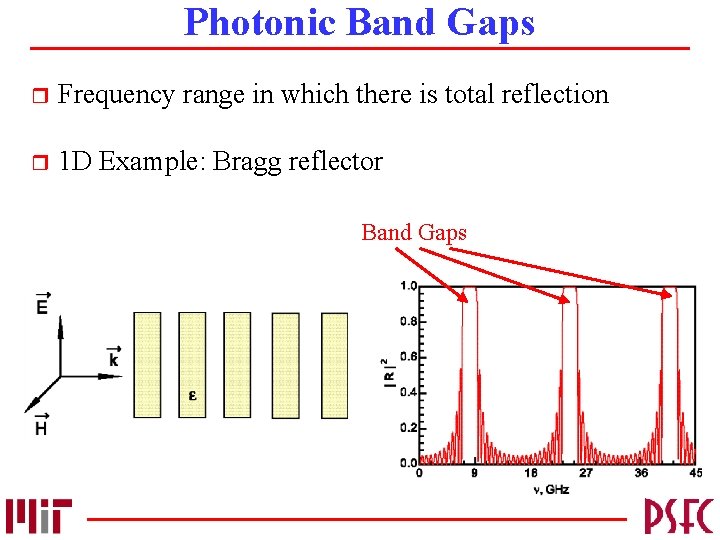
Photonic Band Gaps r Frequency range in which there is total reflection r 1 D Example: Bragg reflector Band Gaps
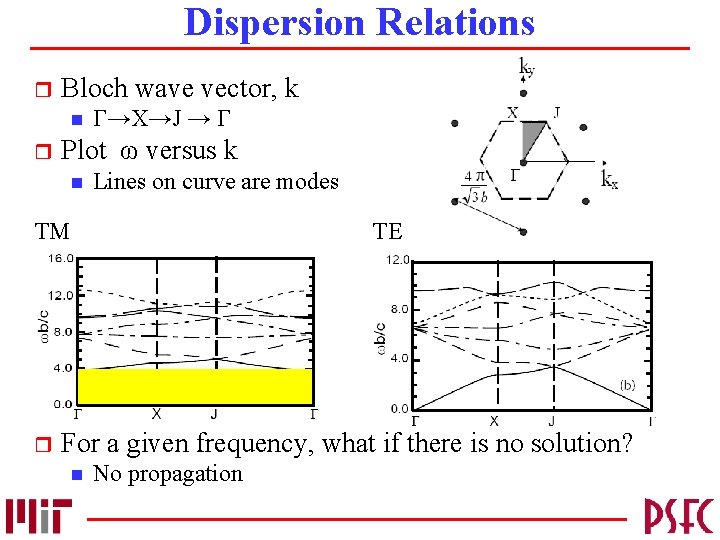
Dispersion Relations r Bloch wave vector, k n r Γ→X→J → Γ Plot ω versus k n Lines on curve are modes TM r TE For a given frequency, what if there is no solution? n No propagation
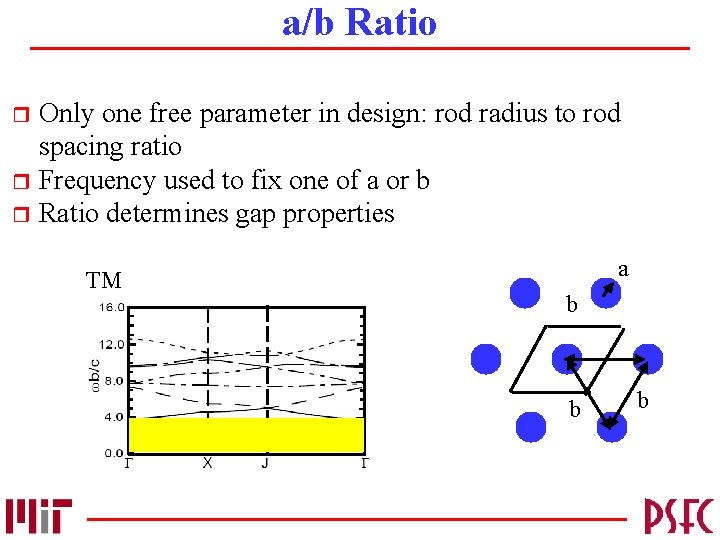
a/b Ratio Only one free parameter in design: rod radius to rod spacing ratio r Frequency used to fix one of a or b r Ratio determines gap properties r TM a b b b
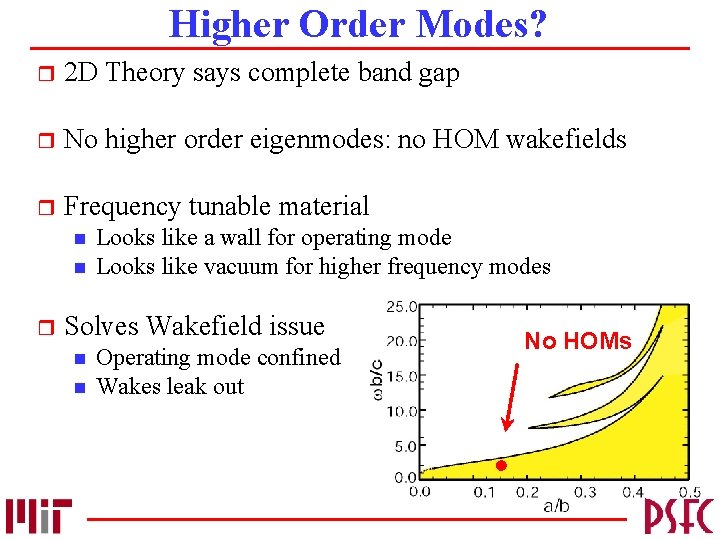
Higher Order Modes? r 2 D Theory says complete band gap r No higher order eigenmodes: no HOM wakefields r Frequency tunable material n n r Looks like a wall for operating mode Looks like vacuum for higher frequency modes Solves Wakefield issue n n Operating mode confined Wakes leak out No HOMs
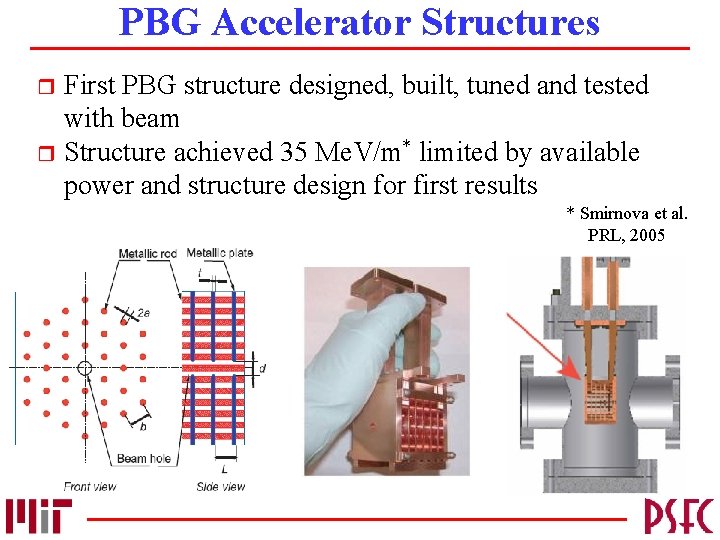
PBG Accelerator Structures First PBG structure designed, built, tuned and tested with beam r Structure achieved 35 Me. V/m* limited by available power and structure design for first results r * Smirnova et al. PRL, 2005
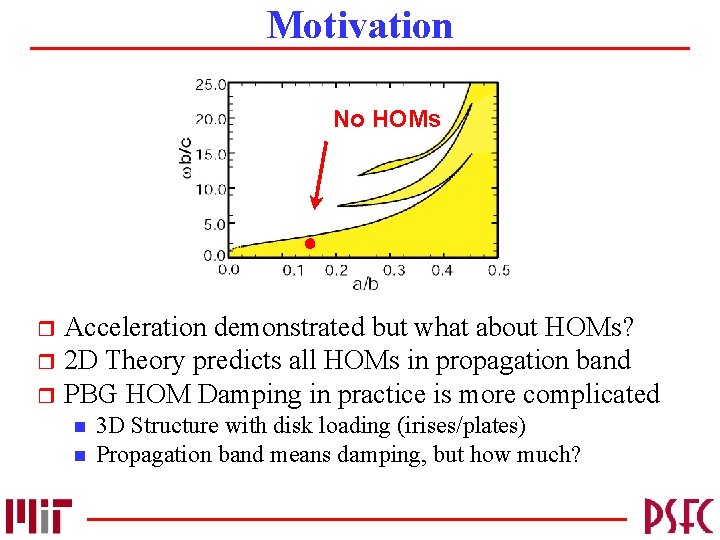
Motivation No HOMs Acceleration demonstrated but what about HOMs? r 2 D Theory predicts all HOMs in propagation band r PBG HOM Damping in practice is more complicated r n n 3 D Structure with disk loading (irises/plates) Propagation band means damping, but how much?
Summary r Bragg filters are a 1 D example of a PBG r 2 D is more complicated r Only one free parameter: ratio a/b r No HOMs expected in PBG accelerators r PBG accelerator demonstrated at MIT
PBG Simulations r High Frequency Structure Simulator: HFSS r Operating Modes r Higher Order Modes: HOMs r Structure Cold Test
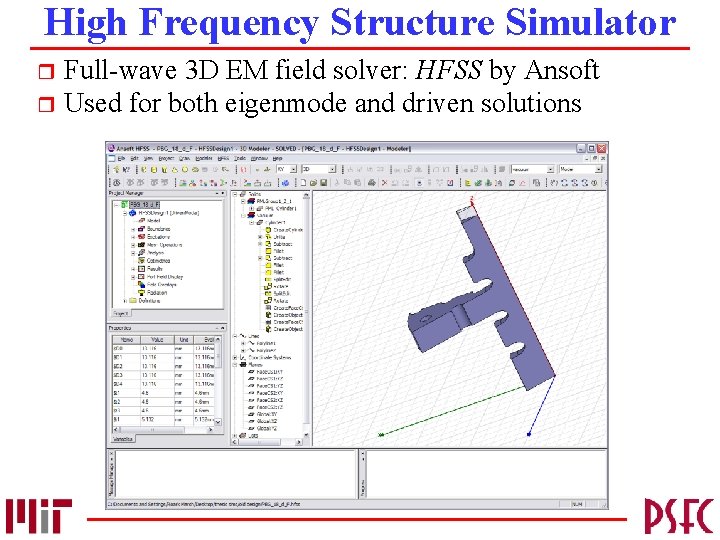
High Frequency Structure Simulator Full-wave 3 D EM field solver: HFSS by Ansoft r Used for both eigenmode and driven solutions r
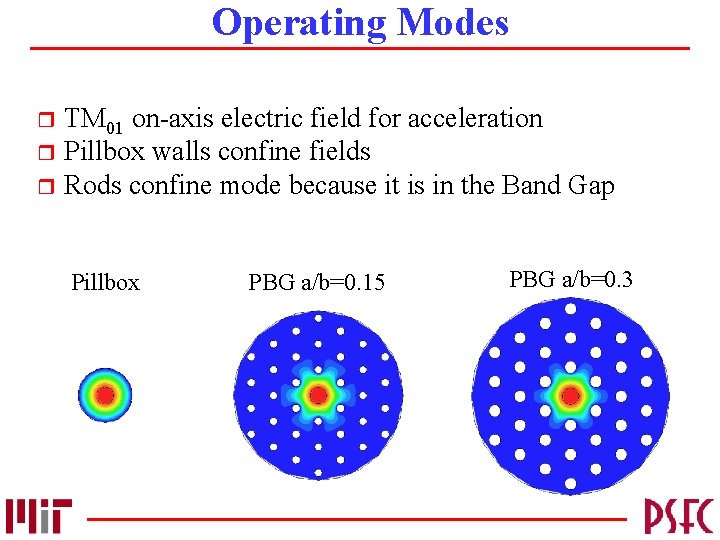
Operating Modes TM 01 on-axis electric field for acceleration r Pillbox walls confine fields r Rods confine mode because it is in the Band Gap r Pillbox PBG a/b=0. 15 PBG a/b=0. 3
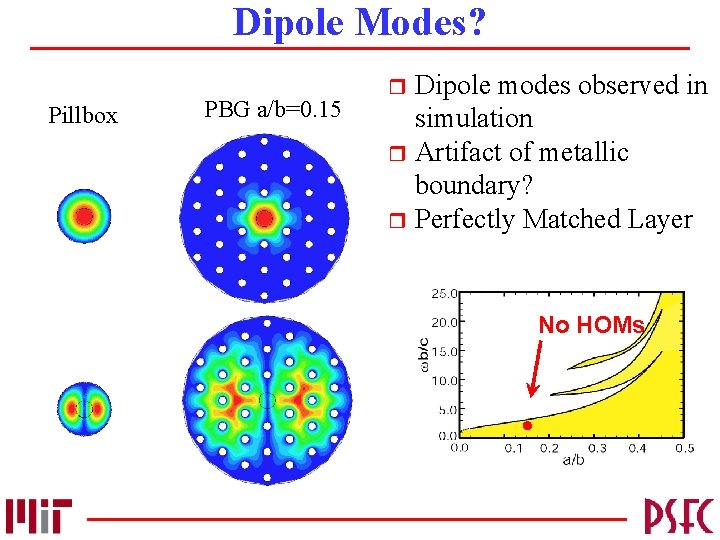
Dipole Modes? Pillbox PBG a/b=0. 15 Dipole modes observed in simulation r Artifact of metallic boundary? r Perfectly Matched Layer r No HOMs
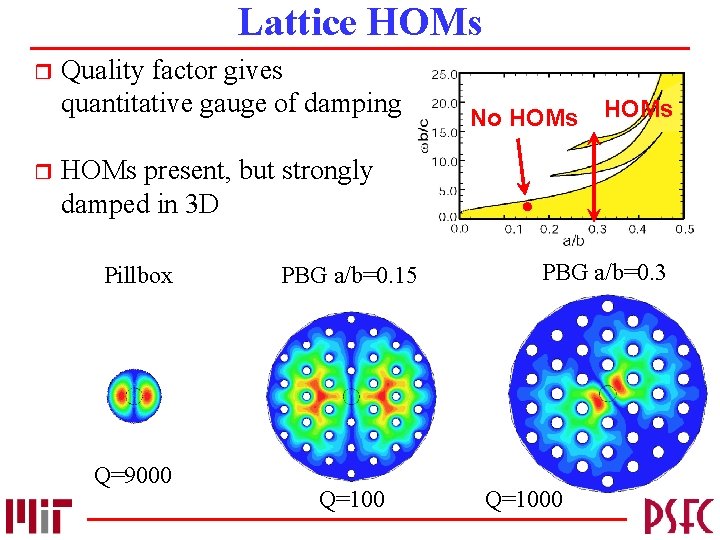
Lattice HOMs r r Quality factor gives quantitative gauge of damping No HOMs present, but strongly damped in 3 D Pillbox Q=9000 PBG a/b=0. 15 Q=100 PBG a/b=0. 3 Q=1000
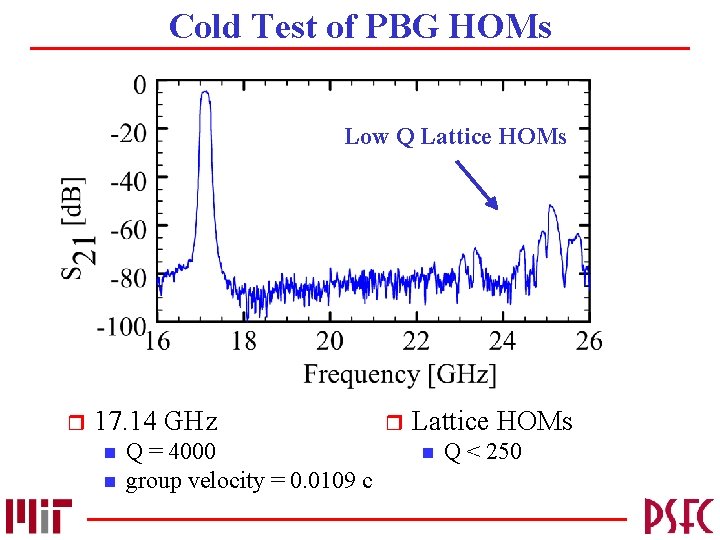
Cold Test of PBG HOMs Low Q Lattice HOMs r 17. 14 GHz n n Q = 4000 group velocity = 0. 0109 c r Lattice HOMs n Q < 250
Summary r HFSS used for field simulations r Operating mode in PBG like pillbox TM 01 r HOMs in fact observed in simulations r Lattice HOMs: very low Q from high diffractive loss r Low Q Lattice HOMs seen in PBG structure cold test
PBG Wakefields r MIT HRC 17 GHz Accelerator r Experimental Setup r Simulations r Theory r Measurements
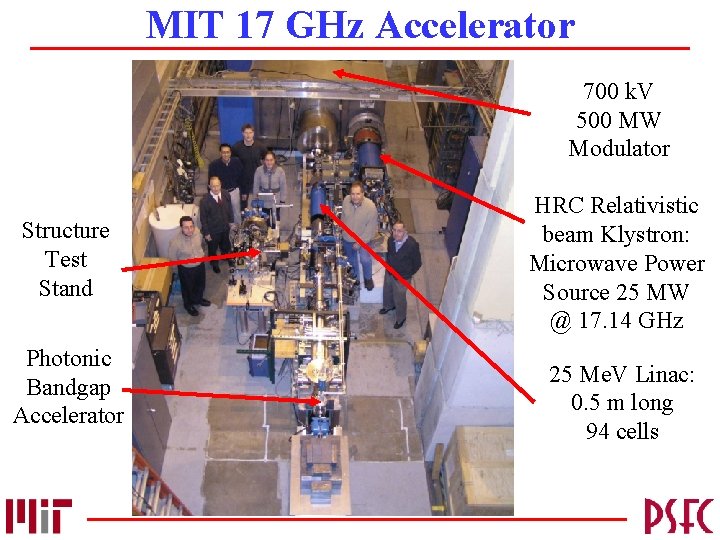
MIT 17 GHz Accelerator 700 k. V 500 MW Modulator Structure Test Stand Photonic Bandgap Accelerator HRC Relativistic beam Klystron: Microwave Power Source 25 MW @ 17. 14 GHz 25 Me. V Linac: 0. 5 m long 94 cells
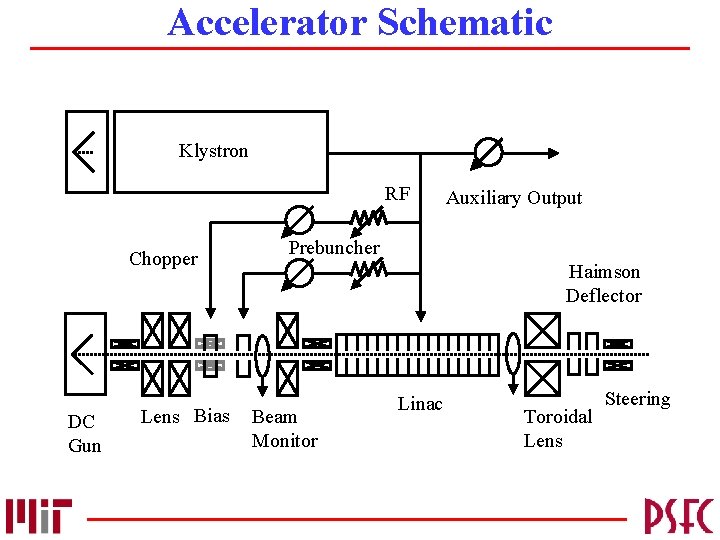
Accelerator Schematic Klystron RF Chopper DC Gun Lens Bias Auxiliary Output Prebuncher Haimson Deflector Beam Monitor Linac Toroidal Lens Steering
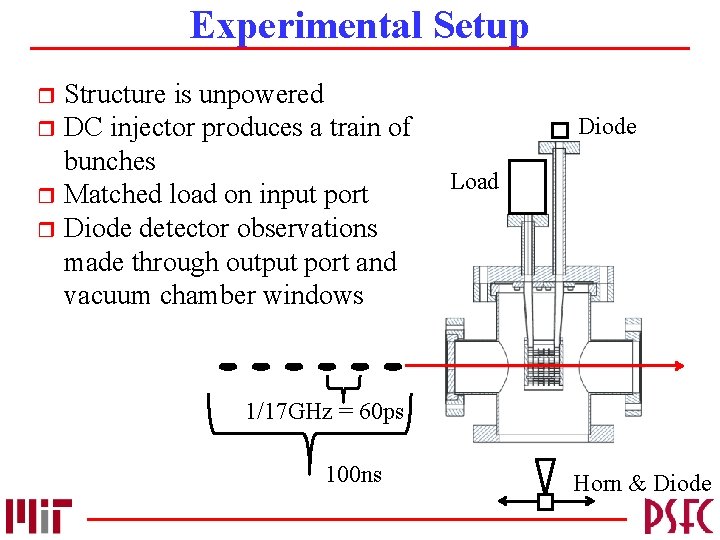
Experimental Setup Structure is unpowered r DC injector produces a train of bunches r Matched load on input port r Diode detector observations made through output port and vacuum chamber windows r Diode Load 1/17 GHz = 60 ps 100 ns Horn & Diode
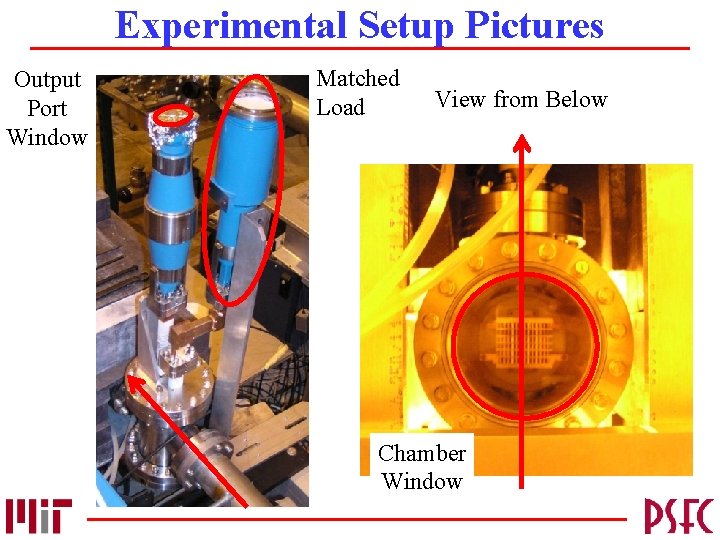
Experimental Setup Pictures Output Port Window Matched Load View from Below Chamber Window
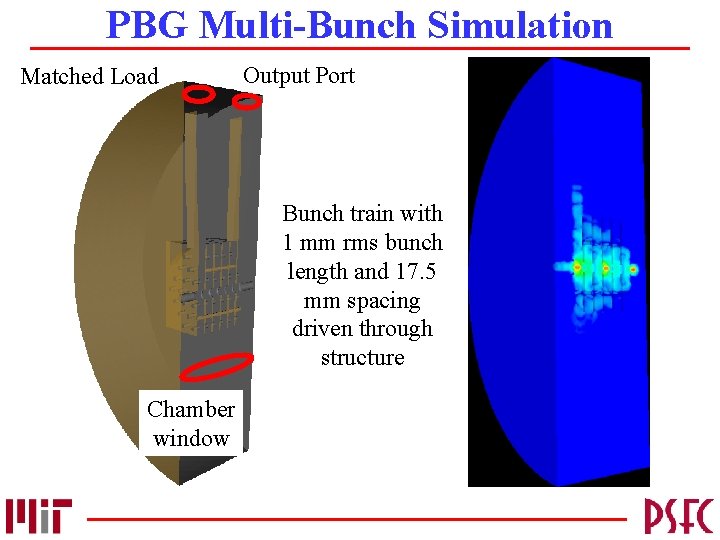
PBG Multi-Bunch Simulation Matched Load Output Port Bunch train with 1 mm rms bunch length and 17. 5 mm spacing driven through structure Chamber window
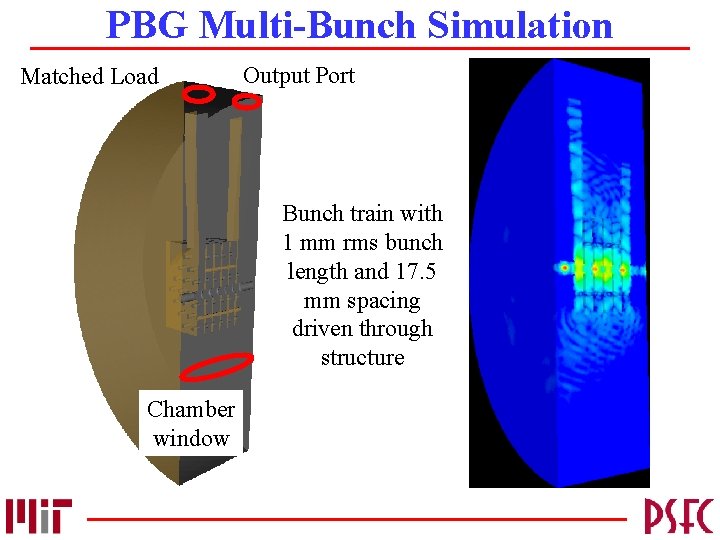
PBG Multi-Bunch Simulation Matched Load Output Port Bunch train with 1 mm rms bunch length and 17. 5 mm spacing driven through structure Chamber window
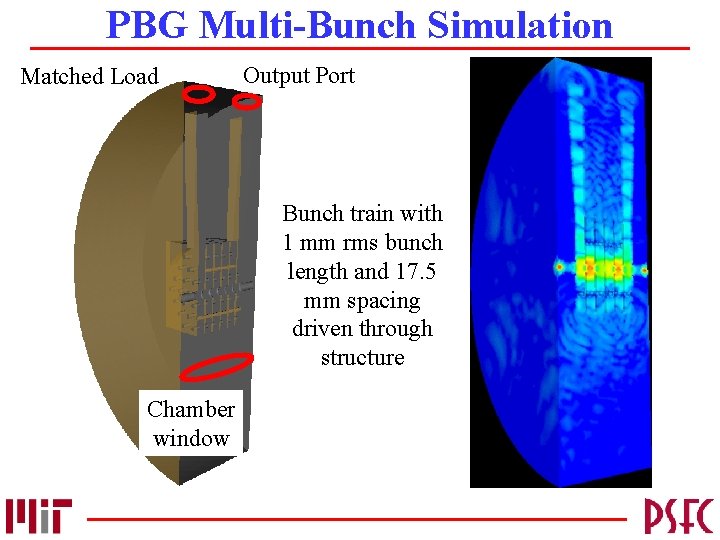
PBG Multi-Bunch Simulation Matched Load Output Port Bunch train with 1 mm rms bunch length and 17. 5 mm spacing driven through structure Chamber window
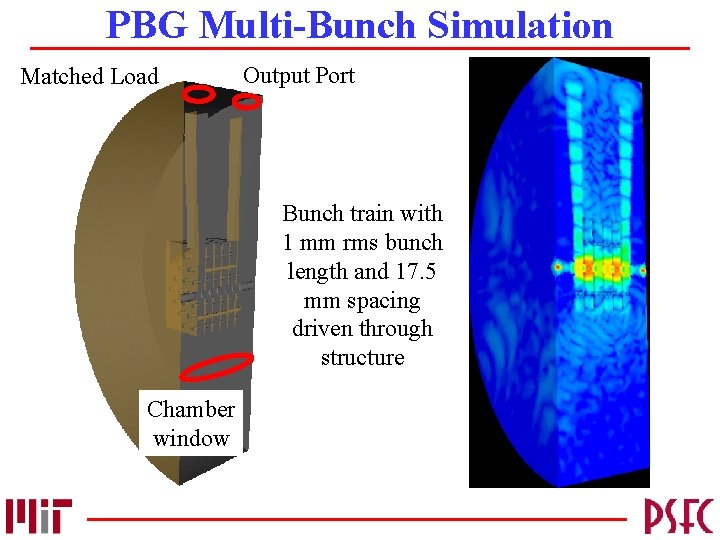
PBG Multi-Bunch Simulation Matched Load Output Port Bunch train with 1 mm rms bunch length and 17. 5 mm spacing driven through structure Chamber window
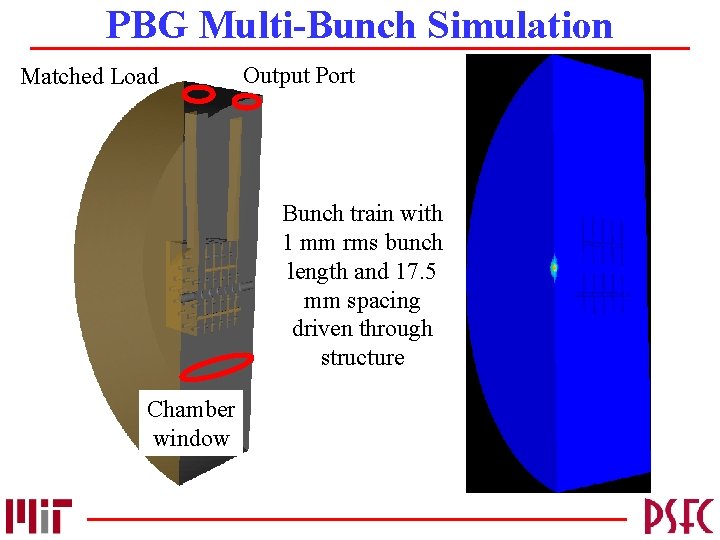
PBG Multi-Bunch Simulation Matched Load Output Port Bunch train with 1 mm rms bunch length and 17. 5 mm spacing driven through structure Chamber window
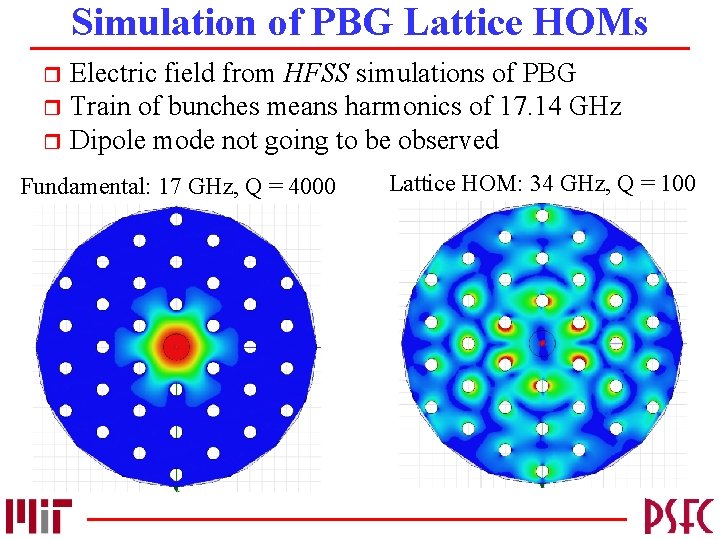
Simulation of PBG Lattice HOMs Electric field from HFSS simulations of PBG r Train of bunches means harmonics of 17. 14 GHz r Dipole mode not going to be observed r Fundamental: 17 GHz, Q = 4000 Lattice HOM: 34 GHz, Q = 100
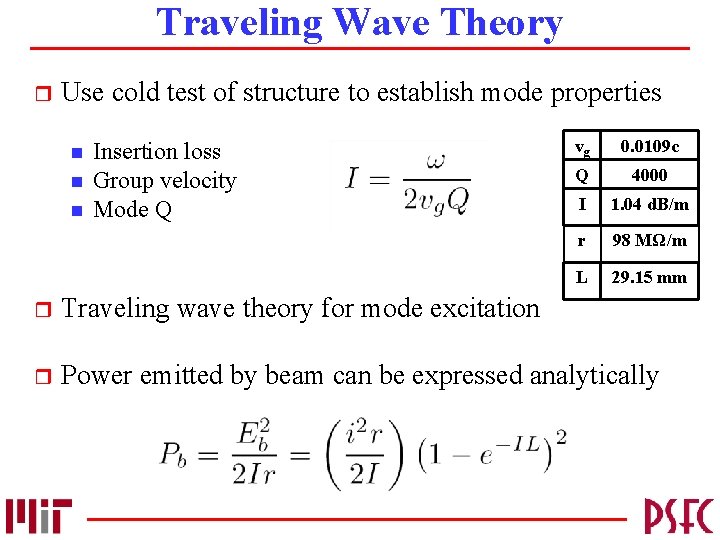
Traveling Wave Theory r Use cold test of structure to establish mode properties n n n Insertion loss Group velocity Mode Q vg 0. 0109 c Q 4000 I 1. 04 d. B/m r 98 MΩ/m L 29. 15 mm r Traveling wave theory for mode excitation r Power emitted by beam can be expressed analytically
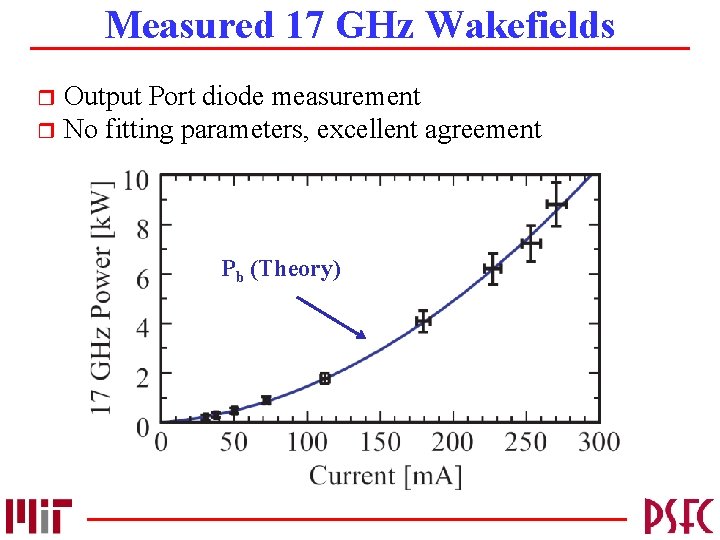
Measured 17 GHz Wakefields Output Port diode measurement r No fitting parameters, excellent agreement r Pb (Theory)
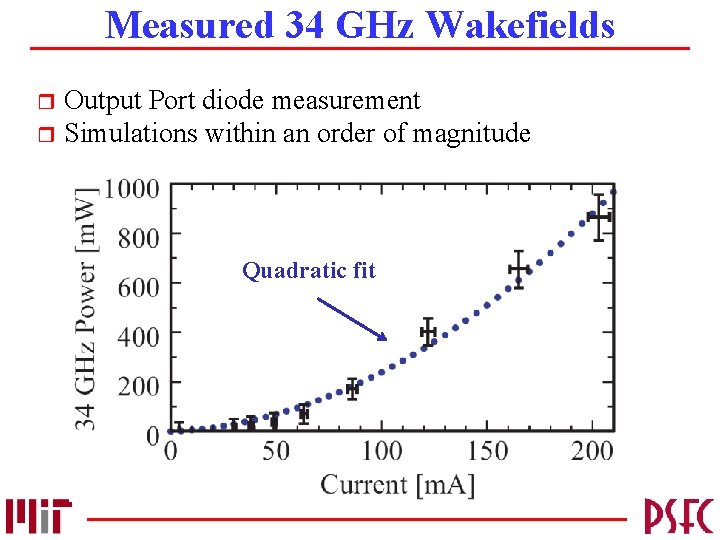
Measured 34 GHz Wakefields Output Port diode measurement r Simulations within an order of magnitude r Quadratic fit
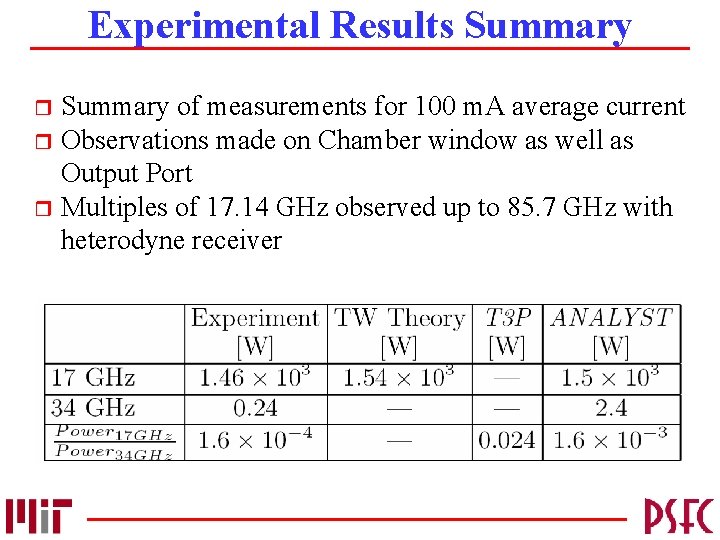
Experimental Results Summary of measurements for 100 m. A average current r Observations made on Chamber window as well as Output Port r Multiples of 17. 14 GHz observed up to 85. 7 GHz with heterodyne receiver r
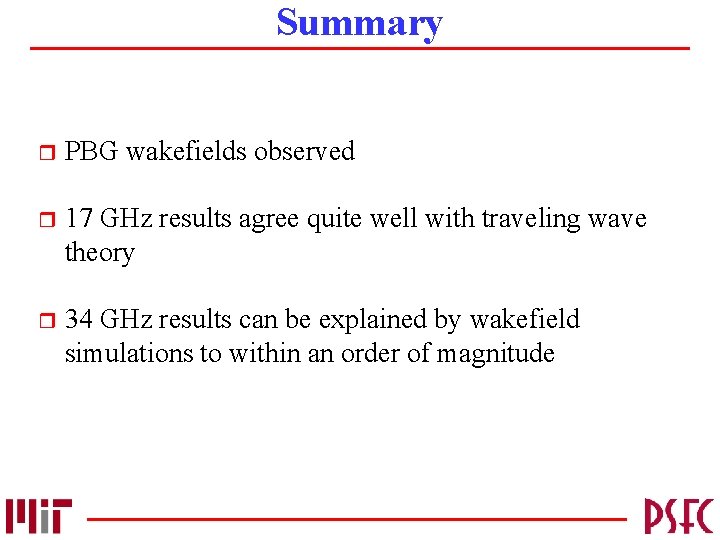
Summary r PBG wakefields observed r 17 GHz results agree quite well with traveling wave theory r 34 GHz results can be explained by wakefield simulations to within an order of magnitude
PBG Breakdown r SLAC standing wave breakdown experiments r PBG structure design r PBG cold test and status r Preliminary results
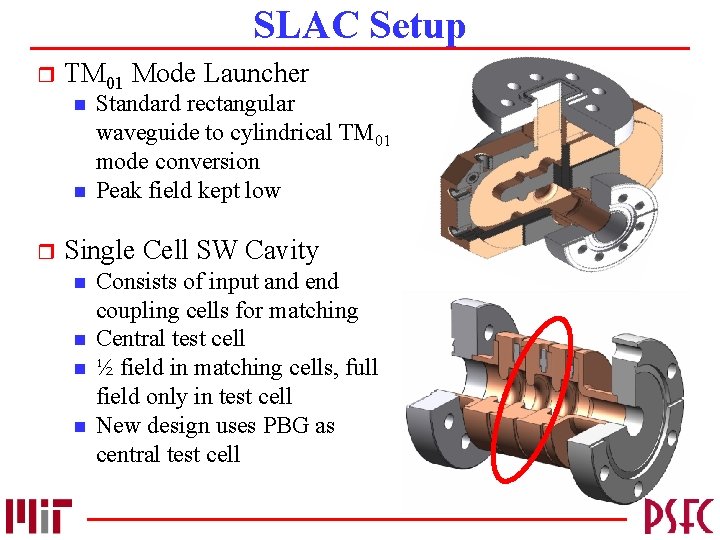
SLAC Setup r TM 01 Mode Launcher n n r Standard rectangular waveguide to cylindrical TM 01 mode conversion Peak field kept low Single Cell SW Cavity n n Consists of input and end coupling cells for matching Central test cell ½ field in matching cells, full field only in test cell New design uses PBG as central test cell
![Breakdown Rate vs Gradient Pillbox #1 Pillbox #2 Pillbox #3 Accelerating Gradient [MV/m] *Dolgashev,](http://slidetodoc.com/presentation_image/1cc764747938a86585ca2258c9addfad/image-45.jpg "Breakdown Rate vs Gradient Pillbox #1 Pillbox #2 Pillbox #3 Accelerating Gradient [MV/m] *Dolgashev,")
Breakdown Rate vs Gradient Pillbox #1 Pillbox #2 Pillbox #3 Accelerating Gradient [MV/m] *Dolgashev, AAC 2008
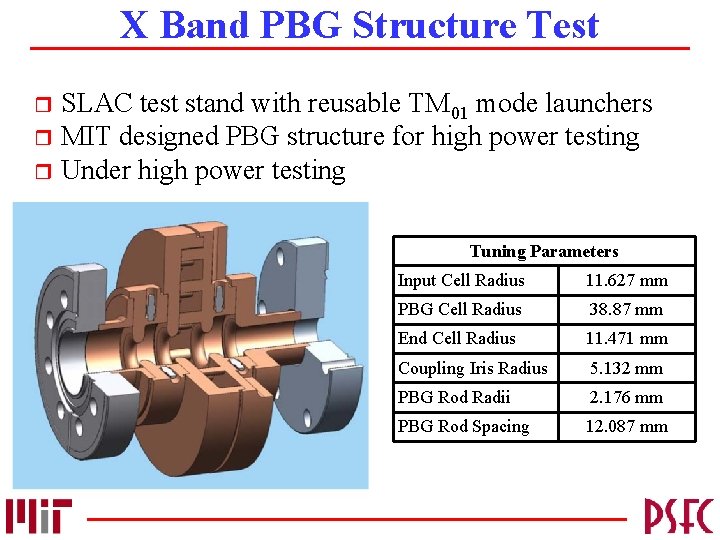
X Band PBG Structure Test SLAC test stand with reusable TM 01 mode launchers r MIT designed PBG structure for high power testing r Under high power testing r Tuning Parameters Input Cell Radius 11. 627 mm PBG Cell Radius 38. 87 mm End Cell Radius 11. 471 mm Coupling Iris Radius 5. 132 mm PBG Rod Radii 2. 176 mm PBG Rod Spacing 12. 087 mm
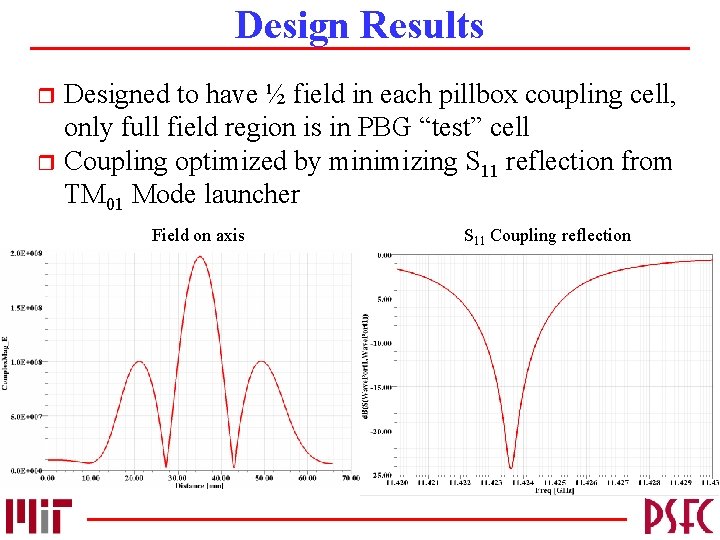
Design Results Designed to have ½ field in each pillbox coupling cell, only full field region is in PBG “test” cell r Coupling optimized by minimizing S 11 reflection from TM 01 Mode launcher r Field on axis S 11 Coupling reflection
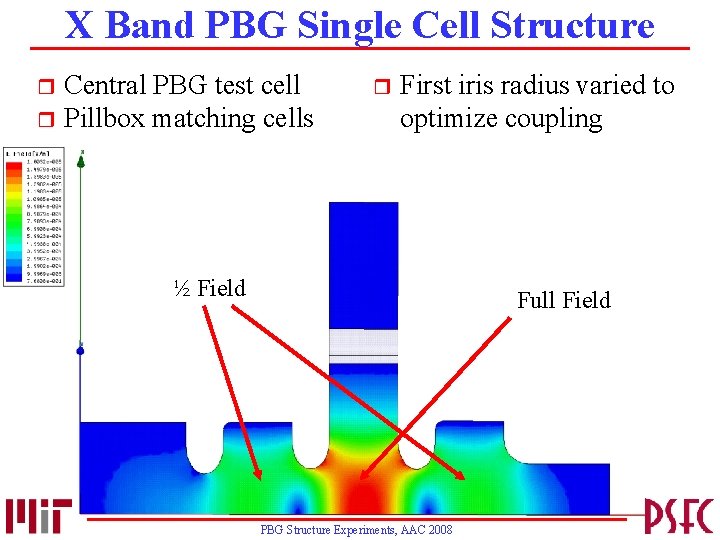
X Band PBG Single Cell Structure Central PBG test cell r Pillbox matching cells r r First iris radius varied to optimize coupling ½ Field Full Field PBG Structure Experiments, AAC 2008
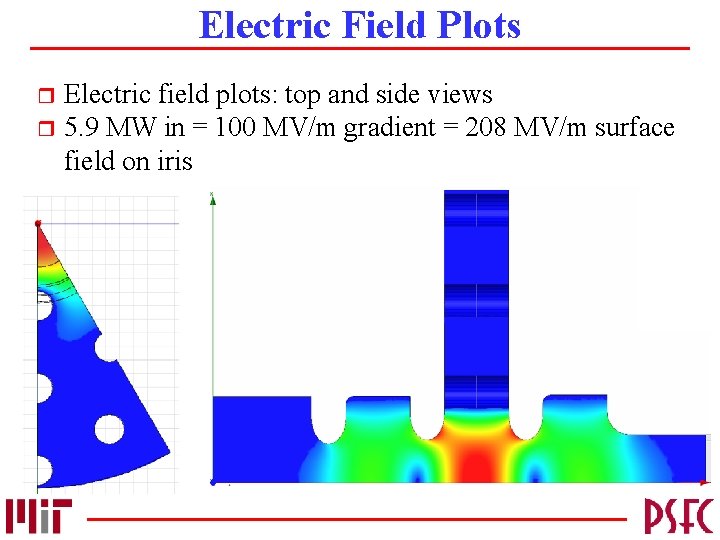
Electric Field Plots Electric field plots: top and side views r 5. 9 MW in = 100 MV/m gradient = 208 MV/m surface field on iris r
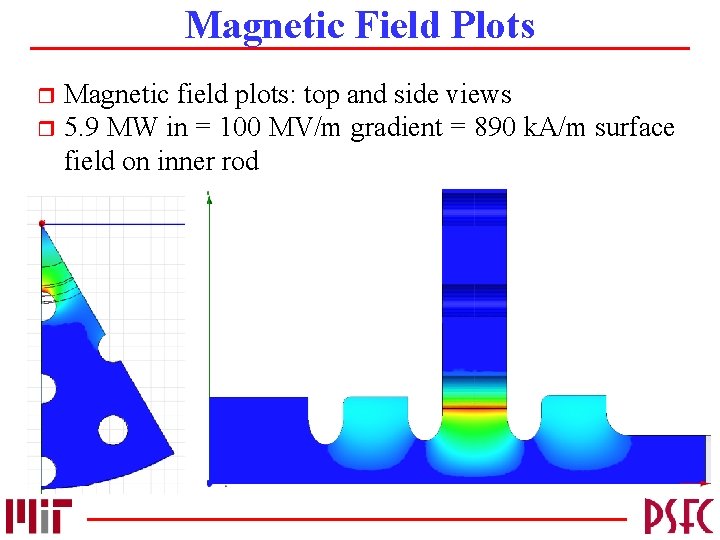
Magnetic Field Plots Magnetic field plots: top and side views r 5. 9 MW in = 100 MV/m gradient = 890 k. A/m surface field on inner rod r
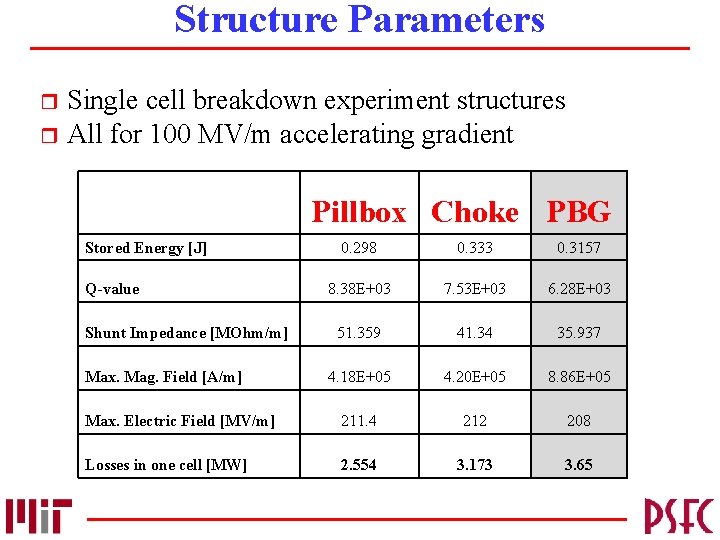
Structure Parameters Single cell breakdown experiment structures r All for 100 MV/m accelerating gradient r Pillbox Choke PBG Stored Energy [J] 0. 298 0. 333 0. 3157 8. 38 E+03 7. 53 E+03 6. 28 E+03 51. 359 41. 34 35. 937 4. 18 E+05 4. 20 E+05 8. 86 E+05 Max. Electric Field [MV/m] 211. 4 212 208 Losses in one cell [MW] 2. 554 3. 173 3. 65 Q-value Shunt Impedance [MOhm/m] Max. Mag. Field [A/m]
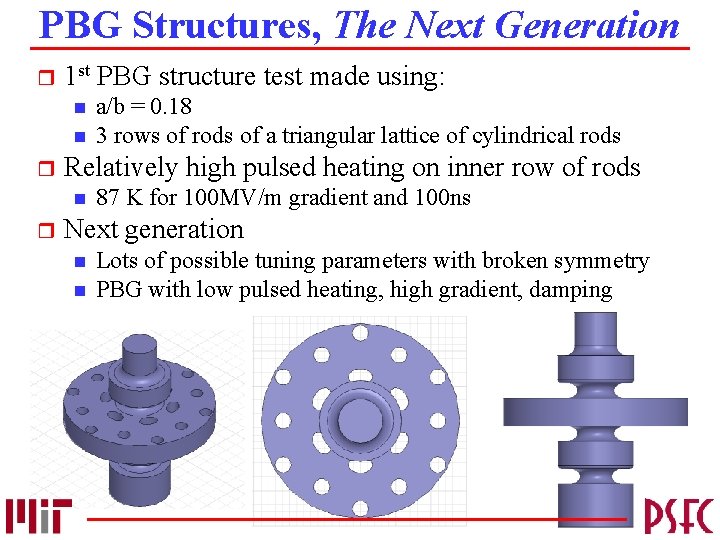
PBG Structures, The Next Generation r 1 st PBG structure test made using: n n r Relatively high pulsed heating on inner row of rods n r a/b = 0. 18 3 rows of rods of a triangular lattice of cylindrical rods 87 K for 100 MV/m gradient and 100 ns Next generation n n Lots of possible tuning parameters with broken symmetry PBG with low pulsed heating, high gradient, damping
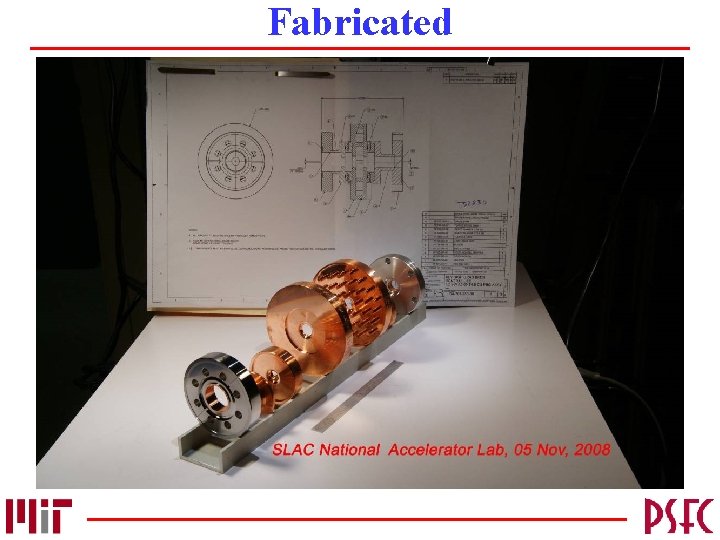
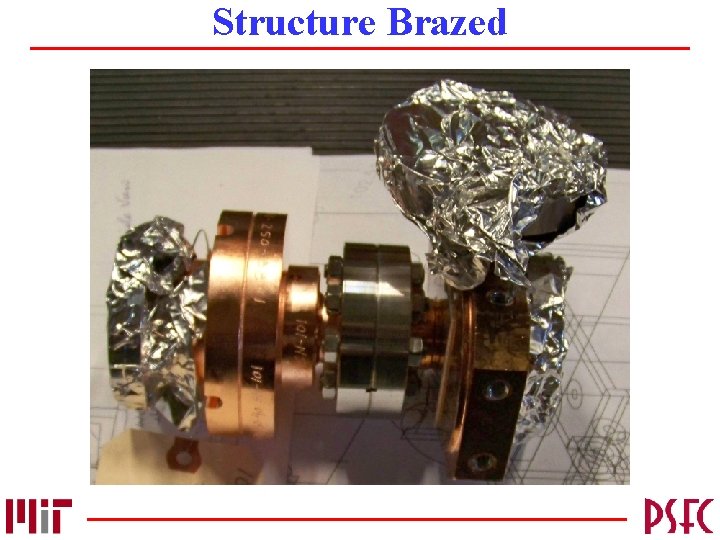
Fabricated
Structure Brazed
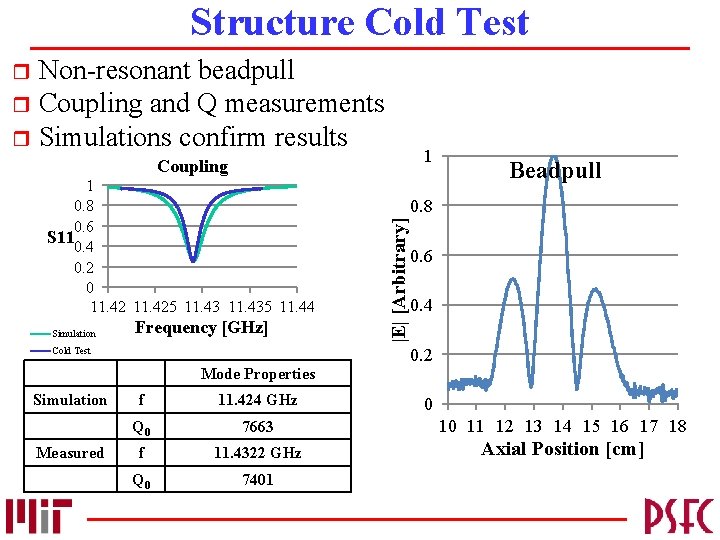
Structure Cold Test Non-resonant beadpull r Coupling and Q measurements r Simulations confirm results r 1 Coupling Simulation Frequency [GHz] Beadpull 0. 8 |E| [Arbitrary] 1 0. 8 0. 6 S 11 0. 4 0. 2 0 11. 425 11. 435 11. 44 0. 6 0. 4 0. 2 Cold Test Mode Properties Simulation Measured f 11. 424 GHz Q 0 7663 10 11 12 13 14 15 16 17 18 f 11. 4322 GHz Axial Position [cm] Q 0 7401 0
Structure Installed
Structure Bunker
![Scope Traces 5 MW in, 92 MV/m gradient, 150 ns pulse length Power [watts]](http://slidetodoc.com/presentation_image/1cc764747938a86585ca2258c9addfad/image-58.jpg "Scope Traces 5 MW in, 92 MV/m gradient, 150 ns pulse length Power [watts]")
Scope Traces 5 MW in, 92 MV/m gradient, 150 ns pulse length Power [watts] r Time [seconds]
Analysis Process r Breakdowns counted on Scope Traces r Time for breakdown data from Scope Traces r Power level from same time span Peak Power Meter r Power converted to Gradient, Surface Electric field, Surface Magnetic field using HFSS simulations r HFSS simulations checked against cold test results
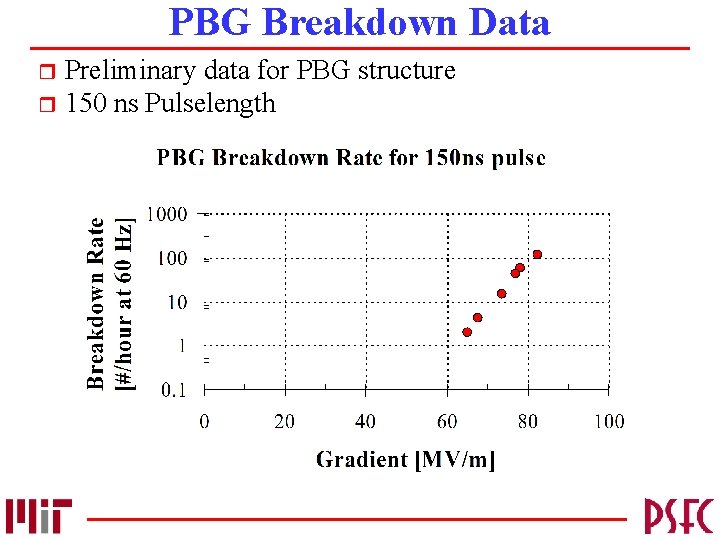
PBG Breakdown Data Preliminary data for PBG structure r 150 ns Pulselength r
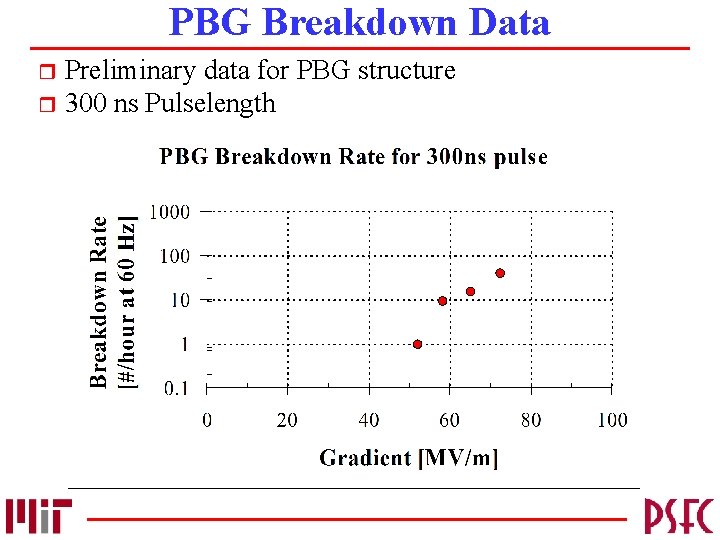
PBG Breakdown Data Preliminary data for PBG structure r 300 ns Pulselength r
Summary r Breakdown in PBG structures under investigation r First “realistic” PBG structure r Highest gradient PBG already observed, >100 MV/m r Data analysis begun
Ongoing and Future Work r Structure has finished high power testing r Highest pulsed heating structure tested r Only second damped structure test r Analysis proceeding for comparison with undamped geometry
Talk Summary r High gradient research necessary for future linear collider concepts and High Energy Physics advances r High frequency research requires HOM damping r The nature of HOMs in PBG structure are understood r Wakefields have been measured in PBG structures r Results agree very well with theory for fundamental, Results can be explained with simulations for HOMs
Talk Summary r Breakdown in PBG structures is being investigated r Structure fabricated and cold tested successfully r High power testing complete r Very exciting initial results for damped structure r Structure performance to be compared with undamped geometry
Funding Acknowledgement This research is funded by the US Department of Energy, Office of High Energy Physics
Collaboration Acknowledgement Colleagues at MIT: Rick Temkin, Michael Shapiro, Jags Sirigiri, Brian Munroe r CTR and SPR work done with Amit Kesar, now at Soreq r 6 Cell structure was designed, built, and tested by Evgenya Smirnova, now at LANL r Wakefield simulations in collaboration with Kwok Ko at SLAC, and John De. Ford at STAAR, Inc. r Breakdown experiments in collaboration with Sami Tantawi and Valery Dolgashev at SLAC. Cold tests with Jim Lewandowski and High power testing with Dian Yeremian. r
Thank You r Any Questions?

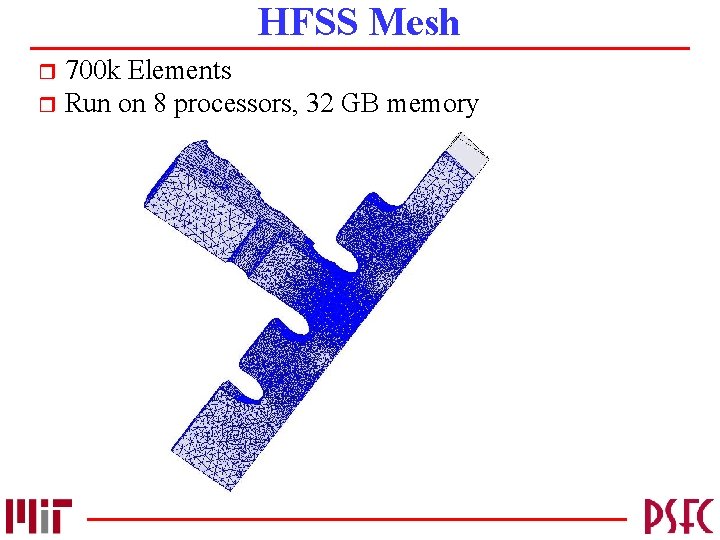
HFSS Mesh 700 k Elements r Run on 8 processors, 32 GB memory r
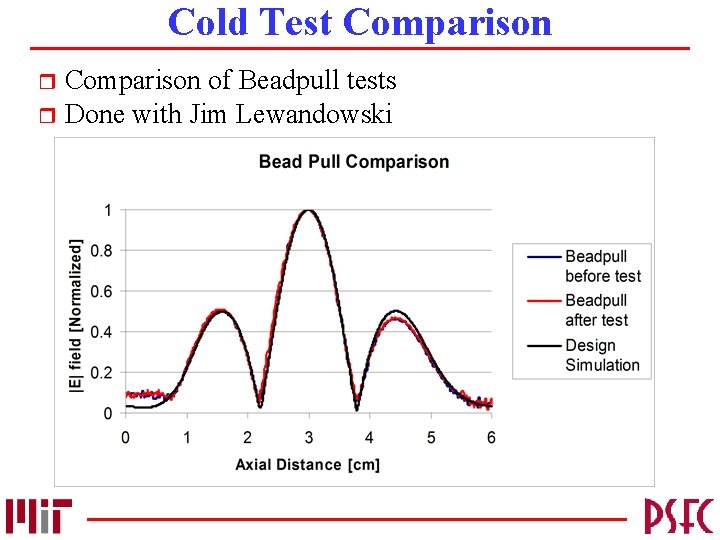
Cold Test Comparison of Beadpull tests r Done with Jim Lewandowski r
- Slides: 71