
Photolithography PEOPLE Program How is Lithography Related to
- Slides: 18
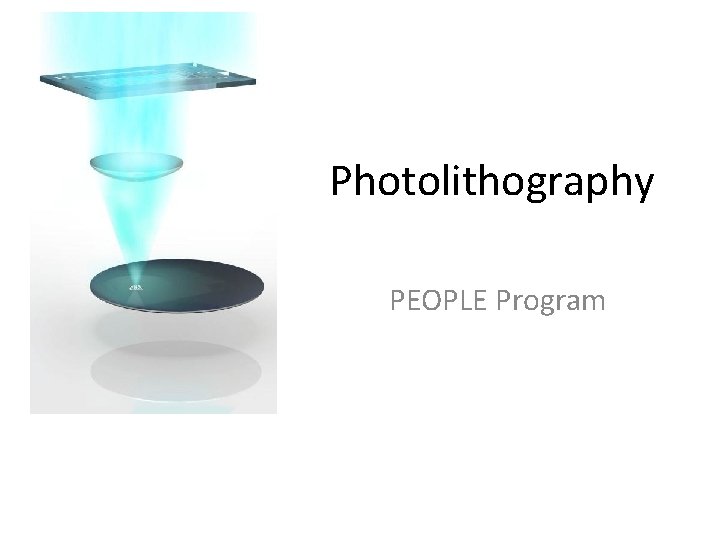
Photolithography PEOPLE Program
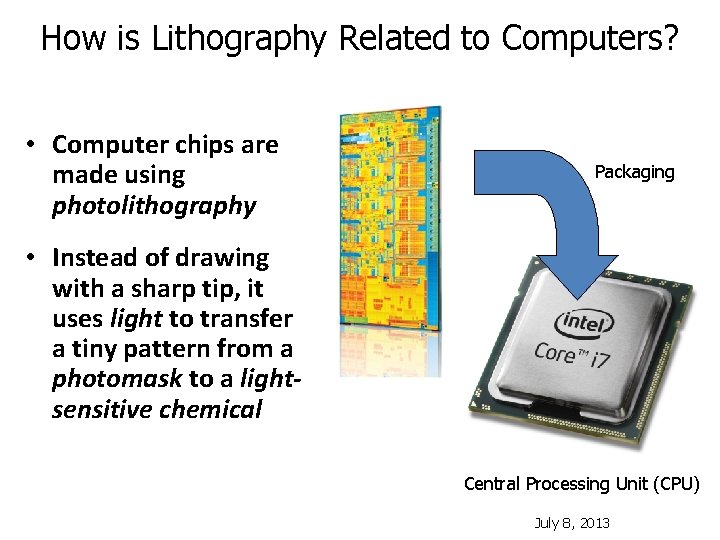
How is Lithography Related to Computers? • Computer chips are made using photolithography Packaging • Instead of drawing with a sharp tip, it uses light to transfer a tiny pattern from a photomask to a lightsensitive chemical Central Processing Unit (CPU) July 8, 2013
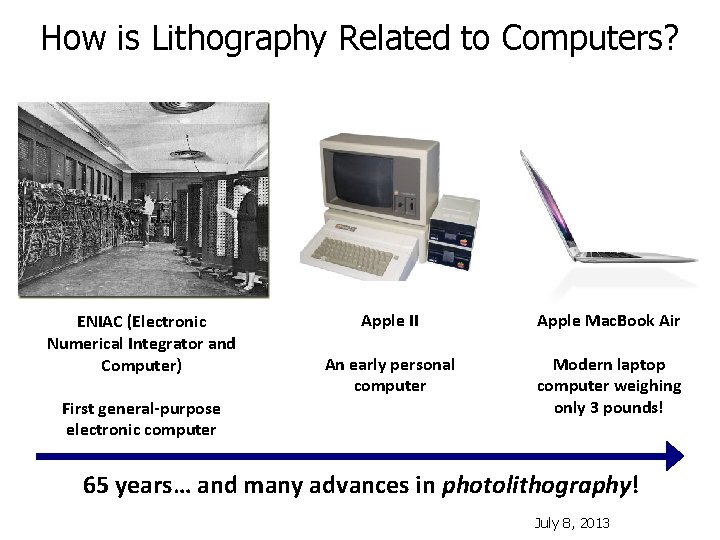
How is Lithography Related to Computers? ENIAC (Electronic Numerical Integrator and Computer) First general-purpose electronic computer Apple II Apple Mac. Book Air An early personal computer Modern laptop computer weighing only 3 pounds! 65 years… and many advances in photolithography! July 8, 2013
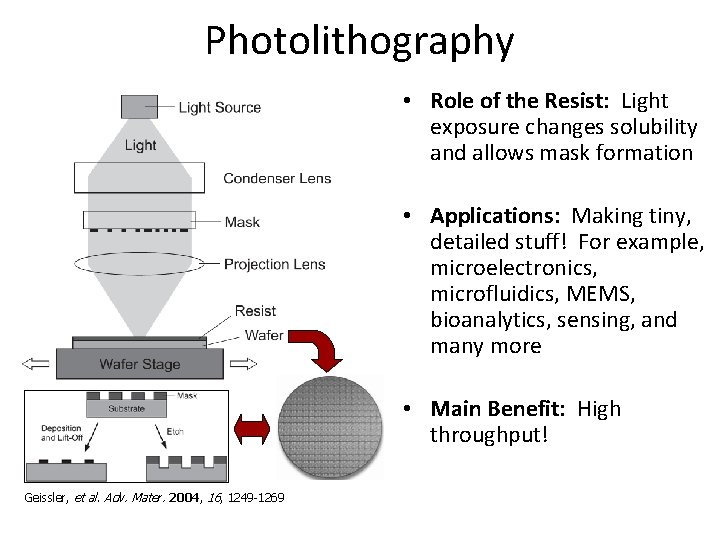
Photolithography • Role of the Resist: Light exposure changes solubility and allows mask formation • Applications: Making tiny, detailed stuff! For example, microelectronics, microfluidics, MEMS, bioanalytics, sensing, and many more • Main Benefit: High throughput! Geissler, et al. Adv. Mater. 2004, 16, 1249 -1269
Exposure of Photosensitive Material to Light • What do you think “photosensitive” means? July 8, 2013
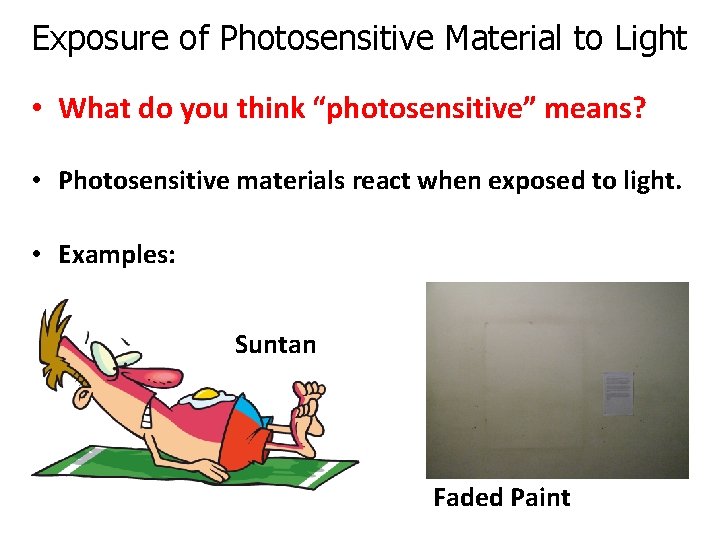
Exposure of Photosensitive Material to Light • What do you think “photosensitive” means? • Photosensitive materials react when exposed to light. • Examples: Suntan Faded Paint July 8, 2013
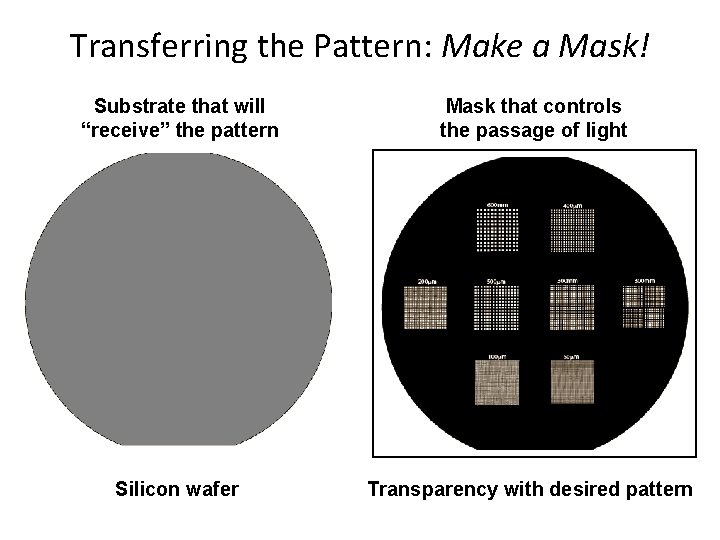
Transferring the Pattern: Make a Mask! Substrate that will “receive” the pattern Mask that controls the passage of light Silicon wafer Transparency with desired pattern
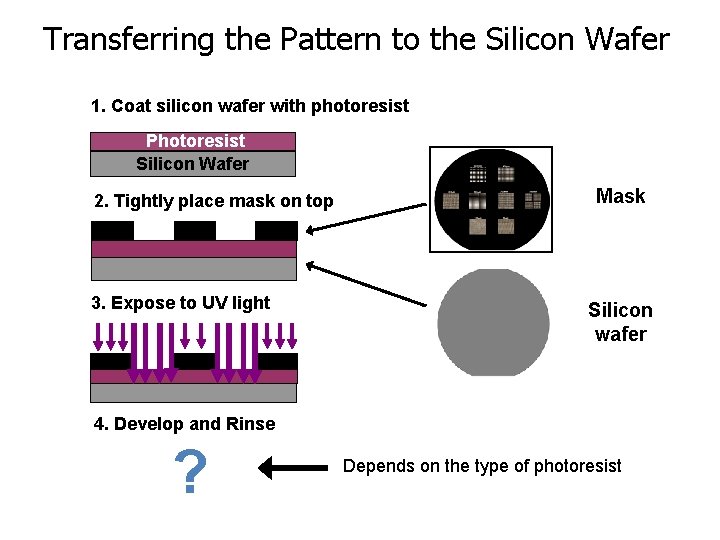
Transferring the Pattern to the Silicon Wafer 1. Coat silicon wafer with photoresist Photoresist Silicon Wafer 2. Tightly place mask on top 3. Expose to UV light Mask Silicon wafer 4. Develop and Rinse ? Depends on the type of photoresist
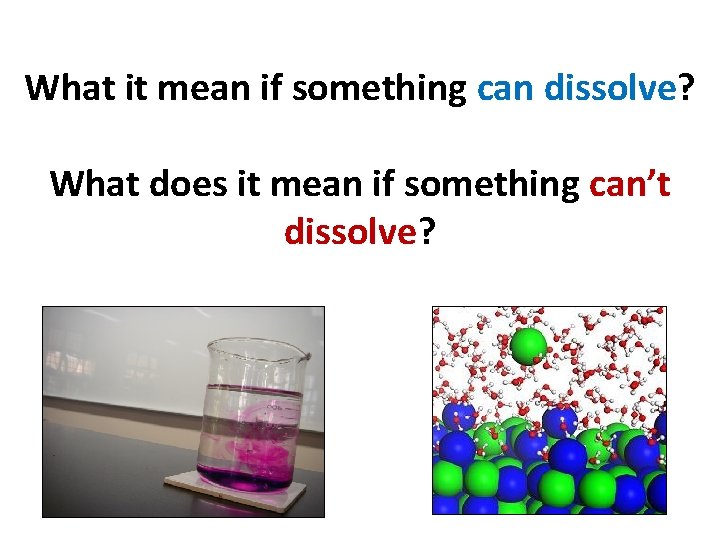
What it mean if something can dissolve? What does it mean if something can’t dissolve?
What could be some examples of things that can dissolve in H 2 O? What could be some examples of things that cannot dissolve in H 2 O?
Our definition Dissolve: A solid loses its structure and becomes dispersed into a liquid. * Examples: • Table salt (Na. Cl) dissolves in water. • Sand (Si. O 2) does not dissolve in water. • Gasoline does not dissolve in water. • A breath-strip dissolves in your saliva. *Dissolving can take other forms, as well. For example a gas can dissolve into another gas, or a gas can dissolve into a liquid.
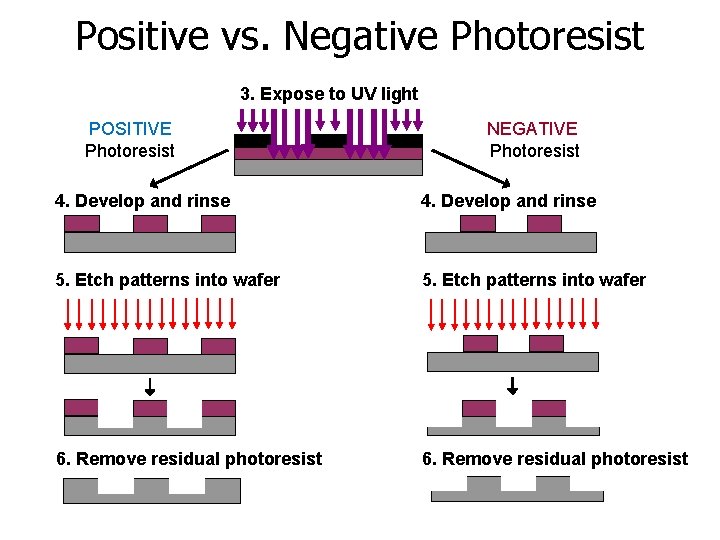
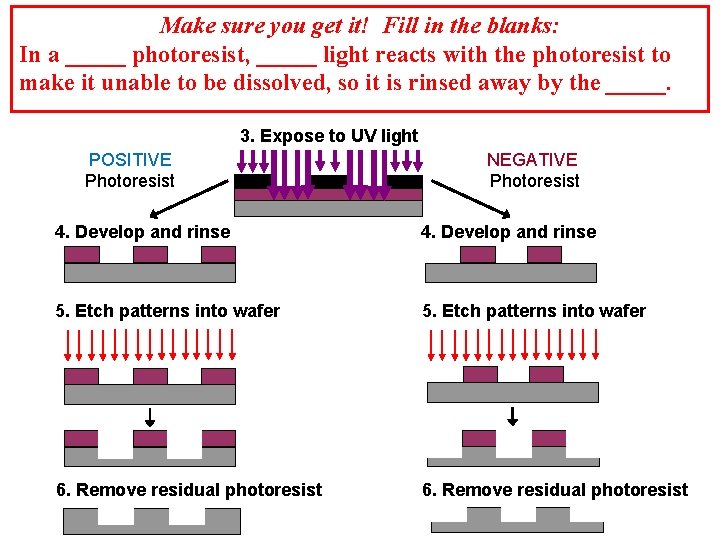
Positive vs. Negative Photoresist • Positive Photoresist: Exposed areas become able to dissolve in the developer (so the exposed portion is dissolved by the developer) • Negative Photoresist: Exposed areas become not able to be dissolved in the developer (so the unexposed portion is dissolved by the developer) – We will use S-1813, a common positive photoresist
Positive vs. Negative Photoresist 3. Expose to UV light POSITIVE Photoresist NEGATIVE Photoresist 4. Develop and rinse 5. Etch patterns into wafer 6. Remove residual photoresist
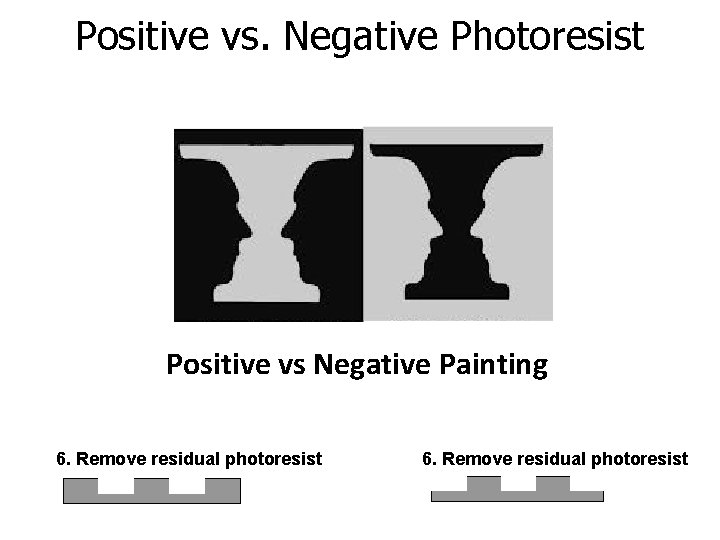
Positive vs. Negative Photoresist 3. Expose to UV light POSITIVE Photoresist NEGATIVE Photoresist 4. Develop and rinse 5. Etch patterns into wafer Positive vs Negative Painting 6. Remove residual photoresist July 8, 2013
Make sure you get it! Fill in the blanks: In a _____ photoresist, _____ light reacts with the photoresist to make it unable to be dissolved, so it is rinsed away by the _____. 3. Expose to UV light POSITIVE Photoresist NEGATIVE Photoresist 4. Develop and rinse 5. Etch patterns into wafer 6. Remove residual photoresist
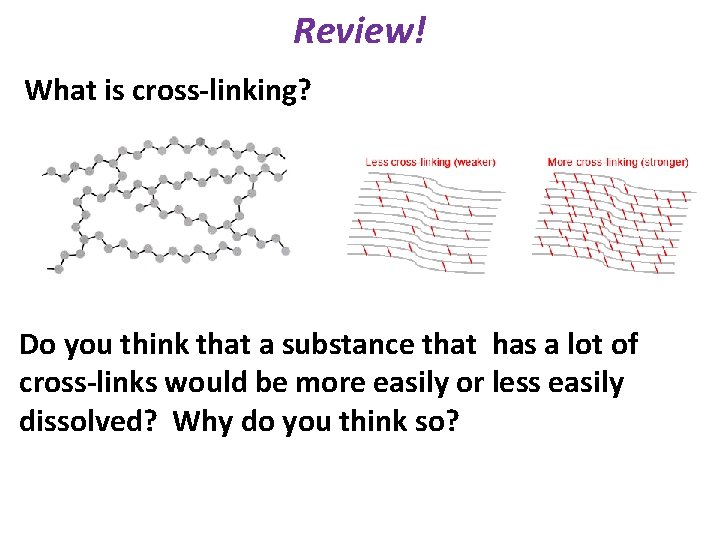
Review! What is cross-linking? Do you think that a substance that has a lot of cross-links would be more easily or less easily dissolved? Why do you think so?
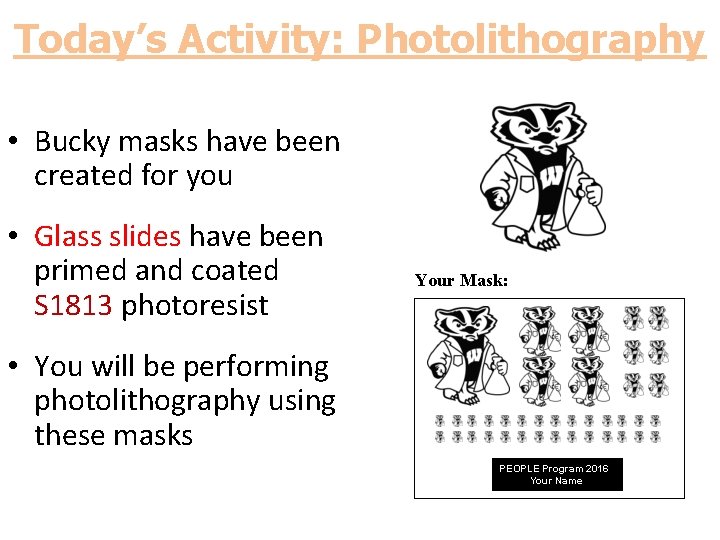
Today’s Activity: Photolithography • Bucky masks have been created for you • Glass slides have been primed and coated S 1813 photoresist Your Mask: • You will be performing photolithography using these masks PEOPLE Program 2016 Your Name
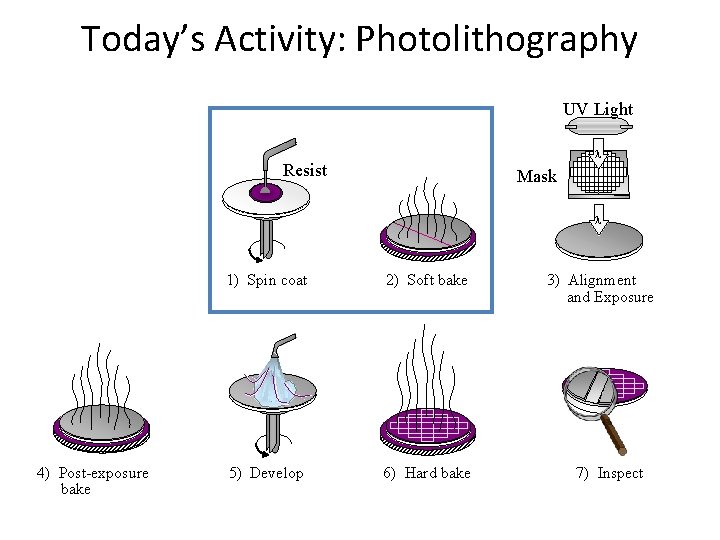
Today’s Activity: Photolithography UV Light Resist Mask 4) Post-exposure bake 1) Spin coat 2) Soft bake 5) Develop 6) Hard bake 3) Alignment and Exposure 7) Inspect