
Photography HISTORY HISTORY DEVELOPMENT DEVELOPMENT DEVELOPMENT FINGERPRINT SIGNATURE









- Slides: 42
Photography
HISTORY
HISTORY
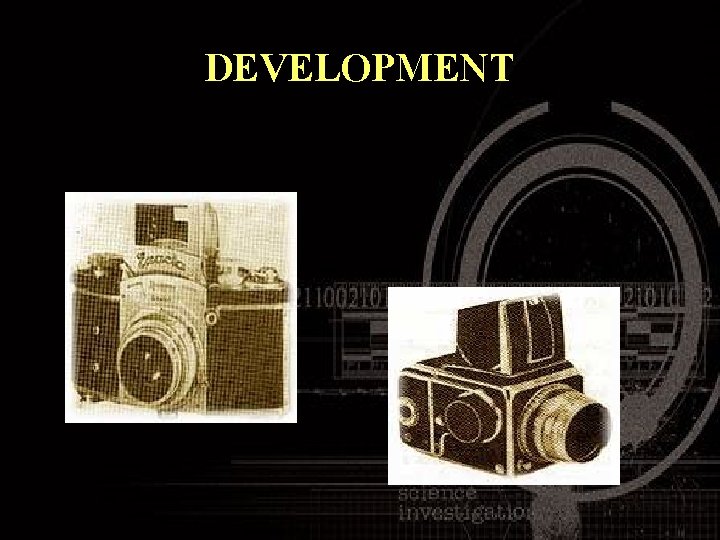
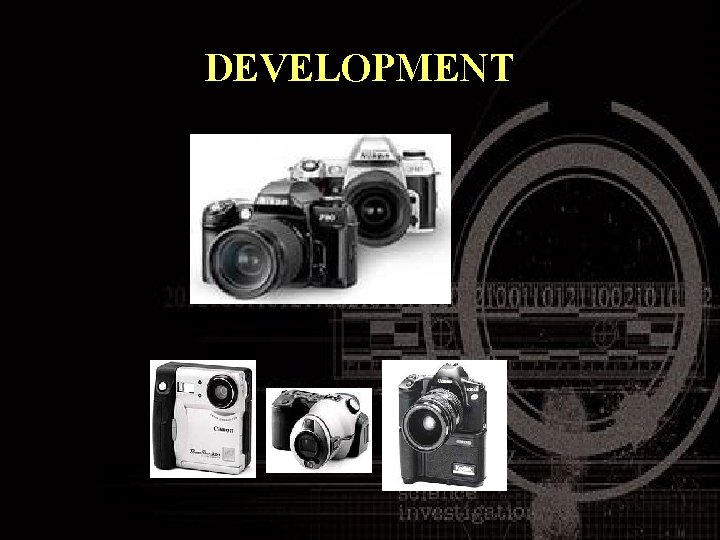
DEVELOPMENT
DEVELOPMENT
DEVELOPMENT
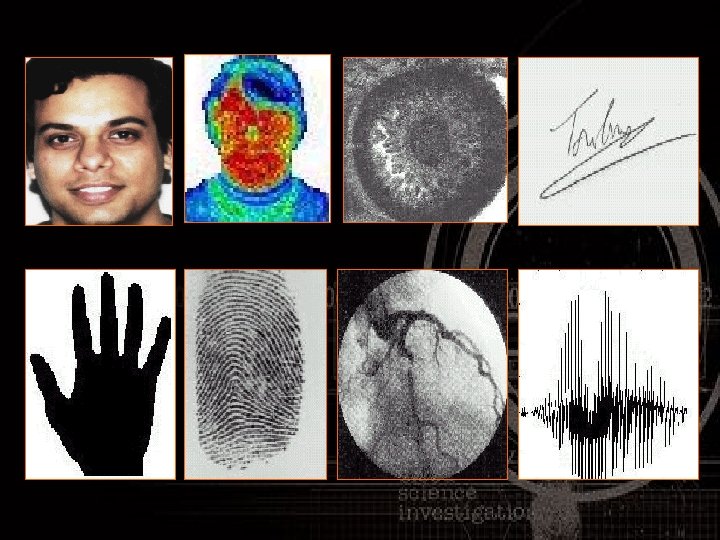
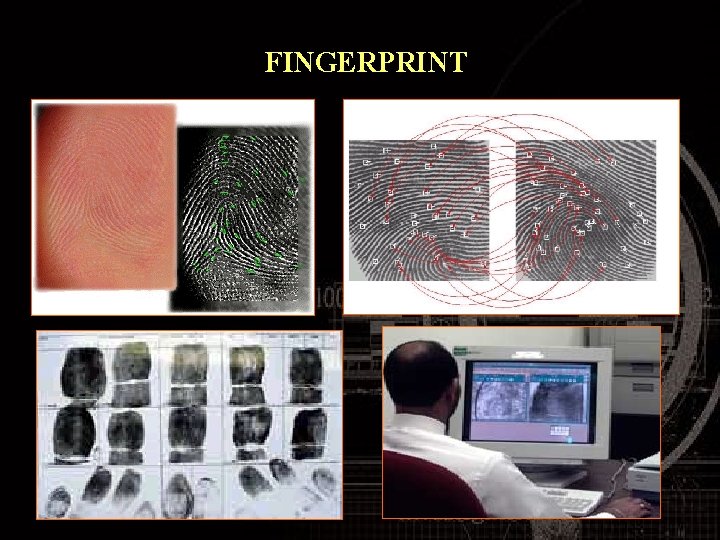
FINGERPRINT
SIGNATURE
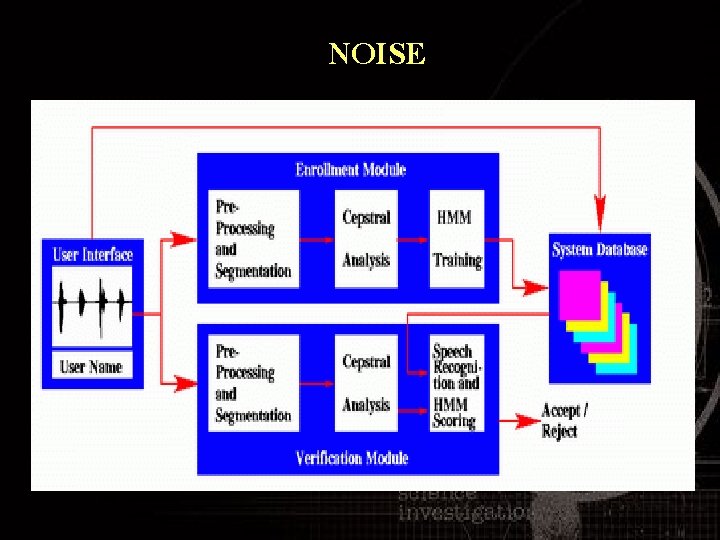
NOISE
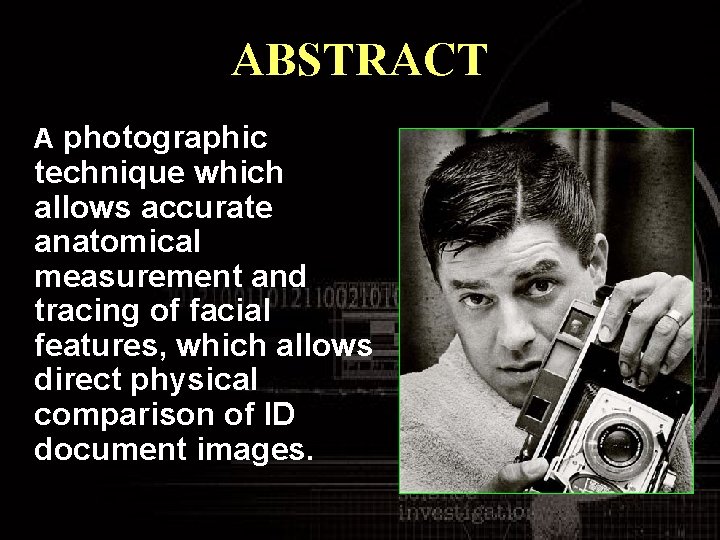
ABSTRACT A photographic technique which allows accurate anatomical measurement and tracing of facial features, which allows direct physical comparison of ID document images.
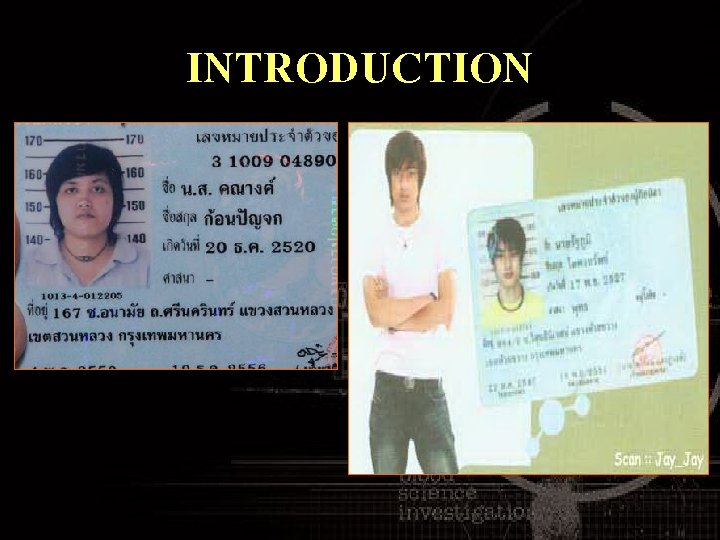
INTRODUCTION
INTRODUCTION • Methods employed by criminals to avoid detection would also become more dificult because they must use their own photograph for the credential to be of any value.
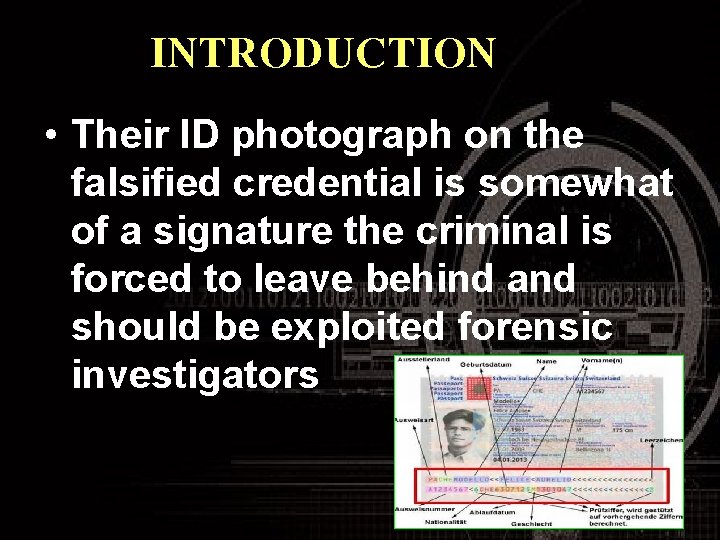
INTRODUCTION • Their ID photograph on the falsified credential is somewhat of a signature the criminal is forced to leave behind and should be exploited forensic investigators
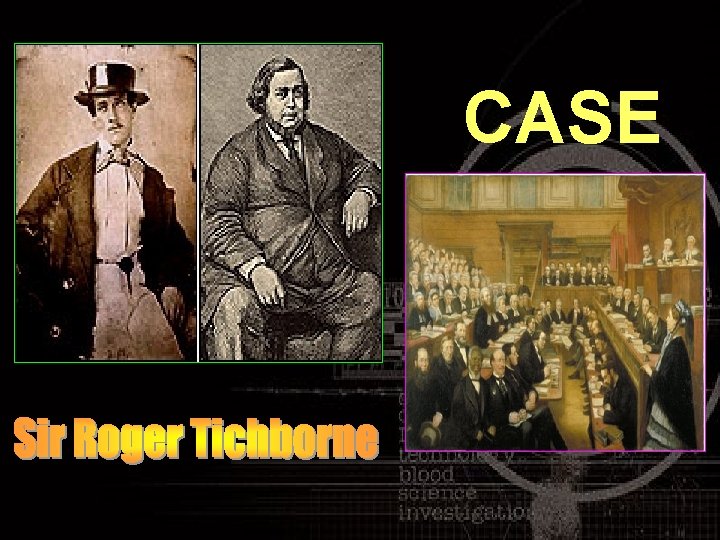
CASE
Materials and methods Legal responsibility • The rules and procedures of local evidencemust be strictly adhered and include:
• correct exhibit labelling, • appropriate secured storage, • appropriate use of police seals or other tamper proof methods, • maintenance of evidence continuity, • issuing and receiving of appropriate receipts of evidence, • maintaining accurate notes of procedures andexamination findings.
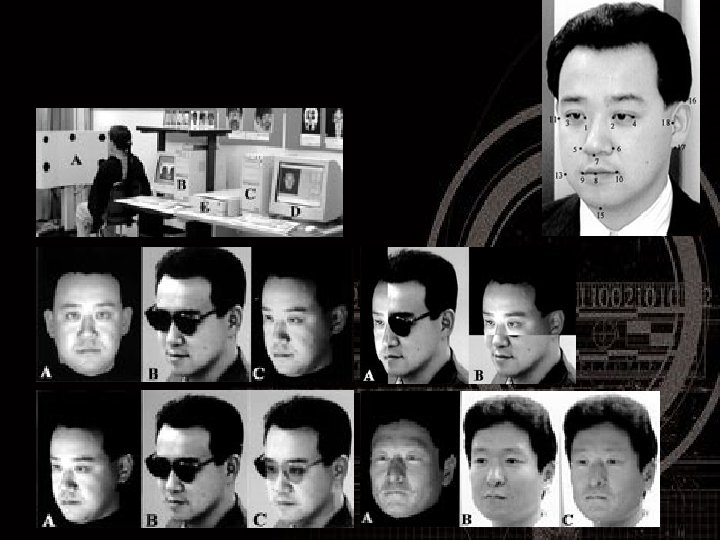
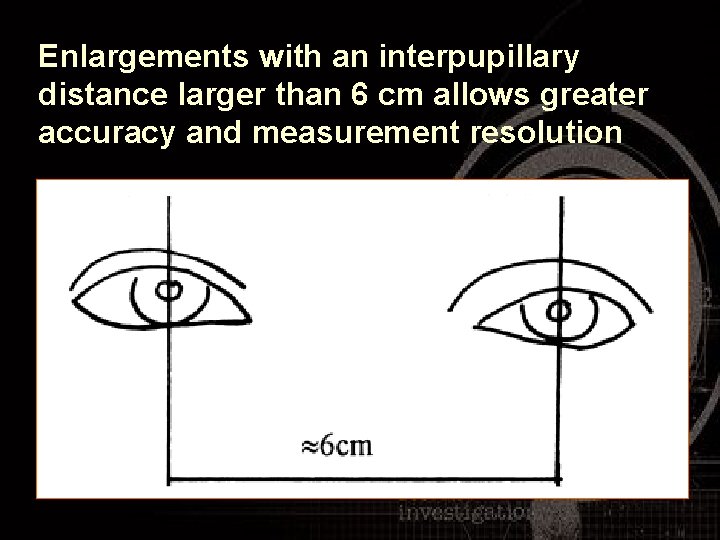
Photographic technique • The first stage of the method is to reproduce the original photographs as larger sized prints and at the same magnification. • Magnification is determined by using the interpupillary distance of the subjects as a standard reference.
Enlargements with an interpupillary distance larger than 6 cm allows greater accuracy and measurement resolution
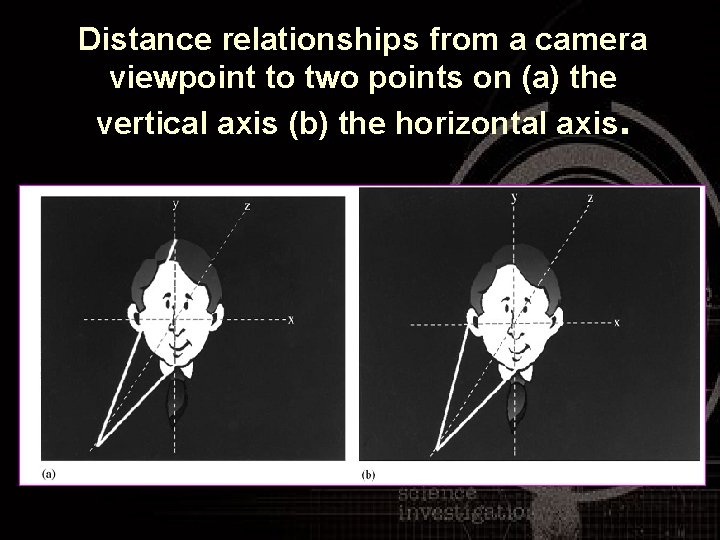
Distance relationships from a camera viewpoint to two points on (a) the vertical axis (b) the horizontal axis.
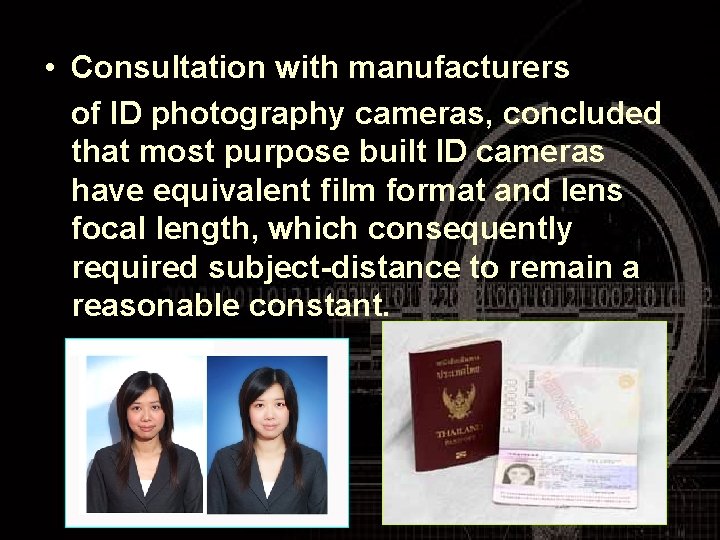
• Consultation with manufacturers of ID photography cameras, concluded that most purpose built ID cameras have equivalent film format and lens focal length, which consequently required subject-distance to remain a reasonable constant.
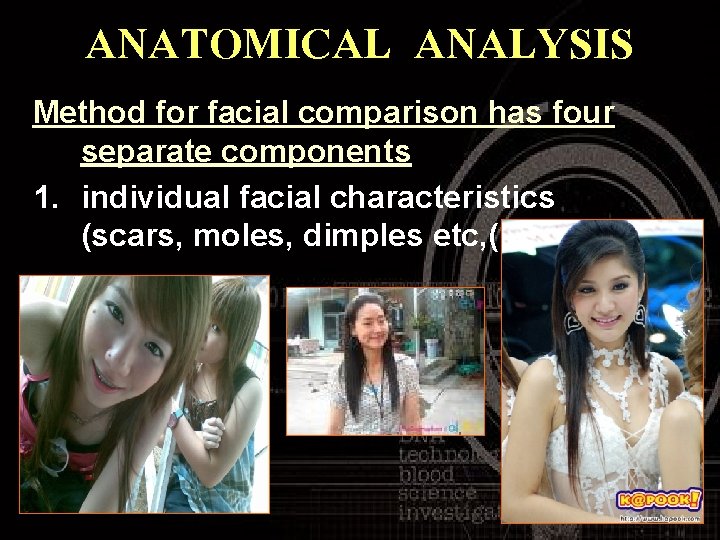
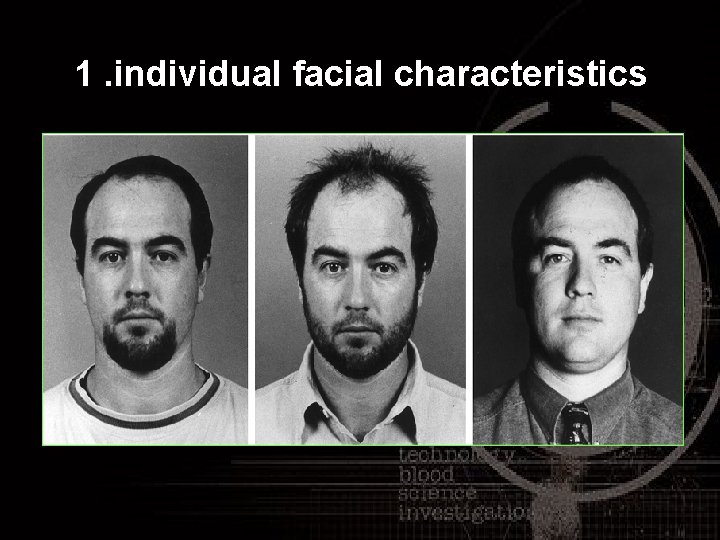
ANATOMICAL ANALYSIS Method for facial comparison has four separate components: 1. individual facial characteristics (scars, moles, dimples etc, (
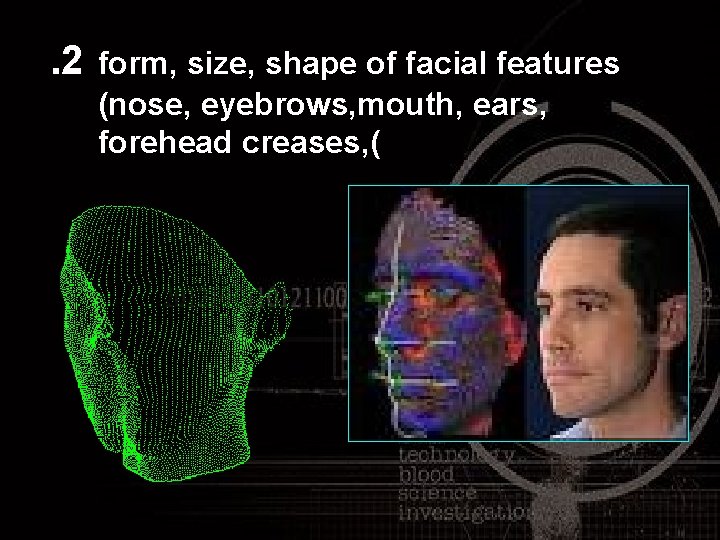
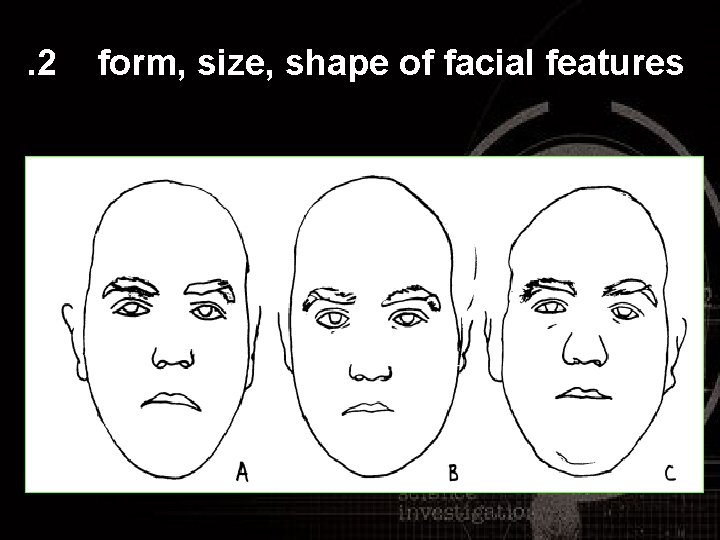
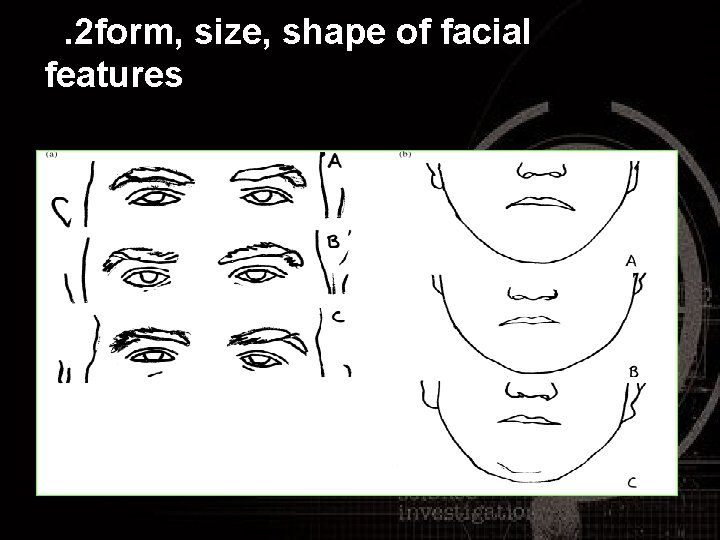
. 2 form, size, shape of facial features (nose, eyebrows, mouth, ears, forehead creases, (
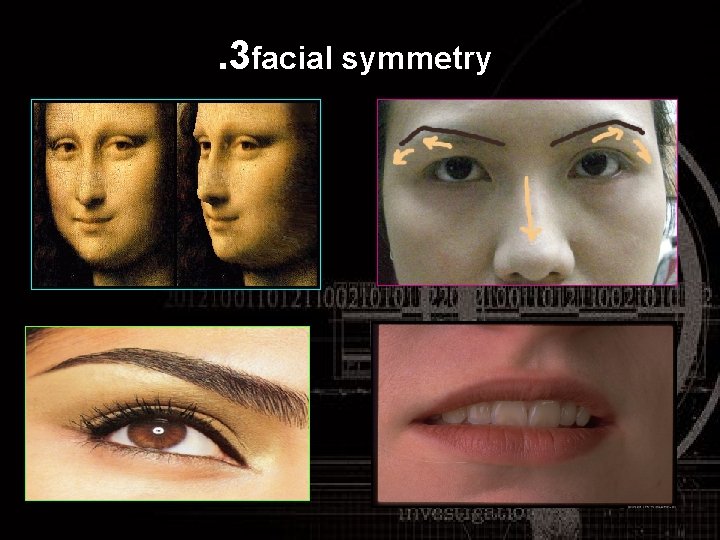
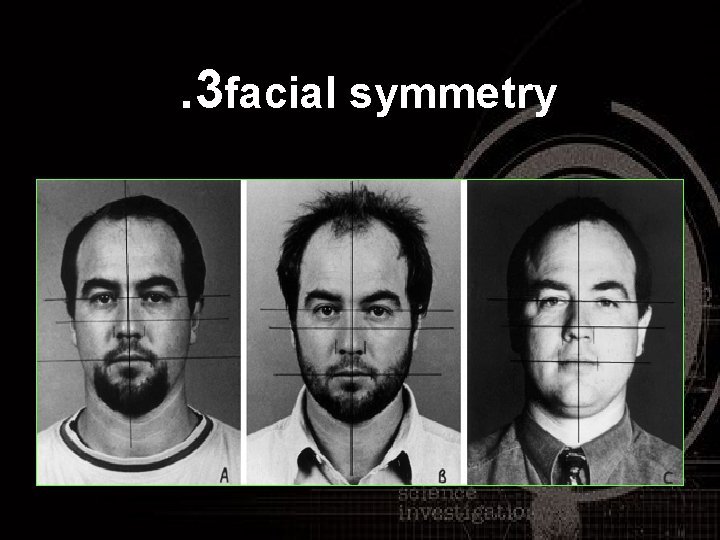
. 3 facial symmetry
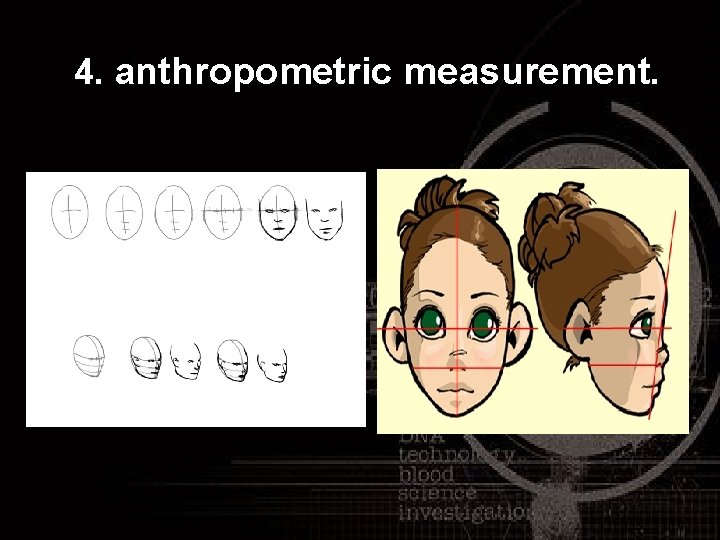
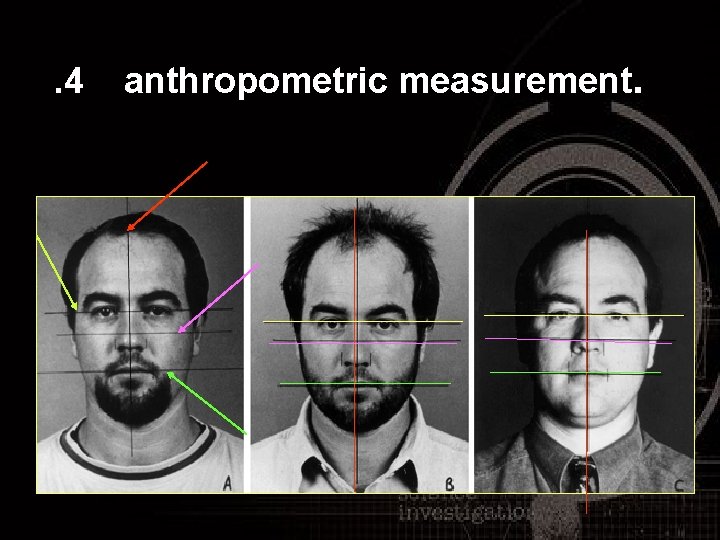
4. 4. anthropometric measurement.
Case
1. individual facial characteristics
. 2 form, size, shape of facial features
. 2 form, size, shape of facial features
. 3 facial symmetry
. 4 anthropometric measurement.
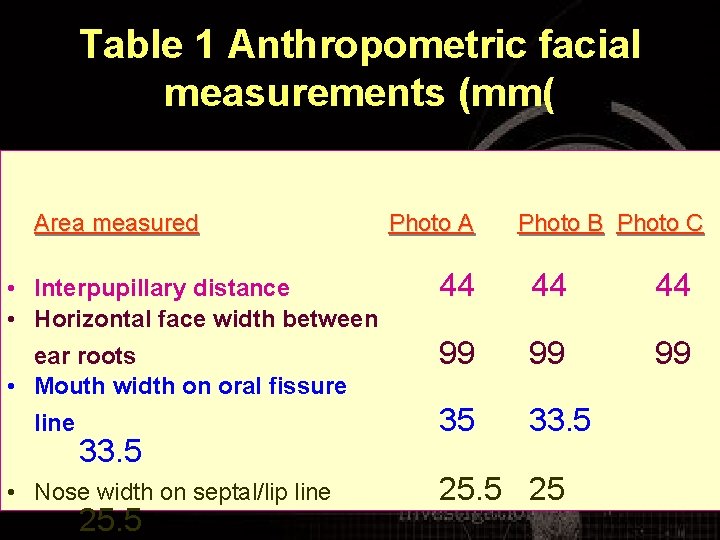
Table 1 Anthropometric facial measurements (mm( Area measured Photo A Photo B Photo C • Interpupillary distance • Horizontal face width between 44 44 44 ear roots • Mouth width on oral fissure 99 99 99 35 33. 5 line 33. 5 • Nose width on septal/lip line 25. 5 25
Preparation of final court report