
PHOTOGRAPHY FRAMES Types of Shots TIGHTLY FRAMED SHOTS
- Slides: 25
PHOTOGRAPHY FRAMES
Types of Shots
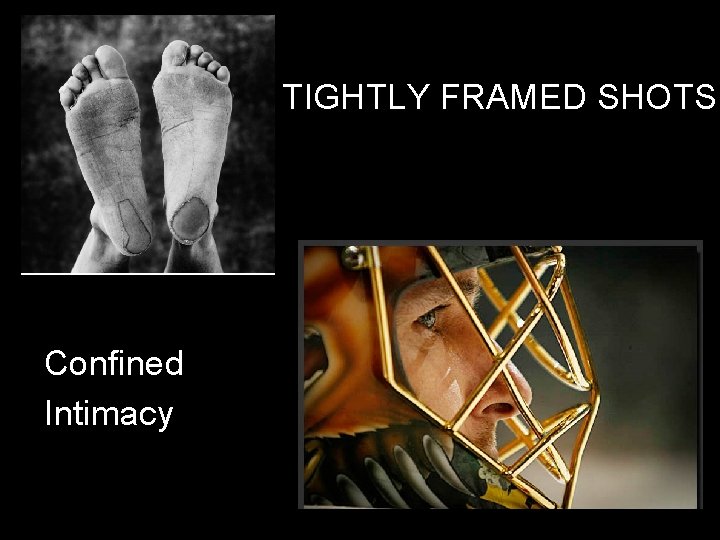
TIGHTLY FRAMED SHOTS Confined Intimacy
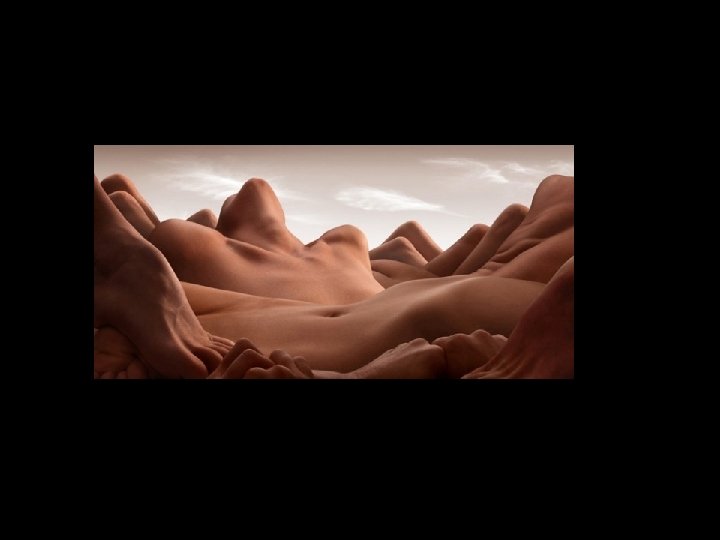
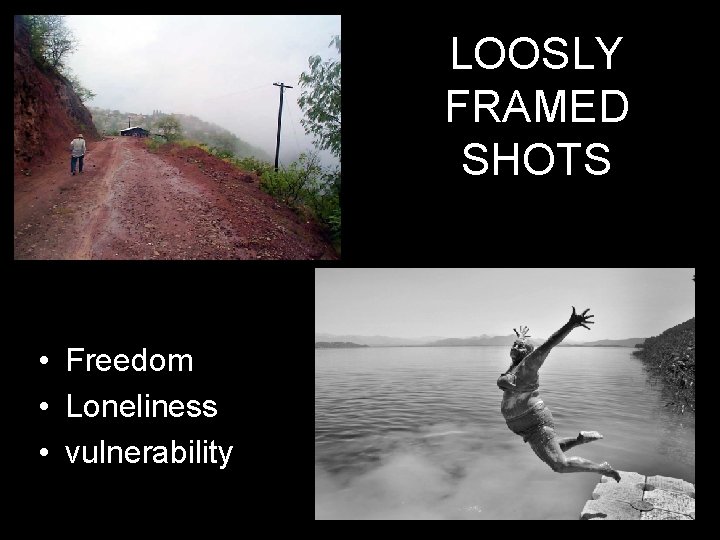
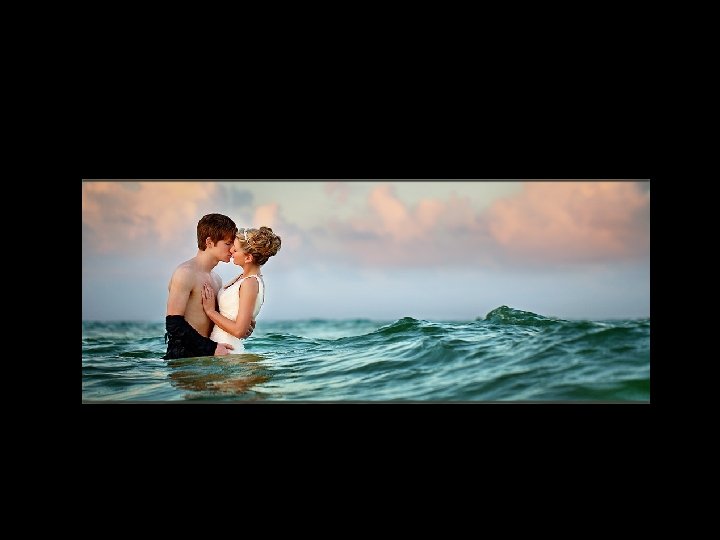
LOOSLY FRAMED SHOTS • Freedom • Loneliness • vulnerability
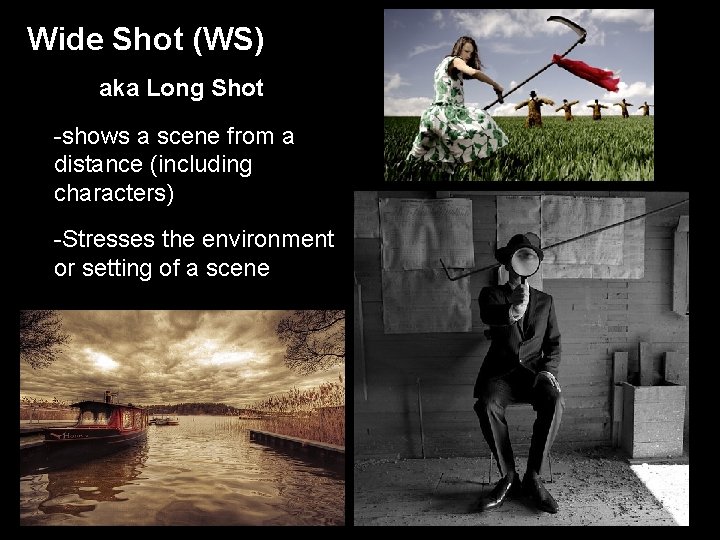
Wide Shot (WS) aka Long Shot -shows a scene from a distance (including characters) -Stresses the environment or setting of a scene
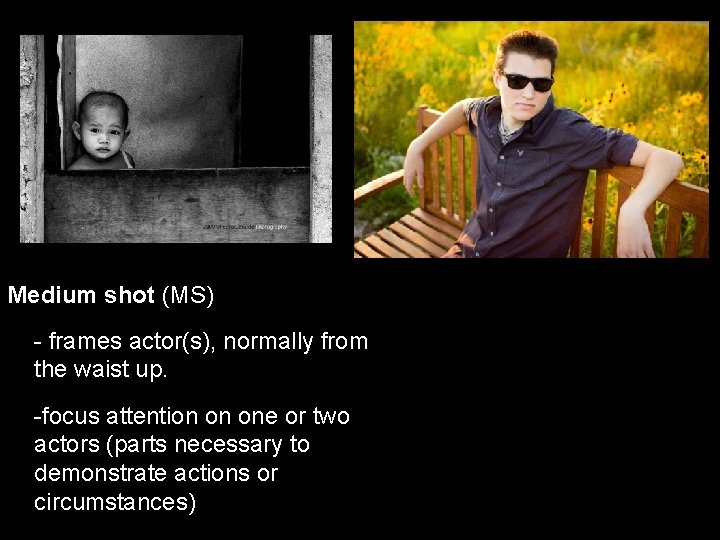
Medium shot (MS) - frames actor(s), normally from the waist up. -focus attention on one or two actors (parts necessary to demonstrate actions or circumstances)
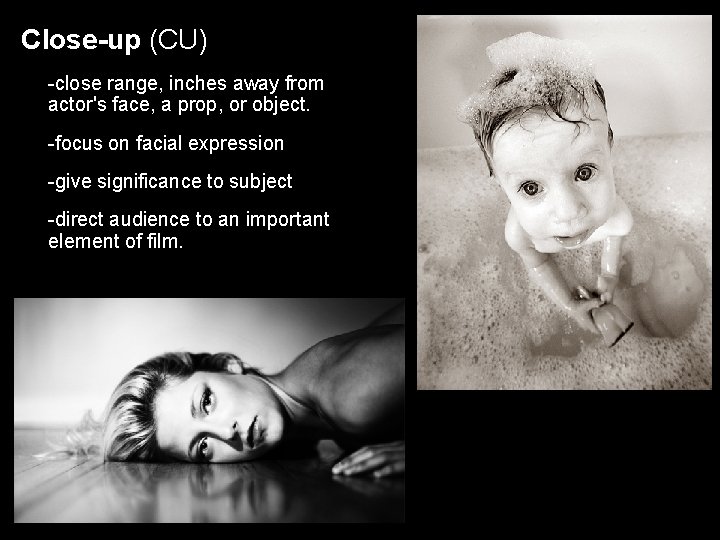
Close-up (CU) -close range, inches away from actor's face, a prop, or object. -focus on facial expression -give significance to subject -direct audience to an important element of film.
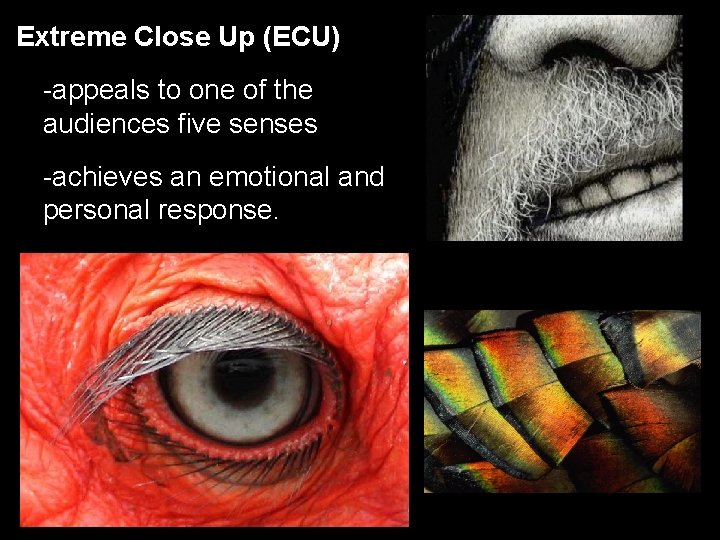
Extreme Close Up (ECU) -appeals to one of the audiences five senses -achieves an emotional and personal response.
Shot Perspectives
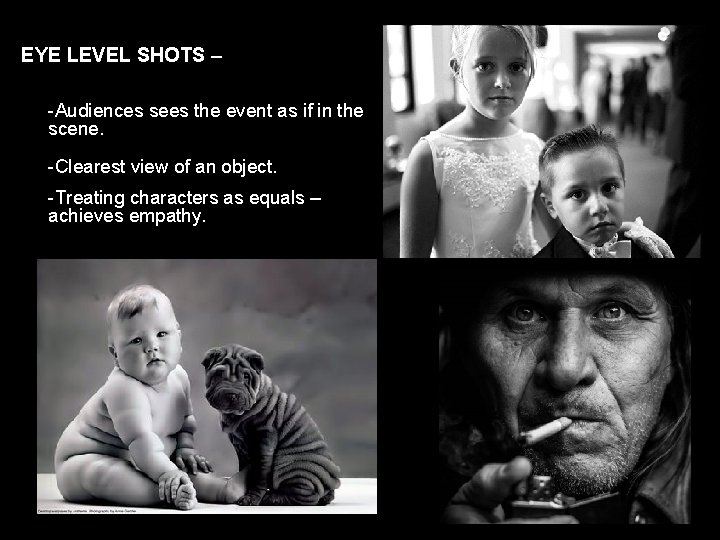
EYE LEVEL SHOTS – -Audiences sees the event as if in the scene. -Clearest view of an object. -Treating characters as equals – achieves empathy.
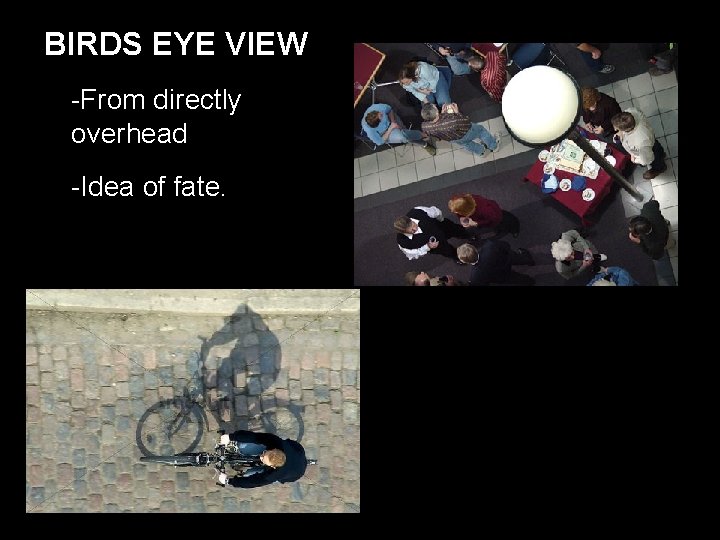
BIRDS EYE VIEW -From directly overhead -Idea of fate.
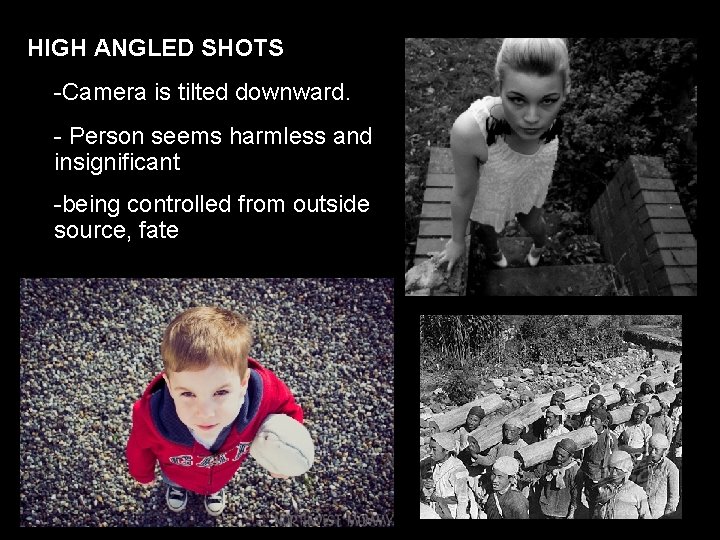
HIGH ANGLED SHOTS -Camera is tilted downward. - Person seems harmless and insignificant -being controlled from outside source, fate
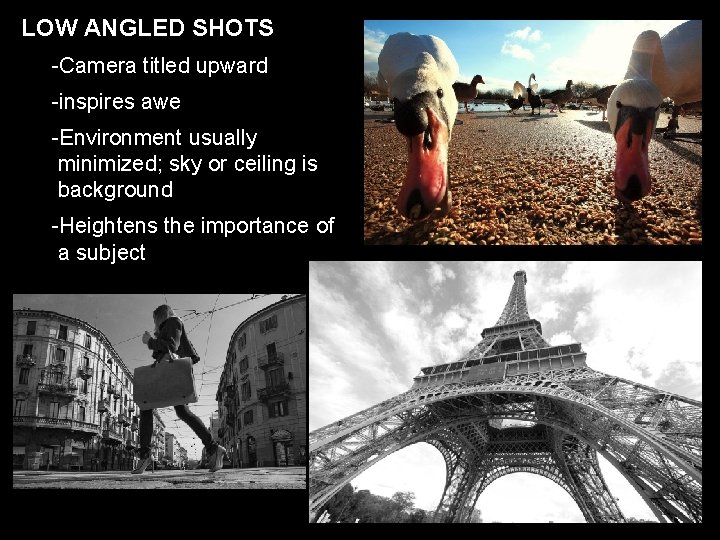
LOW ANGLED SHOTS -Camera titled upward -inspires awe -Environment usually minimized; sky or ceiling is background -Heightens the importance of a subject
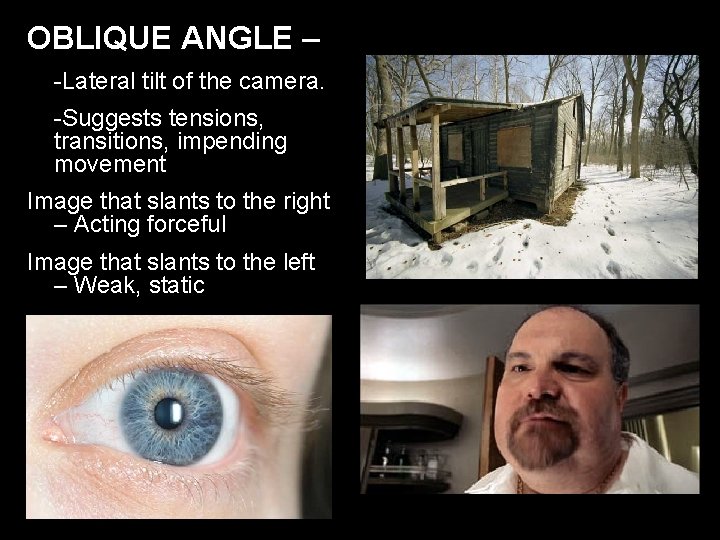
OBLIQUE ANGLE – -Lateral tilt of the camera. -Suggests tensions, transitions, impending movement Image that slants to the right – Acting forceful Image that slants to the left – Weak, static
Character Perspective Shots
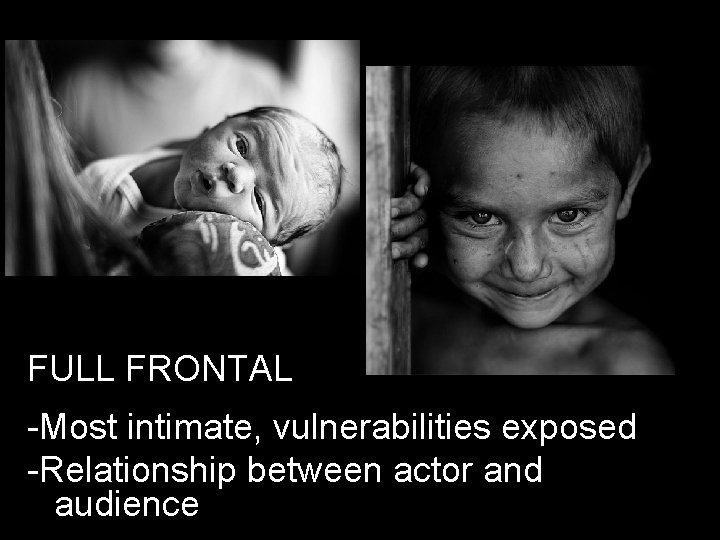
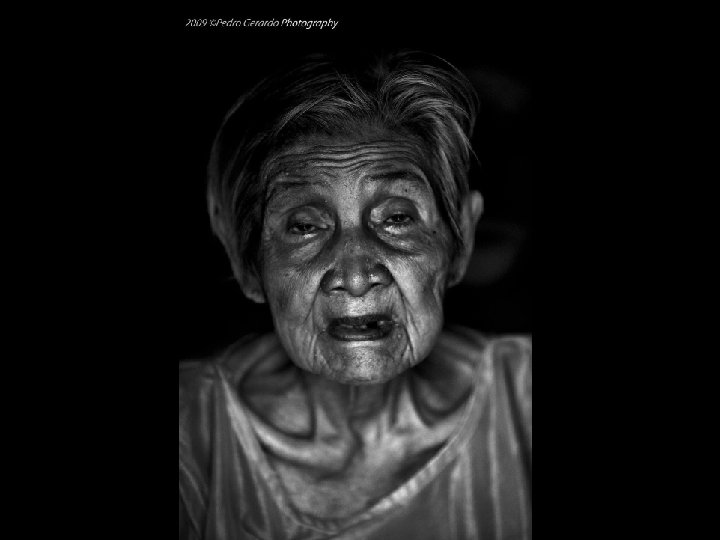
FULL FRONTAL -Most intimate, vulnerabilities exposed -Relationship between actor and audience
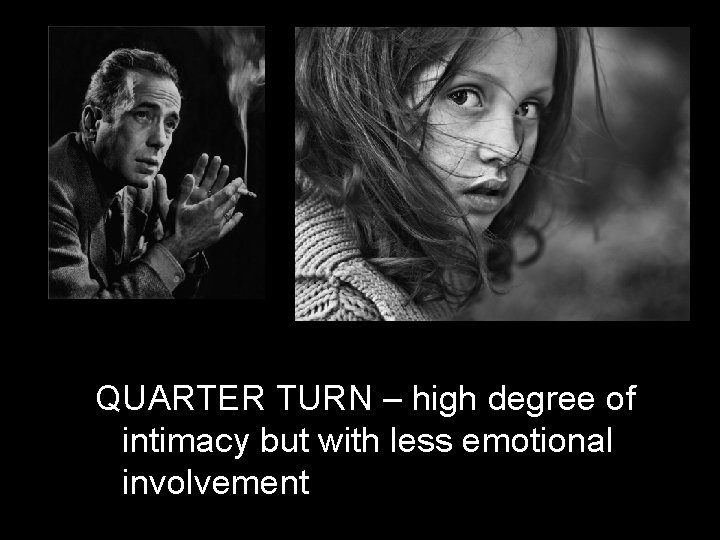
QUARTER TURN – high degree of intimacy but with less emotional involvement
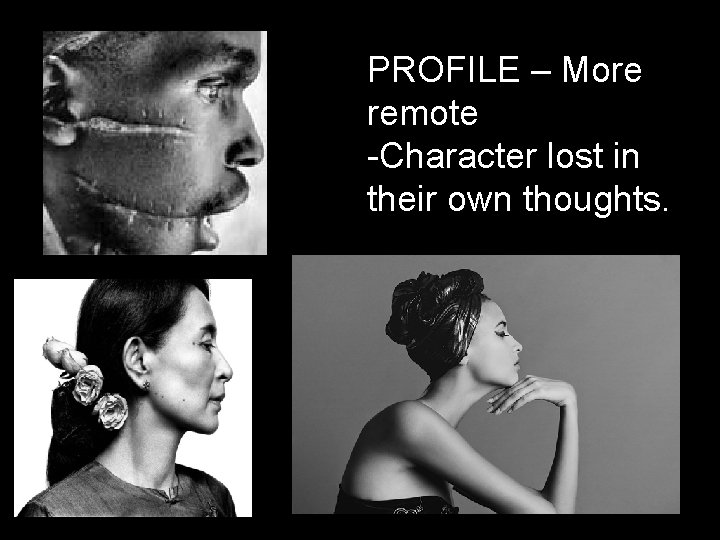
PROFILE – More remote -Character lost in their own thoughts.
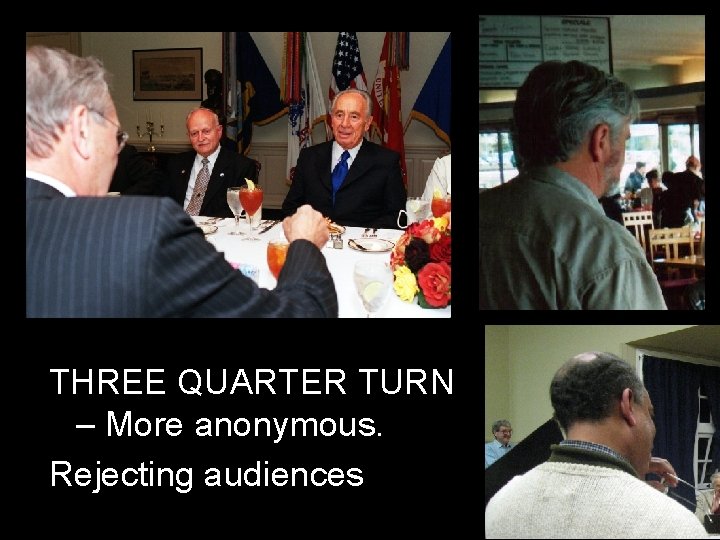
THREE QUARTER TURN – More anonymous. Rejecting audiences
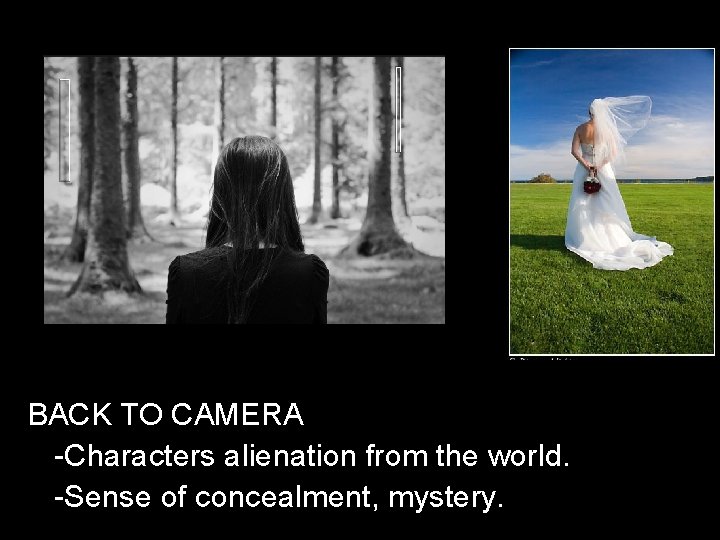
BACK TO CAMERA -Characters alienation from the world. -Sense of concealment, mystery.
What to consider when creating your own storyboard…. .
– How much, and what, should be included in this shot? – What is the message and significance of this shot? – Where should the camera position be angled?