
Photography Composition using the Elements and Principles of
- Slides: 38
Photography Composition using the Elements and Principles of Art
What Are They? • • Elements of design are the parts. They structure and carry the work. Principles of design are concepts. They affect content and message.
Elements The basic building blocks • • • Line Shape/Form Space Value Texture Color
Lines • A mark made by a moving point. • Has greater length than width. • Directs the eye – horizontal, vertical, diagonal, curvy, zig-zag, etc. • Can be actual obvious lines or the borders or edges of shapes.
Lines
Shape/Form • Form is an area surrounded by space. • Shape is a contained area. • Can be GEOMETRIC (man-made) ex. Square, triangle, circle, etc. • Can be ORGANIC (natural) ex. Leaves, humans, puddles, etc. • Shapes are 2 -Dimensional and flat. (circle) • Forms are 3 -Dimensional with height, width and depth. (sphere) • Used to create a sense of space and substance.
Shape/Form
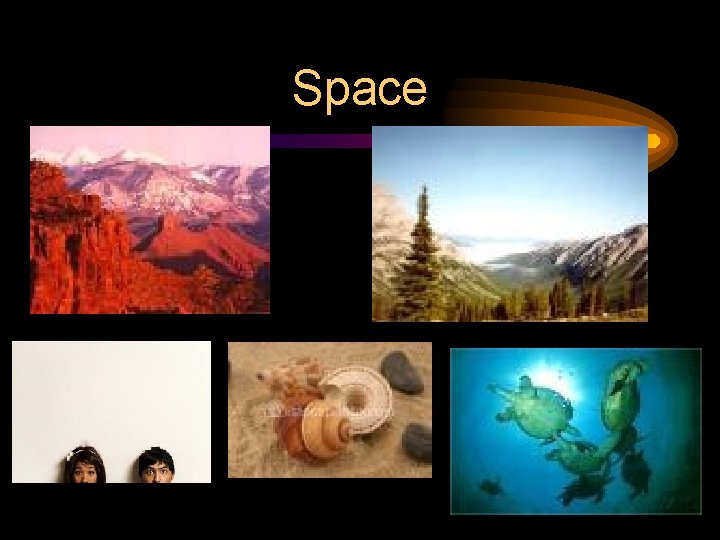
Space • Space can be positive or negative. • Positive space – the area the objects/subject takes up. • Negative space – the area around, under, through and between. • Gives the photo a 3 -dimensional feeling. (Depth) • Foreground (closest), Middle ground, and Background (farthest). • Can be open, crowded, near, far, etc.
Space
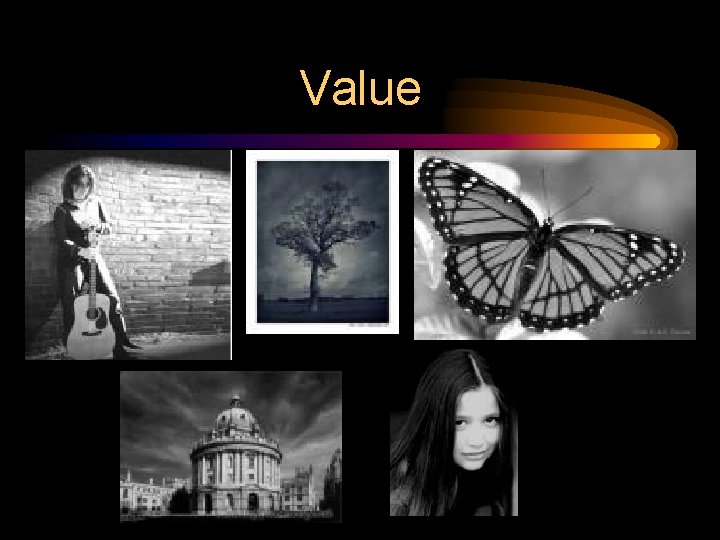
Value • Black and White and all the Grays in between • Dark to Light • Can add drama and impact to composition. • Can give a sense of timelessness • Train your eye to read color as Black and White!
Value
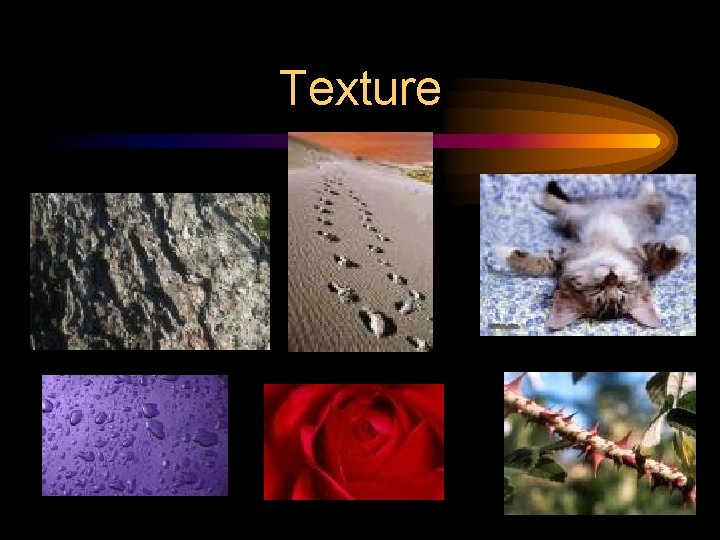
Texture • The surface quality. • How an object feels, or how it looks like it feels. • Rough, smooth, bumpy, gooey, sharp, etc. • Adds interest! Sense of sight and sense of touch involved.
Texture
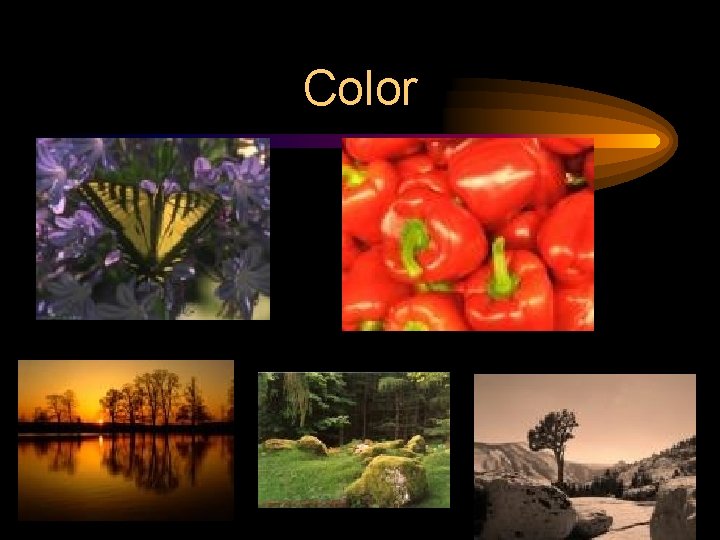
Color • • Artistic term is HUE Need light to see color. Primary, Secondary, Intermediates. Use color schemes to enhance appeal or make impact.
Color
Principles • The different arrangements – or compositions - of the ELEMENTS of design to create artistic, interesting, more visually powerful photographs.
What are the Principles of Art? • Emphasis • Balance • Unity • Harmony • Proportion • Variety • Contrast • Movement/ Rhythm • Pattern/Repetition
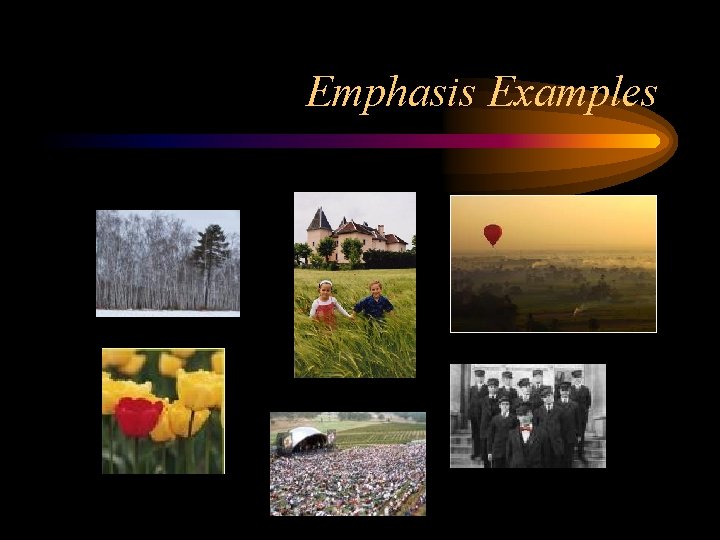
EMPHASIS or Focal Point Emphasis in a composition refers to developing points of interest to pull the viewer's eye to important parts of the body of the work.
Emphasis Examples
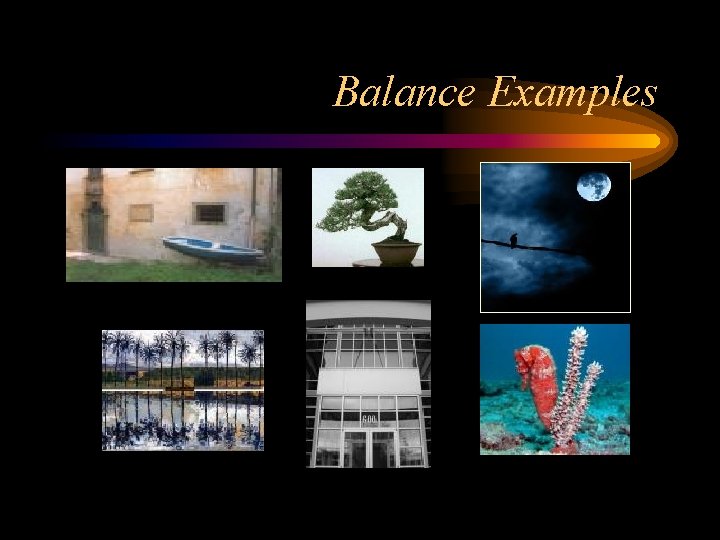
Balance is a sense of stability in the body of work. Balance can be created by repeating same shapes and by creating a feeling of equal weight.
Balance Examples
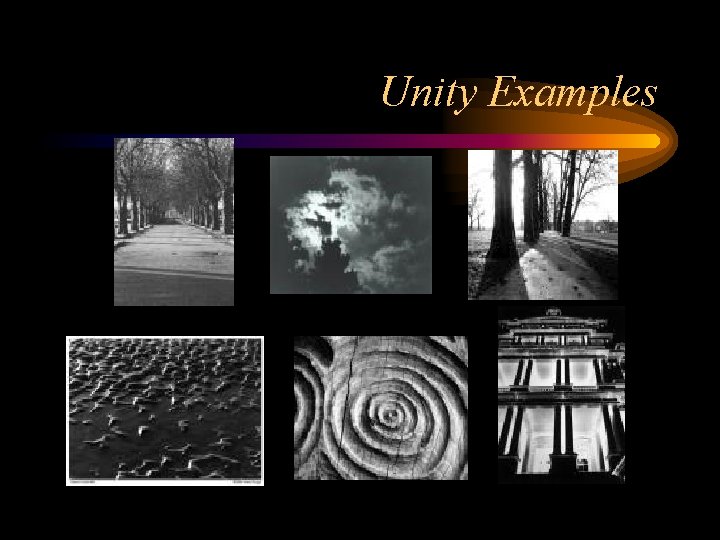
Unity is seen in a painting or drawing when all the parts equal a whole.
Unity Examples
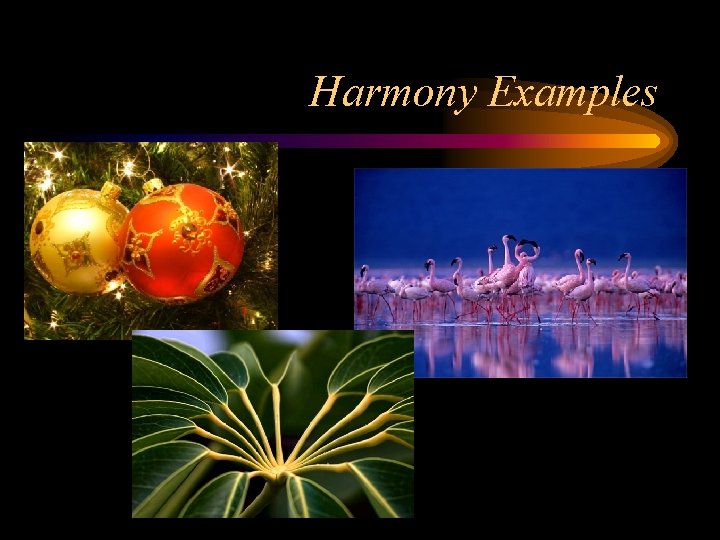
Harmony is when elements are related and may combine similar elements in an image. (Can be done through color or similar forms. )
Harmony Examples
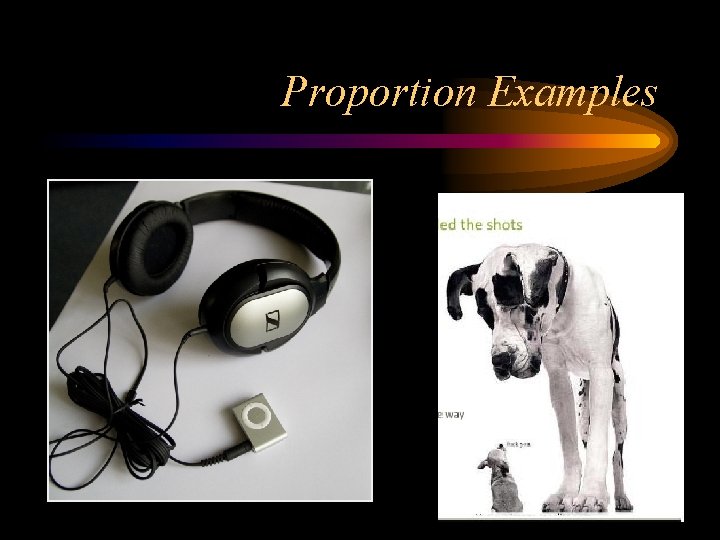
Proportion is the relationship between the size and scale of the elements in a design. This relationship can be between the objects, parts, or the whole.
Proportion Examples
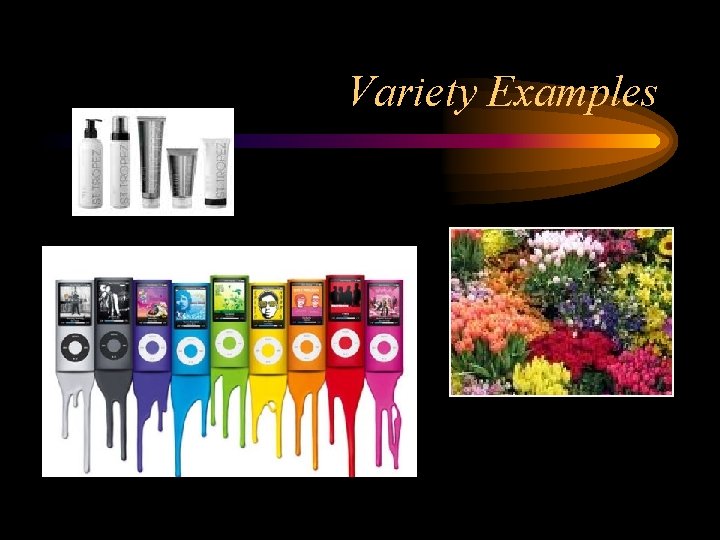
Variety combines elements to create an intricate and complex relationship.
Variety Examples
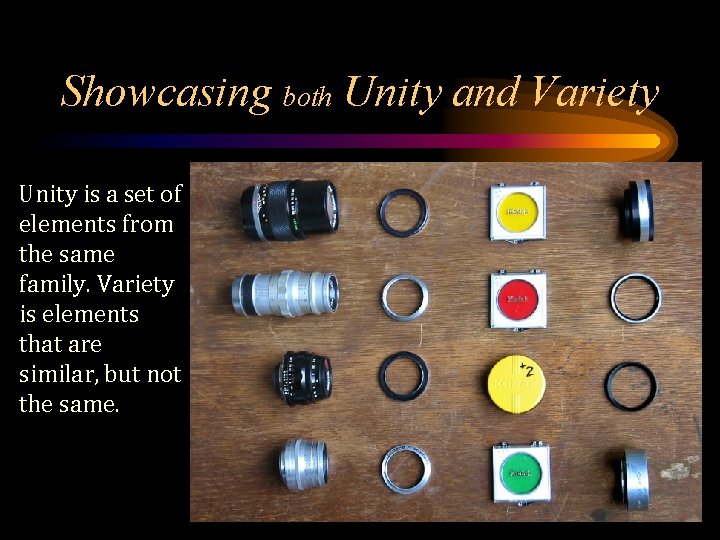
Showcasing both Unity and Variety Unity is a set of elements from the same family. Variety is elements that are similar, but not the same.
CONTRAST Contrast refers to the opposites and differences in the work. You can achieve variety by using different shapes, textures, colors and values in your work.
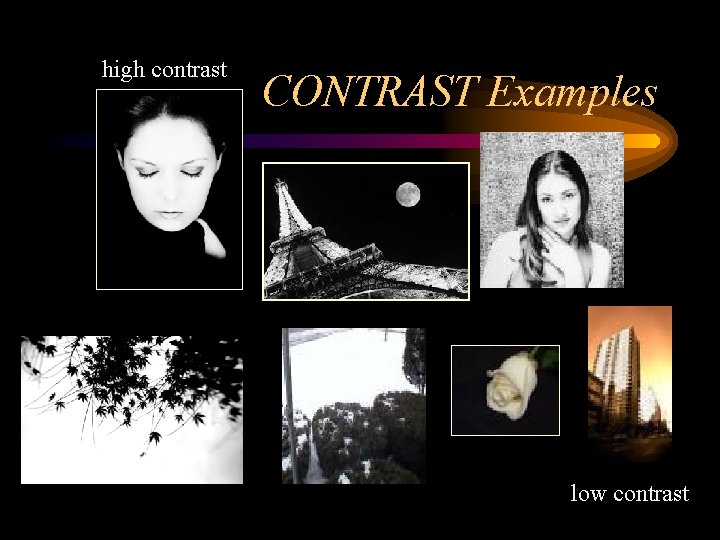
high contrast CONTRAST Examples low contrast
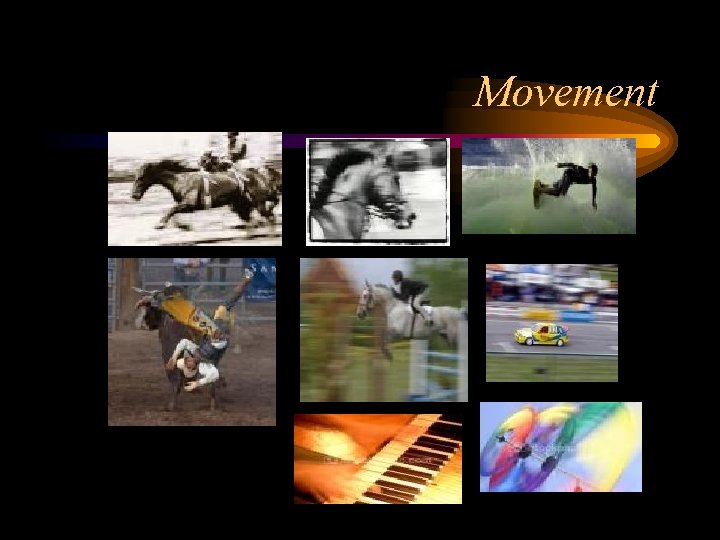
Movement/Rhythm Movement adds excitement to your work by showing action and directing the viewers eye throughout the picture plane. Rhythm is a type of movement in drawing and painting. It is seen in repeating of shapes and colors. Alternating lights and darks also give a sense of rhythm.
Movement
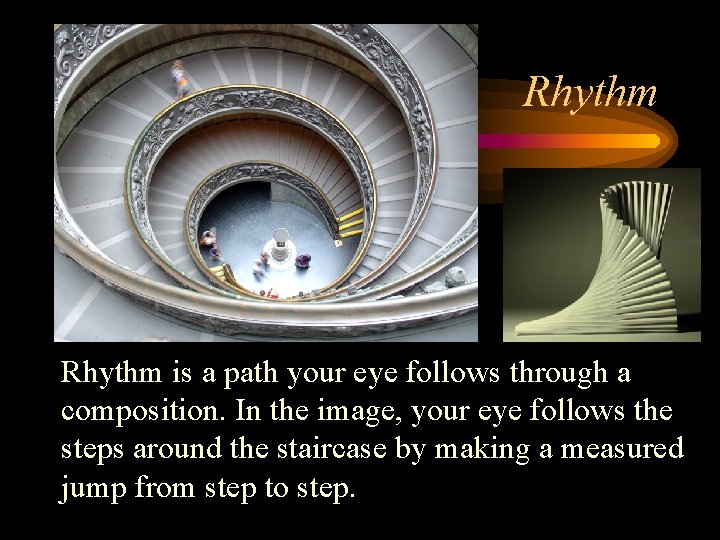
Rhythm is a path your eye follows through a composition. In the image, your eye follows the steps around the staircase by making a measured jump from step to step.
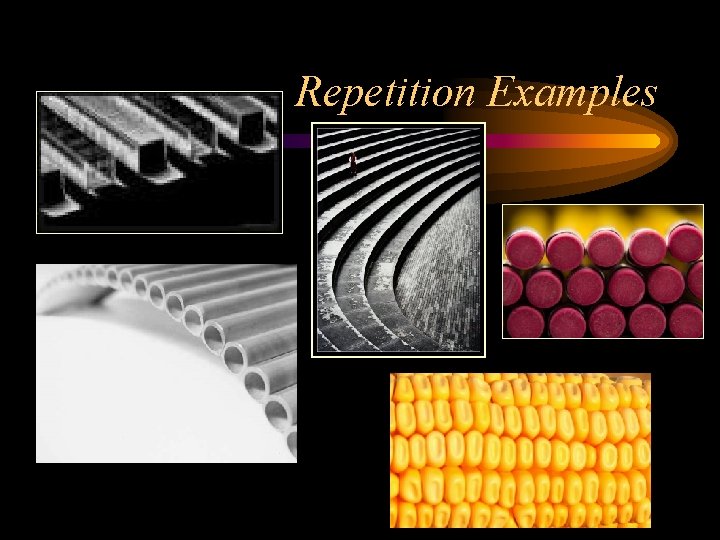
Pattern/Repetition • An element that occurs over and over again in a composition. • Can repeat the element in a consistent pattern. • Can repeat the element in a variation of the pattern.
Repetition Examples
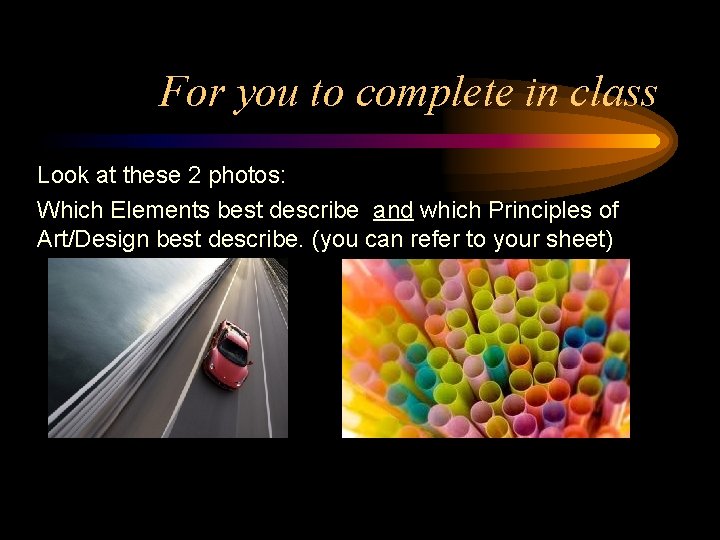
For you to complete in class Look at these 2 photos: Which Elements best describe and which Principles of Art/Design best describe. (you can refer to your sheet)