
Photography A History 5 th4 th Centuries B
Photography: A History
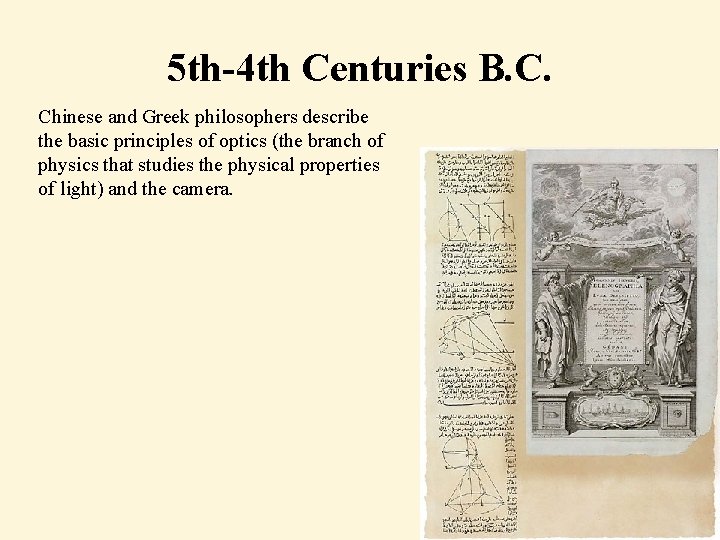
5 th-4 th Centuries B. C. Chinese and Greek philosophers describe the basic principles of optics (the branch of physics that studies the physical properties of light) and the camera.
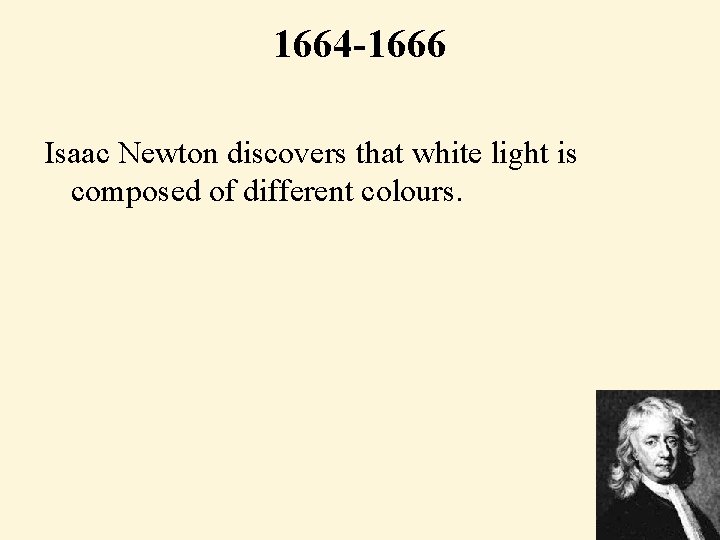
1664 -1666 Isaac Newton discovers that white light is composed of different colours.

1727 Johann Heinrich Schulze, a professor of anatomy, discovered that silver salts, specifically a piece of chalk dipped in silver nitrate turned black from white when exposed to the sun. The unexposed side remained white. He experimented creating crude photographic impressions, but eventually it all turned black due to exposure.
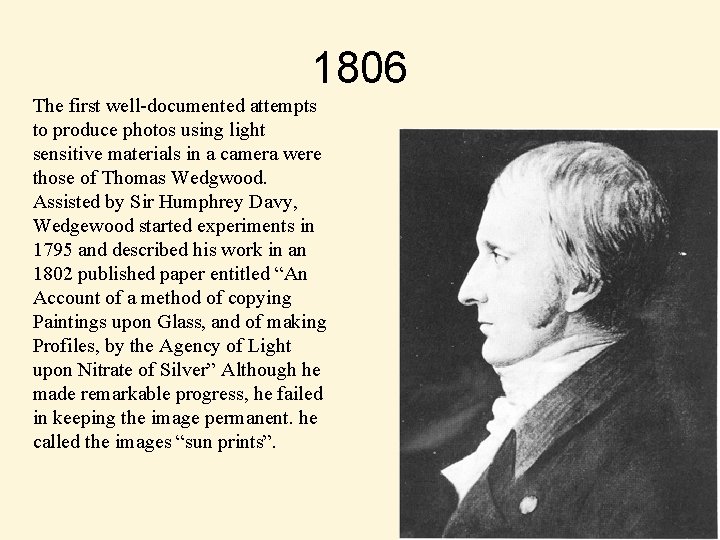
1806 The first well-documented attempts to produce photos using light sensitive materials in a camera were those of Thomas Wedgwood. Assisted by Sir Humphrey Davy, Wedgewood started experiments in 1795 and described his work in an 1802 published paper entitled “An Account of a method of copying Paintings upon Glass, and of making Profiles, by the Agency of Light upon Nitrate of Silver” Although he made remarkable progress, he failed in keeping the image permanent. he called the images “sun prints”.
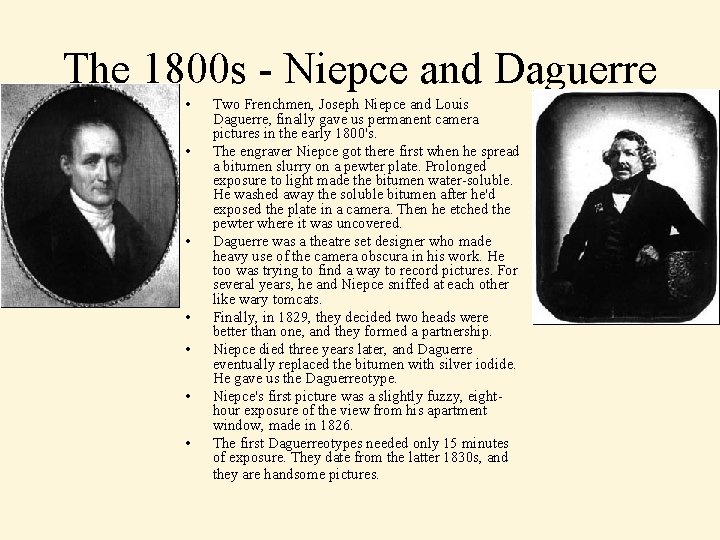
The 1800 s - Niepce and Daguerre • • Two Frenchmen, Joseph Niepce and Louis Daguerre, finally gave us permanent camera pictures in the early 1800's. The engraver Niepce got there first when he spread a bitumen slurry on a pewter plate. Prolonged exposure to light made the bitumen water-soluble. He washed away the soluble bitumen after he'd exposed the plate in a camera. Then he etched the pewter where it was uncovered. Daguerre was a theatre set designer who made heavy use of the camera obscura in his work. He too was trying to find a way to record pictures. For several years, he and Niepce sniffed at each other like wary tomcats. Finally, in 1829, they decided two heads were better than one, and they formed a partnership. Niepce died three years later, and Daguerre eventually replaced the bitumen with silver iodide. He gave us the Daguerreotype. Niepce's first picture was a slightly fuzzy, eighthour exposure of the view from his apartment window, made in 1826. The first Daguerreotypes needed only 15 minutes of exposure. They date from the latter 1830 s, and they are handsome pictures.

1827 Nicephore (Joseph) Niepce achieves first photographic image with camera obscura however, the image required 8 hours of light exposure and later faded. It was a photo of a view from the Niépce family house in Gras, France. Niépce calling his pictures “Heliographs” or sun drawing.
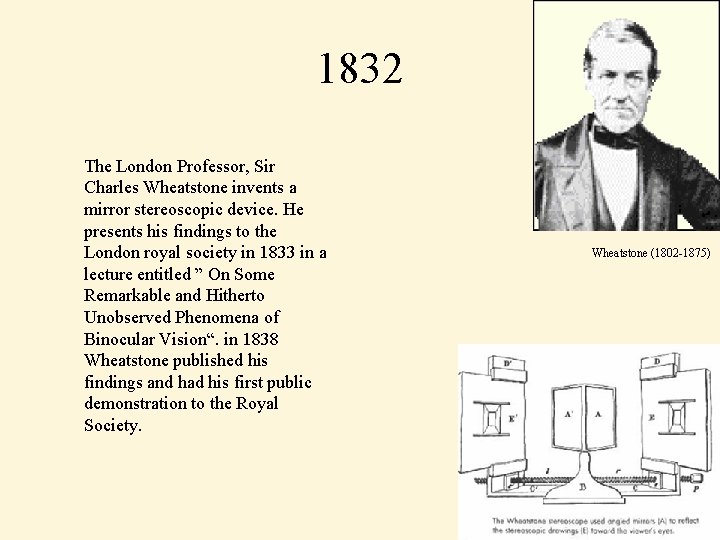
1832 The London Professor, Sir Charles Wheatstone invents a mirror stereoscopic device. He presents his findings to the London royal society in 1833 in a lecture entitled ” On Some Remarkable and Hitherto Unobserved Phenomena of Binocular Vision“. in 1838 Wheatstone published his findings and had his first public demonstration to the Royal Society. Wheatstone (1802 -1875)
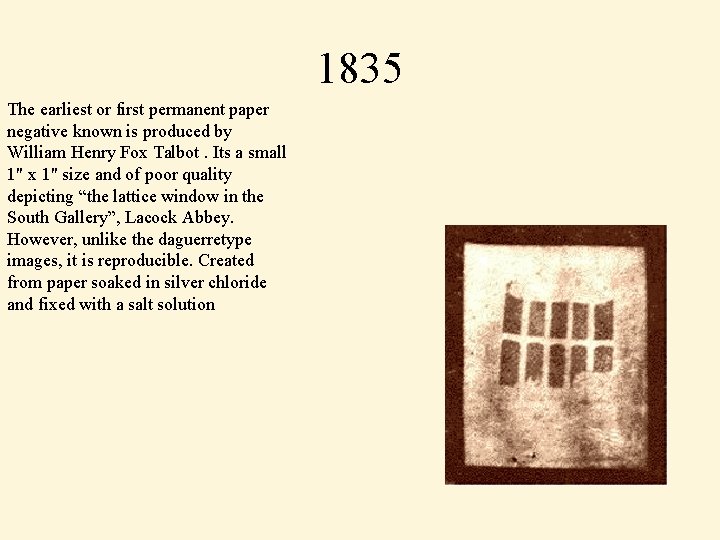
1835 The earliest or first permanent paper negative known is produced by William Henry Fox Talbot. Its a small 1" x 1" size and of poor quality depicting “the lattice window in the South Gallery”, Lacock Abbey. However, unlike the daguerretype images, it is reproducible. Created from paper soaked in silver chloride and fixed with a salt solution
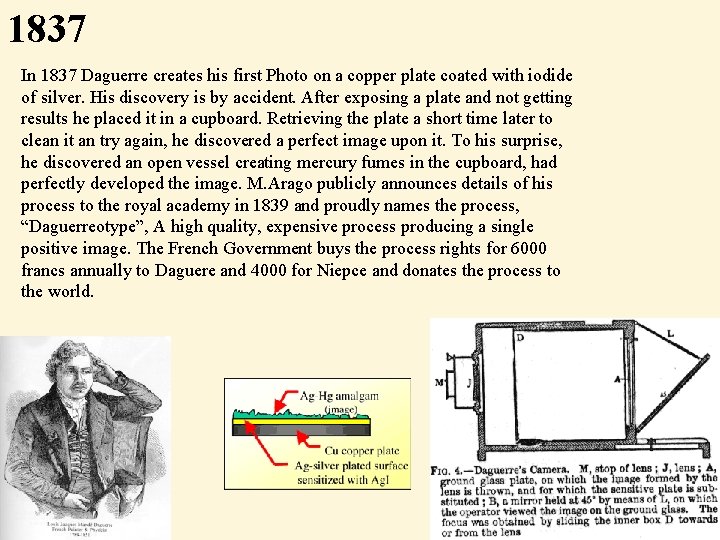
1837 In 1837 Daguerre creates his first Photo on a copper plate coated with iodide of silver. His discovery is by accident. After exposing a plate and not getting results he placed it in a cupboard. Retrieving the plate a short time later to clean it an try again, he discovered a perfect image upon it. To his surprise, he discovered an open vessel creating mercury fumes in the cupboard, had perfectly developed the image. M. Arago publicly announces details of his process to the royal academy in 1839 and proudly names the process, “Daguerreotype”, A high quality, expensive process producing a single positive image. The French Government buys the process rights for 6000 francs annually to Daguere and 4000 for Niepce and donates the process to the world.
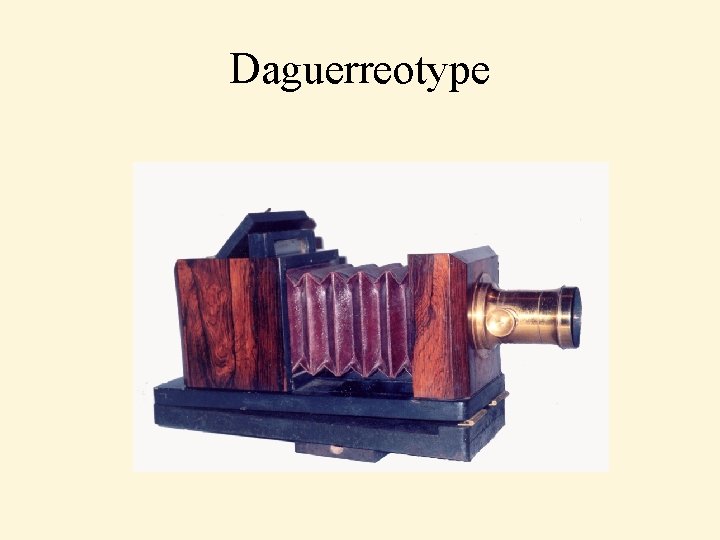
Daguerreotype
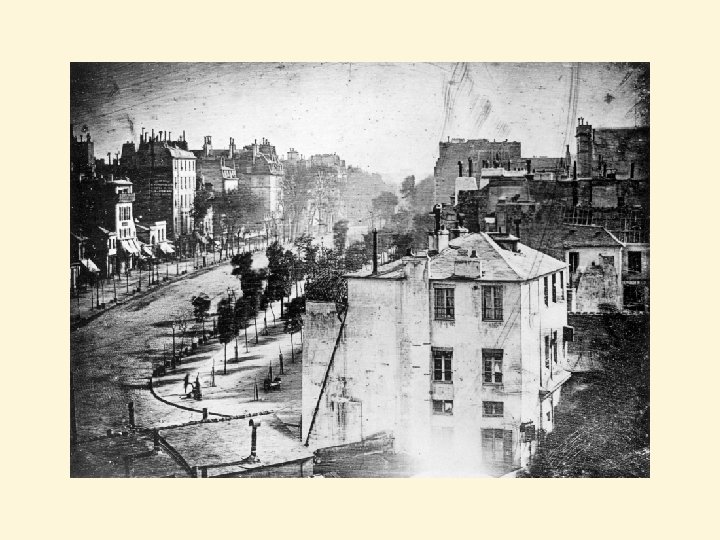
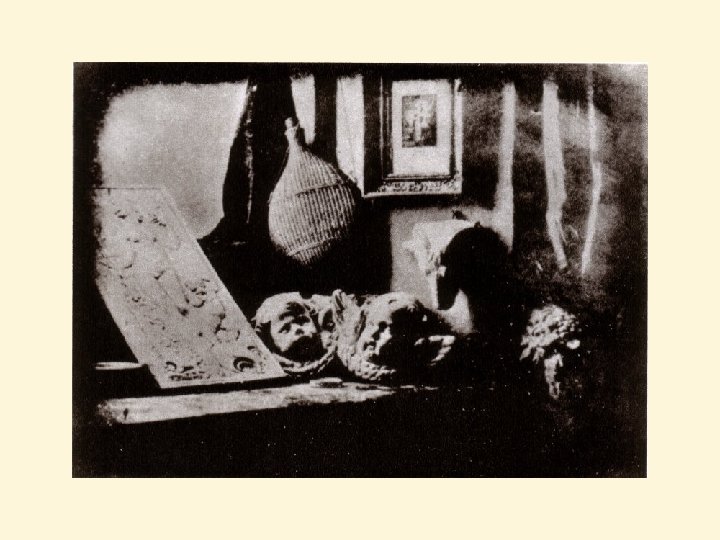
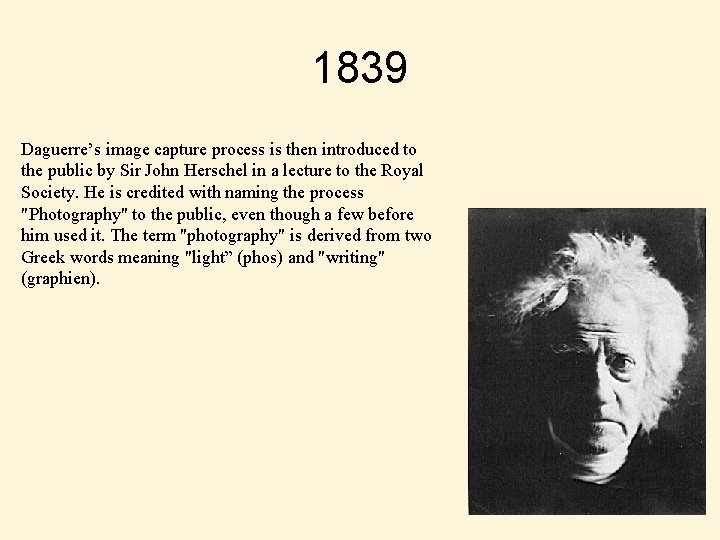
1839 Daguerre’s image capture process is then introduced to the public by Sir John Herschel in a lecture to the Royal Society. He is credited with naming the process "Photography" to the public, even though a few before him used it. The term "photography" is derived from two Greek words meaning "light” (phos) and "writing" (graphien).
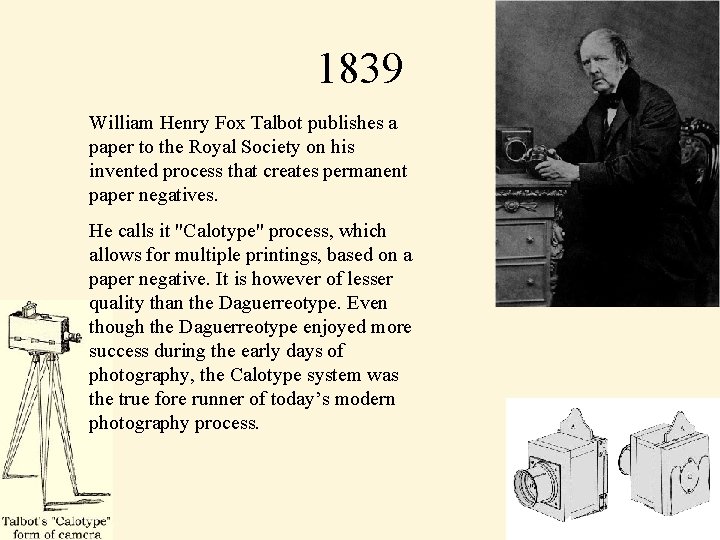
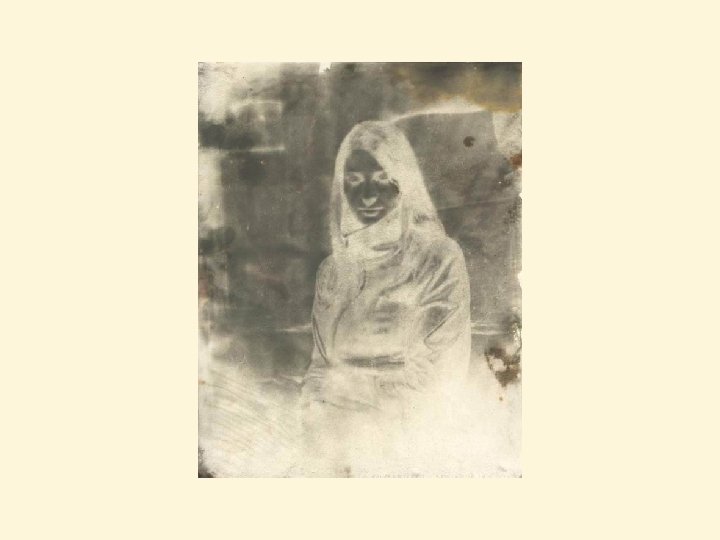
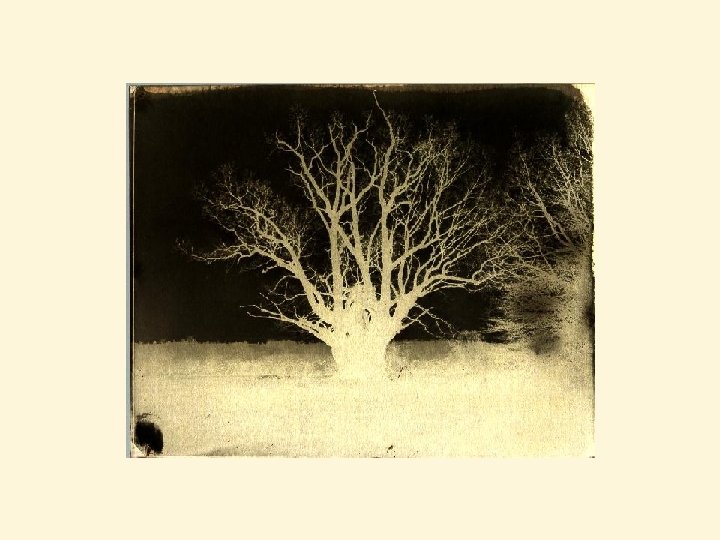
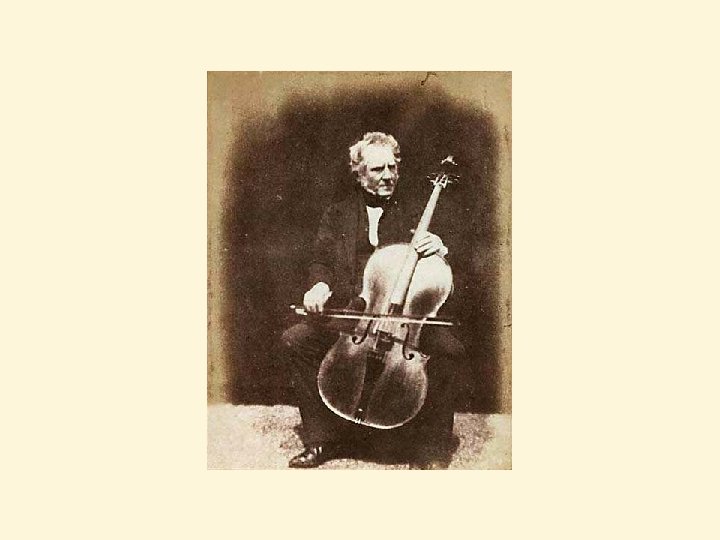
1839 William Henry Fox Talbot publishes a paper to the Royal Society on his invented process that creates permanent paper negatives. He calls it "Calotype" process, which allows for multiple printings, based on a paper negative. It is however of lesser quality than the Daguerreotype. Even though the Daguerreotype enjoyed more success during the early days of photography, the Calotype system was the true fore runner of today’s modern photography process.
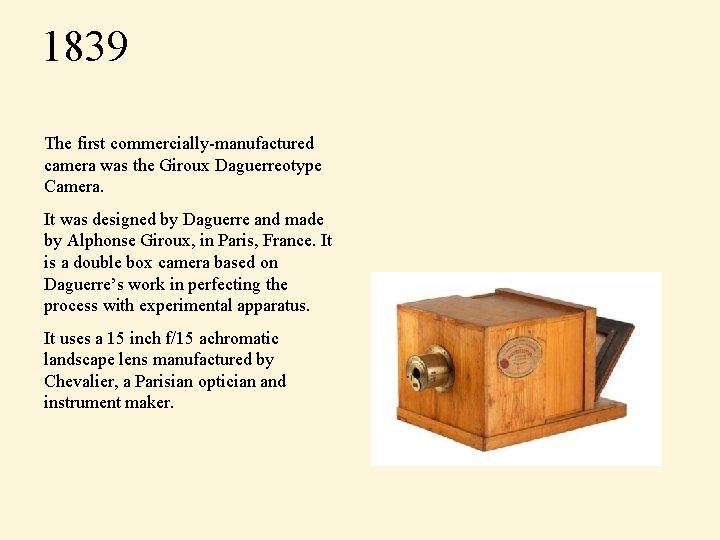
1839 The first commercially-manufactured camera was the Giroux Daguerreotype Camera. It was designed by Daguerre and made by Alphonse Giroux, in Paris, France. It is a double box camera based on Daguerre’s work in perfecting the process with experimental apparatus. It uses a 15 inch f/15 achromatic landscape lens manufactured by Chevalier, a Parisian optician and instrument maker.
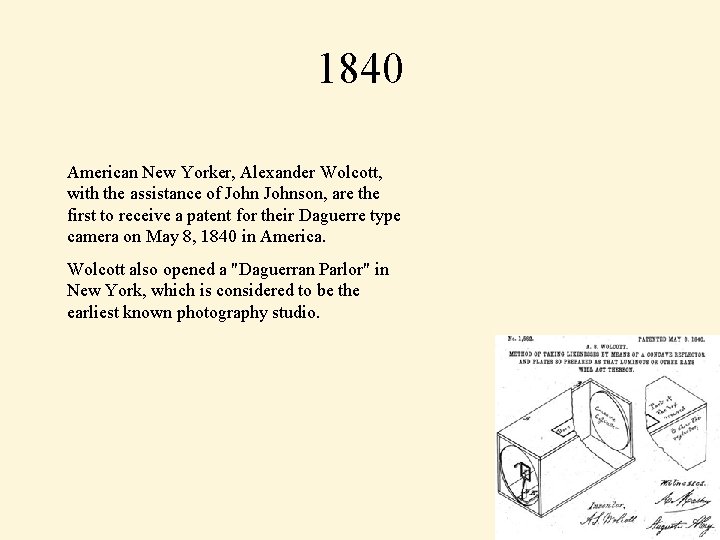
1840 American New Yorker, Alexander Wolcott, with the assistance of Johnson, are the first to receive a patent for their Daguerre type camera on May 8, 1840 in America. Wolcott also opened a "Daguerran Parlor" in New York, which is considered to be the earliest known photography studio.
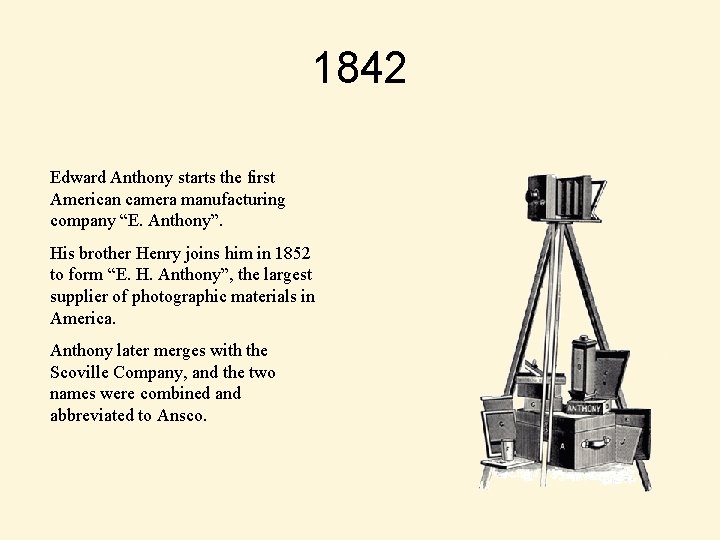
1842 Edward Anthony starts the first American camera manufacturing company “E. Anthony”. His brother Henry joins him in 1852 to form “E. H. Anthony”, the largest supplier of photographic materials in America. Anthony later merges with the Scoville Company, and the two names were combined and abbreviated to Ansco.
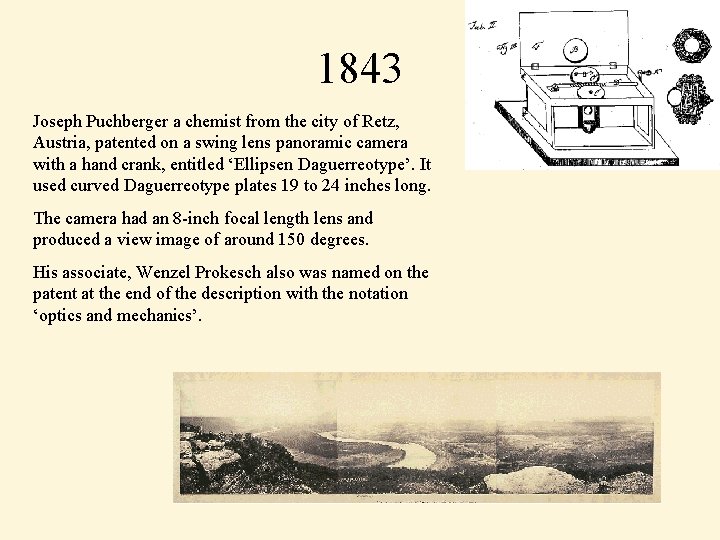
1843 Joseph Puchberger a chemist from the city of Retz, Austria, patented on a swing lens panoramic camera with a hand crank, entitled ‘Ellipsen Daguerreotype’. It used curved Daguerreotype plates 19 to 24 inches long. The camera had an 8 -inch focal length lens and produced a view image of around 150 degrees. His associate, Wenzel Prokesch also was named on the patent at the end of the description with the notation ‘optics and mechanics’.
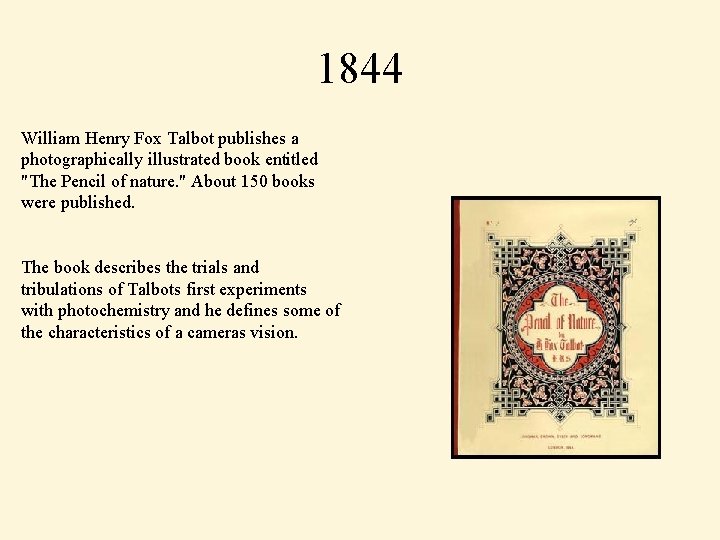
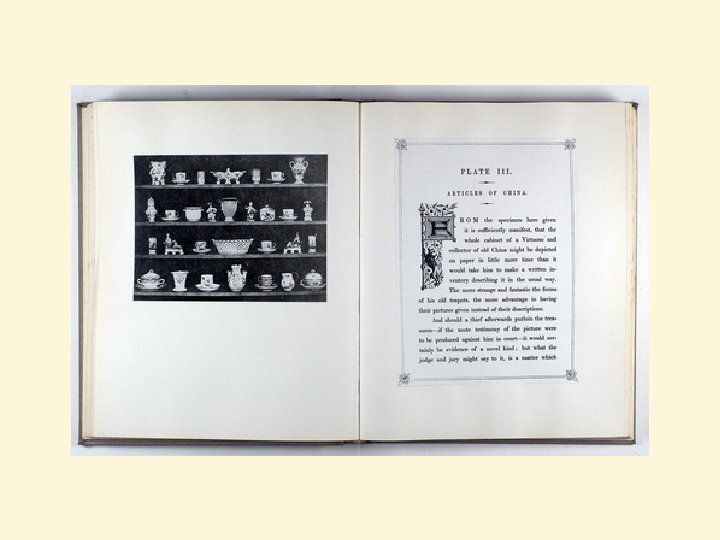
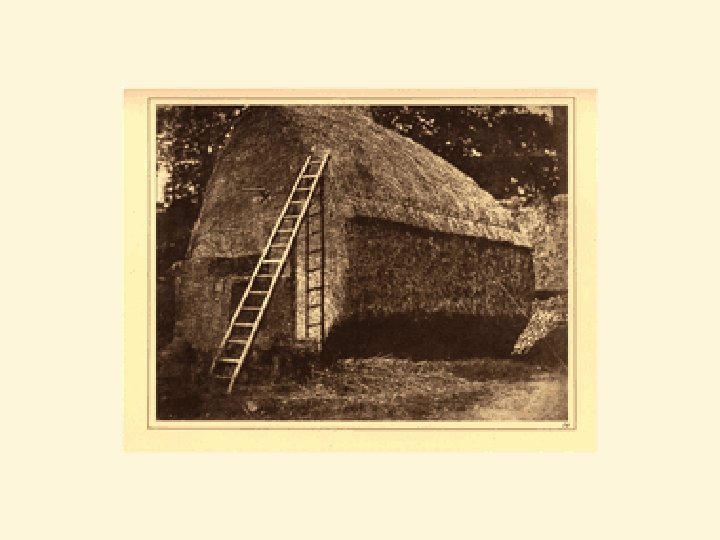
1844 William Henry Fox Talbot publishes a photographically illustrated book entitled "The Pencil of nature. " About 150 books were published. The book describes the trials and tribulations of Talbots first experiments with photochemistry and he defines some of the characteristics of a cameras vision.
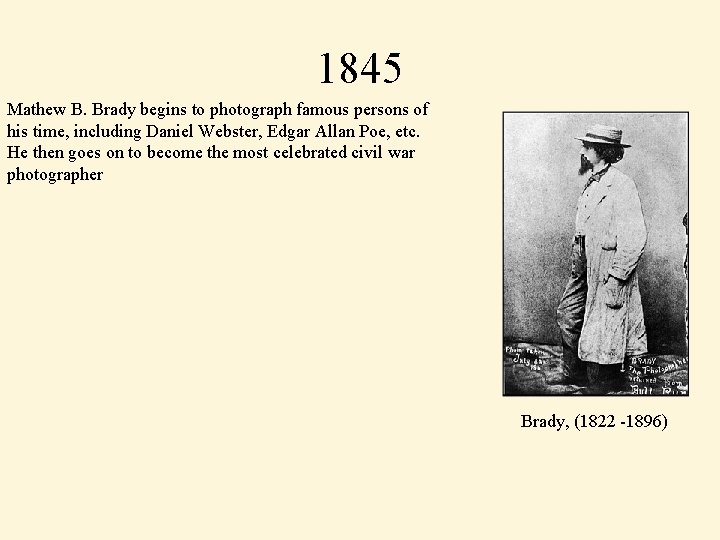
1845 Mathew B. Brady begins to photograph famous persons of his time, including Daniel Webster, Edgar Allan Poe, etc. He then goes on to become the most celebrated civil war photographer Brady, (1822 -1896)
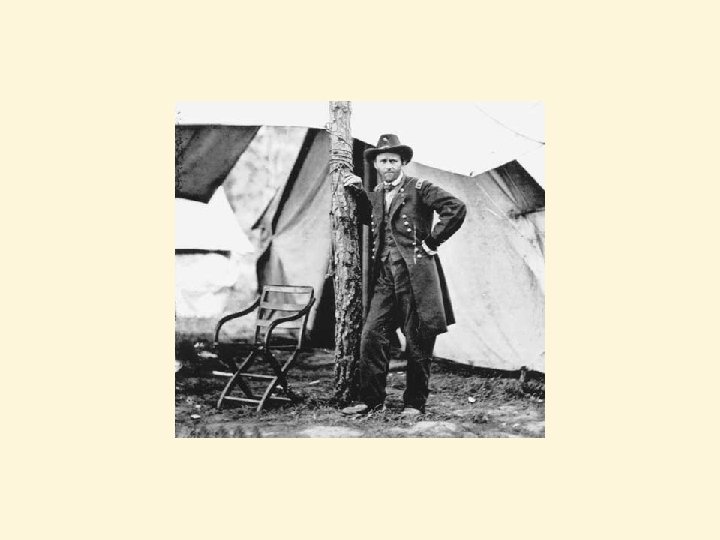
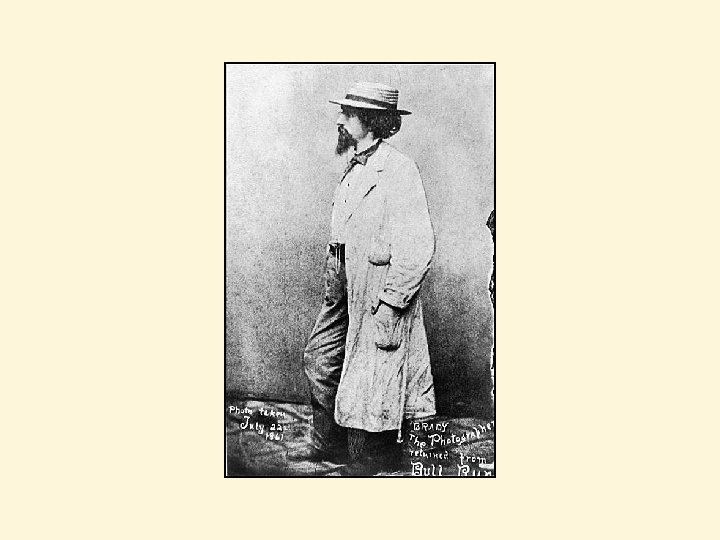
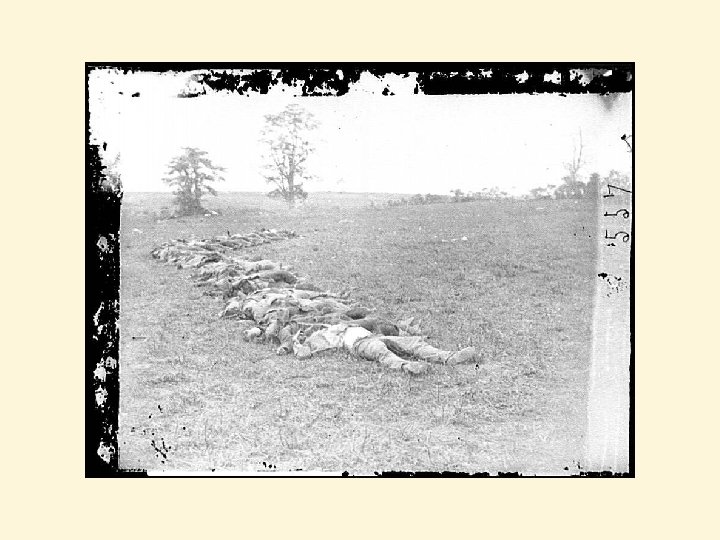
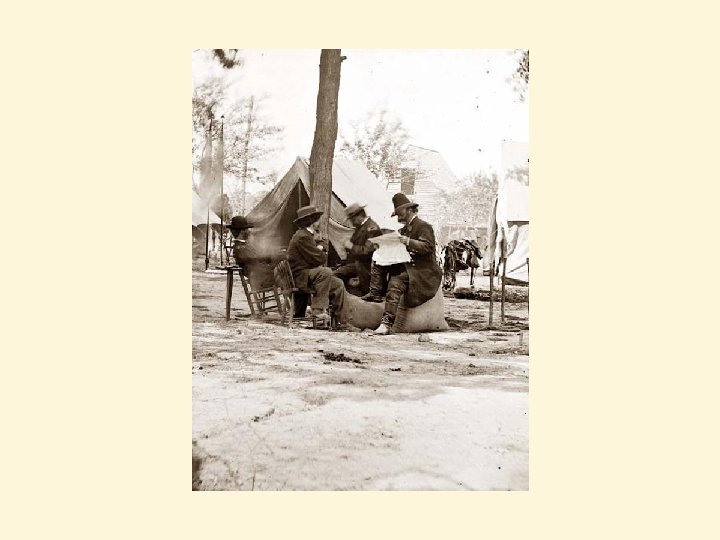
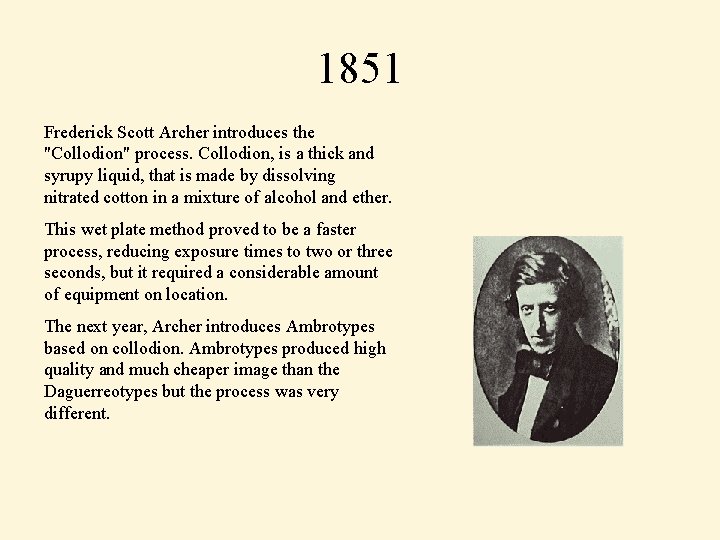
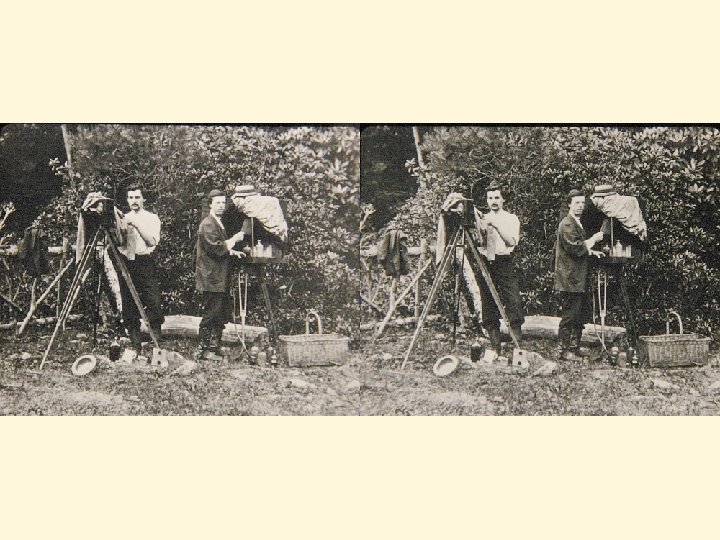
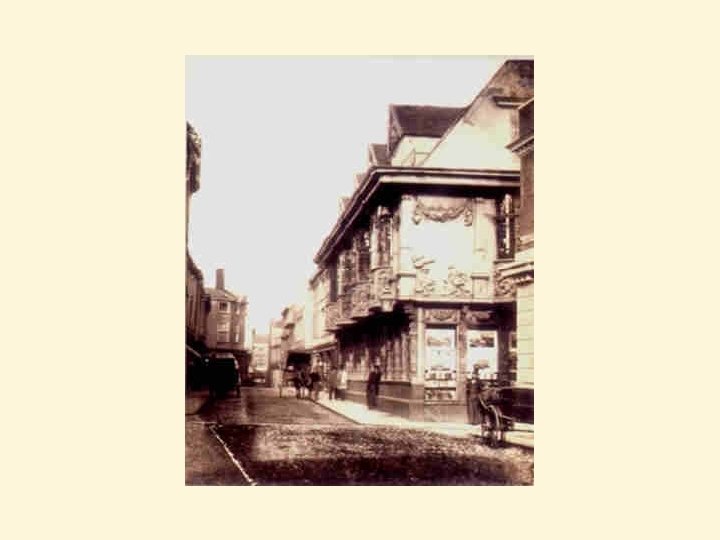
1851 Frederick Scott Archer introduces the "Collodion" process. Collodion, is a thick and syrupy liquid, that is made by dissolving nitrated cotton in a mixture of alcohol and ether. This wet plate method proved to be a faster process, reducing exposure times to two or three seconds, but it required a considerable amount of equipment on location. The next year, Archer introduces Ambrotypes based on collodion. Ambrotypes produced high quality and much cheaper image than the Daguerreotypes but the process was very different.
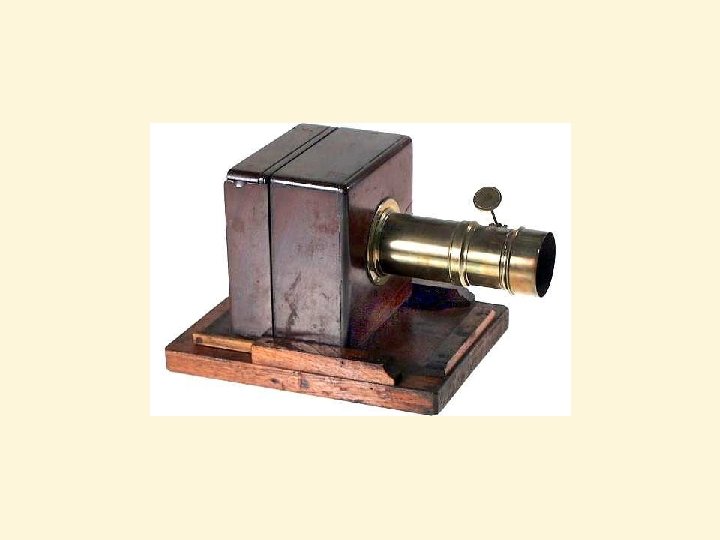
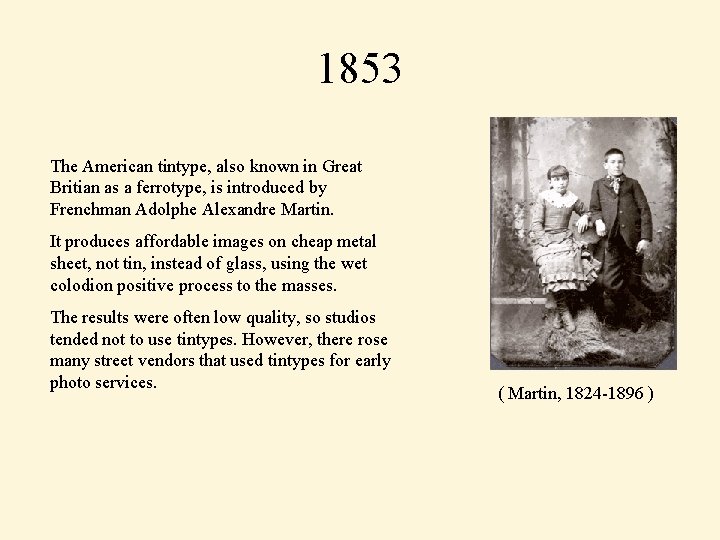
1853 The American tintype, also known in Great Britian as a ferrotype, is introduced by Frenchman Adolphe Alexandre Martin. It produces affordable images on cheap metal sheet, not tin, instead of glass, using the wet colodion positive process to the masses. The results were often low quality, so studios tended not to use tintypes. However, there rose many street vendors that used tintypes for early photo services. ( Martin, 1824 -1896 )
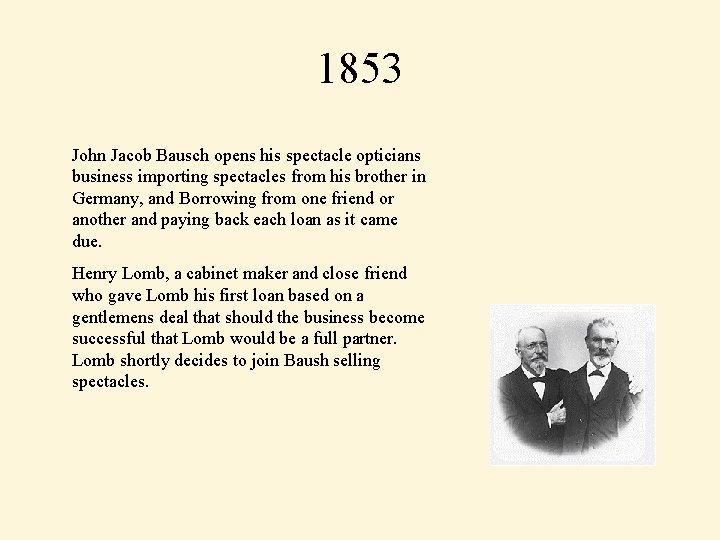
1853 John Jacob Bausch opens his spectacle opticians business importing spectacles from his brother in Germany, and Borrowing from one friend or another and paying back each loan as it came due. Henry Lomb, a cabinet maker and close friend who gave Lomb his first loan based on a gentlemens deal that should the business become successful that Lomb would be a full partner. Lomb shortly decides to join Baush selling spectacles.
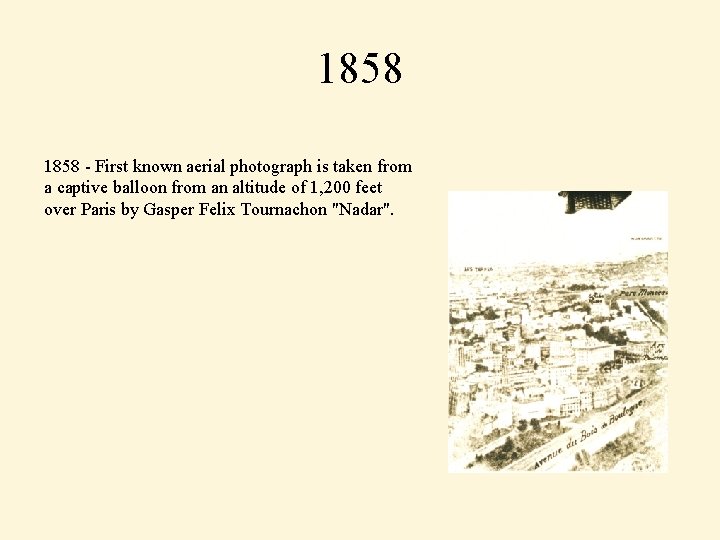
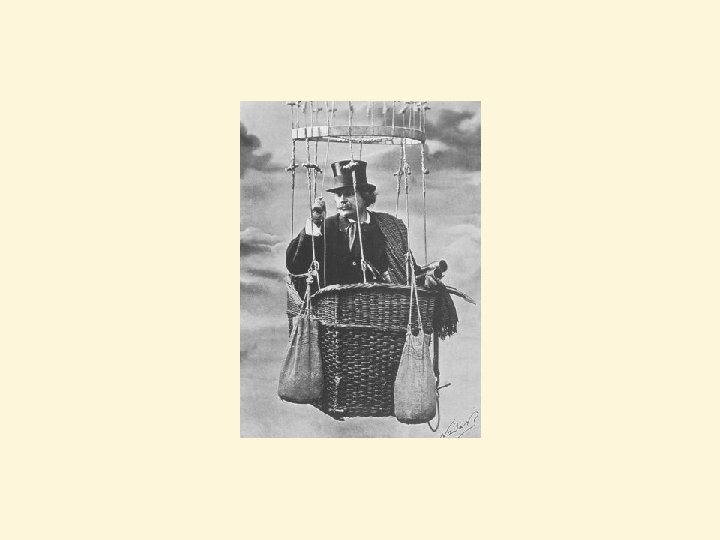
1858 - First known aerial photograph is taken from a captive balloon from an altitude of 1, 200 feet over Paris by Gasper Felix Tournachon "Nadar".
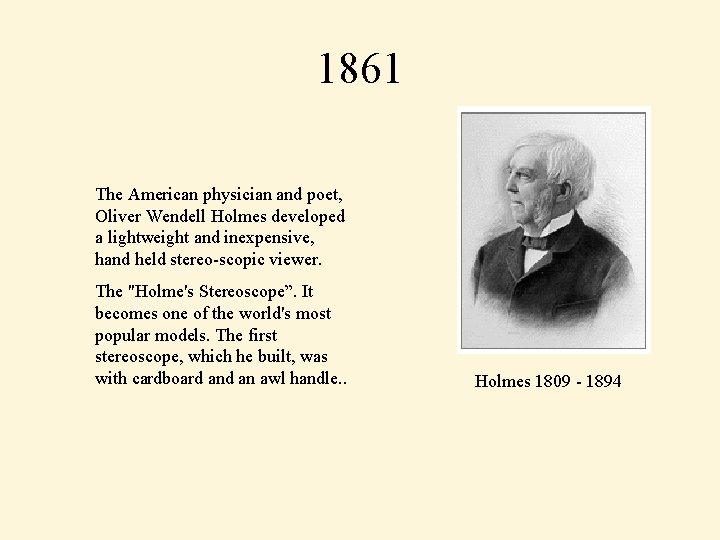
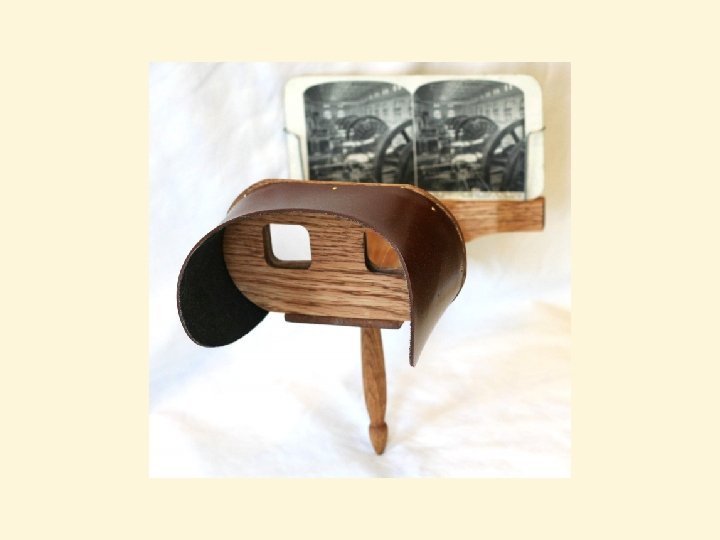
1861 The American physician and poet, Oliver Wendell Holmes developed a lightweight and inexpensive, hand held stereo-scopic viewer. The "Holme's Stereoscope”. It becomes one of the world's most popular models. The first stereoscope, which he built, was with cardboard an awl handle. . Holmes 1809 - 1894
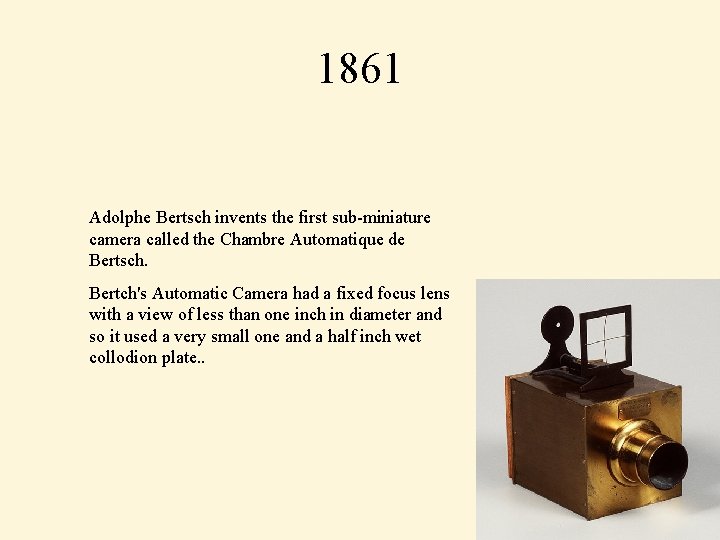
1861 Adolphe Bertsch invents the first sub-miniature camera called the Chambre Automatique de Bertsch. Bertch's Automatic Camera had a fixed focus lens with a view of less than one inch in diameter and so it used a very small one and a half inch wet collodion plate. .
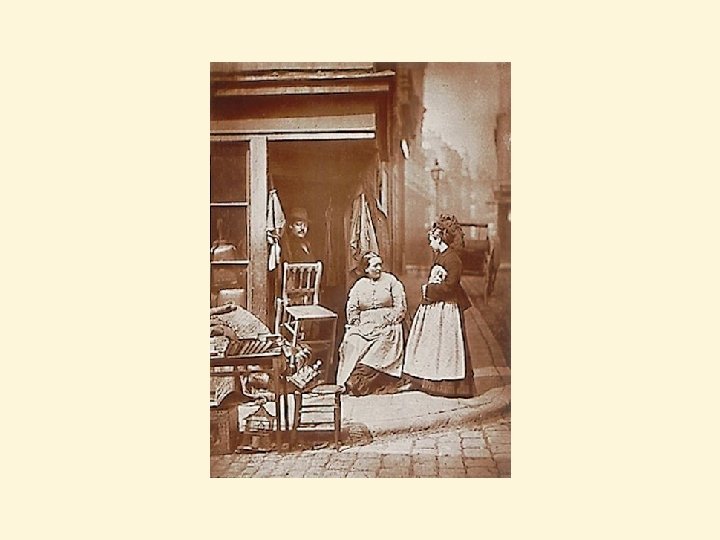
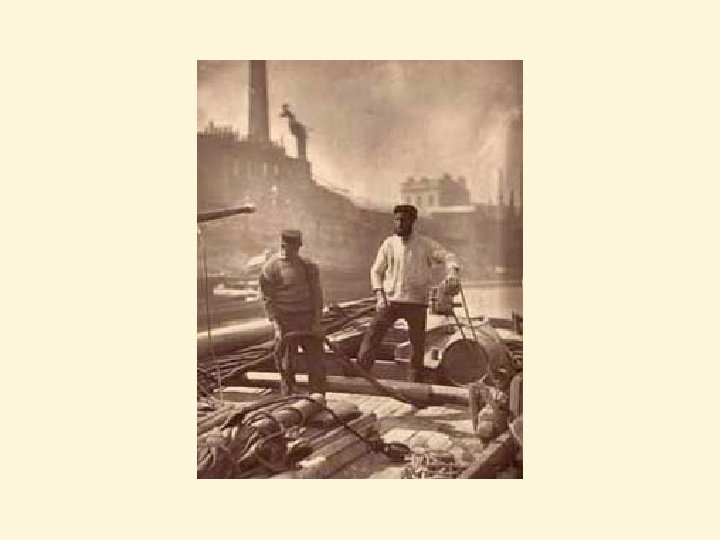
1866 Walter E. Woodbury invents the “Woodburytype”, a photomechanical process like the callotype to create true continuous-tone images by the use of a gelatine and metal mold. The process was patented in 1864. It was widely used until the turn of the century. The quality is excellent, lasting and sharp without grain. However, The technique was difficult, couldn’t be automated and that the pre-press preparation of the lead printing plate required an enormous amount of hydraulic power the method became obsolete in the late 19 th century.
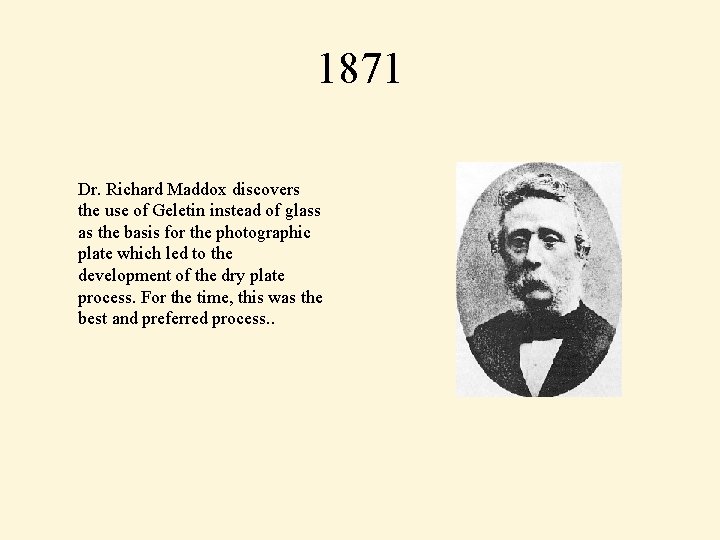
1871 Dr. Richard Maddox discovers the use of Geletin instead of glass as the basis for the photographic plate which led to the development of the dry plate process. For the time, this was the best and preferred process. .
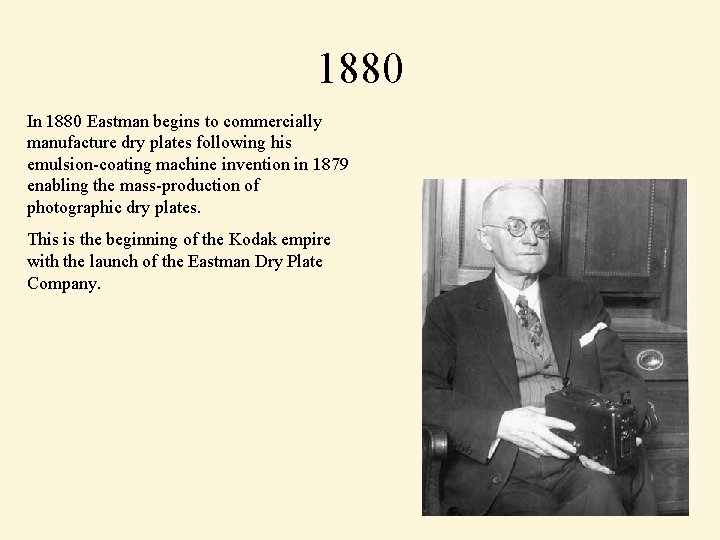
1880 In 1880 Eastman begins to commercially manufacture dry plates following his emulsion-coating machine invention in 1879 enabling the mass-production of photographic dry plates. This is the beginning of the Kodak empire with the launch of the Eastman Dry Plate Company.
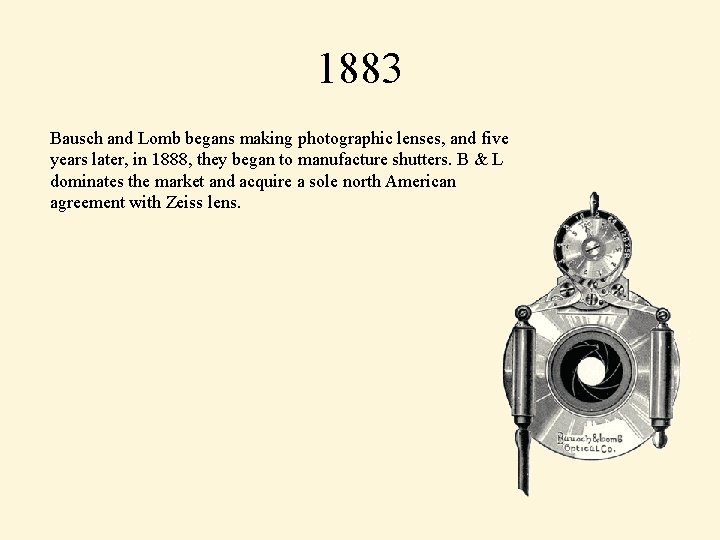
1883 Bausch and Lomb begans making photographic lenses, and five years later, in 1888, they began to manufacture shutters. B & L dominates the market and acquire a sole north American agreement with Zeiss lens.
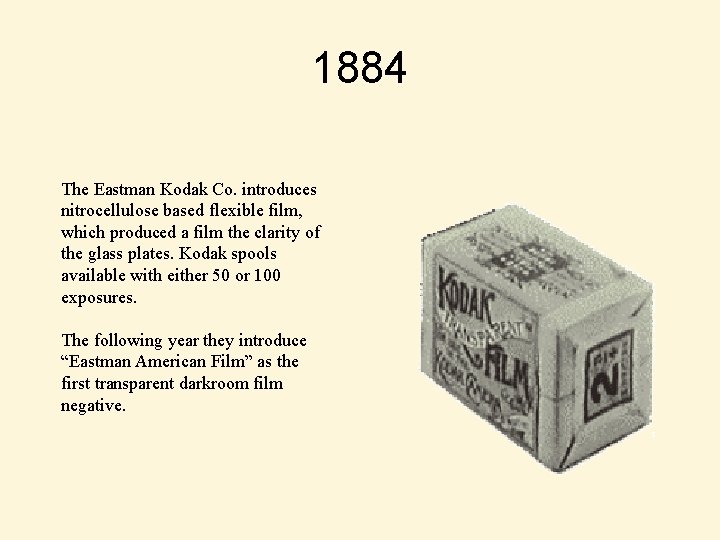
1884 The Eastman Kodak Co. introduces nitrocellulose based flexible film, which produced a film the clarity of the glass plates. Kodak spools available with either 50 or 100 exposures. The following year they introduce “Eastman American Film” as the first transparent darkroom film negative.
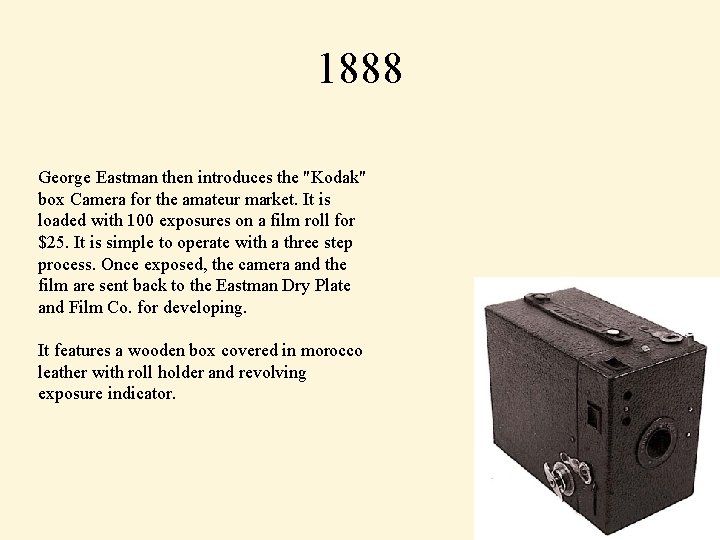
1888 George Eastman then introduces the "Kodak" box Camera for the amateur market. It is loaded with 100 exposures on a film roll for $25. It is simple to operate with a three step process. Once exposed, the camera and the film are sent back to the Eastman Dry Plate and Film Co. for developing. It features a wooden box covered in morocco leather with roll holder and revolving exposure indicator.
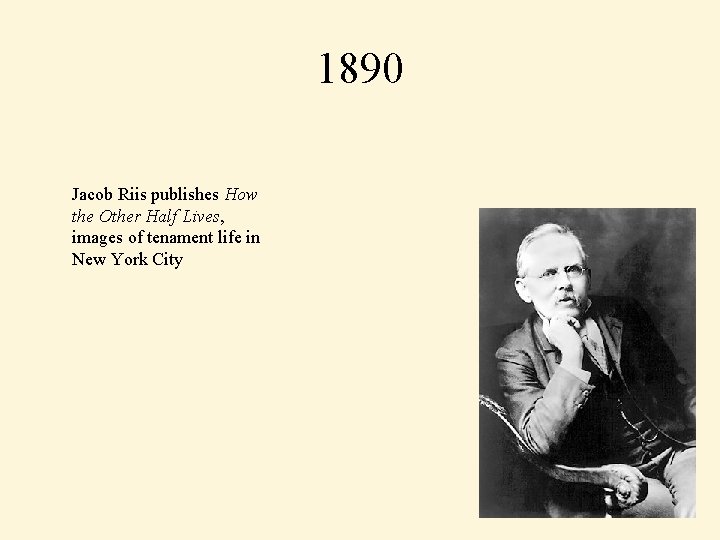
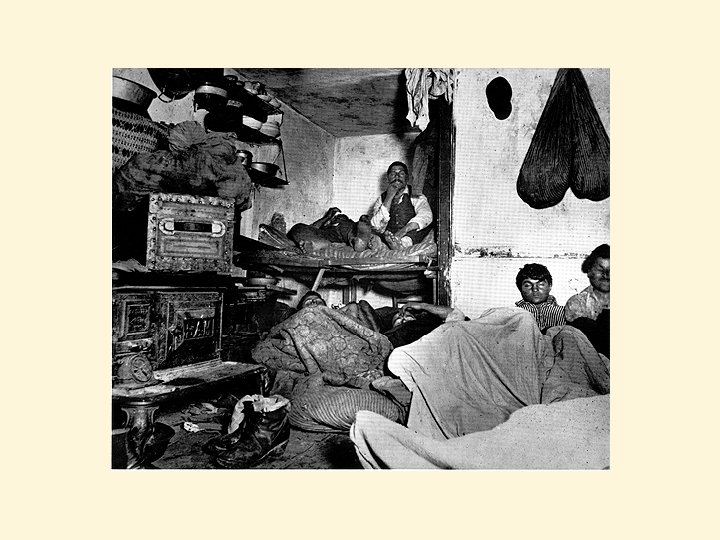
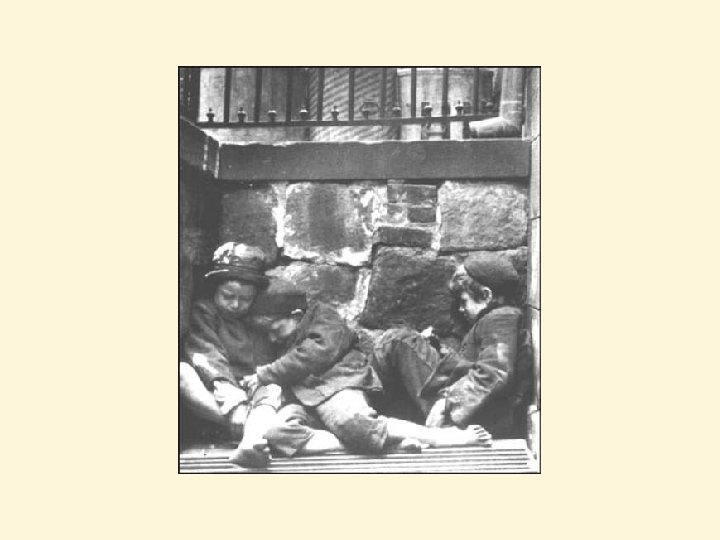
1890 Jacob Riis publishes How the Other Half Lives, images of tenament life in New York City
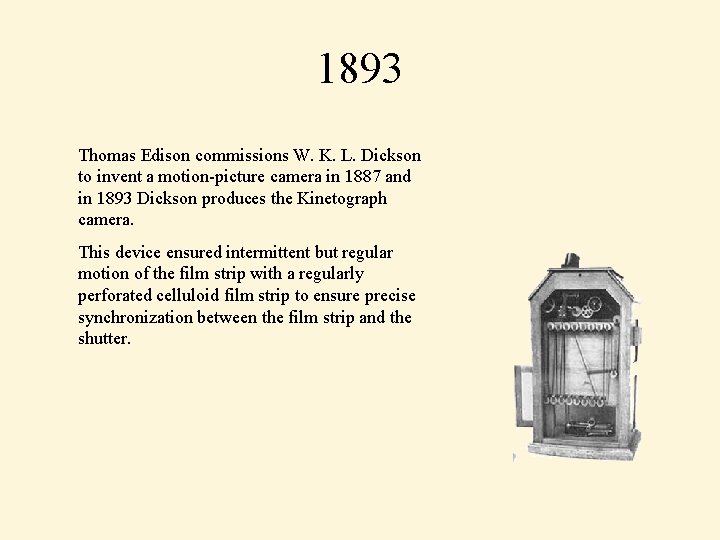
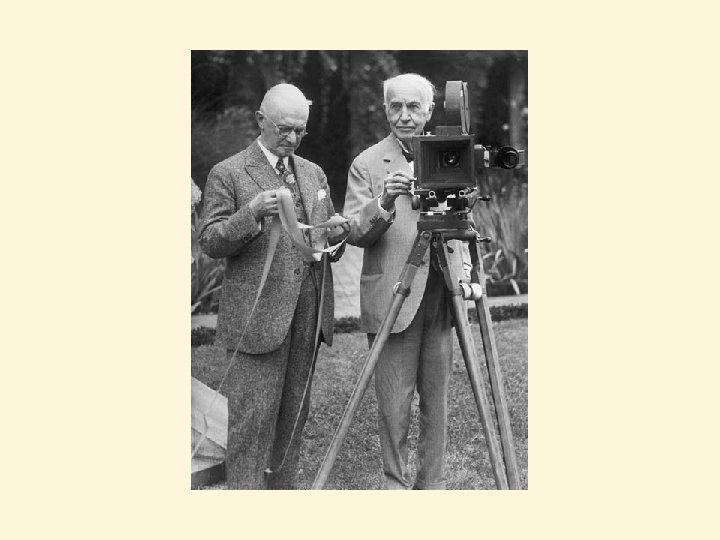
1893 Thomas Edison commissions W. K. L. Dickson to invent a motion-picture camera in 1887 and in 1893 Dickson produces the Kinetograph camera. This device ensured intermittent but regular motion of the film strip with a regularly perforated celluloid film strip to ensure precise synchronization between the film strip and the shutter.
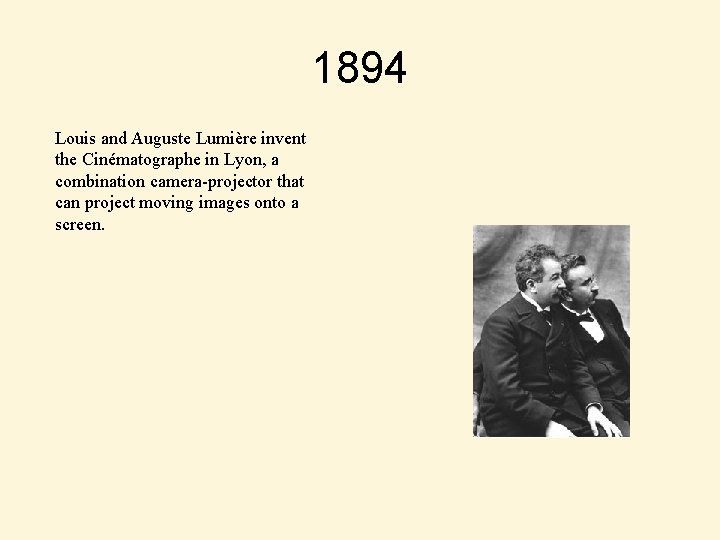
1894 Louis and Auguste Lumière invent the Cinématographe in Lyon, a combination camera-projector that can project moving images onto a screen.
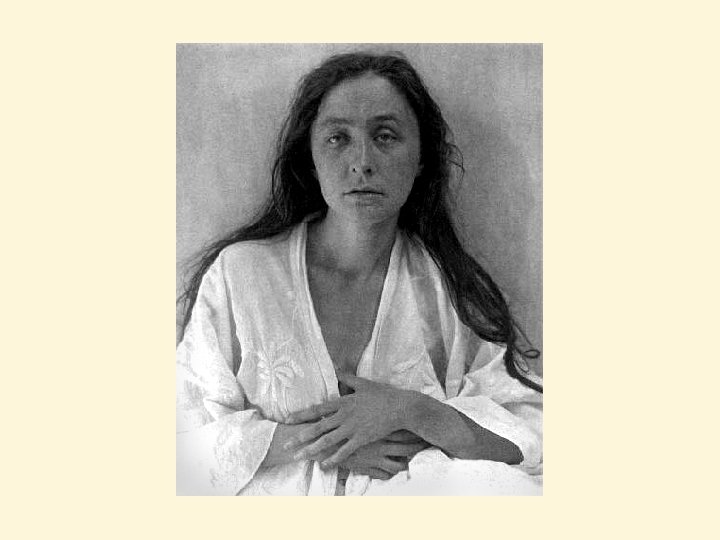
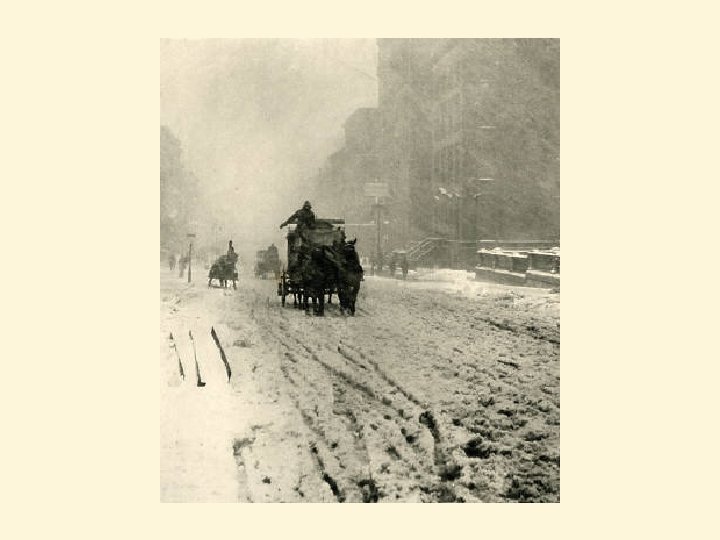
1902 Alfred Stieglitz organises "Photo Secessionist" show in New York City
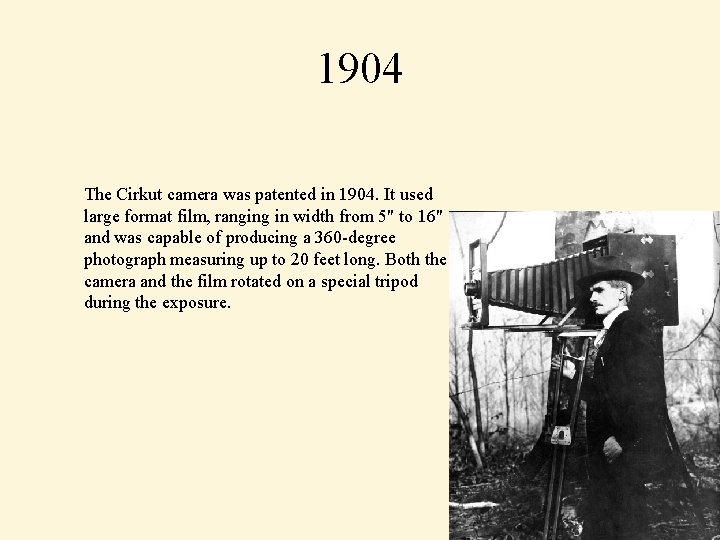
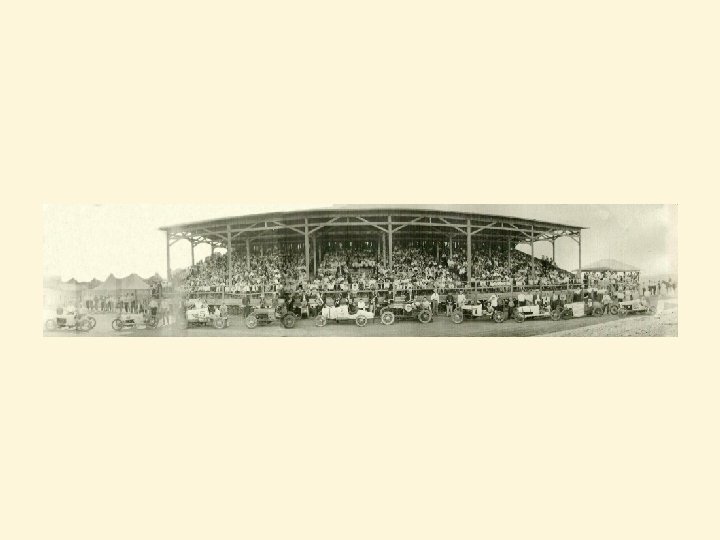
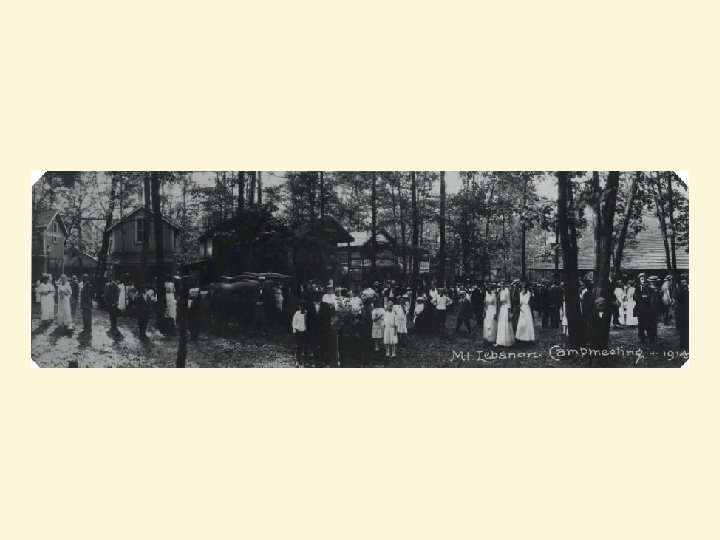
1904 The Cirkut camera was patented in 1904. It used large format film, ranging in width from 5" to 16" and was capable of producing a 360 -degree photograph measuring up to 20 feet long. Both the camera and the film rotated on a special tripod during the exposure.
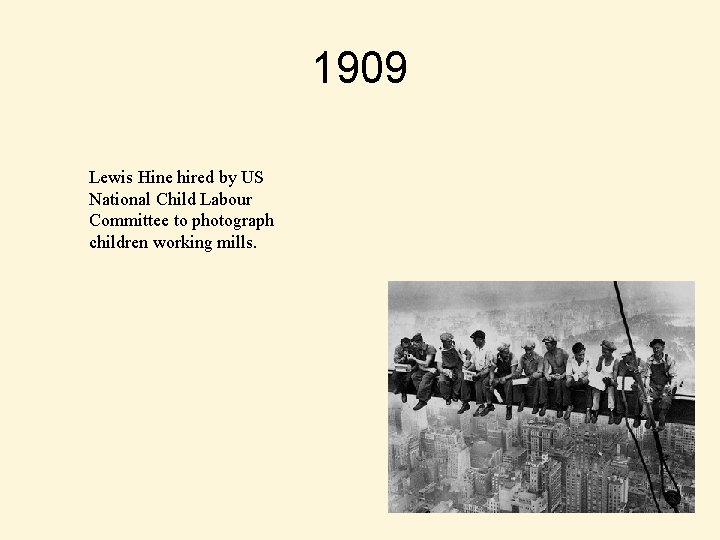
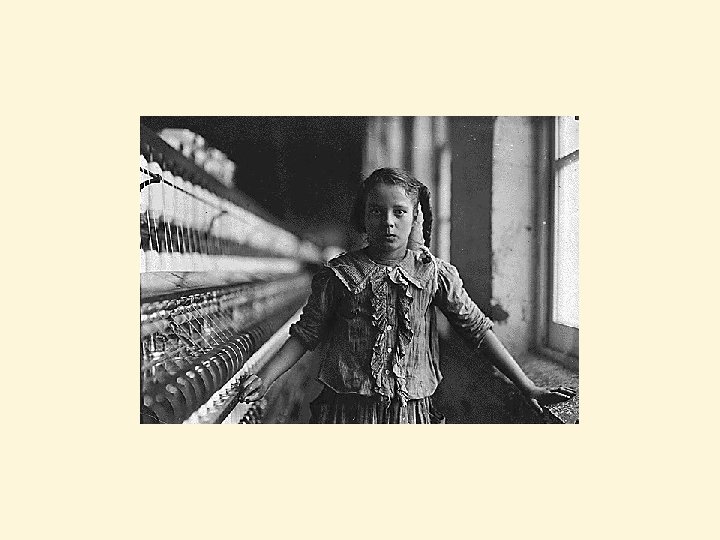
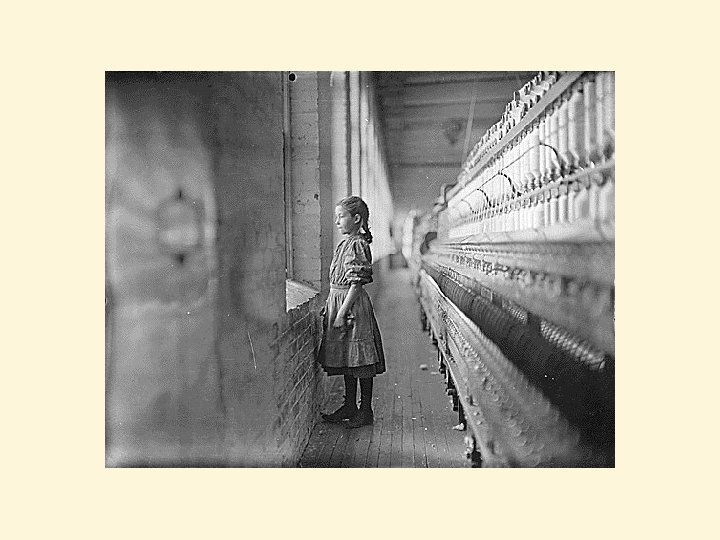
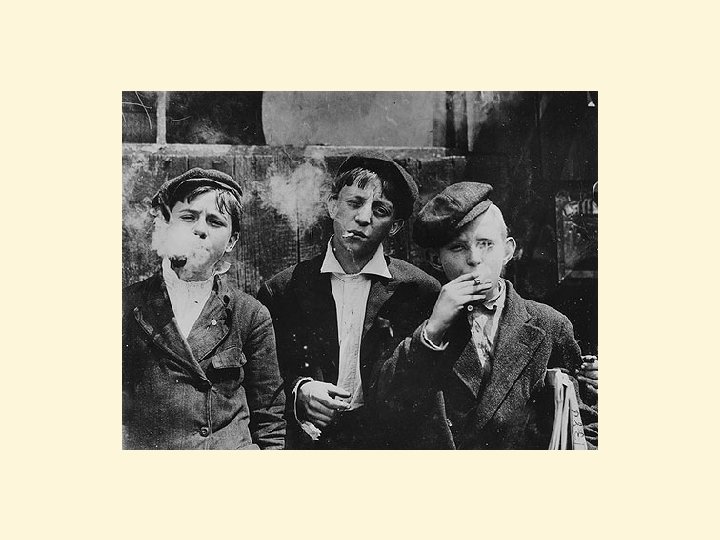
1909 Lewis Hine hired by US National Child Labour Committee to photograph children working mills.
1917 Nippon Kogaku K. K. , which will eventually become Nikon, established in Tokyo.
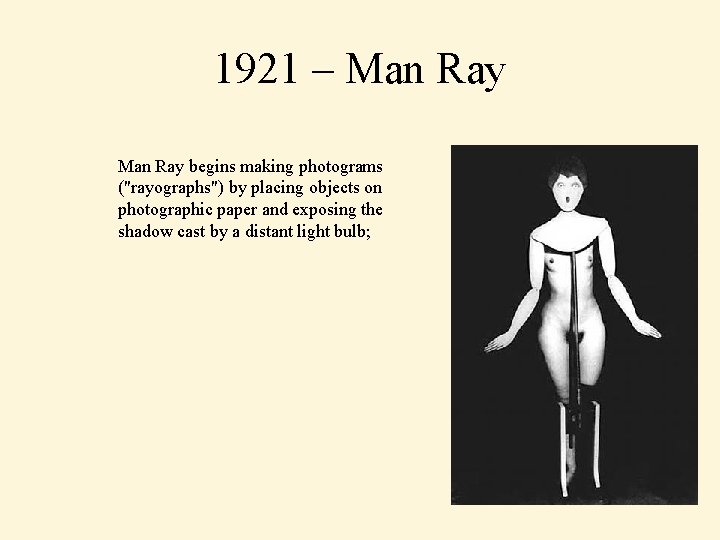
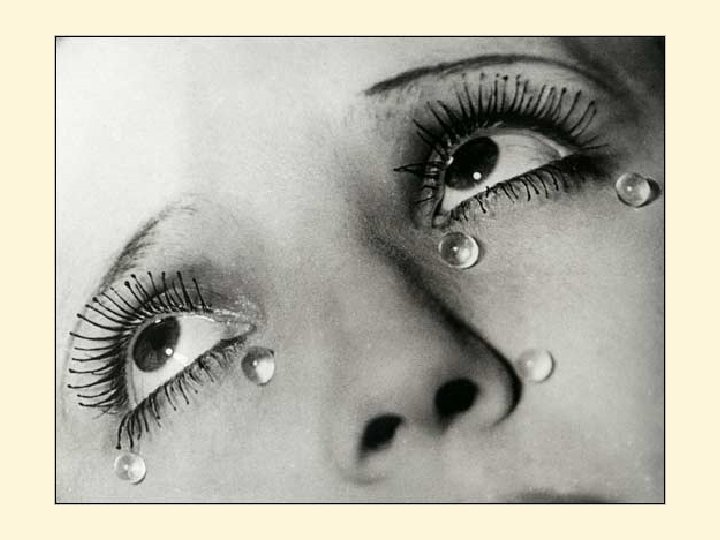
1921 – Man Ray begins making photograms ("rayographs") by placing objects on photographic paper and exposing the shadow cast by a distant light bulb;
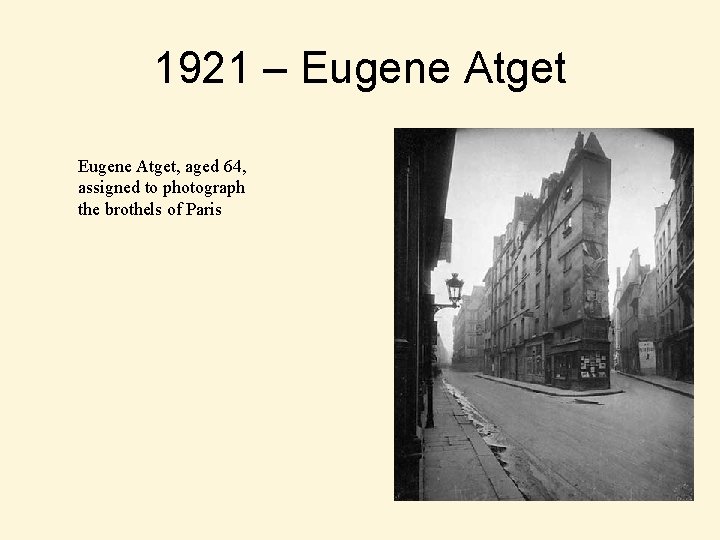
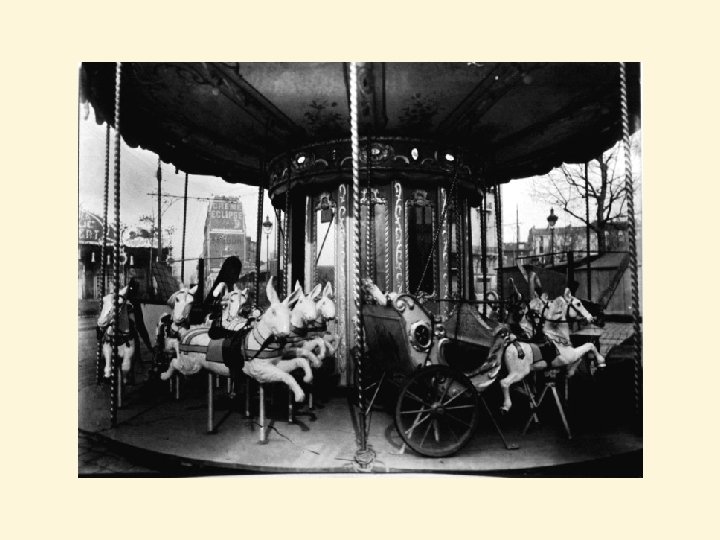
1921 – Eugene Atget, aged 64, assigned to photograph the brothels of Paris
- Slides: 77