
Photograms The first period of photogram exploration was
- Slides: 9
Photograms
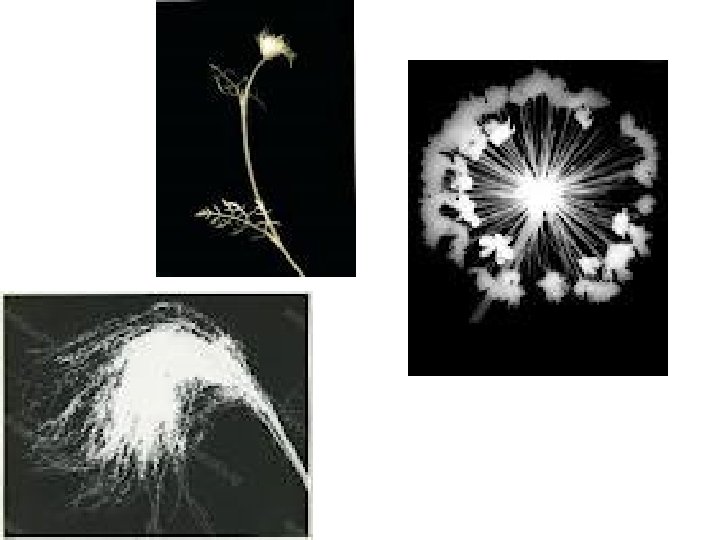
• The first period of “photogram” exploration was to gain scientific record of natural objects. • The light would create a “skeleton” effect of the plants allowing for further investigation of the inner workings of the plant.
• Photograms pre-dated the camera, so a lot of the first attempts were used to find a suitable light sensitive material to create a “photogenic drawing” as they were called. • Johann Shultze made an accidental discovery in 1725. He discovered that silver nitrate on top of gypsum, when left in a jar exposed to the sun, would turn dark only on the side facing the lightsource. • This was the first demonstration that the reaction was caused by LIGHT and not heat, ( as some people predicted) • This experiment was followed by his experiment in which he cut letters from paper, arranged them into words and wrapped them around the jar, and demonstrated the intentional action of light to achieve the photographic photogram without the use of a focusing lens.
• Shultze reported on the light senstivity of silver salts and in doing so invented the photogram. • However, his experiments failed to result in a permanent image, because continual exposure to light would continually alter the image. (the paper wasn’t being “fixed”)
• Herschel discovered that sodium thiosulfate would permenantly “fix” the image onto the paper around 1830 • Talbot used that and shultzes experiments to create the photograms of plant material, allowing the sunlight to pass through leaves he placed on the light sensitive material.
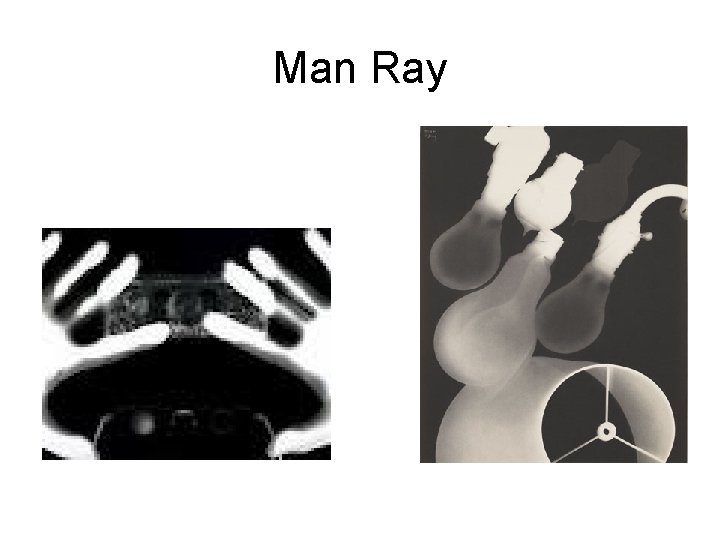
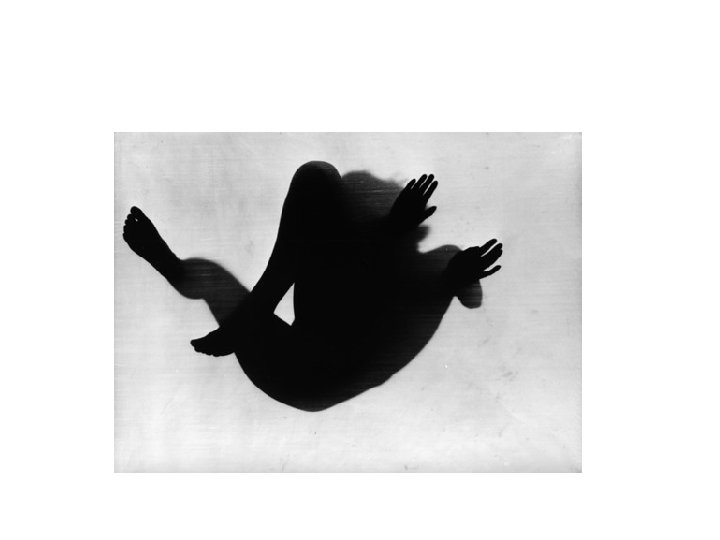
• The second period was a rediscovery of the artistic potential as illustrated by Christian Schad, Man Ray and Lazlo Moholy-Nagy in the Dada, Surrealist and Constructivist periods of art, respectively. • This is when we started thinking of photograms as more than a scientific method and started getting creative.
Man Ray