
Photogrammetry for stress analysis of the hydrogen absorber
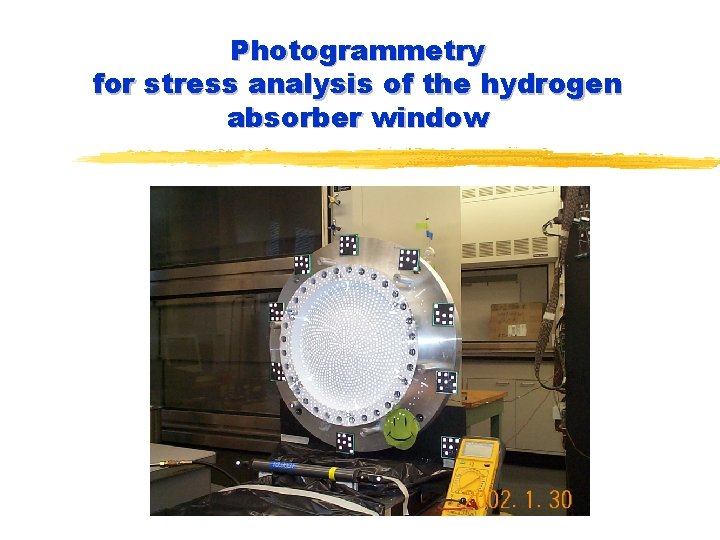
Photogrammetry for stress analysis of the hydrogen absorber window
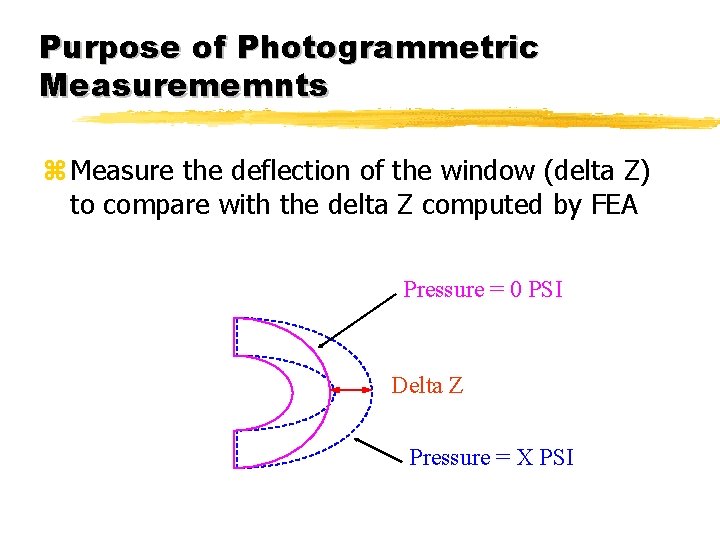
Purpose of Photogrammetric Measurememnts z Measure the deflection of the window (delta Z) to compare with the delta Z computed by FEA Pressure = 0 PSI Delta Z Pressure = X PSI
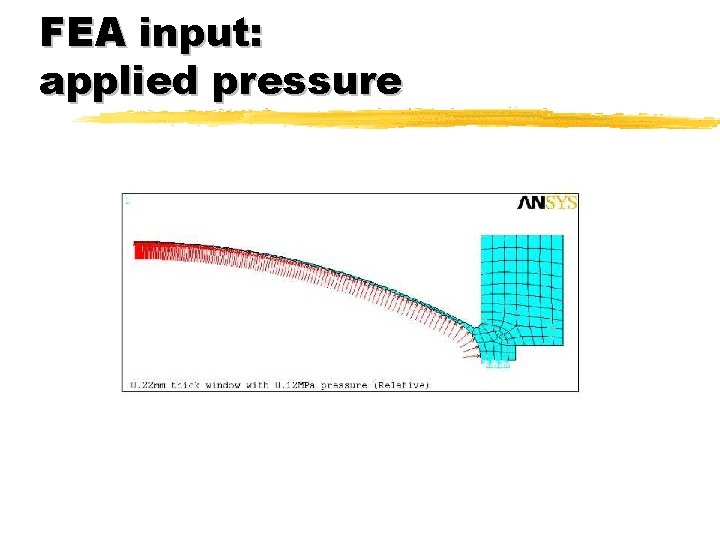
FEA input: applied pressure

FEA output: resultant deflection
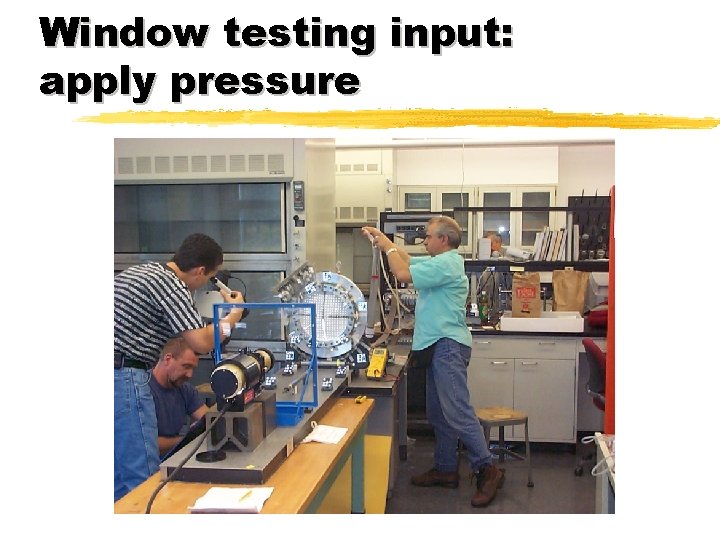
Window testing input: apply pressure

Window testing output: resultant deflection
Desired features Adequate resolution Typical deflection: At operating pressure Max deflection ~ 250 um ~2200 um Non-contact targeting To avoid altering the window’s properties
Solution Adequate resolution Use a photogrammetric system 10 um resolution Non-contact targeting Use a projection targeting system
What is photogrammetry? Photogrammetry is 3 -dimensional coordinate measuring technique that uses photographs as the fundamental medium for metrology (or measurement).
Photogrammetic system y. V-STARS y. Video Stereo Triangulation And Resection Software y. Geodetic Services, Inc.
V-STARS uses high-resolution video cameras instead of film cameras. This is also referred to as videogrammetry or digital photogrammetry.
3 pieces of equipment required 1) Camera 2) Targets 3) Software
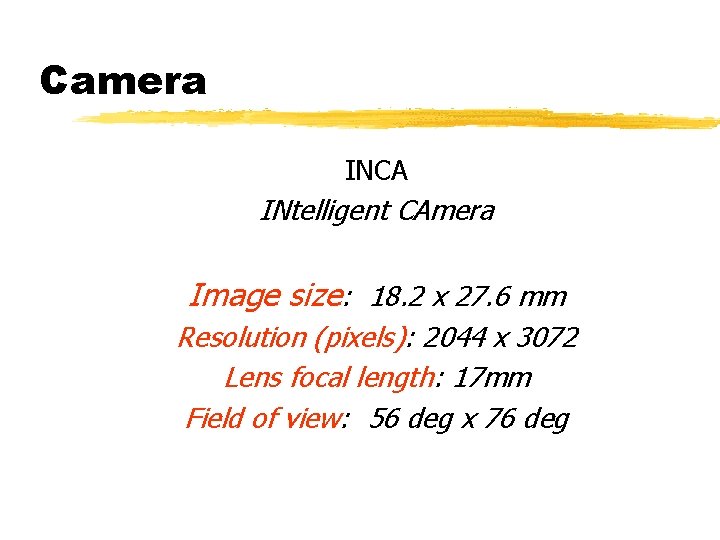
Camera INCA INtelligent CAmera Image size: 18. 2 x 27. 6 mm Resolution (pixels): 2044 x 3072 Lens focal length: 17 mm Field of view: 56 deg x 76 deg

INCA camera
3 pieces of equipment required 1) Camera 2) Targets 3) Software
Targets a) Reference targets (Autobar and coded targets) b) Object targets (we chose Pro-Spot projector) c) Scale bars

Autobar
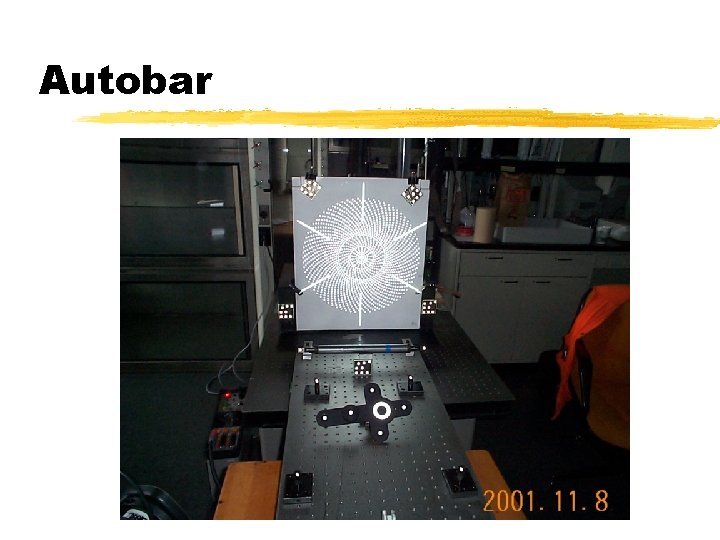
Autobar
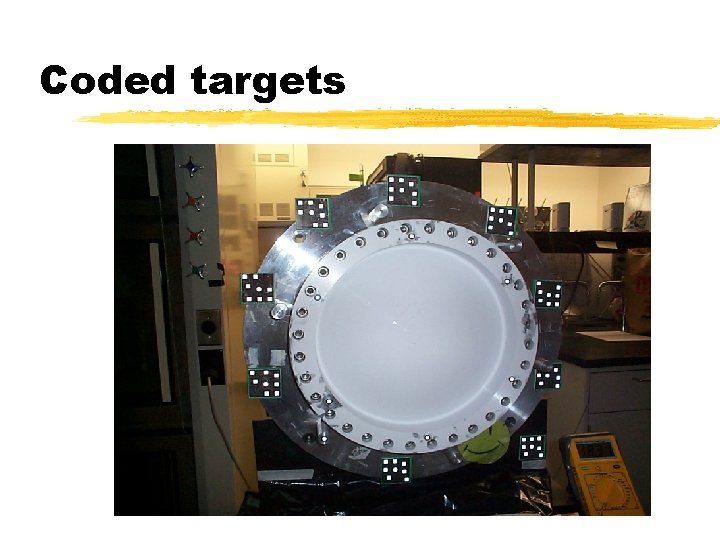
Coded targets
Targets a) Reference targets (Autobar and coded targets) b) Object targets (we chose Pro-Spot projector) c) Scale bars
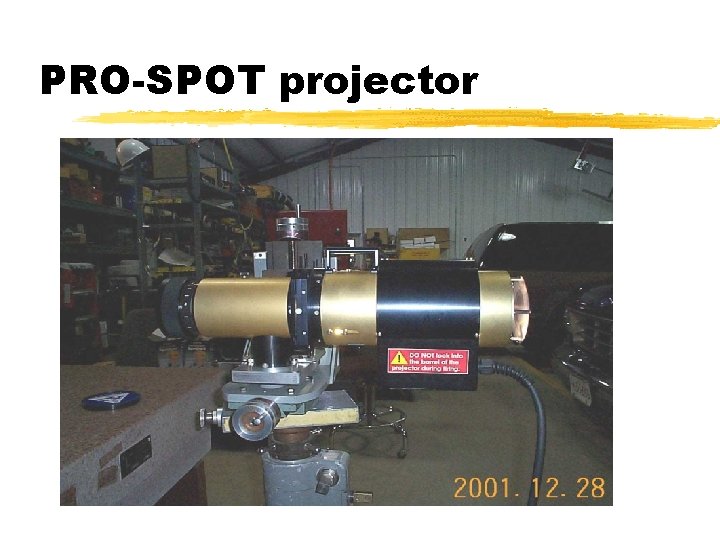
PRO-SPOT projector
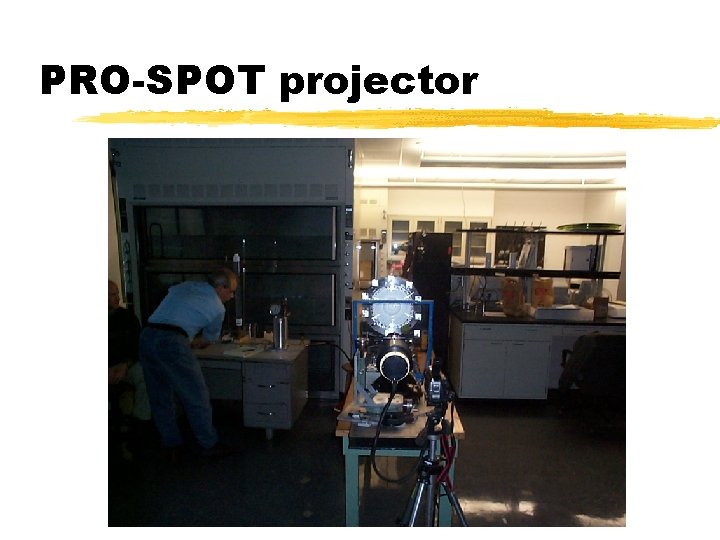
PRO-SPOT projector
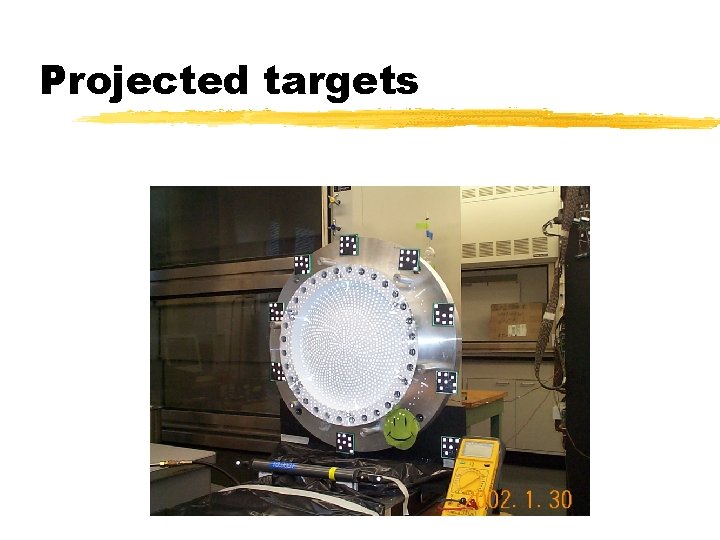
Projected targets
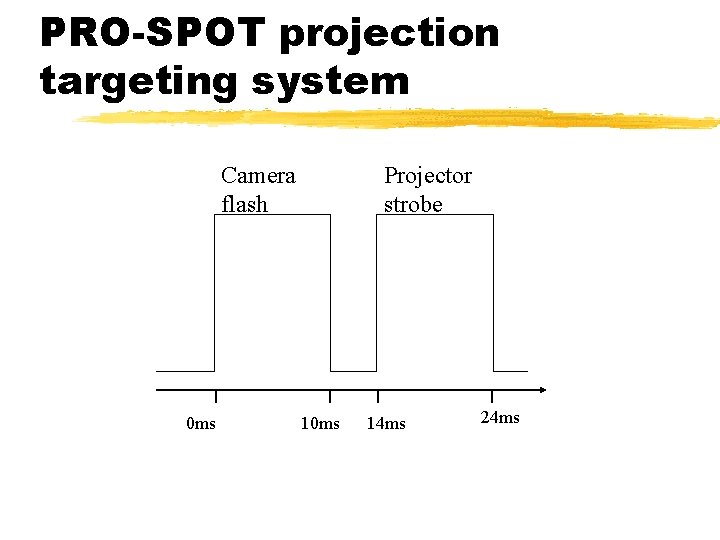
PRO-SPOT projection targeting system Camera flash 0 ms Projector strobe 10 ms 14 ms 24 ms
Targets a) Reference targets (Autobar and coded targets) b) Object targets (we chose Pro-Spot projector) c) Scale bars
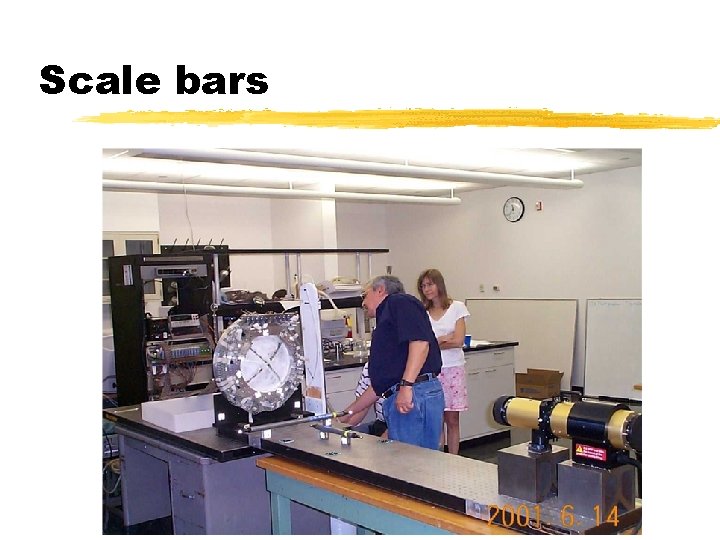
Scale bars
3 pieces of equipment required 1) Camera 2) Targets 3) Software
V-STARS input V-STARS measures the target positions on CCD a) Reference targets (Autobar and coded targets) b) Object targets (we chose Pro-Spot projector) c) Scales
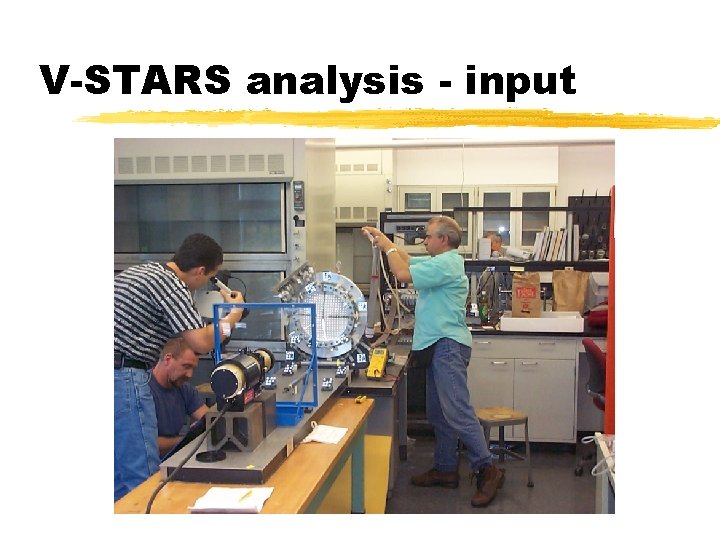
V-STARS analysis - input
V-STARS analysis Using the measured the target positions, V-STARS performs: a) Resection (determines camera positions) and camera calibration b)Triangulation to determine the x, y, z position of each target c) Dimensions the measurements
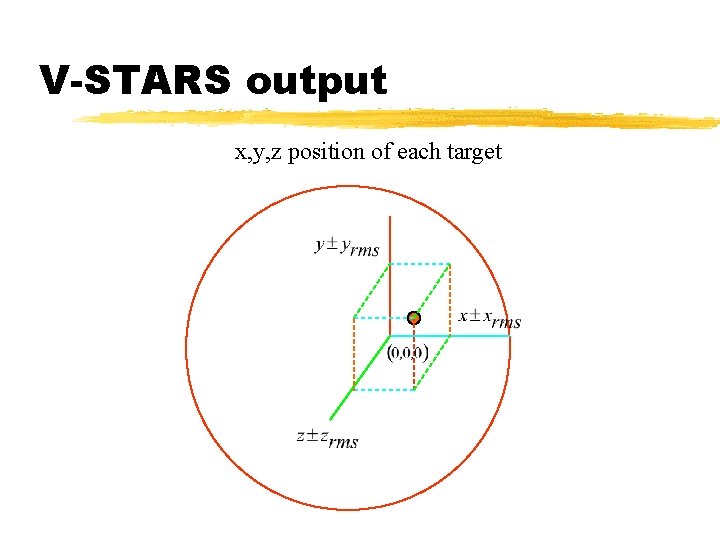
V-STARS output x, y, z position of each target
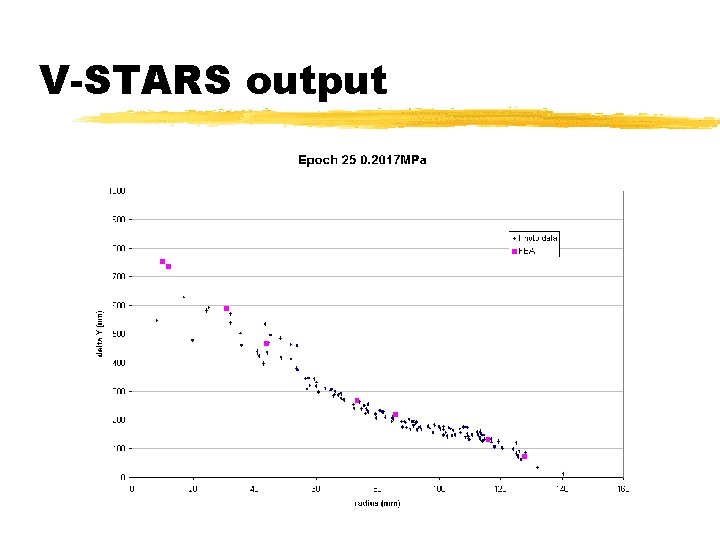
V-STARS output
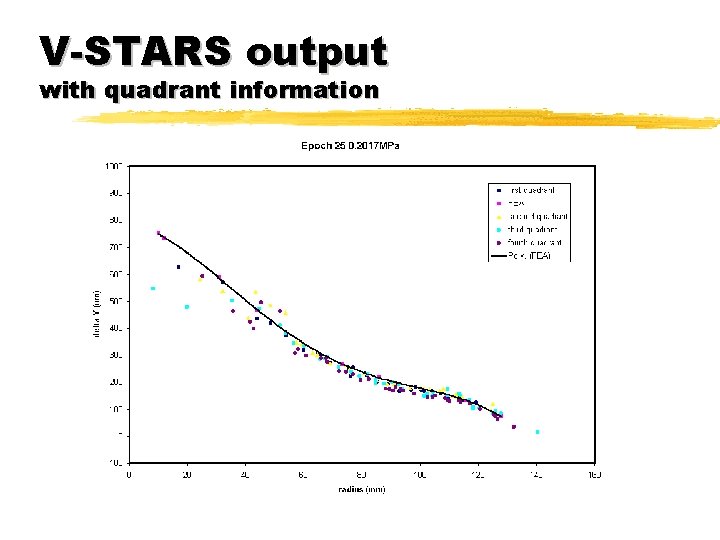
V-STARS output with quadrant information
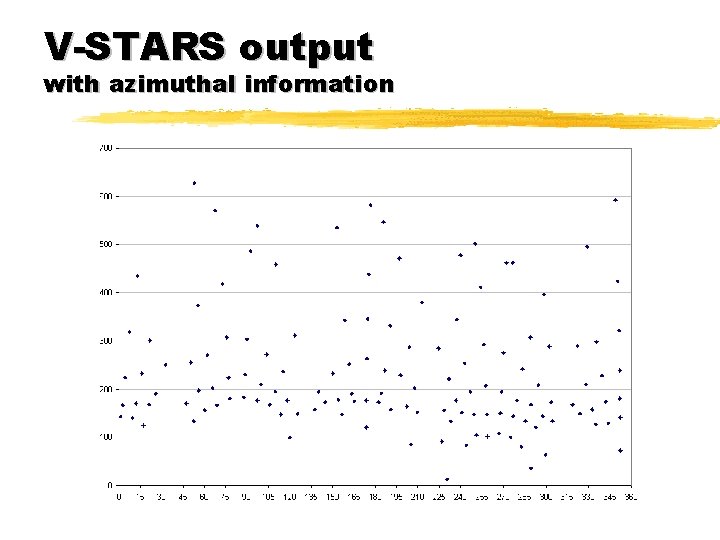
V-STARS output with azimuthal information
How does digital photogrammetry work? Step 1 Determine camera locations from known (identifiable by the software) targets Step 2 Determine unknown target locations from known camera positions
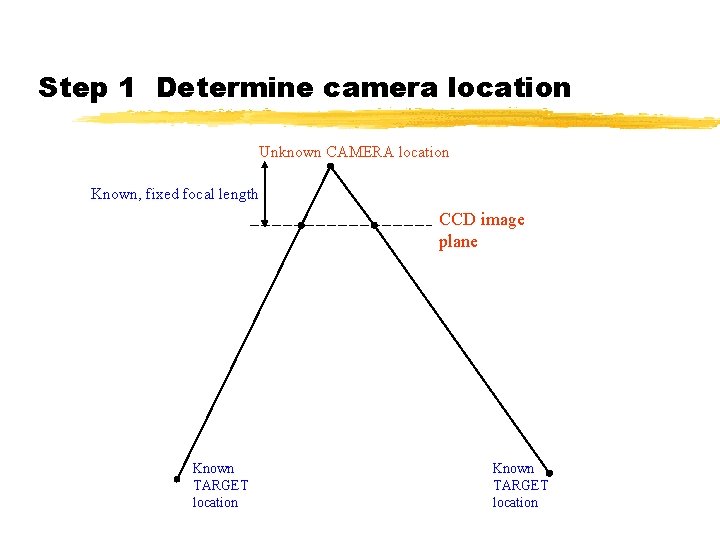
Step 1 Determine camera location Unknown CAMERA location Known, fixed focal length CCD image plane Known TARGET location
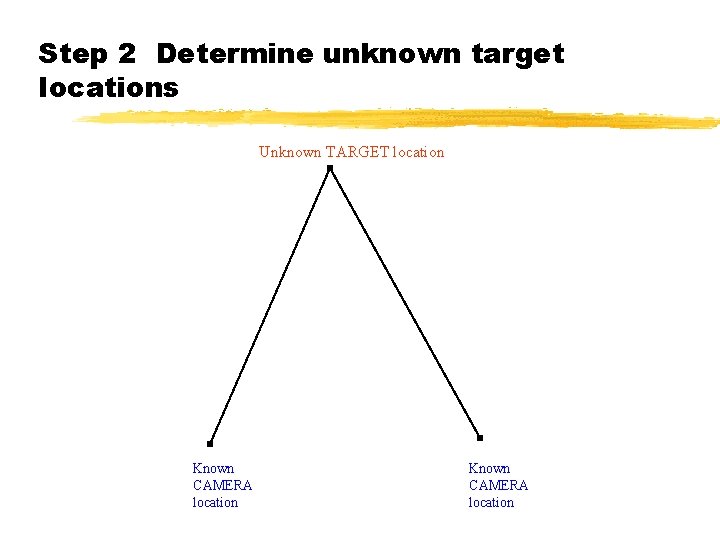
Step 2 Determine unknown target locations Unknown TARGET location Known CAMERA location
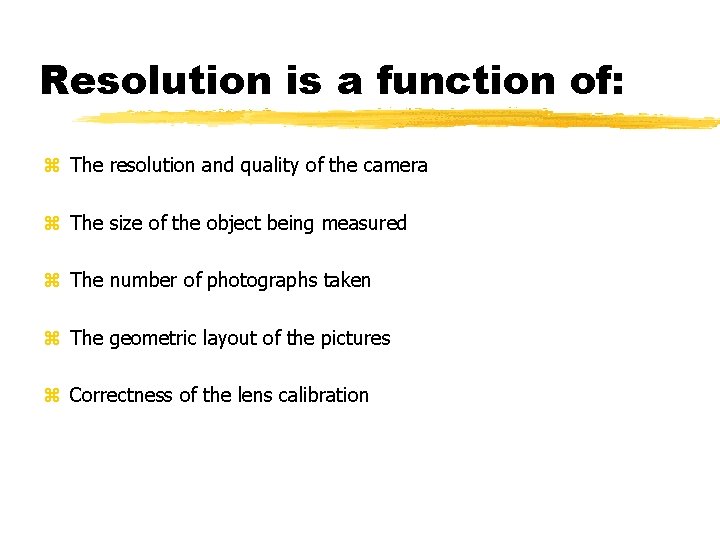
Resolution is a function of: z The resolution and quality of the camera z The size of the object being measured z The number of photographs taken z The geometric layout of the pictures z Correctness of the lens calibration
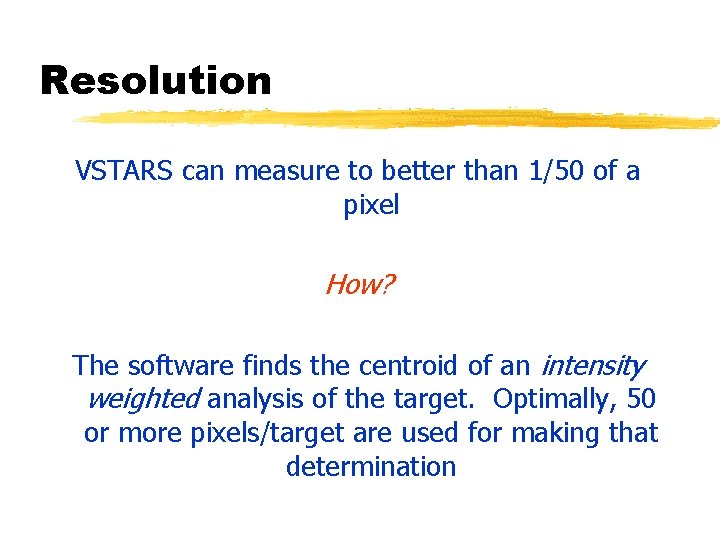
Resolution VSTARS can measure to better than 1/50 of a pixel How? The software finds the centroid of an intensity weighted analysis of the target. Optimally, 50 or more pixels/target are used for making that determination
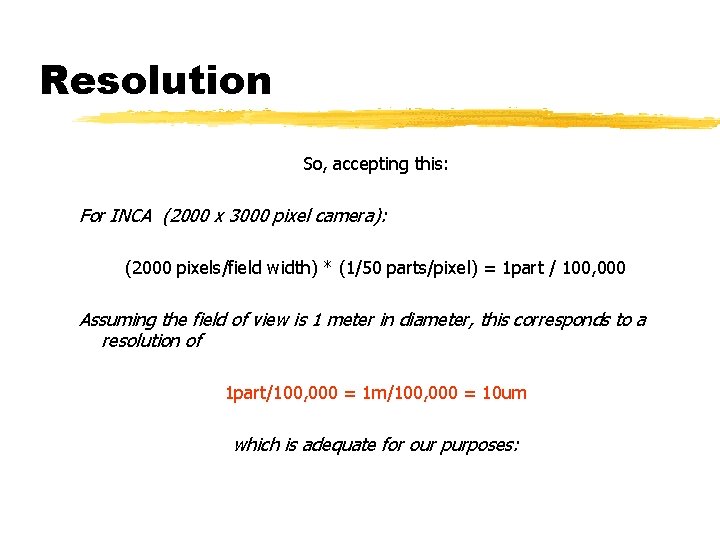
Resolution So, accepting this: For INCA (2000 x 3000 pixel camera): (2000 pixels/field width) * (1/50 parts/pixel) = 1 part / 100, 000 Assuming the field of view is 1 meter in diameter, this corresponds to a resolution of 1 part/100, 000 = 1 m/100, 000 = 10 um which is adequate for our purposes:
Sources of error z. V-STARS analysis z. Determination of pressure z. FEA
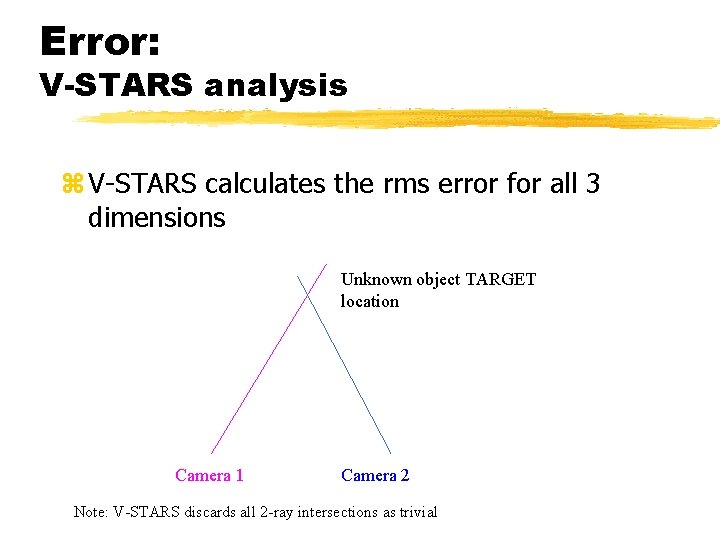
Error: V-STARS analysis z V-STARS calculates the rms error for all 3 dimensions Unknown object TARGET location Camera 1 Camera 2 Note: V-STARS discards all 2 -ray intersections as trivial
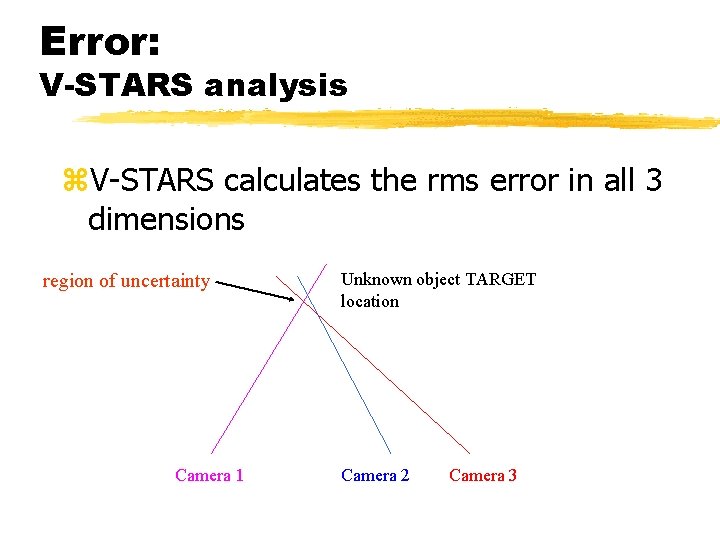
Error: V-STARS analysis z. V-STARS calculates the rms error in all 3 dimensions region of uncertainty Camera 1 Unknown object TARGET location Camera 2 Camera 3
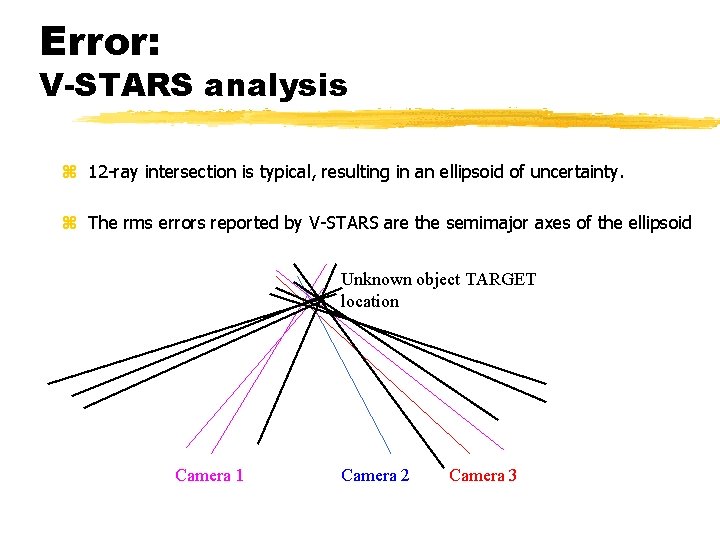
Error: V-STARS analysis z 12 -ray intersection is typical, resulting in an ellipsoid of uncertainty. z The rms errors reported by V-STARS are the semimajor axes of the ellipsoid Unknown object TARGET location Camera 1 Camera 2 Camera 3
Error: V-STARS analysis Xrms, Yrms, Zrms ~5 um
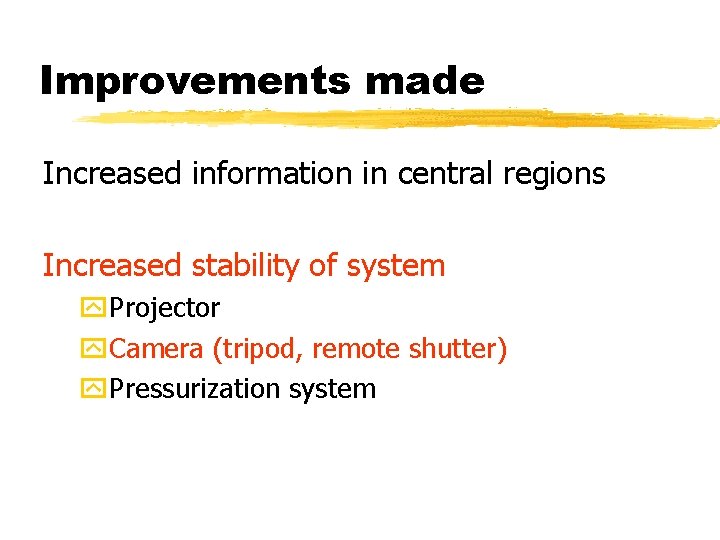
Improvements made Increased information in central regions Increased stability of system y. Projector y. Camera (tripod, remote shutter) y. Pressurization system
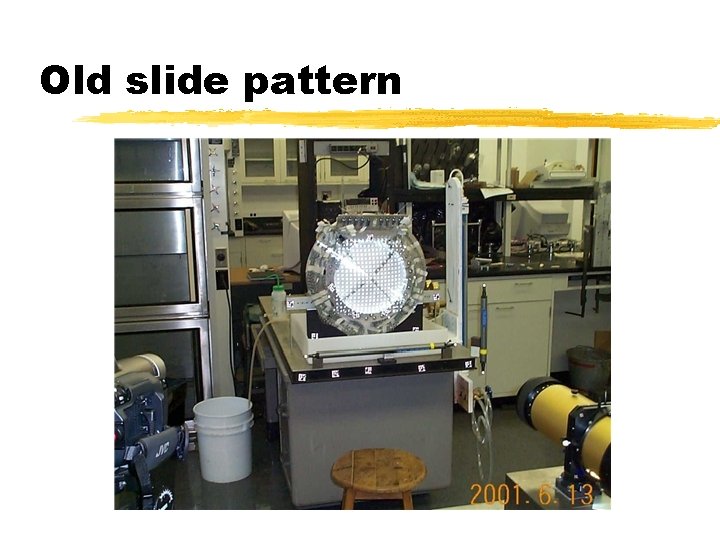
Old slide pattern
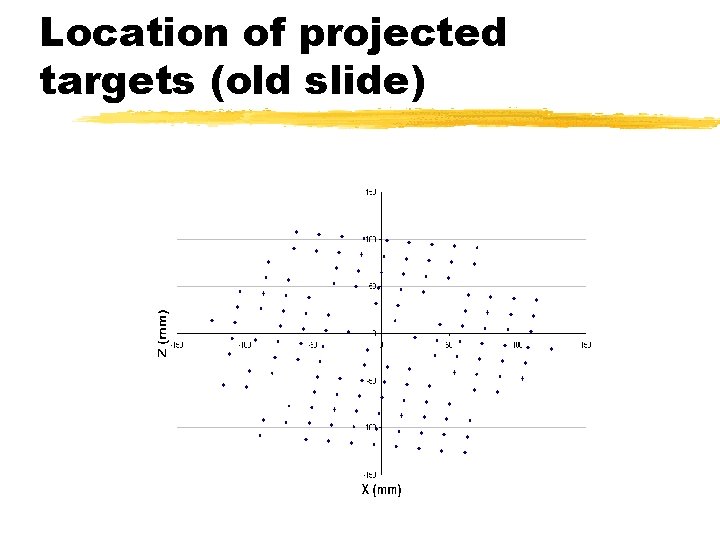
Location of projected targets (old slide)
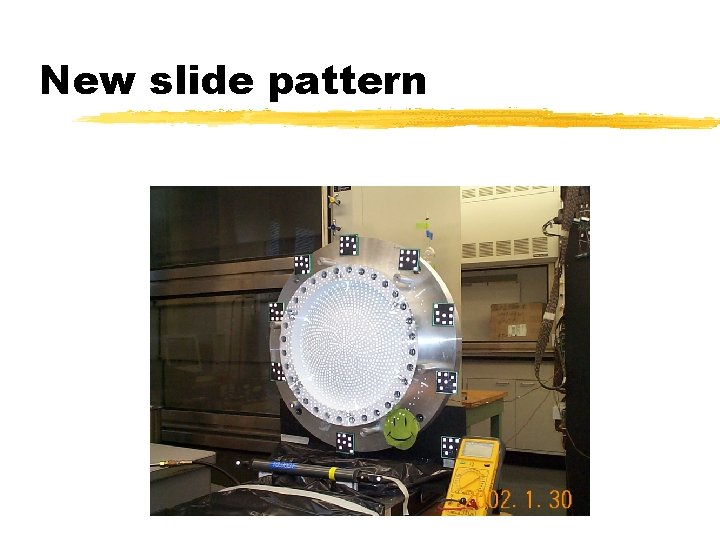
New slide pattern
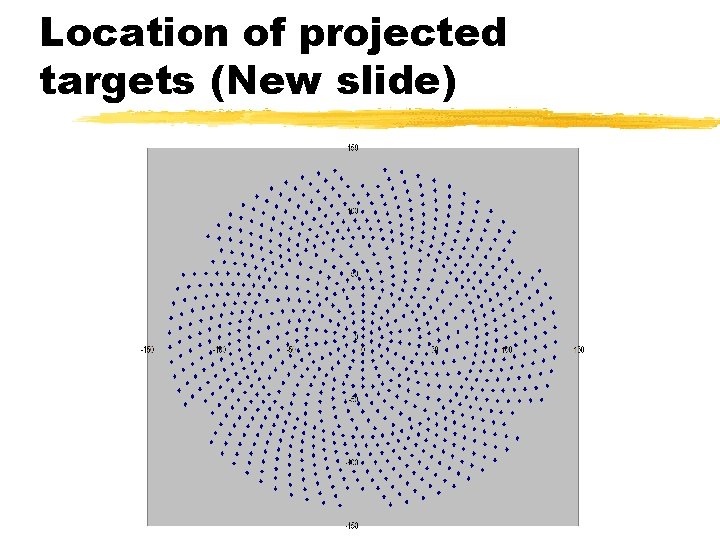
Location of projected targets (New slide)
Improvements made Increased information in central regions Increased stability of system y. Projector y. Camera (tripod, remote shutter) y. Pressurization system
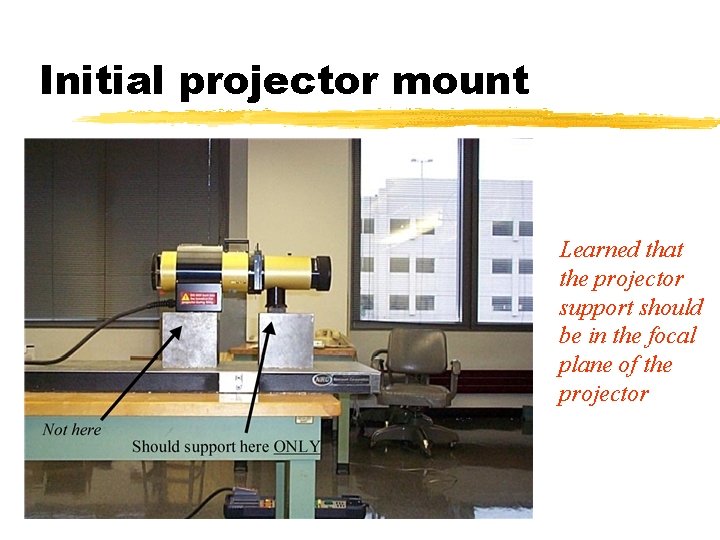
Initial projector mount Learned that the projector support should be in the focal plane of the projector
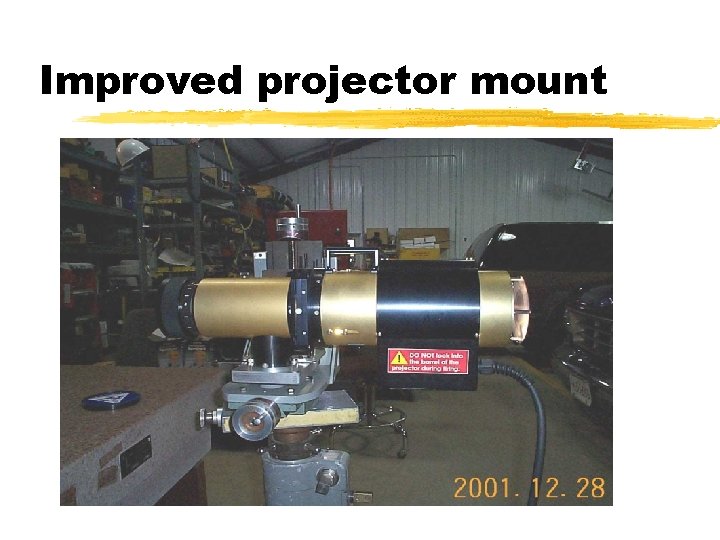
Improved projector mount
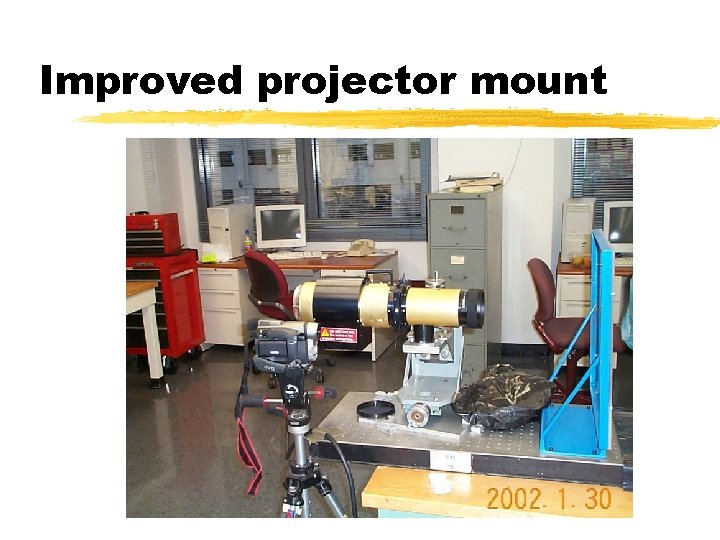
Improved projector mount
Improvements made Increased information in central regions Increased stability of system y. Projector y. Camera (tripod, remote shutter) y. Pressurization system
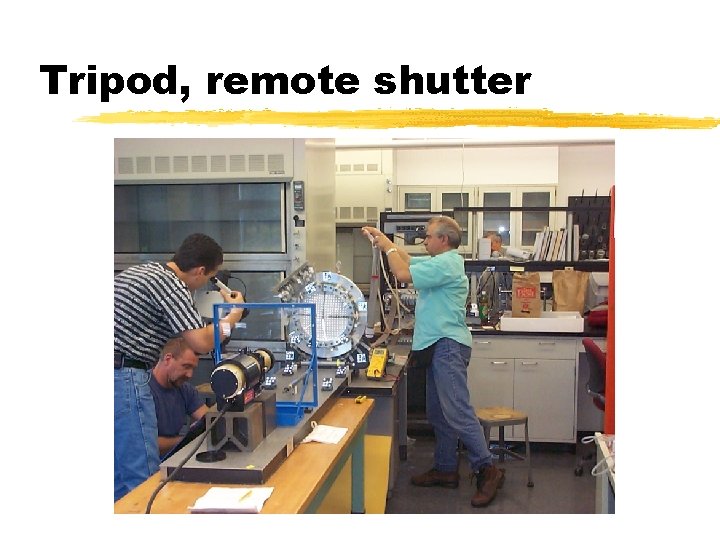
Tripod, remote shutter
Improvements made Increased information in central regions Increased stability of system y. Projector y. Camera (tripod, remote shutter) y. Pressurization system
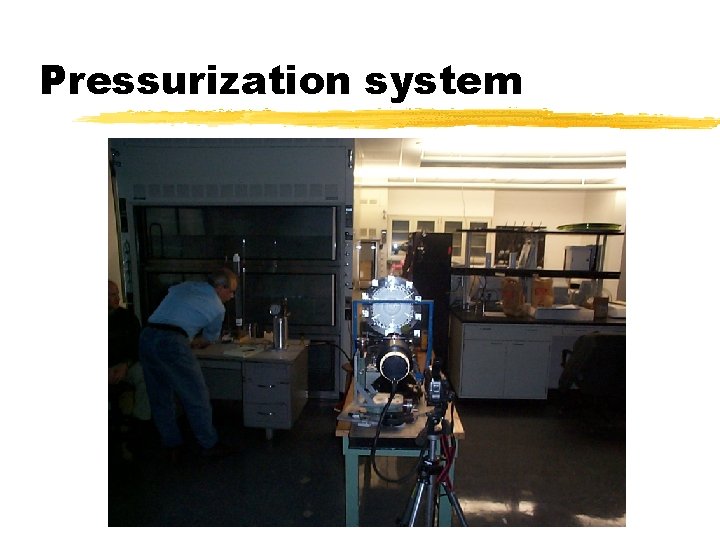
Pressurization system
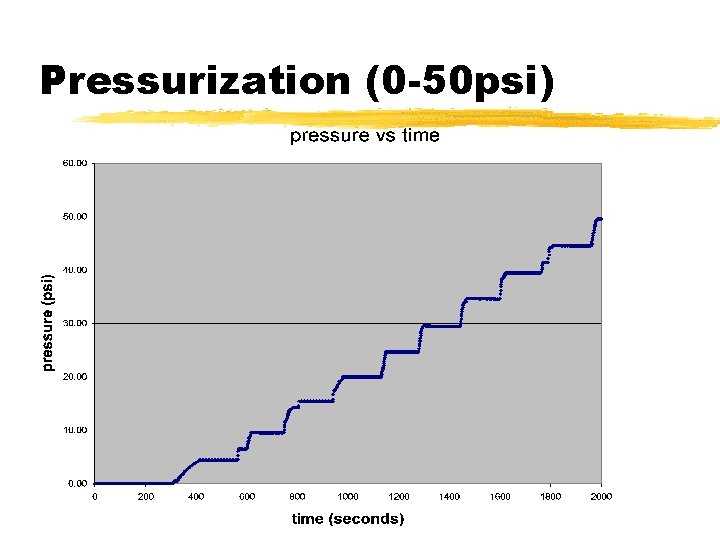
Pressurization (0 -50 psi)
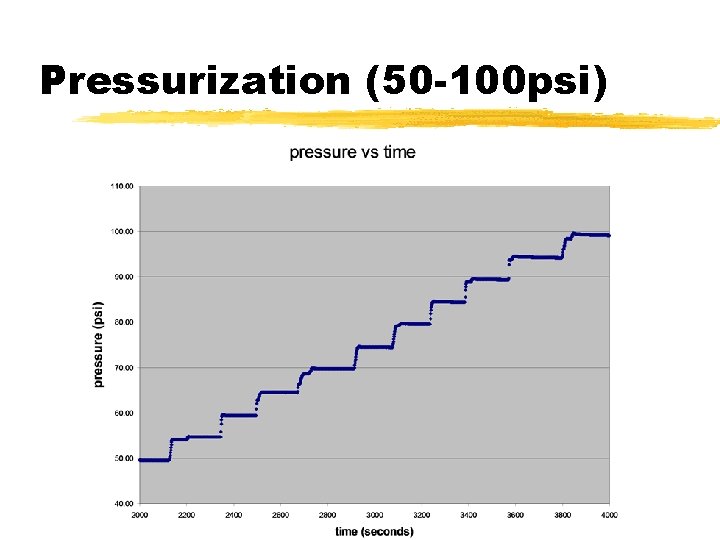
Pressurization (50 -100 psi)
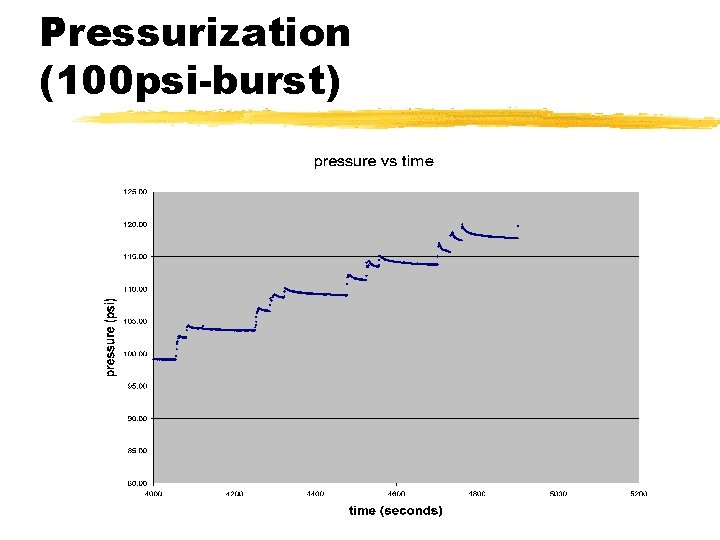
Pressurization (100 psi-burst)
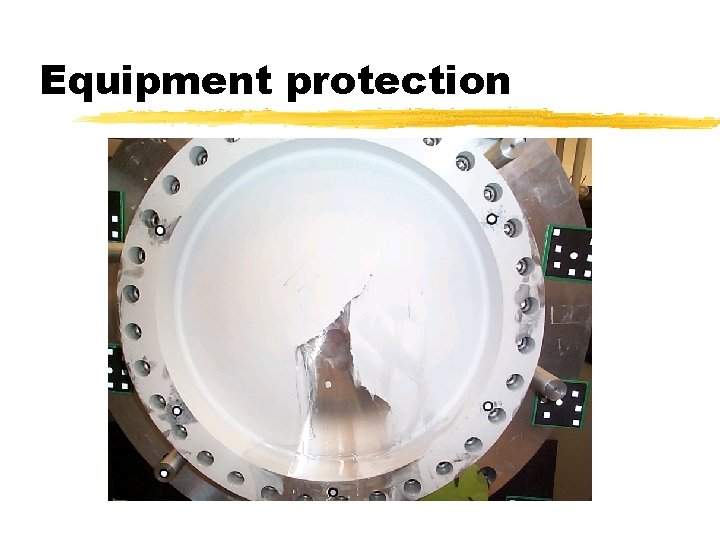
Equipment protection
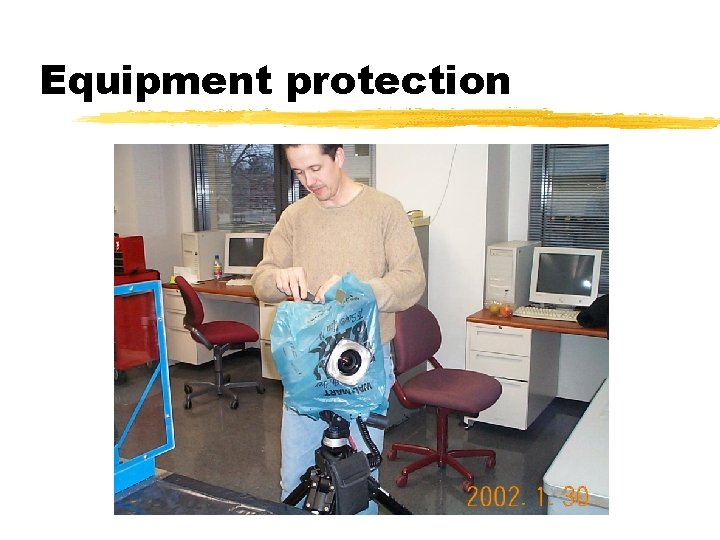
Equipment protection
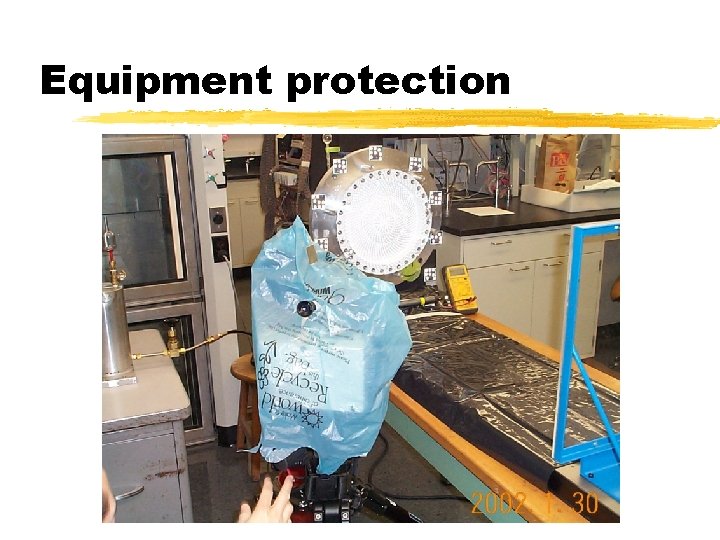
Equipment protection
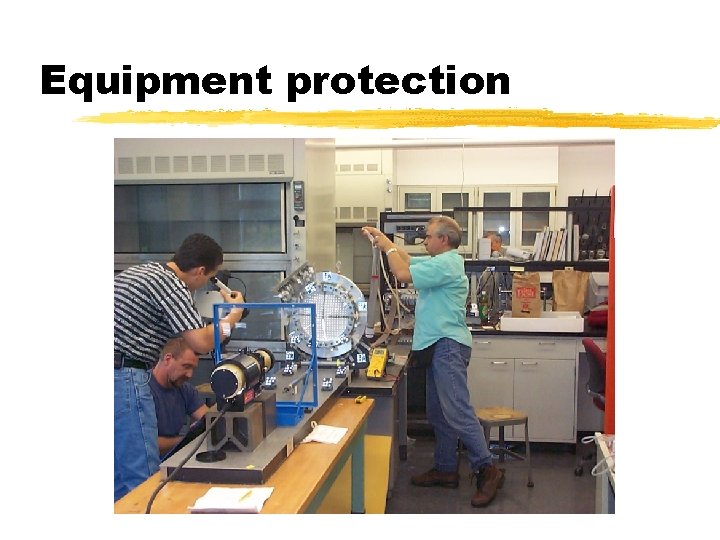
Equipment protection
New plan z. Plan to measure window thickness using photogrammetry (currently use CMM) z. Procedure: perform photogrammetric measurements on both sides of the window.
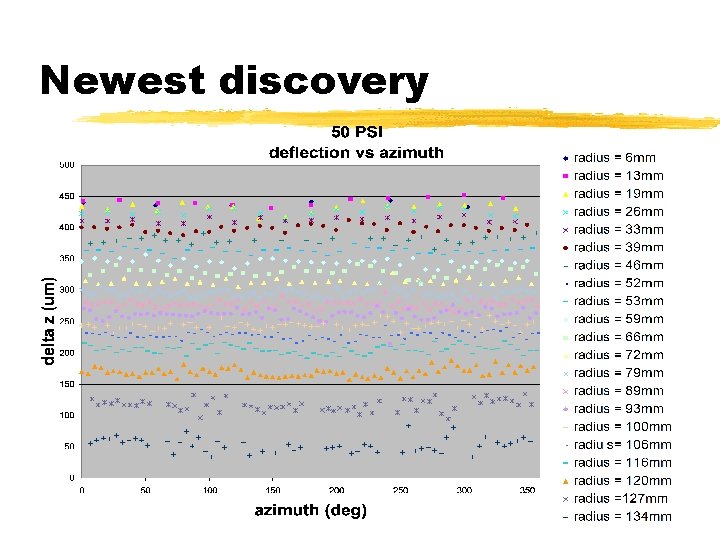
Newest discovery
Newest discovery Periodic variation in deflection as f(azimuth) may be an indication of harmonic variations in the circumferential direction.
- Slides: 68