
Photoevaporating Protoplanetary Disks near Young Massive Stars in
- Slides: 11
Photoevaporating Protoplanetary Disks near Young Massive Stars in the Orion Nebula Mackenzie James Mentor: Dr. Jinyoung Serena Kim Arizona Space Grant Symposium, April 14 th, 2018
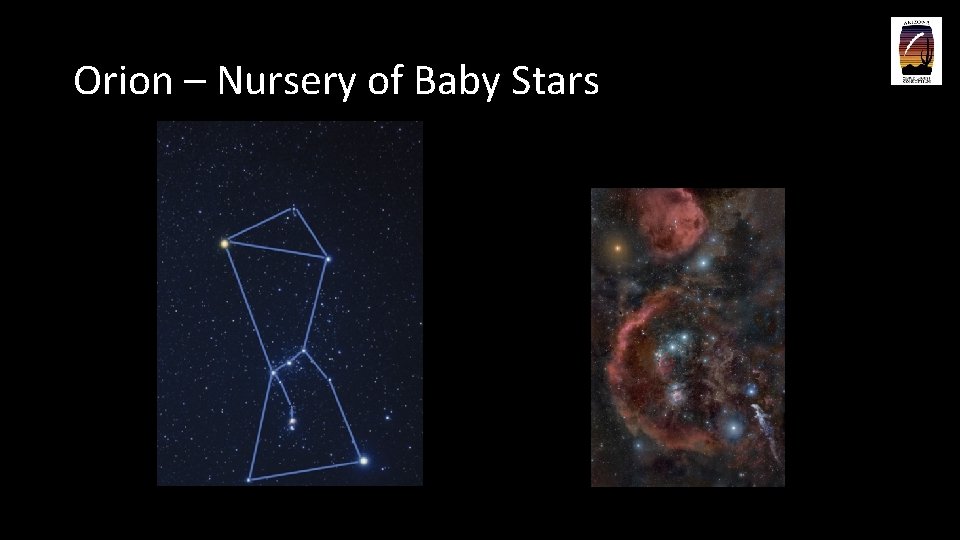
Orion – Nursery of Baby Stars
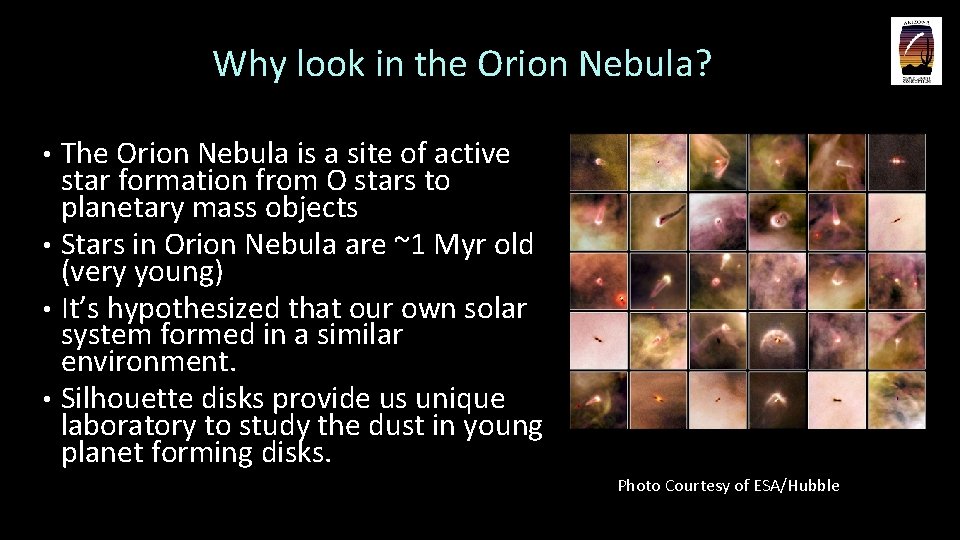
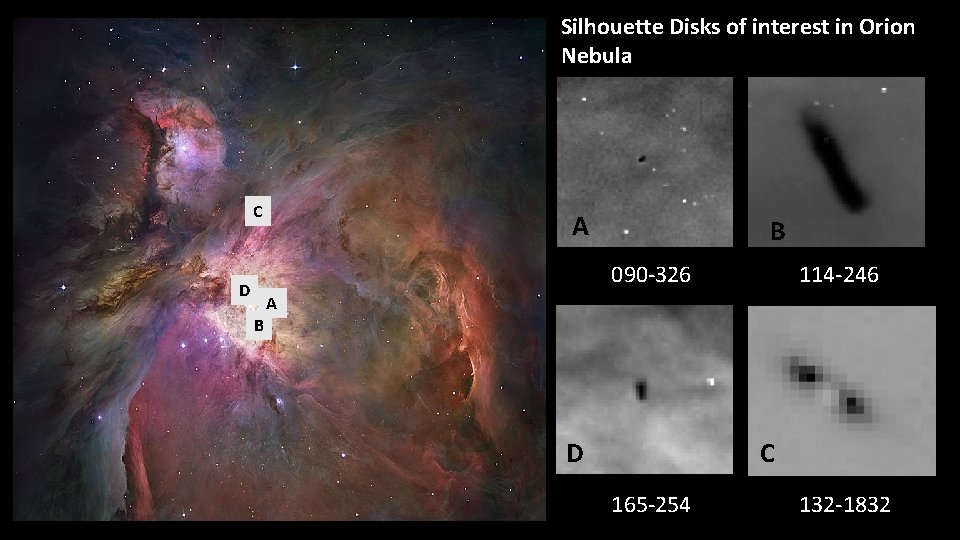
Why look in the Orion Nebula? The Orion Nebula is a site of active star formation from O stars to planetary mass objects • Stars in Orion Nebula are ~1 Myr old (very young) • It’s hypothesized that our own solar system formed in a similar environment. • Silhouette disks provide us unique laboratory to study the dust in young planet forming disks. • Photo Courtesy of ESA/Hubble
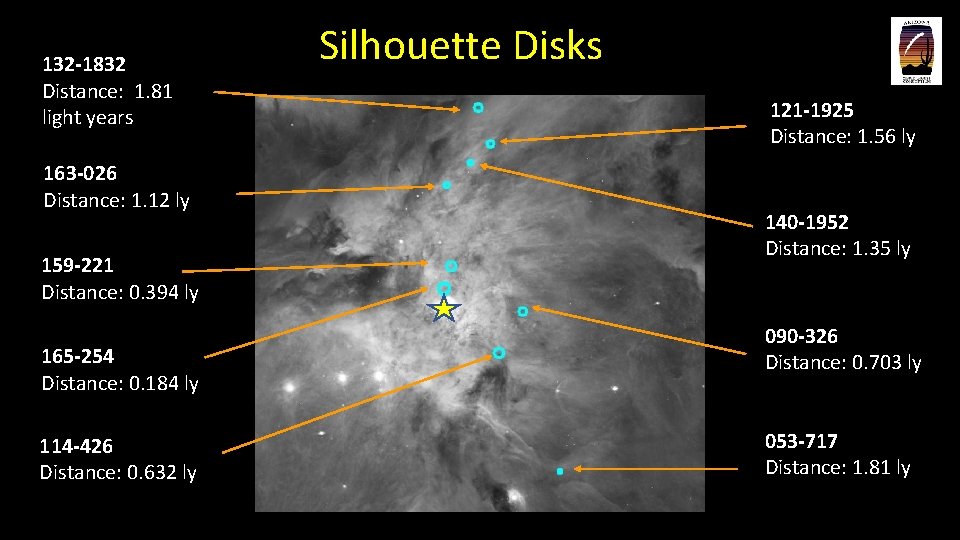
132 -1832 Distance: 1. 81 light years 163 -026 Distance: 1. 12 ly 159 -221 Distance: 0. 394 ly 165 -254 Distance: 0. 184 ly 114 -426 Distance: 0. 632 ly Silhouette Disks 121 -1925 Distance: 1. 56 ly 140 -1952 Distance: 1. 35 ly 090 -326 Distance: 0. 703 ly 053 -717 Distance: 1. 81 ly
Silhouette Disks of interest in Orion Nebula C A B 114 -246 090 -326 D A B D C 165 -254 132 -1832
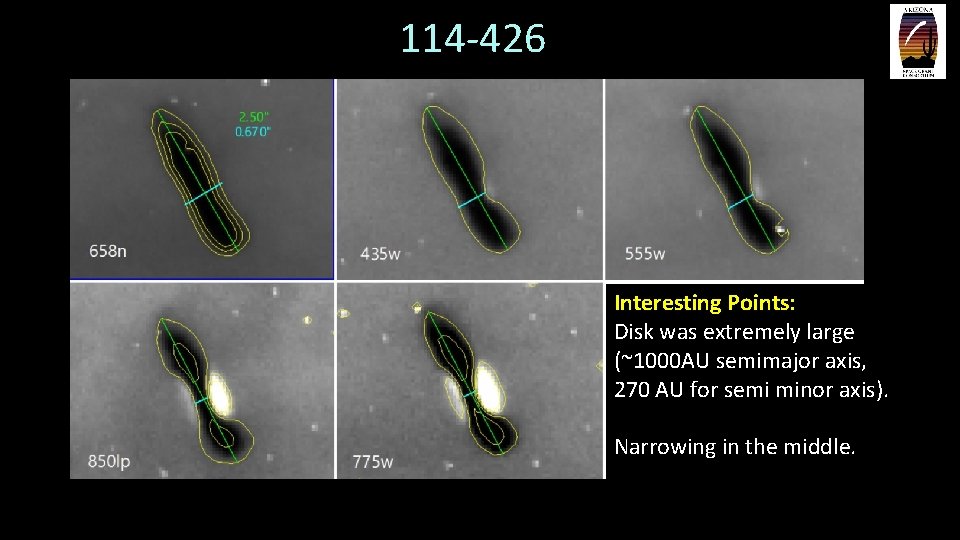
114 -426 Interesting Points: Disk was extremely large (~1000 AU semimajor axis, 270 AU for semi minor axis). Narrowing in the middle.
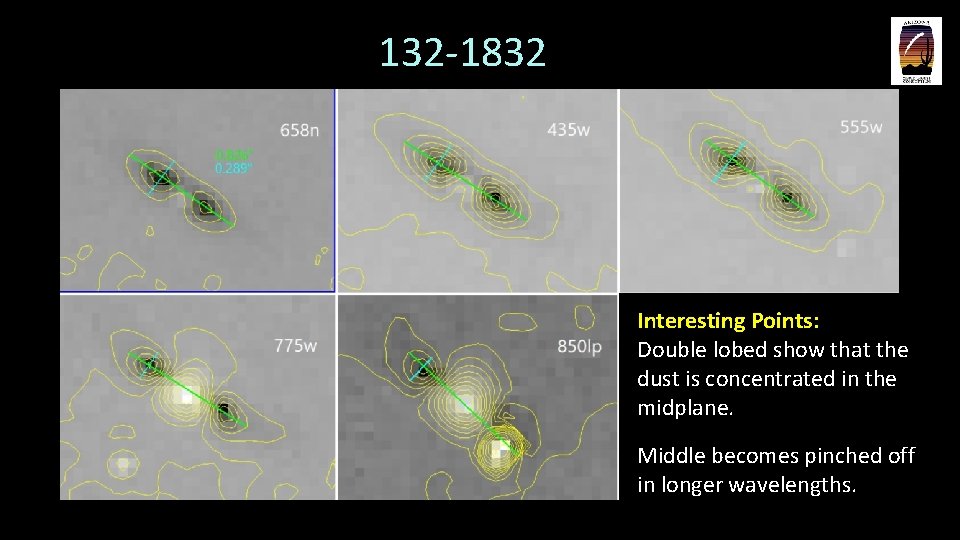
132 -1832 Interesting Points: Double lobed show that the dust is concentrated in the midplane. Middle becomes pinched off in longer wavelengths.
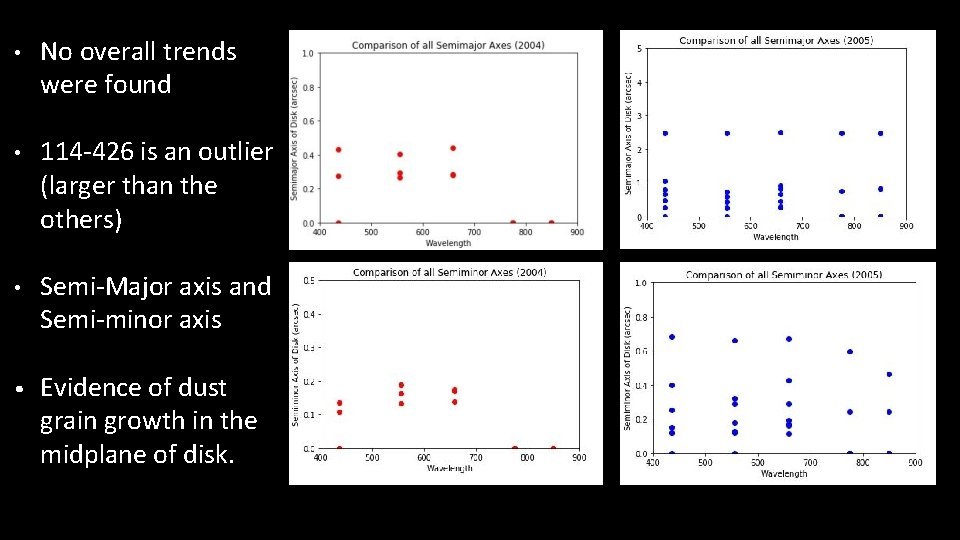
• No overall trends were found • 114 -426 is an outlier (larger than the others) • Semi-Major axis and Semi-minor axis • Evidence of dust grain growth in the midplane of disk.
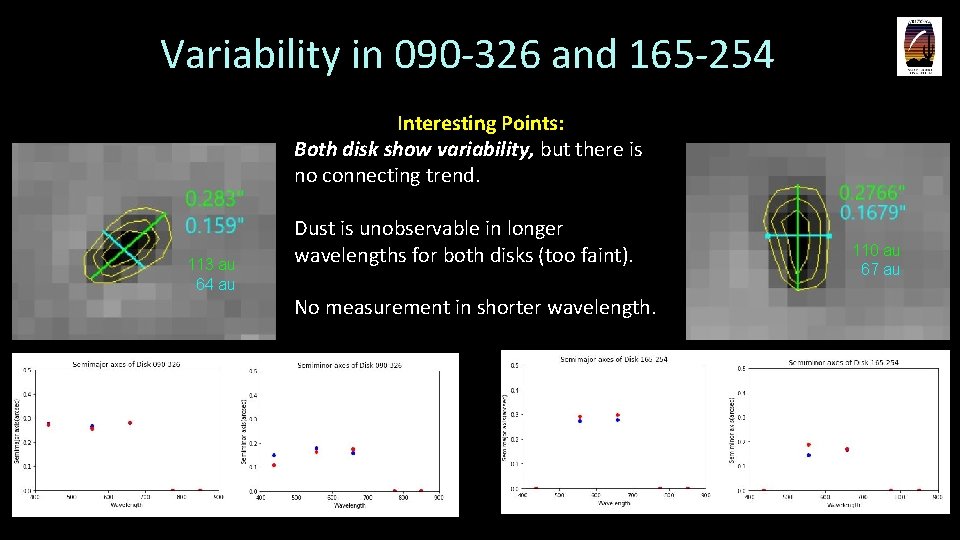
Variability in 090 -326 and 165 -254 Interesting Points: Both disk show variability, but there is no connecting trend. 113 au 64 au Dust is unobservable in longer wavelengths for both disks (too faint). No measurement in shorter wavelength. 110 au 67 au
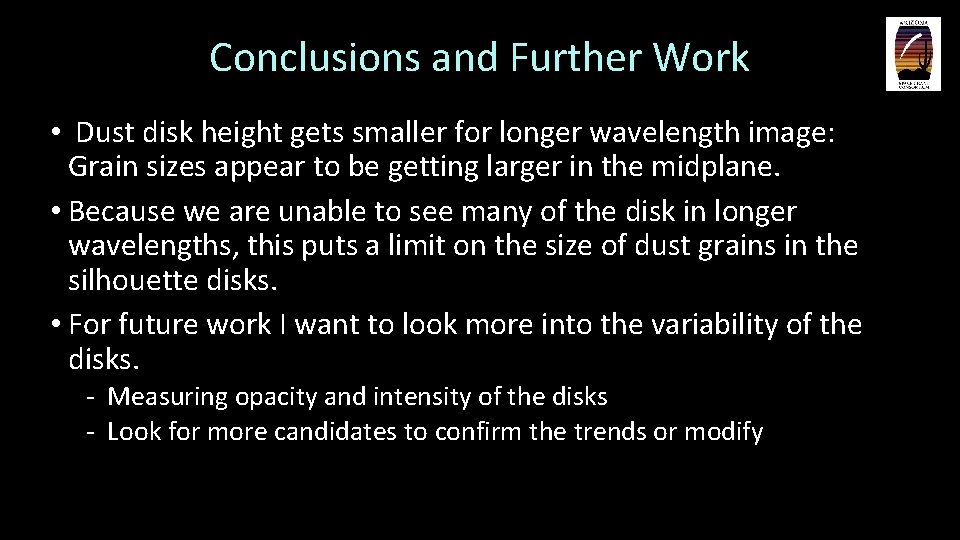
Conclusions and Further Work • Dust disk height gets smaller for longer wavelength image: Grain sizes appear to be getting larger in the midplane. • Because we are unable to see many of the disk in longer wavelengths, this puts a limit on the size of dust grains in the silhouette disks. • For future work I want to look more into the variability of the disks. - Measuring opacity and intensity of the disks - Look for more candidates to confirm the trends or modify
Thank You Acknowledgements: Hubble Legacy Archive Ricci et. al (2008) Miotello et all. (2016)