
Photoelectron Spectroscopy PES Spectroscopy Method of analyzing matter
- Slides: 12
Photoelectron Spectroscopy (PES)
Spectroscopy • Method of analyzing matter using electromagnetic radiation. webpage
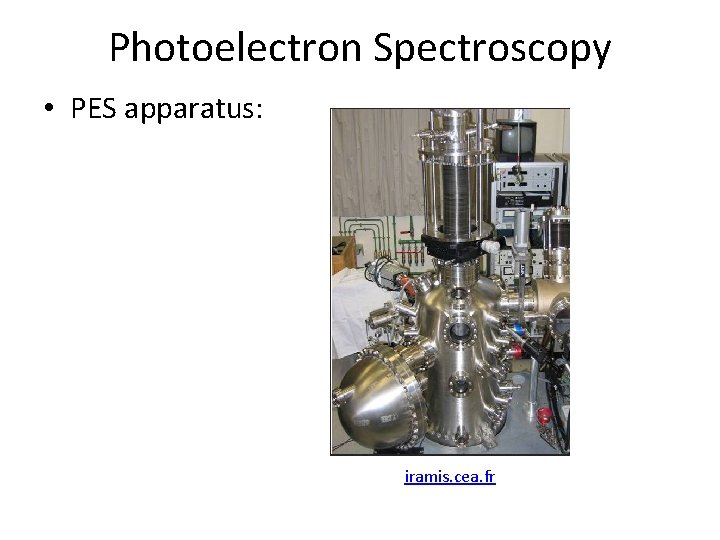
Photoelectron Spectroscopy • PES apparatus: iramis. cea. fr
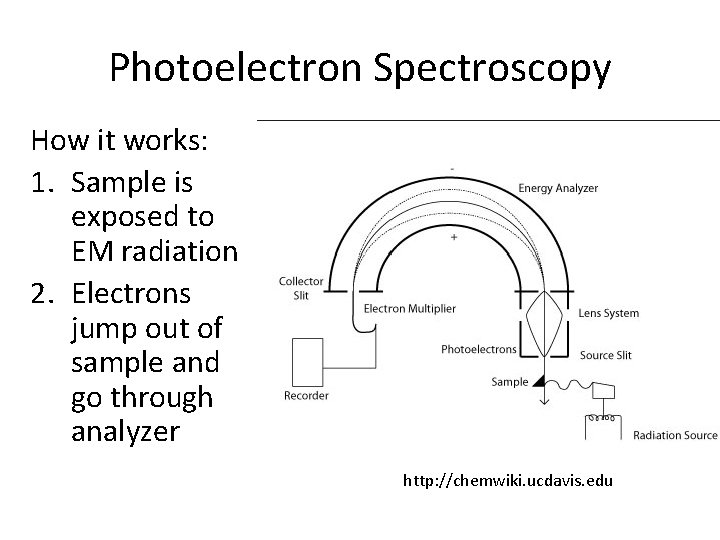
Photoelectron Spectroscopy How it works: 1. Sample is exposed to EM radiation 2. Electrons jump out of sample and go through analyzer http: //chemwiki. ucdavis. edu
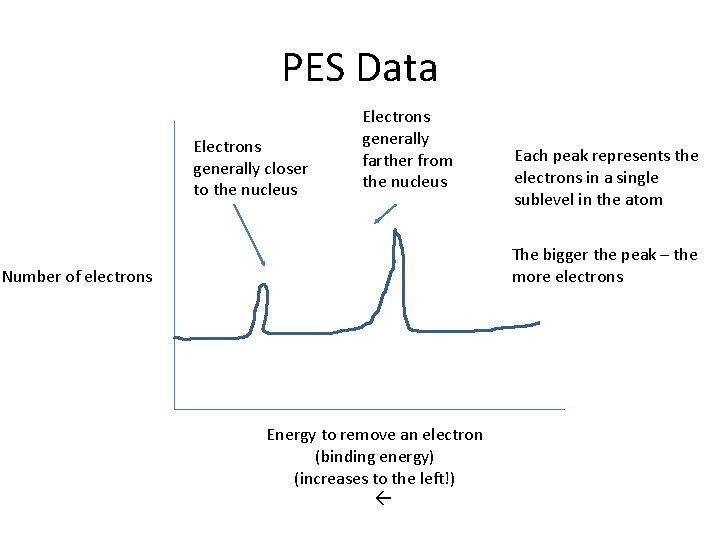
PES Data Electrons generally closer to the nucleus Electrons generally farther from the nucleus Each peak represents the electrons in a single sublevel in the atom The bigger the peak – the more electrons Number of electrons Energy to remove an electron (binding energy) (increases to the left!)
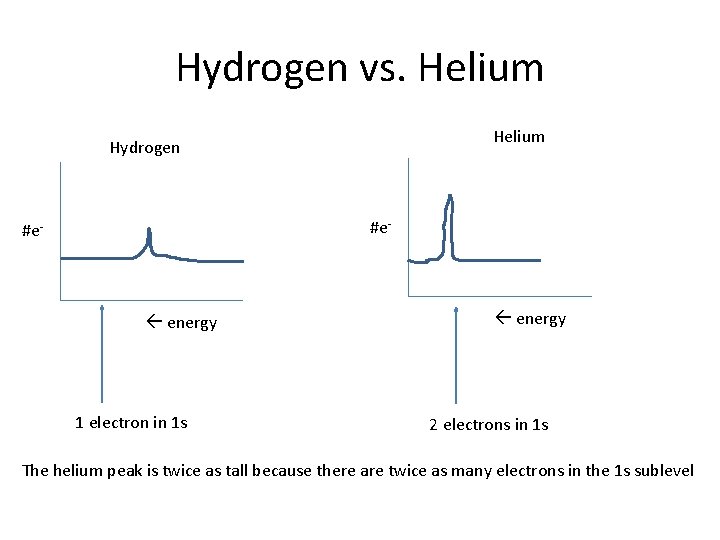
Hydrogen vs. Helium Hydrogen #e- energy 1 electron in 1 s energy 2 electrons in 1 s The helium peak is twice as tall because there are twice as many electrons in the 1 s sublevel
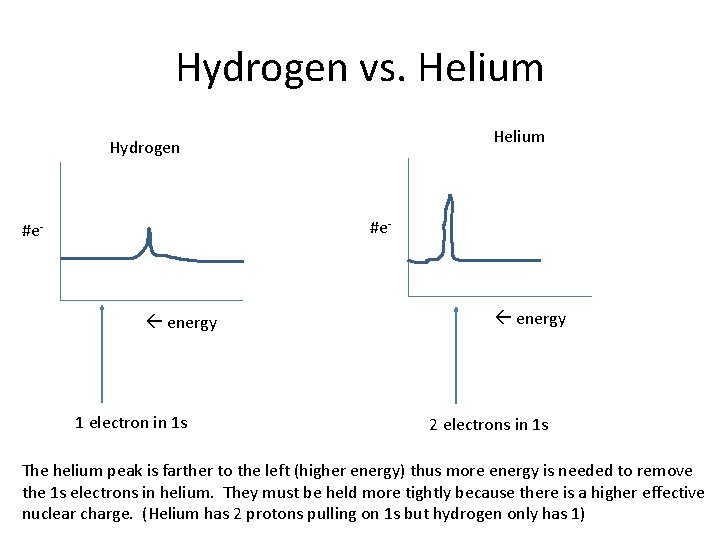
Hydrogen vs. Helium Hydrogen #e- energy 1 electron in 1 s energy 2 electrons in 1 s The helium peak is farther to the left (higher energy) thus more energy is needed to remove the 1 s electrons in helium. They must be held more tightly because there is a higher effective nuclear charge. (Helium has 2 protons pulling on 1 s but hydrogen only has 1)
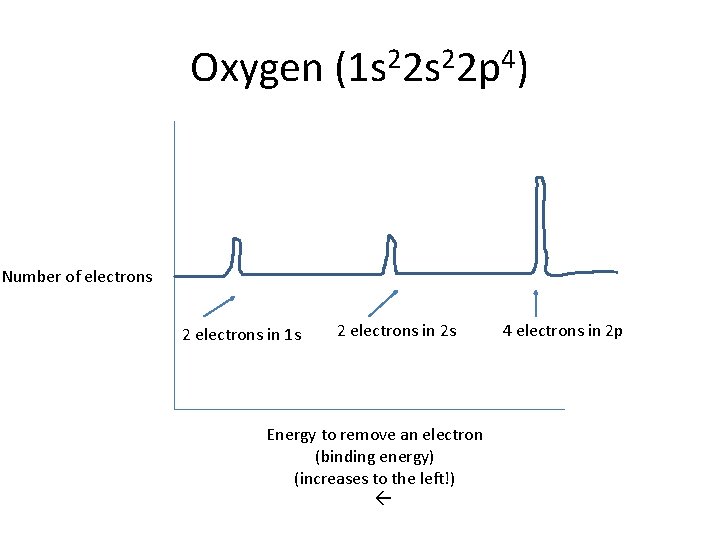
Oxygen (1 s 22 p 4) Number of electrons 2 electrons in 1 s 2 electrons in 2 s Energy to remove an electron (binding energy) (increases to the left!) 4 electrons in 2 p
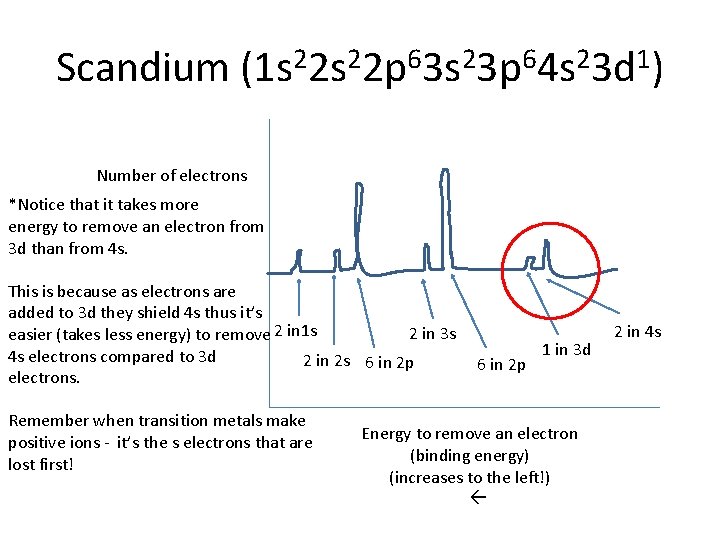
Scandium (1 s 22 p 63 s 23 p 64 s 23 d 1) Number of electrons *Notice that it takes more energy to remove an electron from 3 d than from 4 s. This is because as electrons are added to 3 d they shield 4 s thus it’s 2 in 3 s easier (takes less energy) to remove 2 in 1 s 4 s electrons compared to 3 d 2 in 2 s 6 in 2 p electrons. Remember when transition metals make positive ions - it’s the s electrons that are lost first! 6 in 2 p 1 in 3 d Energy to remove an electron (binding energy) (increases to the left!) 2 in 4 s
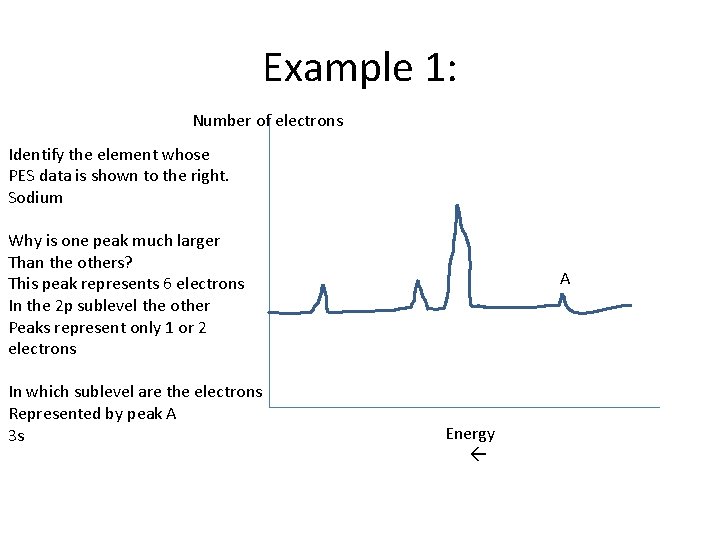
Example 1: Number of electrons Identify the element whose PES data is shown to the right. Sodium Why is one peak much larger Than the others? This peak represents 6 electrons In the 2 p sublevel the other Peaks represent only 1 or 2 electrons In which sublevel are the electrons Represented by peak A 3 s A Energy
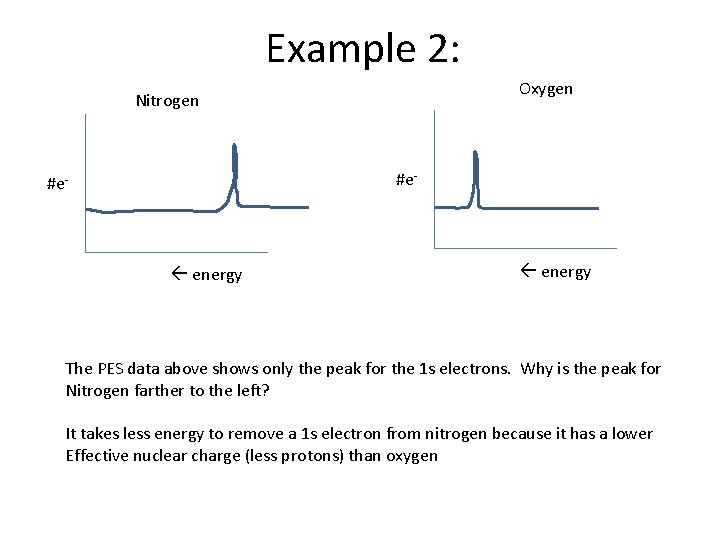
Example 2: Oxygen Nitrogen #e- energy The PES data above shows only the peak for the 1 s electrons. Why is the peak for Nitrogen farther to the left? It takes less energy to remove a 1 s electron from nitrogen because it has a lower Effective nuclear charge (less protons) than oxygen
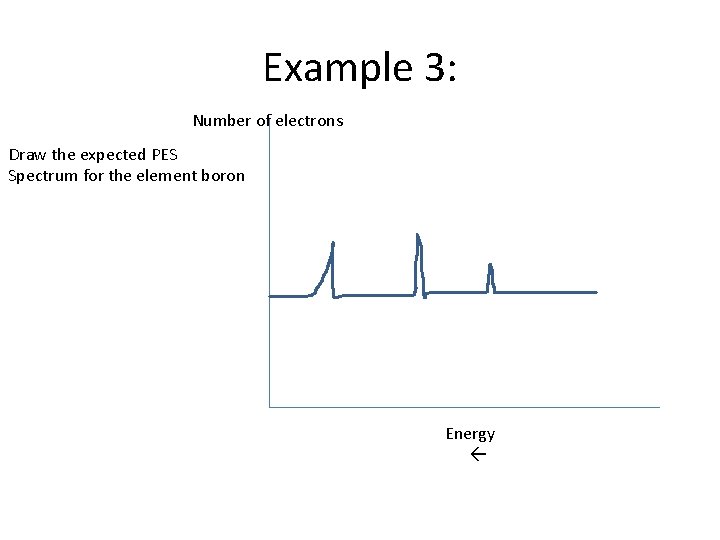
Example 3: Number of electrons Draw the expected PES Spectrum for the element boron Energy