
PHOTODETECTOR Iksan Bukhori M Phil DETECTOR SILICON PIN
PHOTODETECTOR Iksan Bukhori, M. Phil.
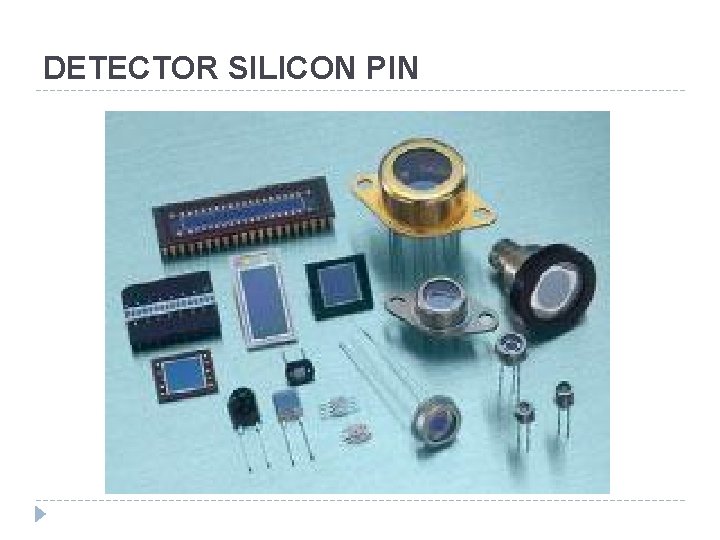
DETECTOR SILICON PIN
REQUIREMENTS OF PHOTO DETECTORS �High response or sensitivity �Low noise �Fast response or wide bandwidth �Not sensitive to temperature variations �Compatible with fiber �Cheap �Durable
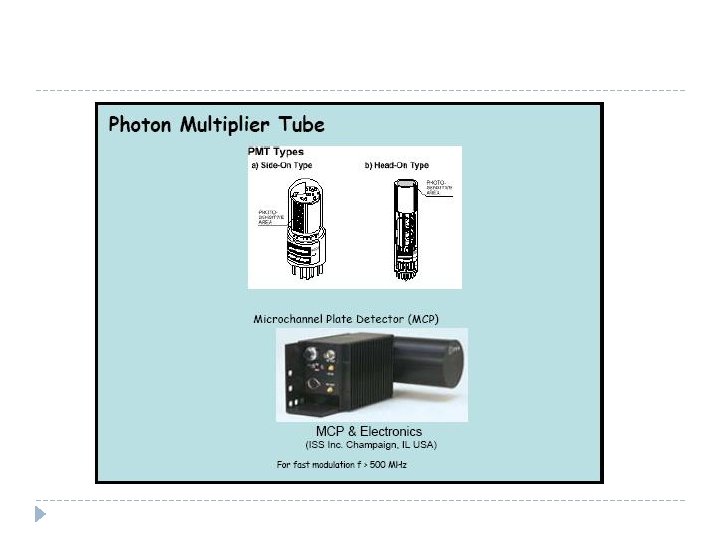
EXISTING PHOTO DETECTORS �Photomultiplier (photocathode + multiplier in vacuum tube) �Pyroelectric detector (conversion of photons to heat dielectric constant) �Semiconductor-based photoconductor (pin and APD) is suitable for optical fiber.

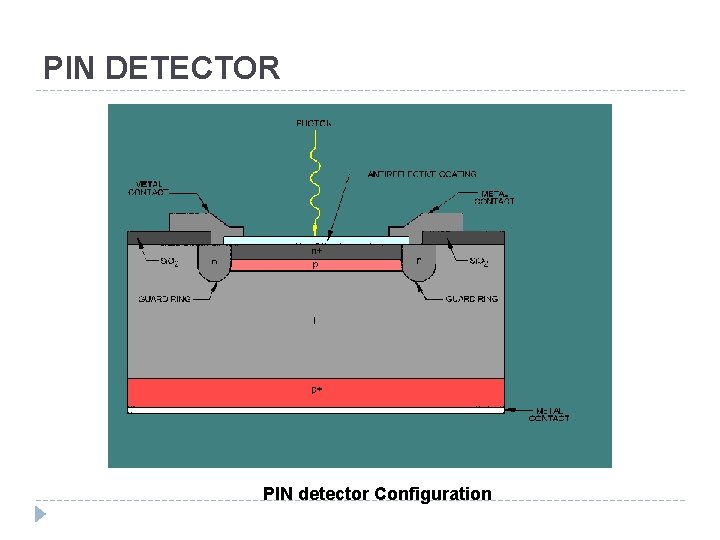
PIN DETECTOR PIN detector Configuration
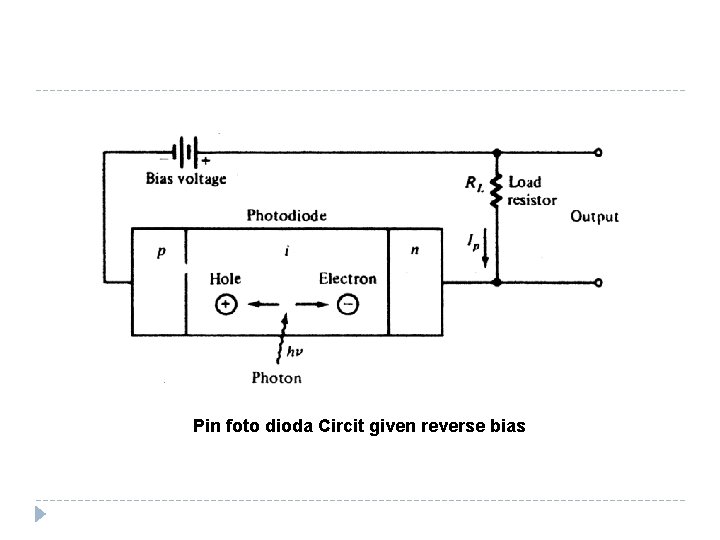
Pin foto dioda Circit given reverse bias
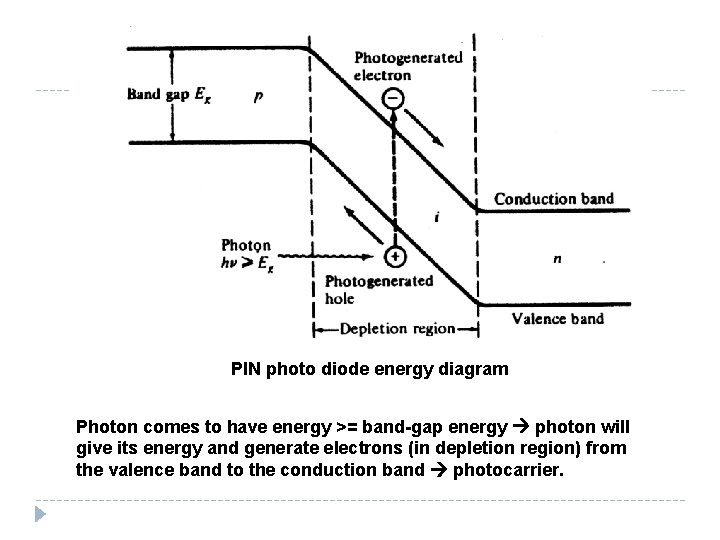
PIN photo diode energy diagram Photon comes to have energy >= band-gap energy photon will give its energy and generate electrons (in depletion region) from the valence band to the conduction band photocarrier.
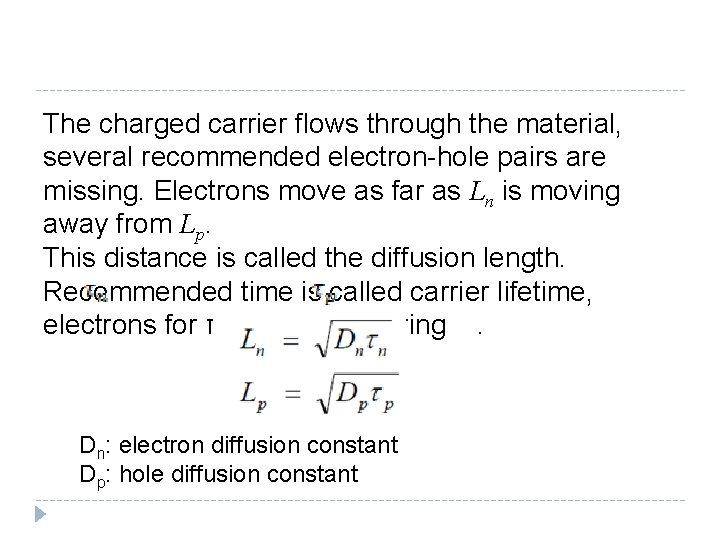
The charged carrier flows through the material, several recommended electron-hole pairs are missing. Electrons move as far as Ln is moving away from Lp. This distance is called the diffusion length. Recommended time is called carrier lifetime, electrons for τ and holes during. Dn: electron diffusion constant Dp: hole diffusion constant
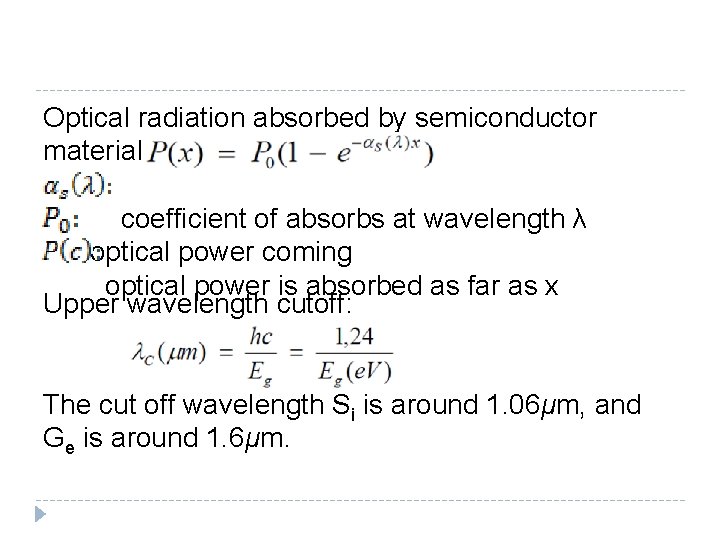
Optical radiation absorbed by semiconductor material: coefficient of absorbs at wavelength λ optical power coming optical power is absorbed as far as x Upper wavelength cutoff: The cut off wavelength Si is around 1. 06μm, and Ge is around 1. 6μm.
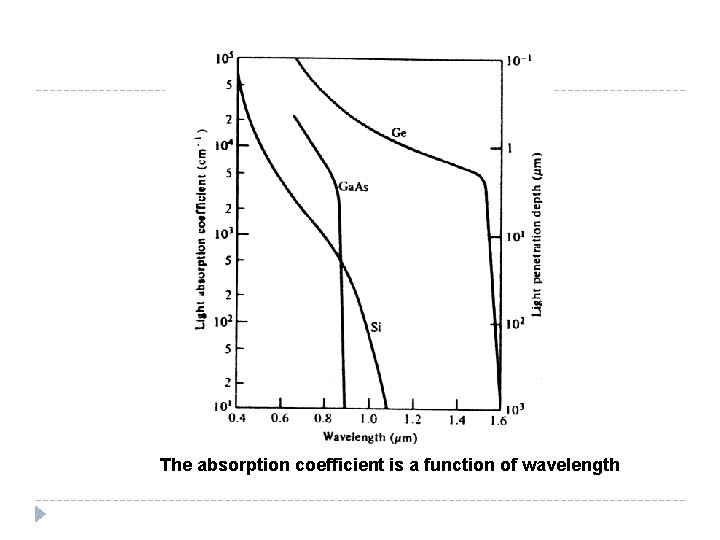
The absorption coefficient is a function of wavelength
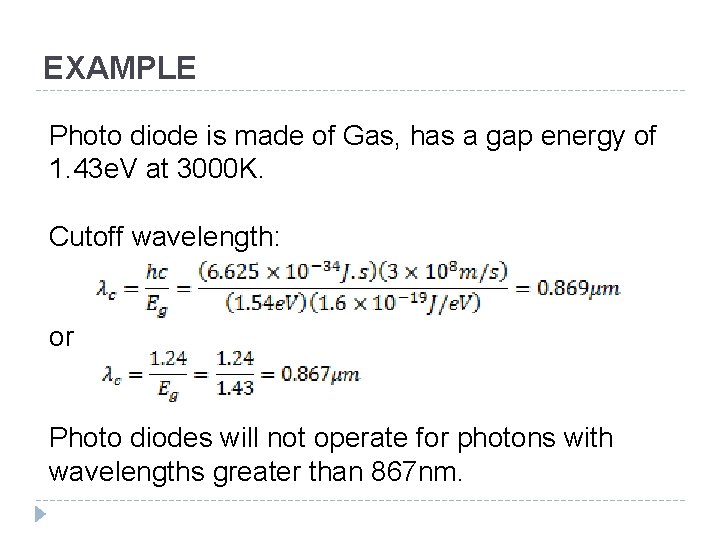
EXAMPLE Photo diode is made of Gas, has a gap energy of 1. 43 e. V at 3000 K. Cutoff wavelength: or Photo diodes will not operate for photons with wavelengths greater than 867 nm.
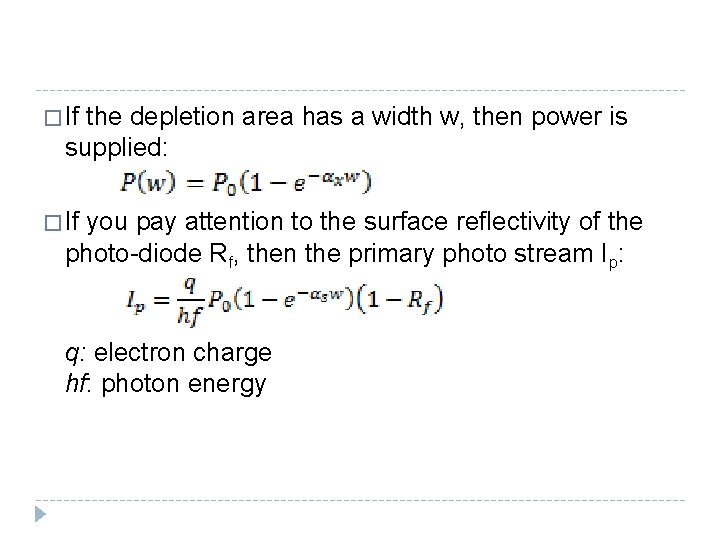
� If the depletion area has a width w, then power is supplied: � If you pay attention to the surface reflectivity of the photo-diode Rf, then the primary photo stream Ip: q: electron charge hf: photon energy
![� Quantum efficiency: � Responsiveness: [A/W] � This parameter is very useful because it](http://slidetodoc.com/presentation_image_h2/83ededc58ba347555a40fd61e240d8e7/image-15.jpg "� Quantum efficiency: � Responsiveness: [A/W] � This parameter is very useful because it")
� Quantum efficiency: � Responsiveness: [A/W] � This parameter is very useful because it specifies the photon current generated by each unit of power.
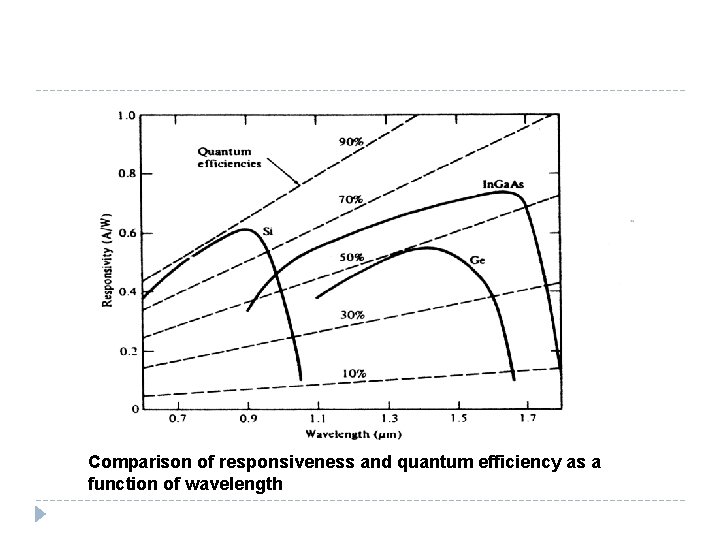
Comparison of responsiveness and quantum efficiency as a function of wavelength
- Slides: 16