
Photocopiers and laser printers Science 9 Bloc B
Photocopiers and laser printers Science 9 - Bloc B Emma, Daejung, Daniel, Josh and Max
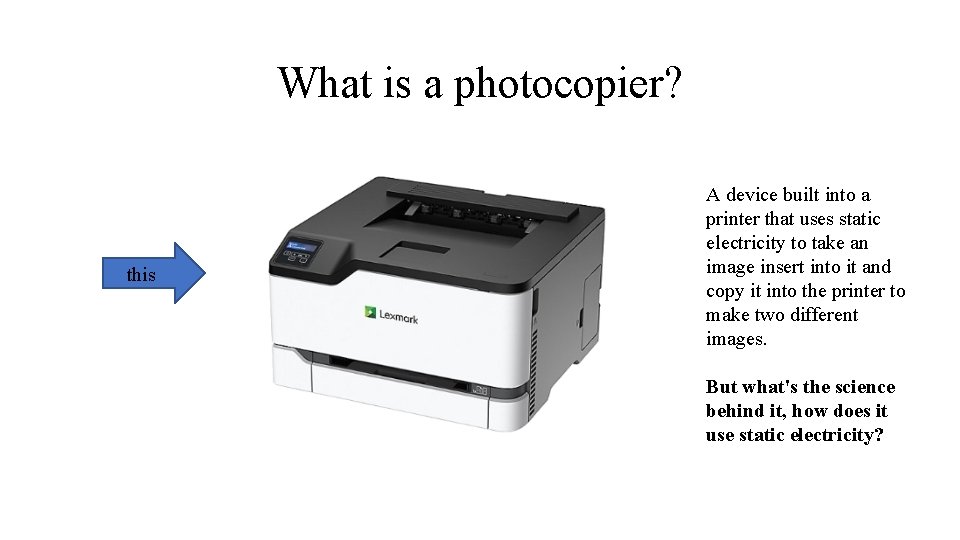
What is a photocopier? this A device built into a printer that uses static electricity to take an image insert into it and copy it into the printer to make two different images. But what's the science behind it, how does it use static electricity?
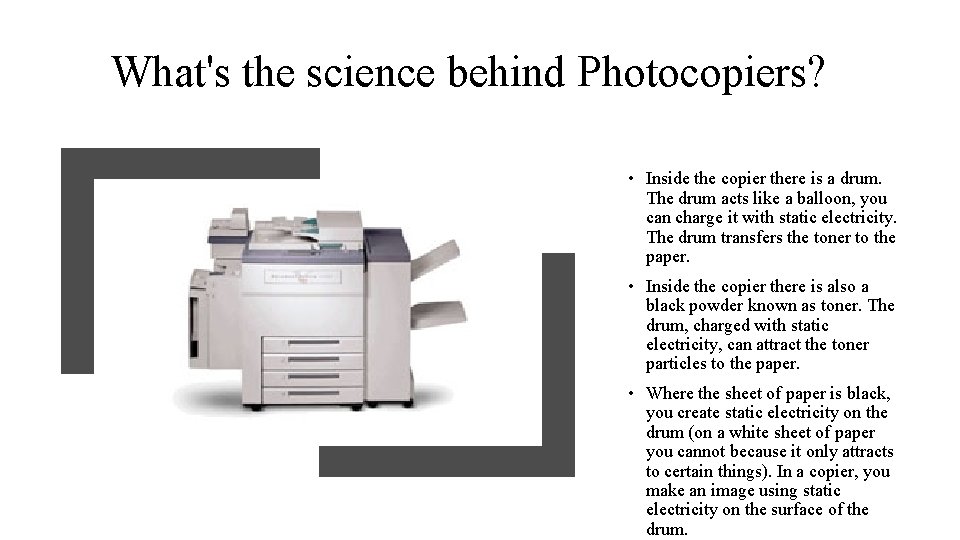
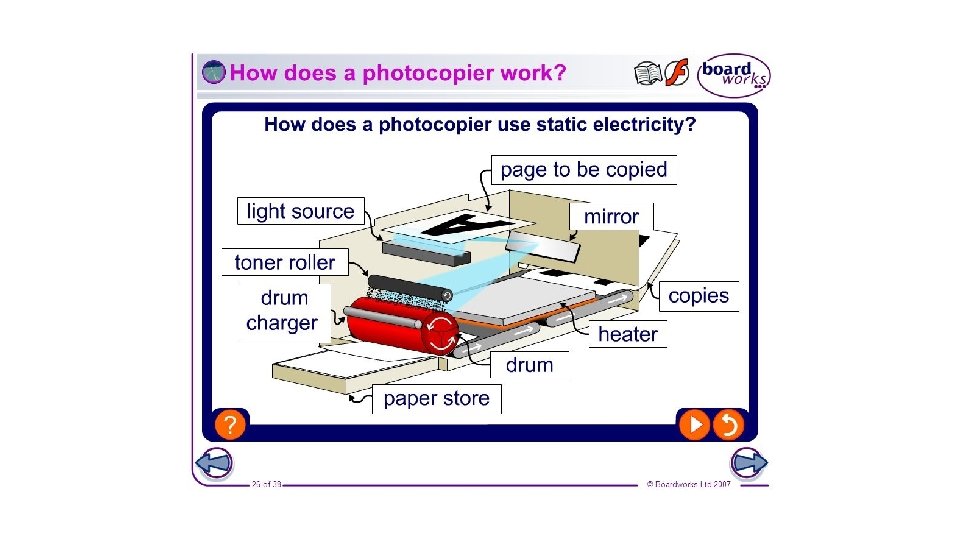
What's the science behind Photocopiers? • Inside the copier there is a drum. The drum acts like a balloon, you can charge it with static electricity. The drum transfers the toner to the paper. • Inside the copier there is also a black powder known as toner. The drum, charged with static electricity, can attract the toner particles to the paper. • Where the sheet of paper is black, you create static electricity on the drum (on a white sheet of paper you cannot because it only attracts to certain things). In a copier, you make an image using static electricity on the surface of the drum.
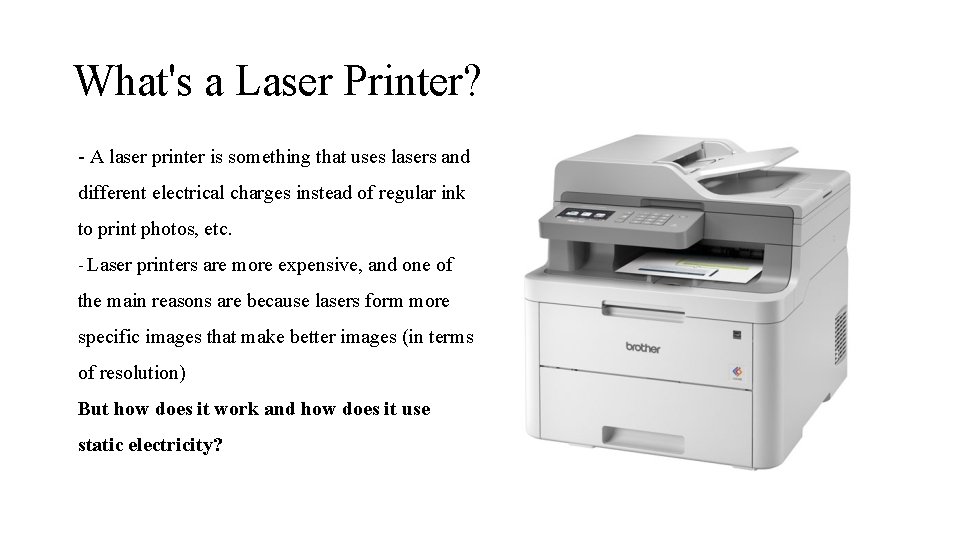
What's a Laser Printer? - A laser printer is something that uses lasers and different electrical charges instead of regular ink to print photos, etc. - Laser printers are more expensive, and one of the main reasons are because lasers form more specific images that make better images (in terms of resolution) But how does it work and how does it use static electricity?
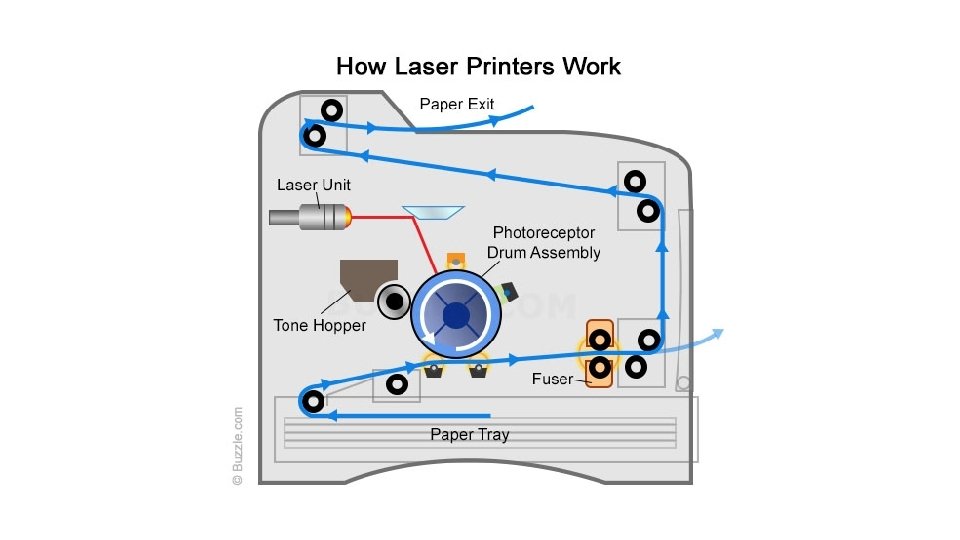
What's the science behind laser printers? • Laser printers will use a driver, created by companies to convert a file to code that printers will understand print the image and/or text. • The printer then places little dots that make up the image on paper using a laser on a metal-roller. • This means that the laser will copy the code from the printer and copy it onto the paper, resulting in a very specific and nice image. • After, the toner is transferred to a piece of paper and fixed by a heating process to finish. • Laser printers use static electricity by creating static electricity when the beam in the printer scans back and forth, building up a pattern. After the beam creates enough static electricity, it attracts onto the paper.
Thank you!
- Slides: 8