
Photocathodes for Electron Accelerators Evangelos Gazis Katerina Tzanetou

- Slides: 28
Photocathodes for Electron Accelerators Evangelos Gazis Katerina Tzanetou Pirsi Prepibaj Rafaella Kotitsa Nick Gazis (ESS ERIC) Institute of Accelerating Systems & Applications National Technical University of Athens 01. 06. 2018 EN Gazis/IASA-NTUA 1
Outline 1. 2. 3. 4. 5. 6. Photocathodes in the past Photocathodes today Photocathodes in the future Electron Guns X-FEL Conclusions 01. 06. 2018 EN Gazis/IASA-NTUA 2
Theoretical Modelling Progress • • QE determination for clean Cu surfaces and other metals Effect of adsorbates Next Steps • • • Stepped surfaces, partial coverages of adsorbates Extension of code to model transverse and longitudinal energy spread Thin films, alloys, semiconducting overlayers 01. 06. 2018 EN Gazis/IASA-NTUA 3
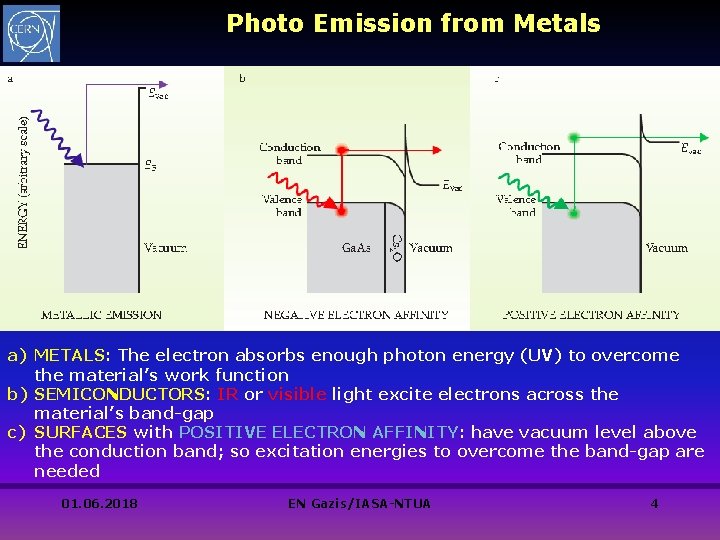
Photo Emission from Metals a) METALS: The electron absorbs enough photon energy (UV) to overcome the material’s work function b) SEMICONDUCTORS: IR or visible light excite electrons across the material’s band-gap c) SURFACES with POSITIVE ELECTRON AFFINITY: have vacuum level above the conduction band; so excitation energies to overcome the band-gap are needed 01. 06. 2018 EN Gazis/IASA-NTUA 4
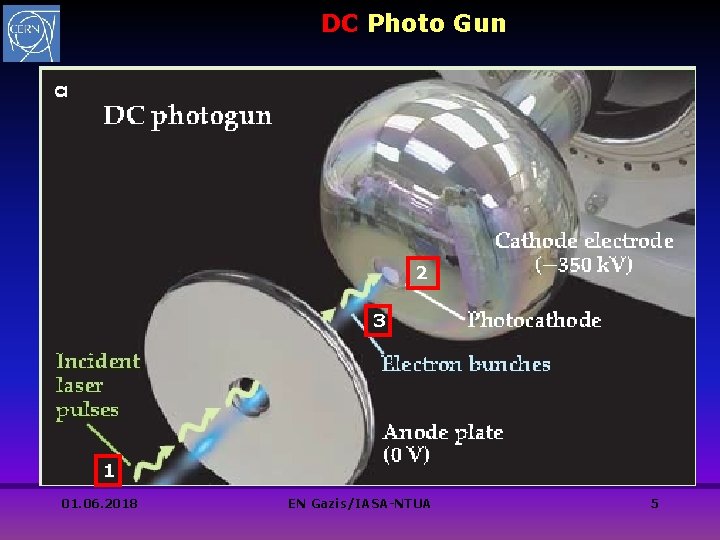
DC Photo Gun 2 3 1 01. 06. 2018 EN Gazis/IASA-NTUA 5
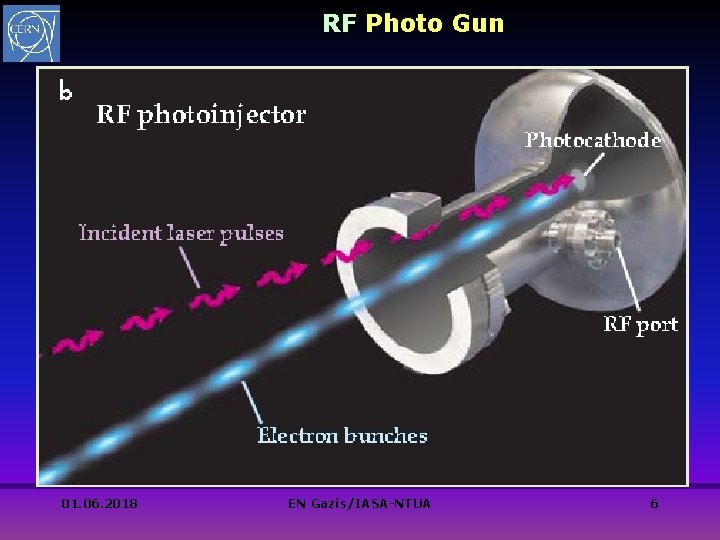
RF Photo Gun 01. 06. 2018 EN Gazis/IASA-NTUA 6
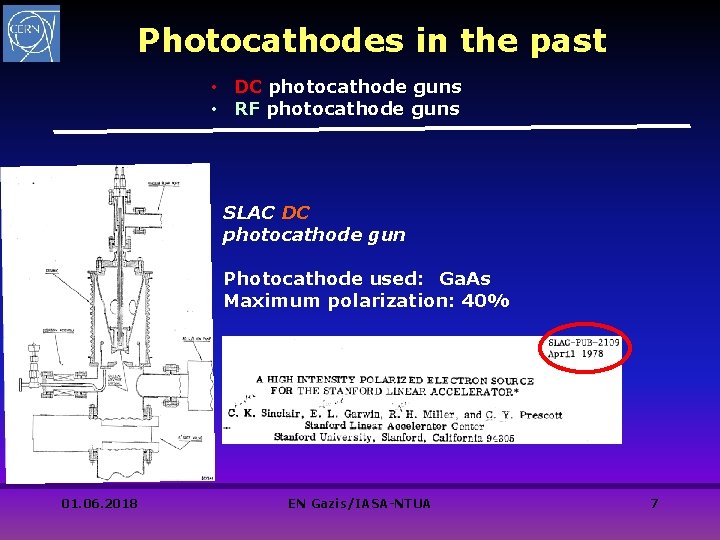
Photocathodes in the past • DC photocathode guns • RF photocathode guns SLAC DC photocathode gun Photocathode used: Ga. As Maximum polarization: 40% 01. 06. 2018 EN Gazis/IASA-NTUA 7
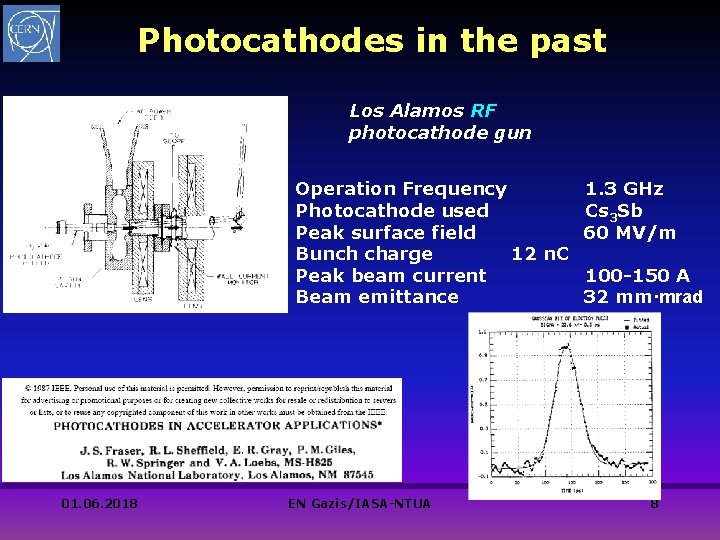
Photocathodes in the past Los Alamos RF photocathode gun Operation Frequency 1. 3 GHz Photocathode used Cs 3 Sb Peak surface field 60 MV/m Bunch charge 12 n. C Peak beam current 100 -150 A Beam emittance 32 mm·mrad 01. 06. 2018 EN Gazis/IASA-NTUA 8
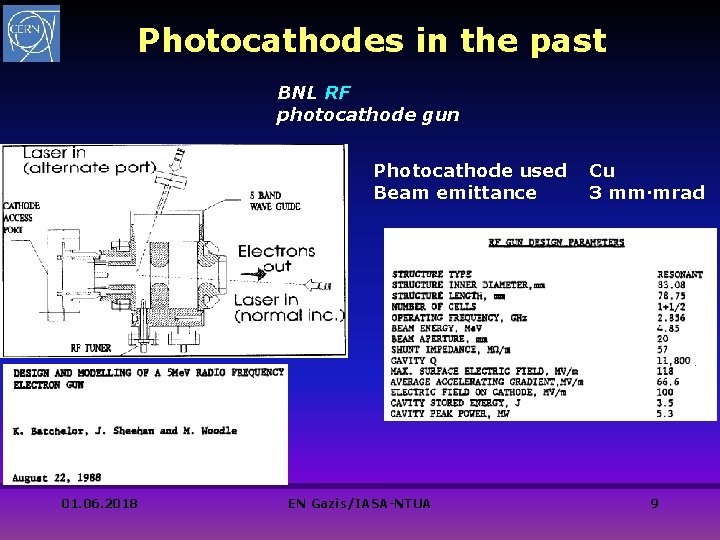
Photocathodes in the past BNL RF photocathode gun Photocathode used Beam emittance 01. 06. 2018 EN Gazis/IASA-NTUA Cu 3 mm·mrad 9
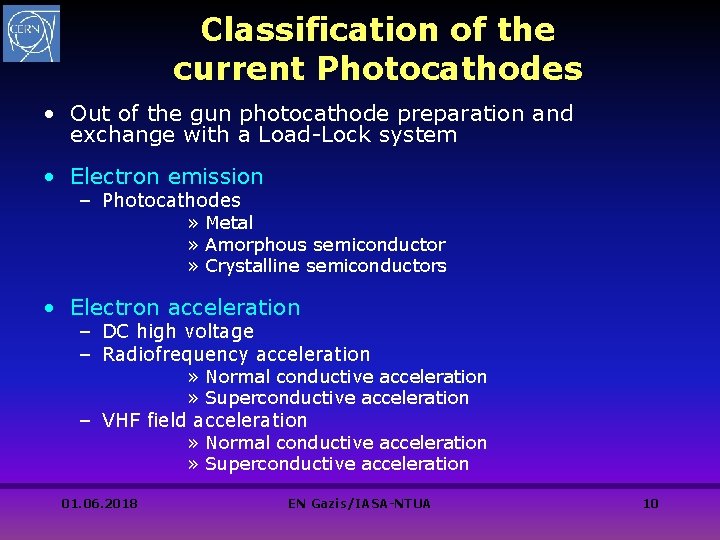
Classification of the current Photocathodes • Out of the gun photocathode preparation and exchange with a Load-Lock system • Electron emission – Photocathodes » Metal » Amorphous semiconductor » Crystalline semiconductors • Electron acceleration – DC high voltage – Radiofrequency acceleration » Normal conductive acceleration » Superconductive acceleration – VHF field acceleration » Normal conductive acceleration » Superconductive acceleration 01. 06. 2018 EN Gazis/IASA-NTUA 10
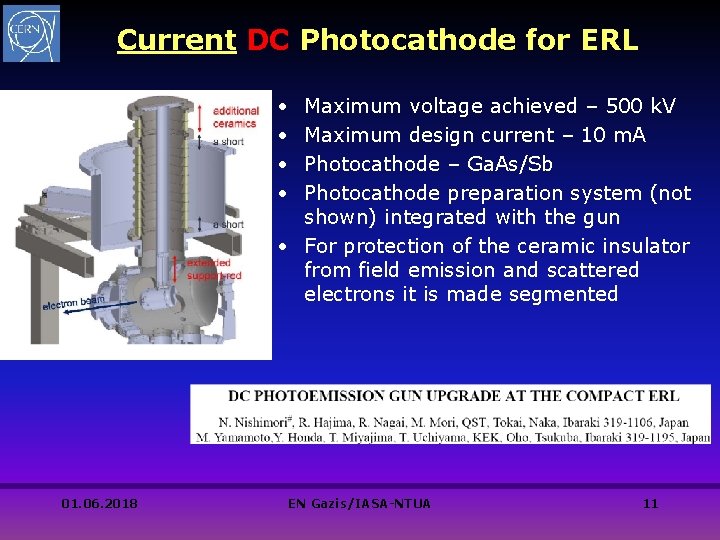
Current DC Photocathode for ERL • • Maximum voltage achieved – 500 k. V Maximum design current – 10 m. A Photocathode – Ga. As/Sb Photocathode preparation system (not shown) integrated with the gun • For protection of the ceramic insulator from field emission and scattered electrons it is made segmented 01. 06. 2018 EN Gazis/IASA-NTUA 11
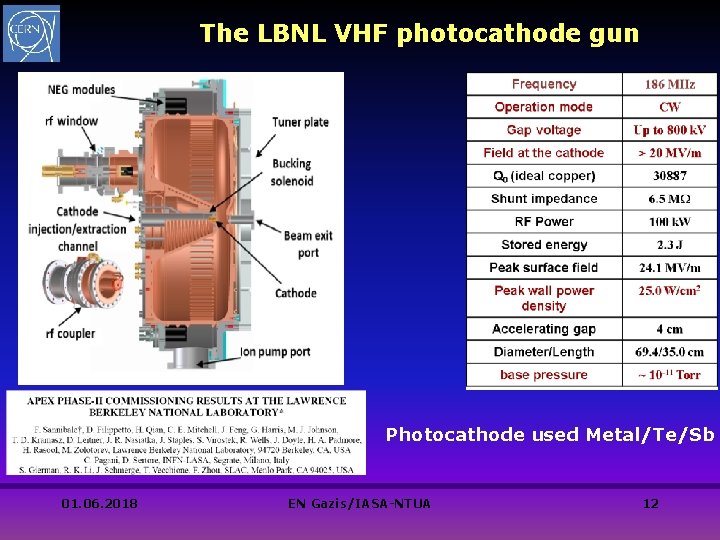
The LBNL VHF photocathode gun Photocathode used Metal/Te/Sb 01. 06. 2018 EN Gazis/IASA-NTUA 12
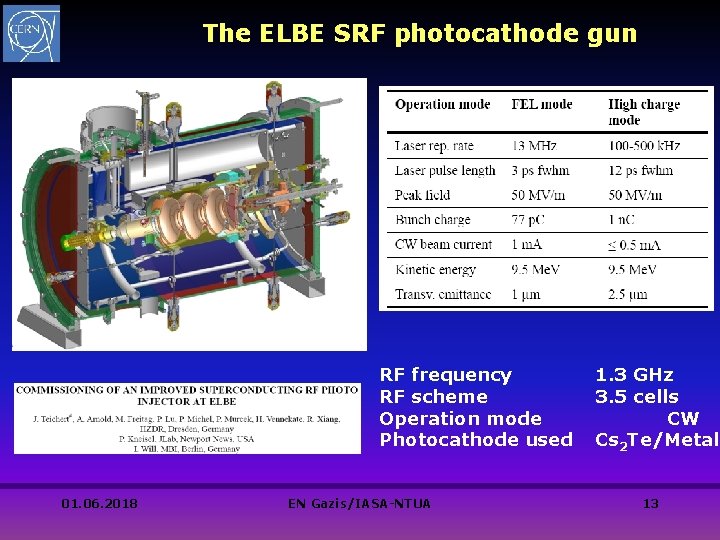
The ELBE SRF photocathode gun RF frequency RF scheme Operation mode Photocathode used 01. 06. 2018 EN Gazis/IASA-NTUA 1. 3 GHz 3. 5 cells CW Cs 2 Te/Metal 13
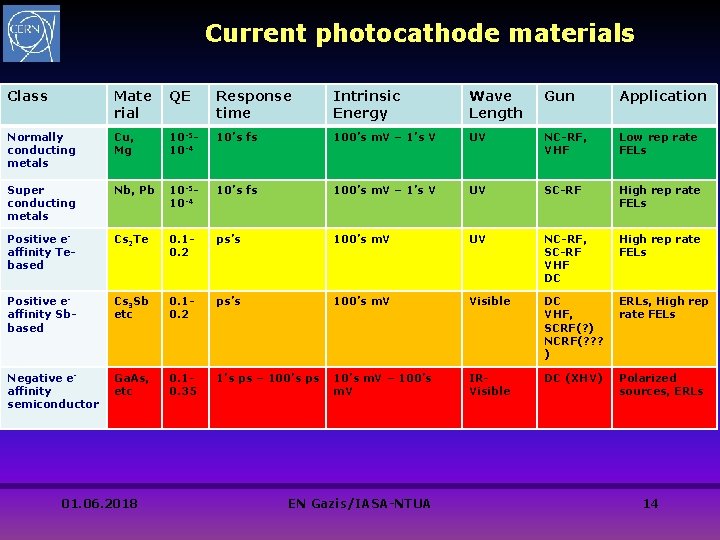
Current photocathode materials Class Mate rial QE Response time Intrinsic Energy Wave Length Gun Application Normally conducting metals Cu, Mg 10 -510 -4 10’s fs 100’s m. V – 1’s V UV NC-RF, VHF Low rep rate FELs Super conducting metals Nb, Pb 10 -510 -4 10’s fs 100’s m. V – 1’s V UV SC-RF High rep rate FELs Positive eaffinity Tebased Cs 2 Te 0. 10. 2 ps’s 100’s m. V UV NC-RF, SC-RF VHF DC High rep rate FELs Positive eaffinity Sbbased Cs 3 Sb etc 0. 10. 2 ps’s 100’s m. V Visible DC VHF, SCRF(? ) NCRF(? ? ? ) ERLs, High rep rate FELs Negative eaffinity semiconductor Ga. As, etc 0. 10. 35 1’s ps – 100’s ps 10’s m. V – 100’s m. V IRVisible DC (XHV) Polarized sources, ERLs 01. 06. 2018 EN Gazis/IASA-NTUA 14
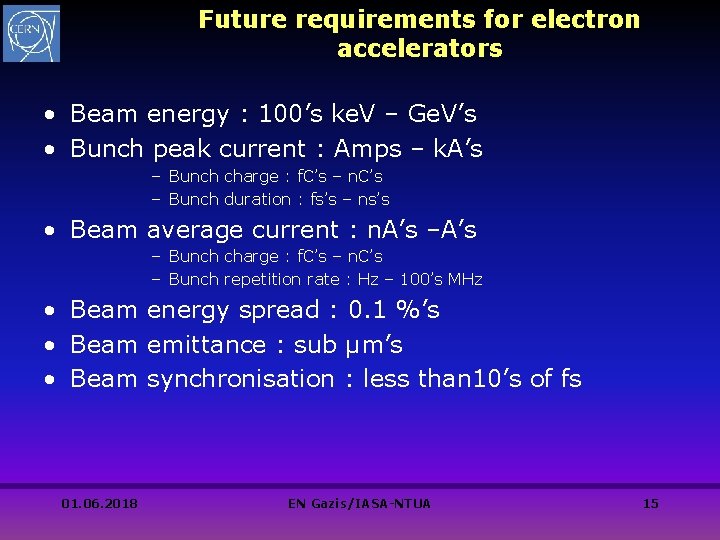
Future requirements for electron accelerators • Beam energy : 100’s ke. V – Ge. V’s • Bunch peak current : Amps – k. A’s – Bunch charge : f. C’s – n. C’s – Bunch duration : fs’s – ns’s • Beam average current : n. A’s – Bunch charge : f. C’s – n. C’s – Bunch repetition rate : Hz – 100’s MHz • Beam energy spread : 0. 1 %’s • Beam emittance : sub µm’s • Beam synchronisation : less than 10’s of fs 01. 06. 2018 EN Gazis/IASA-NTUA 15
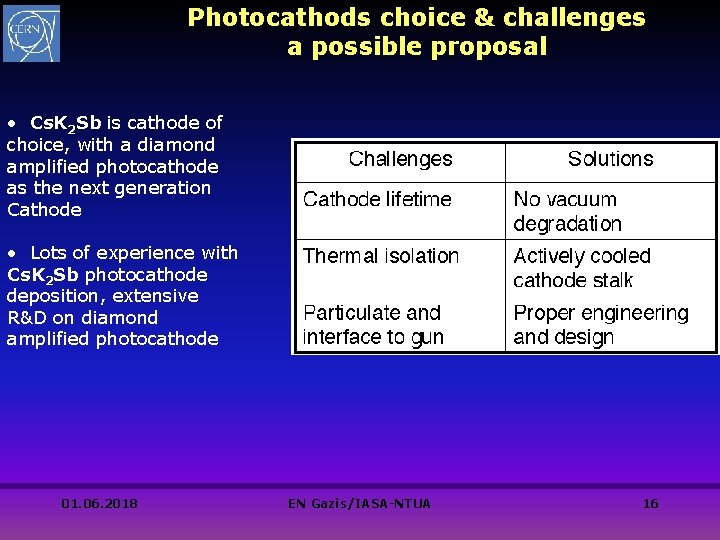
Photocathods choice & challenges a possible proposal • Cs. K 2 Sb is cathode of choice, with a diamond amplified photocathode as the next generation Cathode • Lots of experience with Cs. K 2 Sb photocathode deposition, extensive R&D on diamond amplified photocathode 01. 06. 2018 EN Gazis/IASA-NTUA 16
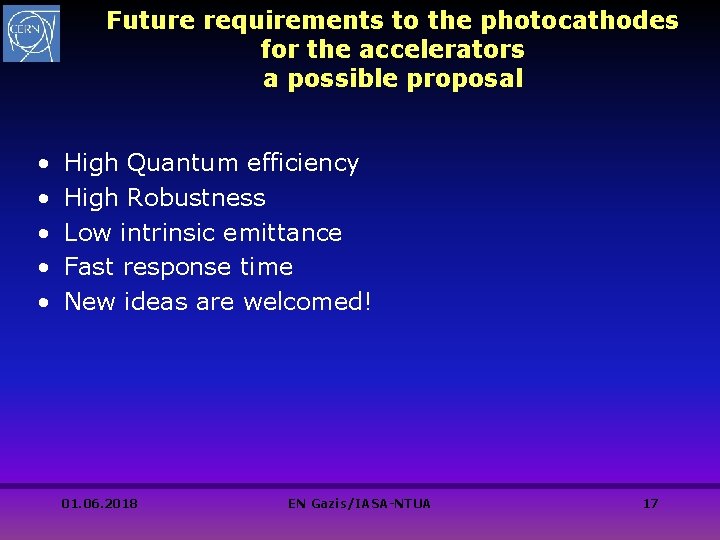
Future requirements to the photocathodes for the accelerators a possible proposal • • • High Quantum efficiency High Robustness Low intrinsic emittance Fast response time New ideas are welcomed! 01. 06. 2018 EN Gazis/IASA-NTUA 17
Electron Gun 01. 06. 2018 EN Gazis/IASA-NTUA 18
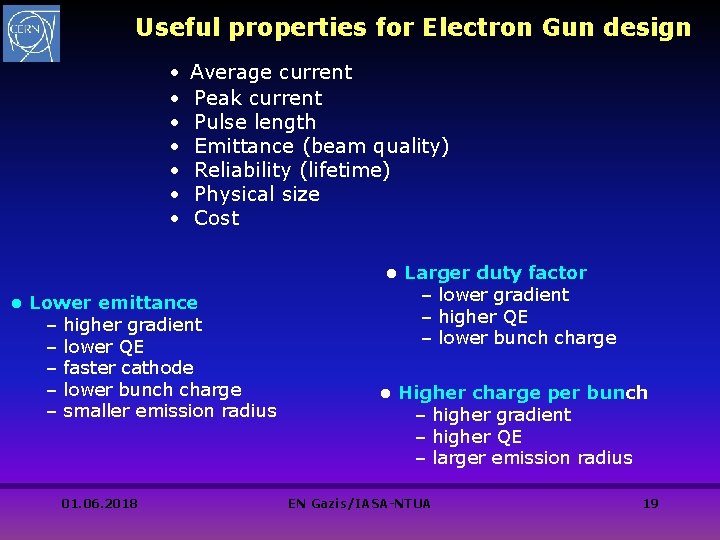
Useful properties for Electron Gun design • • Average current Peak current Pulse length Emittance (beam quality) Reliability (lifetime) Physical size Cost • Lower emittance – higher gradient – lower QE – faster cathode – lower bunch charge – smaller emission radius 01. 06. 2018 • Larger duty factor – lower gradient – higher QE – lower bunch charge • Higher charge per bunch – higher gradient – higher QE – larger emission radius EN Gazis/IASA-NTUA 19
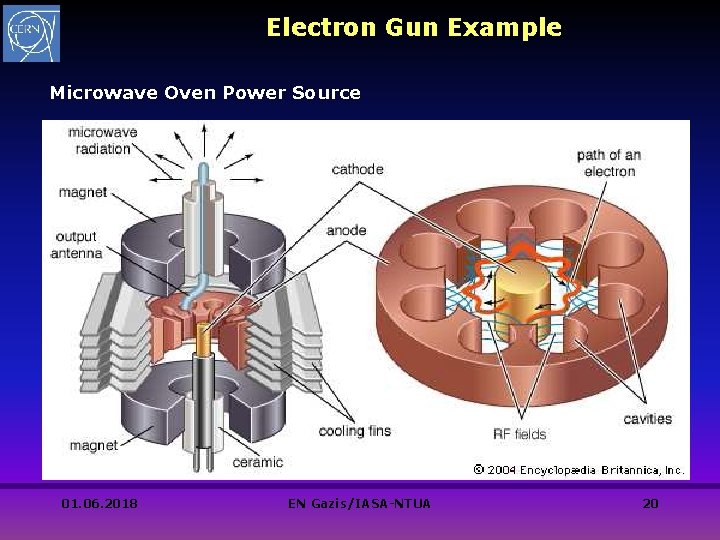
Electron Gun Example Microwave Oven Power Source 01. 06. 2018 EN Gazis/IASA-NTUA 20
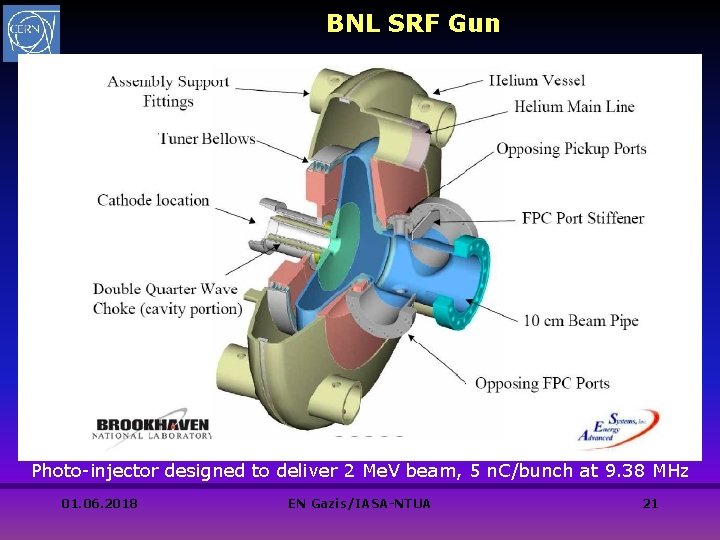
BNL SRF Gun Photo-injector designed to deliver 2 Me. V beam, 5 n. C/bunch at 9. 38 MHz 01. 06. 2018 EN Gazis/IASA-NTUA 21
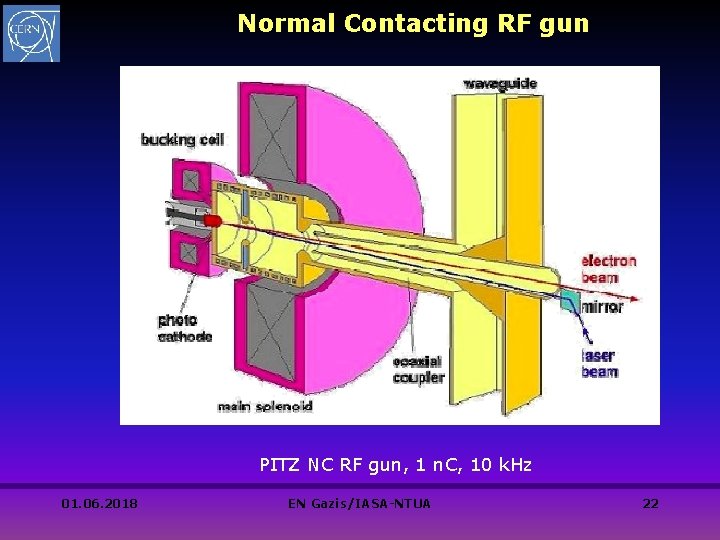
Normal Contacting RF gun PITZ NC RF gun, 1 n. C, 10 k. Hz 01. 06. 2018 EN Gazis/IASA-NTUA 22
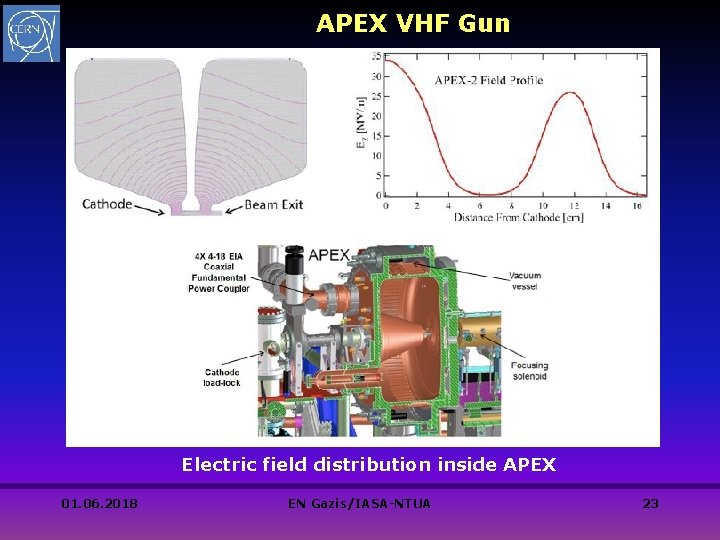
APEX VHF Gun Electric field distribution inside APEX 01. 06. 2018 EN Gazis/IASA-NTUA 23
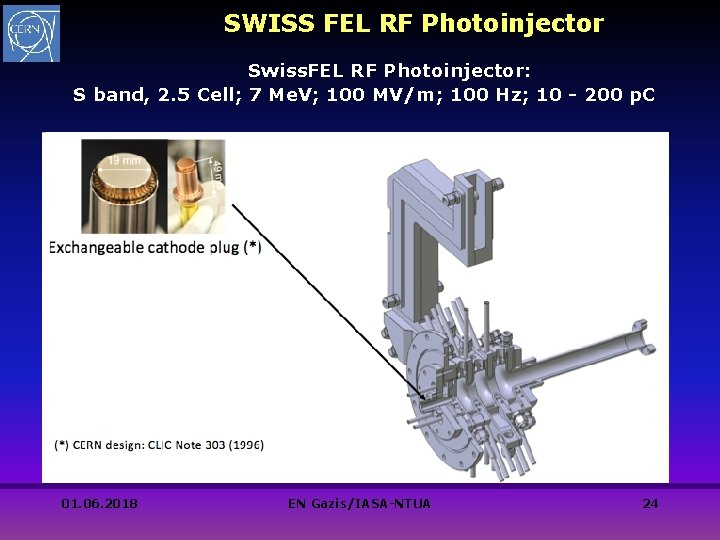
SWISS FEL RF Photoinjector Swiss. FEL RF Photoinjector: S band, 2. 5 Cell; 7 Me. V; 100 MV/m; 100 Hz; 10 - 200 p. C 01. 06. 2018 EN Gazis/IASA-NTUA 24
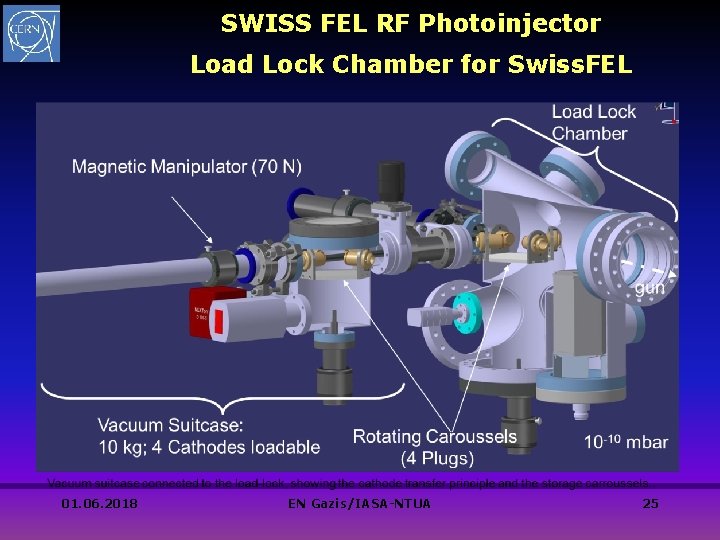
SWISS FEL RF Photoinjector Load Lock Chamber for Swiss. FEL 01. 06. 2018 EN Gazis/IASA-NTUA 25
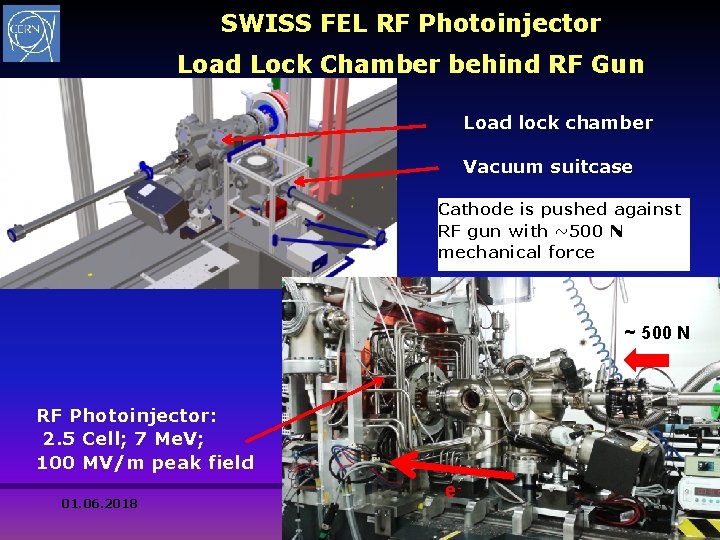
SWISS FEL RF Photoinjector Load Lock Chamber behind RF Gun Load lock chamber Vacuum suitcase Cathode is pushed against RF gun with ~500 N mechanical force ~ 500 N RF Photoinjector: 2. 5 Cell; 7 Me. V; 100 MV/m peak field 01. 06. 2018 EN Gazis/IASA-NTUA e- 26
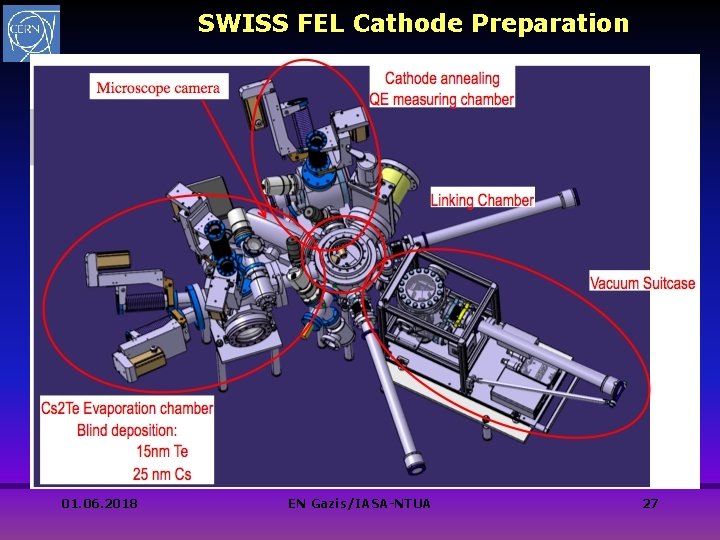
SWISS FEL Cathode Preparation 01. 06. 2018 EN Gazis/IASA-NTUA 27
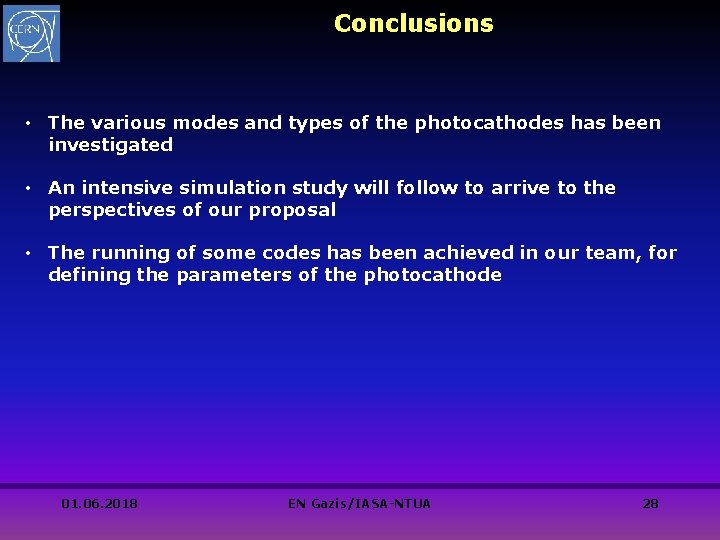
Conclusions • The various modes and types of the photocathodes has been investigated • An intensive simulation study will follow to arrive to the perspectives of our proposal • The running of some codes has been achieved in our team, for defining the parameters of the photocathode 01. 06. 2018 EN Gazis/IASA-NTUA 28