
PhotoAssisted O and Al Production with a Cesium



- Slides: 39
Photo-Assisted O- and Al- Production with a Cesium Sputter Ion Source O. Tarvainen, R. Kronholm, M. Laitinen, M. Reponen, J. Julin, M. Napari, M. Marttinen, T. Kalvas, D. Faircloth, H. Koivisto and T. Sajavaara
Outline 1 Ion pair production hypothesis Theory and previous experiments 2 Experimental setup SNICS ion source and diode lasers at JYFL 3 Experimental results Photo-assisted O- and Al- production 4 Discussion What explains the photo-assisted effect?
Ion pair production in negative ion sources?
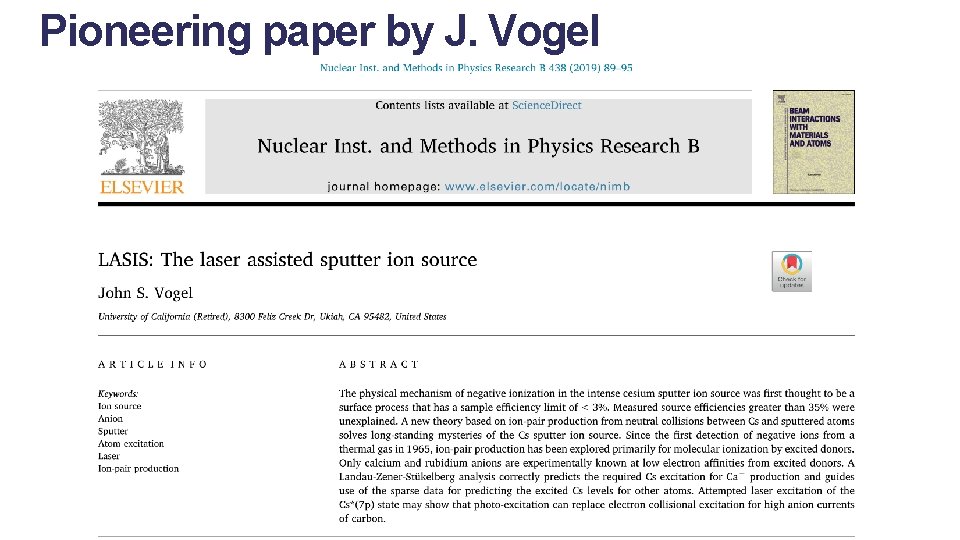
Pioneering paper by J. Vogel
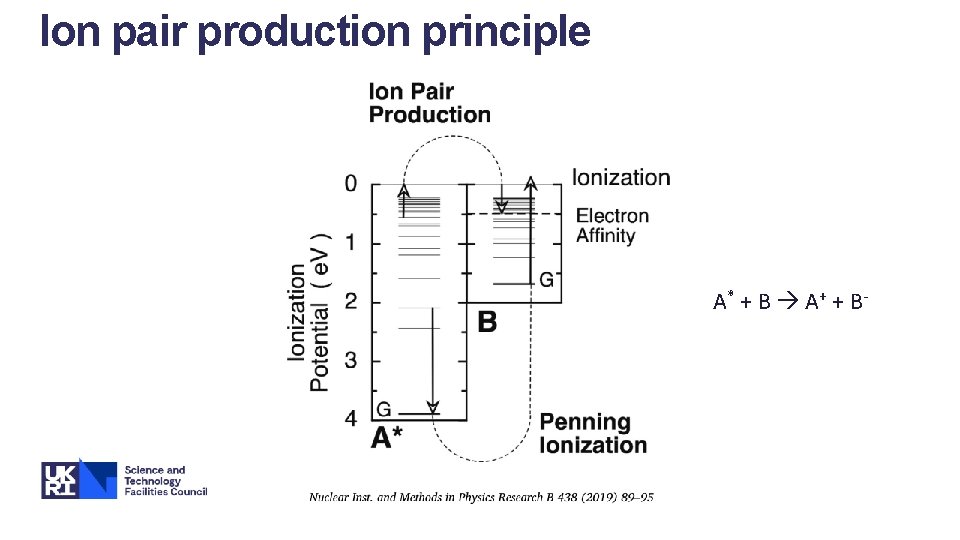
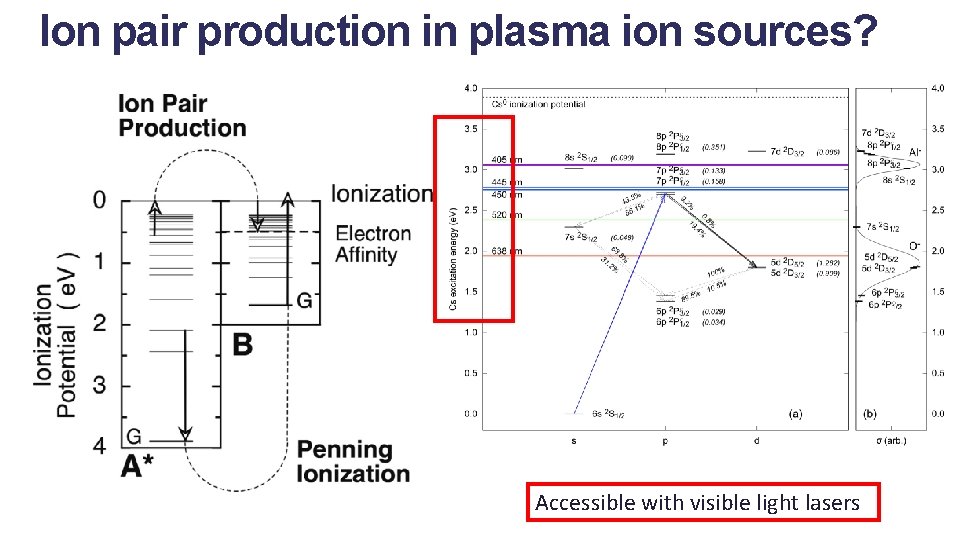
Ion pair production principle A* + B A+ + B -
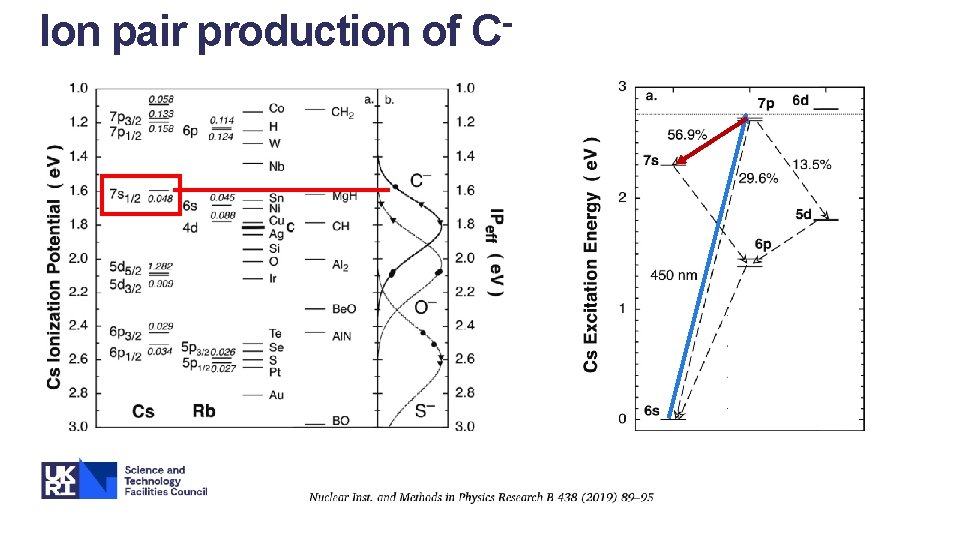
Ion pair production of C-
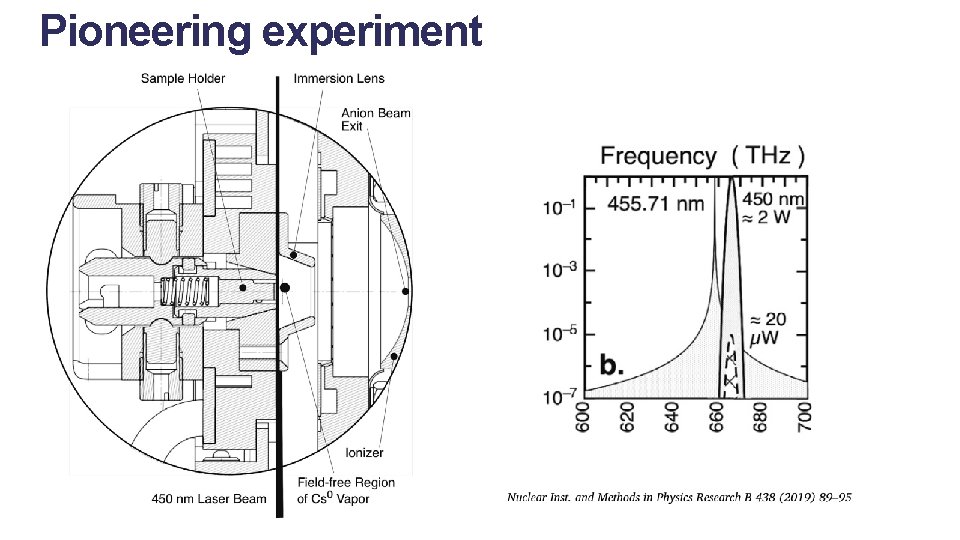
Pioneering experiment
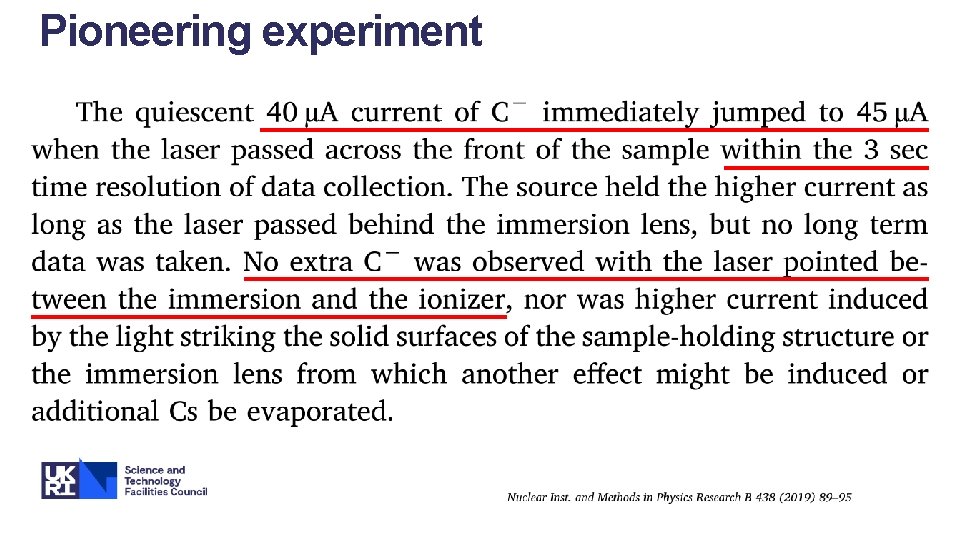
Pioneering experiment
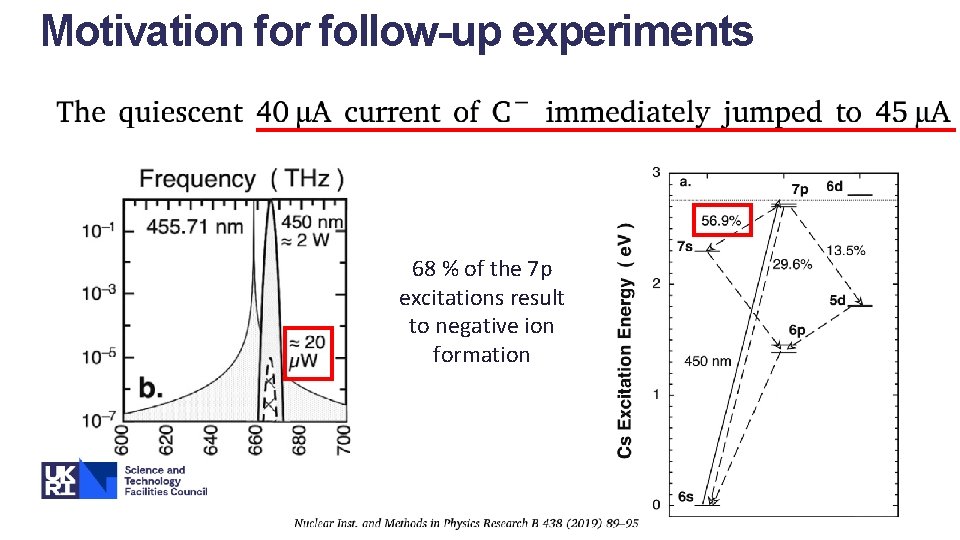
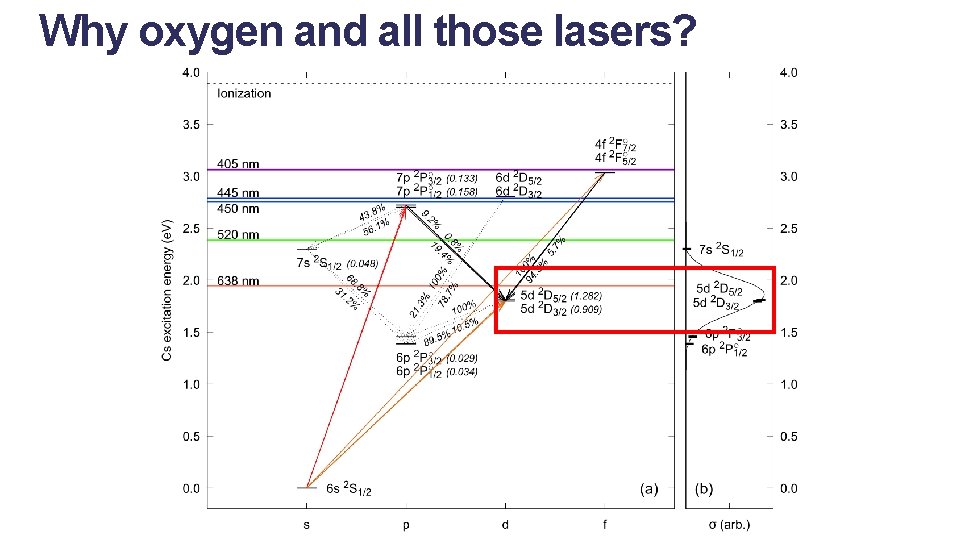
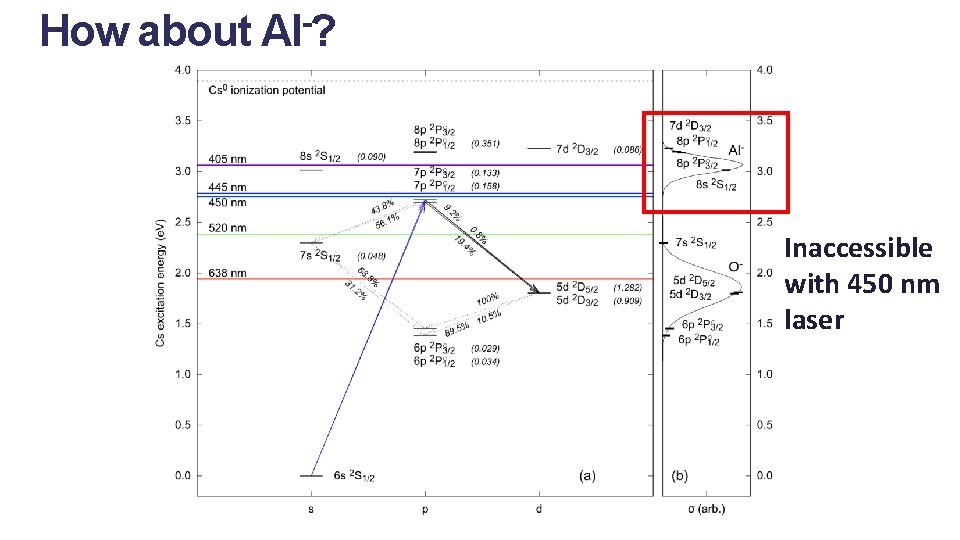
Motivation for follow-up experiments 68 % of the 7 p excitations result to negative ion formation
Experimental setup
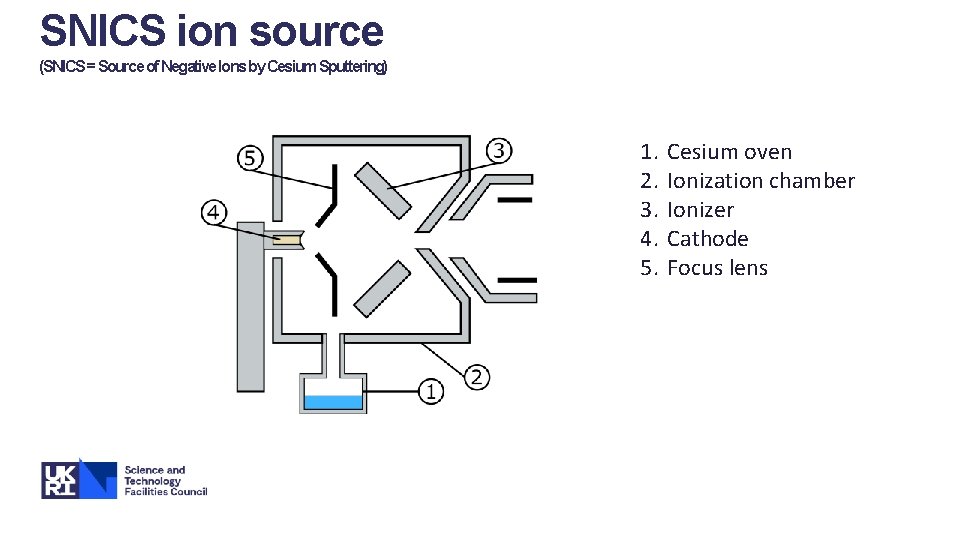
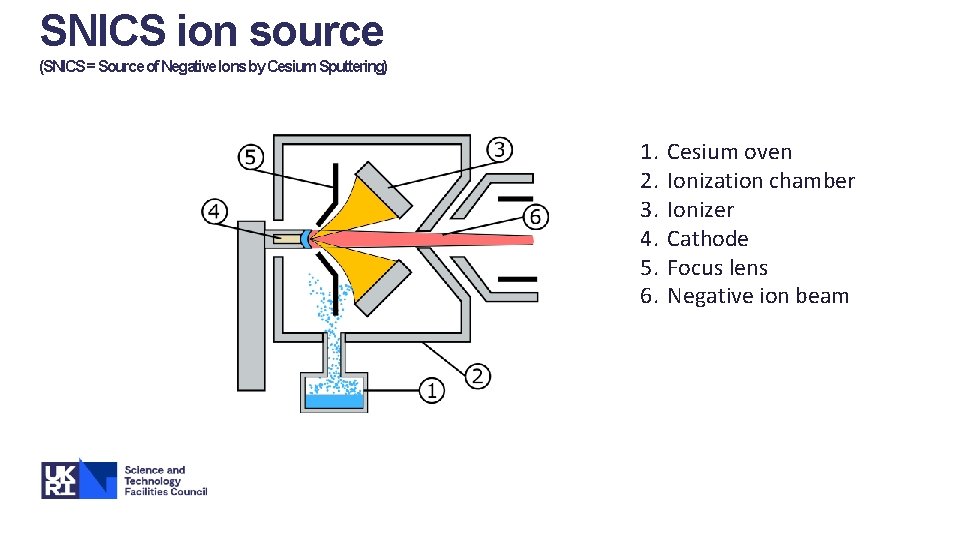
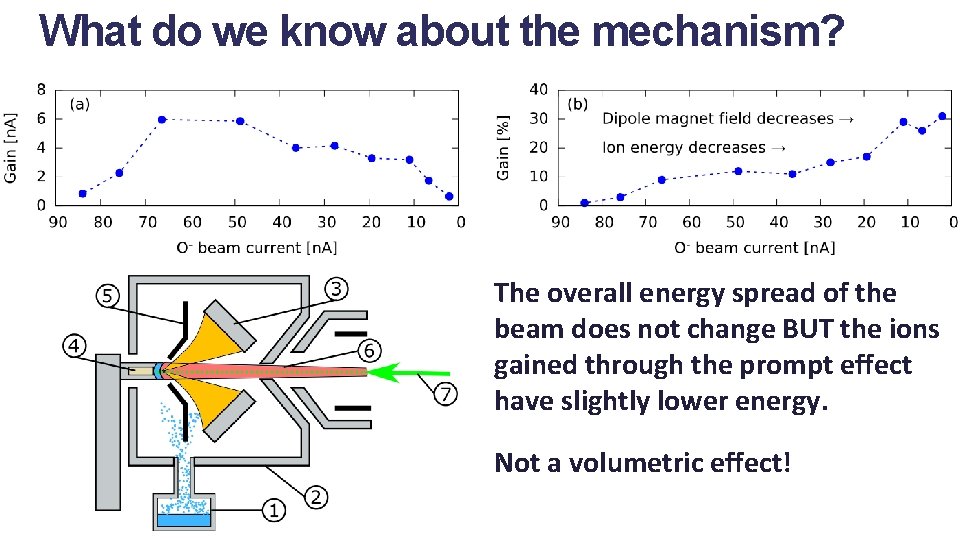
SNICS ion source (SNICS = Source of Negative Ions by Cesium Sputtering) 1. 2. 3. 4. 5. Cesium oven Ionization chamber Ionizer Cathode Focus lens
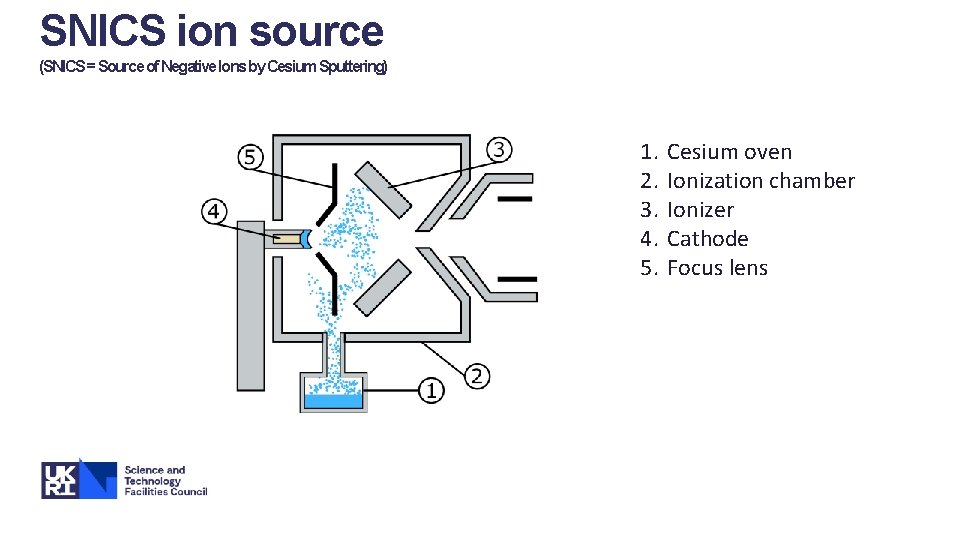
SNICS ion source (SNICS = Source of Negative Ions by Cesium Sputtering) 1. 2. 3. 4. 5. Cesium oven Ionization chamber Ionizer Cathode Focus lens
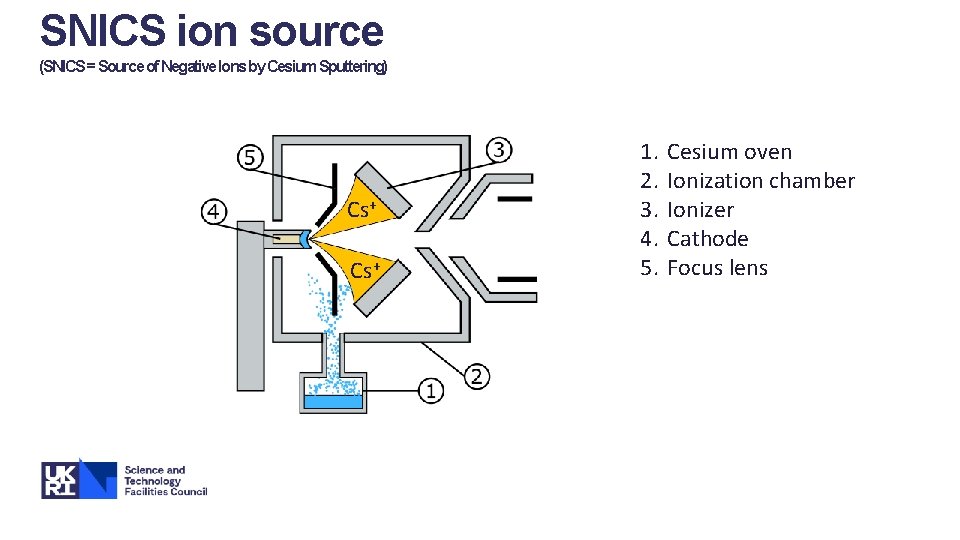
SNICS ion source (SNICS = Source of Negative Ions by Cesium Sputtering) Cs+ 1. 2. 3. 4. 5. Cesium oven Ionization chamber Ionizer Cathode Focus lens
SNICS ion source (SNICS = Source of Negative Ions by Cesium Sputtering) 1. 2. 3. 4. 5. 6. Cesium oven Ionization chamber Ionizer Cathode Focus lens Negative ion beam
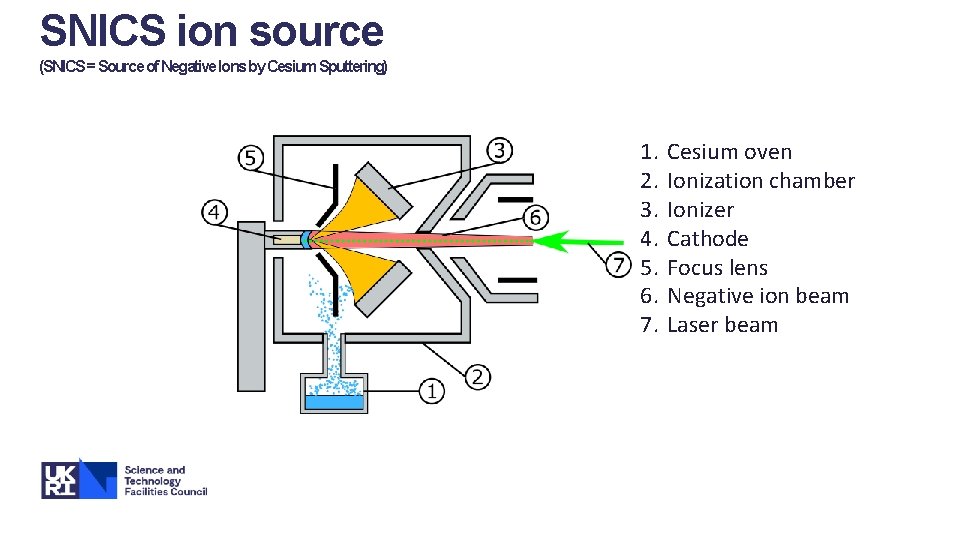
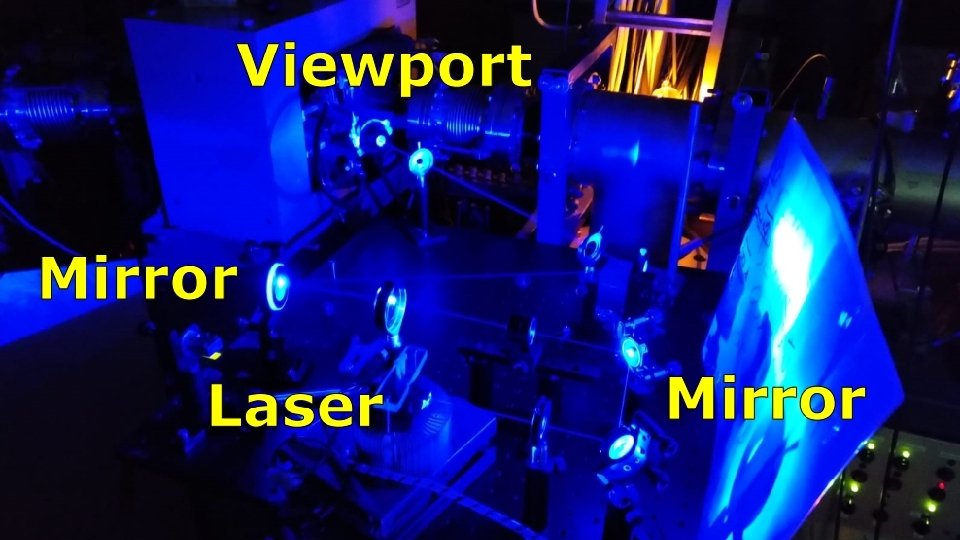
SNICS ion source (SNICS = Source of Negative Ions by Cesium Sputtering) 1. 2. 3. 4. 5. 6. 7. Cesium oven Ionization chamber Ionizer Cathode Focus lens Negative ion beam Laser beam
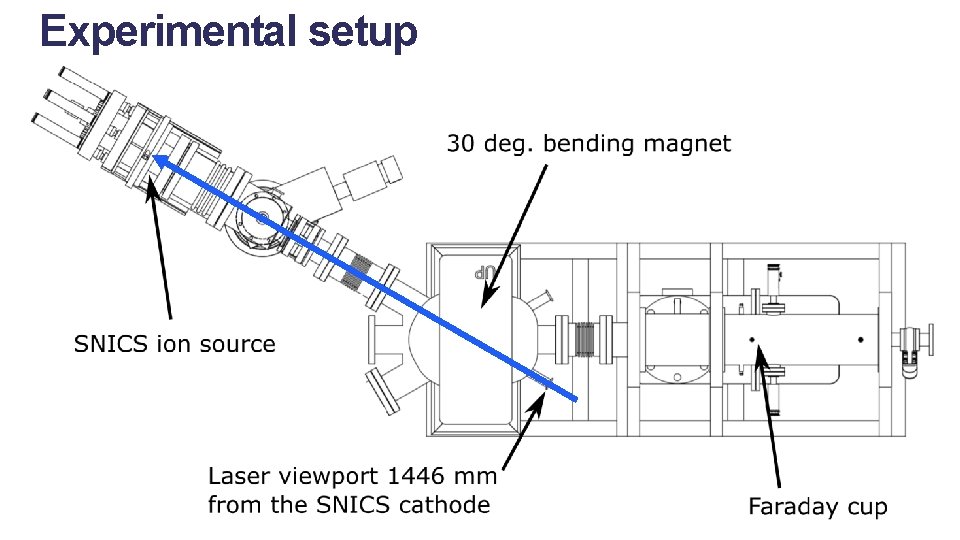
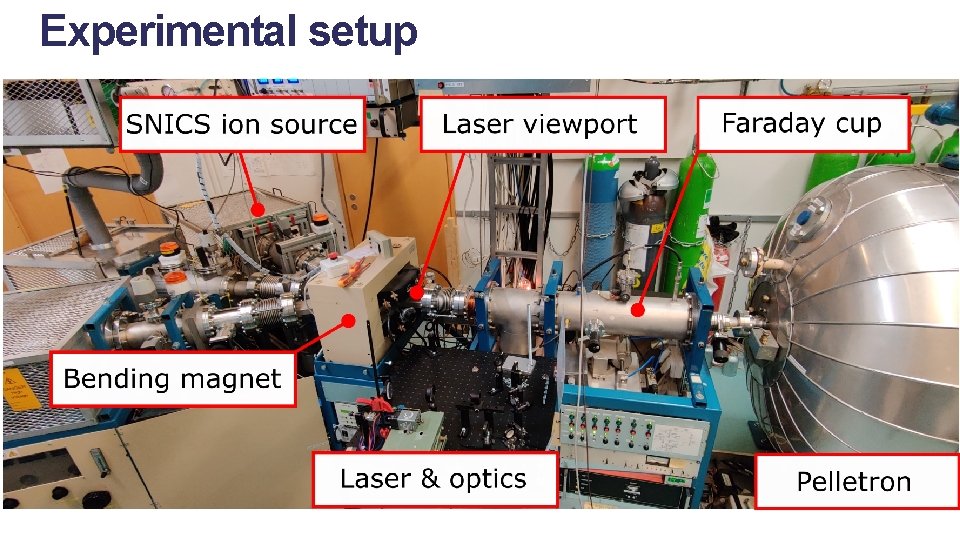
Experimental setup
Experimental setup
Experimental setup
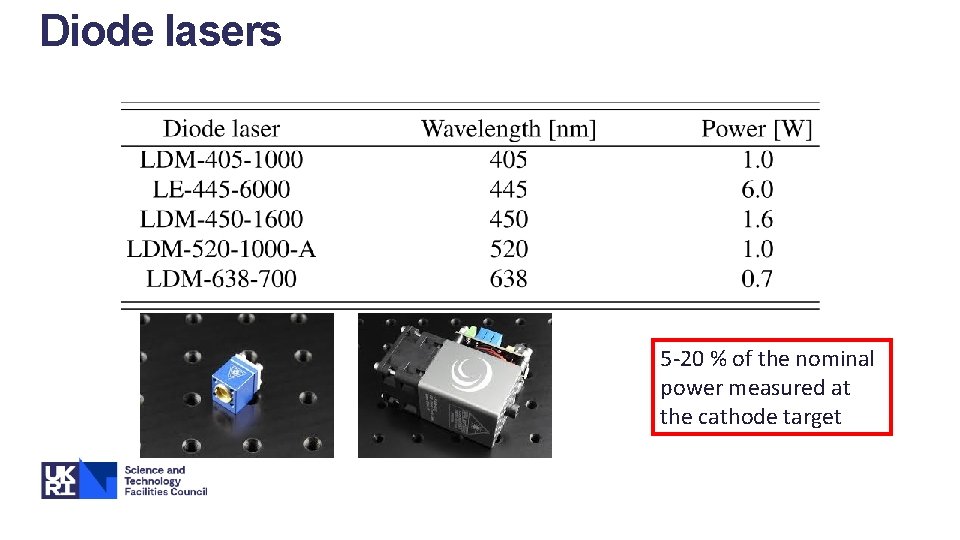
Diode lasers 5 -20 % of the nominal power measured at the cathode target
Experimental results
Why oxygen and all those lasers?
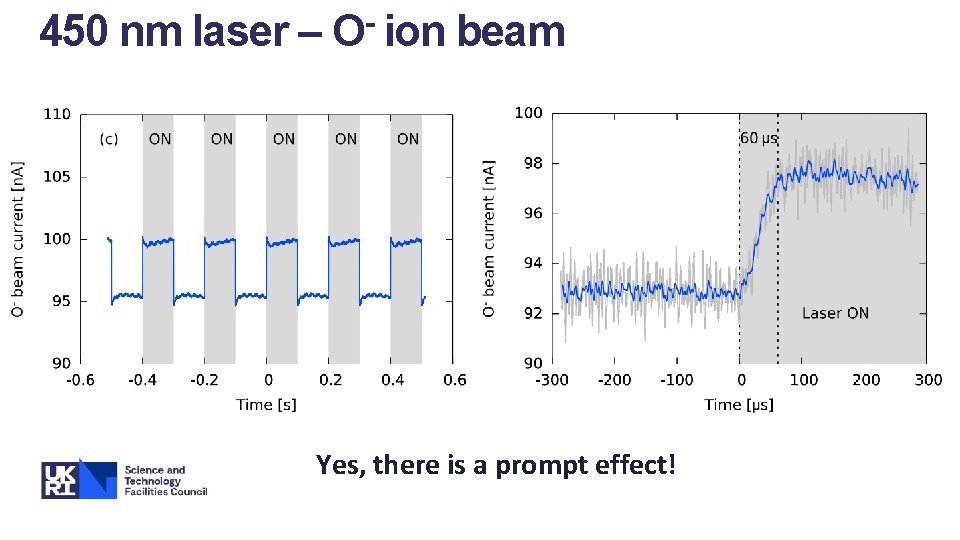
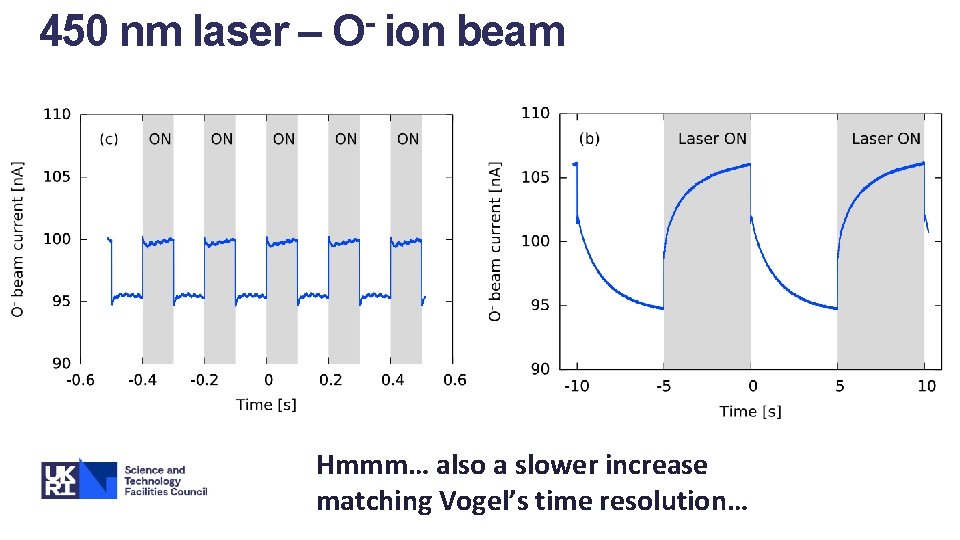
450 nm laser – O- ion beam Yes, there is a prompt effect!
450 nm laser – O- ion beam Hmmm… also a slower increase matching Vogel’s time resolution…
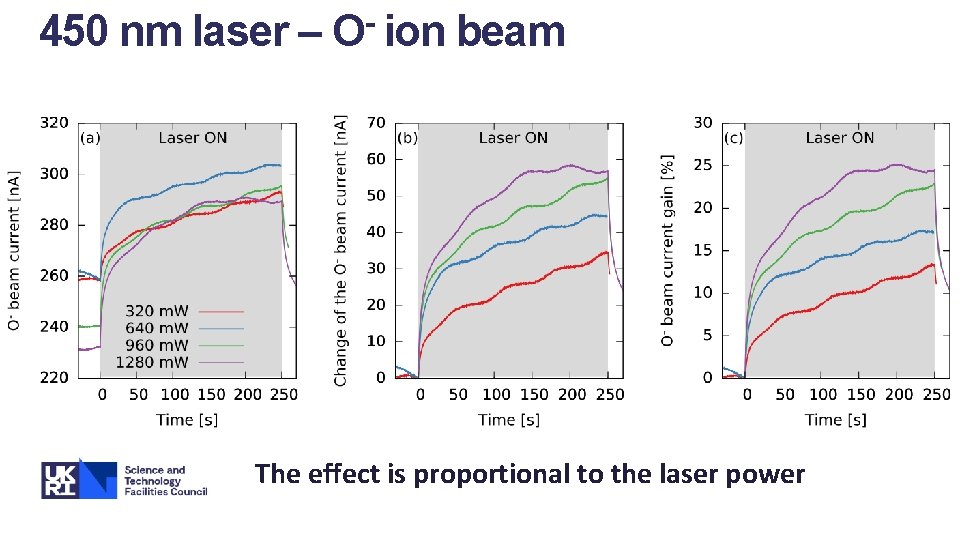
450 nm laser – O- ion beam The effect is proportional to the laser power
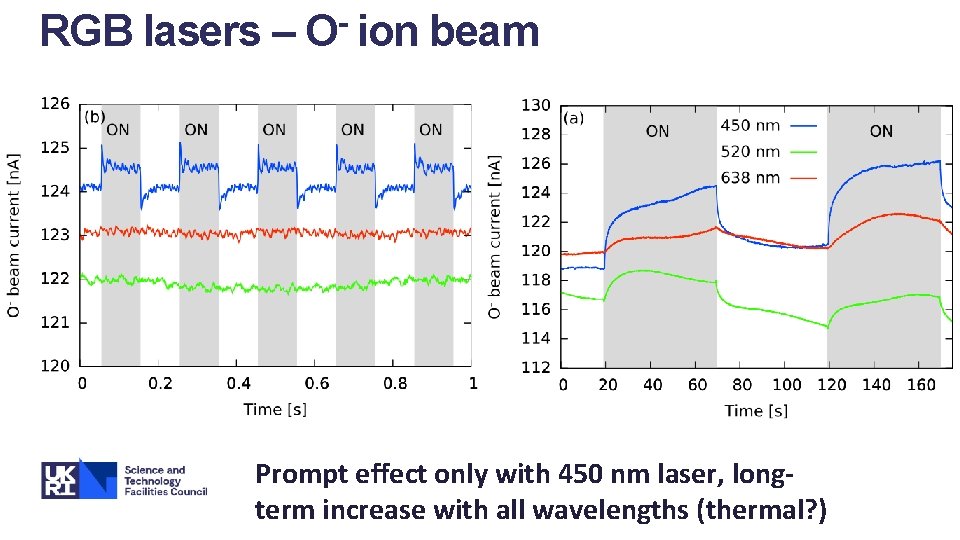
RGB lasers – O- ion beam Prompt effect only with 450 nm laser, longterm increase with all wavelengths (thermal? )
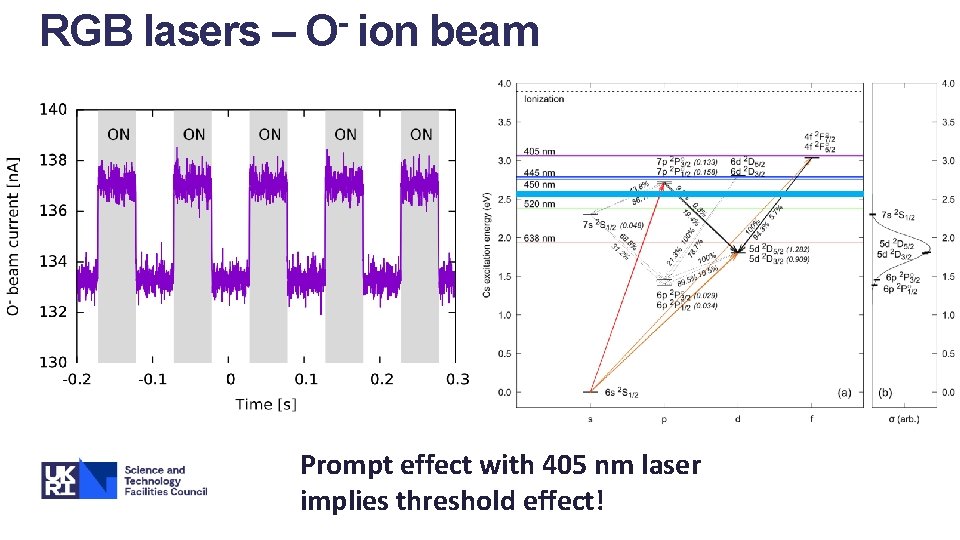
RGB lasers – O- ion beam Prompt effect with 405 nm laser implies threshold effect!
How about Al-? Inaccessible with 450 nm laser
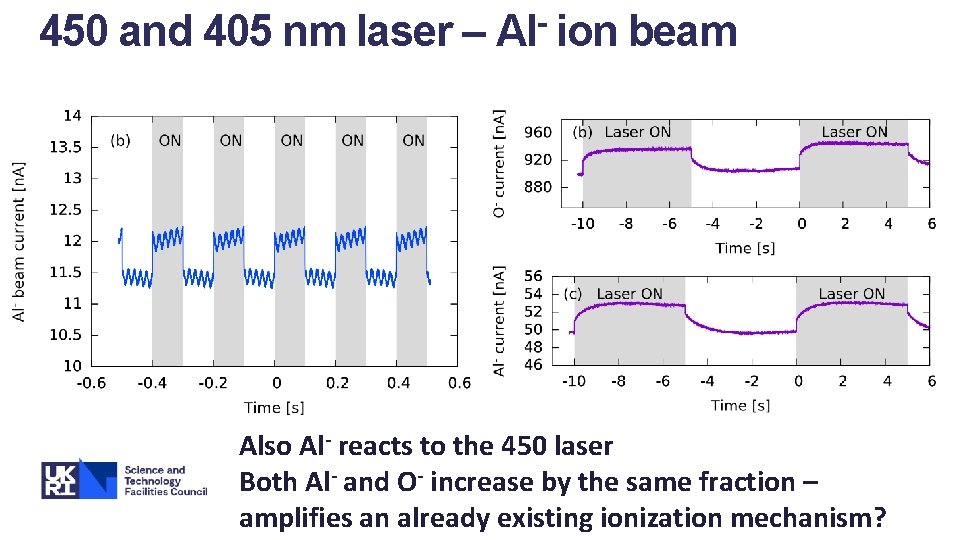
450 and 405 nm laser – Al- ion beam Also Al- reacts to the 450 laser Both Al- and O- increase by the same fraction – amplifies an already existing ionization mechanism?
What do we know about the mechanism? The overall energy spread of the beam does not change BUT the ions gained through the prompt effect have slightly lower energy. Not a volumetric effect!
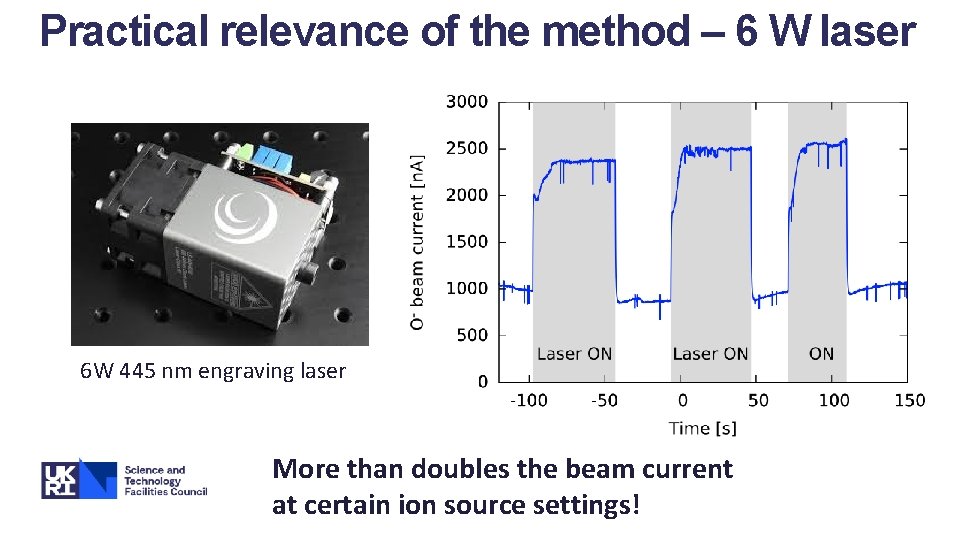
Practical relevance of the method – 6 W laser 6 W 445 nm engraving laser More than doubles the beam current at certain ion source settings!
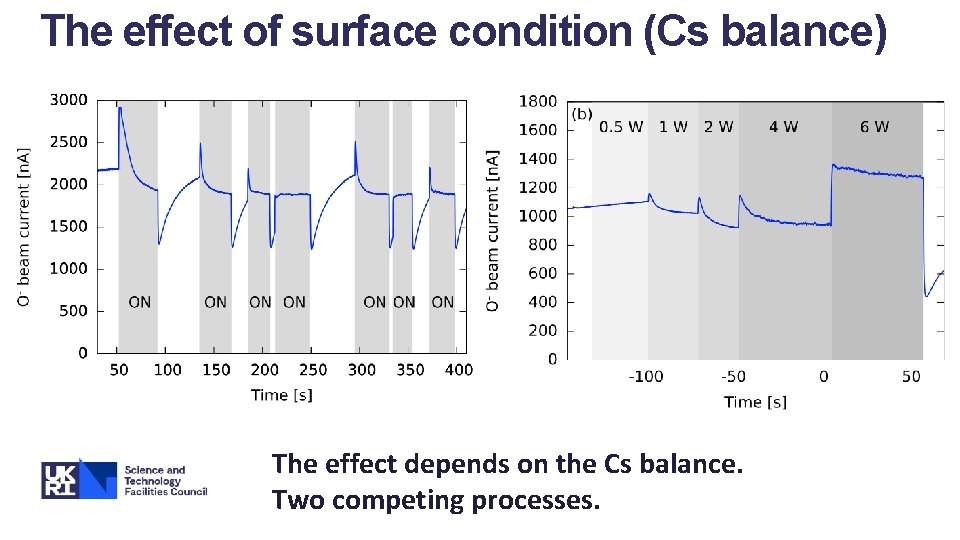
The effect of surface condition (Cs balance) The effect depends on the Cs balance. Two competing processes.
Discussion
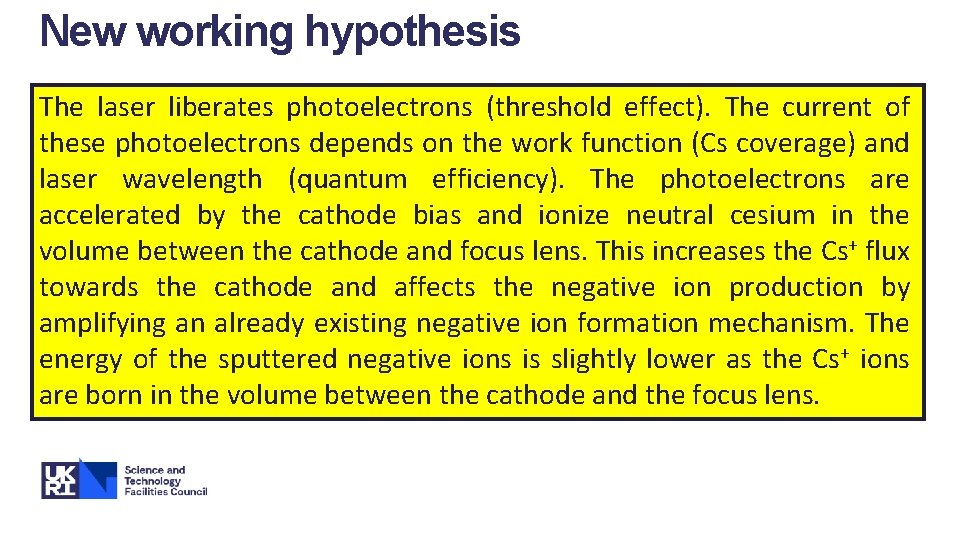
New working hypothesis The laser liberates photoelectrons (threshold effect). The current of these photoelectrons depends on the work function (Cs coverage) and laser wavelength (quantum efficiency). The photoelectrons are accelerated by the cathode bias and ionize neutral cesium in the volume between the cathode and focus lens. This increases the Cs+ flux towards the cathode and affects the negative ion production by amplifying an already existing negative ion formation mechanism. The energy of the sputtered negative ions is slightly lower as the Cs+ ions are born in the volume between the cathode and the focus lens.
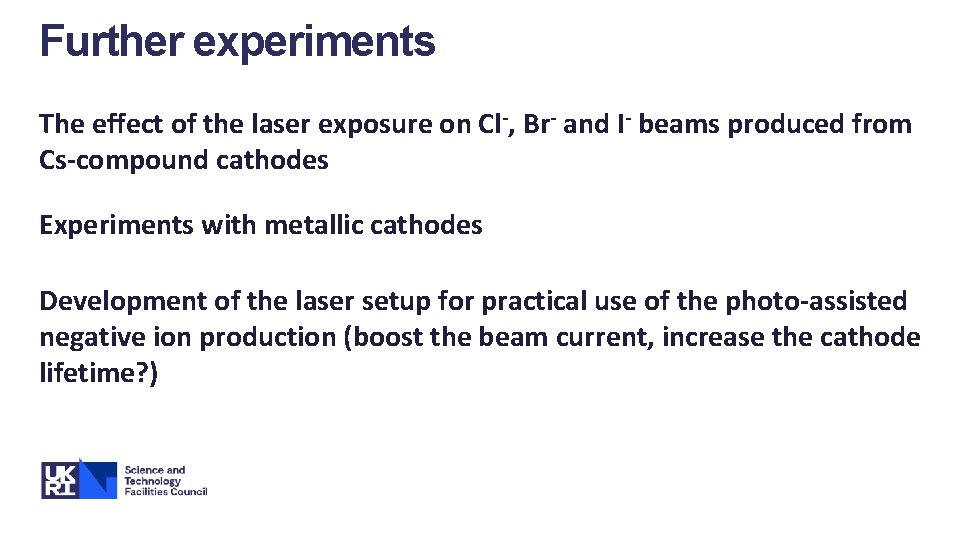
Further experiments The effect of the laser exposure on Cl-, Br- and I- beams produced from Cs-compound cathodes Experiments with metallic cathodes Development of the laser setup for practical use of the photo-assisted negative ion production (boost the beam current, increase the cathode lifetime? )
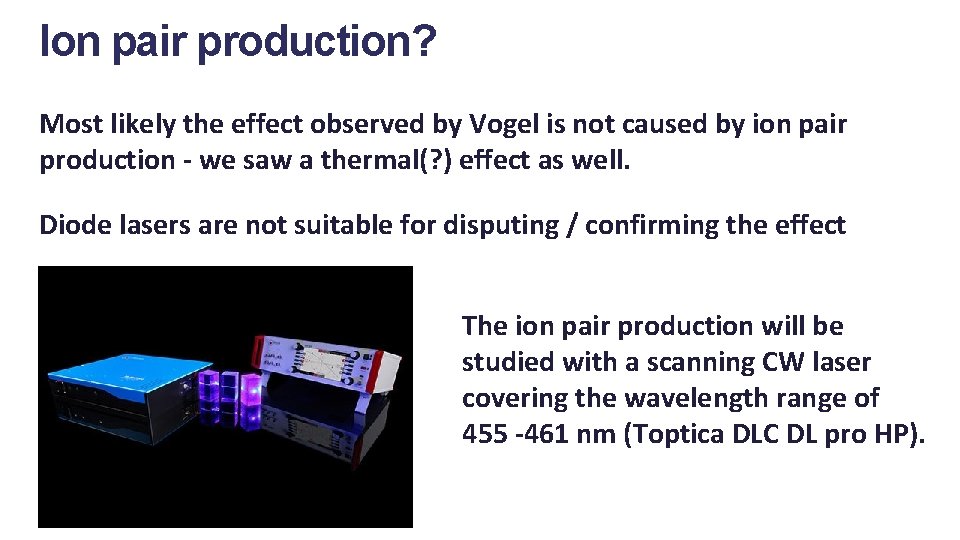
Ion pair production? Most likely the effect observed by Vogel is not caused by ion pair production - we saw a thermal(? ) effect as well. Diode lasers are not suitable for disputing / confirming the effect The ion pair production will be studied with a scanning CW laser covering the wavelength range of 455 -461 nm (Toptica DLC DL pro HP).
Ion pair production in plasma ion sources? Accessible with visible light lasers
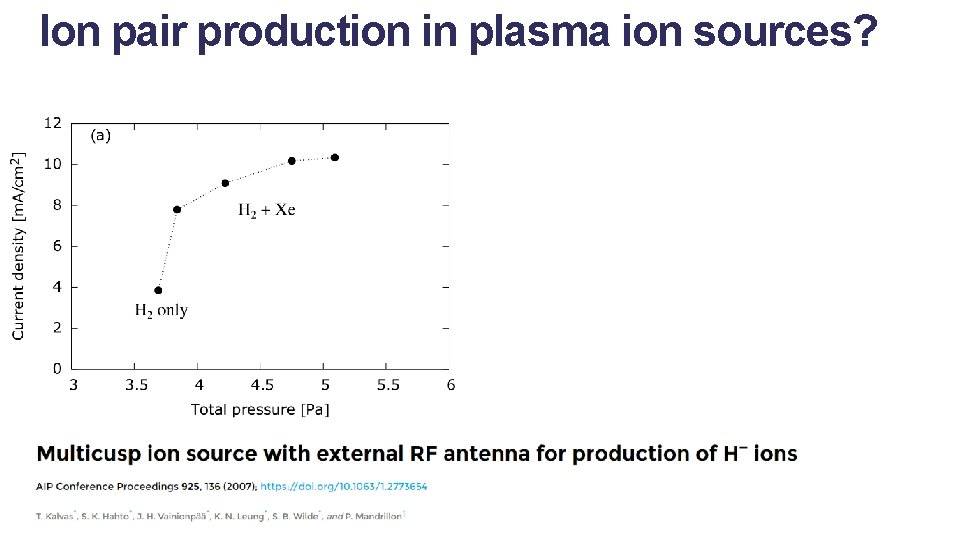
Ion pair production in plasma ion sources?
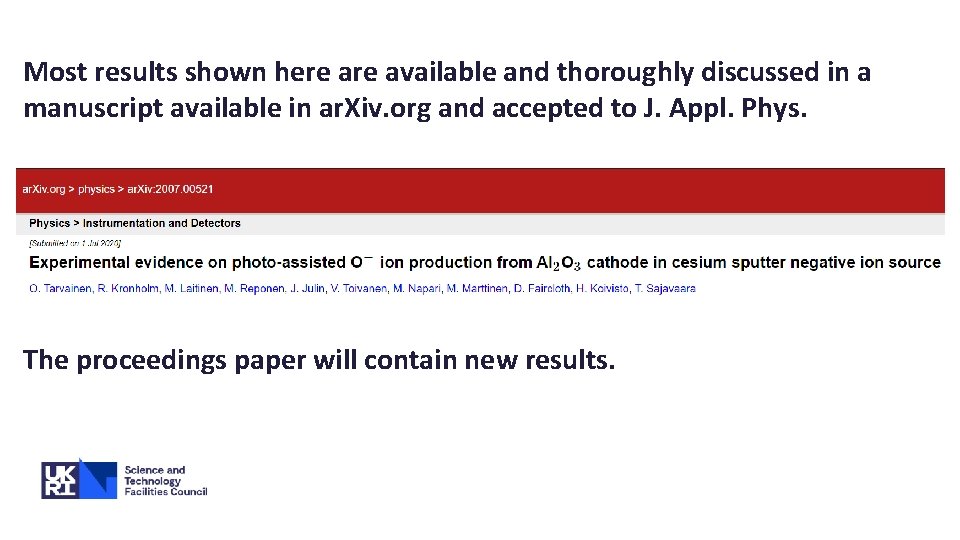
Most results shown here available and thoroughly discussed in a manuscript available in ar. Xiv. org and accepted to J. Appl. Phys. The proceedings paper will contain new results.
Thank You for listening – time for questions