
Phosphorus Index Based Management Douglas Beegle Dept of
Phosphorus Index Based Management Douglas Beegle Dept. of Crop and Soil Sciences Penn State University dbb@psu. edu http: //panutrientmgmt. cas. psu. edu
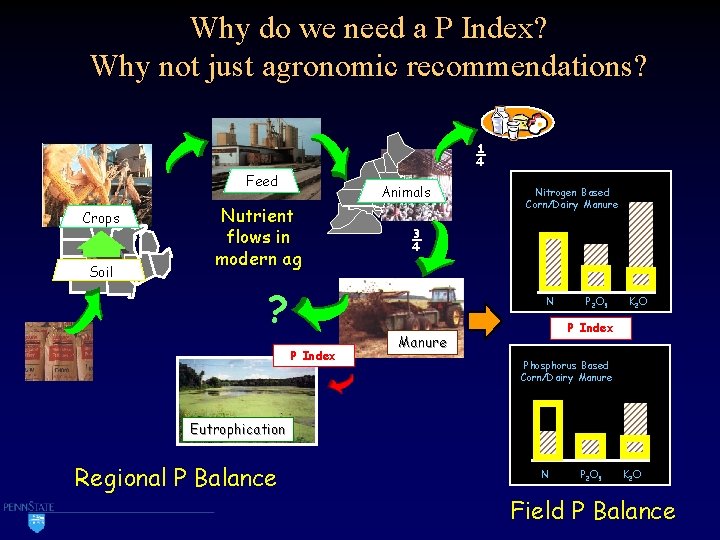
Why do we need a P Index? Why not just agronomic recommendations? ¼ Feed Crops Soil Animals Nutrient flows in modern ag ? Nitrogen Based Corn/Dairy Manure ¾ N P Index P 2 O 5 K 2 O P Index Manure Phosphorus Based Corn/Dairy Manure Eutrophication Regional P Balance N P 2 O 5 K 2 O Field P Balance
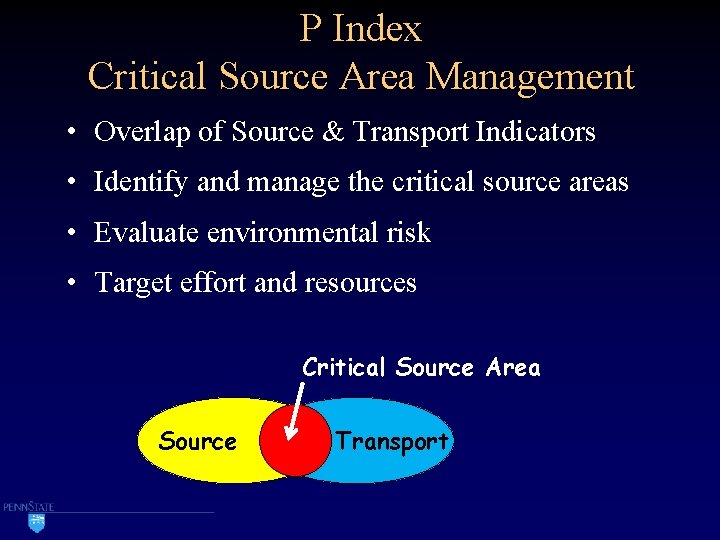
P Index Critical Source Area Management • Overlap of Source & Transport Indicators • Identify and manage the critical source areas • Evaluate environmental risk • Target effort and resources Critical Source Area Source Transport
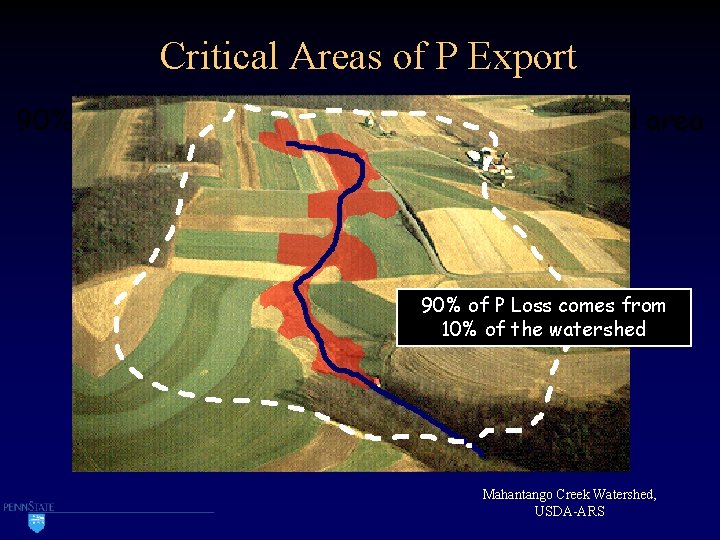
Critical Areas of P Export 90% of annual P export comes from 10% of land area 90% of P Loss comes from 10% of the watershed Mahantango Creek Watershed, USDA-ARS
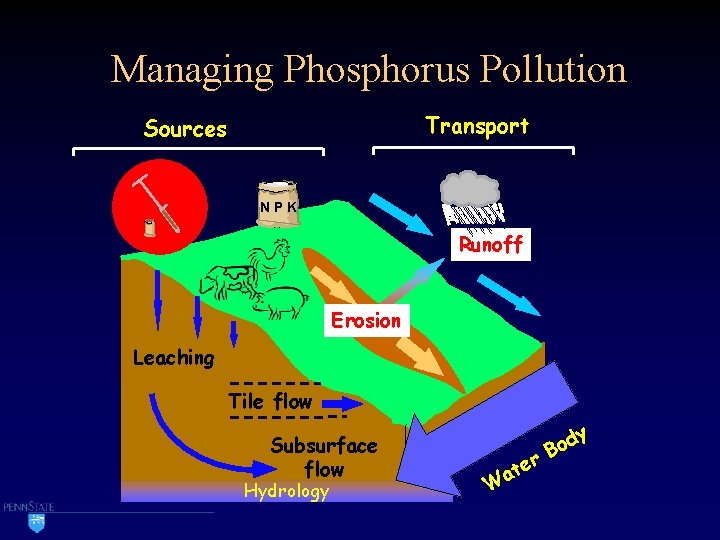
Managing Phosphorus Pollution Transport Sources NPK Runoff Erosion Leaching Tile flow Subsurface flow Hydrology y W od B r e t a
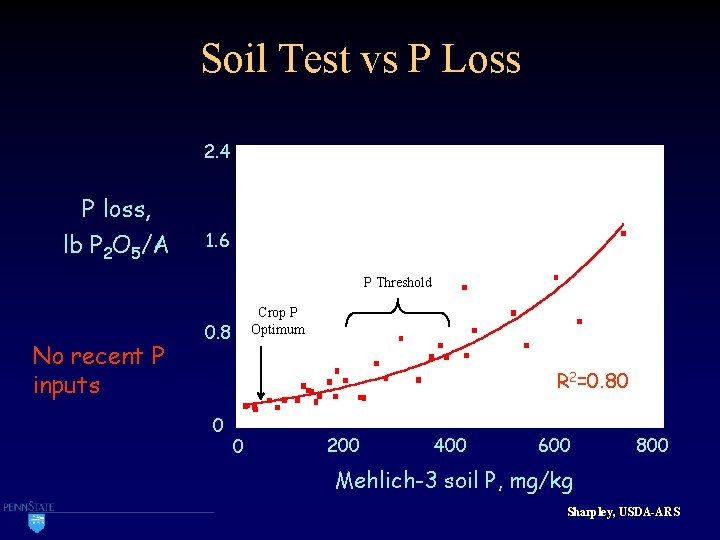
Soil Test vs P Loss 2. 4 P loss, lb P 2 O 5/A 1. 6 P Threshold No recent P inputs Crop P Optimum 0. 8 R 2=0. 80 0 0 200 400 600 800 Mehlich-3 soil P, mg/kg Sharpley, USDA-ARS
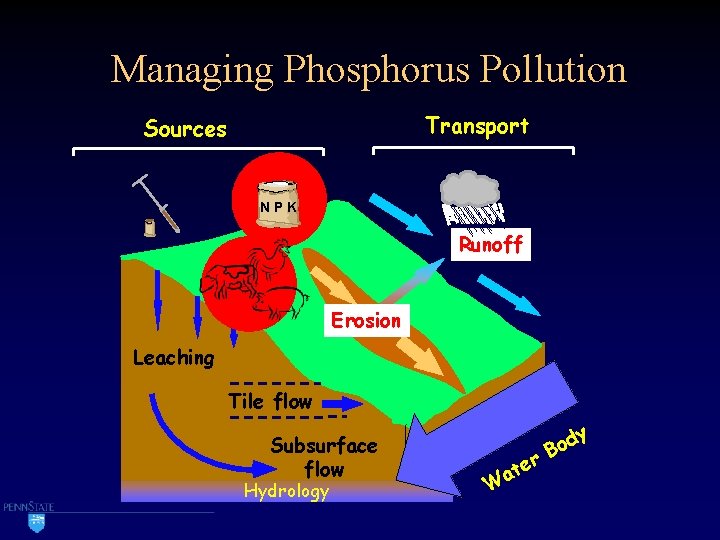
Managing Phosphorus Pollution Transport Sources NPK Runoff Erosion Leaching Tile flow Subsurface flow Hydrology y W od B r e t a
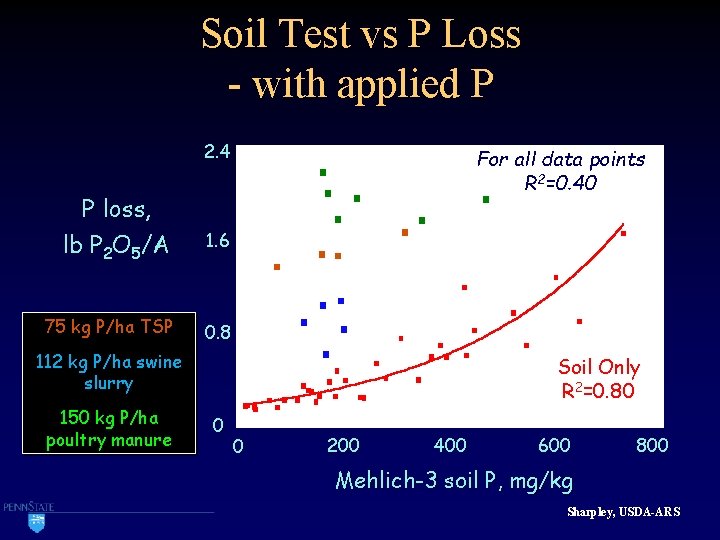
Soil Test vs P Loss - with applied P 2. 4 P loss, lb P 2 O 5/A 75 kg P/ha TSP For all data points R 2=0. 40 1. 6 0. 8 112 kg P/ha swine slurry 150 kg P/ha poultry manure Soil Only R 2=0. 80 0 0 200 400 600 800 Mehlich-3 soil P, mg/kg Sharpley, USDA-ARS
Phosphorus Index • P Source Site Characteristics – Environmental Soil Test P • Same soil test different interpretation • Sampling Questions? • P Saturation? – P Fertilizer • Rate and Appl. Method – Organic P • Rate and Appl. Method • P Source Coefficient (PSC) – Direct availability of manure P to runoff – Based on WEP in manure
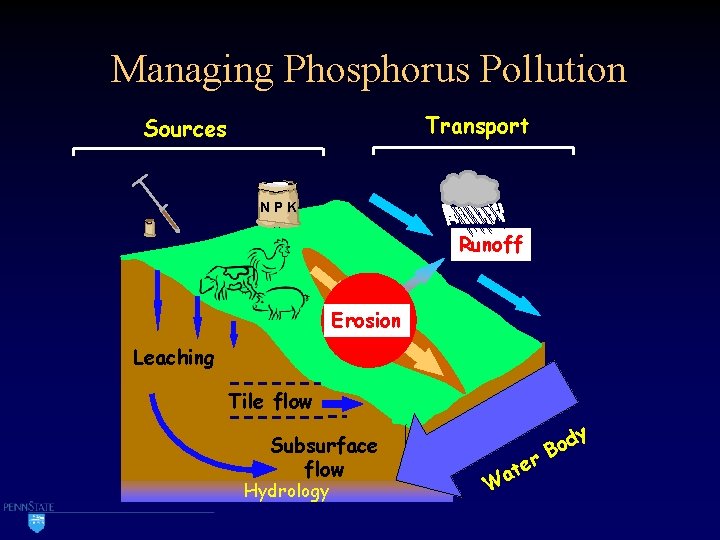
Managing Phosphorus Pollution Transport Sources NPK Runoff Erosion Leaching Tile flow Subsurface flow Hydrology y W od B r e t a
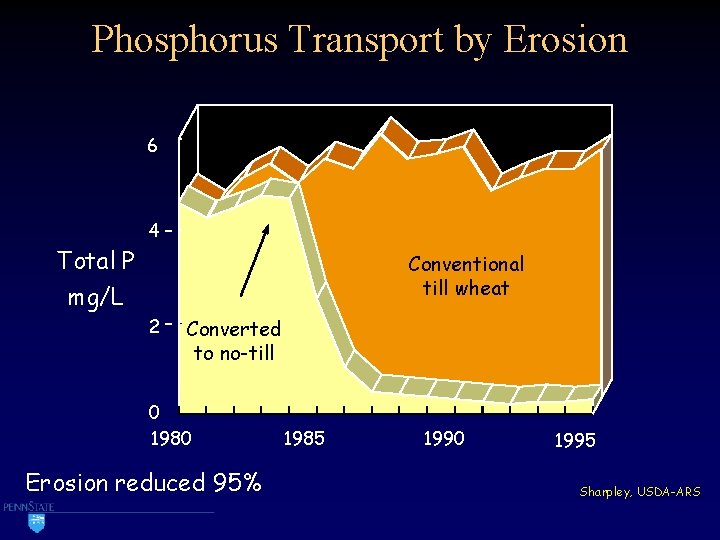
Phosphorus Transport by Erosion 6 Total P mg/L 4 - Conventional till wheat 2 - Converted to no-till 0 1980 Erosion reduced 95% 1985 1990 1995 Sharpley, USDA-ARS
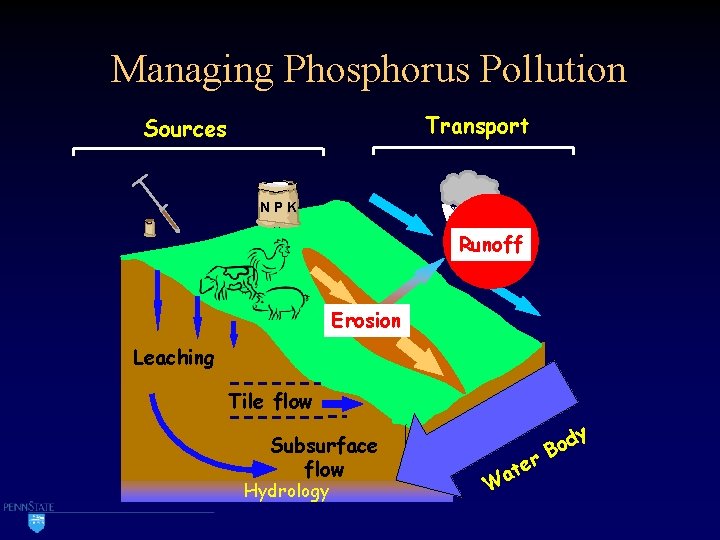
Managing Phosphorus Pollution Transport Sources NPK Runoff Erosion Leaching Tile flow Subsurface flow Hydrology y W od B r e t a
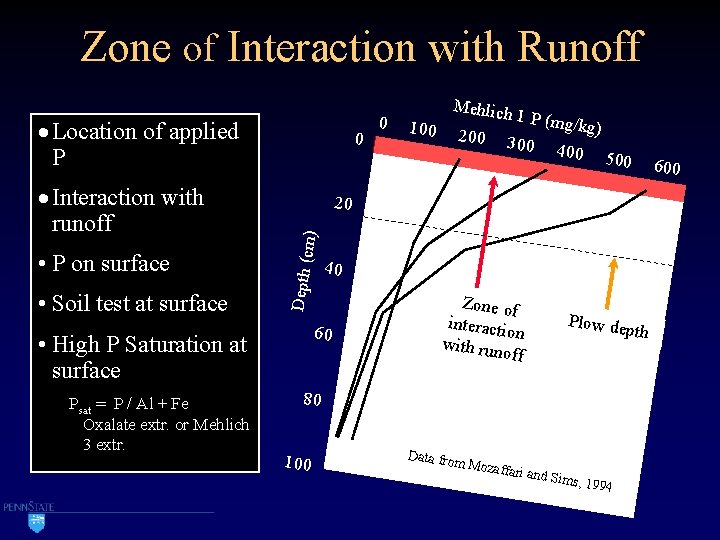
Zone of Interaction with Runoff · Location of applied P • Soil test at surface 300 kg) 400 5 00 600 40 60 • High P Saturation at surface Psat = P / Al + Fe Oxalate extr. or Mehlich 3 extr. 200 1 P (mg/ m) • P on surface 100 20 Depth (c · Interaction with runoff 0 0 Mehlich Zone of interacti on with run off Plow de pt h 80 100 Data fro m Moza ffari and Sims, 19 94
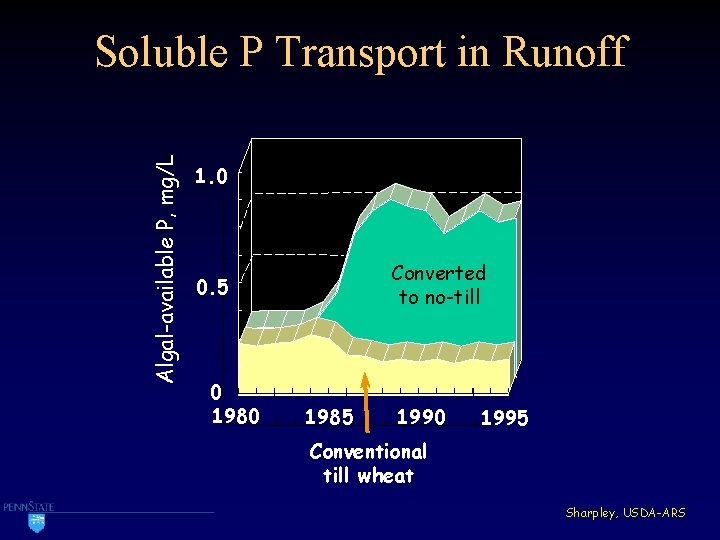
Algal-available P, mg/L Soluble P Transport in Runoff 1. 0 Converted to no-till 0. 5 0 1985 1990 1995 Conventional till wheat Sharpley, USDA-ARS
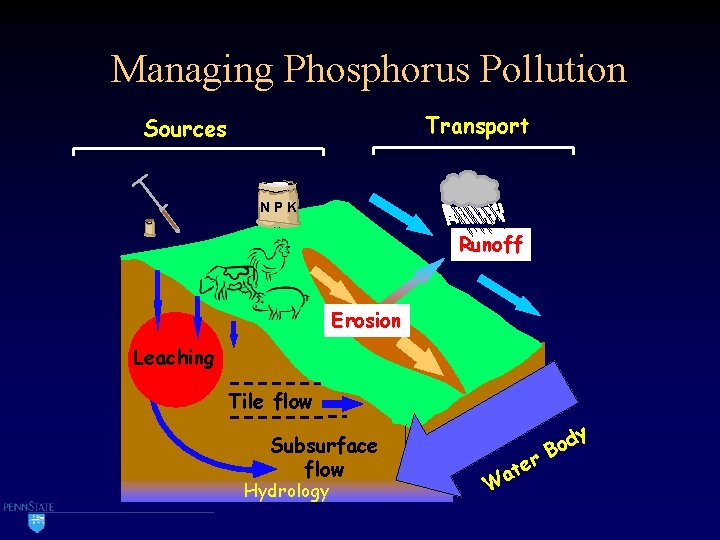
Managing Phosphorus Pollution Transport Sources NPK Runoff Erosion Leaching Tile flow Subsurface flow Hydrology y W od B r e t a
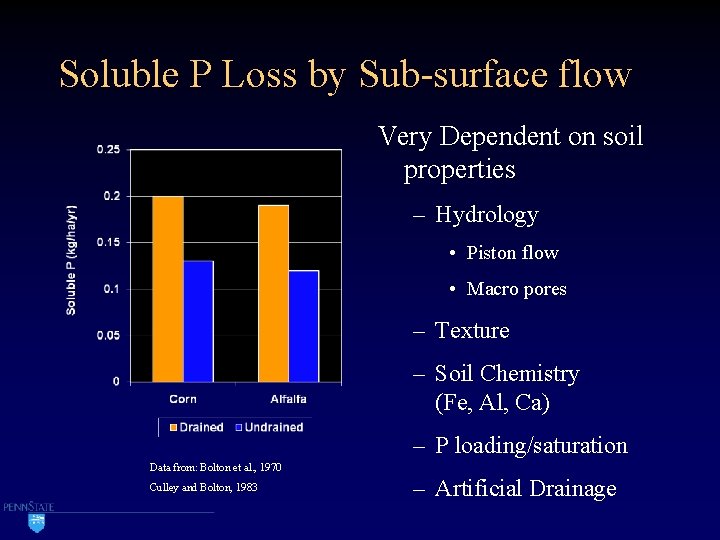
Soluble P Loss by Sub-surface flow Very Dependent on soil properties – Hydrology • Piston flow • Macro pores – Texture – Soil Chemistry (Fe, Al, Ca) – P loading/saturation Data from: Bolton et al. , 1970 Culley and Bolton, 1983 – Artificial Drainage
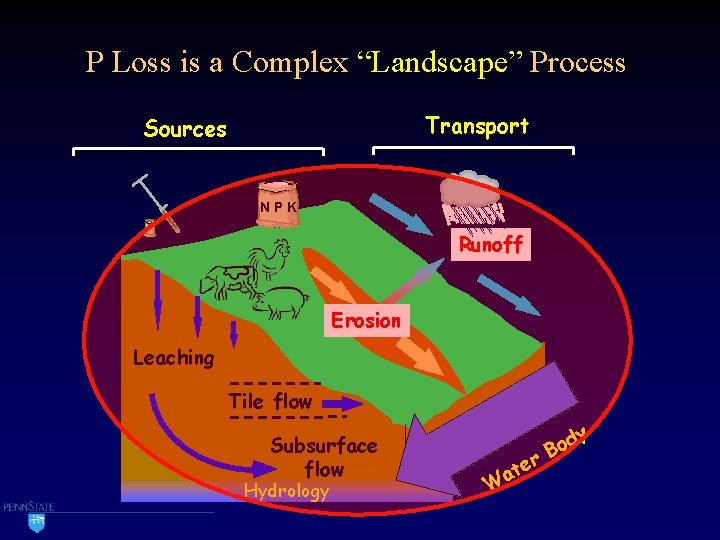
P Loss is a Complex “Landscape” Process Transport Sources NPK Runoff Erosion Leaching Tile flow Subsurface flow Hydrology y W od B r e t a
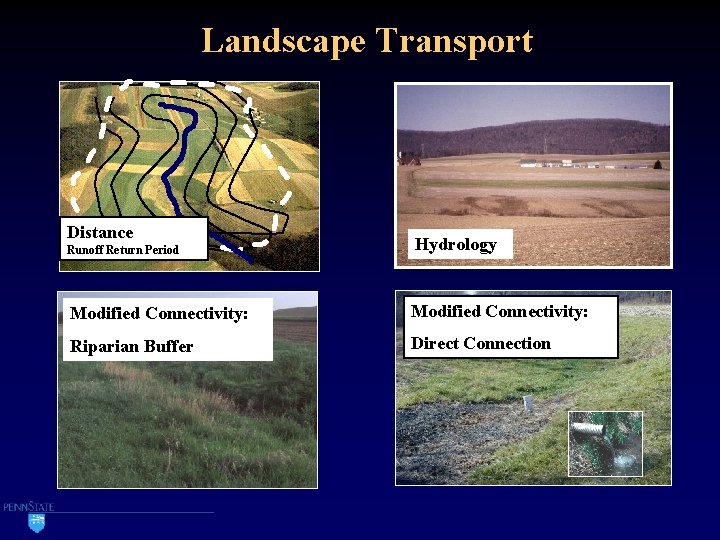
Landscape Transport Distance Runoff Return Period Hydrology Modified Connectivity: Riparian Buffer Direct Connection
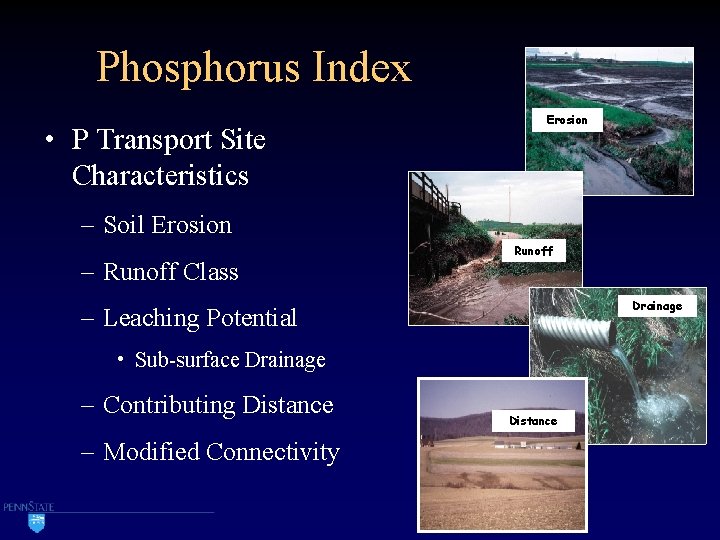
Phosphorus Index • P Transport Site Characteristics Erosion – Soil Erosion – Runoff Class Runoff Drainage – Leaching Potential • Sub-surface Drainage – Contributing Distance – Modified Connectivity Distance
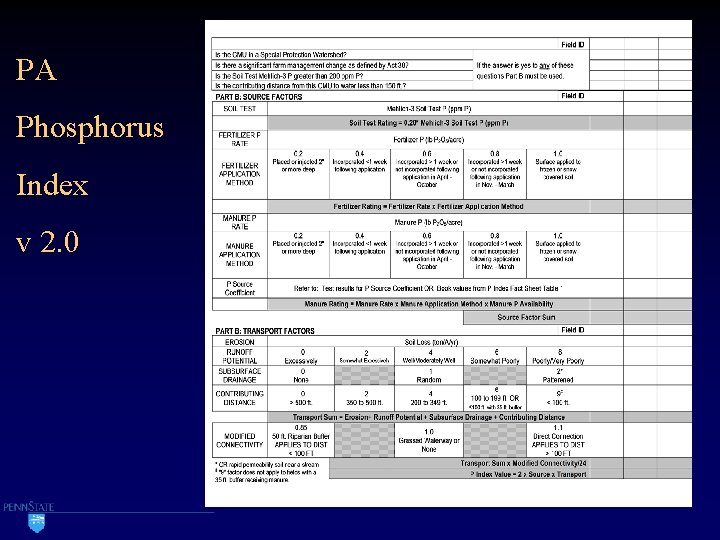
PA Phosphorus Index v 2. 0
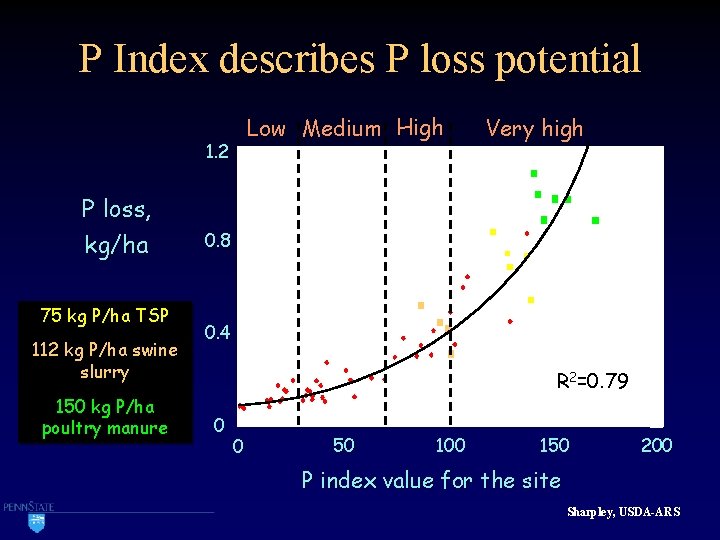
P Index describes P loss potential Low Medium High 1. 2 P loss, kg/ha 75 kg P/ha TSP 112 kg P/ha swine slurry 150 kg P/ha poultry manure Very high 0. 8 0. 4 R 2=0. 79 0 0 50 100 150 200 P index value for the site Sharpley, USDA-ARS
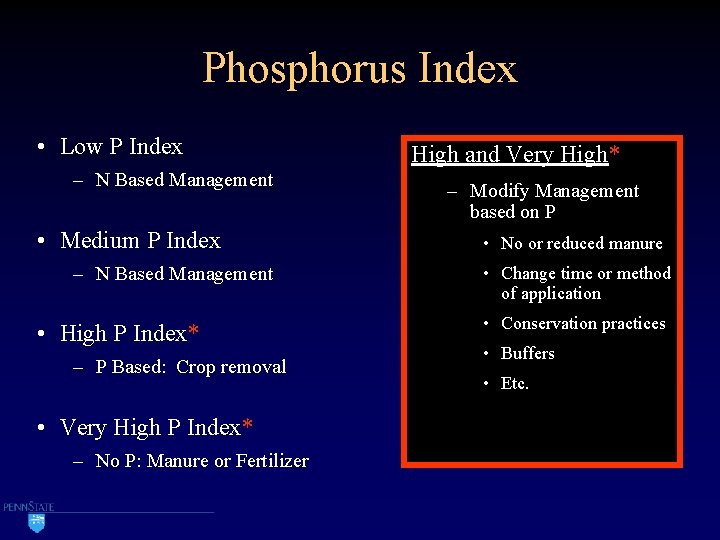
Phosphorus Index • Low P Index – N Based Management • Medium P Index – N Based Management • High P Index* – P Based: Crop removal • Very High P Index* – No P: Manure or Fertilizer High and Very High* – Modify Management based on P • No or reduced manure • Change time or method of application • Conservation practices • Buffers • Etc.
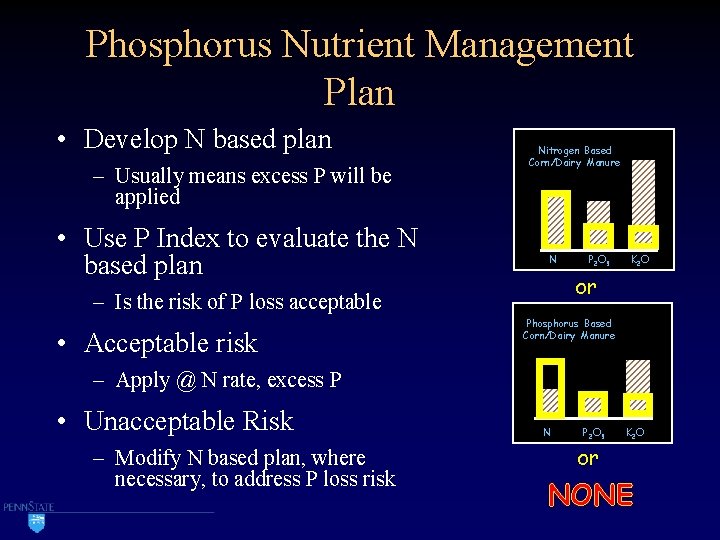
Phosphorus Nutrient Management Plan • Develop N based plan – Usually means excess P will be applied • Use P Index to evaluate the N based plan Nitrogen Based Corn/Dairy Manure N K 2 O or – Is the risk of P loss acceptable • Acceptable risk P 2 O 5 Phosphorus Based Corn/Dairy Manure – Apply @ N rate, excess P • Unacceptable Risk – Modify N based plan, where necessary, to address P loss risk N P 2 O 5 K 2 O or NONE
P Index Application • Eventually, all fields will have a high P index • P Index is not the solution – Tool to buy time to solve problem – Minimizes negative impact of P while we come up with a sustainable solution – We need to get the system into better balance
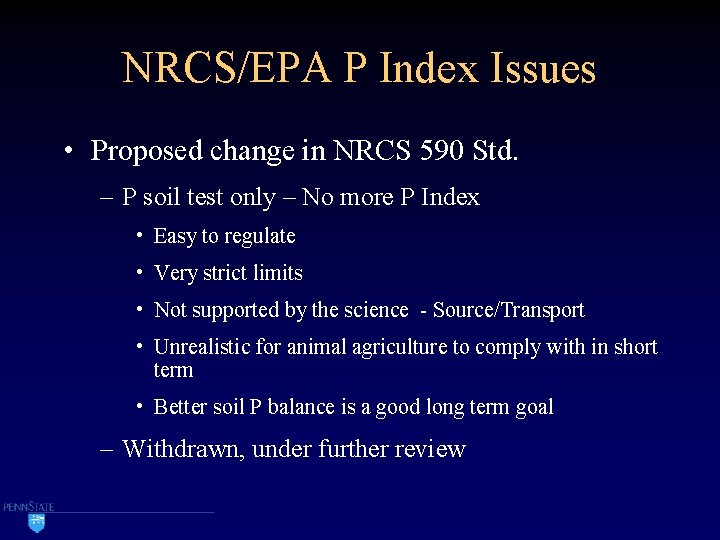
NRCS/EPA P Index Issues • Proposed change in NRCS 590 Std. – P soil test only – No more P Index • Easy to regulate • Very strict limits • Not supported by the science - Source/Transport • Unrealistic for animal agriculture to comply with in short term • Better soil P balance is a good long term goal – Withdrawn, under further review

College of Agricultural Sciences Department of Crop and Soil Sciences
- Slides: 26